
SURFACE TREATMENT · MOISTURE FOLLOW-THROUGH
Mould Remediation Bellbird
If previous treatment marks remain visible and a new damp event is reported at your Bellbird address, distinguish a fresh change from assumptions about permanent prevention. Set out the earlier treatment and any new water signs without assuming a previous visit covers the present extent.
Fresh events recorded
Earlier outlines distinguished
Current repair status discussed
TREATMENT & FOLLOW-THROUGH
UNDERSTANDING THE AFFECTED ROOM
Fresh wetting changes the current enquiry
New wetting changes the enquiry even when an old treatment mark remains. Describe the fresh event and current visible surface independently of the earlier appearance. A previous appointment is not a permanent prevention promise or certification of every repair made since then. Review remediation scope before selecting the structural-surface job.
An earlier visit is background for the current enquiry, not a guarantee about every intervening condition. Describe fresh changes and reliable repair information separately from assumptions about the older result. The supported process should be agreed against present accessible surfaces. It does not retrospectively certify other work, repair new water entry or promise that unchanged cosmetic marks establish a complete history of the room.
MOISTURE & CONTAMINATION
An earlier visit is not a dryness history
Treat new wetting as current information, even where the earlier treatment outline looks unchanged. Describe timing and separate repair status instead of inferring permanent failure or success. Consider inspection when the accessible condition needs clarification.
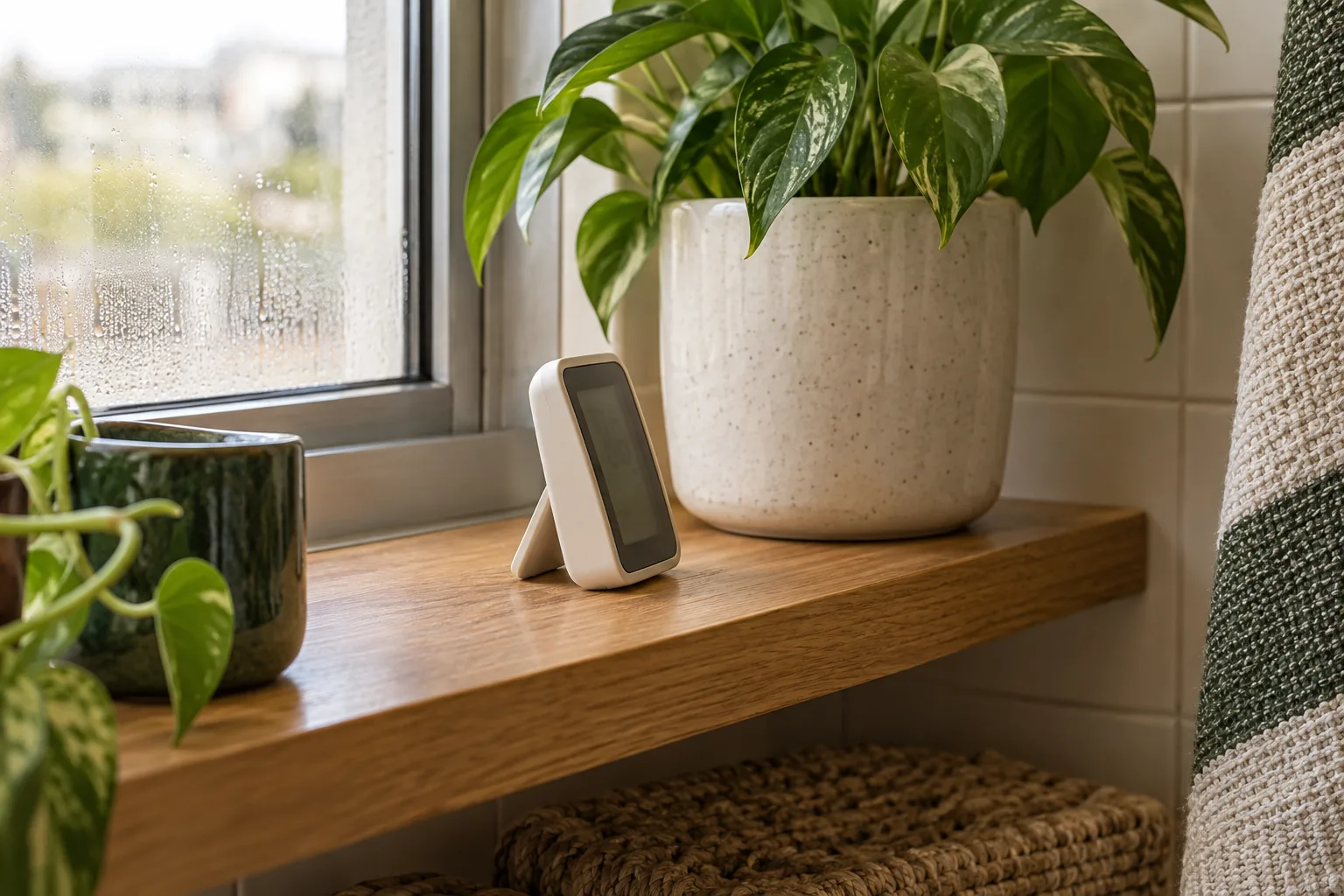
A professional hygrometer informs present room-air humidity, not proof that materials stayed dry between an earlier visit and new wetting.
A DEFINED TREATMENT SEQUENCE
Treat the present accessible change
1
Assess the accessible scope
Assess the current visible change and new wetting history separately from the earlier treatment outline.
2
Set up HEPA protection
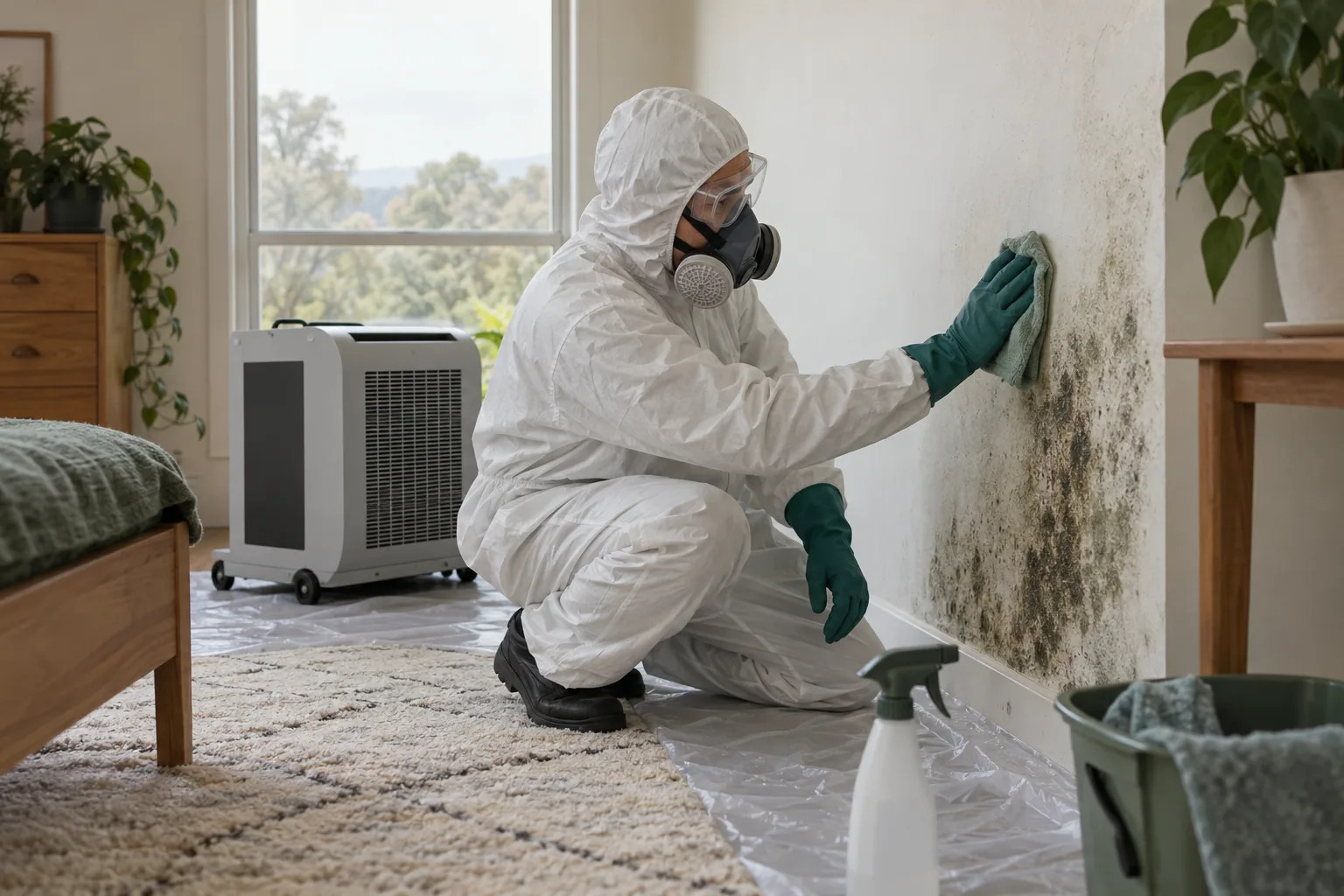
Establish HEPA air protection before application within the newly agreed scope, rather than treating past work as today’s clearance.

3
Choose suitable application
Apply appropriate HOCl treatment with conditional ULV dry fog, without offering permanent prevention or retrospective certification.
4
Remove visible contamination
Physically remove current visible growth using H-class filtered equipment from agreed accessible sections, keeping new leak repairs separate.
5
Continue final air cleaning
Maintain HEPA air cleaning during and after work; review return advice and how to report fresh observations accurately.
Today’s surfaces and earlier cosmetic outlines
Walls
Locate current wall growth separately from the outline left after an earlier visit.
Ceilings
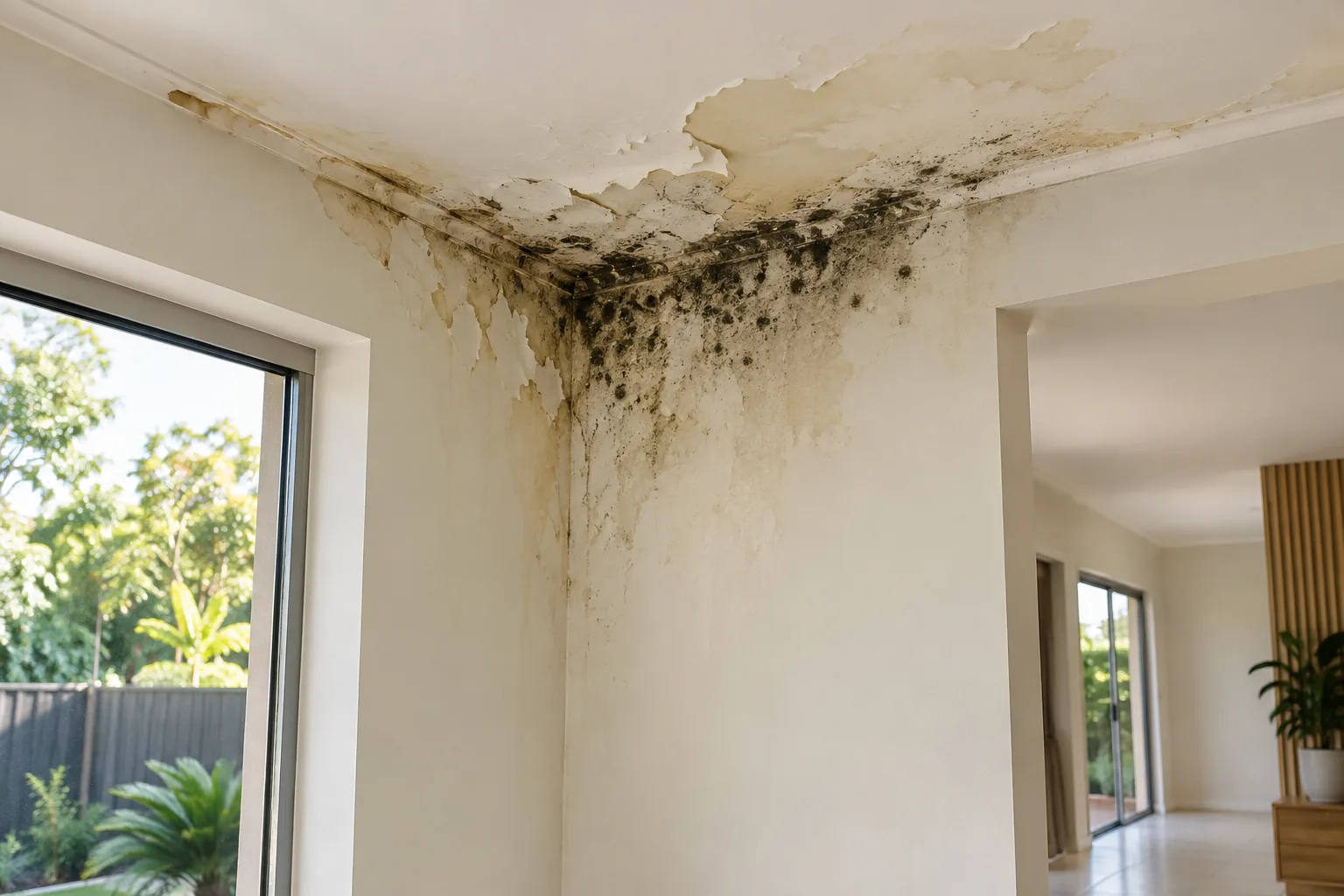
Describe fresh ceiling water or growth without calling an unchanged old mark a new finding.
Bathrooms
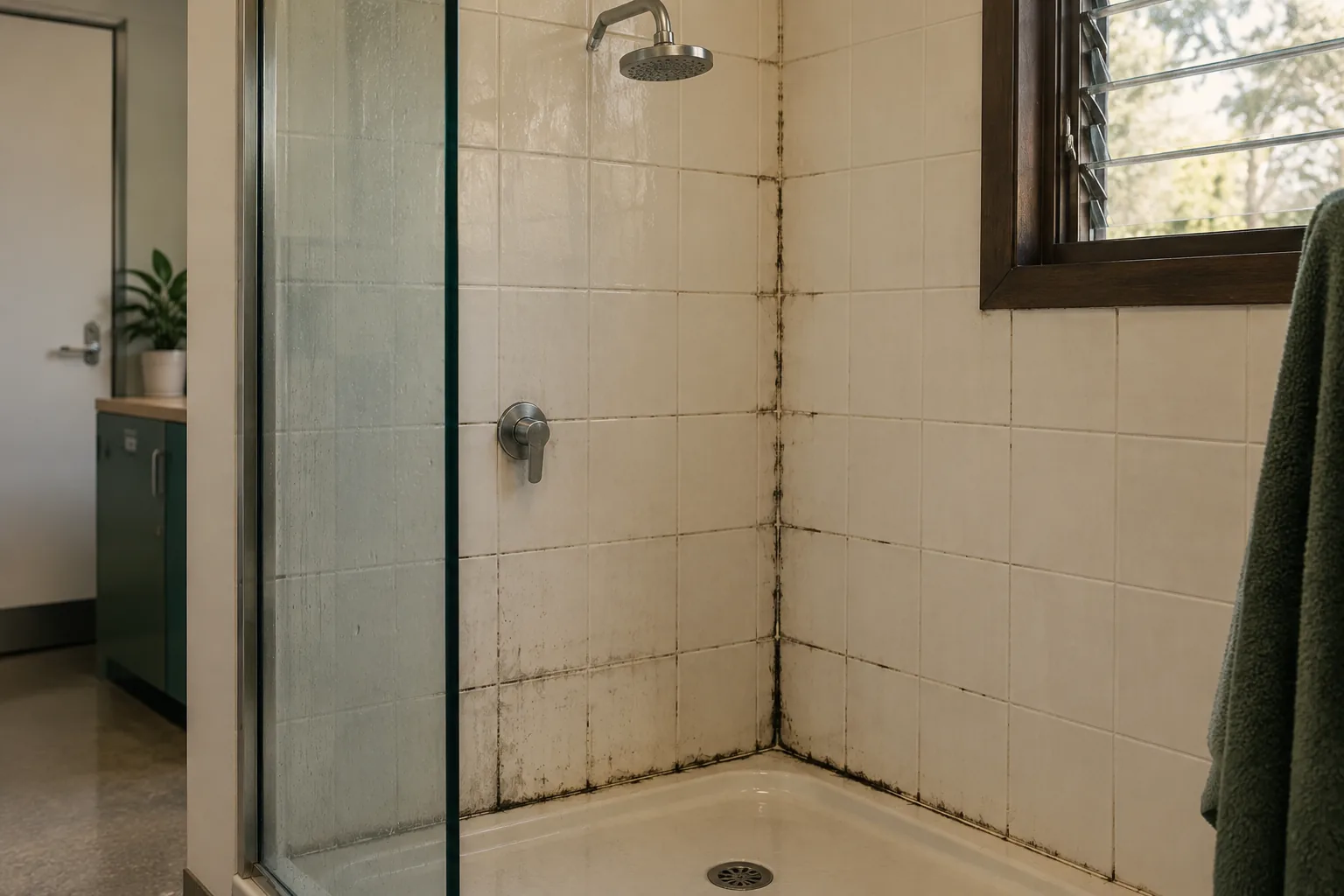
Bathroom surfaces need current observations rather than assumptions about permanent prevention.

Kitchens
Kitchen treatment should state today’s exposed finish and any separately arranged repair status.
Accessible affected surfaces
Additional reachable hard surfaces are specifically agreed; earlier work does not include newly affected fabrics or furnishings.
AFTER TREATMENT
Prepare against reliable current information
Identify new water or growth separately from the previous treatment outline. Give reliable dates where known rather than reconstructing an uncertain history. Prepare the agreed current scope, with people and pets leaving during the treatment.
The source’s three-hour room average is approximate; the current accessible extent and condition determine timing to confirm for the fresh enquiry. Fresh concerns need a current scope rather than assumed hourly retrospective checking.
KEEP MOISTURE IN VIEW
Record new events without permanent-prevention assumptions
Treat new wetting as a reason to revisit the relevant source question, rather than assuming an earlier treatment prevented every future condition. Record dates and the location of fresh visible growth, keeping unchanged outlines separate. Follow actual return instructions and arrange repairs through the appropriate provider. A previous appointment does not certify all intervening work or prove a room remained dry between photographs. Clear current observations give the next enquiry practical value without turning an uncertain history into a claim of either permanent prevention or automatic failure of the earlier surface treatment.
Date new water events and growth where known.
Keep old cosmetic outlines distinct from current observations.
Follow through on relevant repairs rather than assuming permanent prevention.
Quote the fresh visible concern
Provide the new visible condition and reliable dates when discussing the quote. Published examples do not establish retrospective certification, a recurrence guarantee or inclusion of a new leak repair in remediation.
BELLBIRD · EXACT ADDRESS & ACCESS
Address and current-event enquiries
At the Bellbird address, separate fresh water and growth from the earlier cosmetic outline. Confirm attendance for the actual current concern rather than inferring another property’s history from nearby links.
Questions about remediation
Does a previous treatment guarantee no recurrence after new wetting?
No. Continuing or renewed moisture can support growth; describe the new event and arrange appropriate separate source correction.
Is an old mark alone evidence the treatment failed?
No automatic conclusion follows. Report changes separately from an unchanged cosmetic outline.
Will the next visit verify all earlier work?
No retrospective certification is promised. Agree the current visible concern and accessible scope.
Can a photograph prove the room stayed dry between visits?
No. It captures appearance at one time, not every condition or concealed-material state.
Should another leak be repaired through remediation?
Leak repair is separate. Coordinate the appropriate provider and explain the status honestly.
What helps with the current enquiry?
Locate new growth or water, provide dates where known and distinguish it from the older appearance. Avoid presenting uncertainty as a complete treatment history.
Describe what changed recently
Phone 03 8652 1296 with the Bellbird new observations and known repair status. Clarify the current treatment scope without relying on a permanent-prevention assumption.