
SURFACE TREATMENT · MOISTURE FOLLOW-THROUGH
Mould Remediation Caulfield
Two affected rooms do not necessarily need the same preparation or have the same moisture source. For a Caulfield enquiry, describe each visible patch separately and explain the doorway or access between them. A room-by-room scope is clearer than assuming the entire property is included.
Separate room boundaries
Shared access planned
Moisture history compared
TREATMENT & FOLLOW-THROUGH
UNDERSTANDING REMEDIATION
Describe each room before combining the job
List the affected walls, ceilings or exposed floors in each room, including any surfaces that remain obstructed. Note whether the patches appeared together or at different times. That comparison helps explain the enquiry without claiming one cause or a uniform treatment requirement.
The remediation service works on visible accessible structural contamination. Agree which rooms and surfaces are included; an appointment for one patch does not automatically cover the adjoining room, contents or concealed spaces. Shared access and separate preparation can be discussed together.
THE MOISTURE CONNECTION
Do not infer a single moisture source
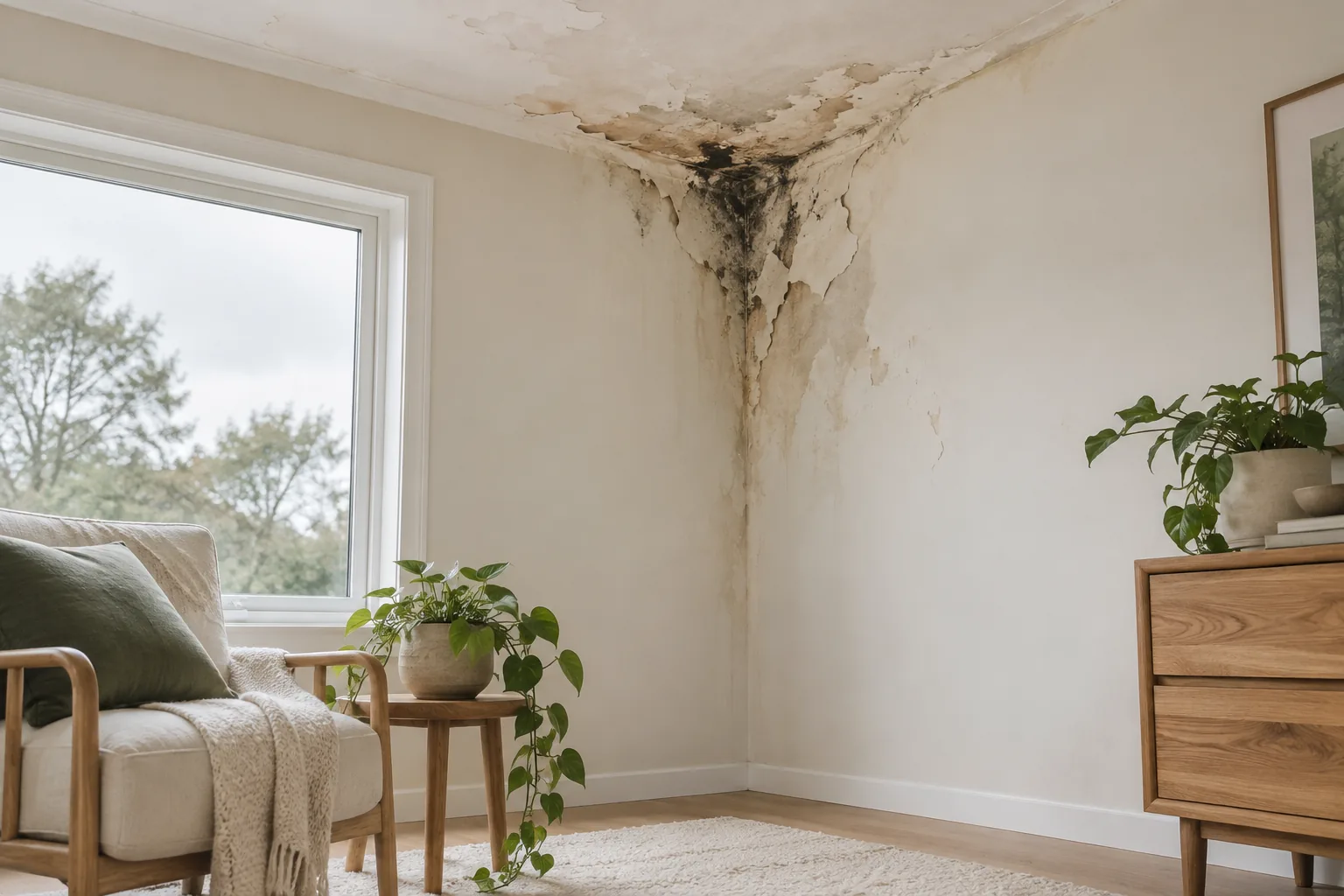
Mention condensation or leaks for the relevant room rather than applying every observation to both. A repaired fault in one area does not establish the condition of another. Plumbing and building repairs remain separate from treating the visible growth.
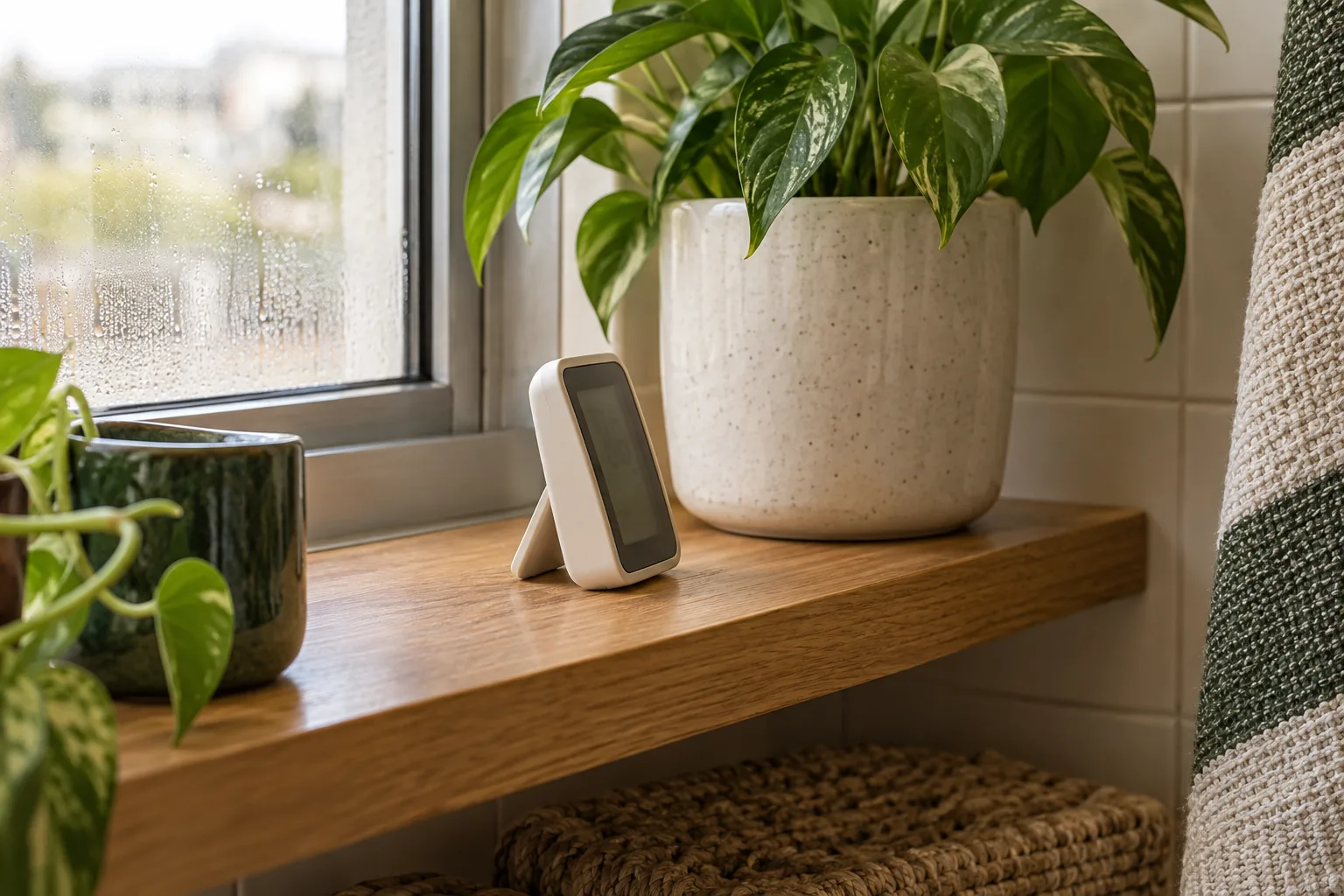
The confirmed hygrometer measures relative humidity in room air. Readings do not measure moisture in the walls or prove that adjoining cavities are dry. If the relationship between patches remains uncertain, discuss assessment requirements without assuming a whole-property laboratory survey or material-probe service.
PLAN · FILTER · TREAT · REMOVE · CONTINUE
An agreed sequence across the included areas
1
Assess the room boundaries
Identify accessible contamination in each proposed room and decide what is included. Explain differing finishes, obstructions and repair status before treating the areas as one job.
2
Arrange air protection
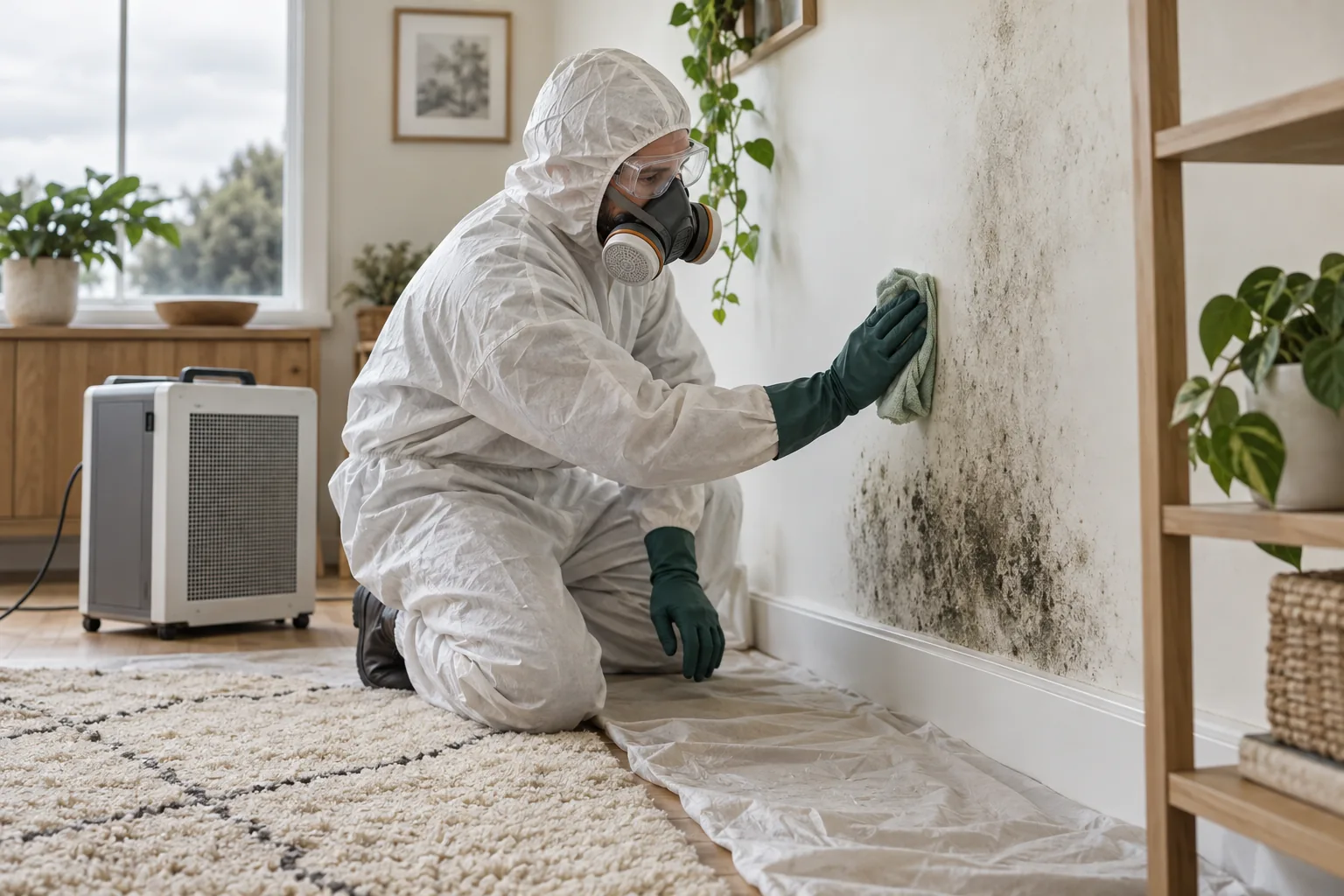
The HEPA air scrubber is set up before treatment. Equipment placement and working access need to suit the agreed rooms, rather than an assumed whole-property package.

3
Apply suitable treatment
For the included rooms, the confirmed application uses HOCl and suitable ULV dry fog, used in most cases. Treatment suitability does not extend the room list by itself.
4
Remove visible growth physically
Professional H-class filtered equipment is used within the accessible scope. Work on a second room needs to be expressly included, not inferred from its proximity.
5
Continue air cleaning
HEPA filtration stays active during and after treatment. Confirm completion observations for the included areas and which moisture questions still need separate follow-up.
Use surface descriptions within each room
Walls
For walls, identify the specific face and finish in each room rather than calling all shared walls affected.
Ceilings
Ceiling marks should be listed where they occur; similar colour does not establish a shared leak or equal extent.
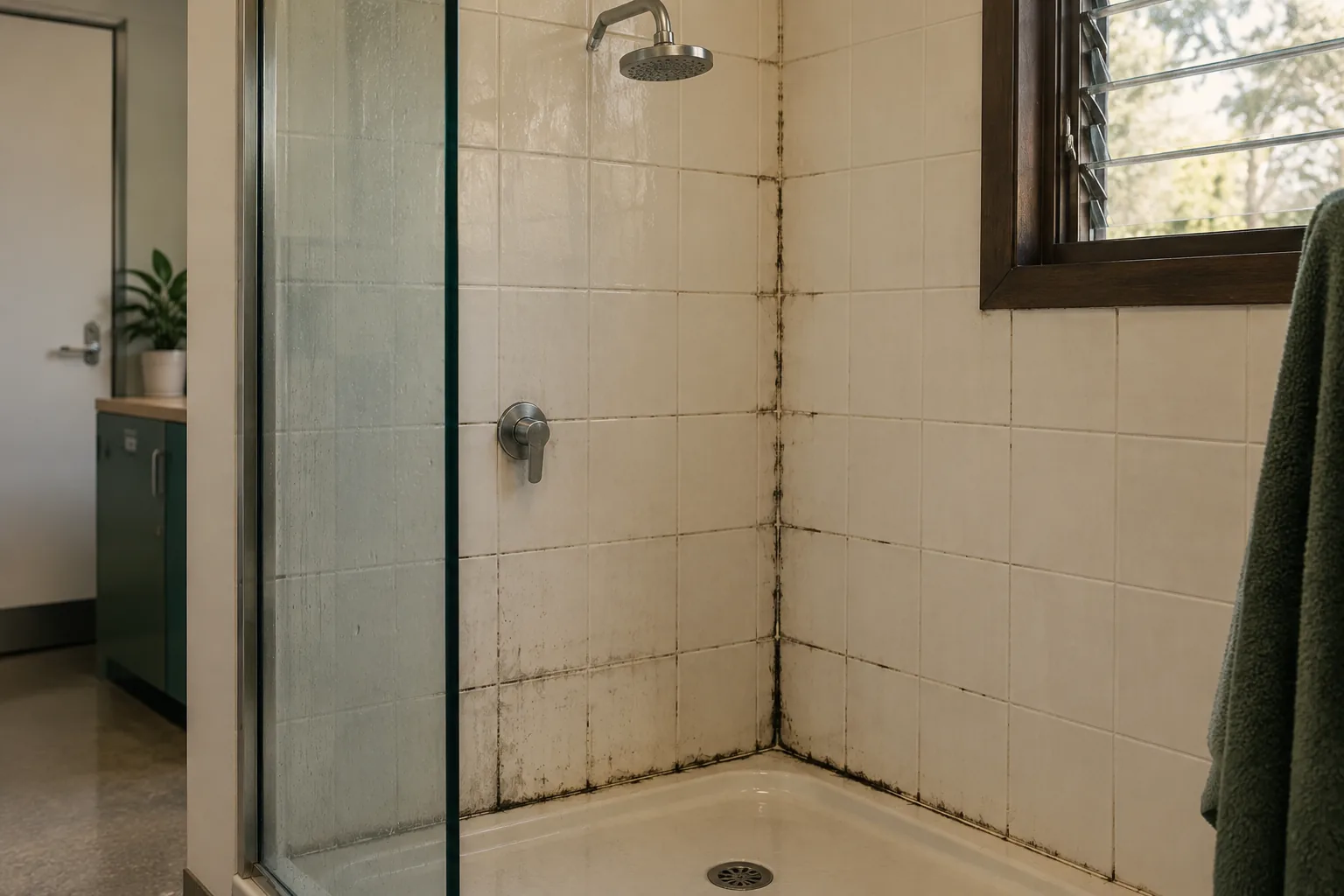
Bathrooms
Bathroom wall and ceiling growth needs its own description, with towels, bathmats and other textiles excluded.
Kitchens
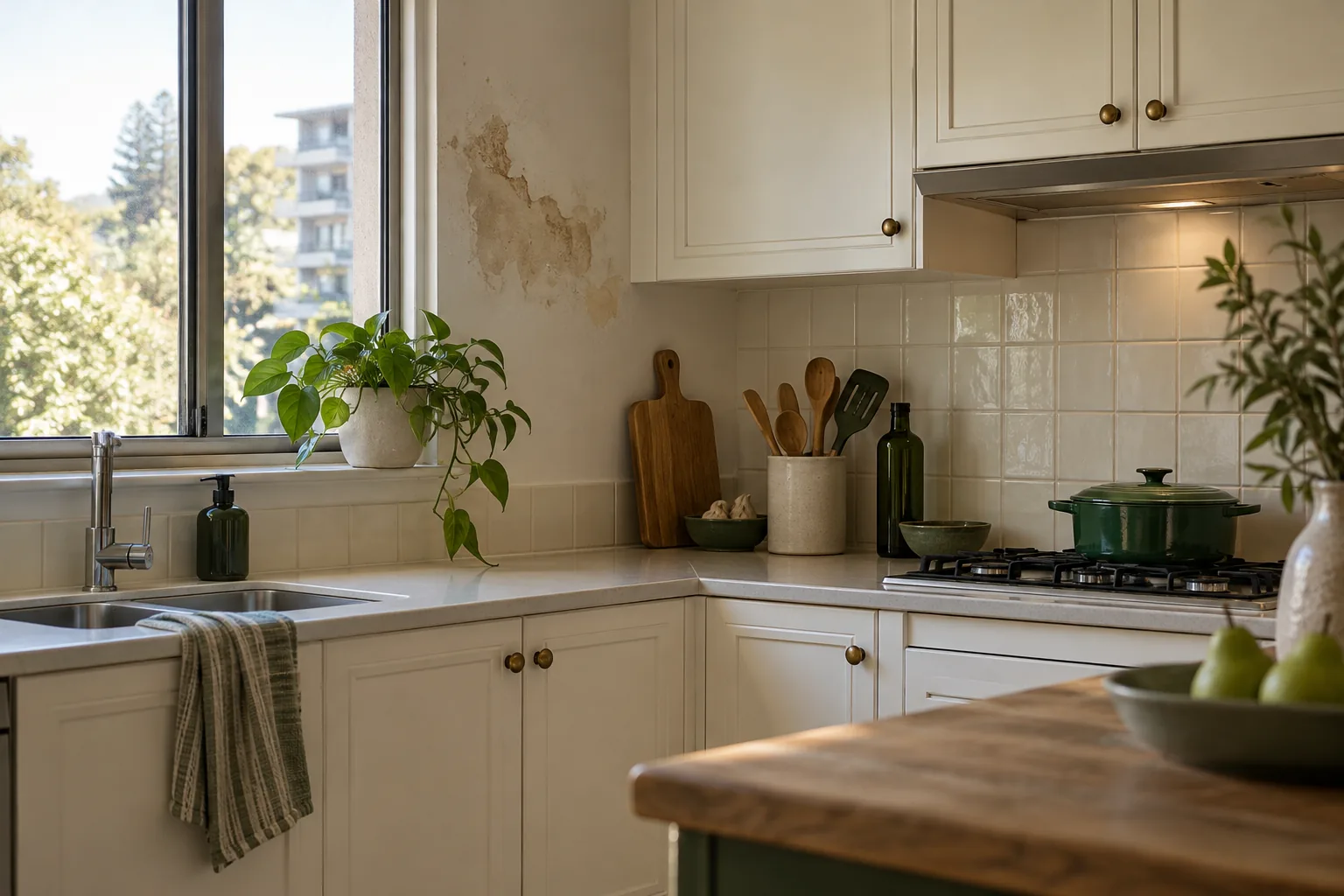
In kitchens, describe accessible structural surfaces separately from cupboard interiors, appliances and plumbing repairs.
Accessible affected surfaces
For floors, distinguish exposed structural finishes from carpet or rugs. Included room treatment does not add textile cleaning.
WHAT TO EXPECT
Coordinate preparation across the property
Agree access routes and clearance for every included area. People and pets leave the property during treatment; an untreated room is not a presumed occupied refuge. Confirm job-specific return advice. Average guidance of around three hours per room varies with size, extent and accessibility, and does not guarantee a combined completion slot.
Remaining cosmetic marks may need separate decorating, while unresolved dampness can allow recurrence. Ask which surfaces were treated and what remained outside the scope. No concealed-area clearance, air test or whole-property certificate should be inferred from completing the included rooms.
FOLLOW THE MOISTURE
Compare follow-up observations accurately
Keep each room’s observations separate so changes can be described meaningfully.
Note renewed condensation or dampness in the room where it occurs.
Arrange repair advice for a continuing water-entry fault instead of assuming both rooms share it.
Maintain ventilation and leave treated areas visible enough for later monitoring.
Ask for an explicit room-by-room quote
When using price examples, provide the included surfaces and access for each room. These Mould Removal figures do not establish a separate multi-room remediation tariff; ask how the actual scope will be quoted. Do not assume a combined discount, an additional room or an excluded contents service is included.
CAULFIELD · EXACT ADDRESS & ACCESS
Another Caulfield-area address
A separate nearby property needs its own room list, authorisation and availability check. Proximity or shared ownership does not establish identical scope or a combined appointment arrangement.
Questions about remediation
Can I describe both rooms as one affected area?
Give each room’s surfaces and access separately first. The technician can then discuss a combined job without losing the treatment boundary.
Can someone stay in the untreated room?
The source preparation is for people and pets to leave during treatment. Confirm the property arrangements rather than assuming an untreated room can remain occupied.
Will both rooms take exactly six hours?
No fixed combined duration is established. Average room guidance varies with extent, size and access, so confirm the actual programme.
Does one humidity reading explain both patches?
No. A room-air reading is not a material measurement or proof of a common cause across rooms.
Is the adjoining room included because the doorway is open?
No inclusion should be assumed from an open doorway. Agree the room list and accessible structural surfaces when arranging the work.
What if only one room has growth again?
Record where and when it returns and revisit that room’s moisture conditions. Recurrence in one area does not automatically establish a problem in the other.
Define both rooms before booking
Call 03 8652 1296 with each visible area, access and relevant moisture history. Agree the included surfaces and a practical preparation plan.