
SURFACE TREATMENT · MOISTURE FOLLOW-THROUGH
Mould Remediation Parkdale
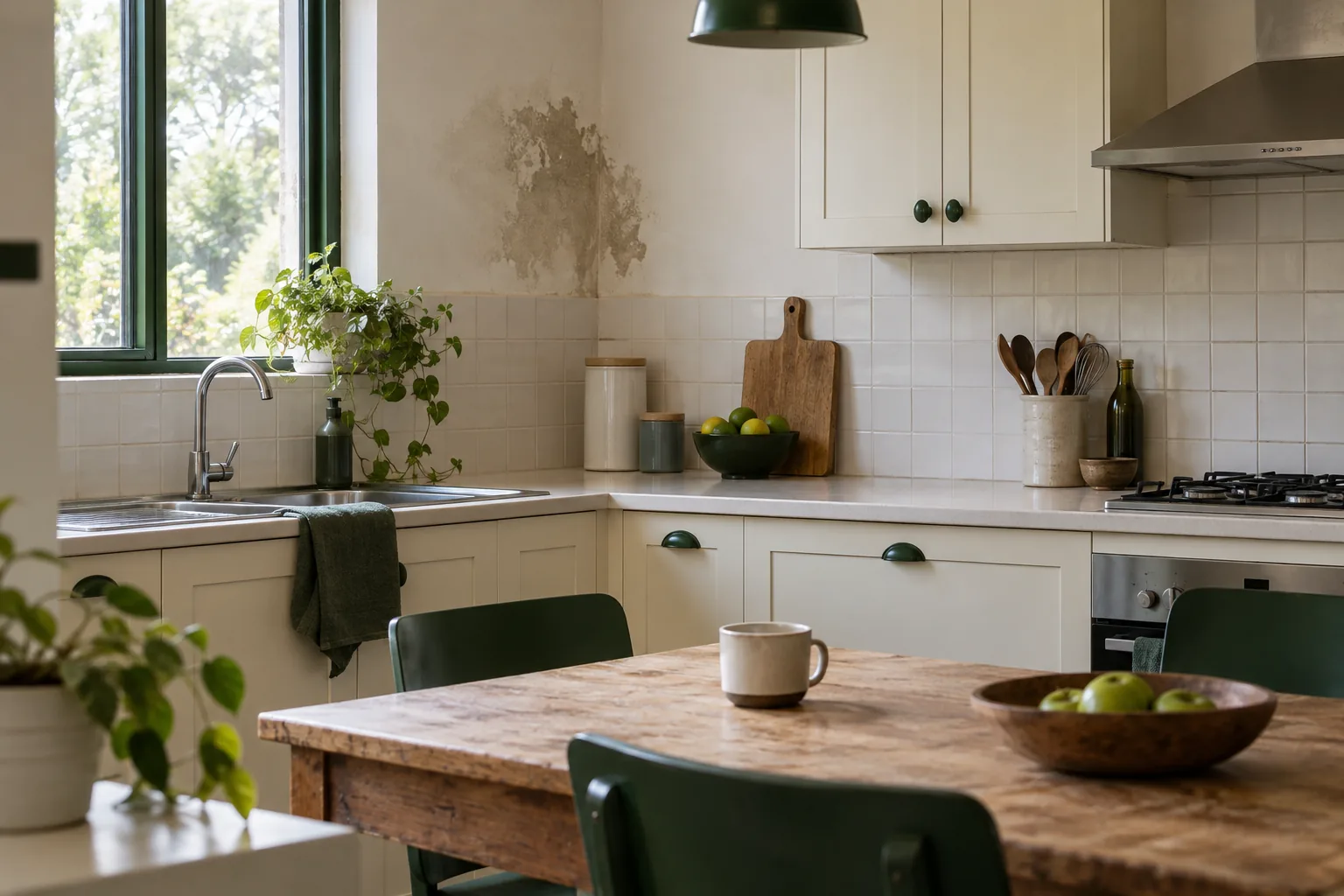
A smooth finish beside a textured one should not be given an automatic shared treatment outcome. For a Parkdale enquiry, identify which face carries visible growth and how the materials differ. Discuss current condition and access before expecting identical colour or texture afterwards; remediation addresses contamination rather than complete decorative matching.
Material differences are identified.
Suitable application is discussed.
Appearance limits are clarified early.
TREATMENT & FOLLOW-THROUGH
UNDERSTANDING REMEDIATION
Describe the finish as well as the mark
Explain the visible boundary, any deterioration and known earlier coating. If the texture’s material is unknown, say so rather than guess from a photograph. Similar-looking growth on adjoining finishes does not establish identical compatibility, hidden extent or a guarantee that the same cosmetic result will follow.
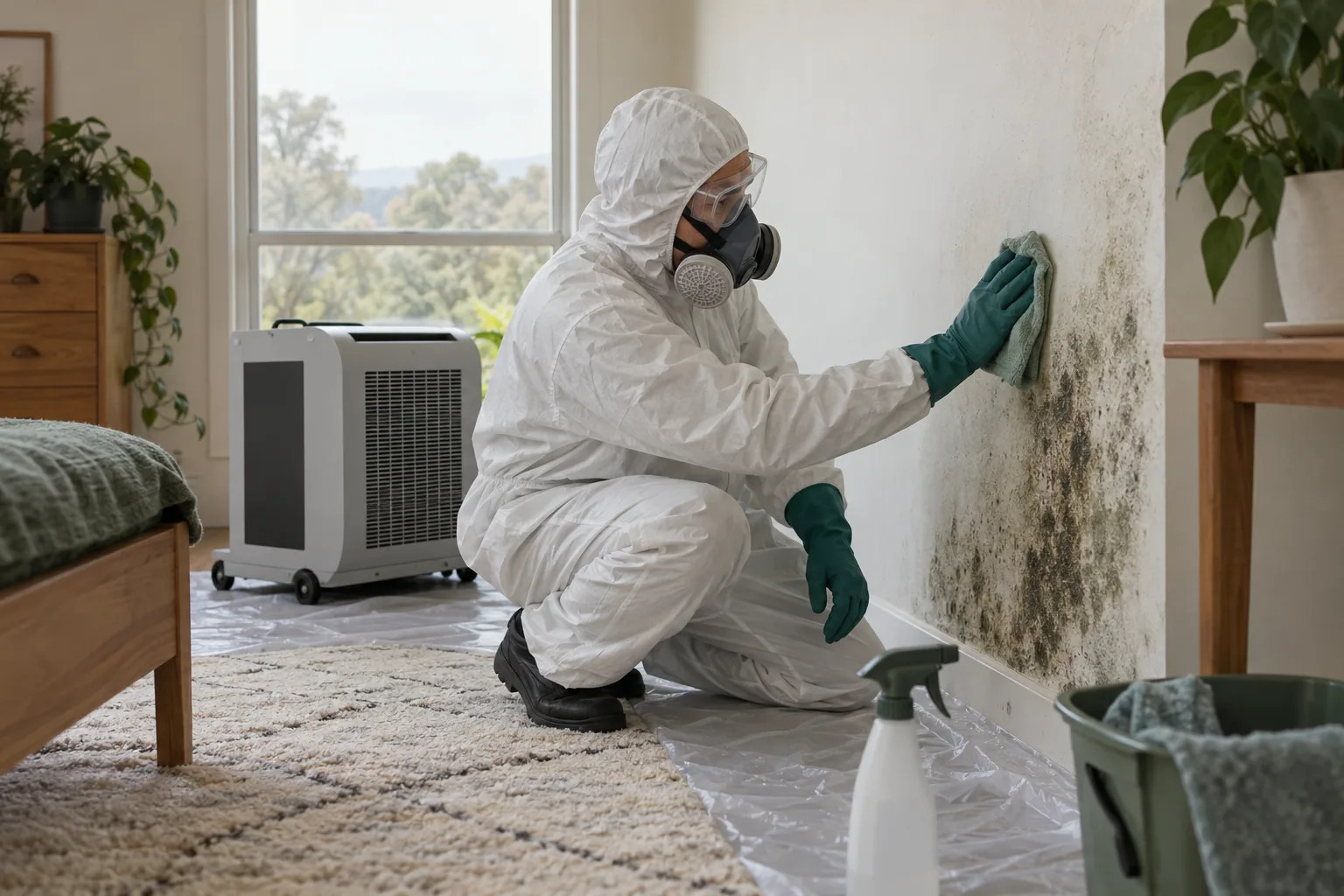
The remediation outline coordinates assessment, air protection, appropriate application and physical removal of visible accessible structural mould. Furniture and textiles are excluded. Stripping, rebuilding texture, hidden investigation and painting need separate scope; a material junction is not automatically a restoration package.
THE MOISTURE CONNECTION
Texture does not decide the water explanation
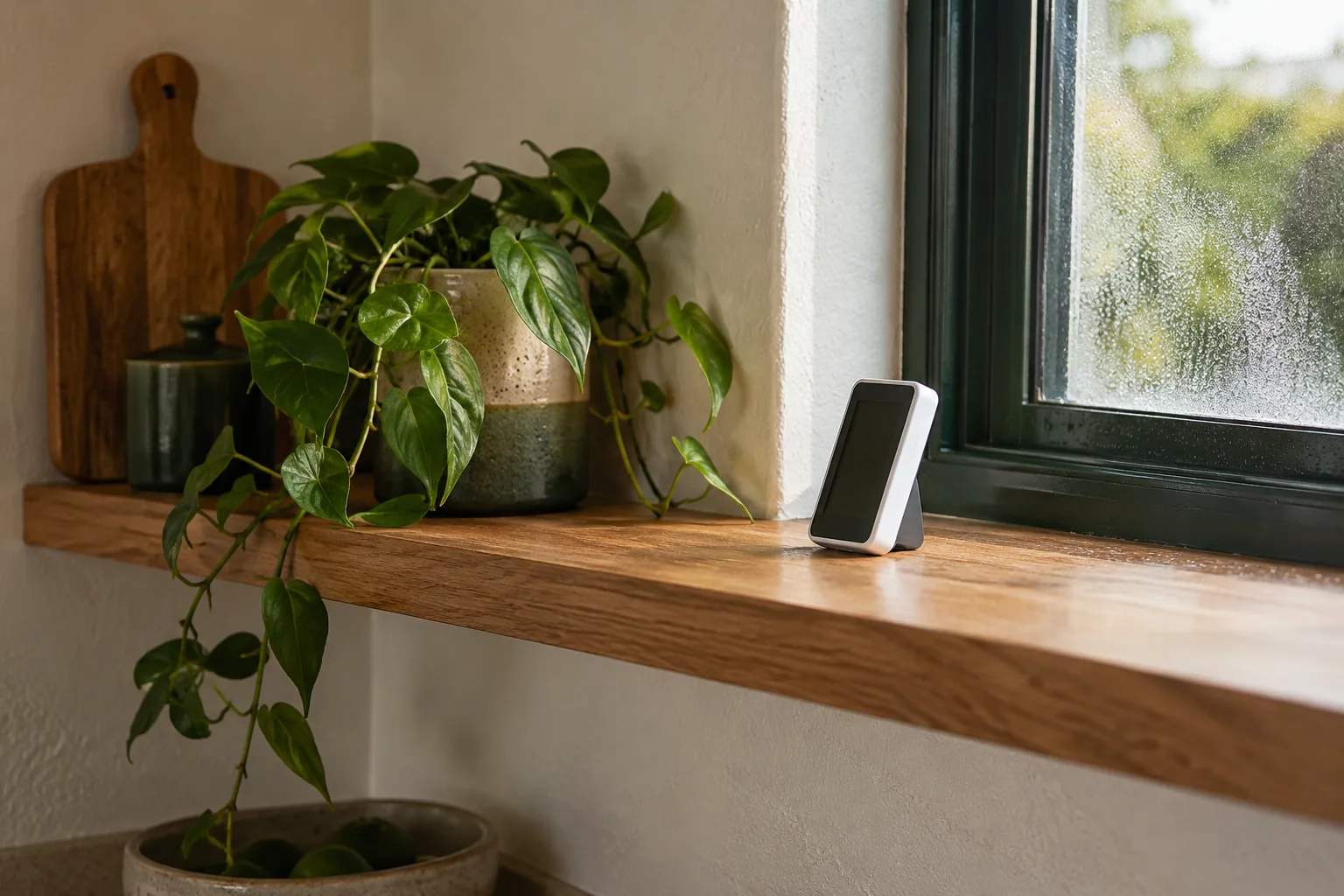
Give actual water or condensation observations for each position and describe completed repairs where known. A professional hygrometer informs relative humidity in room air, not material moisture inside a rough coating or proof that backing is dry. The finish’s appearance cannot establish the source on its own.
An accessible assessment enquiry may clarify the current concern before treatment. Separate leak and ventilation work remains important where dampness persists. Mould can recur after exposed contamination is addressed, so source correction should not be replaced by a new texture or coating that conceals the visible condition.
PLAN · FILTER · TREAT · REMOVE · CONTINUE
Apply confirmed methods to suitable agreed finishes
1
Assess each exposed material
Identify growth, deterioration and access on the adjoining finishes, keeping unknown composition and hidden extent explicitly qualified.
2
Establish HEPA before application
Set up the HEPA air scrubber before surface treatment, agreeing room clearance and equipment positions around the actual work area.

3
Select appropriate HOCl use
Apply HOCl within assessed suitability; ULV dry fog is used in most cases where appropriate, without promising uniform cosmetic compatibility.
4
Remove visible growth professionally
Use H-class filtered equipment for physical mould removal within accepted reach, separate from rebuilding or matching decorative texture.
5
Continue final HEPA cleaning
HEPA runs during and after treatment; obtain specific return advice and discuss residual appearance or separate restoration needs.
Keep each structural finish’s limits visible
Walls
Locate smooth and textured wall faces separately, with existing damage and covered edges clearly identified.
Ceilings
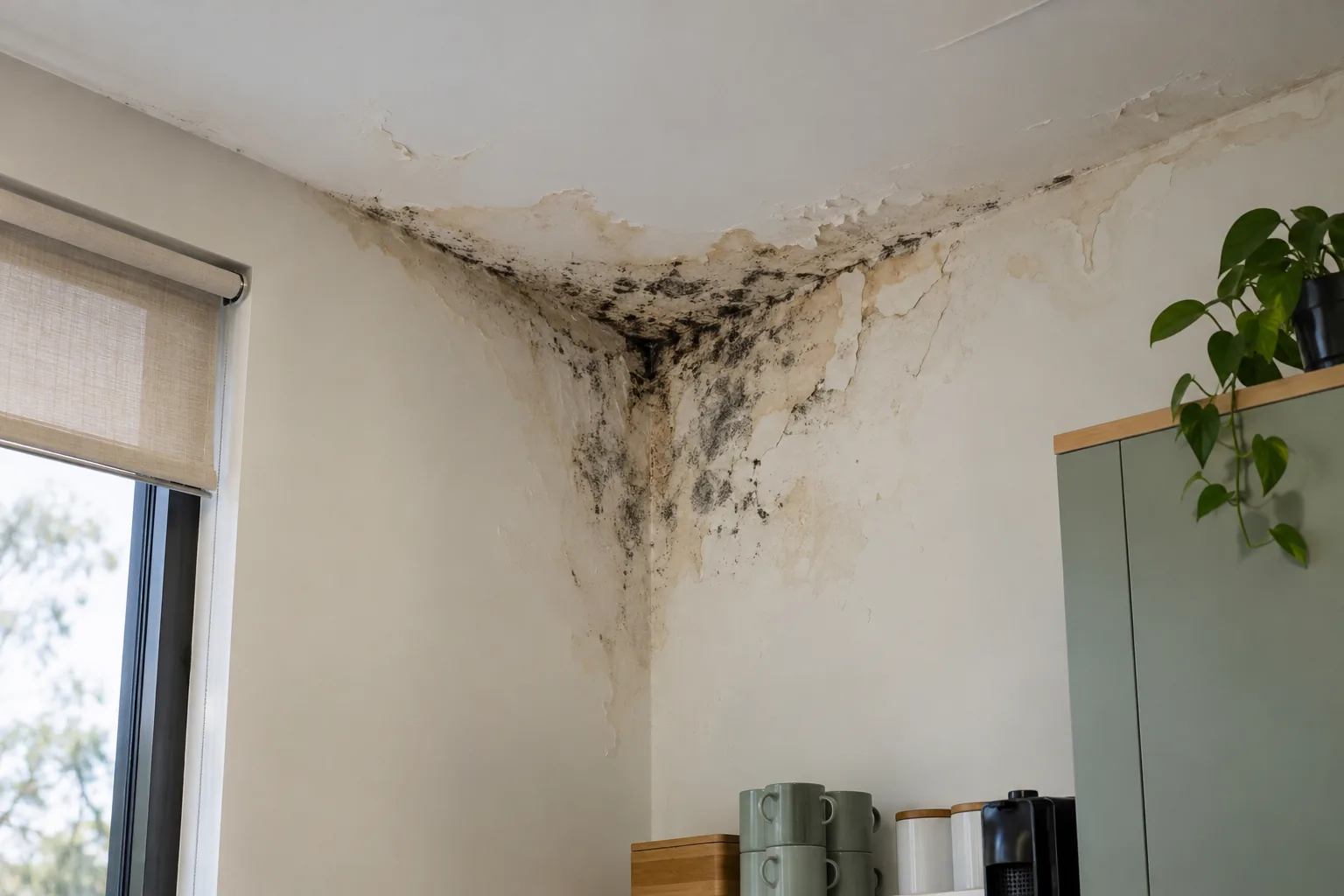
Describe ceiling material and visible growth safely, without assuming decorative texture reveals its backing condition.
Bathrooms
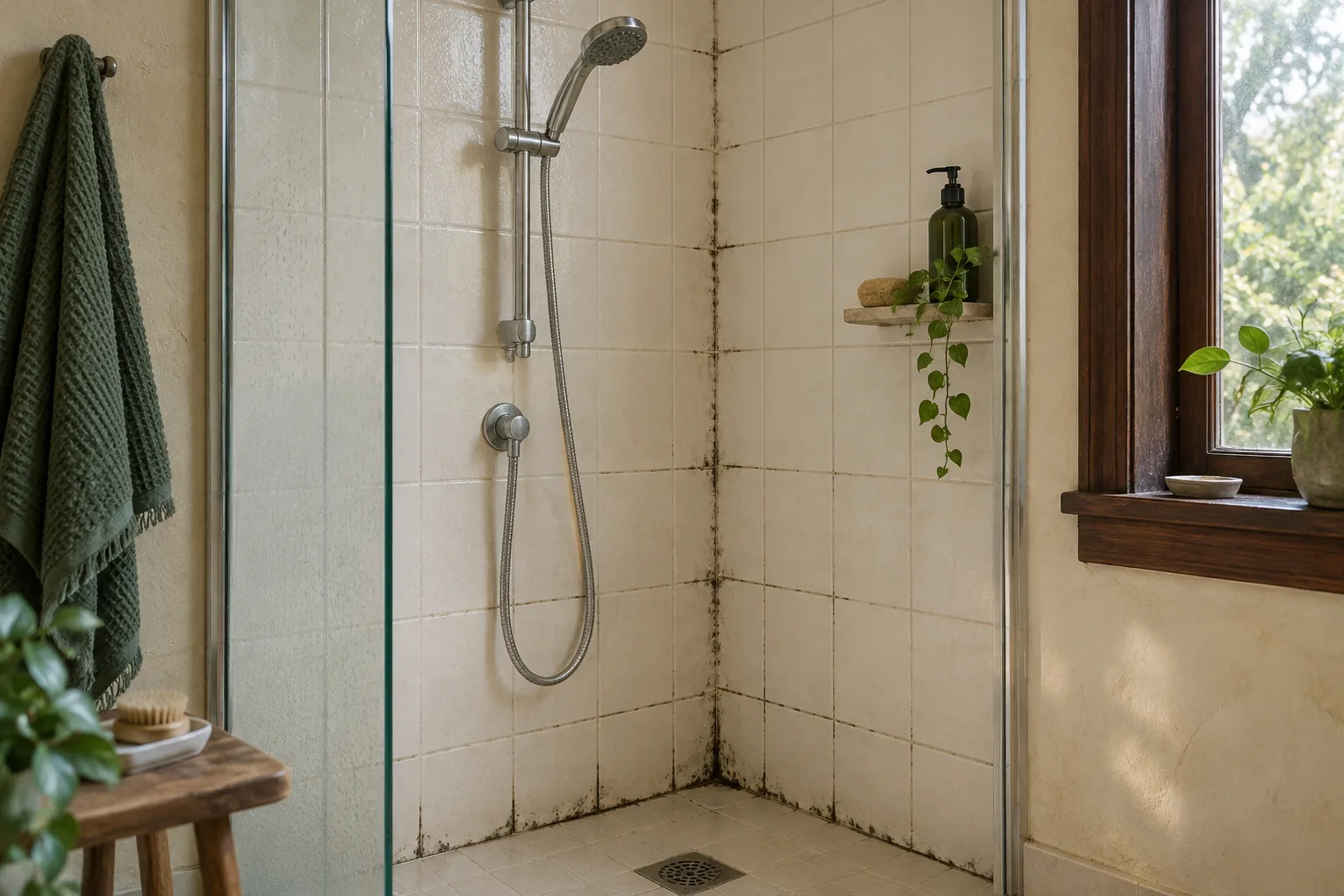
Distinguish bathroom paint, tile and joint concerns; their separate finishes do not create automatic renewal inclusions.
Kitchens
Identify kitchen growth and material transitions around fittings, excluding contents treatment and plumbing repairs from assumptions.
Accessible affected surfaces
Affected exposed hard floors require suitable finish and access agreement; carpet, rugs and concealed layers remain excluded.
WHAT TO EXPECT
Preserve useful information before attendance
Explain fragile finishes and earlier applications before clearing belongings. Do not scrape a textured area merely to prepare it or identify its material. People and pets leave during treatment and follow the technician’s return instructions. Average guidance is approximately three hours per room, affected by size, contamination and accessibility rather than a guaranteed duration for either texture.
The service is not charged hourly. Residual cosmetic staining or differences in appearance may remain; decorating is separately quoted. Ask which finishes were included and do not expect a laboratory finding, hidden-layer certificate or promise that both faces will match perfectly after visible treatment.
FOLLOW THE MOISTURE
Keep moisture observations separate from finish differences
Record actual new growth and water while following through on known sources, instead of treating different decorative appearance as the only result.
Note the specific face and date when a fresh change appears.
Maintain suitable extraction during moisture-producing activities.
Arrange separate source repairs and clarify future decorating before covering unresolved marks.
Quote the contamination scope rather than a matching finish
Describe both materials when discussing pricing applicability. The published room figures are labelled Mould Removal, so confirm the amounts relevant to the accepted remediation. Texture reconstruction, colour matching and coating replacement should not be inferred from treatment examples; identify separate finish responsibilities explicitly.
PARKDALE · EXACT ADDRESS & ACCESS
Confirm the Parkdale room and materials
Give the actual address and material information available. Nearby links relate to separate enquiries and cannot confirm this finish’s suitability or attendance.
Mentone · Mordialloc · Braeside · Beaumaris
Questions about remediation
Should adjoining textures be treated as one material?
Not without clarification. Describe each actual finish and its condition so suitability and accessible scope can be assessed.
Can a photograph identify an unfamiliar rough coating?
Do not rely on it for definitive composition. Provide genuine finish information and acknowledge what remains unknown.
Will remediation reproduce damaged decorative texture?
No texture reconstruction is confirmed. Distinguish physical contamination removal from separately arranged restoration or decorating.
Does the same growth colour guarantee the same application?
No. Similar appearance does not establish material compatibility; discuss each exposed surface before assuming a common method.
Should I scrape the texture to show what is underneath?
Do not do so merely as preparation. Explain the uncertainty and discuss any necessary separate access or material work first.
How should differing appearance be reported afterwards?
Identify the finish and actual change, distinguishing residual cosmetic variation from fresh water or growth without diagnosing hidden layers.
Discuss Parkdale finishes before expecting matching results
Call 03 8652 1296 with the exposed materials, growth and known coating history. Agree suitable treatment and separate cosmetic expectations.