
SURFACE TREATMENT · MOISTURE FOLLOW-THROUGH
Mould Remediation Laurimar
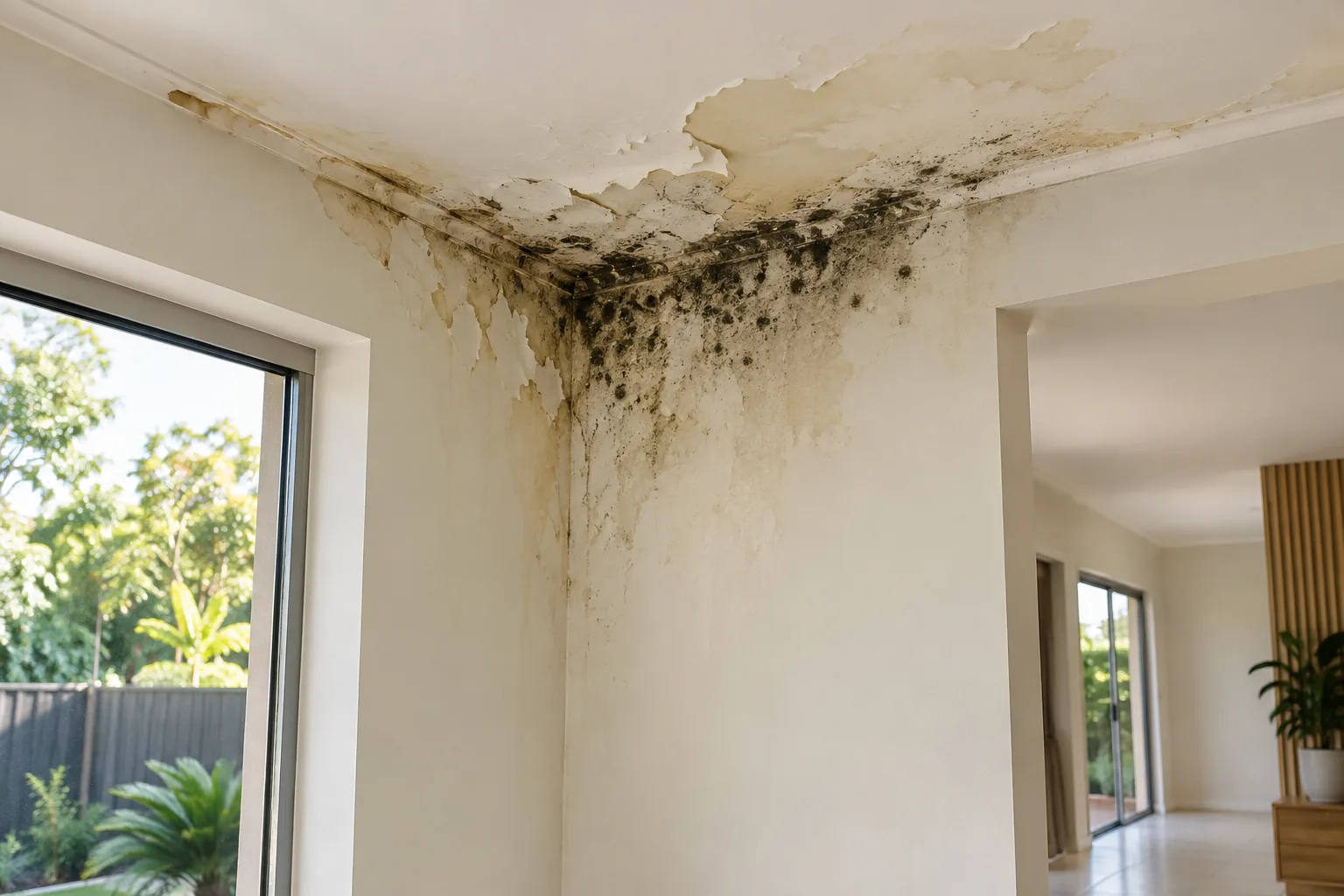
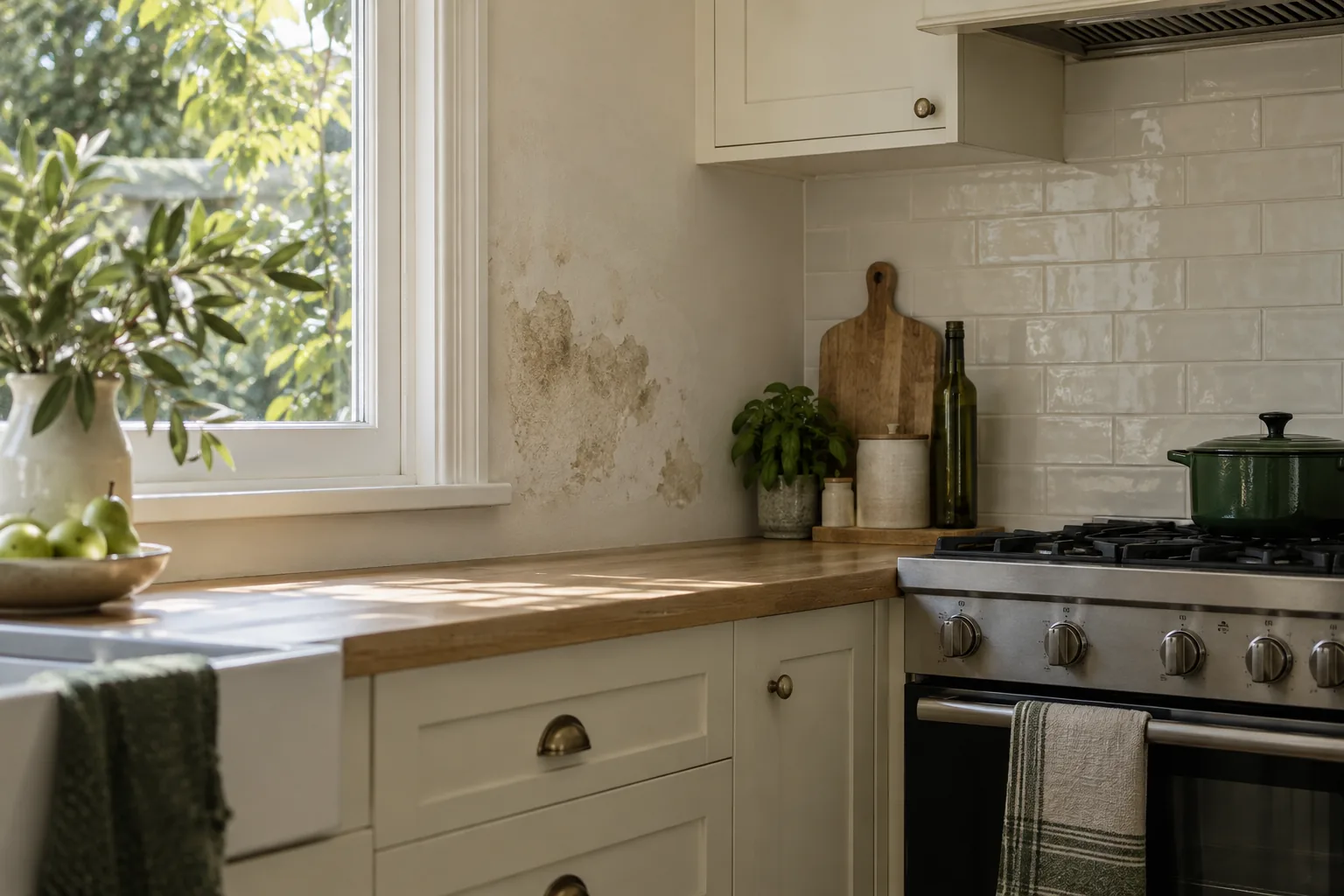
A close-up photograph may show growth clearly while leaving the room, scale and access uncertain. If that is the starting point for a Laurimar area enquiry, add the full postal address and a description of the exposed finish. The useful next step is to define the requested structural surface rather than treating the photograph as a complete scope or diagnosis.
The visible extent is described in context.
Access and finish details support the enquiry.
A photograph does not become hidden clearance.
TREATMENT & FOLLOW-THROUGH
UNDERSTANDING REMEDIATION
Add the room context to the close-up
Explain whether the image shows a wall, ceiling junction or another reachable finish, and identify anything outside the frame that blocks access. The confirmed remediation process needs a suitable accessible boundary. A photograph can introduce the concern but does not establish material condition, every affected section or what the technician can safely reach.
Use reliable extent and access descriptions rather than unscaled measurements. A wider image revealing another patch needs an updated request; unseen layers and contents remain outside scope.
THE MOISTURE CONNECTION
A photograph records appearance rather than ongoing water
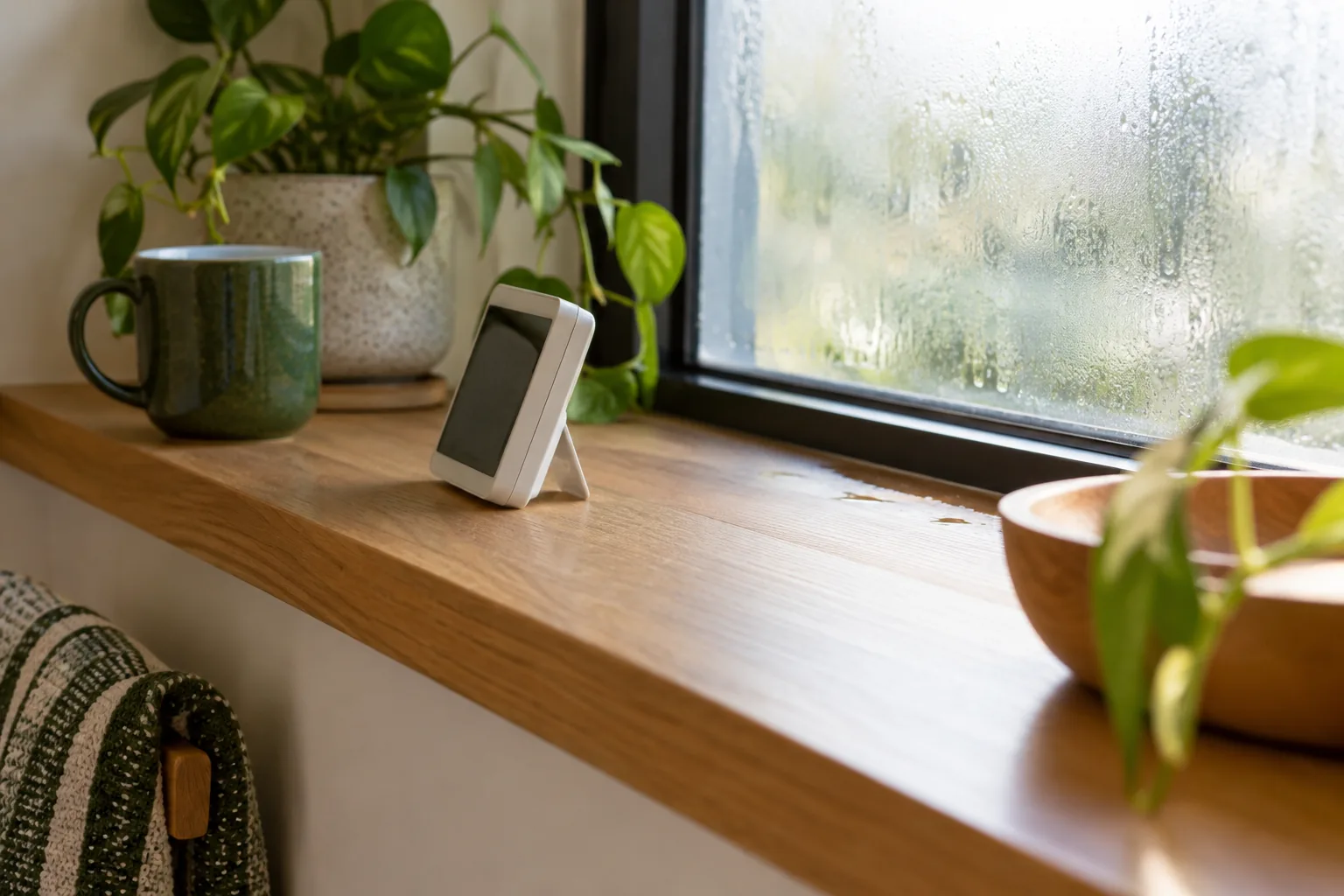
Describe water or condensation you have actually observed, including reliable dates and separate repairs. The patch’s colour or outline is not a verified moisture diagnosis. You can discuss visible accessible assessment where the present condition needs clarification before treatment.
The professional hygrometer records relative humidity in room air, not moisture visible through an image or a percentage inside the wall. A reading also cannot reconstruct conditions before the photograph was taken. Have leaks and relevant building defects addressed by their appropriate providers. Suitable surface work does not promise that unresolved dampness cannot support another patch later.
PLAN · FILTER · TREAT · REMOVE · CONTINUE
Move from the pictured patch to an agreed surface
1
Confirm the visible boundary
Assess the reachable contamination and actual finish, relating the initial image to the room and agreeing any other requested exposed sections.
2
Begin air protection
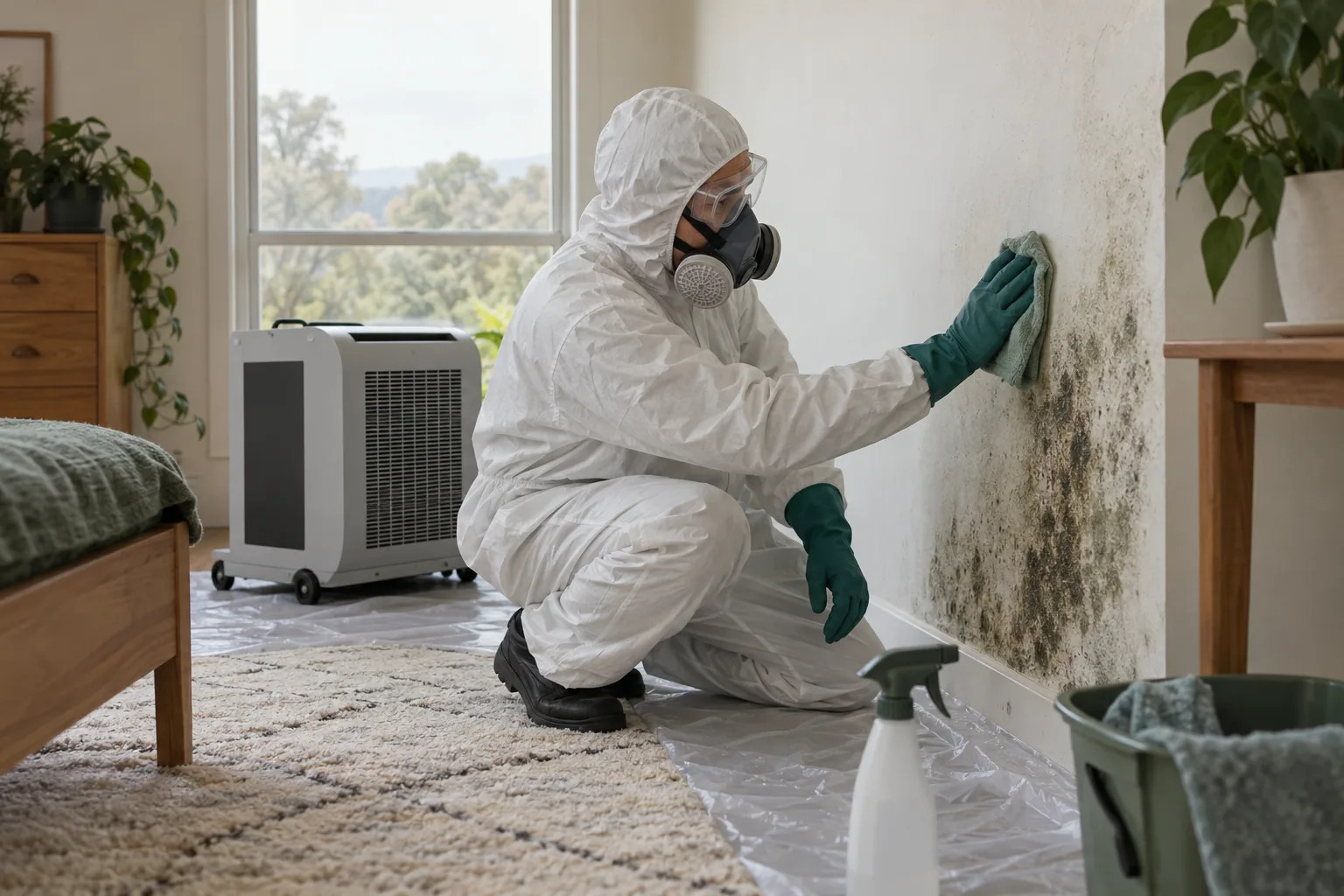
Set up the confirmed HEPA air scrubber before treatment in the prepared area; its operation is part of the job, not photographic or laboratory clearance.

3
Select appropriate application
Apply suitable HOCl treatment with ULV dry fog where appropriate, without assuming an image establishes identical suitability across unseen finishes.
4
Remove visible mould physically
Use professional H-class filtered equipment on the agreed reachable structural surfaces, keeping fabric, belongings and concealed layers excluded.
5
Continue air cleaning and explain completion
Maintain HEPA filtration during and after the process, then discuss actual return instructions and the surfaces included beyond the original photo.
Describe what each photograph actually shows
Walls
Identify the wall face, coating condition and wider extent instead of supplying only a tightly cropped patch.
Ceilings
A ceiling image needs room position and safe-access information, not just an apparent stain size.
Bathrooms
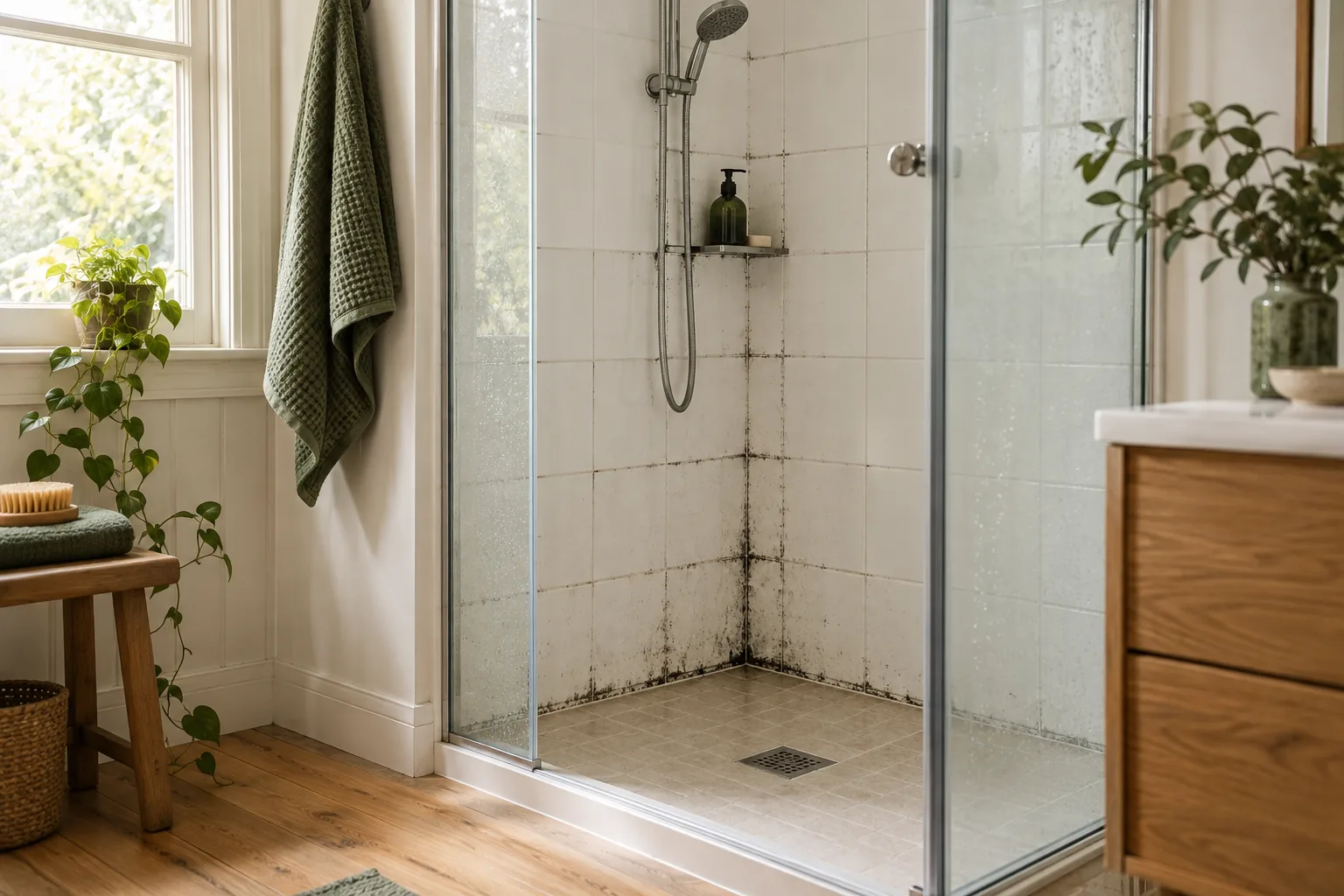
Distinguish tiles, painted walls and fittings in a bathroom photo; towels and mats remain outside treatment.
Kitchens
Name the exposed kitchen finish and fixed cabinetry that a close-up may leave out.
Accessible affected surfaces
Additional exposed structural sections must be described and agreed; a photo of one area does not establish hidden or contents coverage.
WHAT TO EXPECT
Clarify preparation before treating the photo as a booking
Give the precise Laurimar area address and intended room, then explain access outside the image. Ask which clearance is needed before attendance. People and pets leave the property during treatment, with specific return instructions supplied by the technician rather than inferred from the pictured patch.
Average source guidance is approximately three hours per room, dependent on size, contamination and accessibility. A small crop cannot establish a short appointment, hourly cost or universal return interval. Cosmetic staining can remain after treatment. Repairs and decoration are separately scoped, and no formal report or concealed-material certificate is confirmed.
FOLLOW THE MOISTURE
Keep later photographs useful without overstating them
After advised return, label a fresh image with the room, surface and date. Explain whether new water was observed or the appearance has changed. A photograph of an unchanged cosmetic mark should not be presented as proof of fresh growth, dryness or completion of a separate repair.
Include wider room context where it helps identify access.
Describe new moisture observations alongside later images.
Keep the photographed face distinct from hidden layers.
Quote the described extent rather than the crop
Provide accessible extent, finish and restrictions when asking about cost. Confirm the applicability of Mould Removal price examples to remediation; a close-up cannot establish the room category, an unconfirmed tariff or an allowance for material repair.
LAURIMAR · EXACT ADDRESS & ACCESS
Laurimar area and postal-address enquiries
Mernda and Doreen pages help navigate nearby property requests. Include the complete postal address for the Laurimar area interior and identify its room. A neighbourhood label or another property’s photograph cannot confirm availability, access or the scope for this enquiry.
Questions about remediation
Can a close-up establish the complete treatment scope?
No. Add the room, finish, visible extent and access restrictions so the requested work can be discussed accurately.
Should I estimate size from a photograph without scale?
Use an honest description rather than an invented measurement. Explain what is known and provide wider context if appropriate.
Does the colour identify the mould species?
No species testing is promised. The enquiry concerns current visible contamination and suitable accessible treatment.
What if a wider photo shows another patch?
Identify that area separately and have its inclusion agreed. It is not automatically covered by the first image.
Can a later photograph prove the lining is dry?
No. Appearance does not establish concealed or material moisture, and a room-air reading is a different observation.
What should accompany an image after treatment?
Give its date, exact surface and whether water or fresh growth was observed. Keep the described change separate from stable cosmetic staining.
Add the room details to the image
Call 03 8652 1296 with the Laurimar area address, photographed finish and wider access. Agree a practical visible-surface request before arranging preparation.