
SURFACE TREATMENT · MOISTURE FOLLOW-THROUGH
Mould Remediation Whittlesea
An affected hallway can be both the requested treatment area and the usual route through the property. For a Whittlesea enquiry, explain that layout before planning preparation. Agree the reachable walls or ceiling and the occupants’ departure arrangements; a passageway should not be booked as though routine access through active work is automatically available.
Passage access is discussed before attendance.
The actual exposed finishes define the scope.
Departure and return follow job-specific advice.
TREATMENT & FOLLOW-THROUGH
UNDERSTANDING REMEDIATION
A thoroughfare still needs a bounded treatment request
Identify the affected wall faces, ceiling section or exposed structural floor, including doorways and fixtures that restrict reach. The confirmed treatment process applies to agreed suitable visible contamination, not every room connected to the hallway. Explain separate room patches instead of including them through the passage’s location.
A narrow route does not establish brief work. Discuss fixed restrictions before clearing contents, with runners, textiles and concealed material remaining outside structural treatment.
THE MOISTURE CONNECTION
Give hallway observations their own locations
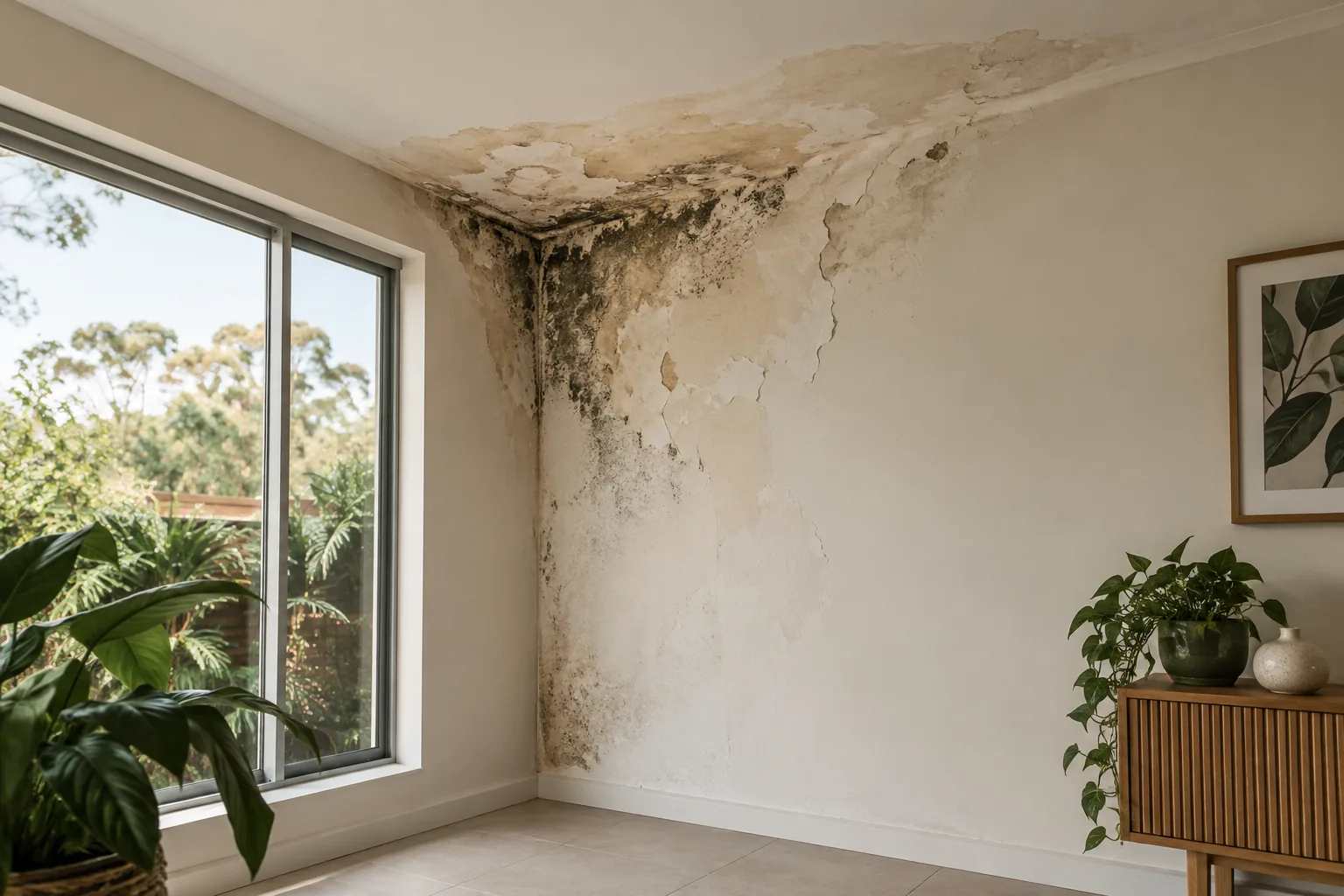
Report actual wetting near a doorway or ceiling and any condensation or known repair independently. The hallway’s position between rooms cannot identify the source by itself. A separate visible accessible inspection enquiry can clarify assessment where treatment requirements are still uncertain.
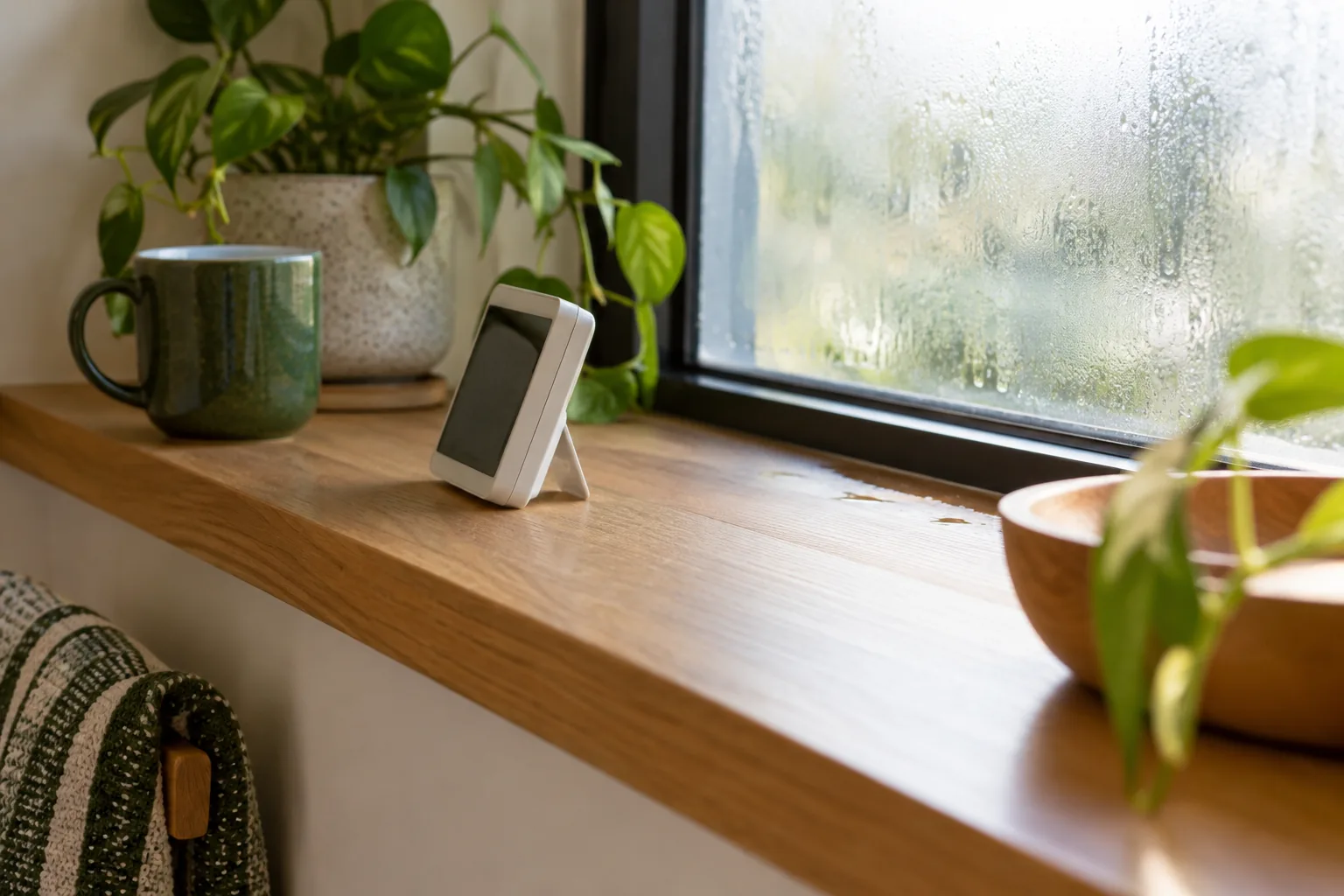
The professional hygrometer measures room-air relative humidity, not moisture beneath a runner or inside a wall. A reading from an adjoining room does not certify the passage’s materials dry. Relevant leak, plumbing or building repairs need their appropriate provider. Remediation should not be described as correcting those defects or guaranteeing that the connecting interiors remain unaffected forever.
PLAN · FILTER · TREAT · REMOVE · CONTINUE
Work on the agreed passage finishes
1
Assess the reachable hallway surfaces
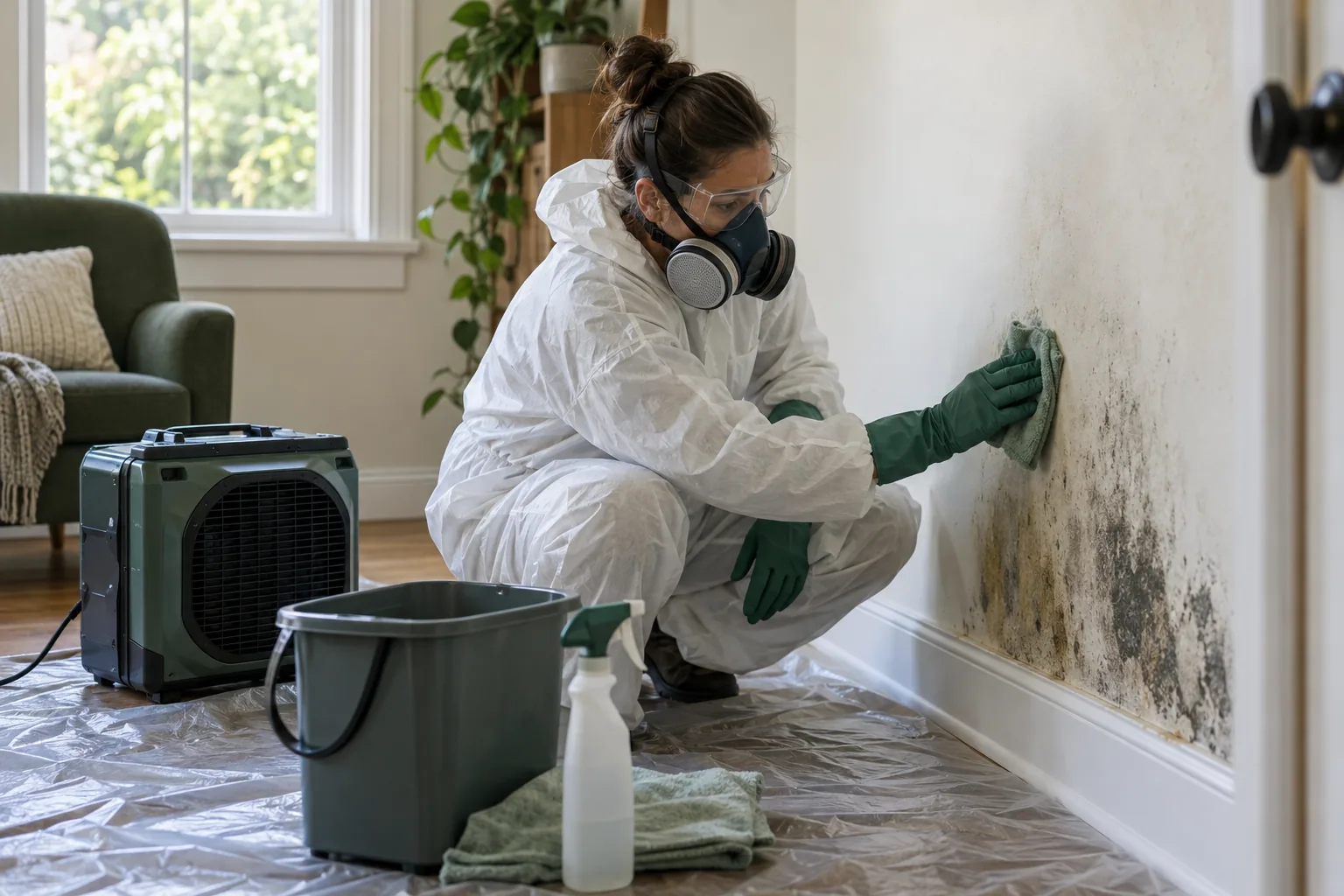
Identify visible contamination, material condition and passage restrictions, then agree the structural faces included rather than every connected room.
2
Set HEPA air protection
Begin the confirmed HEPA air scrubber before treatment after the work area is prepared, retaining the distinction between filtration and unrestricted passage access.

3
Select appropriate HOCl treatment
Apply suitable HOCl and use ULV dry fog where appropriate, without claiming that adjacent interiors or hidden wall sections receive automatic coverage.
4
Remove visible growth
Carry out physical removal using professional H-class filtered equipment on the reachable agreed finishes, excluding runners, textiles and fittings replacement.
5
Maintain filtration and explain re-entry
Continue HEPA air cleaning during and after the process, then provide actual return instructions and the bounded hallway result.
Specify the face rather than the route’s whole surroundings
Walls
Identify each hallway wall face and doorway edge requested, noting fixed fixtures that restrict reach.
Ceilings
Locate the passage ceiling contamination and explain visible water history without including roof-space access.
Bathrooms
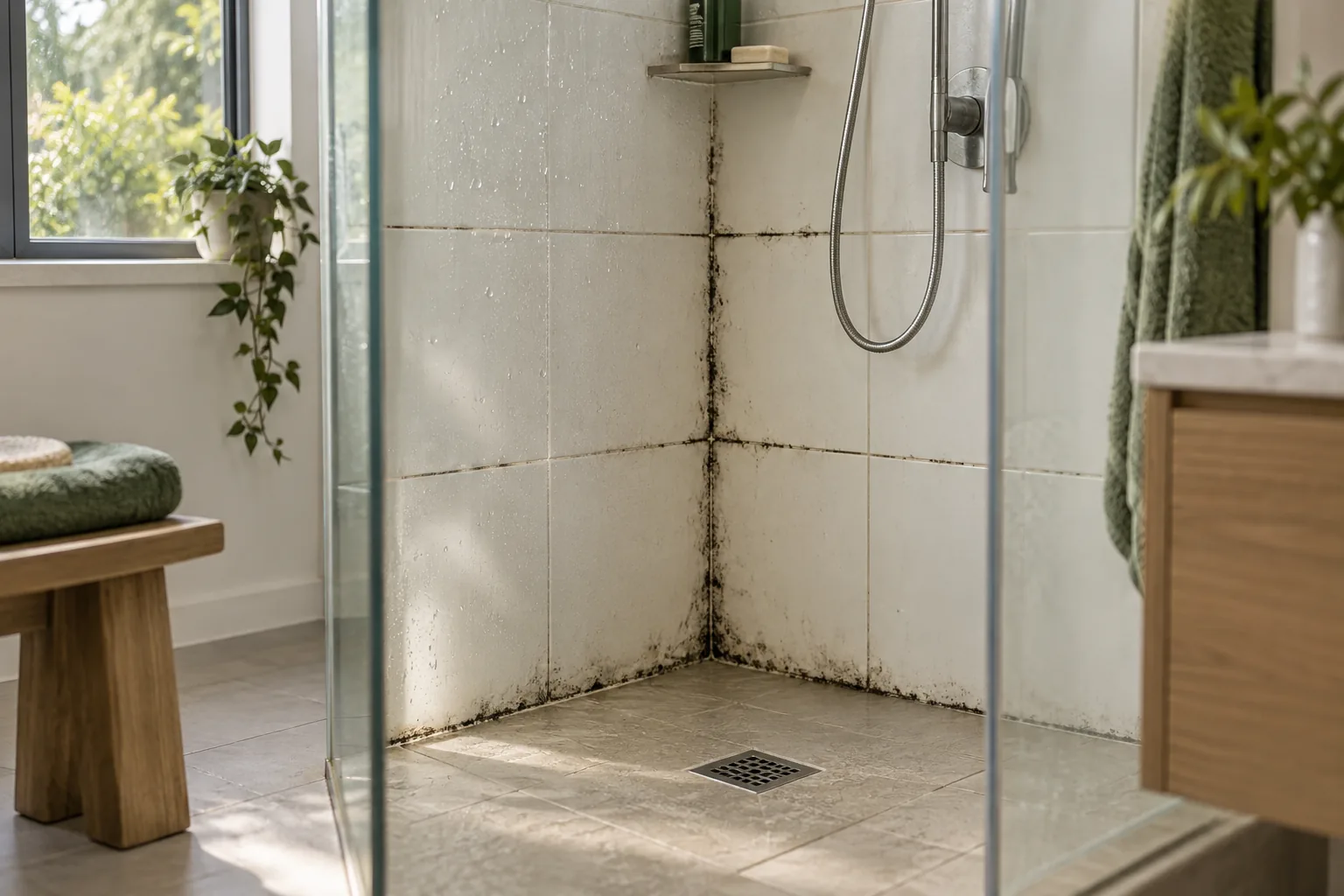
An adjoining bathroom needs its own structural request; proximity to the hallway does not include its textiles or fittings.
Kitchens
Kitchen patches require separate exposed-surface detail, not inferred treatment from the connecting doorway.
Accessible affected surfaces
Reachable structural passage sections can be agreed; runners, concealed faces and every adjacent room are not standard inclusions.
WHAT TO EXPECT
Plan departure before treating the access route
Explain how the hallway is normally used and ask about preparation before moving contents. People and pets leave the property during treatment; routine movement through the active work is not an established exception. Obtain the technician’s specific departure and return instructions for the actual arrangement.
Discuss timing for the proposed area rather than applying the room average mechanically to a small passage. The source gives average guidance subject to contamination, size and accessibility, and the service is not hourly based. Cosmetic stains may remain. Repairs, decoration and access to concealed layers stay separately scoped rather than assumed in a hallway booking.
FOLLOW THE MOISTURE
Follow new changes at the precise doorway or face
After the advised return, record where fresh water or growth appears rather than saying it is somewhere along the route. Complete relevant repairs and distinguish an unchanged cosmetic outline from renewed contamination. A later patch in an adjoining room needs its own description before any further work is selected.
Name the wall, ceiling or doorway when reporting a change.
Keep adjacent-room concerns separate from the treated passage.
Record renewed water and any appropriate repair follow-through.
Quote the passage’s actual affected extent
Explain exposed finishes, passage restrictions and any separately requested room when discussing cost. Confirm applicability of the published Mould Removal guidance to remediation; do not infer an hourly hallway rate, universal room category or inclusion of every connecting interior.
WHITTLESEA · EXACT ADDRESS & ACCESS
Whittlesea premises and neighbouring requests
Eden Park and Mernda pages provide nearby navigation for other property enquiries. For Whittlesea work, identify the particular hallway and actual address. A similar passage elsewhere cannot establish preparation, timing or the surfaces included here.
Questions about remediation
Can occupants keep walking through the hallway during treatment?
No routine passage exception is confirmed. People and pets leave the property and follow the technician’s actual arrangements.
Does treating the hallway include rooms opening onto it?
Not automatically. Each requested room and reachable surface needs its own inclusion agreed.
Is the runner treated as part of the floor?
No. Carpet runners and other textiles are excluded; identify any exposed structural floor separately.
Will a small passage always follow the three-hour room average?
No fixed duration should be inferred. Discuss the actual area, contamination and access instead of applying average guidance mechanically.
Can a nearby room reading clear the hallway wall?
It cannot certify that wall’s material condition. Keep measurements tied to where they were taken.
How should a new mark near a doorway be reported?
Identify the exact face, reliable date and any water observation. Distinguish the new concern from an unchanged stain or an adjacent room outside scope.
Explain the passage and exposed surfaces
Call 03 8652 1296 with the Whittlesea hallway, access route and visible contamination. Agree preparation, departure and the actual structural treatment.