
VISIBLE SURFACES · THOUGHTFUL RESTORATION
Mould Remediation Junction Village
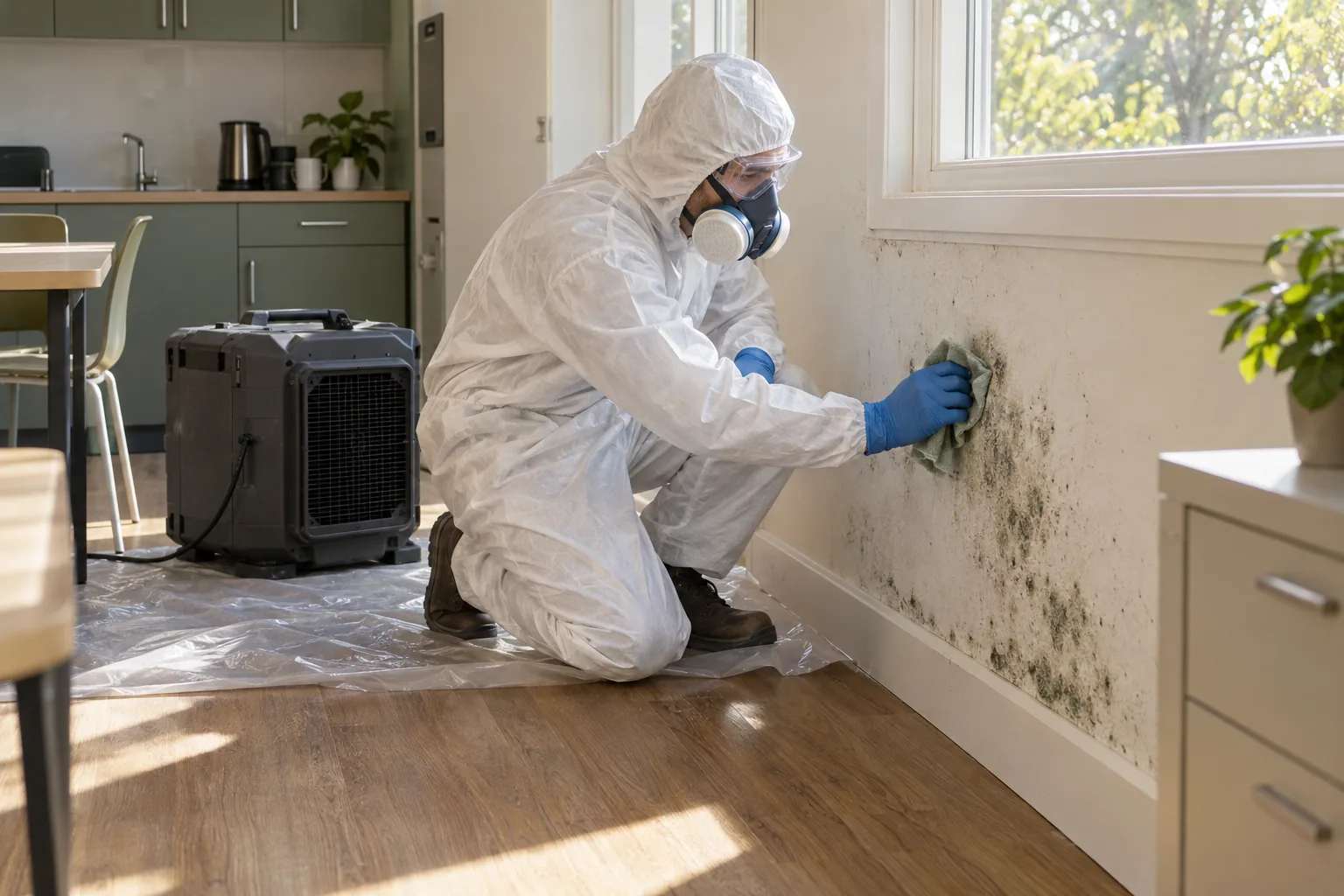
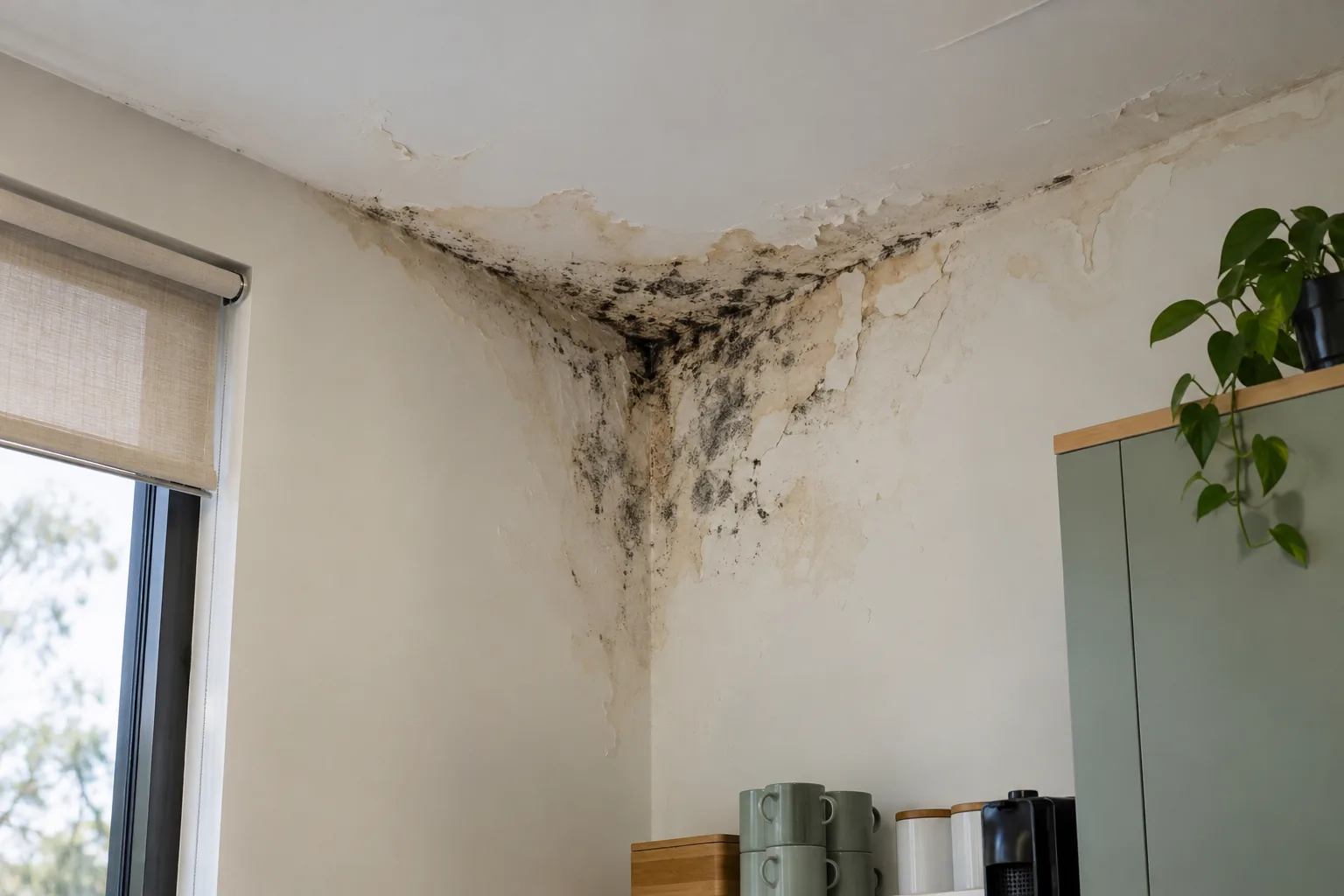
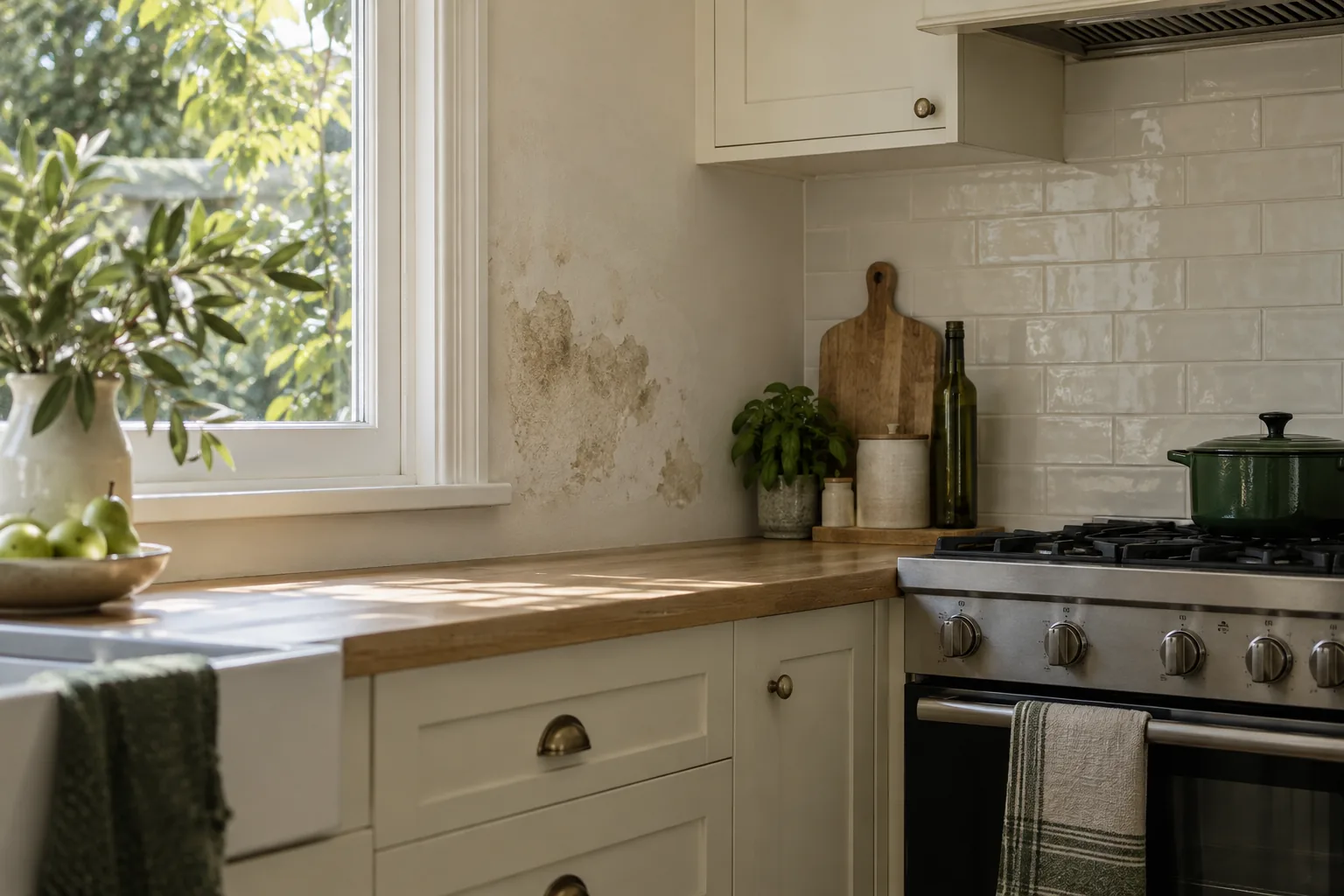
If a patch looks pale, dark or mixed in colour, describe that appearance without turning it into a species or severity finding. For a Junction Village enquiry, identify the exposed finish, current extent and access. The treatment decision concerns suitable visible contamination, not a colour-based promise about hidden material or the household’s health.
ASSESS · FILTER · RESTORE
Appearance is recorded without species claims.
Finish and access guide suitable work.
Cosmetic expectations stay realistic.
Colour is an observation rather than the treatment boundary
Name the structural surface and whether its coating is sound or damaged, separating visible growth from any older unchanged stain. The confirmed process concerns suitable reachable contamination. A darker or lighter patch cannot establish the condition behind a lining or make every face in the room included.
Do not disturb the finish simply to compare colours below it. Discuss preparation first. Concealed cavities and backing remain outside standard work, while furniture and textiles are excluded. Another affected structural section needs agreement rather than being folded into one colour description or an assumption that all stains receive identical treatment.
Relate appearance to actual water observations
Provide reliable condensation, wetting and repair history separately from the patch’s colour. The outline or shade cannot identify a particular source on its own. A separate visible accessible inspection enquiry can clarify assessment before treatment where current condition remains uncertain.
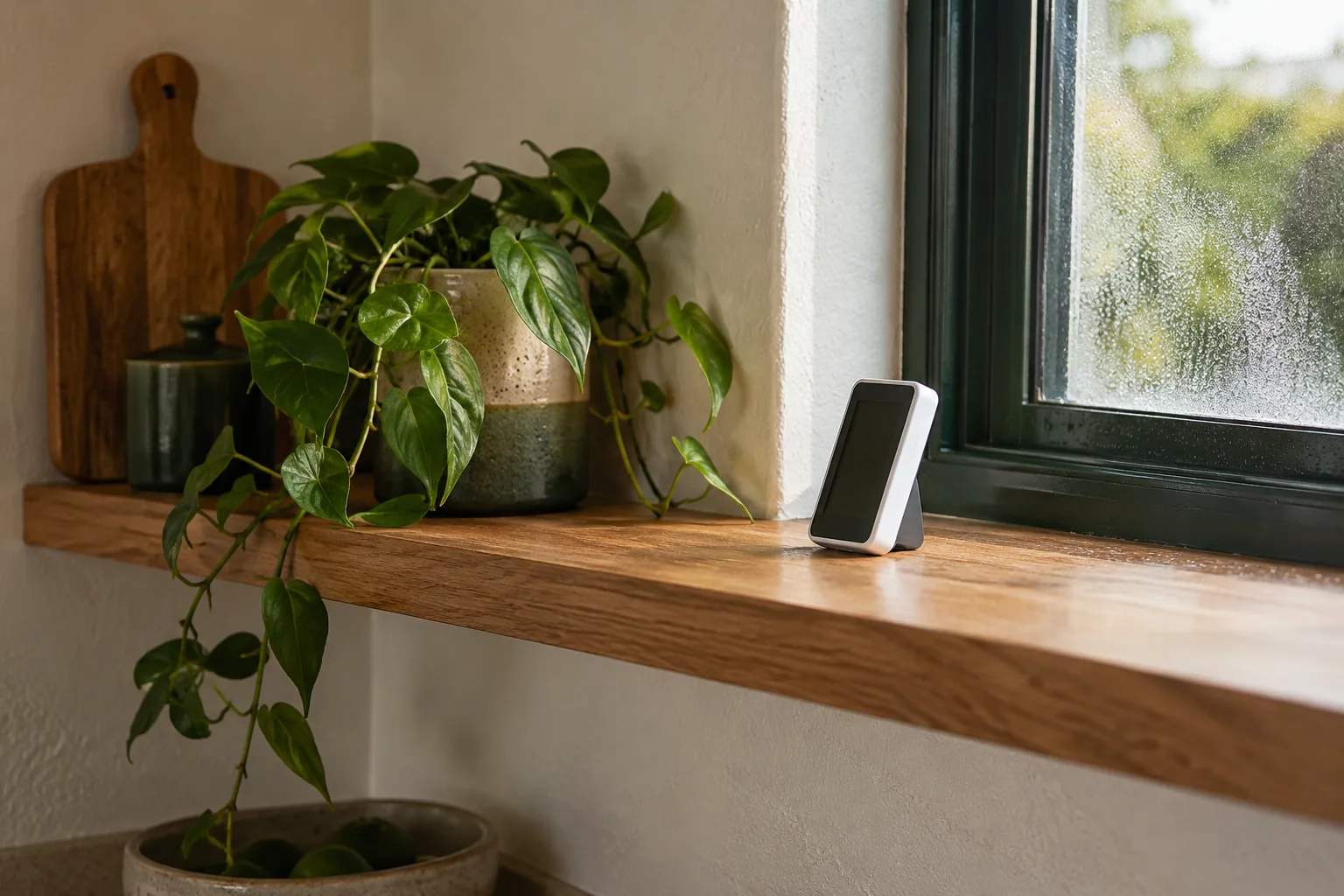
The professional hygrometer measures room-air relative humidity, not species, toxin levels or material moisture behind the exposed finish. It cannot classify a stain as harmless or prove a cavity dry. Relevant leak and building repairs require appropriate providers. Practical ventilation and source correction support follow-through without a guarantee that continued dampness cannot support renewed growth.
PLAN · FILTER · TREAT · REMOVE · CONTINUE
A surface-based sequence without colour diagnoses
1
Assess the present exposed condition
Review visible accessible contamination and finish condition, distinguish reported changes from cosmetic colour and agree suitable structural scope.
2
Set up protective HEPA filtration
Begin the confirmed HEPA air scrubber before treatment in the prepared area, without describing filtration as species identification or a laboratory result.

3
Choose appropriate application
Use suitable HOCl with ULV dry fog where appropriate, retaining material suitability rather than selecting an unconfirmed package from patch colour.
4
Physically remove visible growth
Use professional H-class filtered equipment on the agreed reachable contamination, excluding contents and hidden layers regardless of their assumed appearance.
5
Continue air cleaning and explain cosmetic limits
Maintain HEPA filtration during and after the process, then discuss actual return advice and any residual cosmetic outline on included finishes.
Describe location and material alongside appearance
Walls
Identify the affected wall face and coating condition without treating shade as proof of concealed extent.
Ceilings
A ceiling mark needs its own changes, water history and safe reach rather than a colour diagnosis.
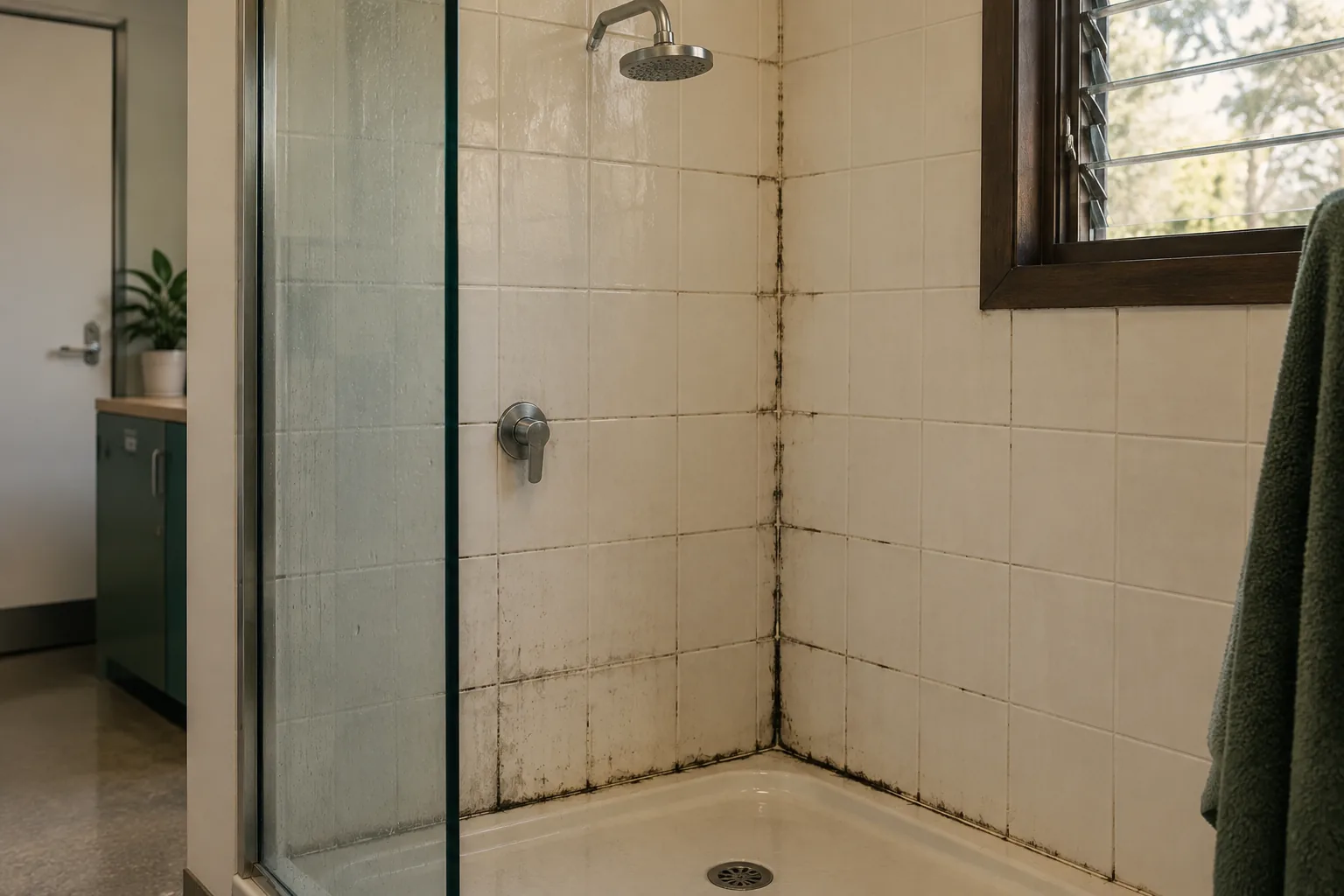
Bathrooms
Bathroom structural patches are distinguished from cosmetic joint marks, fitting repairs and excluded textiles.
Kitchens
Name reachable kitchen finishes without extending treatment to coloured marks on utensils or appliances.
Accessible affected surfaces
Other exposed structural sections need inclusion agreed; appearance alone does not include furnishings or hidden backing.
WHAT TO EXPECT
Confirm preparation before altering the patch
Provide the Junction Village room, visible condition and fixed restrictions, then ask what clearance is appropriate. Arrange for everyone and pets to leave during treatment, with actual departure and return advice obtained from the technician rather than inferred from the patch’s appearance. A colour description cannot establish occupied application or an early return exception.
Average source guidance is about three hours per room, varying with size, contamination and accessibility. It is not an hourly species-testing task or a guaranteed cosmetic makeover. Staining may remain, while decoration and repairs require separate scope. No signed lab, material-dryness or health clearance is confirmed.
FOLLOW THE MOISTURE
Record fresh changes instead of judging by shade alone
After advised return, note new growth or water with its exact surface and reliable timing. Keep an unchanged cosmetic outline distinct from those observations and complete relevant repairs. A different colour in another area needs its own description before further work is assumed included.
Record actual changes alongside photographs of appearance.
Keep species and hidden-material conclusions outside the surface result.
Follow moisture repairs independently of cosmetic decoration.
Quote the actual surface rather than a colour category
Give visible extent, material and access when discussing cost. Confirm how Mould Removal pricing examples apply to remediation; they do not establish species-specific tariffs, laboratory classification or guaranteed removal of every cosmetic mark.
JUNCTION VILLAGE · EXACT ADDRESS & ACCESS
Junction Village and neighbouring appearance enquiries
Cranbourne and Clyde pages help navigate nearby property requests. At the Junction Village address, identify the actual finish and visible change. A similarly coloured patch elsewhere cannot determine species, cause or treatment suitability here.
Questions about remediation
Can patch colour identify the mould species?
No species identification is promised. Describe appearance as an observation rather than a laboratory finding.
Does a pale patch mean no treatment is needed?
Colour alone does not settle the condition. Explain current visible growth, finish and changes before suitable work is discussed.
Will the method be chosen from colour alone?
No colour-based package is confirmed. Material condition, accessible scope and suitability need their own assessment.
Can the hygrometer classify a dark stain?
No. It measures relative humidity in air, not species, activity or moisture within the stain’s backing.
Should I scrape underneath to compare shades?
Do not assume disturbance is preparation. Describe the exposed finish and ask about the appropriate sequence first.
What if colour remains after the visible growth is treated?
Discuss stable cosmetic discolouration separately from fresh water or growth. Complete cosmetic restoration is not guaranteed.
Describe the visible change and exposed finish
Call 03 8652 1296 with the Junction Village surface, extent and access. Agree suitable treatment without converting colour into an unsupported diagnosis.