
VISIBLE SURFACES · THOUGHTFUL RESTORATION
Mould Remediation Clyde
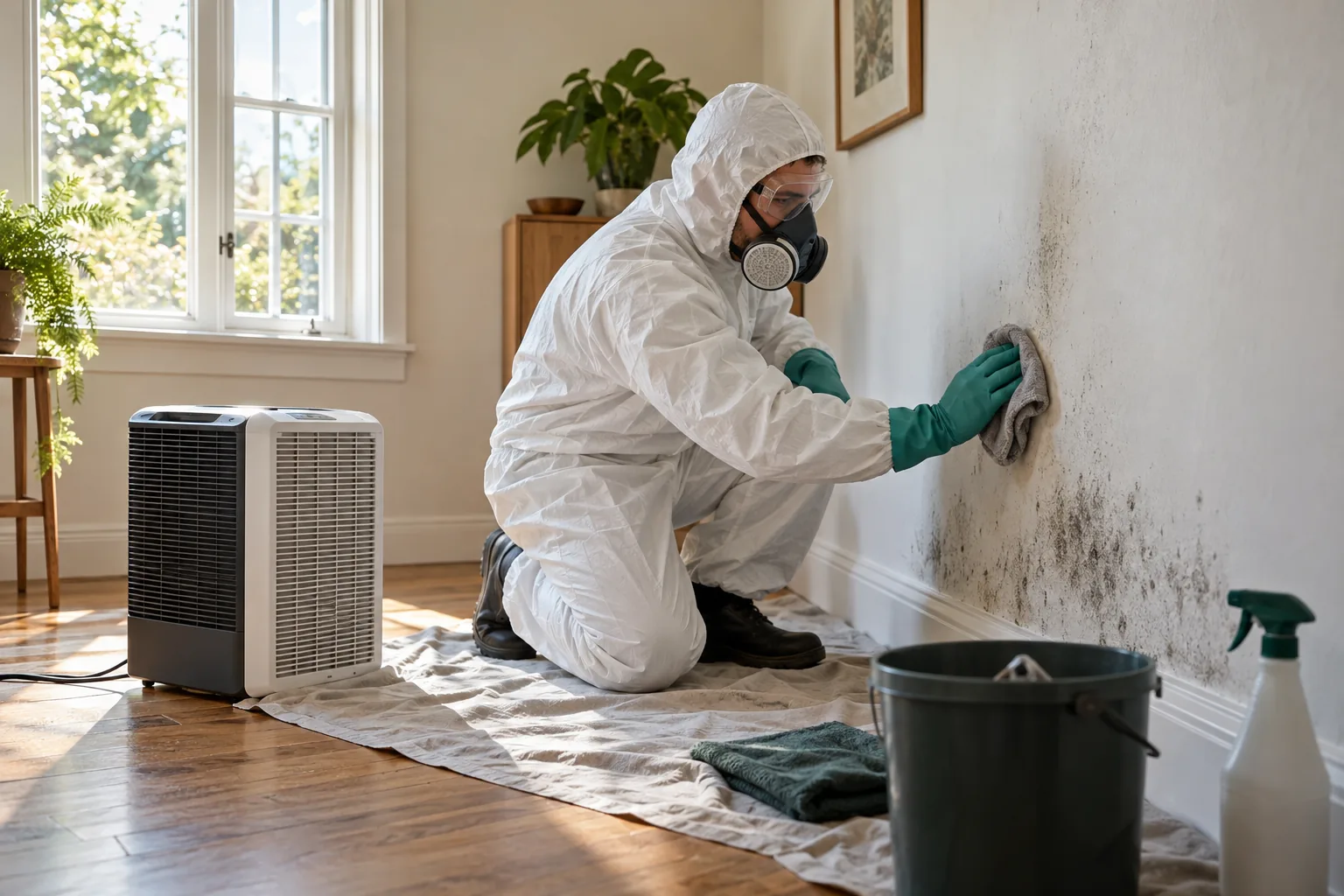
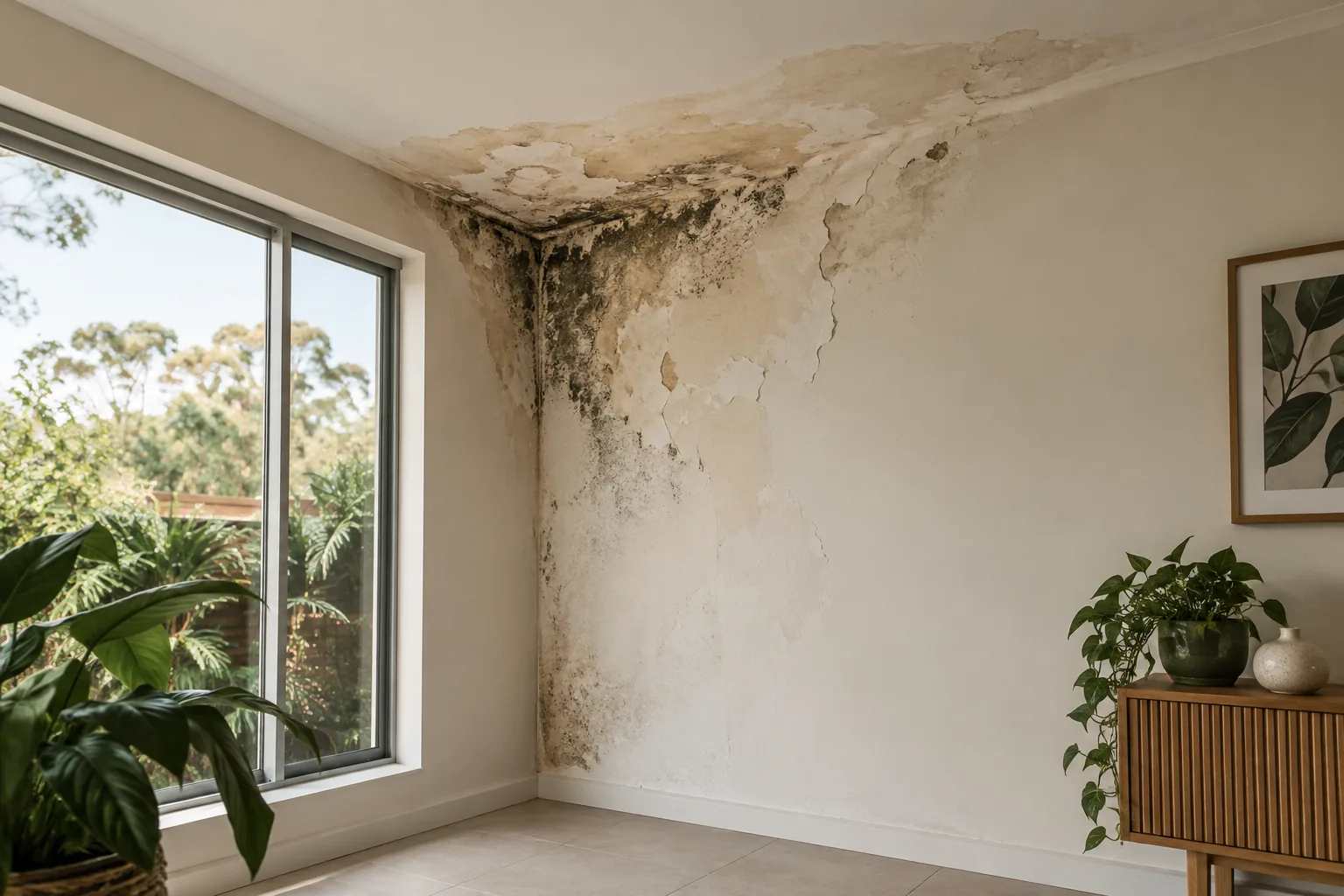
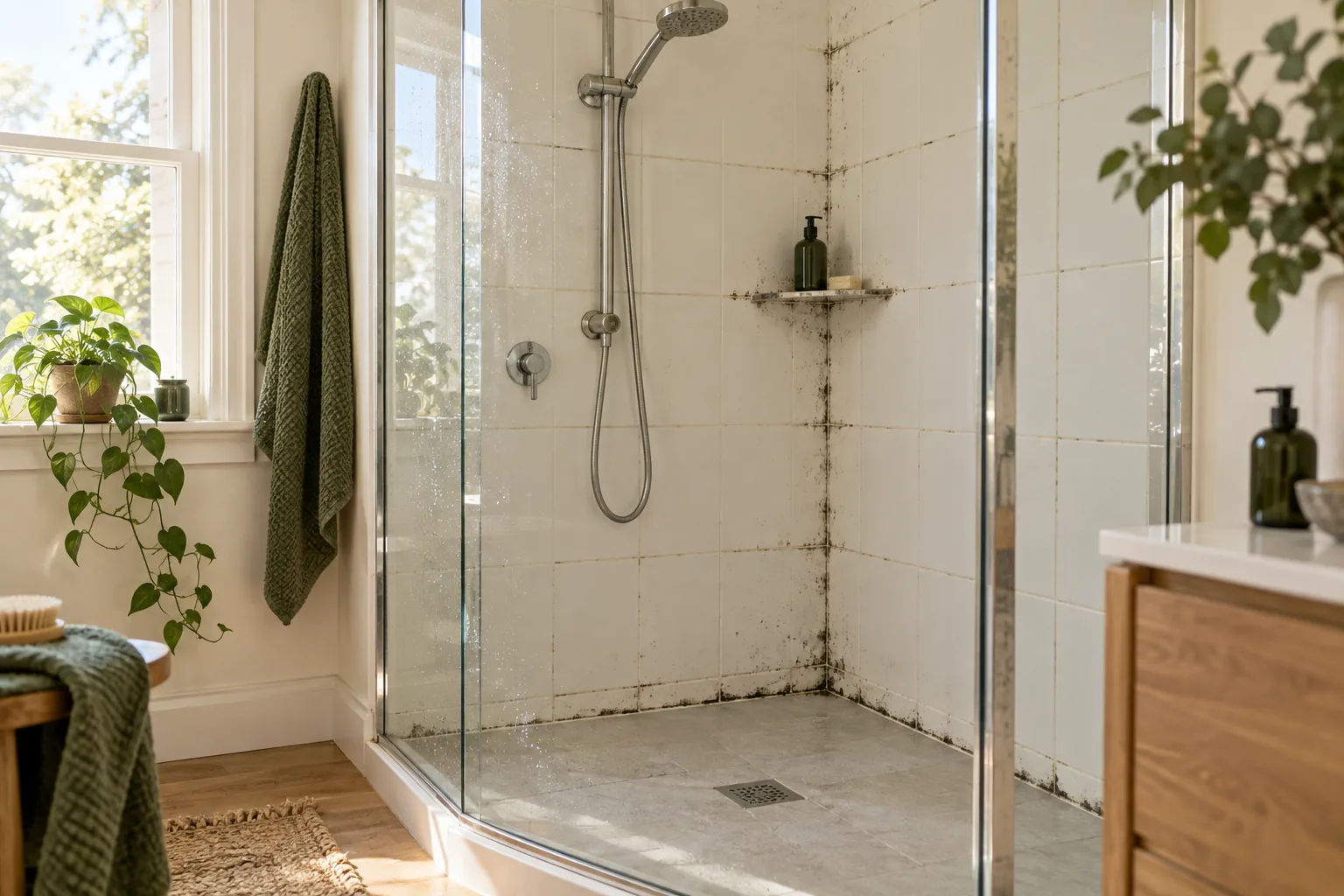
If bathroom joints have been renewed but growth remains on an exposed wall or ceiling, describe the remaining structural concern independently. For a Clyde enquiry, explain what was repaired and what is visible now. A new joint cannot establish that all contamination, concealed material or moisture sources have been addressed.
ASSESS · FILTER · RESTORE
Remaining surfaces are identified separately.
Joint repair and remediation stay distinct.
Current observations guide suitable scope.
Renewed joints do not define the remaining treatment
Name the wall, tile face or ceiling section requested, its current condition and reachable extent. The confirmed remediation process concerns suitable accessible contamination. It is not a warranty check on earlier joint work or automatic approval of the bathroom’s waterproofing.
Keep further joint replacement and decoration separately scoped. Hidden backing, cavities and insulation remain outside standard treatment, with towels, mats and other textiles excluded. If a later repair opens another contaminated face, have that new section assessed and included rather than extending the original exposed-surface result through the bathroom layers.
Describe water after the repair accurately
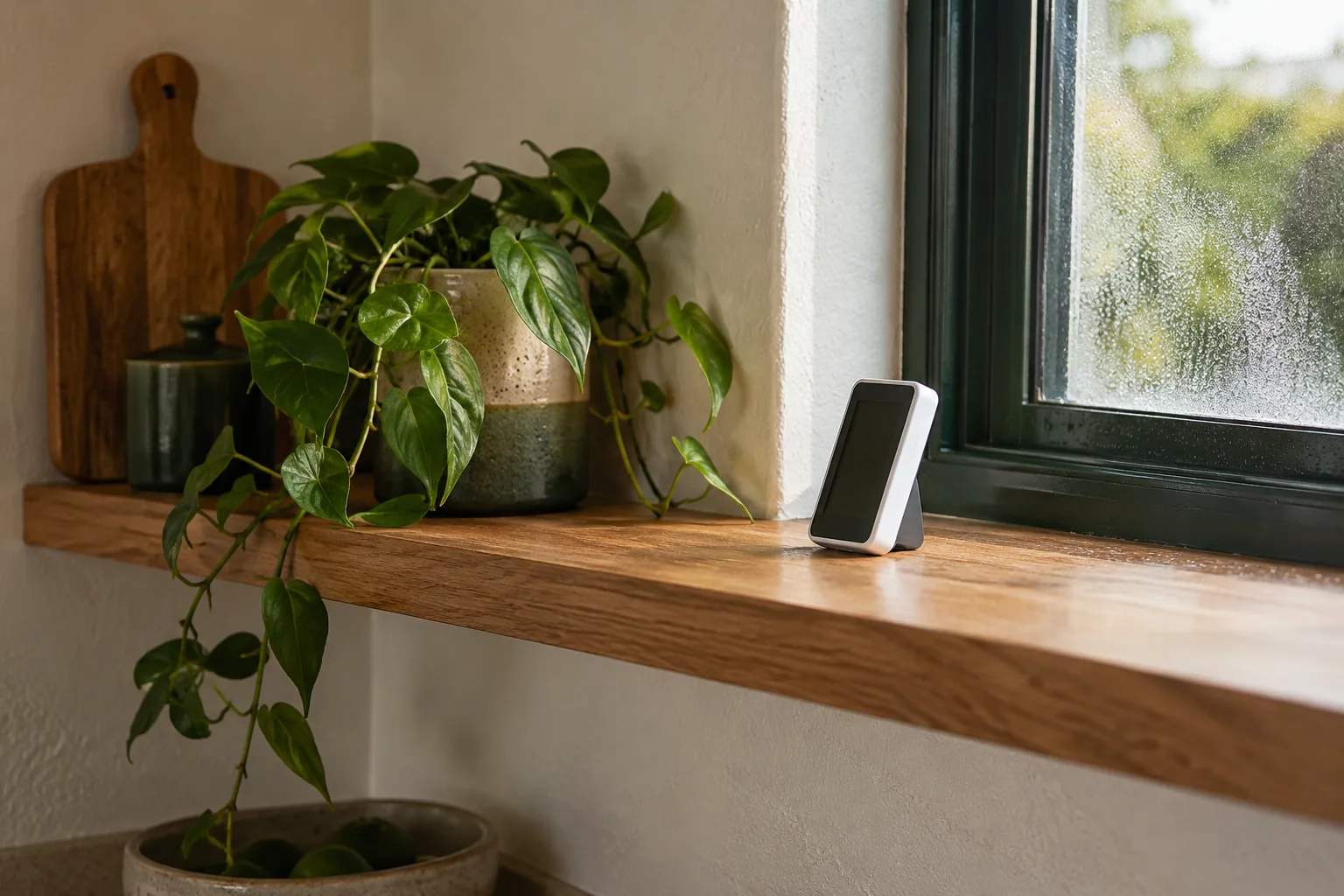
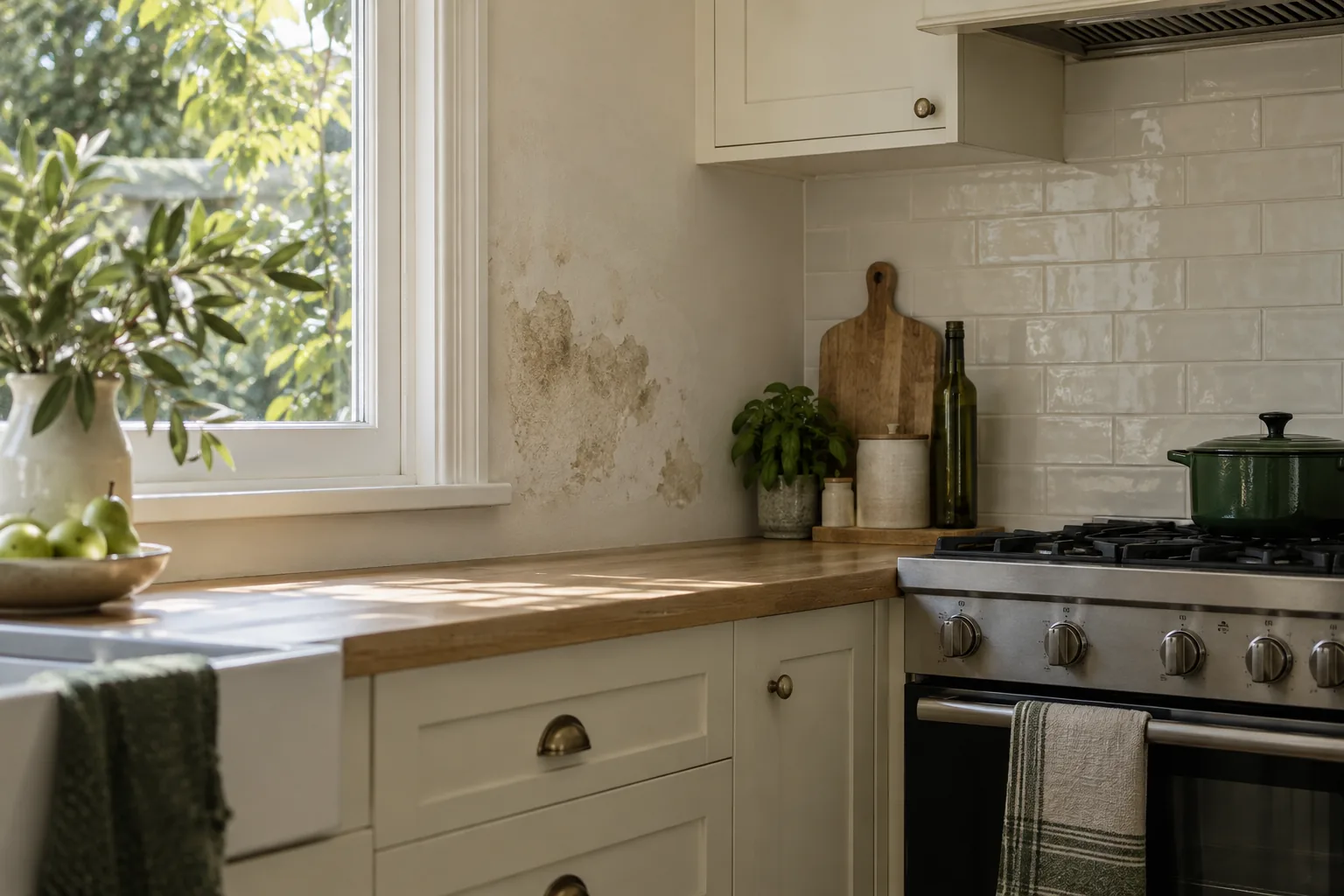
Give reliable dates and say whether water, condensation or changed growth has been observed since the joint work. The new appearance of a seal does not settle every moisture question. A separate visible accessible inspection enquiry can clarify assessment if present condition is uncertain.
The professional hygrometer measures relative humidity in room air, not moisture behind tiles or performance of a repaired joint. It cannot certify waterproofing or plumbing. Relevant defects require their appropriate repair providers. Practical ventilation and source correction support follow-through, without a guarantee that visible treatment prevents recurrence under continuing damp conditions.
PLAN · FILTER · TREAT · REMOVE · CONTINUE
Treat the current exposed contamination
1
Assess the remaining surfaces
Review visible accessible growth and finish condition, discuss the completed joint work and agree suitable structural sections still requiring treatment.
2
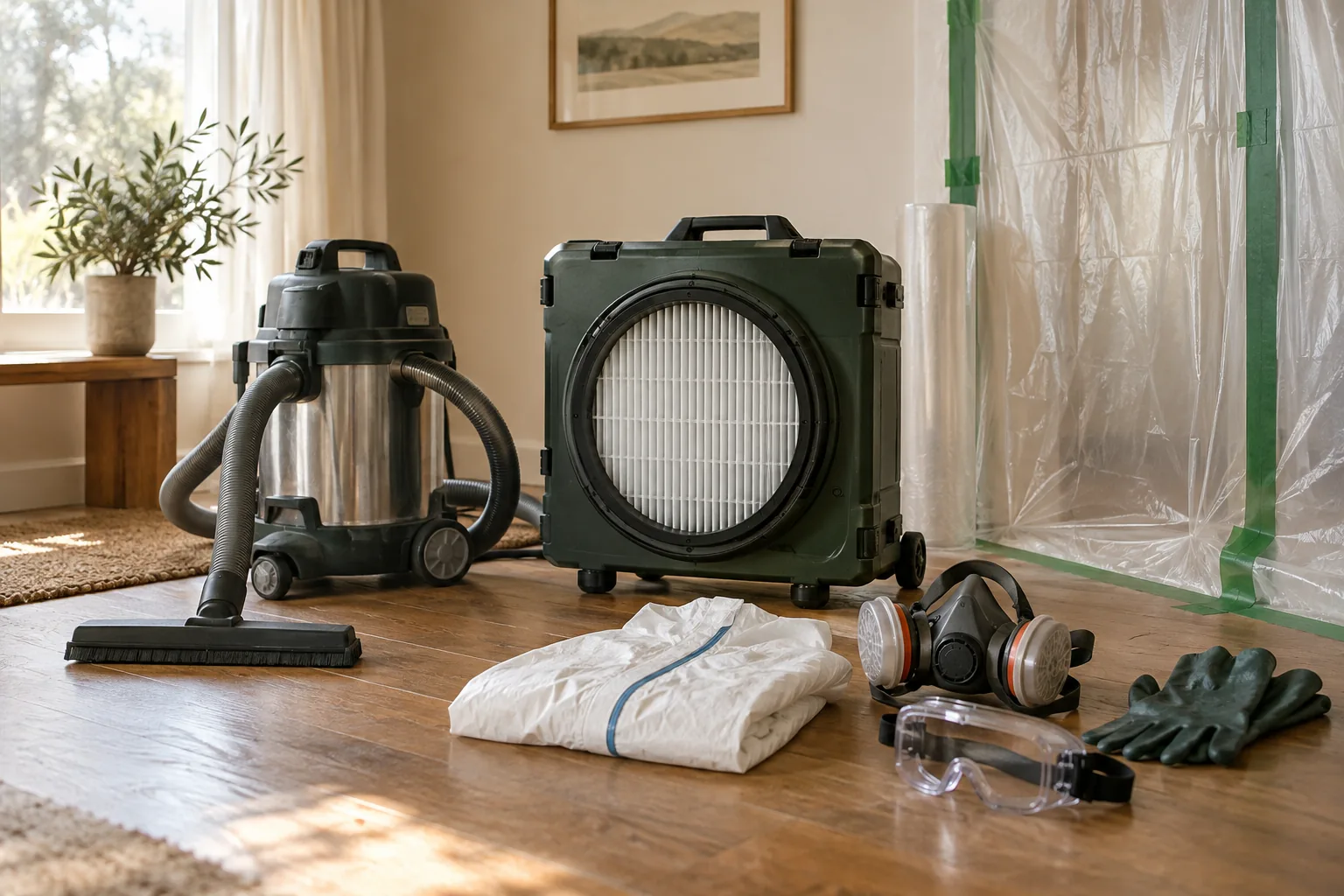
Begin HEPA air protection
Set up the confirmed HEPA scrubber before application in the prepared bathroom area, without describing air cleaning as verification of the repaired seal.
3
Apply appropriate HOCl treatment
Use suitable HOCl with ULV dry fog where appropriate, retaining material and hidden-layer limits rather than assuming new joints establish universal suitability.
4
Physically remove visible mould
Use professional H-class filtered equipment within the agreed reachable scope, keeping joint replacement, waterproofing repairs and textiles separately excluded from assumptions.
5
Continue filtration and explain the actual result
Maintain HEPA air cleaning during and after the process and discuss return advice, cosmetic marks and any separate repair question outstanding.
Structural faces beyond the renewed joint
Walls
Describe remaining wall contamination and coating condition separately from the appearance of nearby joint work.
Ceilings
A ceiling patch needs its own safe reach and inclusion, not presumed clearance from a repair lower in the room.
Bathrooms
Reachable bathroom structural surfaces can be discussed without warranty or waterproofing-performance promises.
Kitchens
Kitchen finishes need their own request, distinct from bathroom repairs and contents cleaning.
Accessible affected surfaces
Other exposed structural sections require agreement; concealed backing and excluded fabrics are not included through a repaired joint.
WHAT TO EXPECT
Discuss preparation and repair follow-through
Explain current finish and access before moving contents, and ask what clearance is needed. Do not remove new joint material as assumed preparation. People and pets leave during treatment and follow the technician’s specific departure and return advice rather than a waiting interval from the previous repair.
For the remaining bathroom faces, discuss actual timing using the approximate three-hour room average as guidance qualified by size, visible contamination and working access. It is not an hourly warranty inspection or guaranteed bathroom-ready deadline. Cosmetic stains can remain, while further repair and decoration need separate scope. No material probe, signed waterproofing or lab clearance result is confirmed.
FOLLOW THE MOISTURE
Follow fresh changes rather than the repair’s appearance
After advised return, record renewed water or growth on the actual surface and refer relevant repair concerns to the responsible provider. Keep a stable cosmetic mark distinct from new contamination. A later opened layer deserves an updated treatment request rather than an assumption of earlier inclusion.
Retain reliable dates for the joint work and subsequent wetting.
Keep source-performance questions separate from structural treatment.
Describe newly exposed contamination if another repair changes access.
Quote the remaining contamination work
Provide extent, material and prior repair context when discussing cost. Confirm applicability of Mould Removal price examples to remediation; they do not establish a joint-work warranty, waterproofing package or automatic inclusion of further repair.
CLYDE · EXACT ADDRESS & ACCESS
Clyde premises and neighbouring bathroom requests
Five Ways and Devon Meadows pages help navigate other nearby enquiries. At the Clyde address, describe what remains visible after the actual repair. A neighbouring bathroom’s joint work cannot establish this treatment suitability or moisture condition.
Questions about remediation
Does a renewed joint mean all bathroom mould was treated?
No. Describe the remaining exposed structural contamination separately from the specific repair completed.
Will remediation check the joint repair warranty?
No warranty service is confirmed. Keep performance questions with the responsible repair provider.
Can a hygrometer certify the repaired joint watertight?
No. It measures room-air relative humidity, not waterproofing or joint performance.
Should the new seal be removed before treatment?
Do not assume removal is preparation. Explain the current condition and discuss any separate access or repair first.
Is ceiling growth included through the earlier joint work?
Not automatically. Identify the ceiling section and have its suitable reachable extent agreed.
What if another repair exposes backing with growth?
Describe the newly visible material and agree additional scope. The original exposed-face treatment did not clear concealed bathroom layers.
Describe the growth remaining after the joint work
Call 03 8652 1296 with the Clyde surfaces, repair details and access. Agree suitable remediation without extending it into a warranty or waterproofing service.