
THE JOURNAL · MOISTURE RECORDS
How to Keep a Home Moisture Log That Helps a Mould Assessment
A moisture log is a short record of what is happening in a room: visible water, condensation, drying, humidity readings and the activities or weather around those observations. It can help explain a recurring patch that happens to look dry when someone visits. It is not a diagnosis and it does not replace repairs. The best log is simple enough to maintain and specific enough to show a pattern.
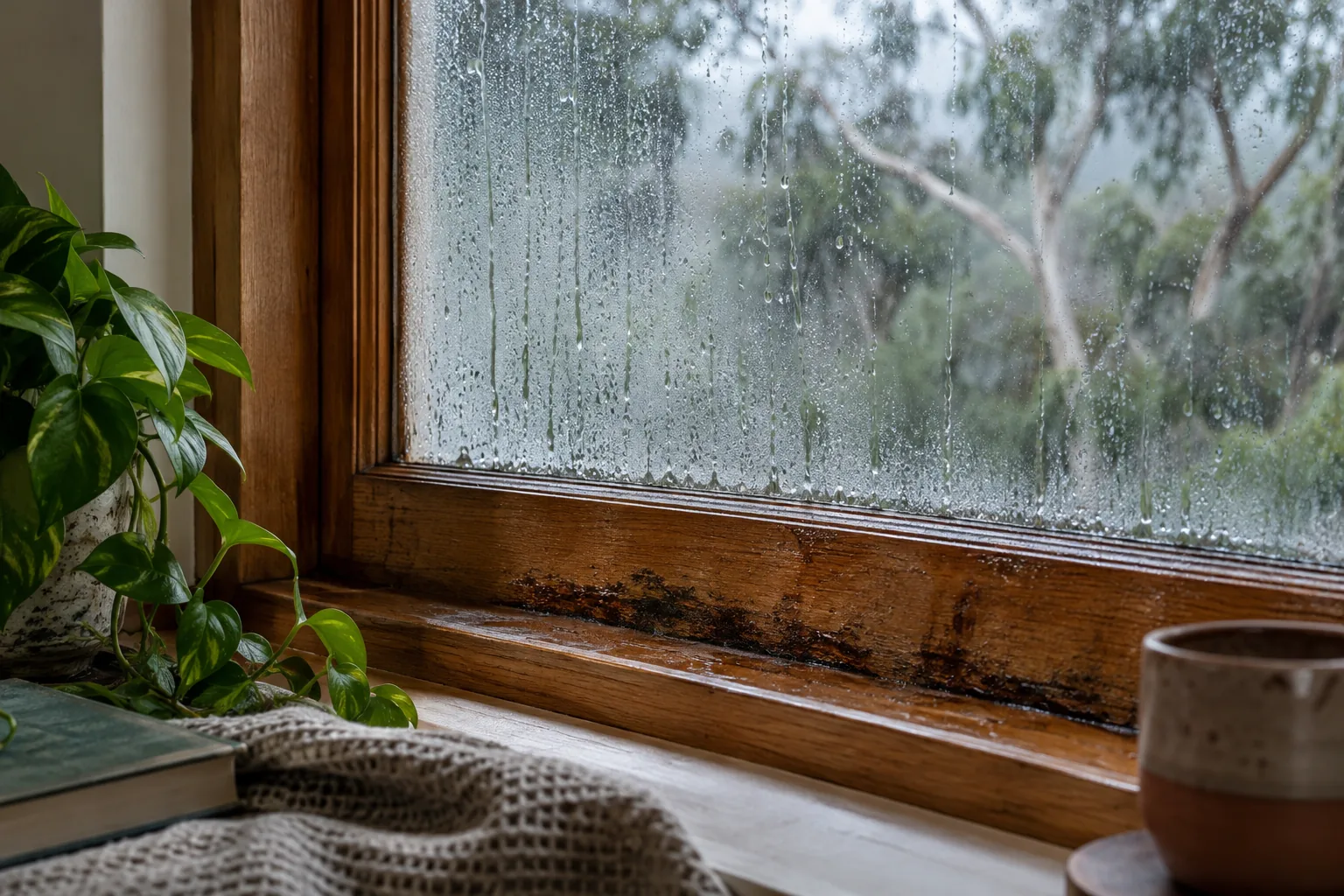
You can use a notebook, a phone note or a basic spreadsheet. You do not need a connected sensor system or an expensive meter to record useful observations. Start with what you can see safely and add room-air readings only if you have a suitable device. If there is active water entry, unsafe electrical equipment or a deteriorating ceiling, seek help immediately rather than waiting to collect more data.
Choose a clear question for the record
Define the issue you want to understand. Perhaps the bedroom window is wet every morning, a ceiling patch becomes darker after rain or mould returns behind a chest of drawers. Write that question at the top of the record. “When does the lower window sill remain wet?” is manageable. “Is my whole house safe?” is not something a household log can determine.
Choose the affected location and, if useful, one comparison location. Describe each position clearly so later readings come from approximately the same place. Avoid adding every room on the first day. A large collection of inconsistent readings can be less useful than a week of clear notes about one recurring problem. You can expand the record if an assessor asks for a particular comparison.
Identify what you will observe without disturbing materials. Visible droplets, wet towels, standing water in a track and changes in a stain are straightforward notes. Moisture inside a wall cavity is not something to infer from room air alone. Do not buy a probe and push it through finishes as a substitute for professional investigation. The record should preserve context and access rather than create holes or additional contamination.
Set up a few consistent columns
Use date, time, room or location, visible condition, room activity, weather and any instrument reading. Keep a comments column for changes such as fan repairs or a new drying arrangement. A single row can be brief: “Tuesday morning; bedroom sill; droplets and wet lower edge; normal overnight use; no rain observed.” You can add a photograph reference without attaching an image to every entry.
For numerical readings, record the unit and what the device measures. A relative humidity percentage in room air is not a material moisture percentage. If you write both types of reading without labels, someone reviewing the record may misunderstand them. Record temperature alongside relative humidity when available. Note the device model once so the assessor knows what sort of instrument produced the number.
Use ordinary language for appearance: dry to look at, visible droplets, darker stain, peeling paint or musty smell noticed on entry. Do not write “no mould” simply because no new marks appeared that morning. Do not write “leak repaired” unless the repair was actually completed and confirmed. The log is strongest when it separates observed conditions, actions taken and conclusions provided by a qualified person.
Place a hygrometer thoughtfully
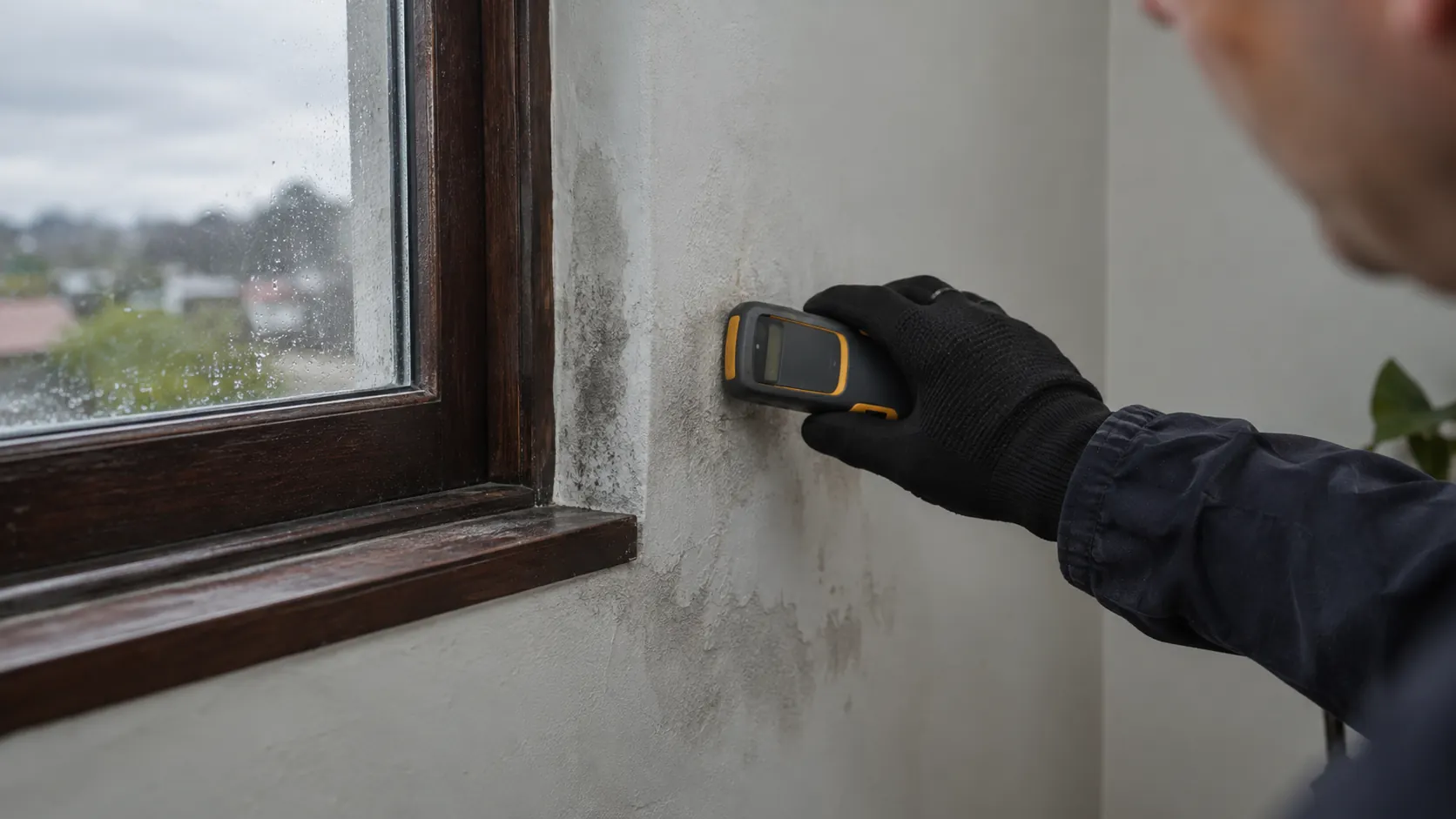
Follow the device instructions and choose a stable position away from direct sunlight, heaters, wet surfaces and the immediate airflow of an open window. Give the instrument time to settle after moving it, according to its guidance. Do not compare an instant reading beside a shower with one from a cool bedroom as if they represented the same conditions. Record where the device was located.
Household sensors have limitations. Two devices may show somewhat different readings, and a number on a display is not a certification of the building’s condition. Avoid becoming preoccupied with minor fluctuations. Look at trends alongside room use and visible moisture. The YourHome ventilation guide provides background on ventilation as part of a home’s overall moisture and comfort conditions.
Do not use a room-air reading to dismiss a wet wall. The room can feel comfortable while a local leak continues inside a building element. Equally, a high reading after a shower does not explain every mark in an adjoining bedroom. The useful question is how readings and observations change over time, and what further assessment is needed. For material concerns, describe the surface and history to the mould inspection service.
Record ordinary use before changing everything
For an initial period, observe the room under its normal routine. Note showering, cooking, clothes drying, heating and extraction without assigning blame. You are trying to understand conditions, not prove that an occupant caused mould. Include days when the room is used differently, such as a weekend with more people at home. If someone is away, record that too so a drier day is not misread as a successful repair.
Weather notes can be simple. Record rain that you observed, a particularly cold morning or outdoor conditions that prevented ventilation. Do not invent a rainfall total or historical climate claim. If accurate local weather data becomes important, an assessor can suggest an appropriate source. Your own observation is still useful when it is labelled as an observation rather than presented as a technical measurement.
Keep recording proportionate. Two planned checks a day may be enough for a morning condensation issue; an active leak needs prompt attention instead of hourly logging. Choose a routine that does not interfere with work, sleep or family life. If the process is becoming stressful, reduce it to photographs and a short summary. A log should support a property decision, not turn every change in the room into an alarm.
Change one manageable thing and note the result
Once you have a baseline, record any practical adjustment. Perhaps the drying rack moves to an agreed location, a fan is repaired or a curtain no longer rests against a wet sill. Write the date and the exact change. If several repairs occur together, list them rather than trying to attribute the result to one. Never delay a necessary repair to preserve a neat experiment.
Compare similar use where possible. A clear window after a warm day is not directly comparable with a wet window after a cold night. Note those differences instead of forcing a conclusion. The window condensation guide explains the importance of checking both the glass and the surrounding finish. You are looking for better drying and reduced water accumulation, not merely a more reassuring number on the sensor.
Do not create unsafe test conditions. Avoid intentionally leaving a leak running, switching off necessary ventilation or saturating a wall to see what happens. Do not aim fans at visible mould. If a professional is managing drying equipment, follow the agreed arrangement and ask before changing settings. Your log can record the equipment and progress without interfering with a controlled restoration process.

Summarise the pattern for an appointment
At the end of the observation period, write a short summary: where the problem occurs, when it is most noticeable, what was changed and whether the visible condition improved. Attach a few representative photographs and keep the full record available. A concise summary is easier to discuss than dozens of unlabelled screenshots. Include entries that do not fit the pattern so the assessor receives the whole picture.
List outstanding questions separately. For example, “water at the frame appears after rain, source unconfirmed” or “wall behind fixed wardrobe not accessible”. This prevents gaps in access from becoming assumptions. Ask which observations need another trade and whether additional moisture assessment would be useful. A log helps explain the enquiry; it does not expand an inspection’s scope to include concealed building areas automatically.
If growth returns after cleaning, include the cleaning date, product and approximate location, plus any subsequent repair. The recurring mould guide explains how that history supports reassessment. Avoid concluding that a particular cleaner failed when the moisture source remains unresolved. Equally, do not assume that a lower room humidity reading means a deteriorated finish can be retained without further advice.
Keep only the record you will actually use
Store the log with inspection notes and repair documents, then reduce the routine once the issue has been addressed appropriately. Periodic checks of the previously affected area can be enough unless new conditions appear. Keep dates and comparison photographs so future changes have context. If you share the record with a contractor, remove unrelated personal information and explain any access restrictions before the visit.
For an assessment enquiry, call 03 8652 1296 and describe the visible surface, the pattern you recorded and any active water issue. A few reliable observations can make the conversation much clearer. The purpose of keeping a moisture log is to help decide what to investigate and maintain next, while leaving instrument interpretation, building repairs and removal scope to the appropriate assessment.