
THE JOURNAL · REMOVAL PREPARATION
How to Prepare a Room for Professional Mould Removal
Preparing a room for mould removal is about safe access, clear agreements and protecting the work area. It does not mean removing the mould yourself before the contractor arrives. It also does not mean emptying a room without knowing which items can be moved safely. A useful preparation plan starts with the agreed scope and gives each person a clear responsibility. This guide explains the questions to ask and the practical arrangements to make.
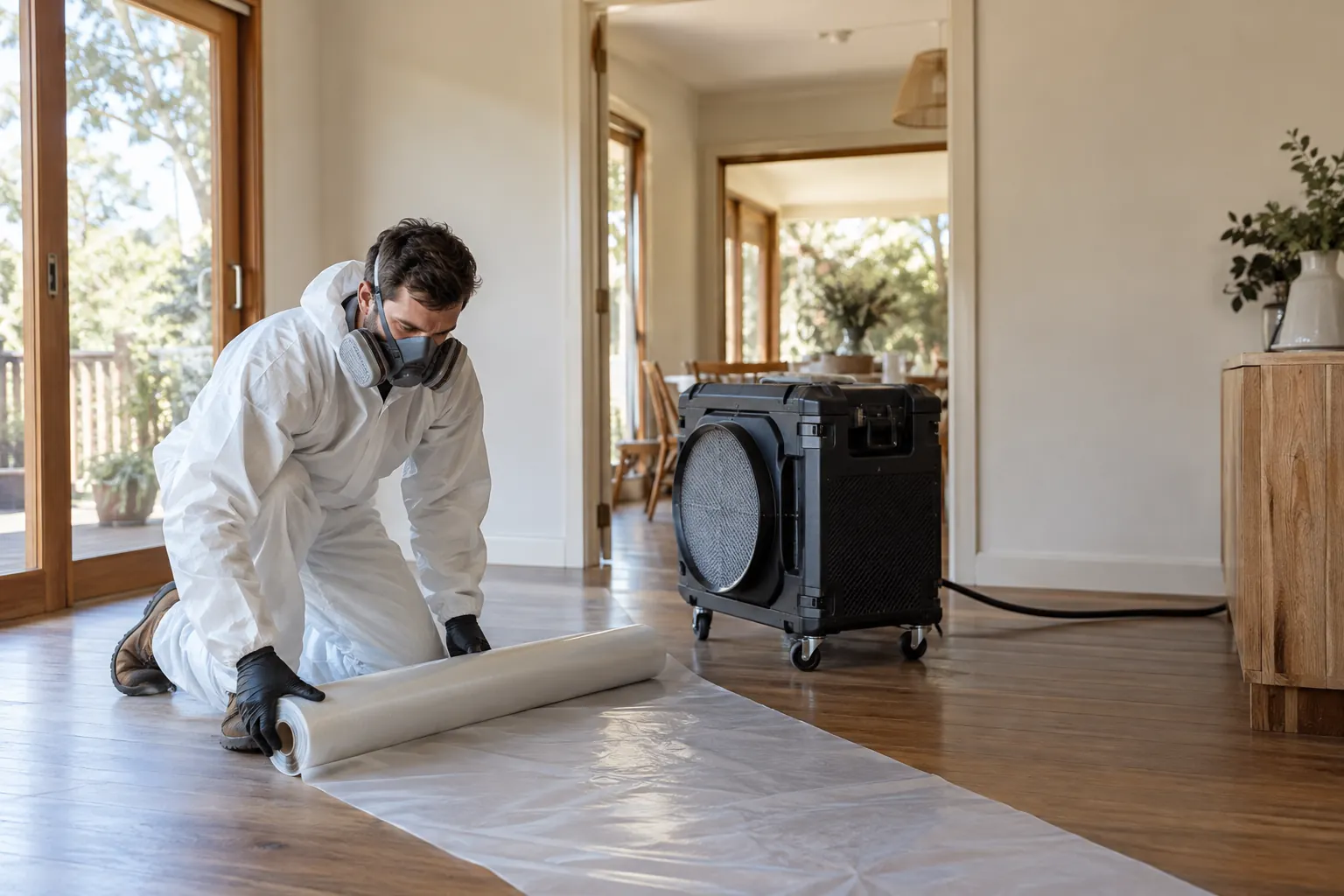
If there is extensive growth, damaged material, an active leak or an electrical concern, keep the area undisturbed and raise it before work begins. Do not open walls, strip coatings or move visibly affected heavy furniture on your own. Preparation must suit the condition of the room. The instructions from the contractor handling the job should take account of the actual surfaces, occupants and access limitations.
Confirm what the appointment includes
Read the written scope and identify the surfaces to be treated. Are the walls, ceiling or accessible floor included? Is the appointment an inspection, removal, treatment or a broader remediation job? Which preparation and filtration measures are proposed? These words describe different tasks, and assumptions can create confusion. Ask for a plain explanation of what will happen in this room rather than relying on a service name alone.
Check the exclusions. Our mould removal focus is visible, accessible walls, ceilings and floors; furniture, carpets, curtains, clothing and other textiles are outside that scope. If belongings are affected, arrange separate advice and tell the contractor before the visit. Do not expect the removal team to restore a mattress or decide the fate of a valuable rug during a wall-cleaning appointment. Those decisions should be agreed in advance.
Ask what might change the plan on arrival. Fragile paint, inaccessible corners or new water damage may require reassessment. Confirm how additional work would be discussed and authorised. Keep the original photographs and any inspection notes available. A clear scope does not prevent unexpected findings, but it creates a sensible process for dealing with them without unapproved demolition, disposal or changes to the job.
Agree which belongings can be moved
Make a list of ordinary items obstructing access: a lightweight table, storage boxes, a bed or a secured wardrobe. Ask which should be moved and by whom. Do not drag heavy furniture alone or remove anti-tip restraints. If an item has visible mould, explain that before moving it; disturbing or carrying it through the home may need a different plan from relocating clean belongings.
Choose a clean, suitable place for items that can be moved safely. Keep the route clear and avoid stacking possessions in front of doors or required exits. Label anything that needs separate assessment. Do not wrap everything in plastic without guidance, especially damp items whose condition is uncertain. The contractor should be able to explain the preparation needed for the defined work, while specialist belongings remain a separate responsibility.
If the room cannot be emptied, say so early. Occupants may need a bed, mobility equipment or other essential items. An honest access limitation is more useful than a rushed move on the day. Ask whether the work can be staged, whether another arrangement is needed and what restrictions apply. The mould remediation information explains why preparation and access form part of the work plan.
Discuss occupants, pets and room use
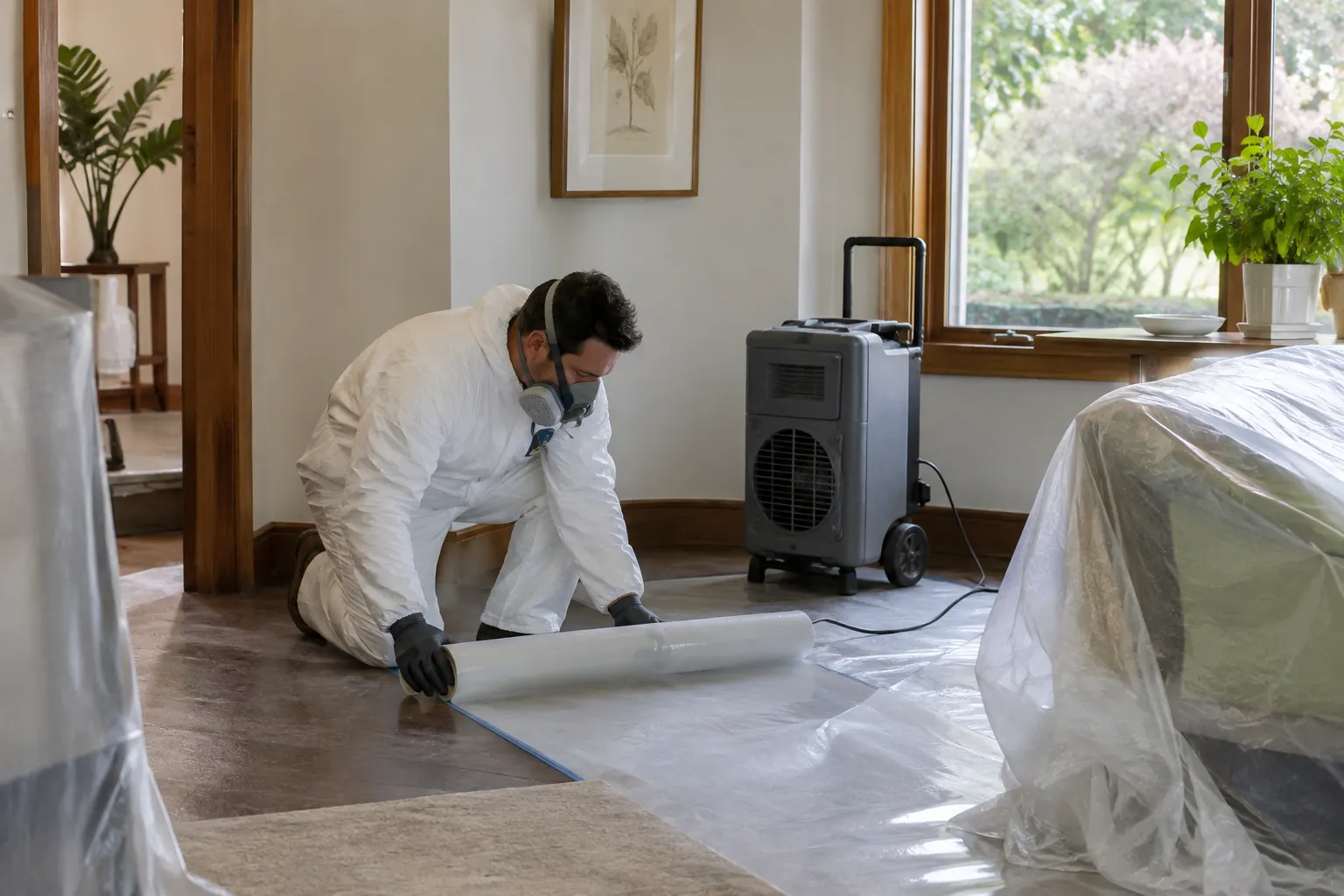
Tell the contractor who normally uses the room and whether there are relevant exposure concerns. Ask where occupants and pets should be during the work and when the area can be used again. Do not invent your own re-entry timetable from a general article or product advertisement. The answer depends on the actual method, products, surface condition and site arrangements. Keep the instructions available for everyone in the household.
Plan for children and pets before equipment arrives. Keep them away from work areas, cables and products, and maintain a safe route to other rooms. If someone needs access to a bathroom or essential medication, explain that when arranging the appointment. Avoid assuming the entire home must be vacated or that unrestricted access is always possible. Ask about this specific job and confirm the arrangements that make it workable.
For health concerns, contact a healthcare professional rather than expecting the contractor to provide a medical assessment. The Better Health Channel mould guidance identifies the importance of appropriate precautions and medical advice where needed. Share practical information relevant to planning, while keeping unrelated private details out of the property brief. The contractor needs to arrange the work safely, not diagnose an occupant.
Arrange access and authority to work
Confirm entry time, the correct address, parking information and any stairs or access restrictions. In a managed building, check rules for contractor entry and common areas. If access requires keys, a concierge or another occupant, coordinate that before the appointment. A contractor should not arrive to discover that the affected room or suspected source cannot be accessed by the person who booked the work.
In rented premises, establish who has authorised the job and any associated repairs. In an apartment, clarify whether the proposed work concerns your interior or common property. Do not authorise structural changes beyond your authority. Keep property manager and trade contacts available if the scope depends on another repair. The mould inspection page can help distinguish assessment from removal and from separate building investigations.
Mention power, water or ventilation constraints relevant to the visit. Do not set up extension leads or improvised water connections in anticipation. Ask the contractor what is required and where equipment can safely be placed. If water damage has affected electrical systems, arrange the appropriate assessment first. Safe access includes functioning site services, not merely an open front door and space beside the wall.
Leave the surface condition visible
Do not repaint, sand or scrape the area before the appointment to make it look better. Those actions can disturb growth, damage finishes and hide useful evidence. If you already cleaned it, record the date, product and result. There is no need to wait for mould to become more extensive so the contractor can see it. Earlier photographs and an honest history can explain a recurring problem when the current patch is smaller.
Keep a concise record of water events and repairs. Was a pipe fixed, did a roof leak stop, or is moisture entry still being investigated? Provide reports if available. Removal should be planned with that context. A surface that looks dry may still require further assessment, while an active leak can make another trade the immediate priority. Do not treat visible removal as automatic completion of all moisture and building work.
If the ceiling is sagging, the wall is soft or there is water around a socket, stop preparing the room and explain the hazard promptly. Do not press damaged plaster to see whether it will hold. Do not cover the area with a temporary decorative panel. The work may need a different safety or repair response before cleaning is appropriate. A useful preparation plan includes recognising when the condition has changed.
Understand protective equipment and work-area boundaries
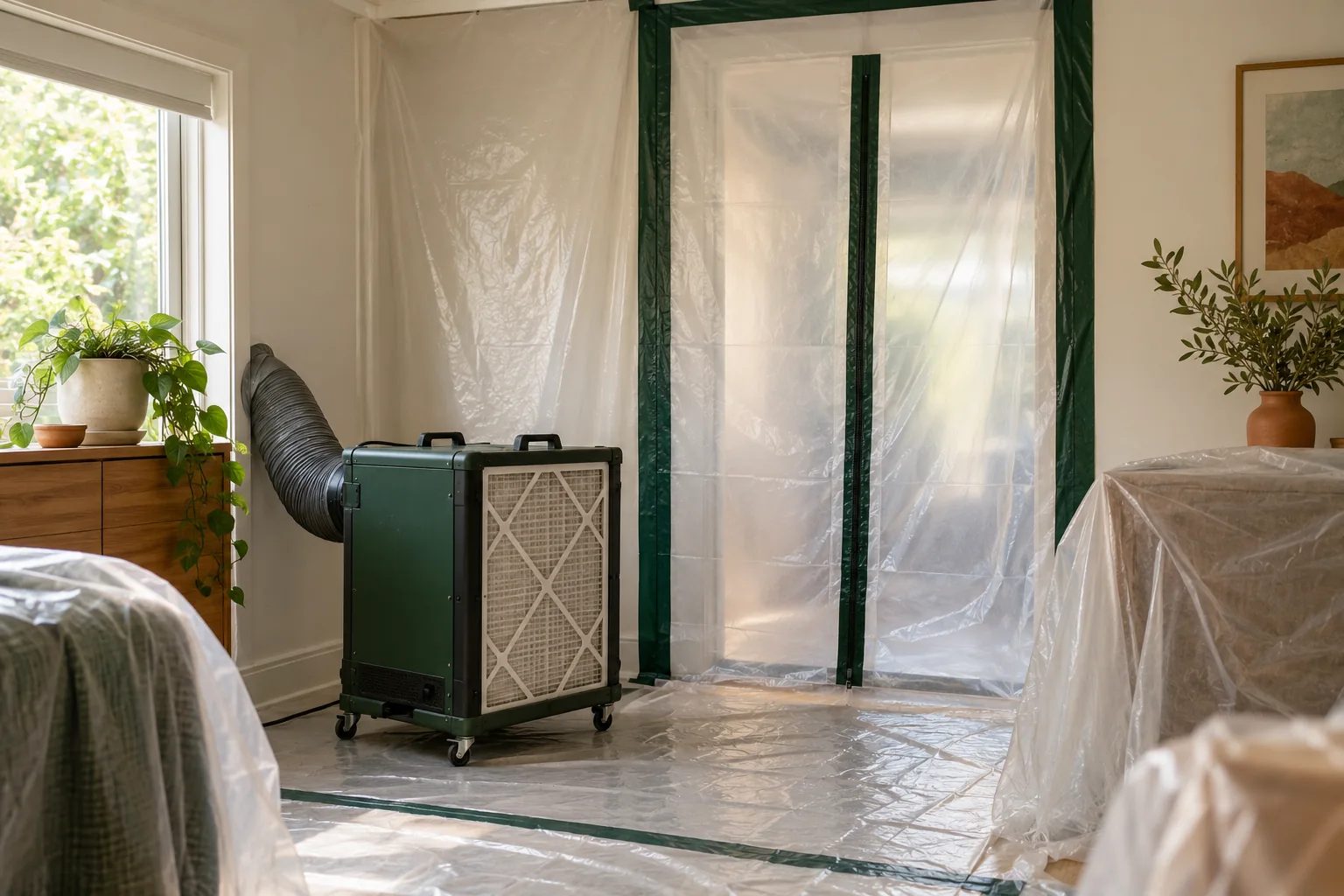
Ask how the working area will be protected and what parts of the home should remain clear. The US EPA guidance on containment and protective equipment explains that controls depend on the extent of contamination and exposure potential. Your contractor should choose measures for the actual job. A photograph of protective equipment is not proof that every project requires the same arrangement.
Respect the agreed boundary while work is in progress. Do not move equipment, change ventilation settings or enter to retrieve an item without asking. Tell the contractor if you need something urgently so they can advise safely. Avoid switching on household fans to clear smells from the area. Air movement and filtration should be managed as part of the work rather than altered by several people with conflicting ideas.
Ask where waste or used materials will be handled and what cleaning is included at completion. Do not use an ordinary household vacuum on disturbed mould residues as an additional clean-up step. If the contractor identifies damaged materials needing separate removal or restoration, obtain a clear handover. Protective measures, cleaning and repair decisions should connect to the scope, not leave the household guessing what to do with an unfinished area.
Prepare a simple handover checklist
At completion, ask which surfaces were treated, whether any area remained inaccessible and what follow-up is recommended. Record separate repairs still required. Keep product or care instructions relevant to the finish and ask before repainting. Confirm the room-use instructions and who to contact if there is a concern. This makes the handover practical without asking for an unrealistic promise that future moisture can never lead to new growth.
Take comparison photographs when it is appropriate and keep the area accessible for periodic checks. Read how to investigate recurring mould if marks return. To discuss preparation for a defined job, call 03 8652 1296. Explain the surfaces, belongings and occupant access needs in advance. A well-prepared room supports the agreed work while keeping repairs, specialist items and unresolved moisture clearly identified.