
THE JOURNAL · BEDROOM MOULD
How to Check Bedroom Mould Without Disturbing Hidden Areas
Mould in a bedroom often becomes noticeable during a change of bedding, a furniture move or an inspection of a window. A room can look tidy and still have a damp corner that is difficult to see. The most useful first response is to describe the visible problem and check the room safely, rather than moving everything at once or spraying an entire wall. This guide gives you a practical way to do that.
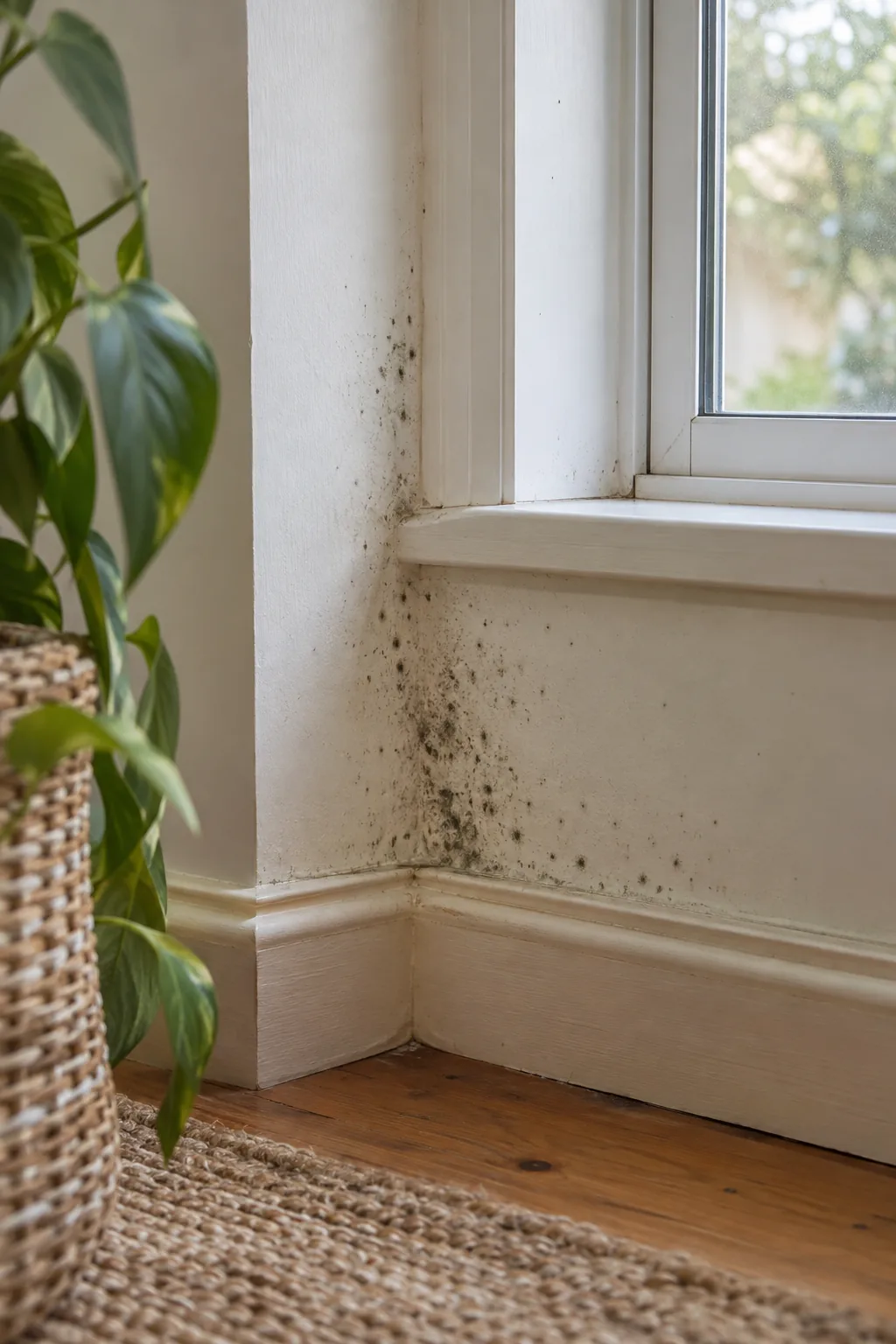
Do not disturb extensive growth or damaged materials. If someone using the room has health concerns, seek medical advice about those concerns and arrange suitable property assessment; a photograph cannot establish a medical diagnosis. Avoid opening wall cavities, lifting carpet or entering a ceiling space. Those tasks can introduce other hazards and change the work required. A bedroom check should help plan the next step while preserving useful information.
Start with the places you can see safely
Walk around the room and note visible marks on walls, window reveals, ceilings and skirting boards. Look from normal standing height and use a light if the corner is dim. Do not scrape a mark to identify it. Photograph the wider area so the position is clear, followed by a closer photograph of the surface. Include a familiar object for scale if you can do so without touching growth.
Describe the material and condition. “Painted external wall beside the wardrobe, scattered marks and intact paint” is different from “ceiling corner, peeling paint and a brown stain”. Note whether the patch is near a window, underneath a pipe route or behind furniture. These observations guide an enquiry, but they do not prove the source. A recurring cold corner and a concealed plumbing leak can require different investigations despite similar visible mould.
Keep the inspection contained. Do not carry dusty items from the affected area through the home or use an ordinary vacuum directly on growth. Avoid putting your face close to a patch to smell it. If the area is larger than expected or the surface looks unstable, leave it undisturbed. Record what is accessible and what is concealed so a professional can discuss access and precautions before attending.
Check furniture access before trying to move anything
Large wardrobes and beds can hide the section you want to inspect. Check whether an item is fixed to the wall, attached to anti-tip restraints, connected to power or too heavy to move safely. Do not remove safety restraints or drag furniture alone to get a photograph. An inaccessible wall should be described as inaccessible, not treated as a reason to take a risky shortcut.
For a light item that can be moved safely without disturbing visible mould, create enough room to look at the surface without leaning into it. Protect finishes and keep belongings away from the affected wall. Stop if growth appears on the furniture or if moving it would spread debris. Furniture and textiles may need separate specialist advice; our visible-surface removal work is not a promise to restore every item in the room.
Write down what remains blocked. A useful appointment note might say “wall behind a built-in wardrobe is not accessible; marks visible at its left edge”. This lets an assessor explain what can be examined during the visit and what may require other arrangements. Read the mould inspection information before booking so access, surface condition and any exclusions can be discussed clearly.
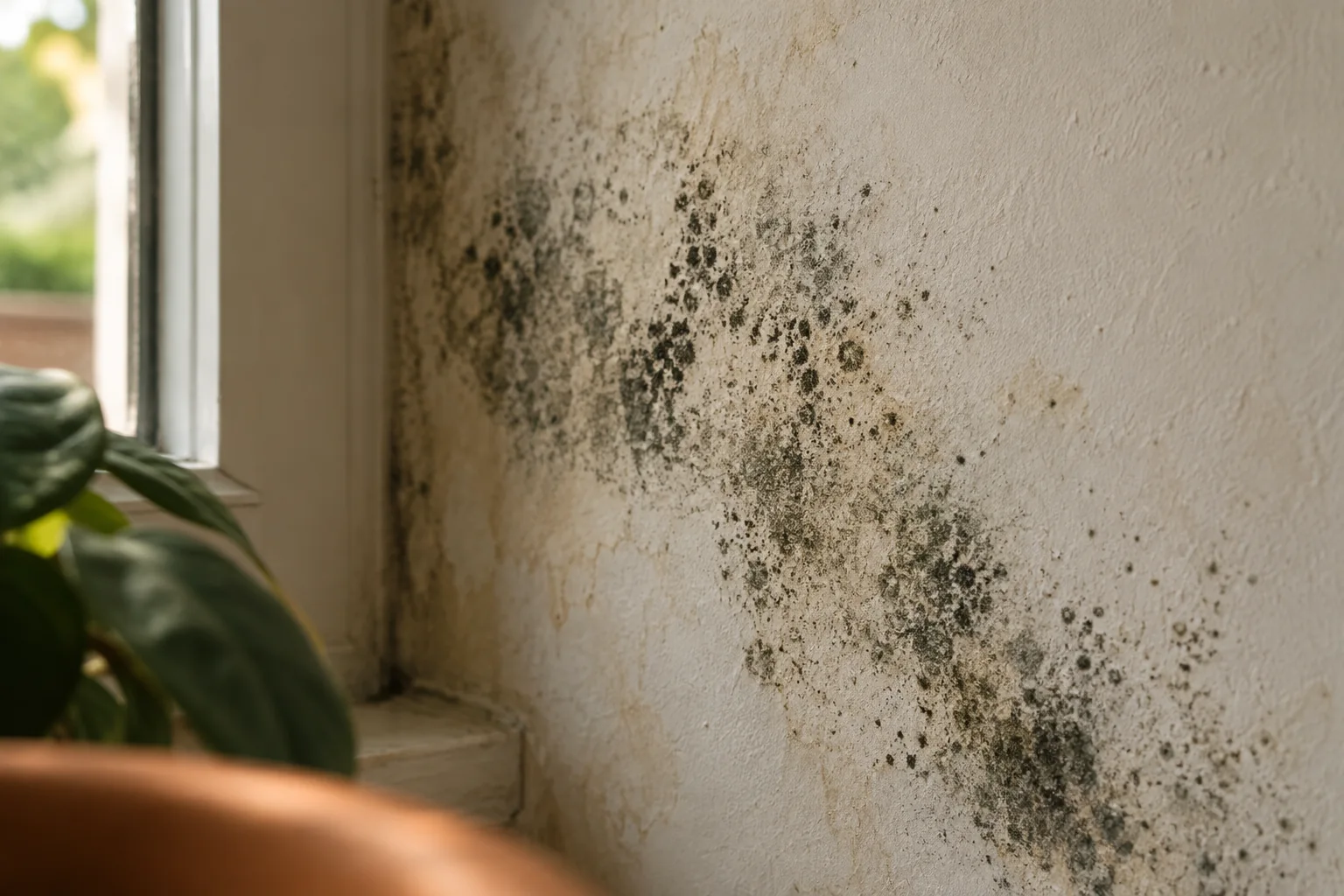
Look at the room’s drying conditions
Notice whether the window is wet in the morning, whether curtains touch a damp sill and whether the bedroom is being used to dry clothes. Record how the room is heated and ventilated during ordinary use. Keep the notes factual. Saying that a window was closed on one morning does not establish that household habits caused the problem; building condition and ventilation capacity also matter.
Check the space around furniture. A tightly packed corner can be harder to observe and keep dry, especially where a wall is cool. Where practical and safe, arrange the room so there is access for routine checks and air can circulate. There is no universal gap that guarantees mould will not return. The useful adjustment is one that makes this particular surface less concealed and allows you to notice moisture sooner.
If you use a hygrometer, record temperature and relative humidity at a consistent position away from a radiator, direct sun or the window glass. A room-air reading is not a test of wall moisture and cannot certify that a hidden area is dry. Use it to identify trends in room conditions. Our home moisture log guide shows how to combine readings with ordinary observations without overinterpreting them.
Separate a surface mark from signs of a building problem
Look for lifted paint, a stain with a distinct water edge, swollen skirting or a patch that changes after rain. Mention any roof leak, overflowing gutter, adjoining bathroom leak or previous water event. You do not need to decide which trade is responsible before reporting the facts. A mould removal enquiry can identify the visible work while a plumber, roofer or building professional investigates moisture entry.
Do not test a soft wall by pushing into it. Do not remove a socket cover, lift flooring or open an access panel near wet materials. Water around electrical components needs appropriate electrical advice. A ceiling that is sagging, cracking or actively leaking requires a prompt safety response. Keep occupants out of the affected area and explain the condition to the relevant professional instead of planning a cosmetic clean.
The Better Health Channel guidance explains why dampness and mould deserve attention. For this room, the practical task is to connect the visible condition with a repair and removal plan. Avoid calling every dark patch “toxic black mould”. Colour does not establish species, and a dramatic label can distract from the accessible surface, the moisture history and the condition that need to be assessed.
Decide what to clean and what to leave for assessment
A small mark on a sound, suitable hard finish may be considered for careful surface cleaning with precautions and compatible products. Follow the cleaner’s label and the finish manufacturer’s guidance. Never mix chemicals. Avoid dry brushing and avoid soaking painted plaster. If the paint is fragile, the area is extensive or the material is porous and damaged, get advice before proceeding. More force is not a substitute for a suitable method.
Do not extend a wall-cleaning method to bedding, upholstered furniture, mattresses or curtains. Those items have different care requirements and may need specialist evaluation. Keep a record of which belongings are affected and take advice before discarding valuable or sentimental items. A cleaner’s ability to improve a wall does not demonstrate that a mattress or the back of a wardrobe can be restored safely using the same treatment.
If you arrange professional work, ask what surfaces are included, what needs to be moved, who will do that moving and how the room will be prepared. Ask about occupants’ access during the work and any separate repairs required. The mould remediation page explains why assessment, preparation, removal and moisture follow-up have distinct roles. Confirm the scope rather than assuming that the word remediation includes every bedroom item.
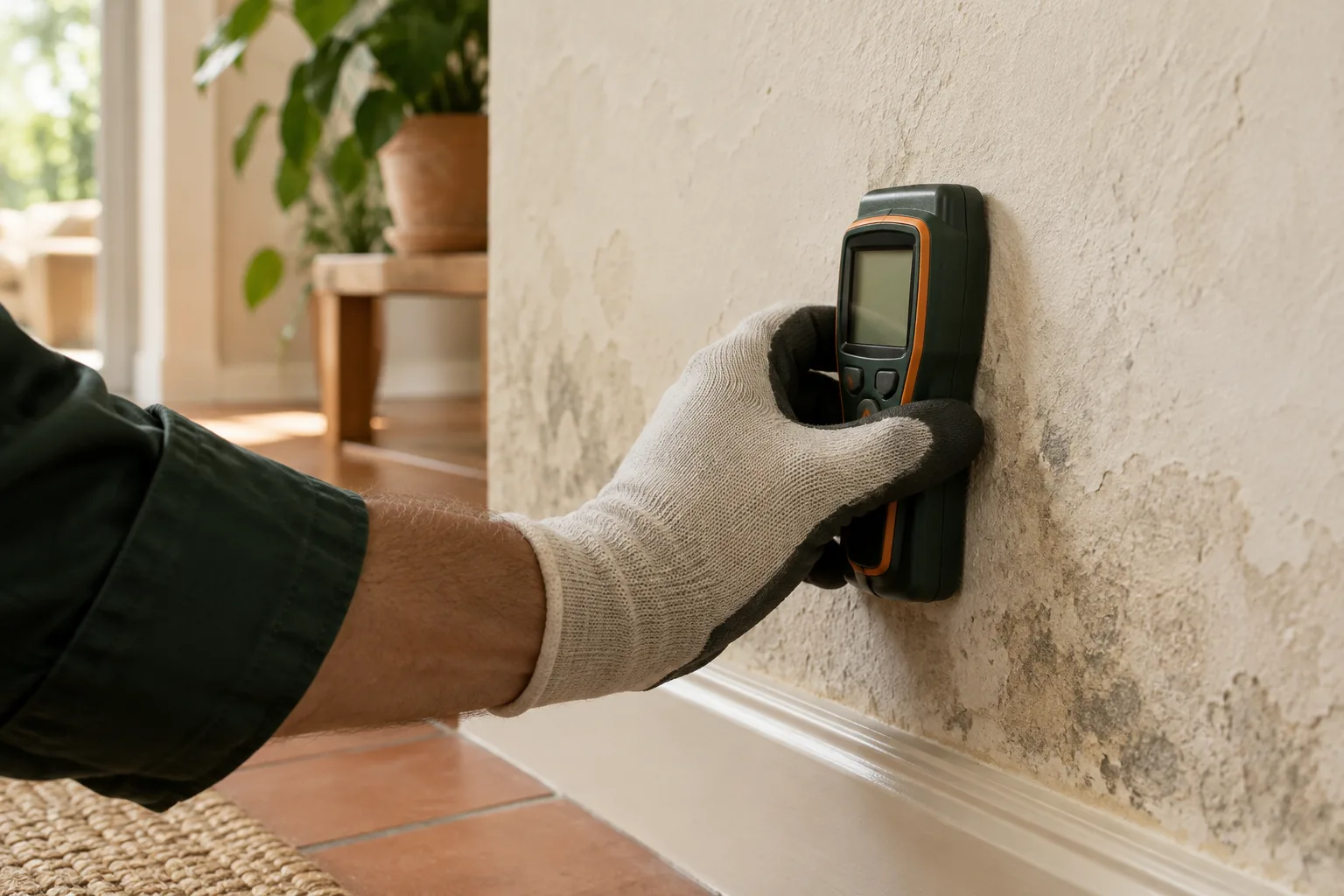
Create a short record for the enquiry
Prepare a summary with room, wall location, approximate affected area, material and visible condition. Add the date first noticed, any previous cleaning and whether the patch returned. Include the photographs and a brief note about recent water damage. Tell the assessor if the bedroom cannot be emptied, if someone depends on it for accessibility or if there are concerns about exposure. These details influence planning and should be raised before work begins.
Keep questions specific. Ask whether the visible surface can be assessed without moving a fixed wardrobe, whether moisture measurements are appropriate and what would prompt a separate building investigation. Ask how fragile paint or water-damaged plaster will be handled. Avoid asking for a guarantee that no mould will ever return. A useful answer explains what work is proposed and what moisture conditions remain outside that work.
For rented premises, notify the appropriate property contact in writing and retain your records. Responsibility and repair processes depend on the circumstances; consult current Consumer Affairs Victoria guidance if you need advice. Do not agree to open walls or authorise structural work unless you have the authority to do so. Clear communication about access and repairs protects the process from misunderstandings between the occupant, property manager and contractor.
Follow up without turning the room into a daily investigation
After agreed cleaning or repairs, check the same places periodically. Use comparison photographs from a similar distance and position. Watch for new dampness after rain, renewed condensation or marks at the edge of a previously blocked wall. Keep the arrangement accessible enough to notice change. You do not need to dismantle the room every week; you need a workable way to recognise whether the original issue is recurring.
If marks return, explain what was done and when, rather than starting a stronger cleaning cycle. The guide to investigating recurring mould helps organise that history. For a defined inspection or removal enquiry, call 03 8652 1296. Describe the affected bedroom surface and access limitations. The next step should match what can be seen and safely reached, with concealed damage or specialist belongings addressed separately.