
SURFACE TREATMENT · MOISTURE FOLLOW-THROUGH
Mould Remediation Dingley Village
If water is still dripping near an affected surface, that needs to be part of the first conversation. For Dingley Village, describe the visible growth and when wetting occurs. Remediation treats the included contamination; it does not make a leaking pipe, roof or fitting watertight.
Continuing wetting disclosed
Repair tasks separated
Accessible treatment agreed
TREATMENT & FOLLOW-THROUGH
UNDERSTANDING REMEDIATION
Describe the active condition, not just the mark
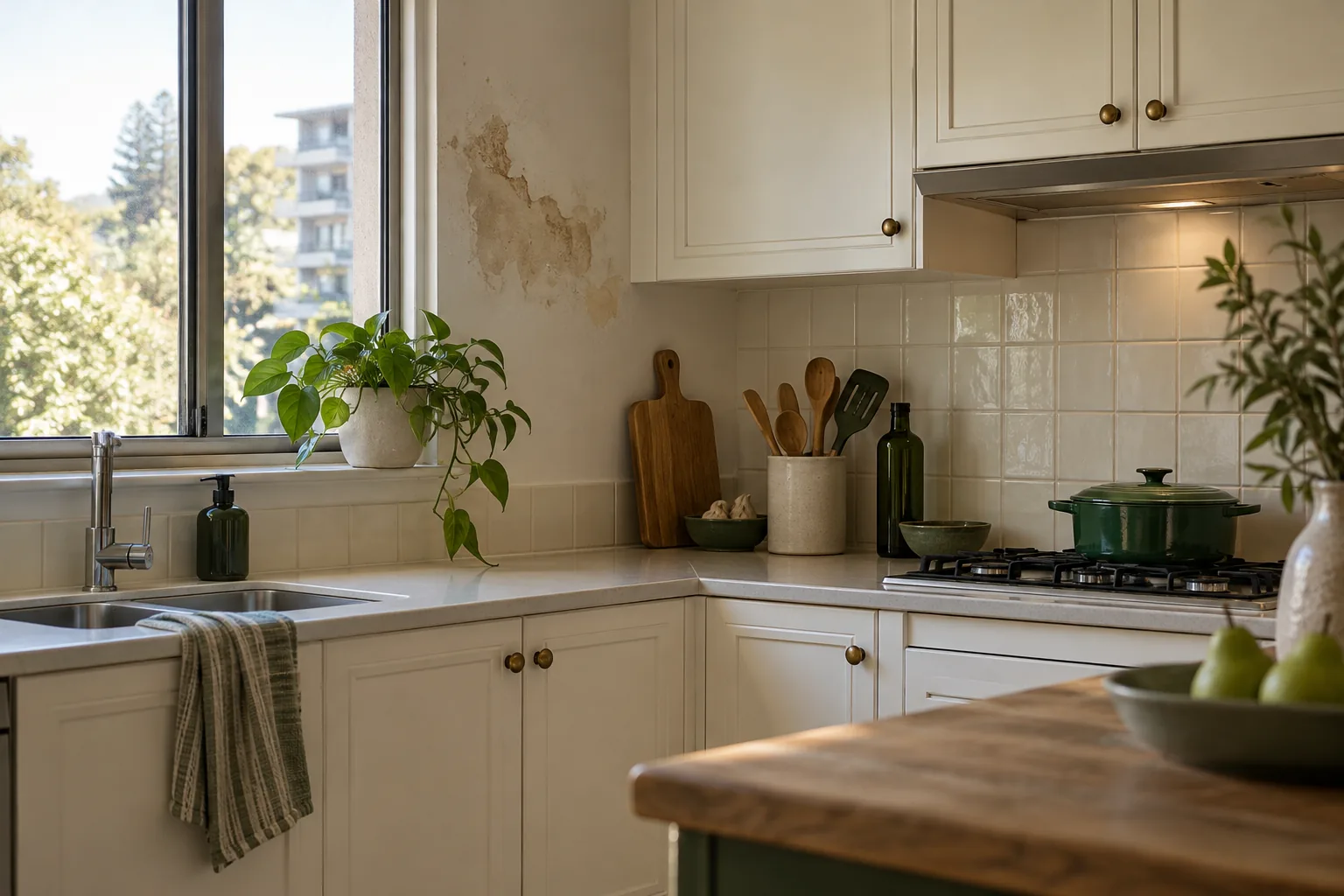
Say where water appears, what can be seen without opening construction and whether the affected surface is reachable. Mention any repair already arranged. Avoid calling the problem an old stain if new wetting is continuing; the current condition matters to the proposed programme.
The confirmed treatment boundary covers visible accessible structural surfaces. Plumbing, roof and other building repairs are separate. Agree how those tasks will be coordinated before treating the appointment as the end of the water problem.
THE MOISTURE CONNECTION
Observed dripping is useful history, not a complete diagnosis
Give timing and location without assuming the visible drip identifies every affected material or the exact fault. The responsible repair trade may need to consider the source separately. Surface treatment cannot establish that a concealed area has stopped becoming wet.
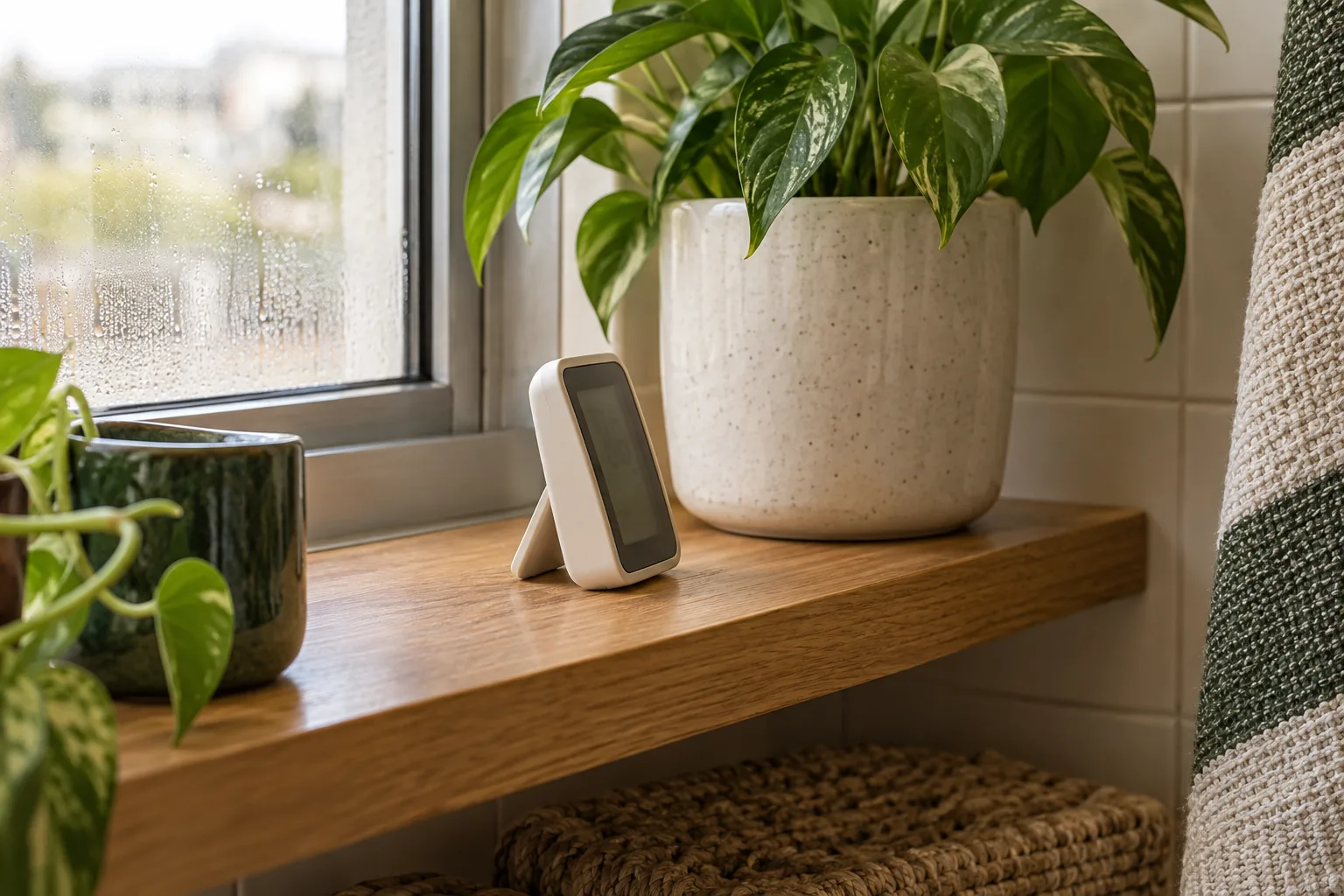
A professional hygrometer measures room-air relative humidity rather than water content in the wall or ceiling. If the structural condition raises uncertainty, discuss assessment questions; hidden-cavity work, material probes and written clearances are not confirmed inclusions.
PLAN · FILTER · TREAT · REMOVE · CONTINUE
A treatment programme alongside separate repairs
1
Review visible growth and repair status
Assessment identifies accessible contamination and the continuing wetting described. Explain scheduled repair work that could change access or the exposed boundary.
2
Arrange filtration before treatment
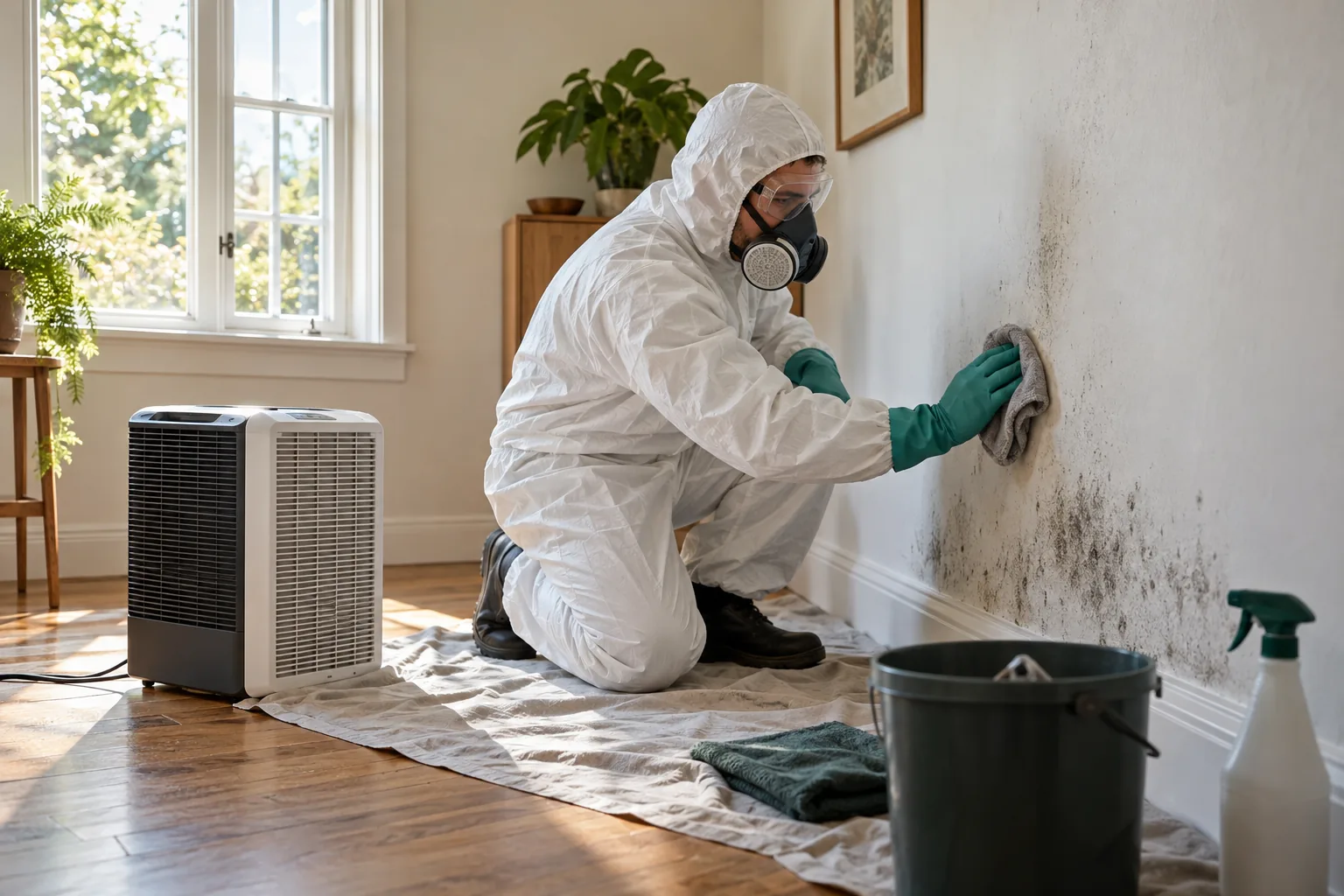
The confirmed HEPA scrubber is established before application. A clear working route is needed for equipment and access to the included structural surfaces.

3
Apply suitable treatment
HOCl forms the treatment stage, with ULV dry fog where appropriate in most cases. Suitability needs discussion in the actual condition; application is not a leak-repair method.
4
Physically remove accessible growth
Professional H-class filtered equipment is used on visible contamination within scope. Replacing water-damaged materials or repairing the fault requires a separate arrangement.
5
Continue air cleaning and follow-up
HEPA stays active during and after the work. Discuss remaining marks and unresolved wetting before deciding that the affected room is ready for separate finishing.
Record the surfaces separately
Walls
For walls, identify visible growth and the area where wetting is observed; the two boundaries need not be assumed identical.
Ceilings
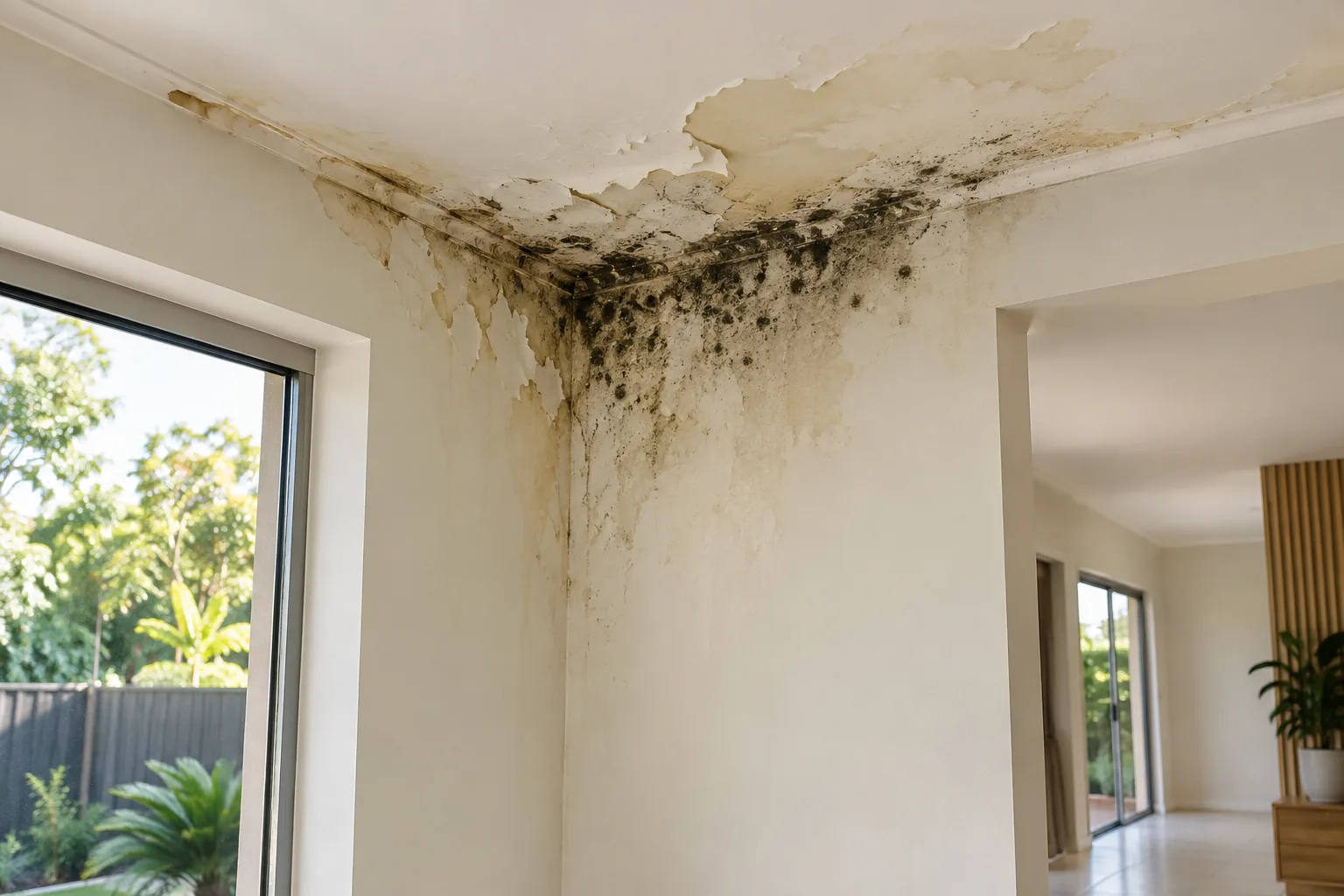
For ceilings, describe a separate patch or drip location without claiming the concealed space has been assessed.
Bathrooms
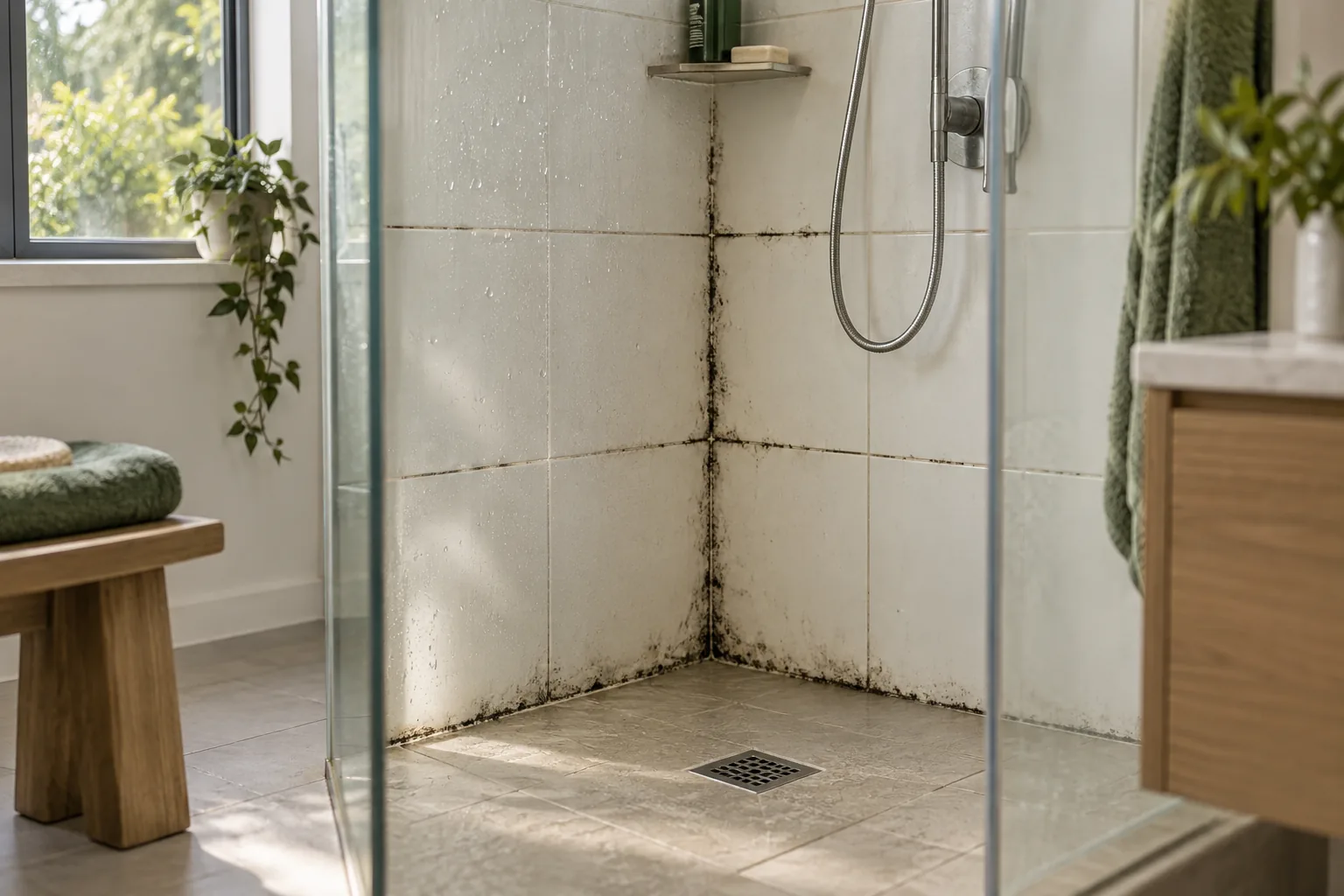
Bathroom structural areas need their own water-use and access history, distinct from plumbing repair and excluded textiles.
Kitchens
Kitchen wall or floor growth should be listed alongside relevant observations, without implying appliance or cabinet treatment.
Accessible affected surfaces
Exposed structural floors can be discussed, while carpet, rugs and other textiles remain excluded even where water has reached them.
WHAT TO EXPECT
Confirm the programme before preparing the room
Discuss repairs, clear access and fragile items before the appointment. People and pets leave during treatment with specific instructions for departure and return. Average guidance is about three hours per room, varying with size, extent and accessibility; it is not a timetable for repairing the leak as well.
Cosmetic stains may remain and decorating is separate. Persistent wetting can lead to recurrence, and standard treatment does not certify concealed materials dry. Keep the treatment outcome and the repair outcome distinct, especially if one task is completed before the other.
FOLLOW THE MOISTURE
Follow up on the water, not only the appearance
A cleaner surface should not end attention to continuing wetting.
Arrange the appropriate trade to address an identified pipe, roof or building fault.
Record whether dripping or dampness persists after repair work.
Maintain ventilation and describe renewed growth with its timing and location.
Clarify two separate cost questions
The listed room examples are labelled Mould Removal. Explain the visible area, access and repair status when checking applicability to remediation. They do not establish a combined treatment-and-leak-repair package or a guaranteed drying programme.
DINGLEY VILLAGE · EXACT ADDRESS & ACCESS
Nearby enquiries with their own repair history
For another address around Dingley Village, provide its actual wetting observations, access and approval details. Similar-looking water damage does not prove the same source or establish combined attendance availability.
Heatherton · Clarinda · Springvale · Braeside
Questions about remediation
Will remediation stop the dripping?
No plumbing or building repair is included by default. Arrange the moisture-source task separately and explain continuing wetting before booking treatment.
Should I describe it as an old leak if it still drips?
Describe the current condition accurately. Continuing water entry is relevant even if the original fault was noticed some time ago.
Can the technician identify the exact roof fault?
A roof-repair diagnosis is not a confirmed remediation inclusion. Discuss the visible scope and refer the repair question to the appropriate trade.
Does treatment prove the cavity is dry?
No. Standard visible-surface remediation does not certify concealed materials dry or replace separate investigation.
What information helps after a repair?
Give the repair date and whether water or dampness continues in the same location. That history helps the enquiry without proving every material has dried.
Is repainting part of finishing the job?
Repainting requires a separate scope. Discuss remaining marks and moisture concerns before arranging a new finish.
Explain the wetting before arranging treatment
Call 03 8652 1296 with the accessible growth, drip observations and repair status. Agree remediation and the separate water-source work.