
SURFACE TREATMENT · MOISTURE FOLLOW-THROUGH
Mould Remediation Garden City
Growth beside a skirting board raises two questions: which exposed finish needs treatment, and whether moisture continues beneath it. For a Garden City enquiry, describe the wall, skirting and visible floor separately. One edge cannot establish the condition of the whole floor.
We agree the exposed treatment boundary.
You can distinguish cleaning from repair.
Return instructions relate to the actual job.

TREATMENT & FOLLOW-THROUGH
UNDERSTANDING REMEDIATION
An edge is not the whole floor
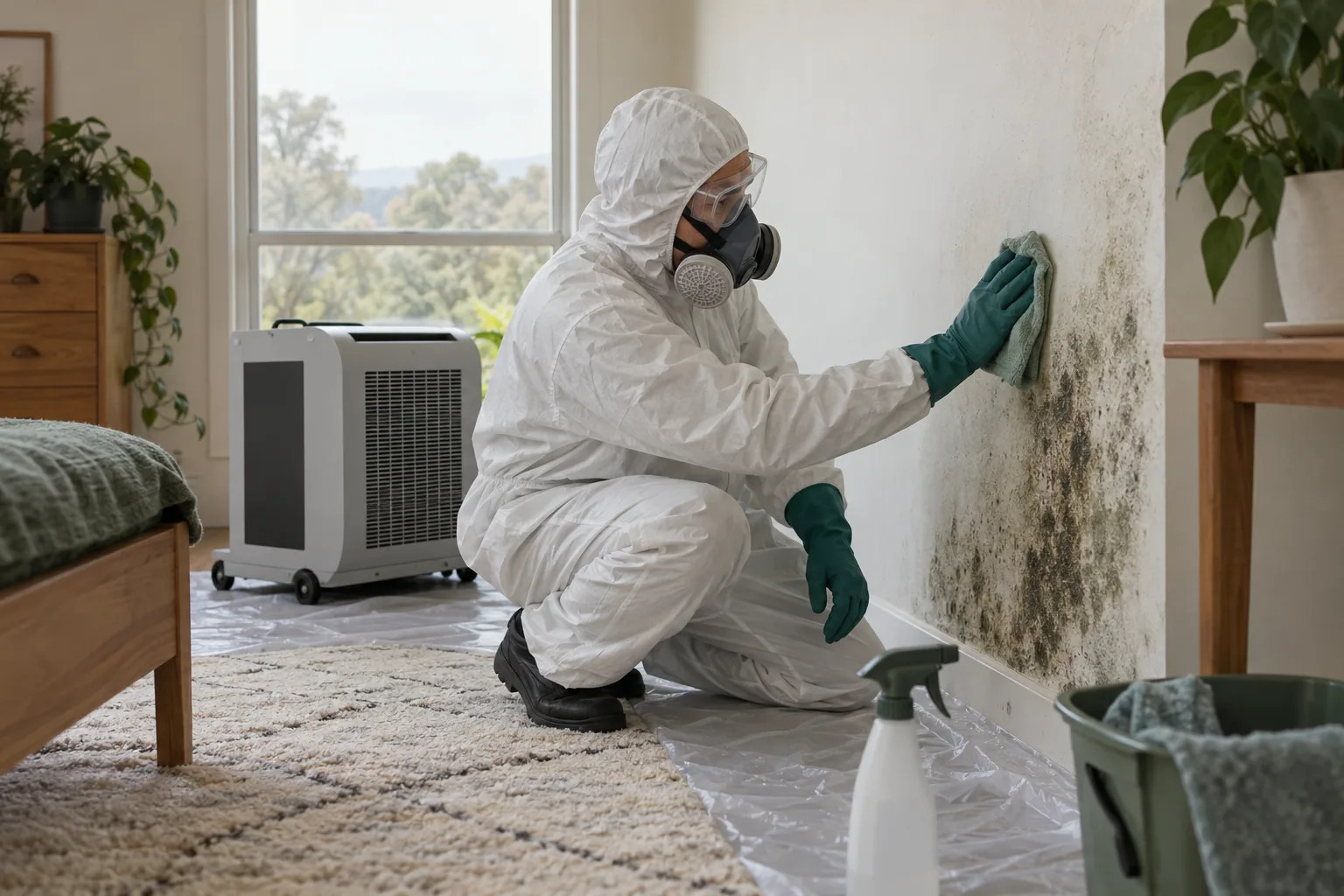
Professional remediation addresses agreed visible contamination on reachable structural surfaces. At a floor-to-wall junction, identify the painted wall, exposed skirting or floor section and whether the finish is lifting or soft. Discuss the condition before removing trim or arranging separate access work.
Review the remediation process for the junction. Application must suit the accessible material; one treated edge does not include concealed underlay or the underside of a floor. Carpets and other textiles remain excluded. Agree any newly revealed area’s inclusion rather than extending the scope yourself.
THE MOISTURE CONNECTION
Describe water at the junction accurately
Note whether water reached the floor recently, whether the line changes after cleaning the room and whether a nearby leak has been repaired. Those observations help frame the enquiry without diagnosing the cause from the stain’s shape. A separate inspection request can discuss visible accessible assessment before treatment is selected.
The professional hygrometer measures room-air relative humidity, not floor moisture or dryness beneath a covering. Plumbing and building repairs require the appropriate provider. Surface treatment should never be described as correcting water beneath the junction.
PLAN · FILTER · TREAT · REMOVE · CONTINUE
Work along the agreed exposed boundary
1
Identify the reachable finishes
Assess the visible wall, trim and floor sections, agree their extent and distinguish damaged material from a suitable treatment surface.
2
Prepare air protection
Set up the confirmed HEPA air scrubber before treatment begins, with the working area prepared rather than relying on an open window alone.

3
Select suitable application
Apply appropriate HOCl treatment; include ULV dry fog where suitable, without claiming that application reaches concealed floor layers.
4
Remove the visible growth
Use professional equipment with H-class filtration for physical removal on the agreed accessible finishes, retaining the carpet and textile exclusions.
5
Maintain air cleaning
Continue HEPA filtration during and after the process, then discuss the actual return instructions and any residual cosmetic outline at the edge.
Different finishes need separate descriptions
Walls
Identify the exposed wall band above the skirting and any lifted paint before treatment is agreed.
Ceilings
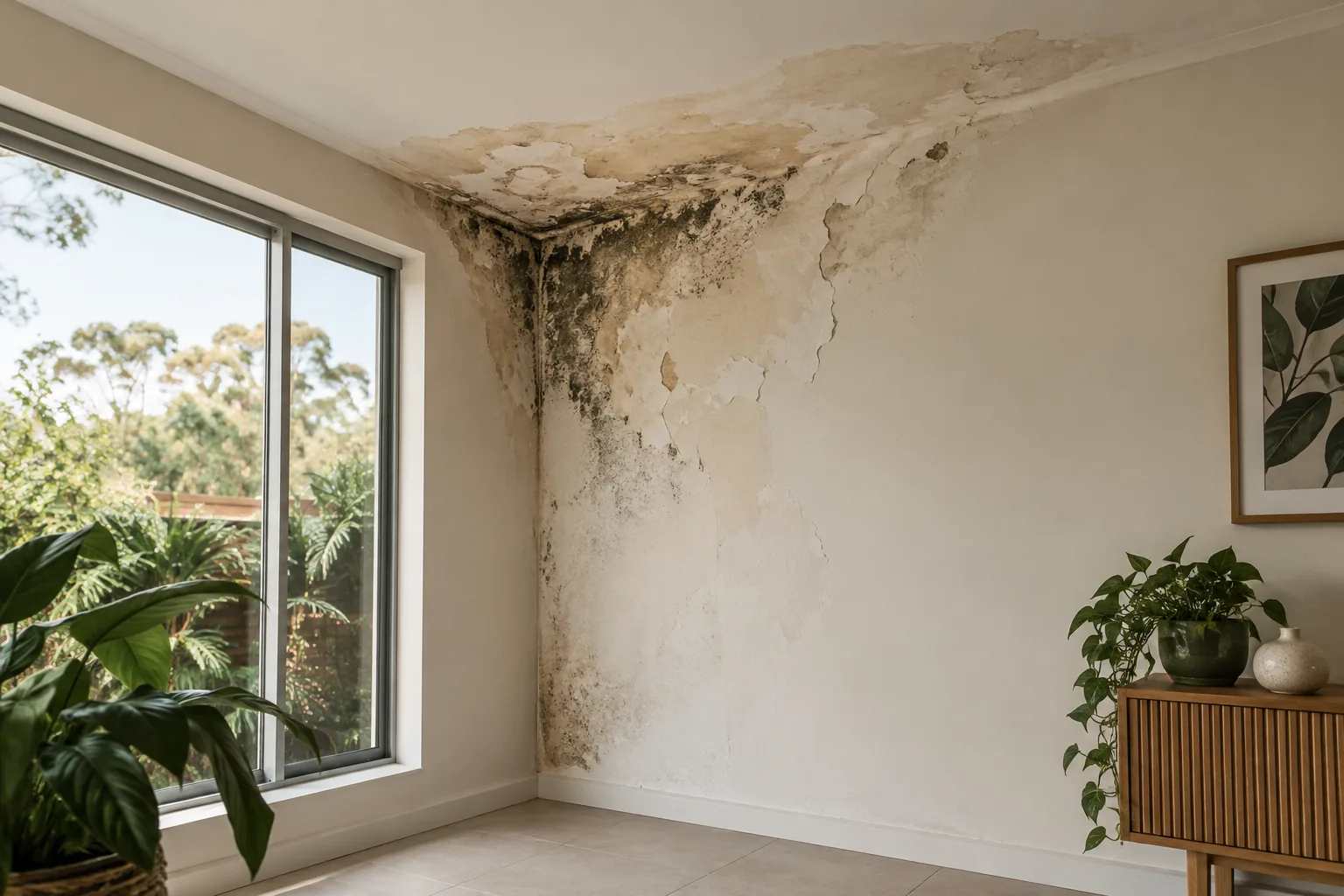
A ceiling patch needs its own location and safe access; it is not included merely because the floor edge is affected.
Bathrooms
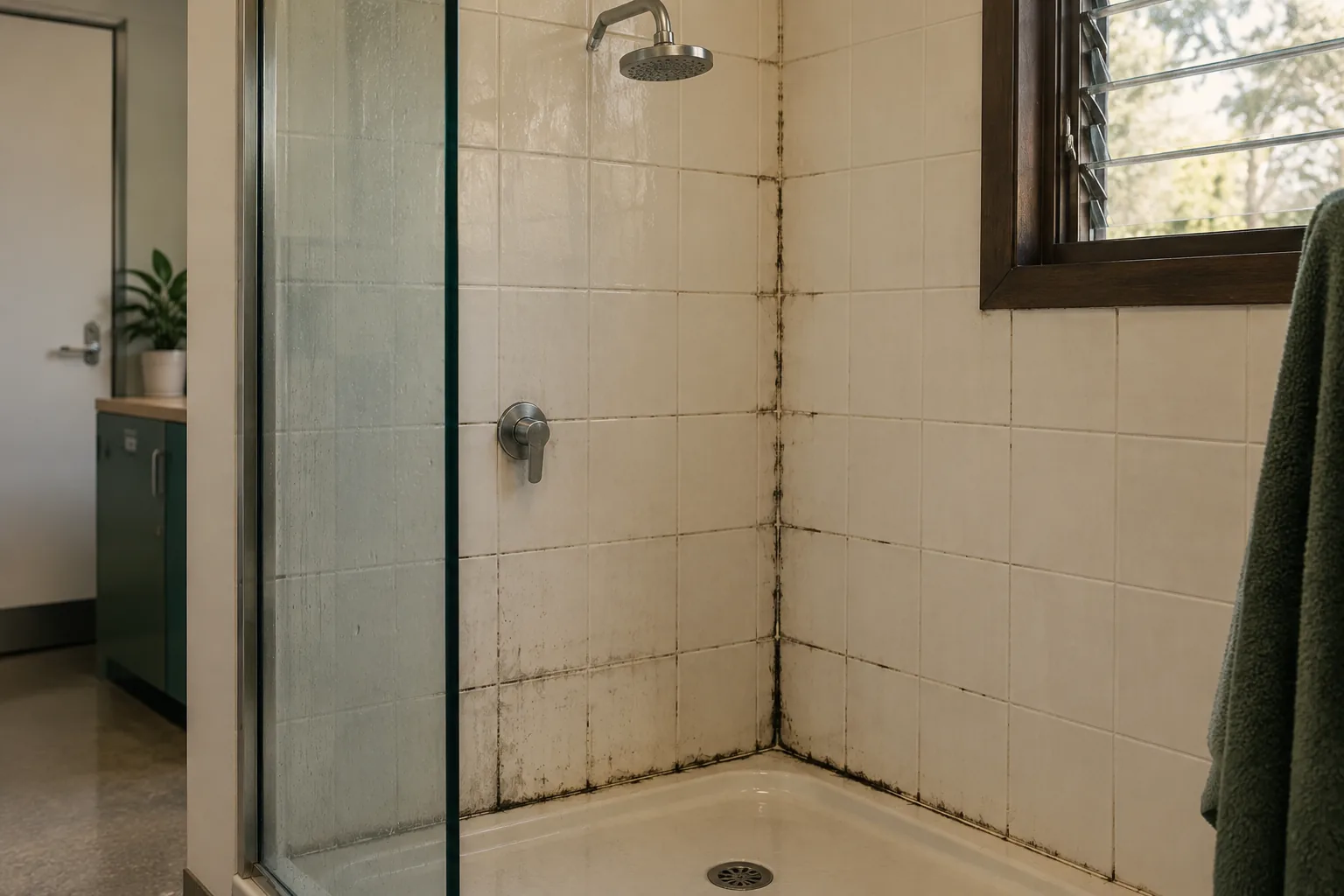
Describe visible wall or floor finishes beside bathroom fittings while keeping silicone replacement separate.
Kitchens
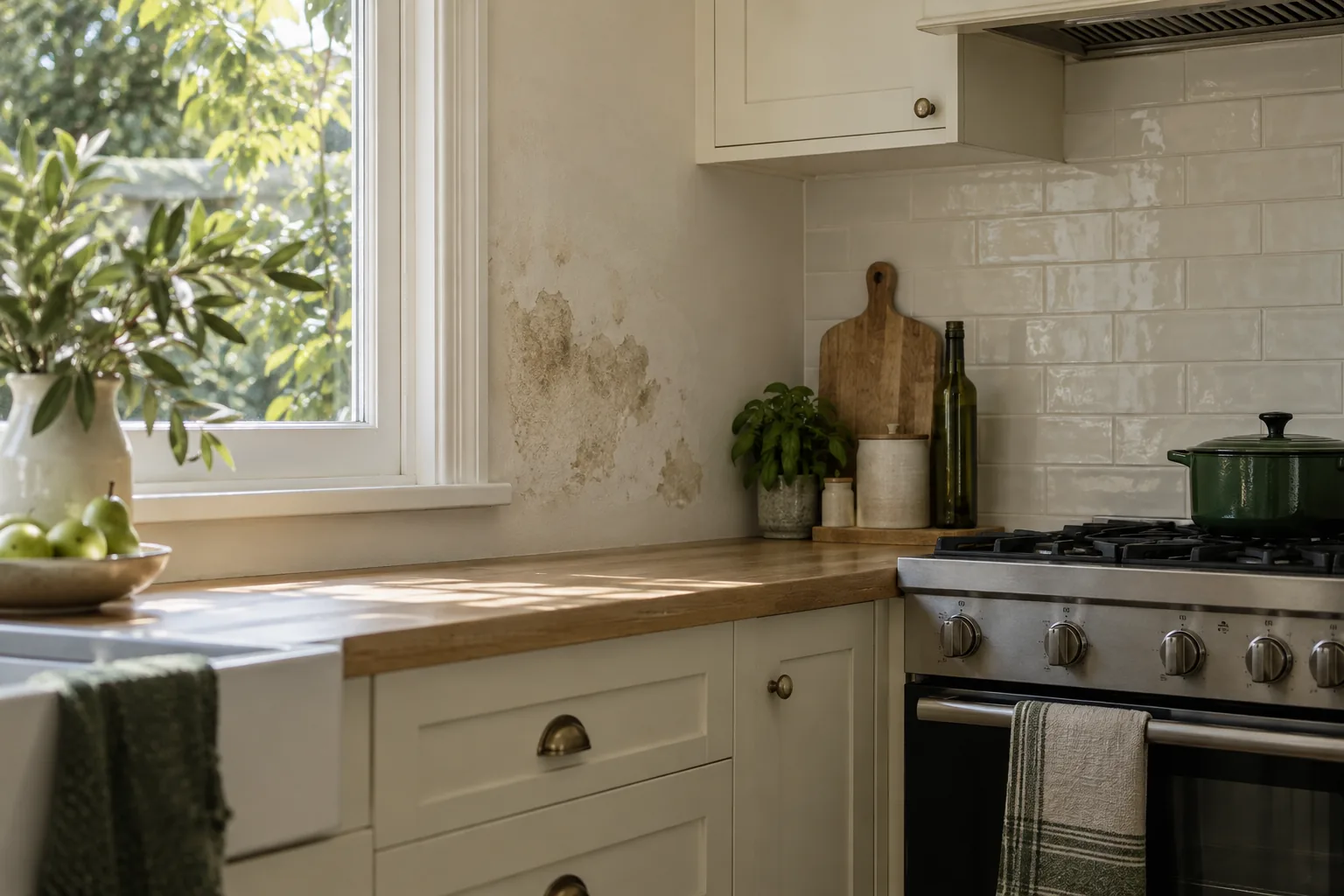
Name the exposed kitchen floor-to-wall edge and distinguish it from inaccessible sections behind fixed cabinetry.
Accessible affected surfaces
Additional visible structural sections may be discussed; underlay, concealed cavities and excluded belongings are not inferred from a room booking.
WHAT TO EXPECT
Prepare the edge without lifting the floor
Ask what clearance is needed beside the junction and explain anything fixed in place. People and pets leave the property during treatment, and the technician provides job-specific return advice. Average source guidance is around three hours per room, depending on size, contamination and access; a narrow-looking line does not establish the attendance duration.
Do not arrange flooring replacement on an assumption that every cosmetic mark disappears or the substrate is certified dry. Its provider must settle their own installation requirements. Hidden contamination, demolition and formal clearance are outside the promised visible-surface work.
FOLLOW THE MOISTURE
Watch the same exposed edge after treatment
After advised return, compare changes at the same exposed section. Fresh dampness, expanding growth or a lifting finish needs a new description. Keep an unchanged cosmetic stain distinct from a newly wet edge.
Record the exact wall and floor junction if a change appears.
Follow through on separately arranged leak or flooring advice.
Keep routine cleaning observations distinct from concealed-material conclusions.
Quote the junction and its access
Give the exposed finish, approximate affected extent and clearance restrictions when asking about cost. The published examples are labelled Mould Removal, so confirm how they apply to the proposed remediation work; they do not establish an under-floor treatment or replacement allowance.
GARDEN CITY · EXACT ADDRESS & ACCESS
Garden City and adjacent address enquiries
For a Garden City enquiry, include the street address and room entrance. Port Melbourne and Beacon Cove pages concern nearby premises; they cannot determine access to your floor edge.
Port Melbourne · Beacon Cove · Fishermans Bend · Coode Island
Questions about remediation
Should I remove the skirting before the visit?
Do not assume removal is required. Explain any loose or damaged board and agree preparation first; dismantling or repair may need a separate provider.
Will the carpet edge be treated with the wall?
No standard carpet treatment is confirmed. Identify the structural surface separately from carpet and underlay when agreeing the job.
Does the line prove water is coming from below?
No. Its appearance alone cannot locate the water source; describe when dampness appeared and what has been repaired.
Can the hygrometer clear the floor for replacement?
It cannot certify a floor’s material moisture. Ask the flooring provider what checks their proposed installation requires.
What if the board reveals more mould afterwards?
Report the newly exposed extent before assuming it was included. The earlier result applies to the surfaces actually accessible and treated.
Must every dark outline disappear at completion?
No cosmetic guarantee is made. Discuss remaining discolouration separately from fresh visible growth and any continuing water.
Describe the junction before arranging treatment
Call 03 8652 1296 with the Garden City address, exposed finishes and access details. Agree the structural treatment boundary before lifting, covering or replacing anything.