
VISIBLE SURFACES · AGREED TREATMENT
Mould Remediation Jacana
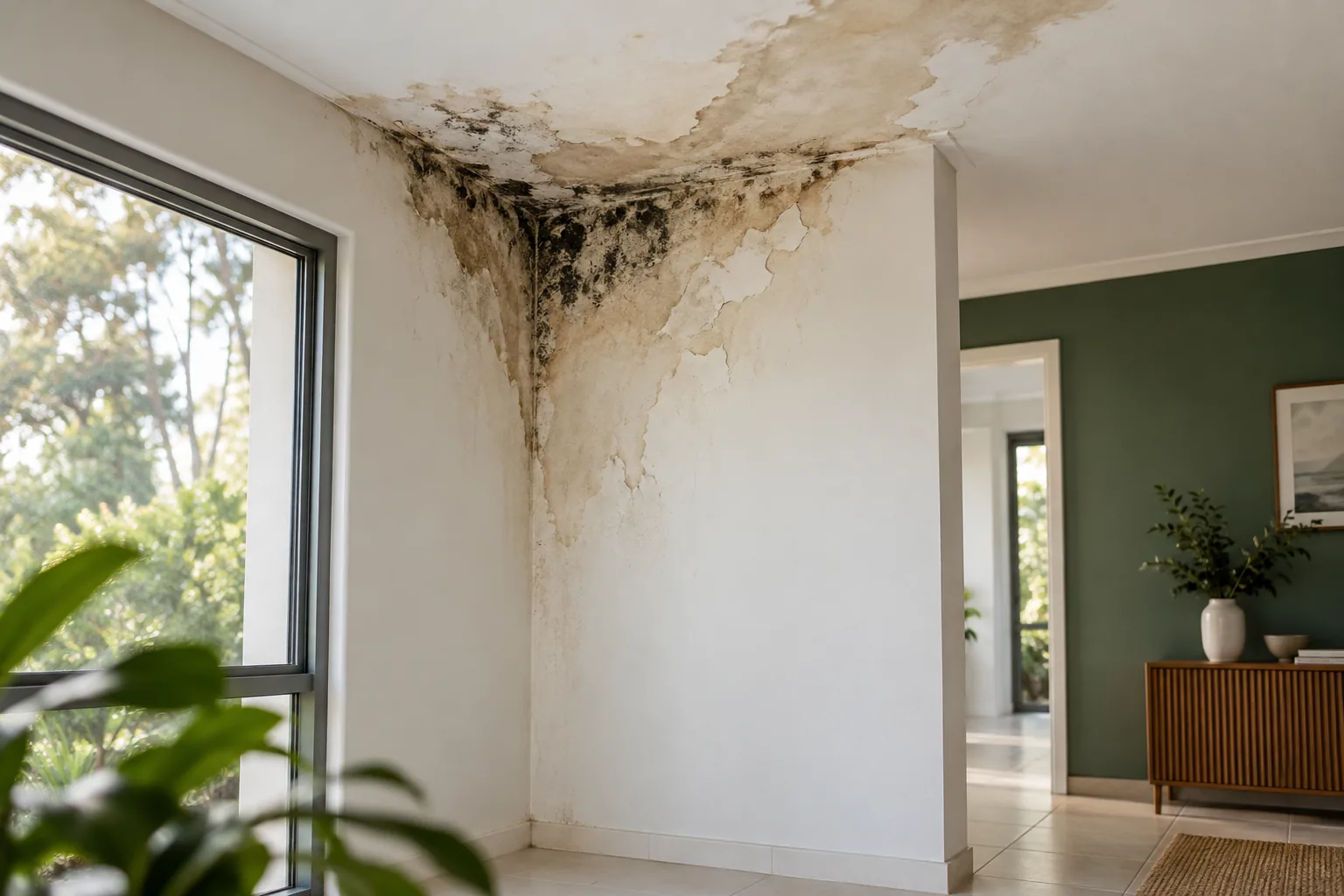
Ceiling marks following a roof leak raise separate treatment and repair questions. For your Jacana enquiry, explain the repair status and exposed finish. Do not assume remediation includes roof work, concealed materials or handling an unstable lining simply because the room is accessible.
The ceiling access limit is acknowledged.
Treatment and leak repair are distinguished.
Remaining cosmetic marks are discussed.

TREATMENT · FILTRATION · FOLLOW-THROUGH
A TREATMENT PLAN WITH CLEAR LIMITS
Treat the visible ceiling within a clear boundary
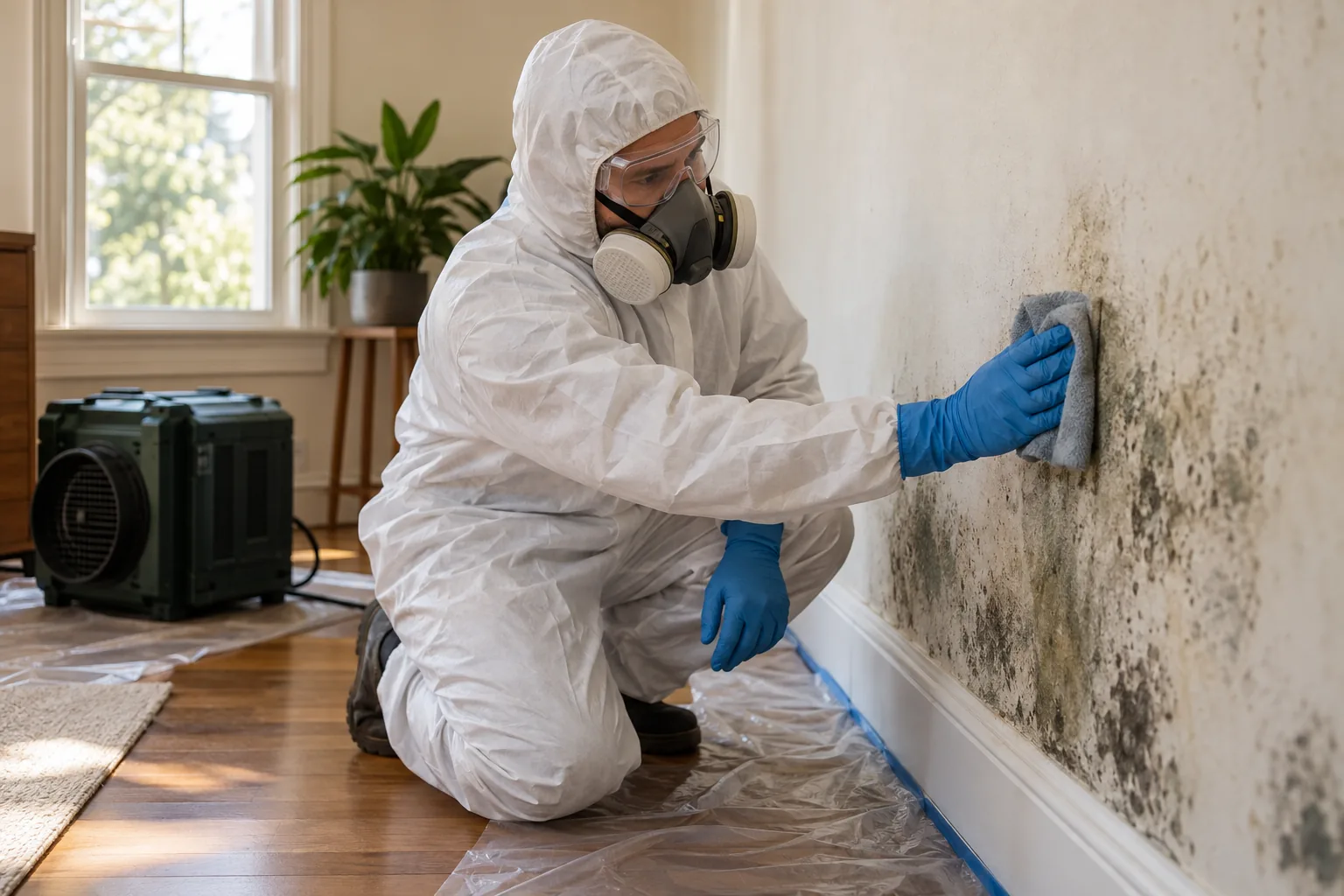
Remediation can involve assessment, HEPA air protection, HOCl treatment and physical removal on accessible surfaces. A ceiling needs its visible finish and condition described before a method is agreed. Mention sagging, loose paint or an area you cannot safely approach, so treatment is not presented as permission to disturb damaged material.
The supported service does not open the ceiling or remove insulation as a standard inclusion. Roof and structural work need another arrangement. Read our remediation overview for the process relationship, then identify the particular exposed section you want included rather than describing the whole roof assembly as treated.
MOISTURE COMES FIRST
A repair claim needs its own history
Tell us when the leak was observed and whether a repair was completed, proposed or still being investigated. Separate what the repair provider confirmed from your own visible observations. Room air-relative humidity from the professional hygrometer cannot prove that a roof space, insulation or the back of the ceiling lining is dry.
Continuing water entry can undermine follow-through after visible treatment. Keep contact with the person responsible for repairs and report changes in the ceiling condition. An inspection discussion may clarify the accessible concern, but it does not replace the trade responsible for locating and correcting a roof fault.

FROM PREPARATION TO FOLLOW-THROUGH
From scope agreement to final filtration
1
Agree the accessible scope
Identify the exposed ceiling section, finish and safe working access, including any damaged area that cannot be treated as sound.
2
Begin air protection
Set the confirmed HEPA air scrubber running before application; air protection is part of work, not proof of a sterile space.
3
Choose the treatment application
Use the appropriate HOCl application, including ULV dry fog only when suitable; concealed ceiling voids are not promised coverage.
4
Remove visible growth
Remove visible contamination using professional H-class filtered equipment, without adding demolition or insulation work to the agreed surface task.
5
Continue final air cleaning
Continue HEPA air cleaning during and after the job, and discuss any residual staining alongside the technician’s return advice.
Identify affected finishes individually
Walls
Wall marks beneath the leak need their own accessible boundary; a ceiling quote does not silently include every wall.
Ceilings
The exposed ceiling finish is considered within safe access, with weakness or sagging reported before disturbance.
Bathrooms
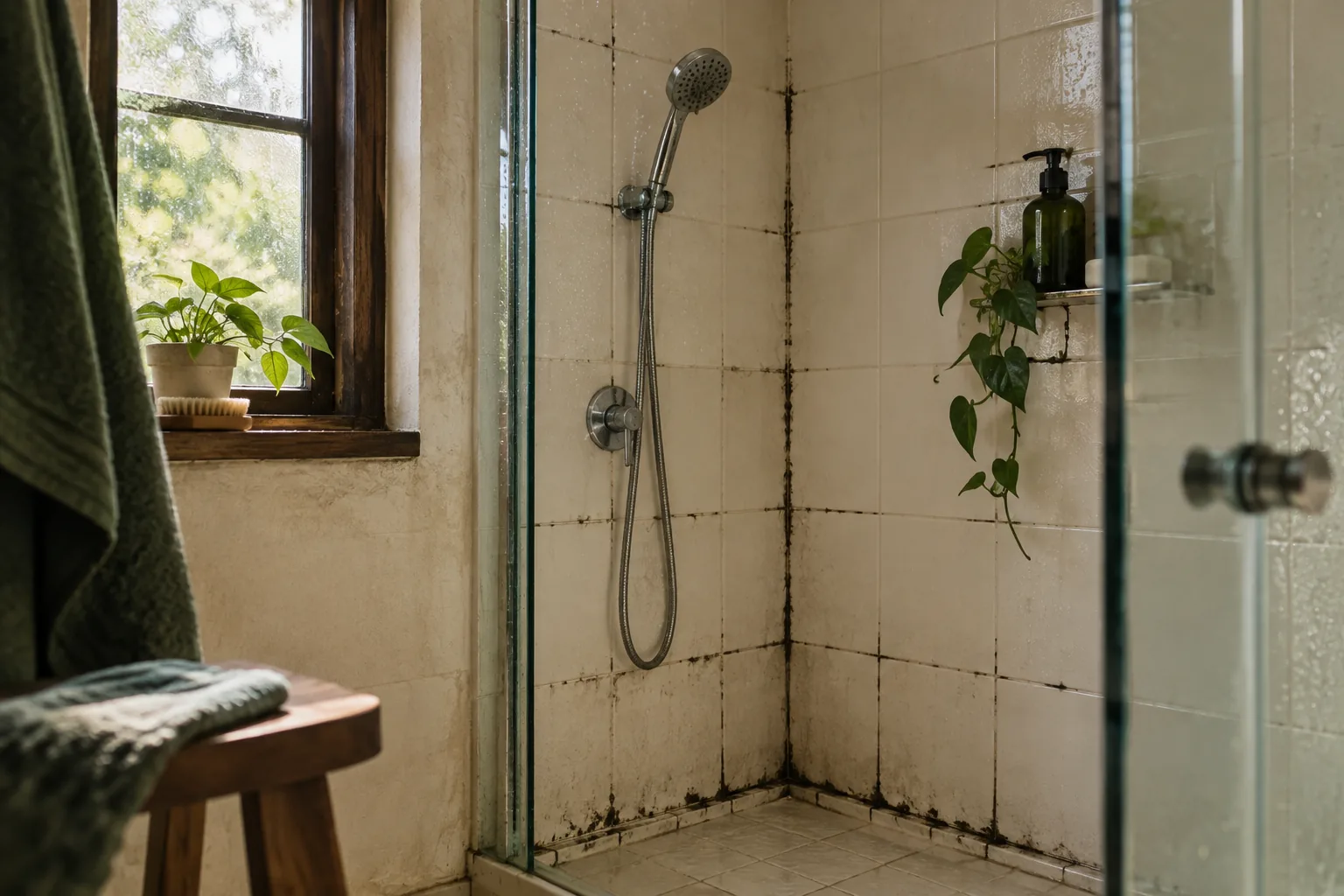
Bathroom ceiling growth and shower-joint concerns may involve different finishes, so include each only through an explicit scope discussion.
Kitchens
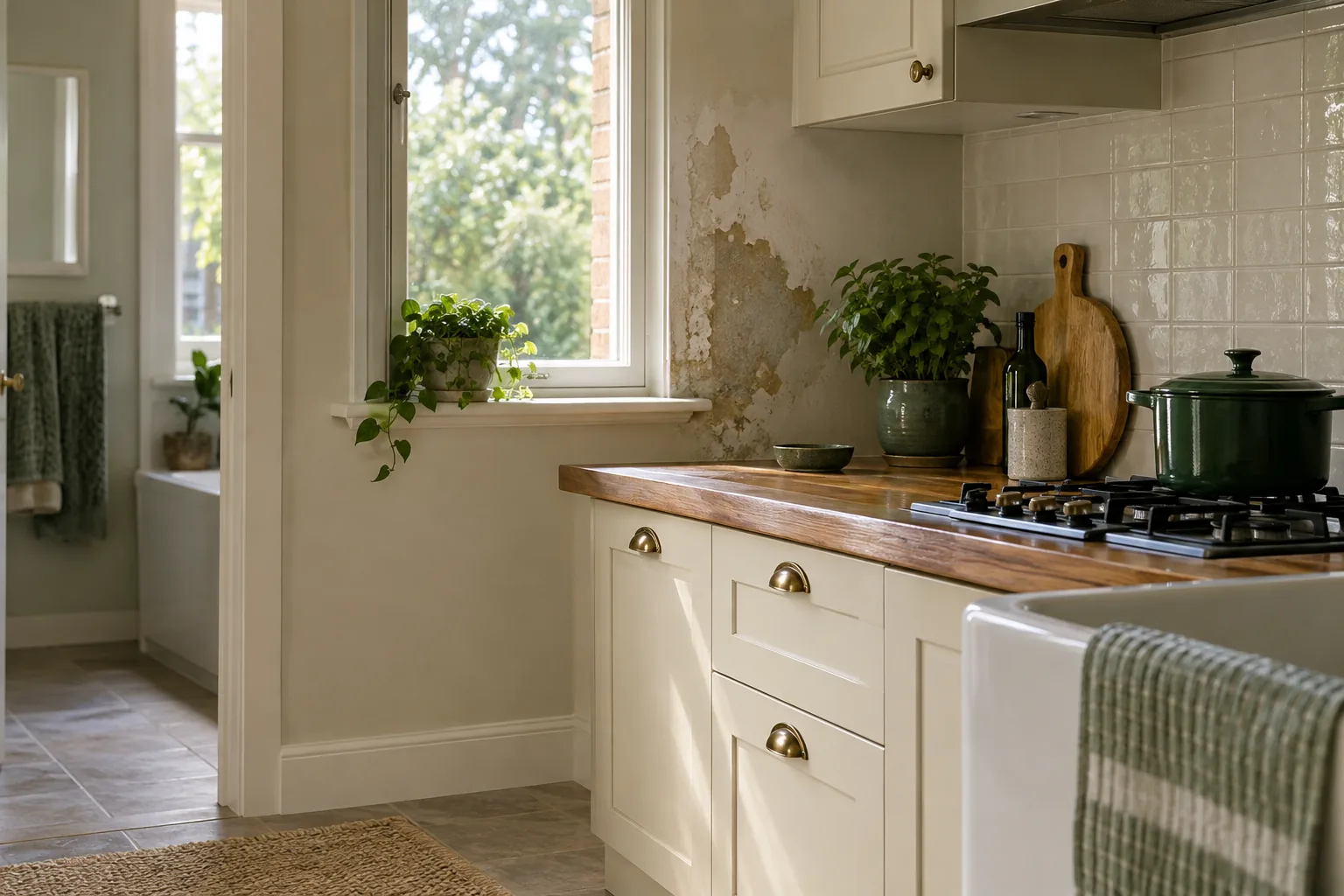
A kitchen ceiling must be distinguished from cupboards and contents; movable items may need preparation as directed.
Accessible affected surfaces
Other agreed affected walls, floors or ceilings remain visible-surface work, excluding insulation, cavities and household textiles.
PREPARE FOR THE ACTUAL JOB
Prepare without disturbing damaged linings
Arrange access to the room and clear movable belongings only as instructed. Do not scrape a damaged ceiling to prepare it for attendance. All occupants and pets leave during treatment. The average source guidance is around three hours per room, but ceiling area, contamination and accessibility can change the time required.
Water stains can remain and decorating requires separate scope. Final filtration does not provide an air-test certificate. Obtain specific return advice rather than using a dry-looking patch or elapsed average duration as permission to re-enter.
AFTER THE TREATMENT
Follow the ceiling after repairs
Keep the water-repair and surface-treatment follow-up records distinct.
Check the visible ceiling from a safe position after subsequent wet-weather events.
Follow through if the original leak has not been corrected.
Report spreading stains, loosened paint or renewed growth without opening the lining yourself.
Discuss the ceiling and access in the quote
Explain ceiling height, reachable area and repair status before requesting a quote. The room examples are labelled Mould Removal. Confirm remediation applicability, without assuming roof repairs or concealed water damage are included.
JACANA · EXACT ADDRESS & ACCESS
Enquiries for nearby addresses
Supply the Jacana address and identify the room beneath the marked ceiling. Nominate the entry contact and explain repair-related access limits. Nearby navigation does not establish attendance or safe ceiling access at this premises.
Questions about remediation
Can a sagging ceiling be treated immediately?
Do not assume so. Describe the sagging and avoid disturbing the lining; its condition and safe access need consideration before an appropriate surface-treatment scope can be agreed.
Does remediation include roof-leak repair?
No. Arrange roof or plumbing work separately. Explain its status so treatment planning does not mistake a proposed repair for a completed correction.
Should I scrape loose ceiling paint before the visit?
No. Do not disturb damaged material merely to improve the photograph or access. Explain the loose finish and follow the agreed preparation instructions.
Will the water stain disappear with mould treatment?
Not necessarily. Cosmetic staining can remain after contamination is addressed. Ask what appearance limitations apply before arranging any separate decorating.
Can fogging treat the insulation above the ceiling?
That is not promised. Concealed layers and insulation are outside the standard visible accessible scope, even where ULV dry fog is appropriate for the room.
How do I judge a later ceiling change?
Compare the visible area safely and note timing, water entry and finish changes. Report renewed growth or deterioration; neither room humidity nor appearance alone certifies the hidden assembly.
Explain your ceiling’s current condition
Call 03 8652 1296 with the ceiling finish, access limitations and known leak-repair status. Discuss what can be treated before arranging decorating.