
VISIBLE SURFACES · AGREED TREATMENT
Mould Remediation Moonee Ponds
An affected room contains a large amount of clothing. If this is the concern at your Moonee Ponds address, protect access without treating textiles as part of the package. Explain the visible condition and what can be reached before confirming the treatment appointment.
Visible treatment scope agreed
Professional filtration and treatment
Practical preparation discussed
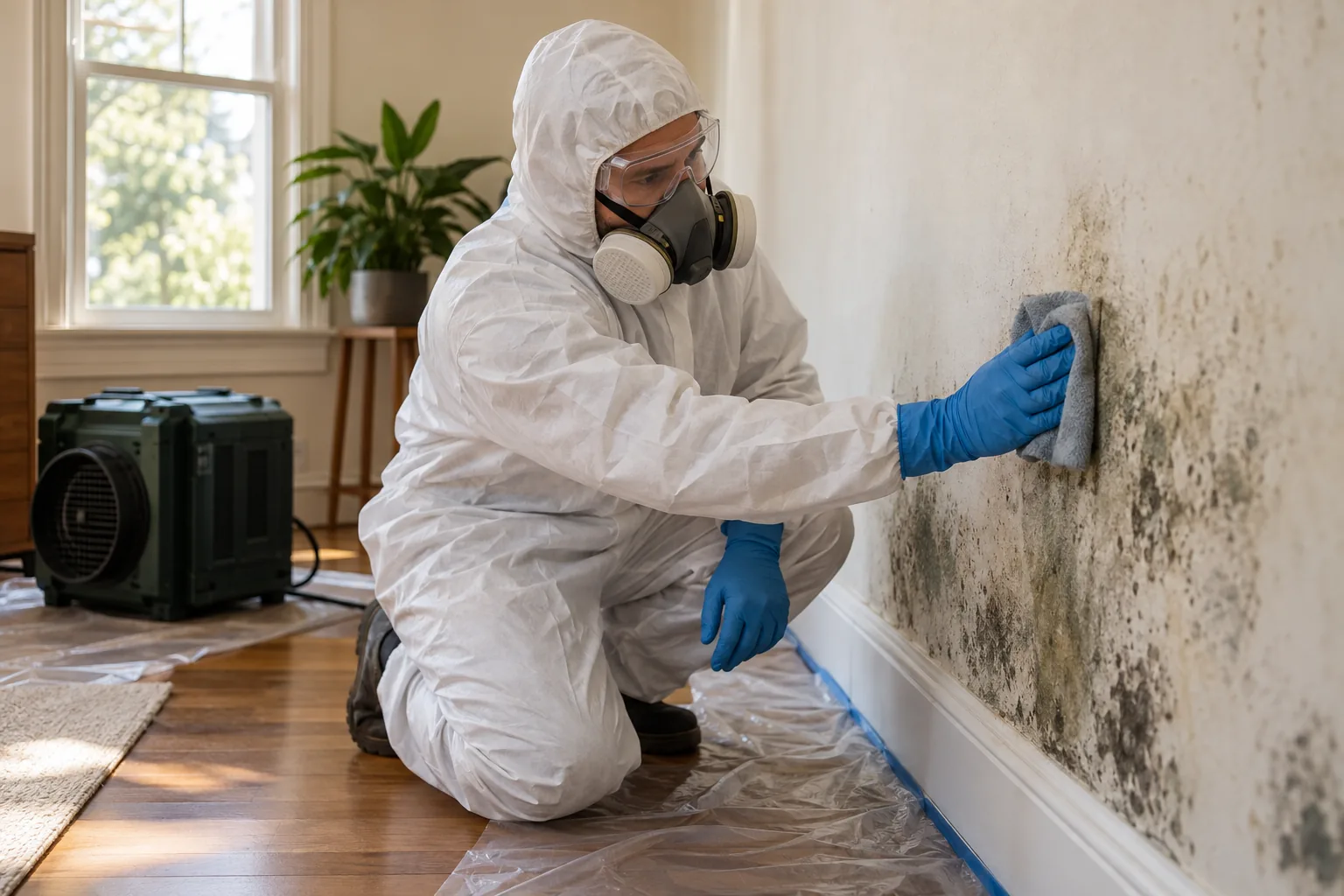

TREATMENT · FILTRATION · FOLLOW-THROUGH
A TREATMENT PLAN WITH CLEAR LIMITS
Plan treatment around the actual surface
A clothes-filled room requires a contents decision alongside the surface booking. Structural remediation is not a way to resolve textile concerns without a separate plan. An assessment conversation should separate the surface problem from assumptions about the source or the finish. Planning the boundary of the job helps avoid adding unrelated contents cleaning or repairs by implication. Professional remediation combines assessment, air protection, appropriate treatment, physical removal and final air cleaning.
A room filled with clothes needs a structural-surface enquiry with a clear contents exclusion. Treatment should not be represented as textile sanitising. Compare the remediation process with the intended job.
MOISTURE COMES FIRST
Treatment and moisture correction have separate roles
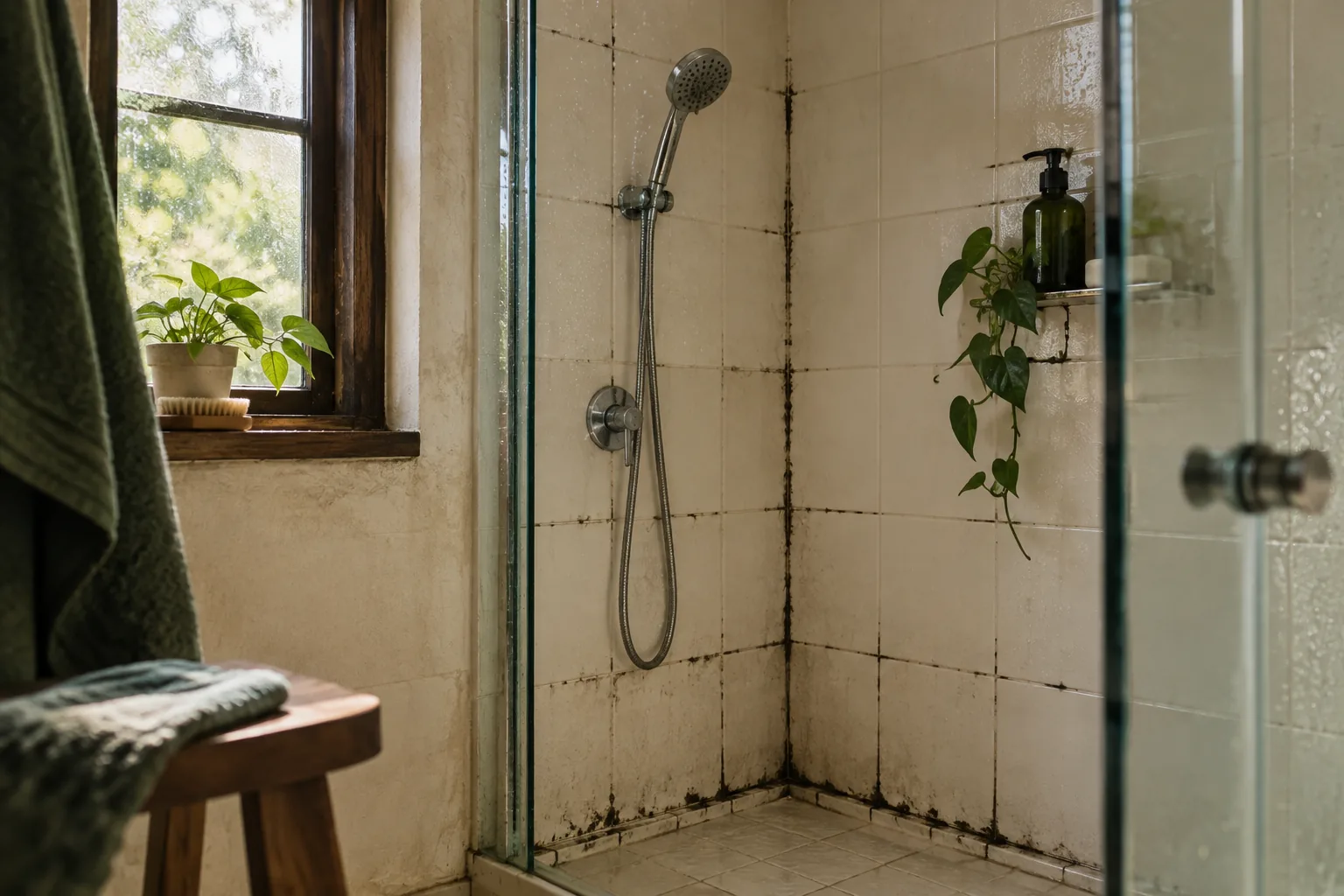
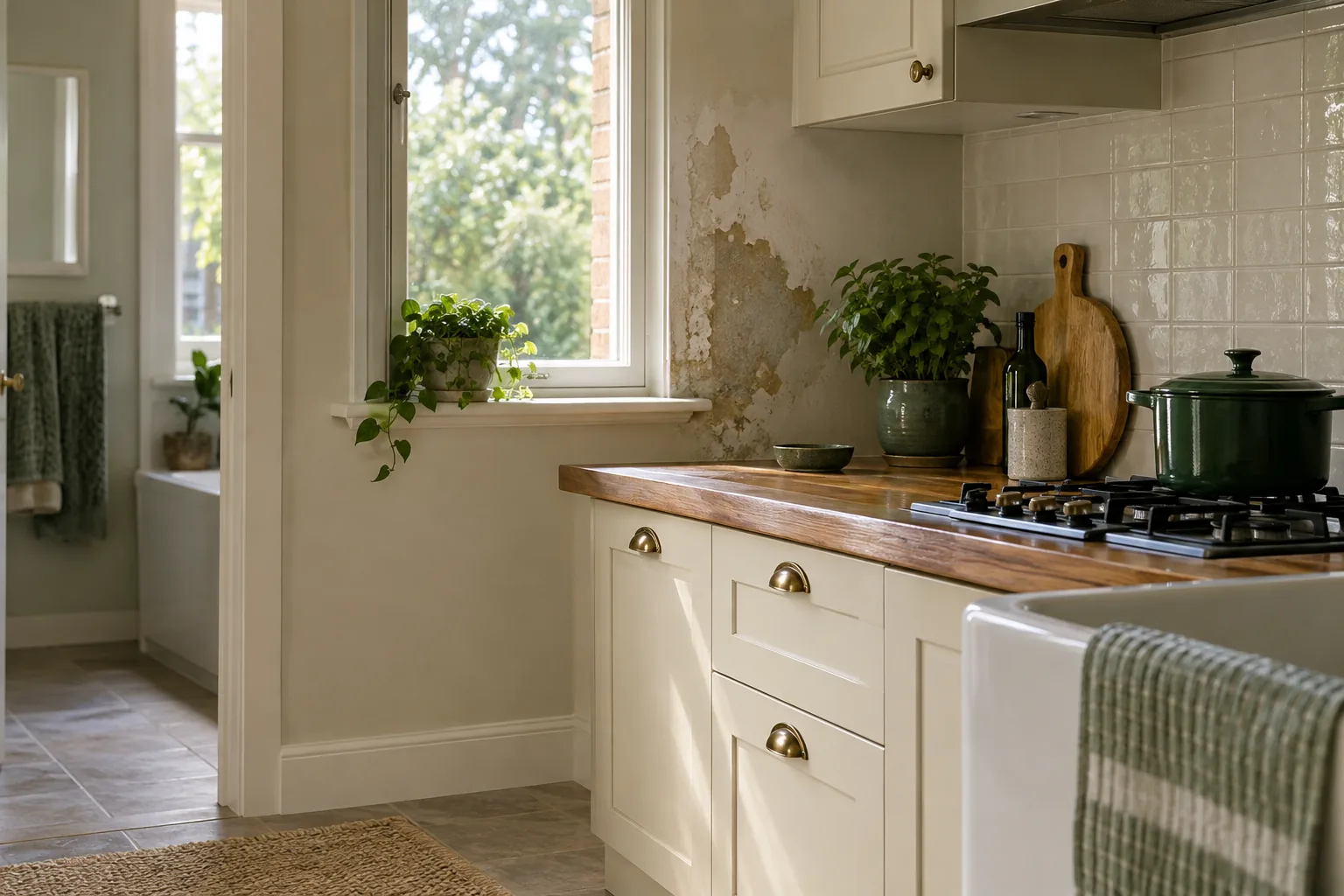
Clothing concerns can distract from the actual structural surface. Explain any dampness observed on the wall while keeping the contents enquiry separate.
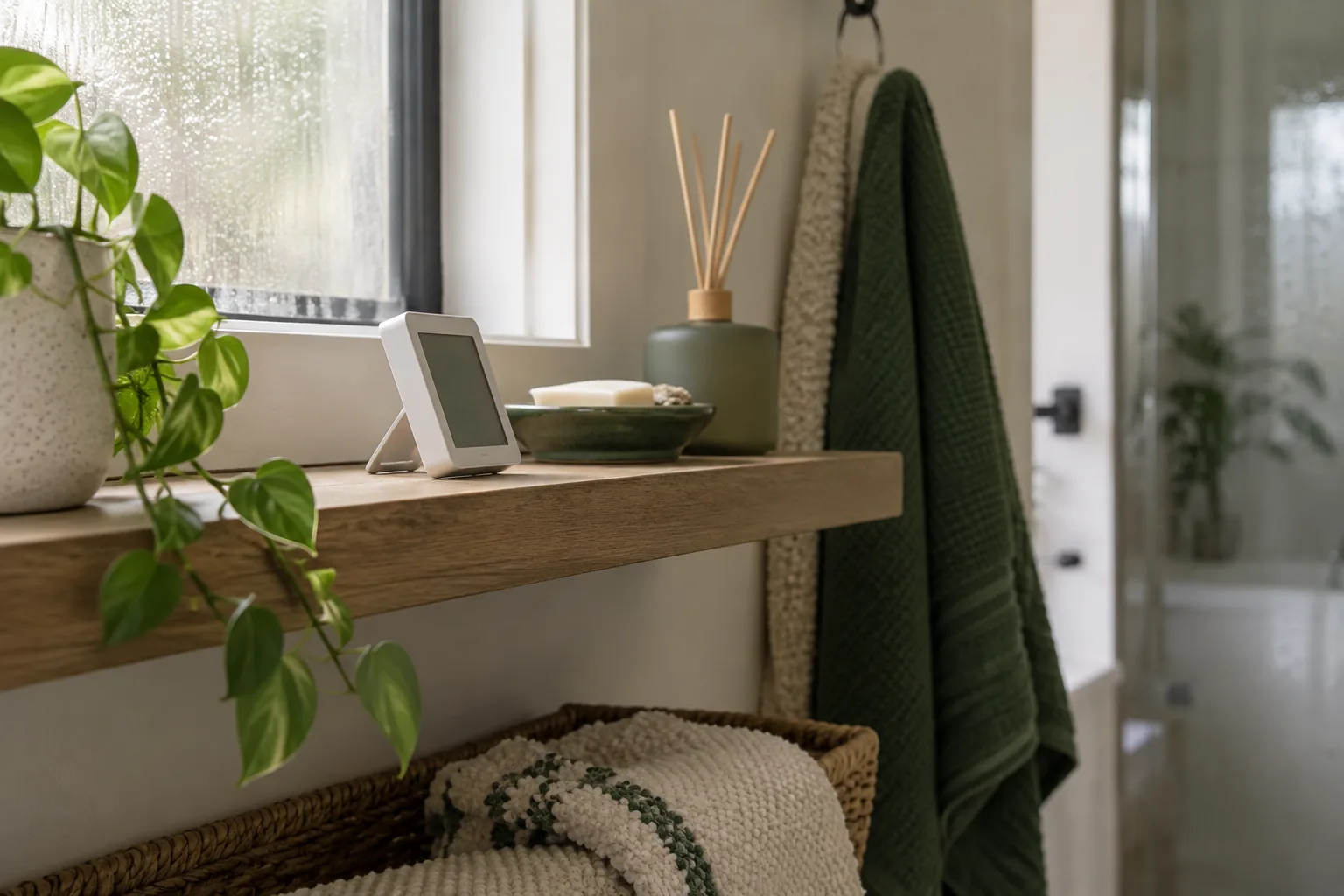
Room relative humidity may inform the discussion, but it does not establish whether stored garments are affected. Surface remediation does not remove the need for separate textile handling. Discuss inspection if assessment is needed before treatment.
FROM PREPARATION TO FOLLOW-THROUGH
A coordinated surface-remediation process
1
Assess and agree
Use the initial assessment to settle the intended structural surfaces and appropriate treatment decisions.
2
Protect the work area air
Set up the confirmed HEPA air scrubber before treatment to provide air filtration during the work.
3
Apply the appropriate treatment
Discuss suitable HOCl application for the actual job, including conditional ULV treatment rather than guaranteed fogging.
4
Remove visible growth
Removal addresses visible contamination within the agreed access limits; it is not demolition or cosmetic restoration.
5
Complete air cleaning
Run the HEPA air-cleaning stage through treatment and afterwards. Clarify return advice and the structural result without presenting the stored clothing as treated or independently assessed.
Agree the accessible structural surfaces
Walls
Visible wall patches can be discussed for treatment without promising clearance behind the lining.
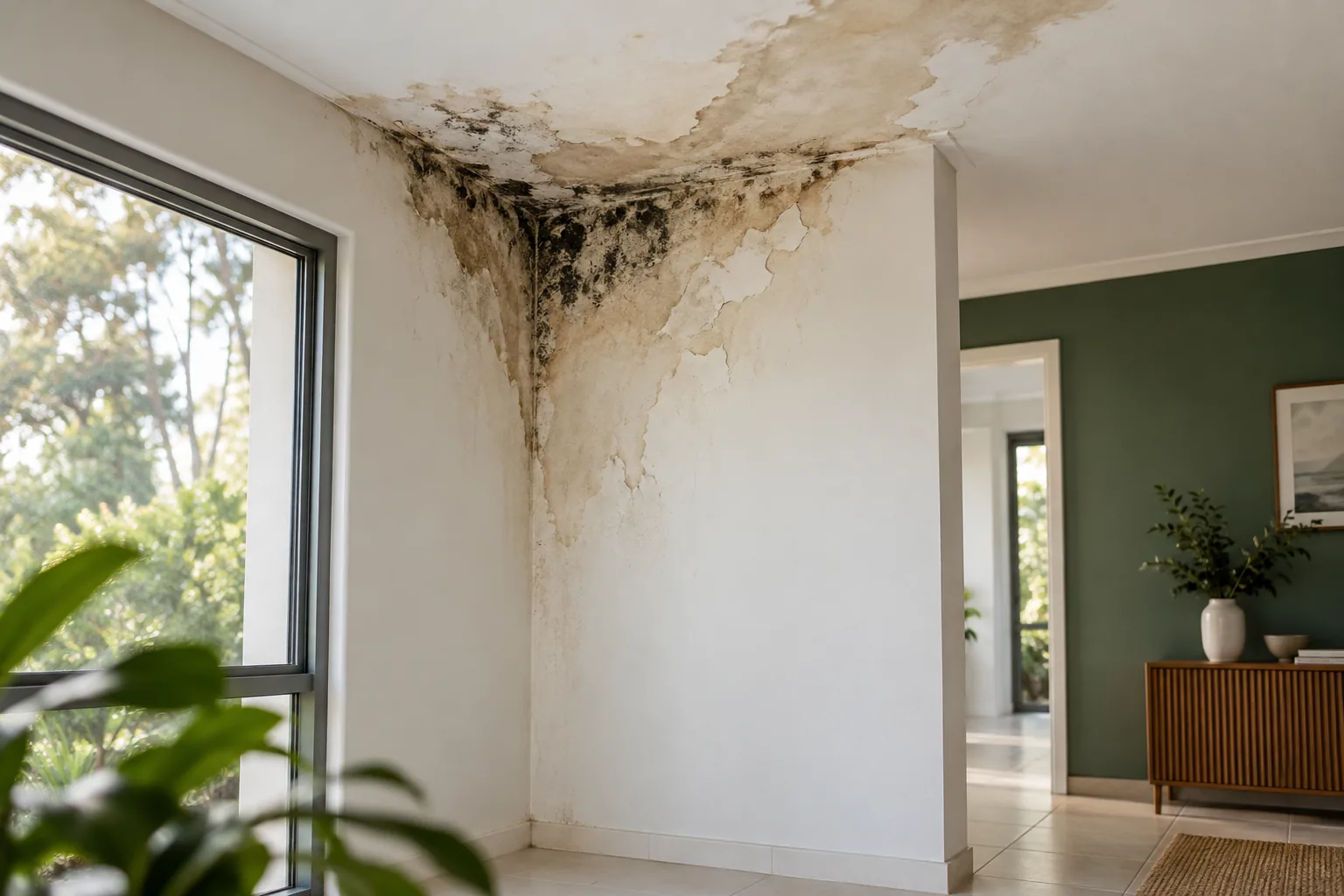
Ceilings
Mention ceiling height, obstructions and deterioration so overhead access can be considered.
Bathrooms
Bathroom humidity and plumbing concerns need follow-through beyond treating existing visible growth.
Kitchens
Kitchen contents are separate from the accessible structural surfaces agreed for remediation.
Accessible affected surfaces
Other affected walls, ceilings or floors need individual confirmation of material and accessibility.
PREPARE FOR THE ACTUAL JOB
Prepare for a bounded treatment job
Arrange the movement of clothing and confirm how the structural wall will be reached. Closed bags nearby are not automatically adequate equipment clearance.
People and pets must leave during treatment. Ask when the property may be used again and keep clothing decisions outside the room-treatment expectations.
AFTER THE TREATMENT
Keep the moisture question open after treatment
After structural treatment, maintain separate decisions for the stored clothing and the wall. Do not interpret filtration as clearance of garments, or return belongings merely to cover the affected area. Ordinary ventilation and humidity management can support room conditions without proving textile or material dryness. Note new visible changes and follow up on relevant repairs where needed. A later enquiry should say whether the concern is the surface or the contents, because those purposes differ. Keeping access clear makes observations easier and avoids turning a room-treatment result into an unsupported promise for everything kept there.
Arrange separate attention to leaks or building defects where relevant.
Use ordinary ventilation and humidity management appropriate to the room.
Watch for fresh damp signs or new growth, rather than judging only old marks.
Confirm the scope before accepting a price
Confirm the structural surfaces rather than asking for a clothes-filled room to be treated as a single object. Clothing concerns require their own arrangements outside the remediation quotation. Check pricing information and confirm its applicability to this job.
MOONEE PONDS · EXACT ADDRESS & ACCESS
Service enquiries around Moonee Ponds
A Moonee Ponds enquiry should distinguish the address’s structural surfaces from the clothing concern. Confirm scope and attendance rather than expecting a locality page to include textiles. Browse Areas We Cover for the service navigation.
Questions about remediation
Do you treat clothes while remediating the room?
No. Clothing is excluded, and a structural-surface treatment does not include the stored textiles.
Should clothes be left in closed bags nearby?
Ask where belongings should be moved for this job. Bagging them does not automatically create adequate equipment or surface access.
Does HEPA filtration make affected clothing usable?
No. The air-cleaning process is not a treatment or clearance service for clothing.
Can you assess the wall once the wardrobe is emptied?
Discuss whether the wall itself is accessible; emptying contents may not remove a fixed obstruction.
What if the clothing smells but the wall has no visible patch?
Explain the concern and ask whether assessment is a more appropriate first step. Do not assume remediation of an unseen surface is the right booking.
What should we prioritise before the appointment?
Confirm the intended structural surfaces, clear the agreed working area and arrange occupants’ departure. Handle excluded textiles through a separate appropriate service.
Discuss the visible problem before booking
Use 03 8652 1296 to separate the structural wall enquiry from concerns about stored clothing. Confirm attendance for the Moonee Ponds address and agree clearance, surface treatment and the separate handling of excluded textiles.