
VISIBLE SURFACES · AGREED TREATMENT
Mould Remediation Niddrie
An affected wall is next to kitchen appliances. If this is the concern at your Niddrie address, arrange safe access and separate appliance responsibility. Explain the visible condition and what can be reached before confirming the treatment appointment.
Visible treatment scope agreed
Professional filtration and treatment
Practical preparation discussed

TREATMENT · FILTRATION · FOLLOW-THROUGH
A TREATMENT PLAN WITH CLEAR LIMITS
Plan treatment around the actual surface
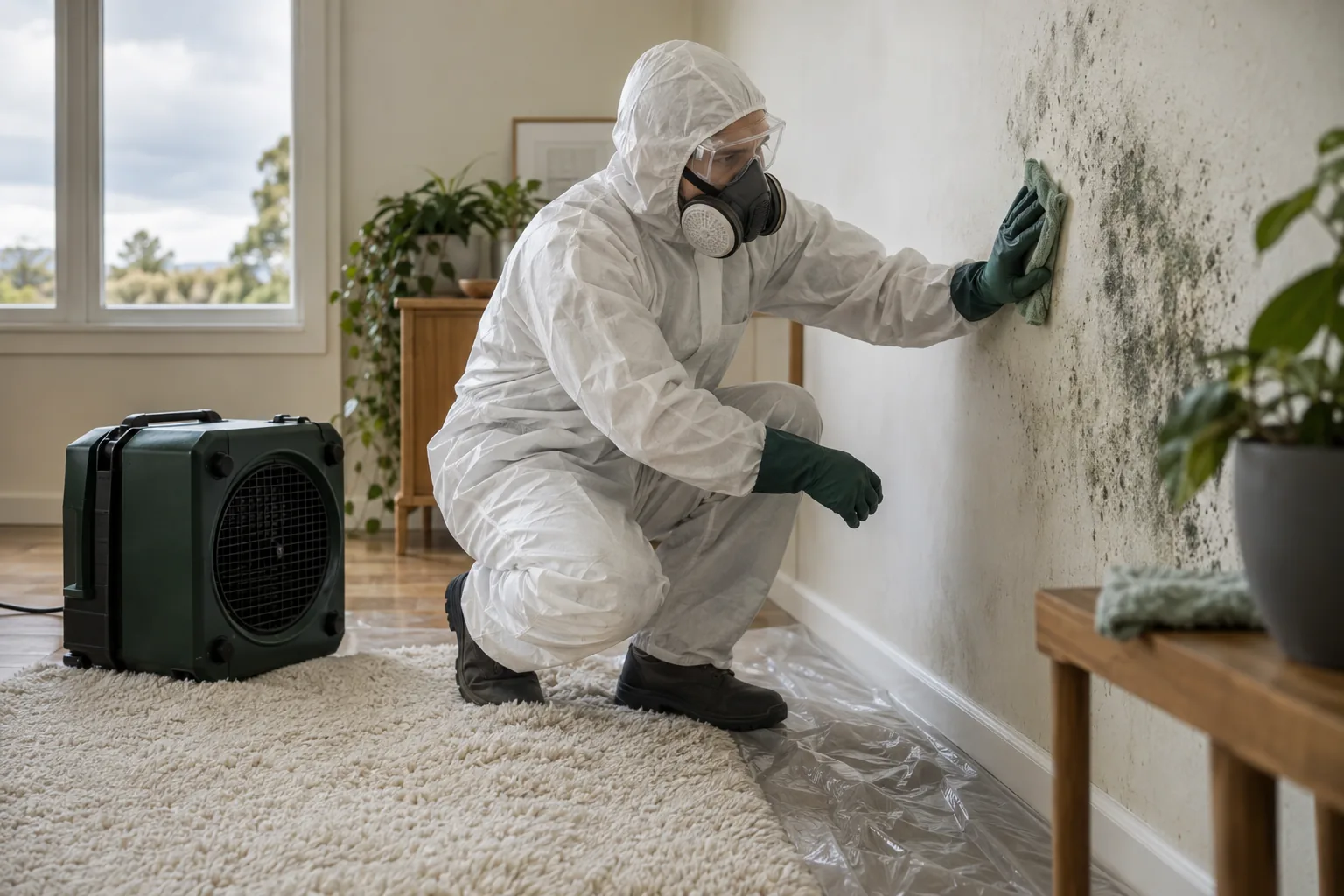
Appliances can make a kitchen wall inaccessible even when the patch is visible. Agree safe clearance and separate repair responsibility rather than expecting a technician to relocate equipment. The purpose is to treat existing visible contamination within an agreed structural-surface scope. Clarify the affected material, reachable area and intended outcome before equipment is brought into the room. Professional remediation combines assessment, air protection, appropriate treatment, physical removal and final air cleaning.
The appliance obstruction should be resolved as an access decision. Keep the treatment’s structural surface distinct from equipment repair or contents handling. Compare the remediation process with the intended job.
MOISTURE COMES FIRST
Treatment and moisture correction have separate roles
A suspected appliance connection problem needs its own responsibility and repair plan. Visible wall growth beside equipment does not identify which component is responsible.
Room-humidity information cannot certify that the appliance or wall cavity is dry. Keep access, repair and existing-growth treatment as separate practical decisions. Discuss inspection if assessment is needed before treatment.

FROM PREPARATION TO FOLLOW-THROUGH
A coordinated surface-remediation process
1
Assess and agree
Assess the reachable surfaces and discuss their condition before agreeing treatment.
2
Protect the work area air
Air protection includes the confirmed HEPA scrubber; it does not certify that a room is sterile.
3
Apply the appropriate treatment
The treatment stage uses HOCl, with ULV application where appropriate; hidden-cavity clearance is outside the scope.
4
Remove visible growth
Physically remove visible mould with the confirmed professional equipment using H-class filtration.
5
Complete air cleaning
Continue HEPA filtration throughout the wall work and afterwards. Review return instructions and the accessible result, keeping appliance servicing and concealed plumbing concerns outside the completed treatment.
Agree the accessible structural surfaces
Walls
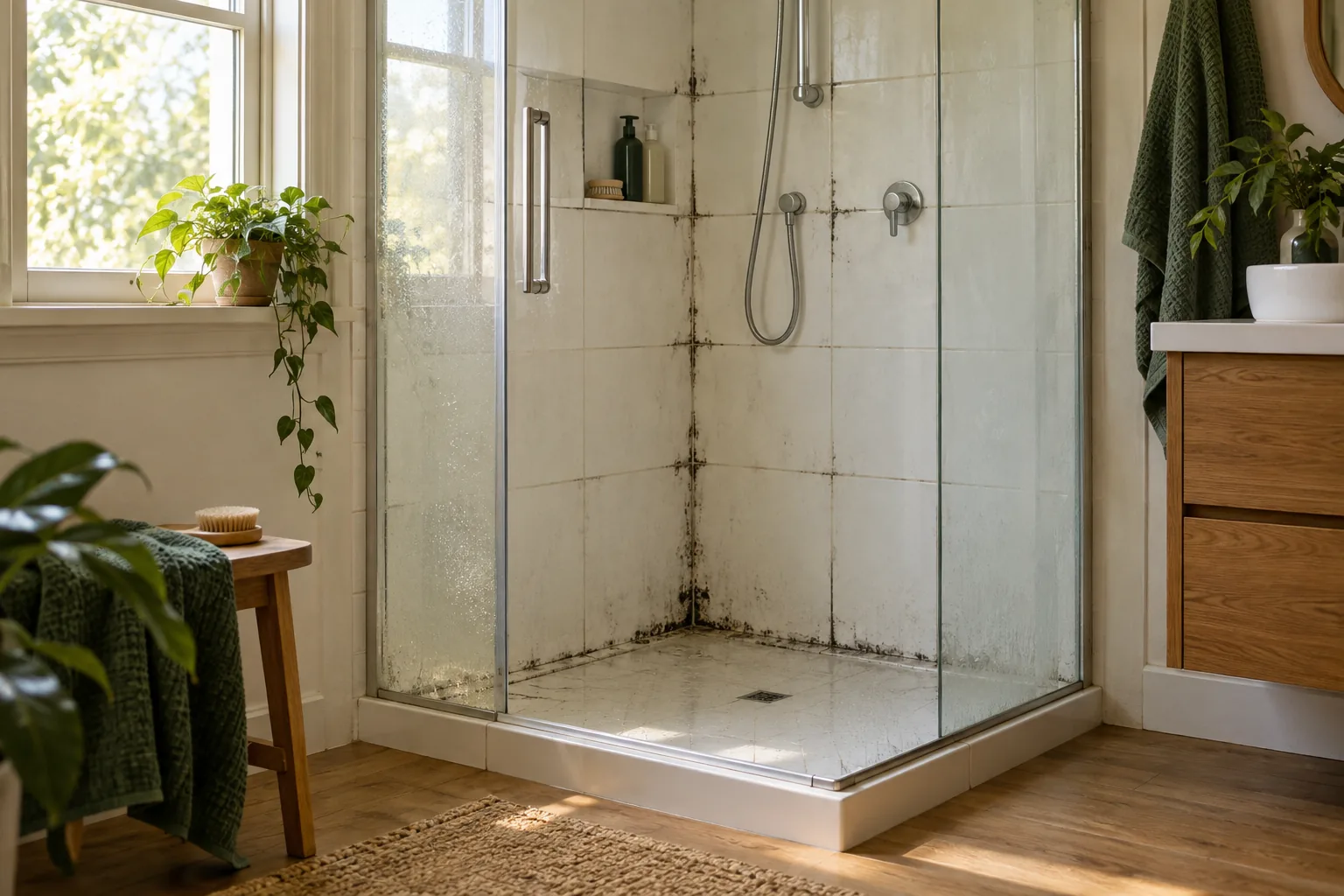
Describe wall growth and any loose or fragile finish before agreeing the reachable treatment area.
Ceilings
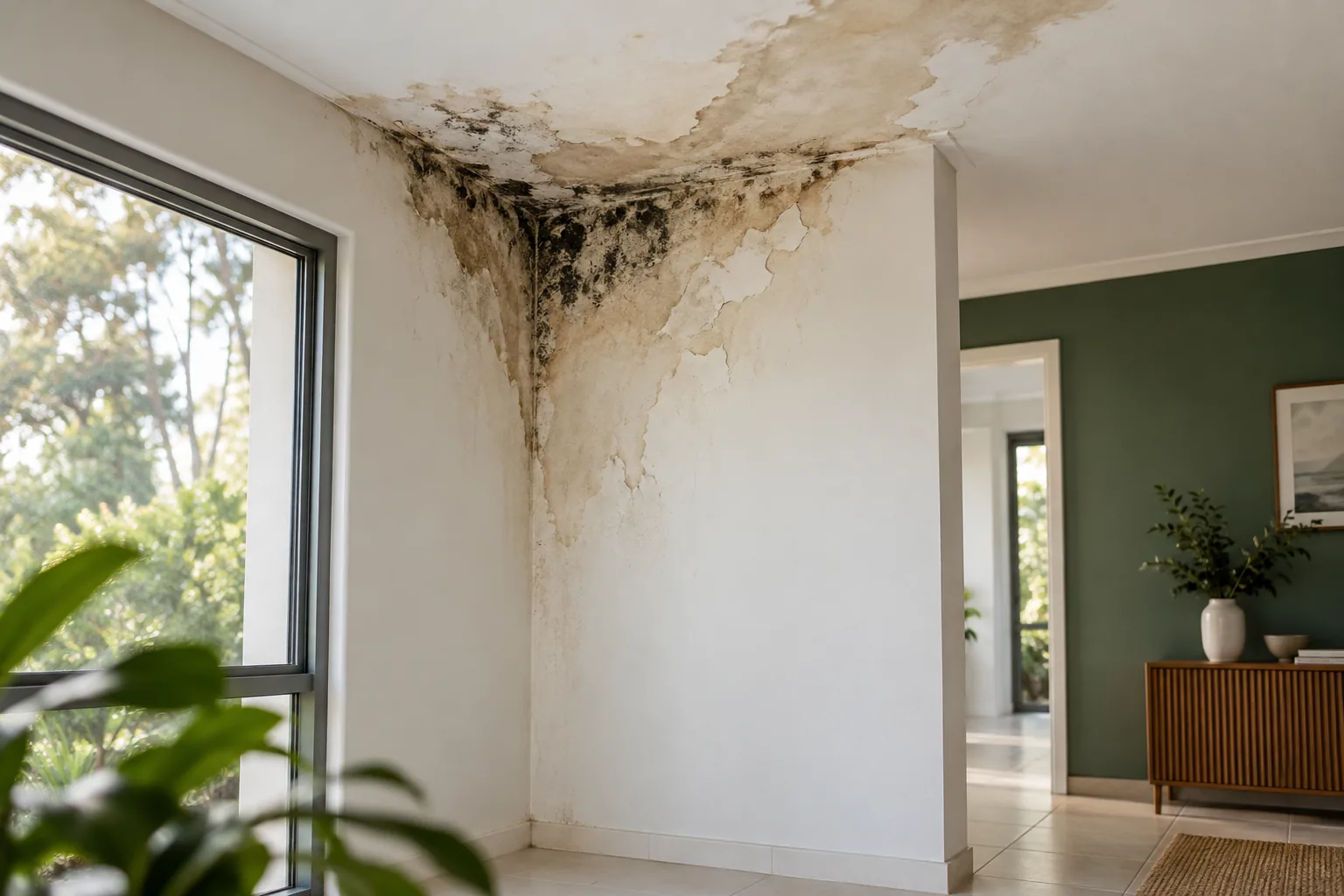
Ceiling treatment concerns reachable surfaces, while sagging material or structural damage needs separate attention.
Bathrooms
Describe growth beyond the shower recess as well as the recess itself when discussing scope.
Kitchens
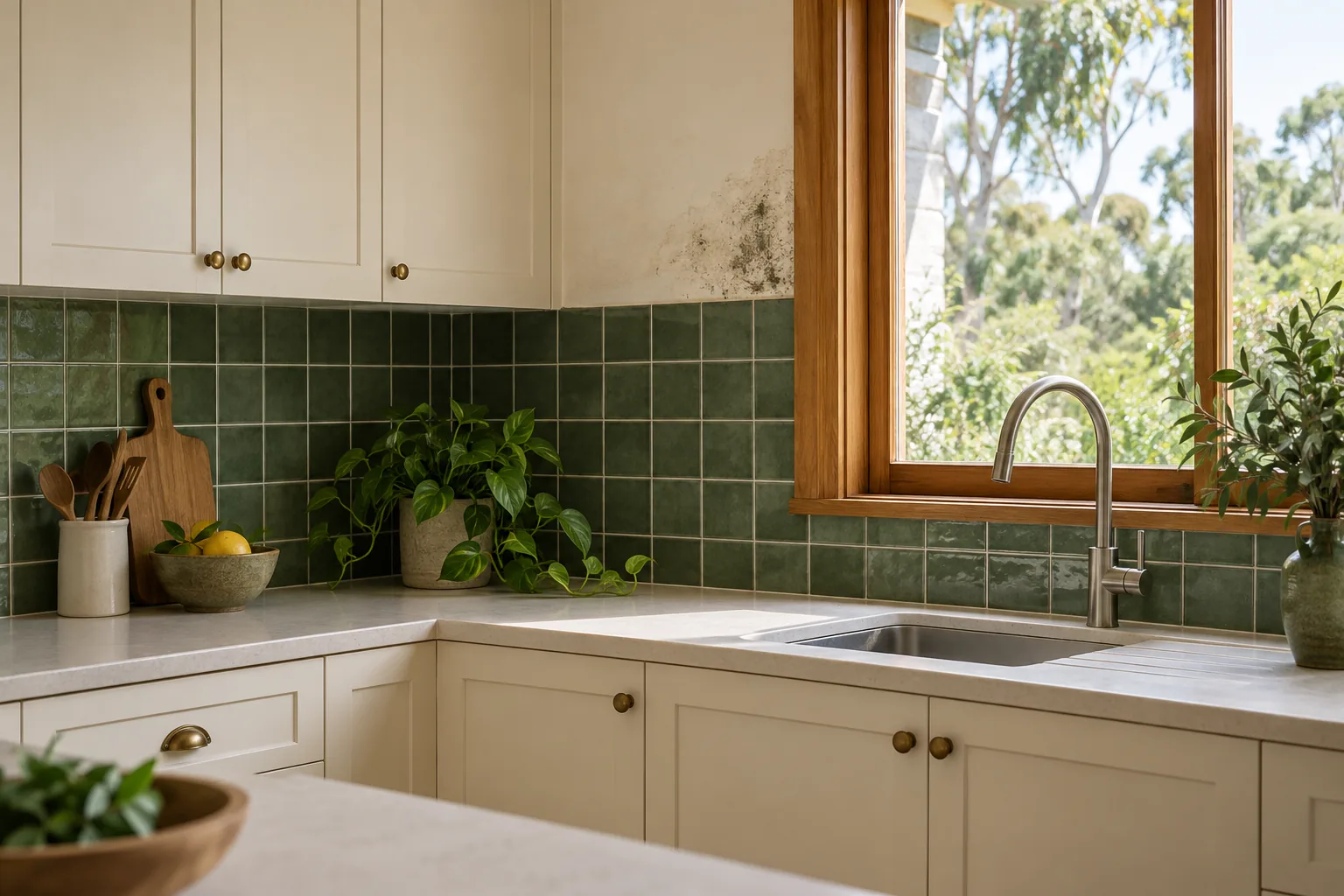
Explain kitchen access and any suspected plumbing concern separately from the visible surface job.
Accessible affected surfaces
The standard scope excludes furniture, carpets, mattresses, curtains, clothing and other textiles.
PREPARE FOR THE ACTUAL JOB
Prepare for a bounded treatment job
Agree safe appliance access and responsibility before confirming the treatment visit. The technician should not arrive to an unplanned fixed-equipment moving task.
People and pets leave while treatment is undertaken. Ask about the expected schedule and return instructions without assuming appliance repair is part of completion.
AFTER THE TREATMENT
Keep the moisture question open after treatment
After treatment, keep appliance repair and access responsibilities distinct from the structural surface result. Observe any fresh wall changes and follow up with the appropriate repair provider where a connection concern remains. Do not use a cleaner wall to certify that equipment is leak-free or that a cavity is dry. The excluded contents also need their own handling arrangements. Clear access helps future observation, while ordinary humidity management may support conditions without replacing repair work. Describe later changes factually so another enquiry does not begin with an assumed appliance diagnosis.
Arrange separate attention to leaks or building defects where relevant.
Use ordinary ventilation and humidity management appropriate to the room.
Watch for fresh damp signs or new growth, rather than judging only old marks.
Confirm the scope before accepting a price
Clarify which wall can be reached once appliance access is resolved. A remediation quote should not silently include moving fixed equipment or repairing its connections. Check pricing information and confirm its applicability to this job.
NIDDRIE · EXACT ADDRESS & ACCESS
Service enquiries around Niddrie
For Niddrie, state the premises and how appliance access will be resolved. Check attendance and safe preparation before coordinating any separate trades. Browse Areas We Cover for the service navigation.
Strathmore · Aberfeldie · Oak Park · Essendon
Questions about remediation
Do you move fixed kitchen appliances?
Do not assume that is included. Discuss the obstruction and arrange appropriate access separately where needed.
Can the wall behind an appliance be treated if it is not moved?
Only reachable surfaces are within the agreed standard scope. An inaccessible area is not cleared by treating the visible edge.
Does the service repair an appliance leak?
No. Appliance or plumbing repairs are separate tasks.
Are cupboards and their contents automatically included?
No. Confirm the structural surfaces to be treated and handle excluded belongings separately.
Can I unplug and move everything myself?
Arrange safe preparation appropriate to the appliance and follow the agreed access plan. Do not create a hazard merely to expose the wall.
What should the enquiry explain?
Describe visible growth, the appliance position and any known leak. This allows access and treatment discussions without implying appliance repair or concealed coverage.
Discuss the visible problem before booking
Explain the appliance obstruction and visible kitchen wall on 03 8652 1296. For the Niddrie address, settle safe access and separate repair responsibility before accepting treatment under assumptions about moving equipment or repairing connections.