
SURFACE TREATMENT · MOISTURE FOLLOW-THROUGH
Mould Remediation Plenty
If visible growth spans a larger part of a Plenty room, describe the affected surfaces rather than selecting a price category from appearance alone. Explain whether it reaches a ceiling, another wall or an obstructed edge. The treatment plan needs the actual accessible extent and material condition, not just the room’s floor area.
Describe extent across structural surfaces
Agree the accessible boundary clearly
Separate treatment from source and finish work
TREATMENT & FOLLOW-THROUGH
UNDERSTANDING THE AFFECTED ROOM
A larger patch still needs precise boundaries
Explain which surfaces show growth and which areas you cannot see. Mention fixed fittings, delicate finishes and previous work. Do not assume a broad visible area proves the whole property or every cavity is affected; define observations and unknowns separately before the proposed treatment is agreed.
Our remediation service combines assessment, air protection, suitable treatment and physical removal on accessible structural surfaces. Furniture, textiles and hidden material remain outside standard scope. Agree walls, ceilings and floors individually rather than treating the room label as unrestricted restoration.
MOISTURE & CONTAMINATION
Record source information beyond the apparent size
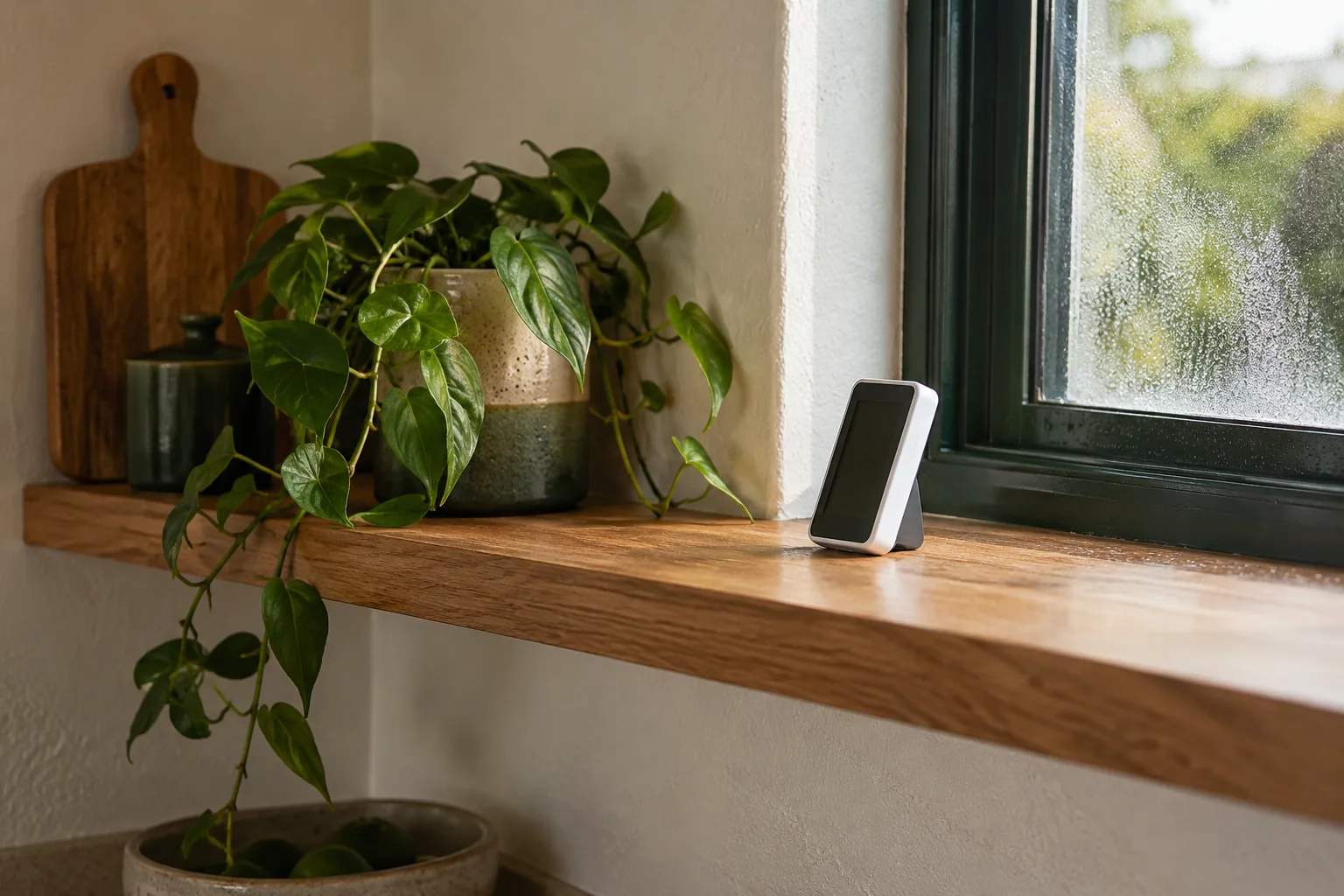
Give wetting dates, known leaks and any repairs. Extent alone cannot identify the cause. The professional hygrometer assesses relative humidity in room air, rather than material moisture inside a wall or proof that a concealed area is dry.
Discuss accessible inspection if the visible boundary is uncertain. Plumbing and structural repairs remain separate. Ongoing moisture can support recurrence after treatment, so a wider contamination area still needs a practical source response instead of a guarantee based on application alone.
A DEFINED TREATMENT SEQUENCE
The assessed process for the agreed extent
1
Review surfaces and access
Show visible growth across the nominated areas. Agree structural boundaries and identify finish or concealed concerns requiring another decision.
2
Set up HEPA protection
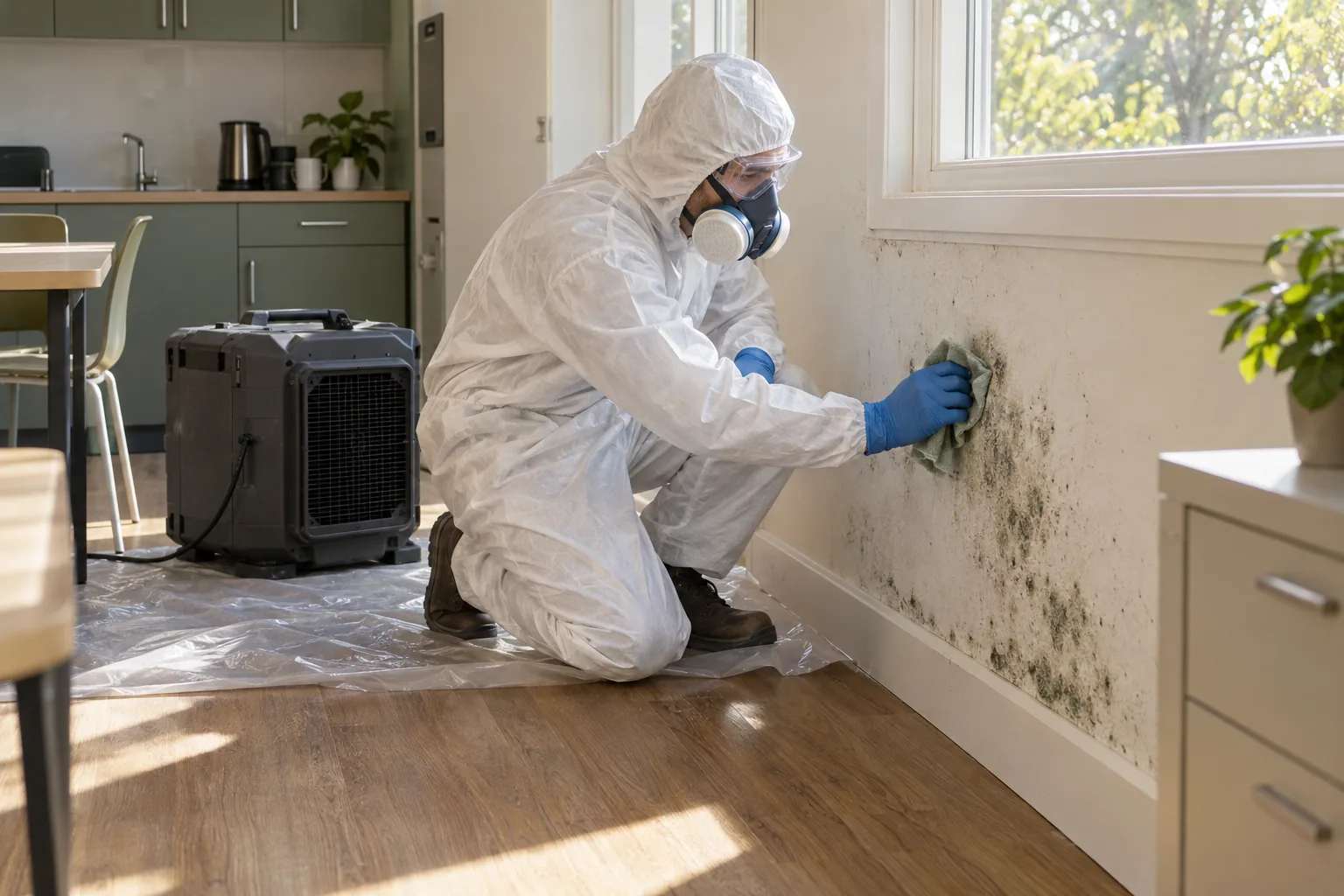
The technician establishes HEPA air filtration before treatment. Discuss equipment access across the proposed work area; filtration supports the process without certifying all air or hidden surfaces are clear.

3
Apply appropriate HOCl treatment
HOCl is applied within the assessed plan. ULV dry fog is used in most cases where suitable, without turning a larger scope into automatic concealed-area coverage.
4
Physically remove visible contamination
Removal uses professional equipment with H-class filtration. Explain delicate or damaged finishes beforehand; rebuilding and complete cosmetic restoration remain different tasks.
5
Complete air cleaning and review
HEPA operation continues during and after the work. Confirm return instructions and remaining source or decorating tasks against the actual surfaces treated.
Describe each proposed structural surface
Walls
Identify growth on each exposed wall and any fixed obstruction. Unseen sections remain a separate access issue.
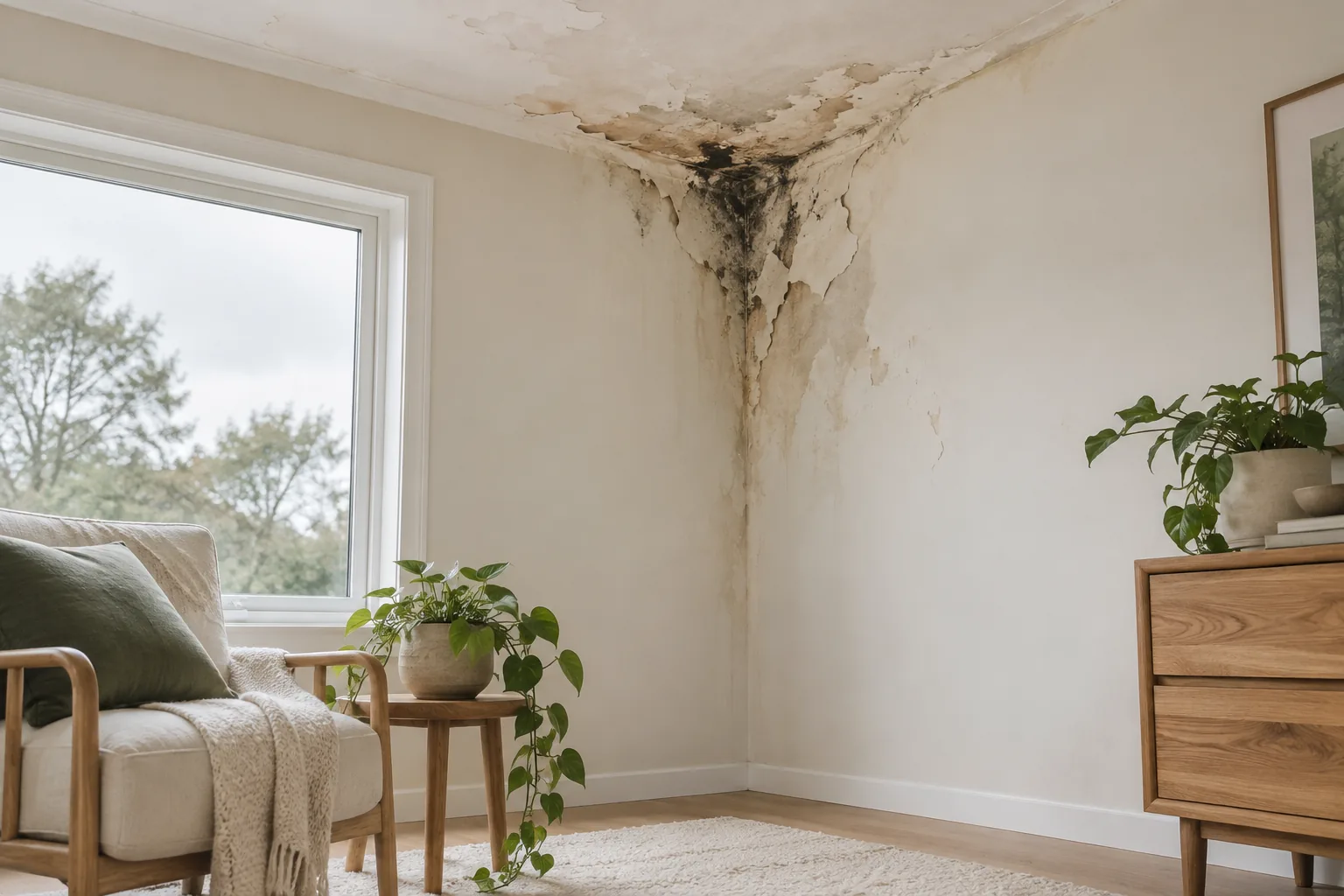
Ceilings
Mention ceiling extent, height and water history safely. Treatment does not include repairs above the lining.
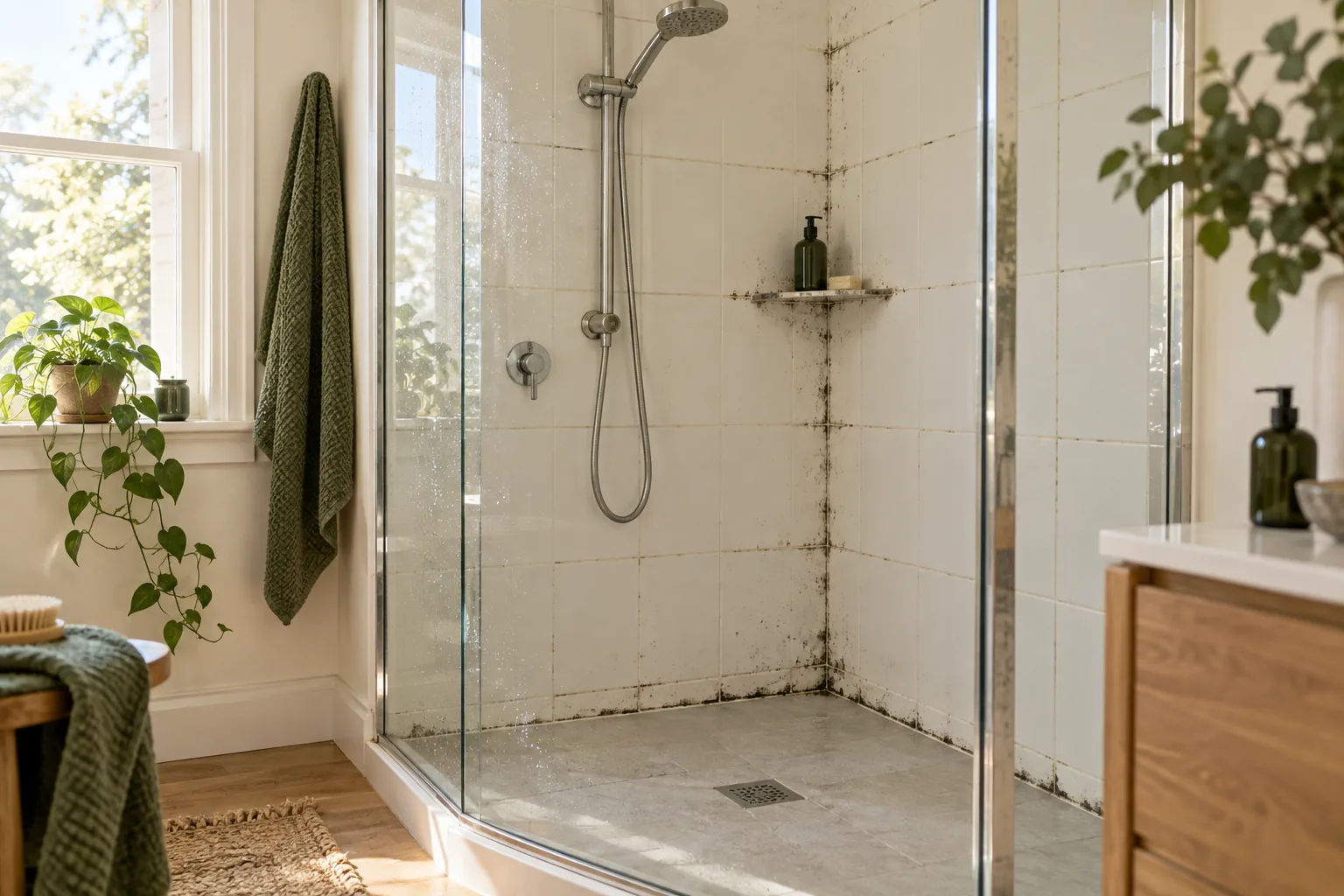
Bathrooms
Show structural bathroom contamination separately from towels and fabrics. Ventilation observations inform the moisture conversation.
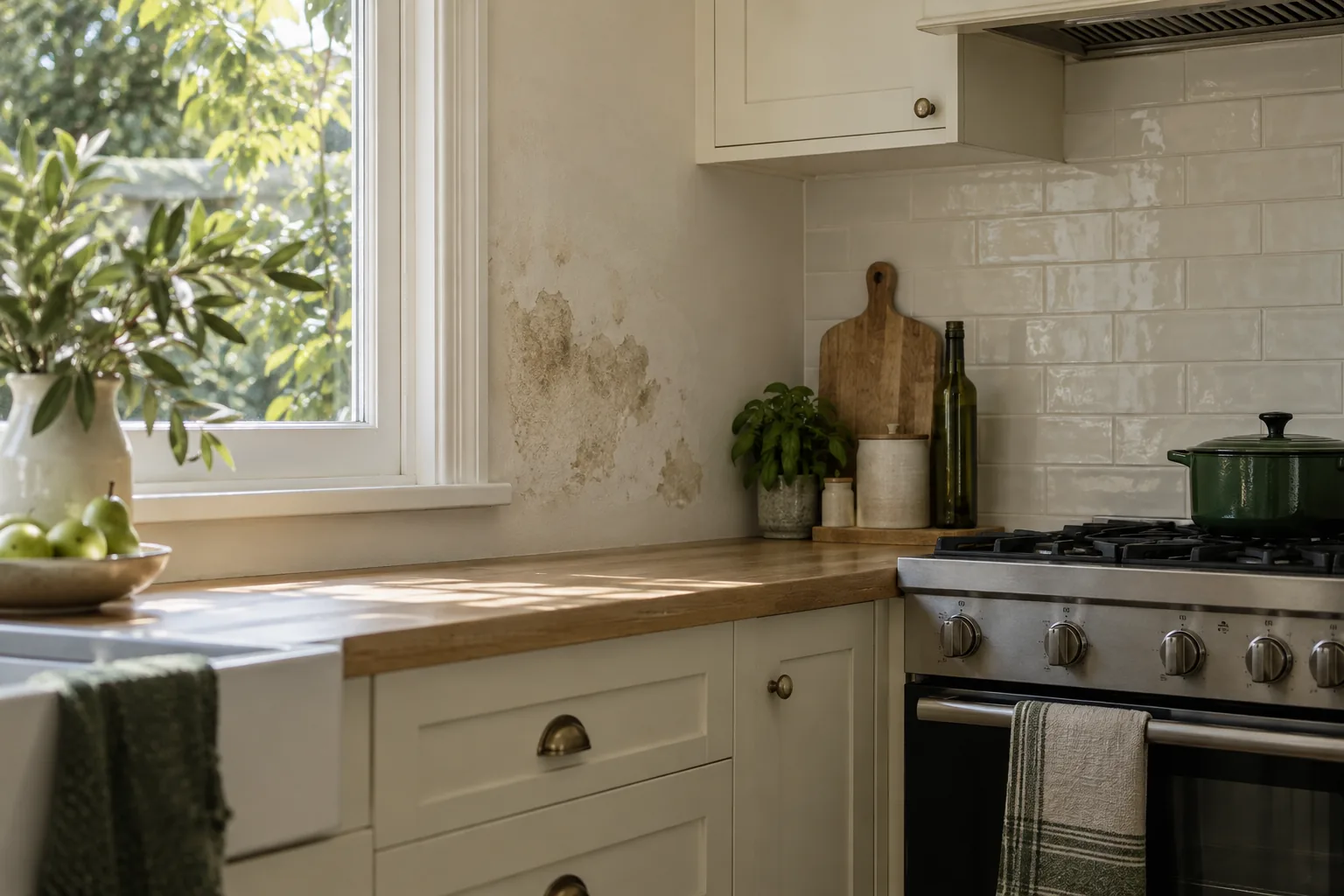
Kitchens
Describe kitchen wall patches and plumbing or cooking wetting. Appliances and cabinetry are not included by room size.
Accessible affected surfaces
Assess an exposed floor subject to its finish and access. Carpet and furnishings remain excluded even within a broader job.
AFTER TREATMENT
Prepare for the extent actually agreed
Discuss clearance and fragile belongings throughout the nominated area. People and pets leave the property for treatment; obtain job-specific departure and return guidance. Average source guidance is about three hours per room, with size, contamination and accessibility affecting duration. Charging is not hourly.
Cosmetic staining may remain and decorating is separately quoted. Ask which surfaces were addressed and what questions remain. A cleaner broad area cannot establish concealed dryness or completion of source repairs; renewed wetting should be recorded before it is hidden again.
KEEP MOISTURE IN VIEW
Track new growth against a clear starting description
A dated record helps distinguish renewed patches from an old cosmetic mark. Prevention depends on ongoing moisture control and appropriate repair, not simply the original affected-area size.
Record new wetting and its surface location.
Maintain suitable extraction while producing steam.
Arrange separate repairs where leaks or defects continue.
Confirm extent before assuming a price category
Explain the accessible surfaces when checking pricing applicability. Its room table is labelled Mould Removal. No remediation-specific area threshold, surcharge or whole-property package is confirmed here; discuss the actual scope rather than interpreting a photograph as a tariff.
PLENTY · EXACT ADDRESS & ACCESS
Plenty and nearby premises enquiries
Give the actual address and authorised contact. Nearby service pages cannot assess the larger boundary or establish attendance before your room details are discussed.
Questions about remediation
Does a larger patch prove every room needs treatment?
No. Describe observed areas and unknowns honestly. The agreed scope should identify actual visible surfaces rather than assume property-wide contamination.
Can I choose the price category from floor area alone?
Do not assume that. Affected surfaces, material condition and access need discussion, and remediation price applicability must be confirmed.
Is there a confirmed square-metre threshold on this page?
No treatment threshold is established here. Describe the actual visible extent and ask about the proposed quotation rather than relying on an invented measurement rule.
Can an obstructed patch be included without discussing access?
Access still needs agreement. Identify fixed fittings or coverings before assuming the unseen area is part of the treatment.
Will a broader treatment remove every cosmetic stain?
Complete cosmetic restoration is not promised. Staining may remain, and decorating needs separate scope after treatment and moisture questions are addressed.
Should I ask whether one or several surfaces are being quoted?
Yes. Confirm the nominated walls, ceilings or floors so the proposed extent is clear rather than inferred from a room label.
Discuss the Plenty extent surface by surface
Call 03 8652 1296 with visible boundaries, finishes and wetting history. Agree accessible treatment before price or timing assumptions.