
VISIBLE SURFACES · THOUGHTFUL RESTORATION
Mould Remediation Safety Beach
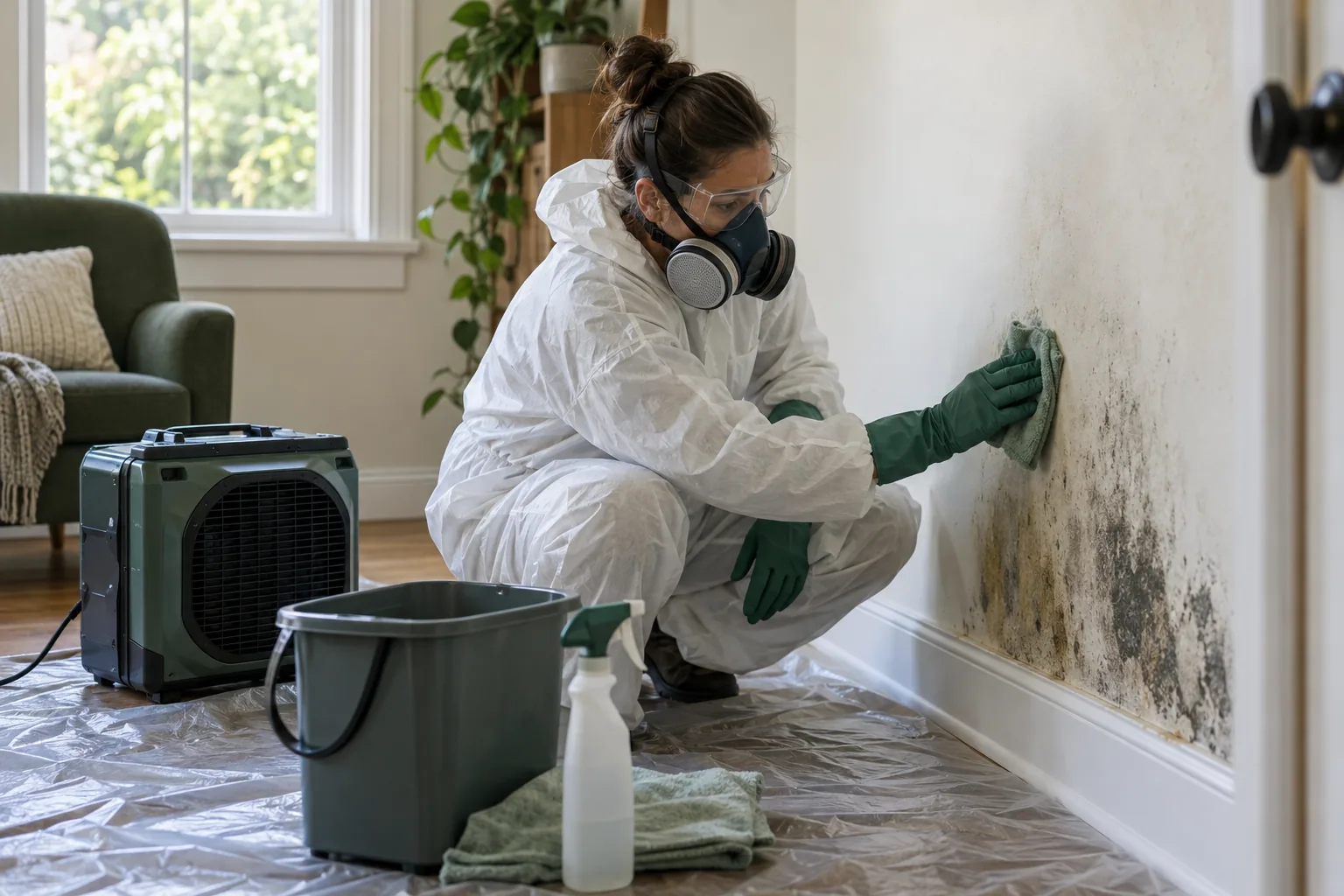
If growth is visible on a wall adjoining a bathroom, describe that exposed face without deciding the source from its position. For a Safety Beach enquiry, identify the affected room, finish and actual wetting observations. Structural-surface remediation is separate from determining whether plumbing or waterproofing needs repair.
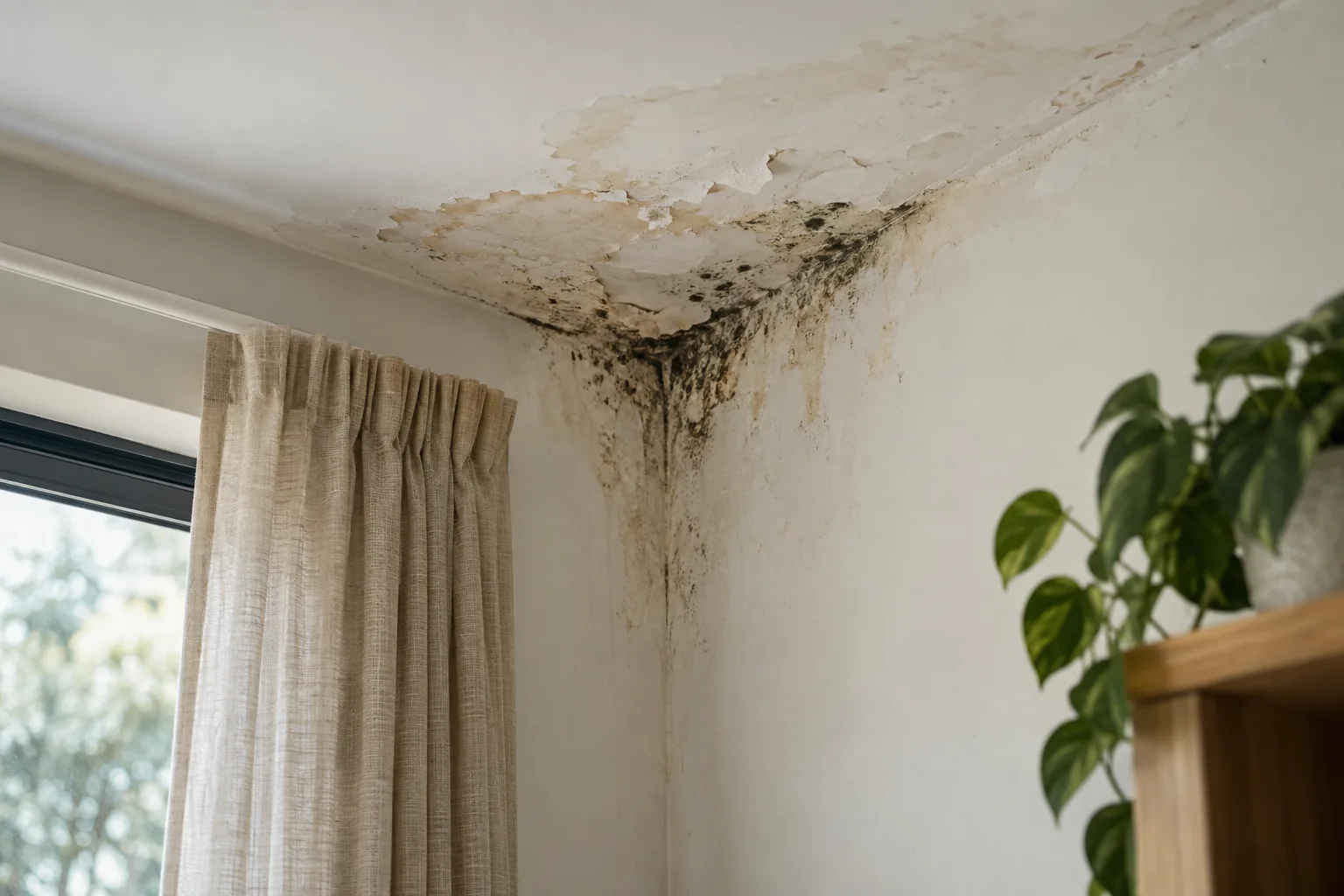
ASSESS · FILTER · RESTORE
The affected wall is identified in its own room.
Suspected causes remain distinct from observations.
Repair work has a separate scope.
The adjoining wall is the request, not proof of a bathroom defect
Describe visible extent, coating and any fixed obstruction on the exposed face. The professional remediation process can be discussed for suitable accessible contamination. A wall beside a shower does not establish the condition behind its lining or automatically include work inside the bathroom.
Explain damage before agreeing application. Hidden backing, insulation and cavities remain outside standard treatment. Furniture and textiles are excluded, even when they sit near the patch. If a separate repair opens another face, have newly exposed contamination described and included explicitly instead of extending the original wall result through the structure.
Record wetting without diagnosing waterproofing from the outline
Explain when dampness was observed and whether it changes after bathroom use, rainfall or another event where that timing is known. Do not infer a complete cause from proximity. An accessible inspection enquiry can clarify assessment limits if treatment suitability is uncertain.
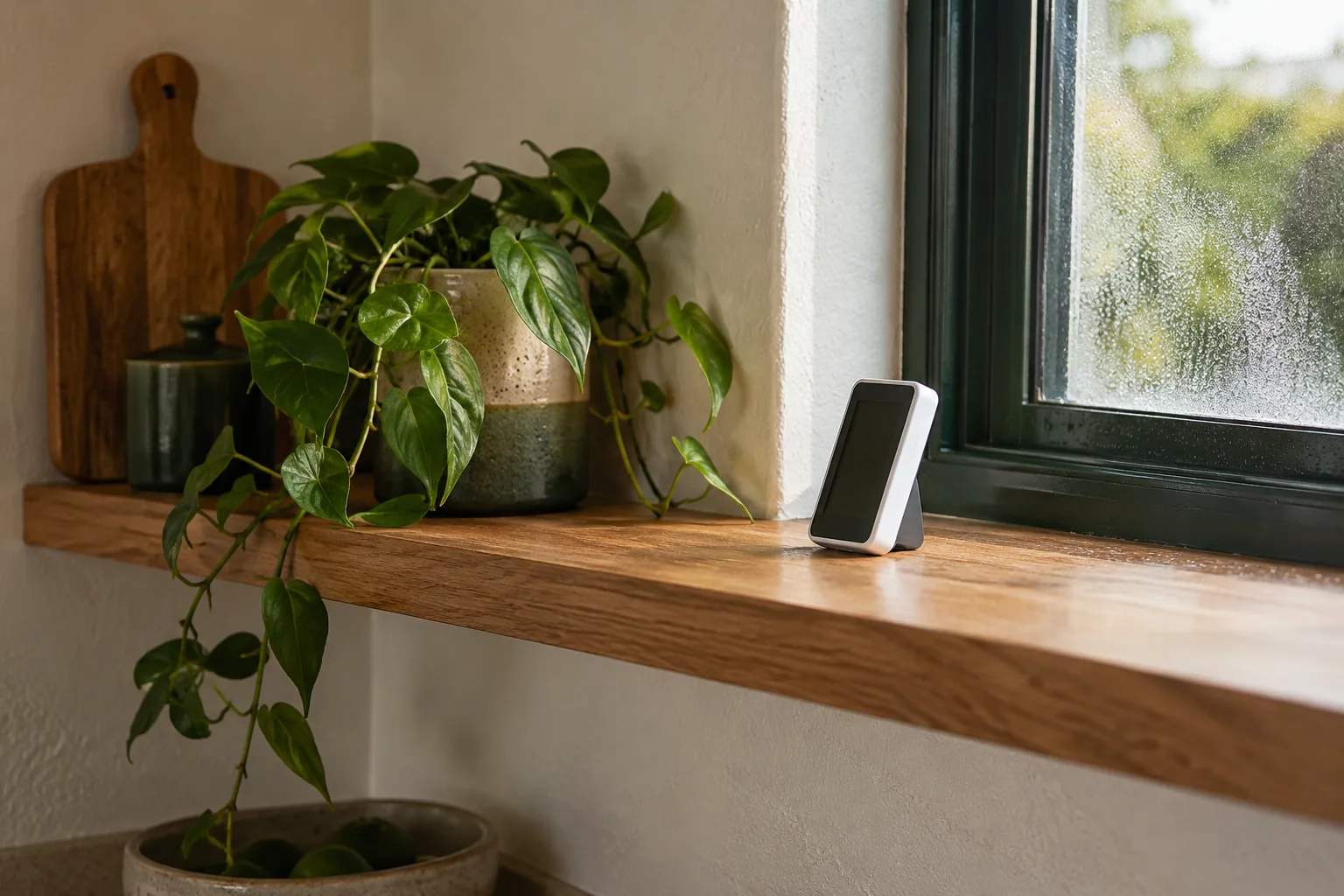
The professional hygrometer measures room-air relative humidity, not waterproofing performance or moisture within the adjoining wall. It cannot certify plumbing sound. Appropriate repair providers need to address relevant defects separately. Ventilation and source correction support follow-through, but treating the exposed growth cannot guarantee that continuing water will not affect the finish again.
PLAN · FILTER · TREAT · REMOVE · CONTINUE
Treatment on the nominated exposed face
1
Assess the reachable wall
Review current visible contamination and finish condition in the affected room, agree suitable surfaces and retain the suspected bathroom cause as a separate question.
2
Prepare HEPA air protection
Set up the confirmed HEPA air scrubber before application in the prepared area, without describing filtration as a plumbing or waterproofing test.

3
Choose appropriate HOCl application
Apply suitable HOCl with ULV dry fog where appropriate, keeping concealed backing and unagreed bathroom areas outside the treatment promise.
4
Physically remove visible growth
Use professional H-class filtered equipment within the agreed reachable structural scope, excluding source repairs and textile treatment.
5
Continue air cleaning and explain remaining concerns
Maintain HEPA filtration during and after the process, then discuss actual return advice, residual staining and separate moisture follow-through.
Keep every room face clear
Walls
Identify the exposed wall in the adjoining room and describe coating damage without assuming the hidden reverse is included.
Ceilings
A ceiling mark needs its own location and safe reach rather than inclusion based on bathroom proximity.
Bathrooms
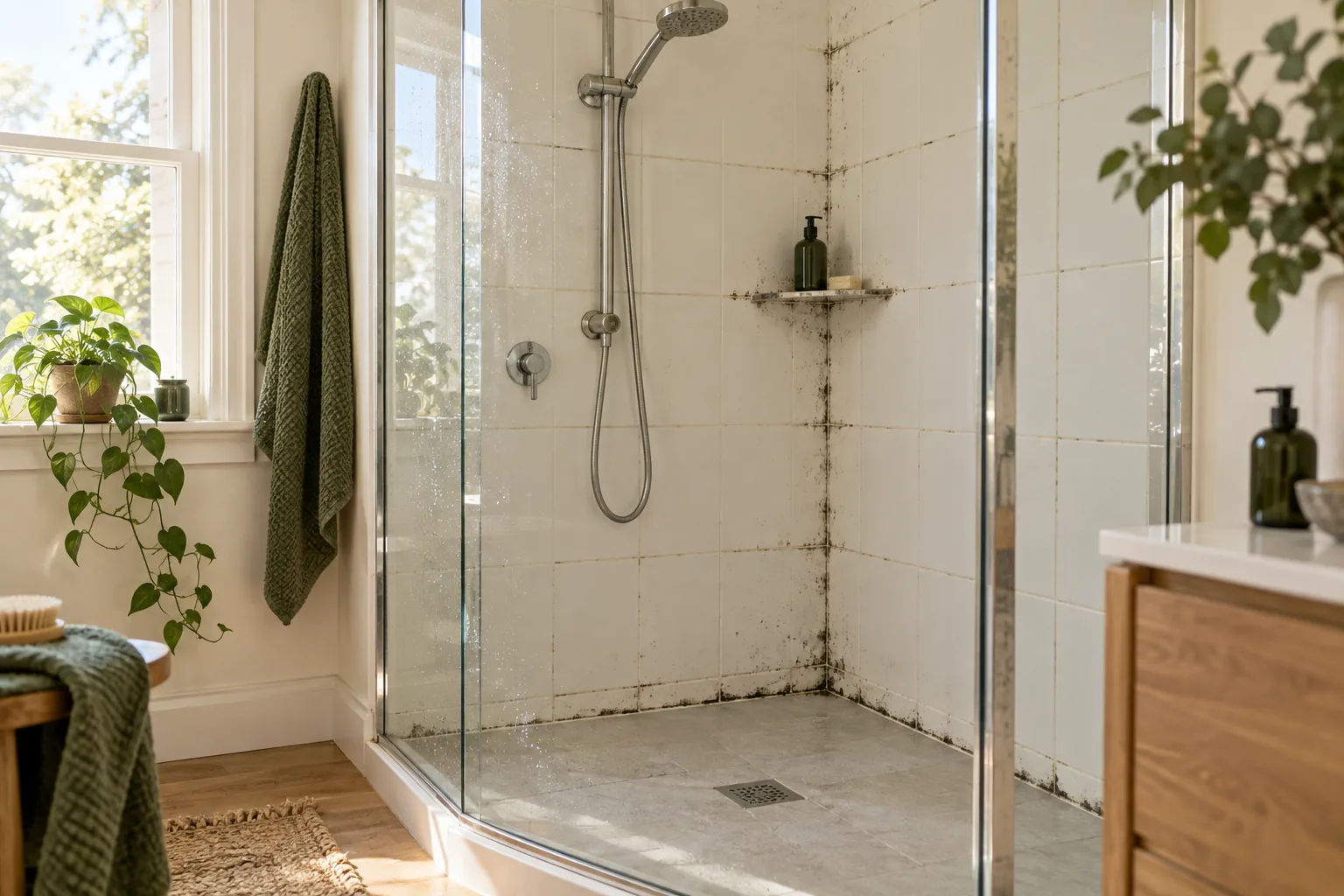
Bathroom structural contamination is separately agreed, excluding waterproofing repair and towels or mats.
Kitchens
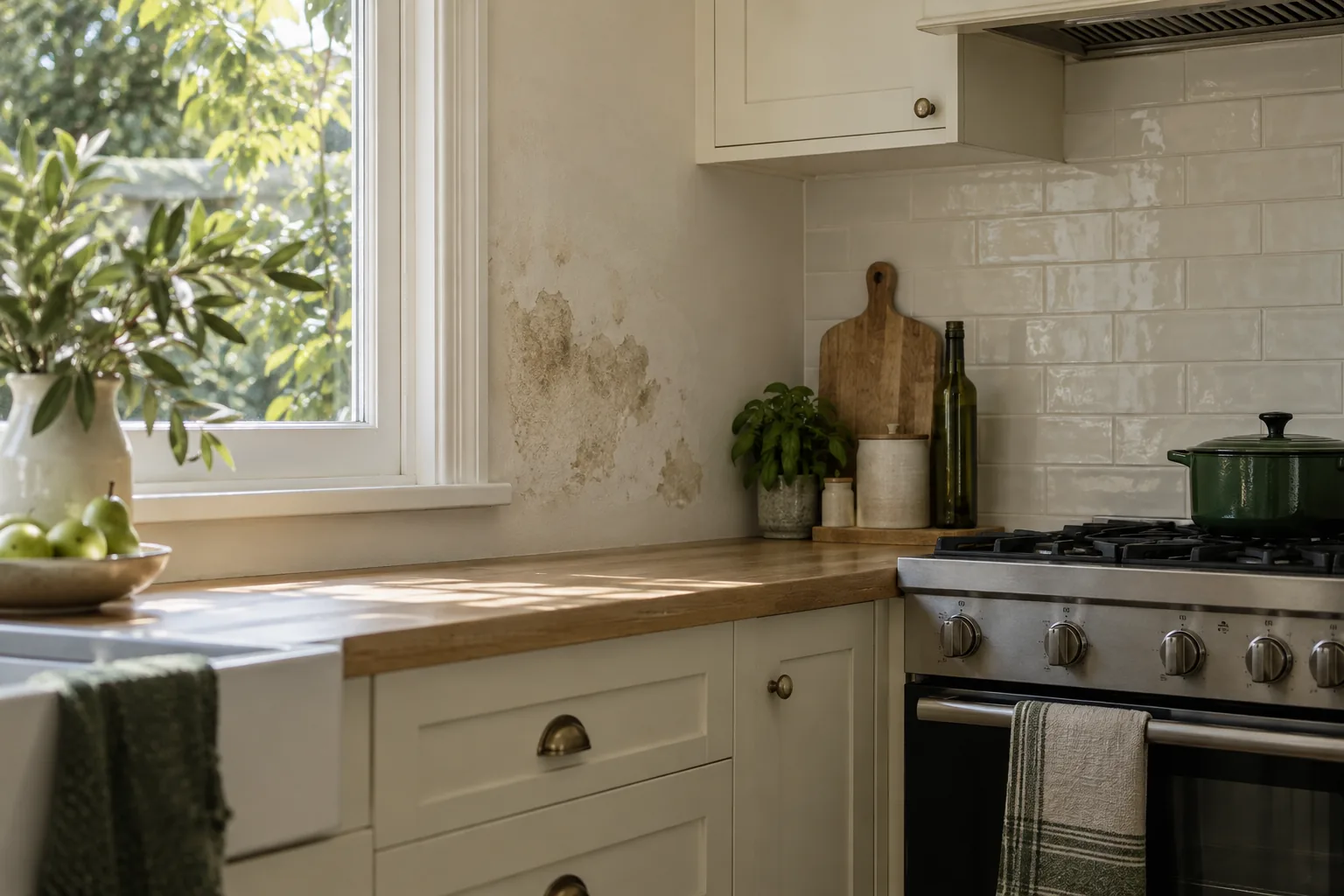
Kitchen finishes need their own visible extent without plumbing, appliance or contents-cleaning assumptions.
Accessible affected surfaces
Additional exposed structural sections can be considered individually; hidden layers and excluded furnishings remain outside standard work.
WHAT TO EXPECT
Discuss the repair sequence before preparing the wall
Explain planned repair and current access before contents are moved. Ask what preparation suits the agreed wall. People and pets leave the property during treatment, and return follows the technician’s specific instructions; staying inside the adjoining bathroom is not an established exception.
For the adjoining wall, timing remains a job-specific discussion; indicative source guidance is around three hours per room, dependent on size, contamination and reachable surfaces. It is not an hourly waterproofing task or a fixed repair handover. Cosmetic staining may remain, while decoration and material repair stay separately arranged. No concealed-dryness, lab clearance or source-performance certificate is confirmed.
FOLLOW THE MOISTURE
Track new water at the precise face
After advised return, record fresh dampness and visible changes on the affected wall, with reliable timing where available. Follow appropriate repair advice and distinguish that outcome from contamination treatment. A new patch after separate work needs its own current description.
Keep bathroom-use observations separate from an assumed diagnosis.
Describe newly exposed material after repair before adding treatment.
Retain actual treated surfaces and outstanding source questions.
Quote the wall separately from bathroom repairs
Give current extent, finish and repair status when discussing cost. Confirm applicability of Mould Removal pricing examples to remediation; they do not establish waterproofing investigation, plumbing repairs or treatment through the wall’s concealed backing.
SAFETY BEACH · EXACT ADDRESS & ACCESS
Safety Beach premises and nearby wall enquiries
Dromana and Mount Martha pages help navigate another nearby property request. For the Safety Beach address, name the affected room and visible face. A neighbouring bathroom layout cannot establish the cause, access or suitable treatment at this premises.
Questions about remediation
Does a patch opposite the shower prove waterproofing failed?
No. Explain actual wetting and reliable timing; the position alone does not establish the defect or responsible repair.
Will treatment repair the shower or pipes?
No repair package is confirmed. Keep plumbing and waterproofing questions with the appropriate provider.
Is the bathroom included when the adjoining wall is treated?
Not automatically. Identify any bathroom contamination and have its accessible extent included separately.
Can a room reading clear the hidden wall backing?
No. Air relative humidity is not a material-moisture test or a concealed condition finding.
What if repairs open the other side of the wall?
Describe any newly exposed growth and agree further work. The original reachable-face treatment did not include it by implication.
How should wetting after treatment be reported?
Give its exact face, timing and known repair status. Do not interpret another surface clean as proof the continuing source has been resolved.
Describe the adjoining wall and observed water
Call 03 8652 1296 with the Safety Beach room, exposed finish and repair plan. Clarify suitable treatment while keeping source diagnosis and repair separate.