
VISIBLE SURFACES · THOUGHTFUL RESTORATION
Mould Remediation Yarra Glen
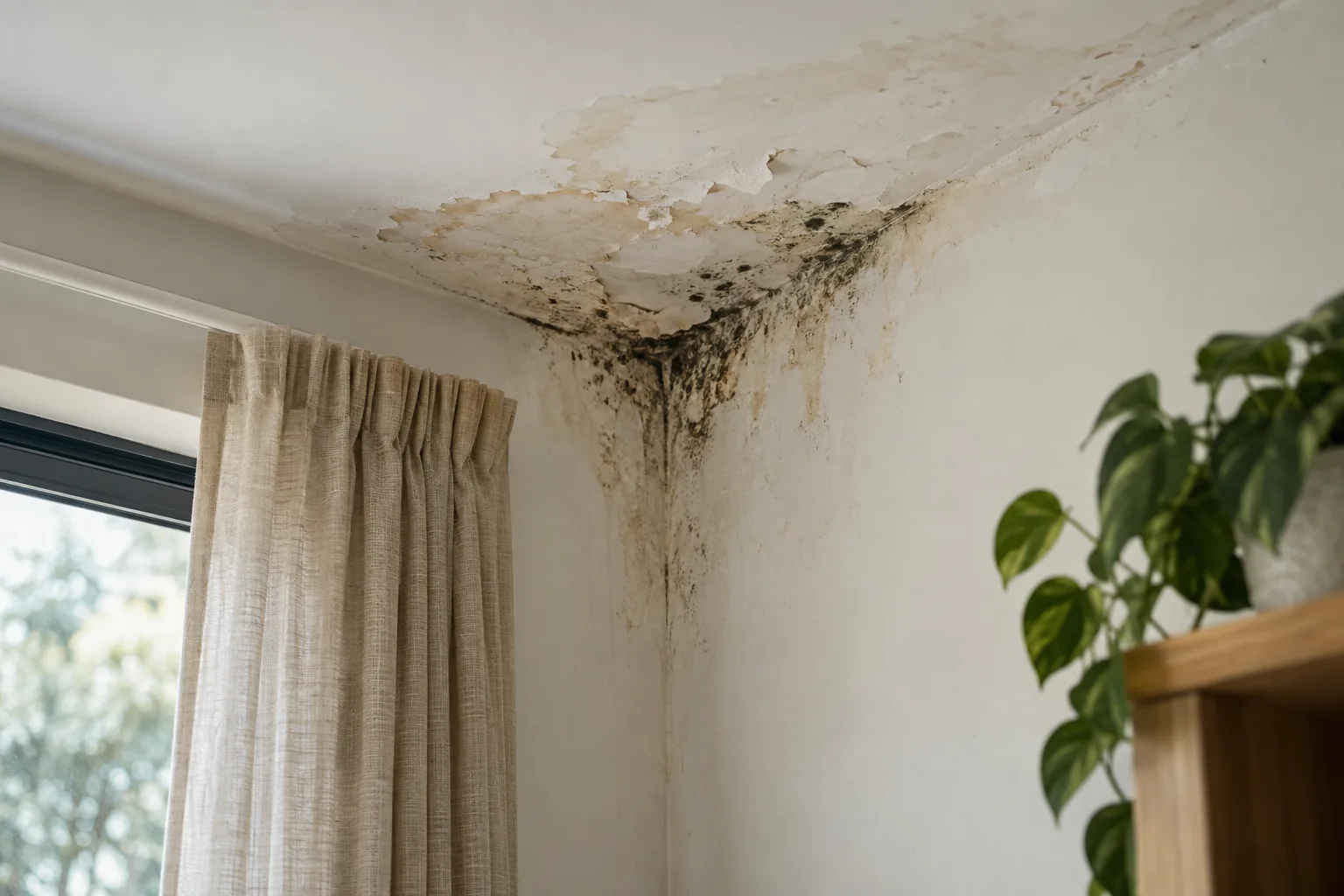
Growth at a room corner may span two walls and a ceiling junction. For Yarra Glen, describe each visible face and the access beneath it. A corner label is useful for location, but it should not hide differences in finish, reach or the structural surfaces proposed for treatment.
ASSESS · FILTER · RESTORE
Each corner face identified
Overhead access discussed
Surface limits explained
Turn the corner description into a surface list
Explain which wall faces show growth and whether it extends onto the ceiling. Mention shelving, fittings or furnishings that interrupt access. Observations from a safe place are sufficient to begin an enquiry; do not climb or dismantle items merely to trace every edge.
The confirmed remediation process treats visible accessible structural contamination. Agree the actual faces and finishes rather than assuming the corner includes all adjoining rooms or concealed construction. Furniture, mattresses, carpet and other textiles remain excluded.
A shared junction does not prove a shared cause
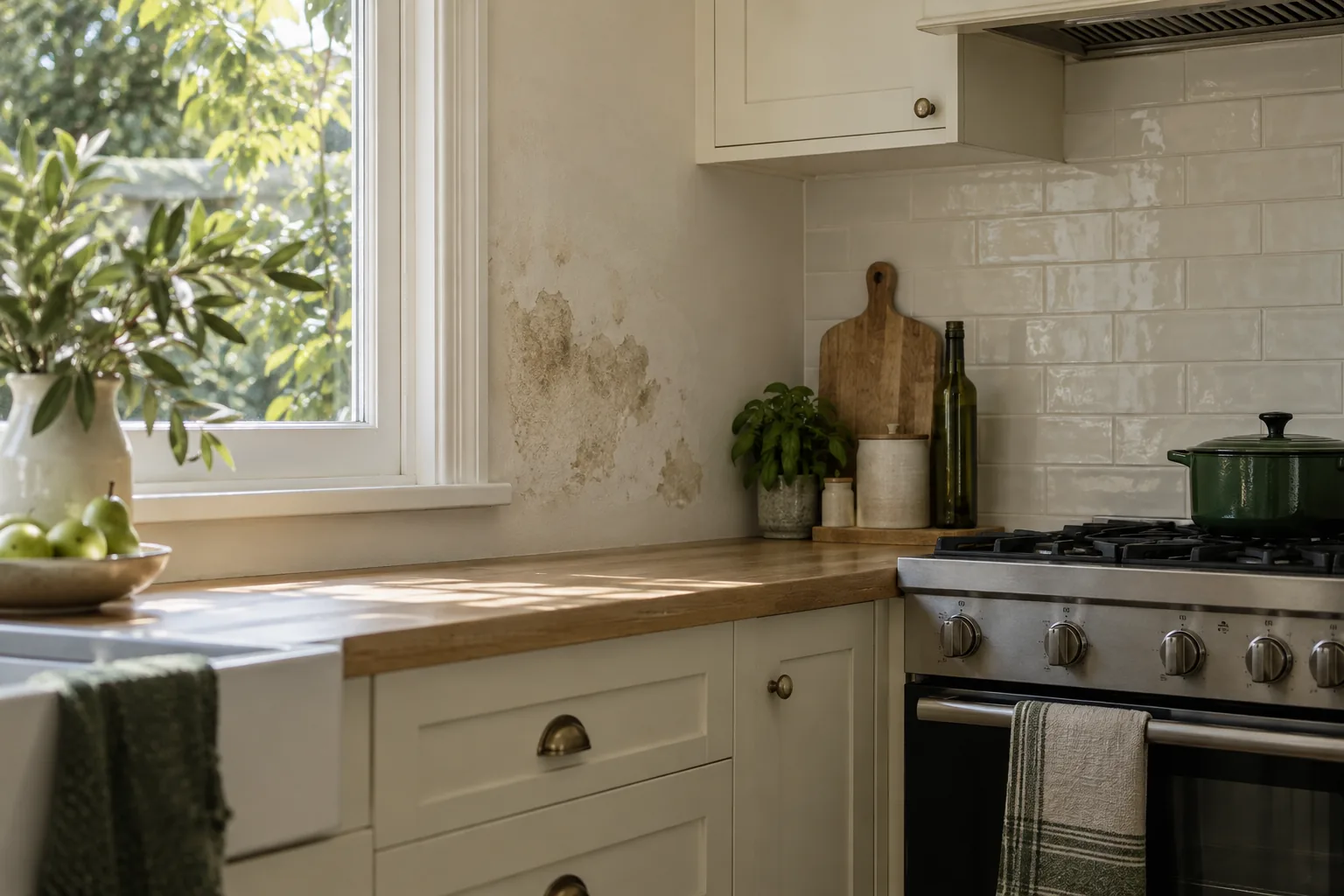
Describe condensation, water entry or changes on each face if observed. Marks meeting at a junction do not establish a leak path or reveal the condition behind the lining. Any building or plumbing fault needs appropriate separate repair advice.
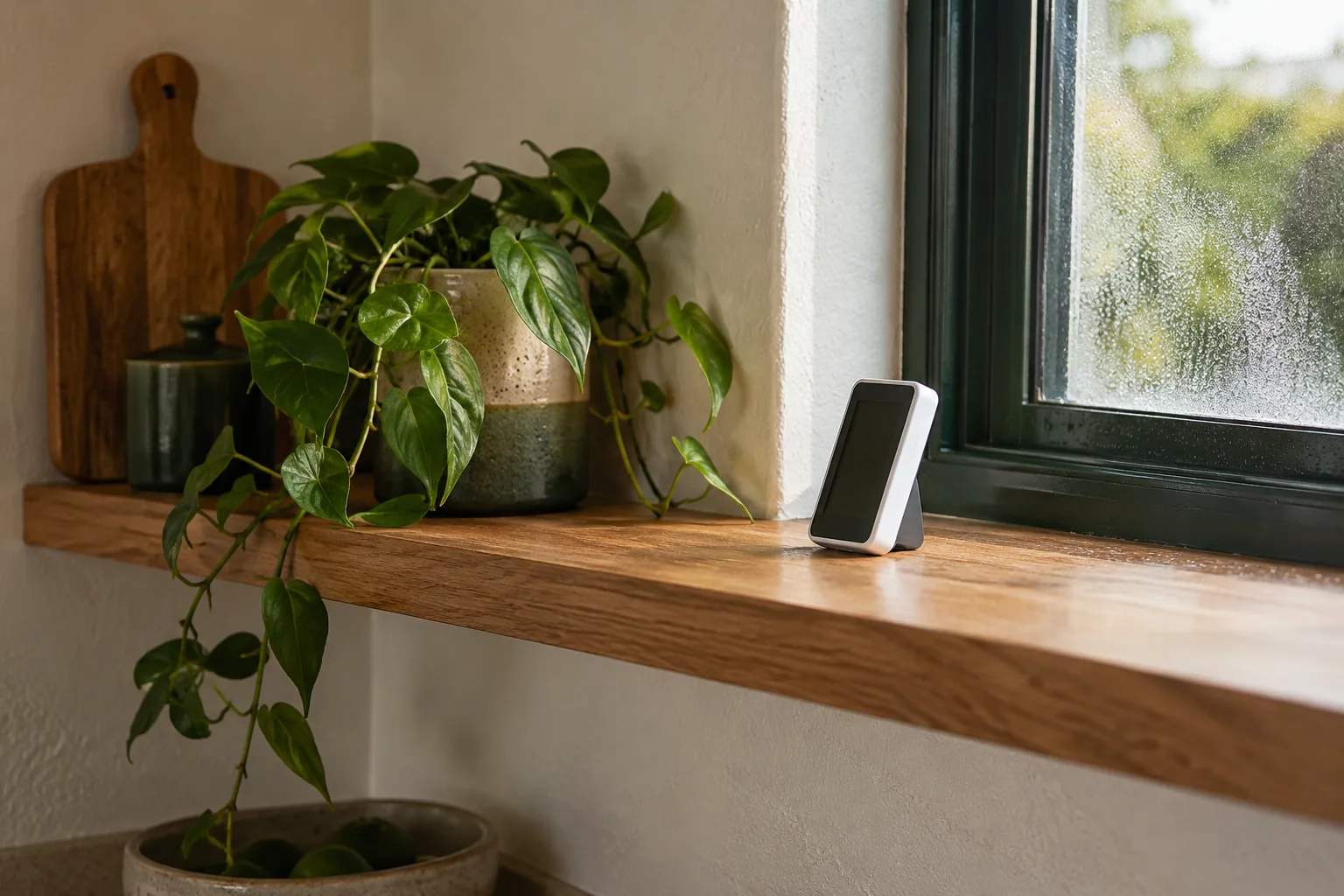
A professional hygrometer measures relative humidity in room air, not moisture within the corner’s construction. If the cause or material condition remains uncertain, discuss assessment questions. No specific wall probes, cavity opening or laboratory clearance is confirmed.
PLAN · FILTER · TREAT · REMOVE · CONTINUE
A sequence for the agreed corner surfaces
1
Assess the visible faces
Review growth, finishes and reachable extent on the proposed walls and ceiling. Keep covered sections and unrequested adjoining surfaces explicit before scope is accepted.
2
Set filtration before surface work
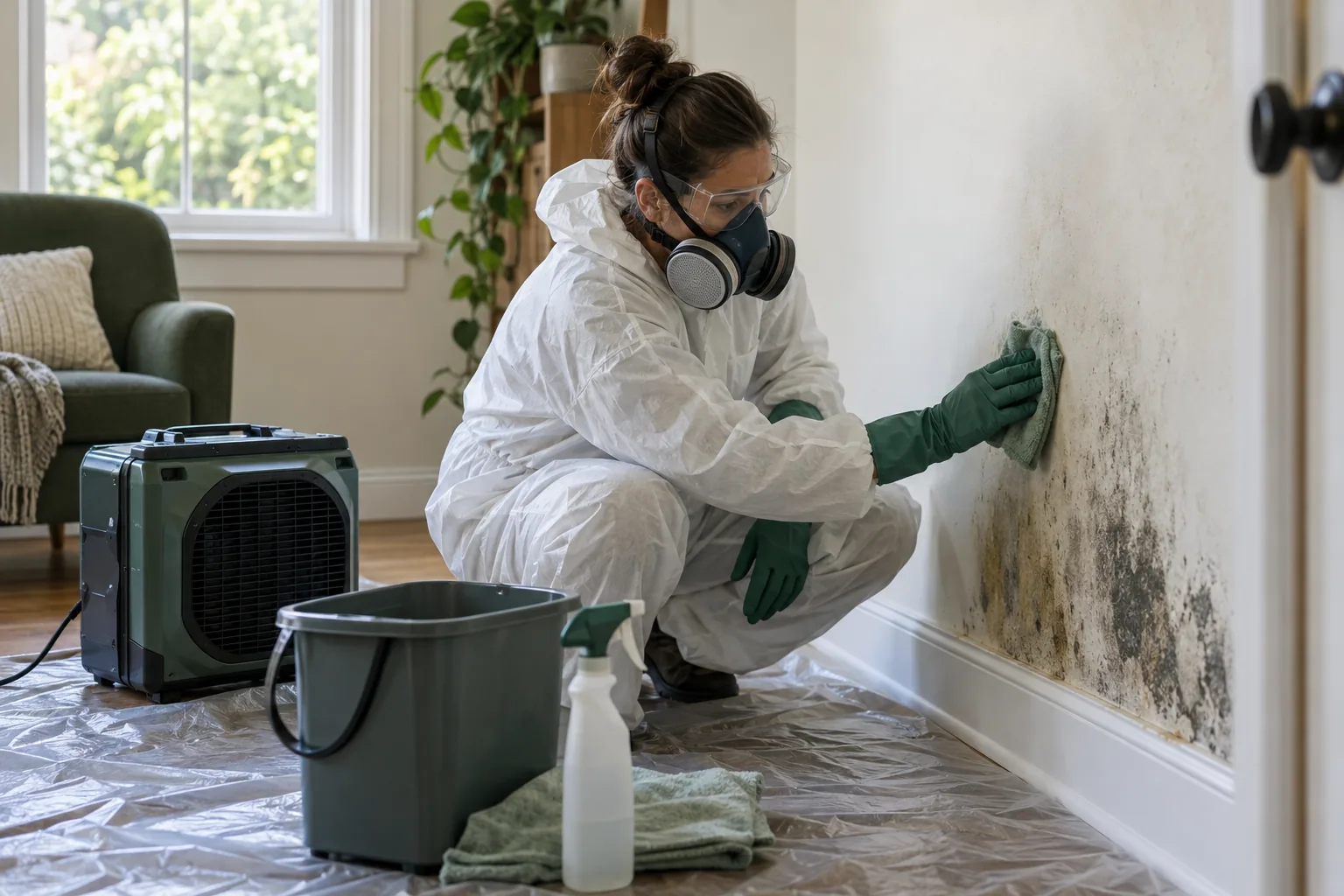
The confirmed HEPA scrubber is established before treatment. Equipment and technician access need planning around the room corner and any fixed obstruction.

3
Apply suitable treatment
HOCl is applied within the assessed plan, with appropriate ULV dry fog used in most cases. A junction between surfaces does not make every finish suitable or concealed area included.
4
Physically remove accessible growth
Professional H-class filtered equipment removes visible contamination on the agreed faces. Repairing linings or matching decorative finishes requires separate arrangements.
5
Continue air cleaning after treatment
HEPA operates during and after the work. Discuss the included surfaces, remaining appearance and moisture follow-up before arranging another finish or restoring obstructions.
Keep each area distinct
Walls
For walls, identify the particular faces at the corner and their finishes, rather than treating the whole room perimeter as affected.
Ceilings
For ceilings, describe overhead extent and access below it separately from the two wall faces.
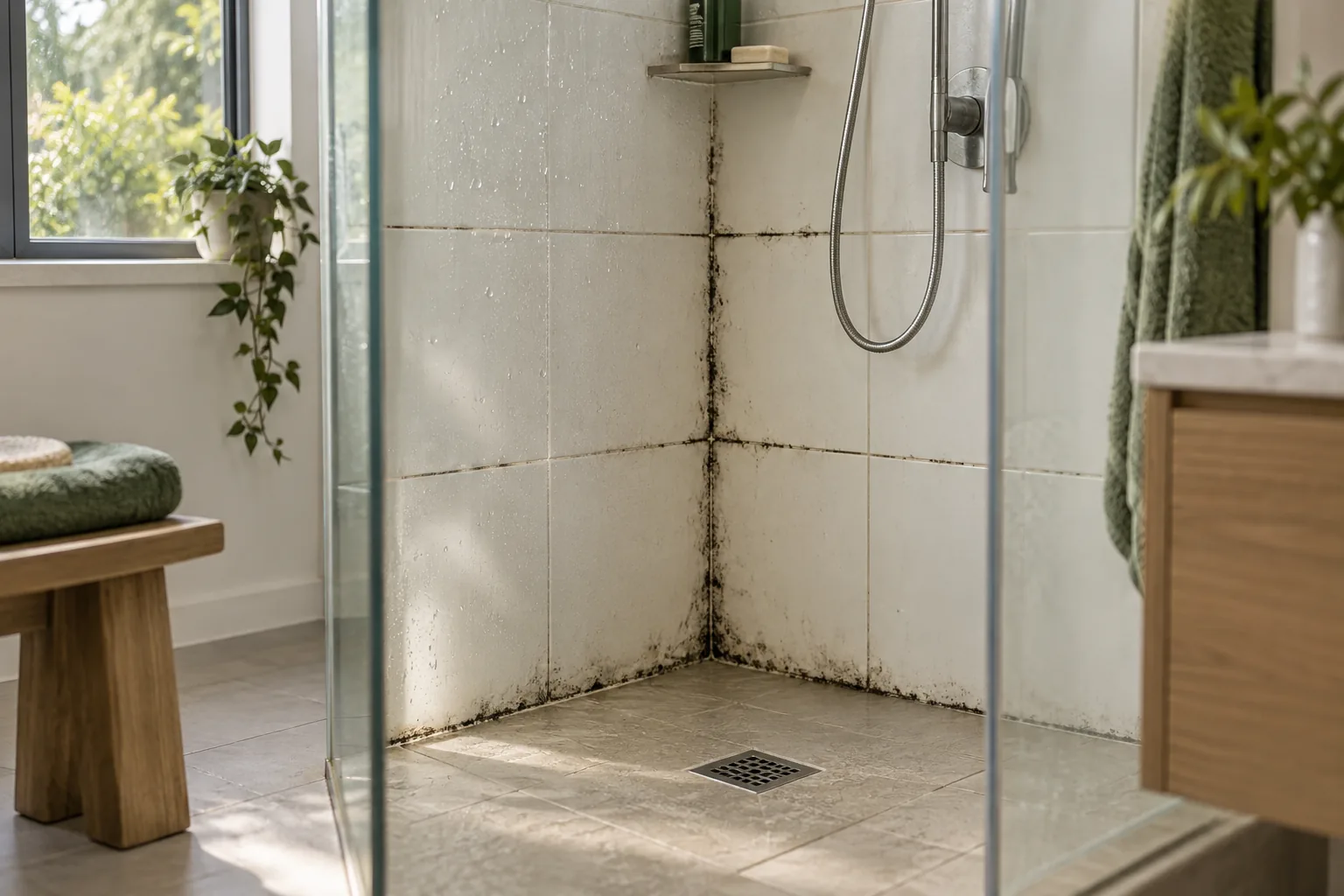
Bathrooms
Bathroom structural corners need their own observations, with towels and bathmats outside the treatment scope.
Kitchens
Kitchen wall and floor areas should be listed independently from cabinets, appliances and plumbing repairs.
Accessible affected surfaces
An exposed structural floor can be considered separately; rugs, carpet and items stored in the corner remain excluded belongings.
WHAT TO EXPECT
Prepare for the surfaces actually included
Discuss clearance and fragile fittings before moving them. People and pets leave during treatment, with departure and return advice confirmed for the appointment. Around three hours per room is average source guidance, varying with size, extent and accessibility rather than a guaranteed period for each face in the corner.
Cosmetic marks may remain and decorating is separately scoped. Standard treatment does not certify concealed materials dry or prevent recurrence where dampness continues. Ask which faces were treated so later observations are compared against the actual boundary instead of a broad claim that the entire junction is cleared.
FOLLOW THE MOISTURE
Record where a new observation begins
A useful follow-up distinguishes the actual face from the general corner location.
Note renewed dampness or growth on the wall or ceiling where it appears.
Arrange repair advice for continuing water entry or a confirmed building fault.
Maintain ventilation and keep the included junction reasonably observable after the room is reset.
Discuss the faces rather than a corner package
Refer to pricing information with the exposed finishes and access. The room examples are labelled Mould Removal, not a confirmed three-face remediation tariff. Confirm applicability without assuming decorating, concealed treatment or an extra adjoining area is included.
YARRA GLEN · EXACT ADDRESS & ACCESS
Other Yarra Glen-area enquiries
Provide the actual address and authorised access for a nearby property. Similar corner growth does not establish a common source or combined appointment; each visible scope and attendance arrangement needs confirmation.
Questions about remediation
Should both walls be named when growth meets at a corner?
Yes. Identify the actual affected faces and any ceiling area so the proposed structural scope is clear.
Does a ceiling junction automatically include the roof space?
No. The standard scope is visible accessible surfaces, not concealed construction above the ceiling.
Can I assume both faces need identical treatment?
Suitability needs assessment for their actual finishes and condition. Similar location does not establish a universal method.
Should shelving be removed before the enquiry?
Discuss the obstruction first. No dismantling instruction is established merely to make the visible corner easier to photograph.
Does growth meeting at the junction prove one leak?
No. Position alone does not identify the source; share actual wetting and repair observations.
What helps report a later patch near the same corner?
Name the particular surface, date and visible change, and explain its relation to the included boundary. Avoid treating every nearby mark as previously covered.
Define the corner before booking
Call 03 8652 1296 with the wall faces, ceiling extent and access. Agree structural treatment and the separate moisture or finishing tasks.