
BEND OF ISLANDS · MELBOURNE
Mould Removal Bend of Islands
BEND OF ISLANDS / THE ROOM CONDITION
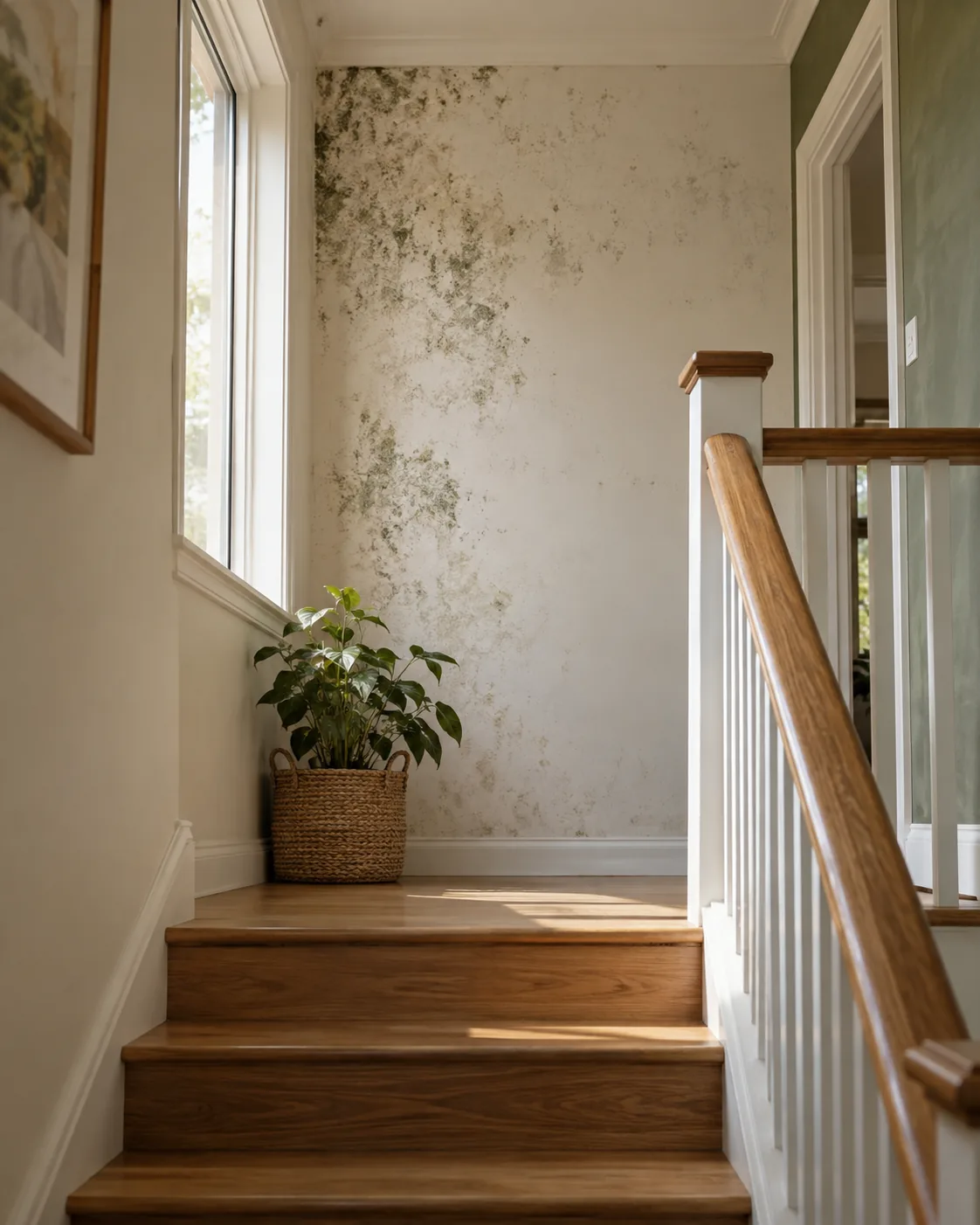
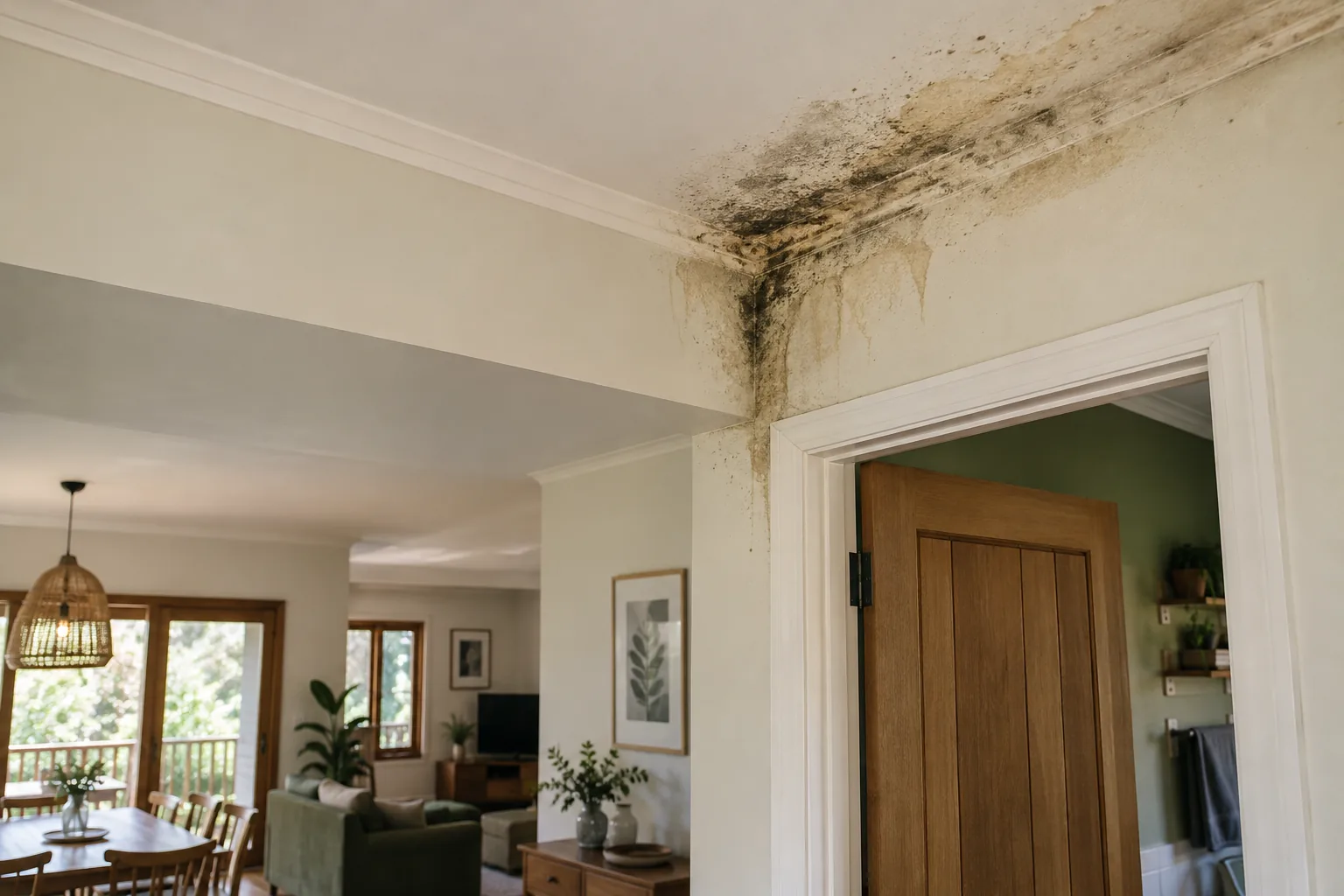
For a Bend of Islands room affected after water entry, describe the visible surfaces and whether dampness continues. An interior enquiry needs a specific address, access plan and repair history. Treatment can then be discussed without attributing every patch to the surrounding landscape.
Actual property availability checked
Water history reviewed
Interior scope kept clear
SURFACES & THEIR SETTING
Property-specific enquiries in Bend of Islands
Nillumbik Council identifies Bend of Islands as a distinctive local area. This guide concerns accessible indoor structural surfaces; it does not assume that conservation surroundings explain the moisture source in every property.
An indoor problem with its own history
Explain when water entered, what repairs occurred and which finish is affected. A mould inspection can consider visible condition and room information. The local landscape is context, not a diagnosis of the wall or ceiling.
Confirm access and availability
Give the street address, entry contact and equipment route. Availability must be discussed for the actual property. A location page does not guarantee a booking, permission to enter land or the presence of a nearby office.
Describe damage without disturbing it
Tell us about softened plaster, peeling paint and visible growth. A wider photograph helps show the extent without cutting construction or scraping a fragile surface.
Accessible structural surfaces
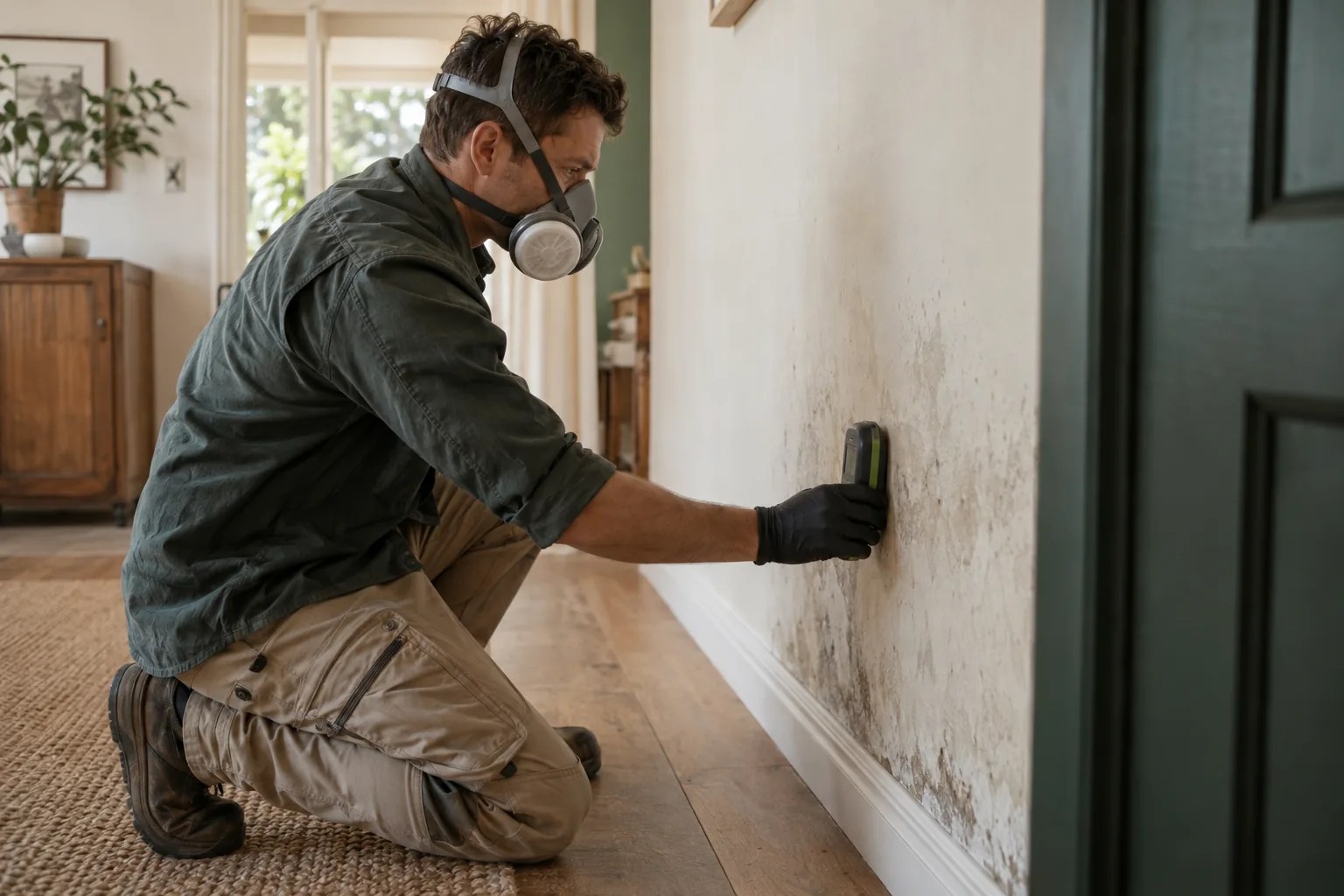
The removal service covers visible walls, ceilings and hard floors. Hidden cavities or blocked sections need separate clarification. Furniture, mattresses, carpets, clothing, curtains and other textiles are excluded.
Resolve the water entry separately
A roof, plumbing or building defect needs the appropriate repair trade. Give maintenance notes and explain any continuing wetness. Humidity readings can add room context but cannot establish dryness throughout concealed construction.
THE SURFACE REMOVAL PROCESS
Plan the interior work in six stages
01
Review the agreed areas
The technician considers visible extent, material and surface condition. Hygrometer information may support the assessment. Concealed sections, unstable material and restricted access remain limitations unless additional investigation is explicitly arranged.
02
Prepare the room and filtration
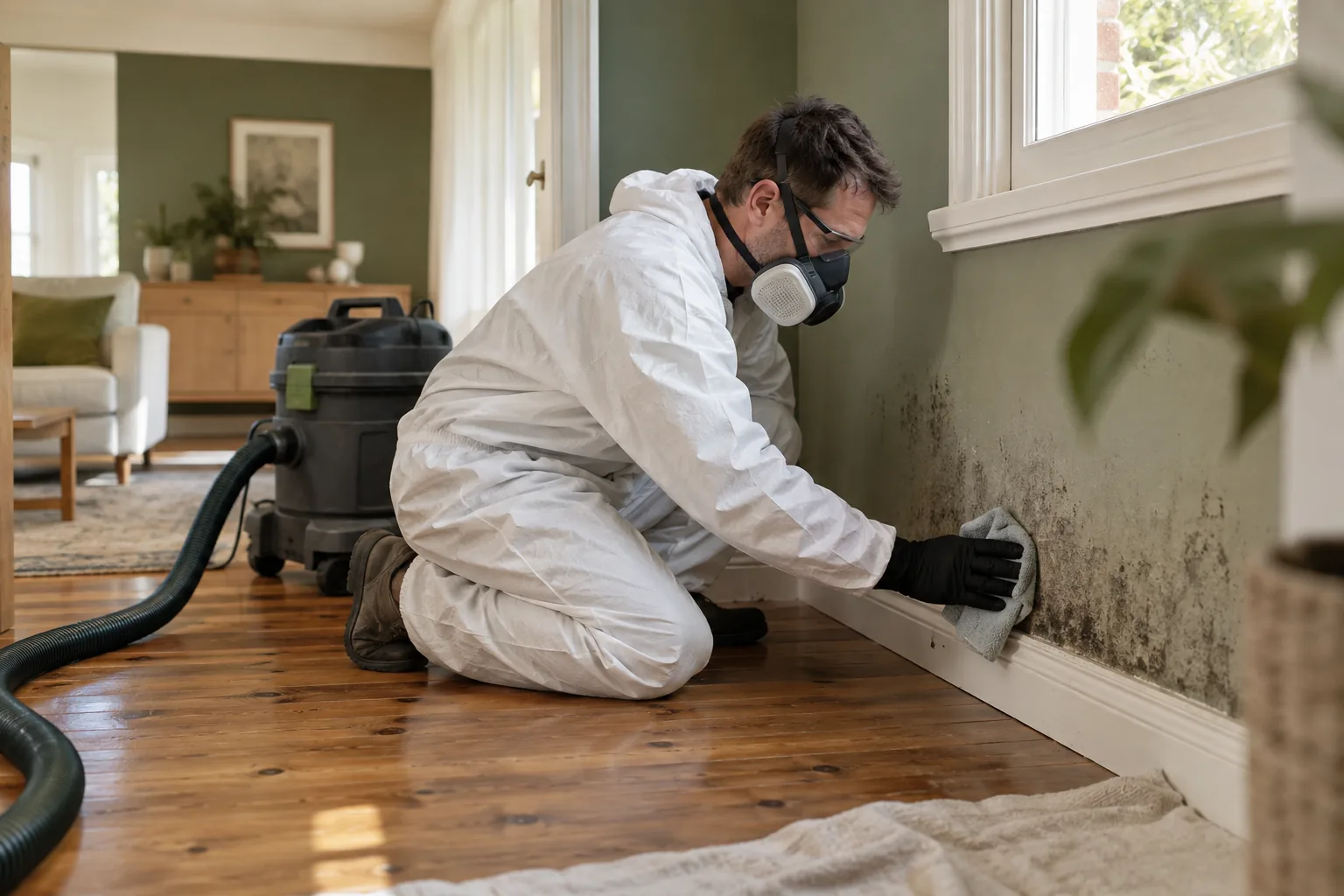
Agree clearance and occupant arrangements before treatment. HEPA filtration supports the work as appropriate. Belongings moved for access do not become treated items, and potentially affected contents should not be dispersed without discussing handling.
03
Choose material-appropriate treatment
HOCl application is considered for the surface condition. Mention fragile coatings and previous cleaning attempts. Treating growth is different from repairing water-damaged construction or guaranteeing disappearance of every cosmetic stain.
04
Include suitable ULV application
Fog application may form part of the agreed plan. Follow preparation and return instructions. Any alarm procedure requires approval with the responsible person rather than independent disabling before the visit.
05
Remove accessible residues
Professional physical removal uses H-class filtered equipment where suitable. The scope remains agreed structural surfaces. Textiles, concealed construction and material replacement need separately defined handling, investigation or repair work.
06
Complete filtration and discuss follow-up
Final filtration continues as required. Review treated areas, marks remaining and outstanding moisture work. Clear responsibilities for repair and decorating prevent the surface visit being mistaken for a permanent resolution of damp conditions.
VISIBLE & ACCESSIBLE
Interior areas worth describing
Ceilings after water entry
Give repair dates and current wetness.
Painted wall sections
Show visible growth and coating condition.
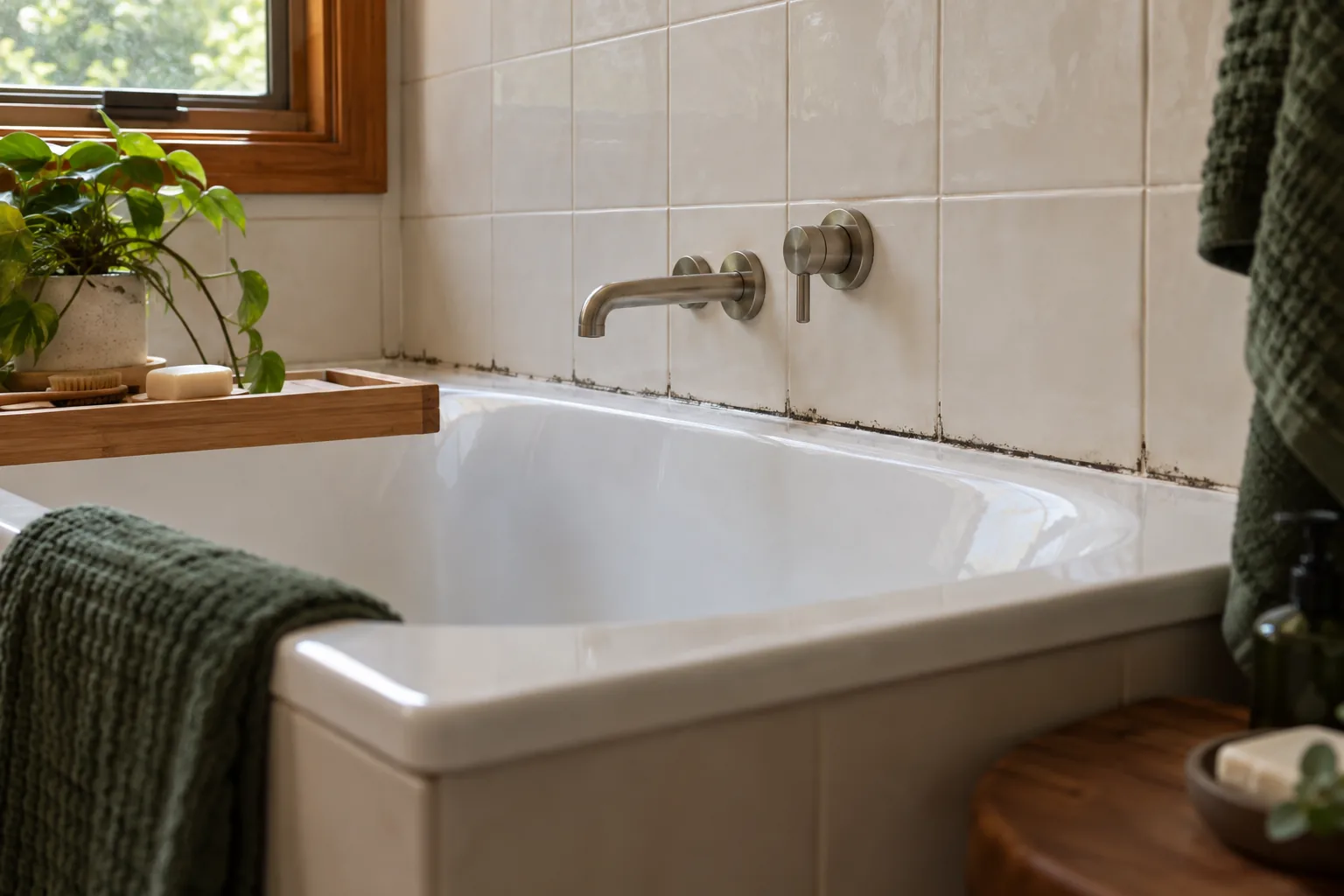
Bathroom ceilings
Explain extraction and drying.
Hard-floor edges
State the material and water tracking.
PREPARATION & LIMITS
Keep the outcome and duration realistic
Allow around three hours per room as an average. Size, contamination and accessibility affect duration, and the service is not hourly-based. Confirm the actual room scope and available appointment before setting fixed plans.
Remediation may leave stains, with decorating separately quoted. Repair of water entry remains separate too. Unresolved dampness can support recurrence despite treatment of existing growth; no permanent cure is promised.
AFTER THE SURFACE WORK
A practical record for the next wet period
Keep maintenance notes and record whether the surface changes after rainfall or room use. Use functioning extraction where steam is produced and leave vents clear. Outdoor surroundings do not remove the need to investigate a specific leaking building detail.
After the agreed return time, monitor the treated area before covering it with stored belongings or paint. Dated photographs and humidity observations can support advice without certifying concealed dryness. Report continuing wetness to the appropriate repair contact.
BEND OF ISLANDS · NEARBY LOCATION PAGES
Nearby local enquiries
Nearby guides can help orient a Bend of Islands enquiry. Give the actual address and access arrangements when calling; geographic proximity does not confirm availability or imply that neighbouring properties share the same interior conditions.
BEFORE YOU ARRANGE WORK
Questions for your enquiry.
Does the landscape establish the cause of mould?
No. Describe the indoor evidence, water history and room use. A local environmental setting cannot identify the source in an individual building.
Is a visit guaranteed in Bend of Islands?
Availability is discussed for the actual address, access and scope. A location guide is not a confirmed appointment, permission to enter the property or a claim that a local office exists.
Should I open a damaged wall first?
Do not open construction simply to improve the enquiry photograph. Explain the damage and agree any investigation separately.
Can treatment repair roof damage?
Roof and building repairs are separate work. Give dates and current wetness so limitations can be discussed. Removing visible growth cannot stop continuing water entry or rebuild a weakened ceiling.
Are furnishings included after a leak?
Furniture, mattresses, carpet and textiles are excluded. Discuss their clearance and separate handling. Treatment of structural surfaces does not mean every item affected by a water incident can be restored.
Will all discolouration disappear?
Cosmetic stain removal is not guaranteed. A separate decorating quotation may be appropriate after moisture issues and surface condition are considered. Remaining marks should be distinguished from new growth during the handover.
Discuss the property and water history
Call 03 8652 1296 with the Bend of Islands address and visible surface concern. Confirm availability, access and preparation before treatment is booked.
Useful references: Nillumbik Bend of Islands local information