
BRUNSWICK · 3056
Mould Removal Brunswick
For a Brunswick home with newer glazing or recent room changes, explain how moisture is removed as well as where mould appears. A tighter room does not identify the cause by itself, but the alteration history can be useful. We can discuss accessible inspection and removal, practical preparation and appointment availability while separating ventilation improvements and building repairs from the cleaning result.
Change history considered
No design promises
Focused room assessment
THE PROPERTY SETS THE PLAN
A practical starting point in Brunswick
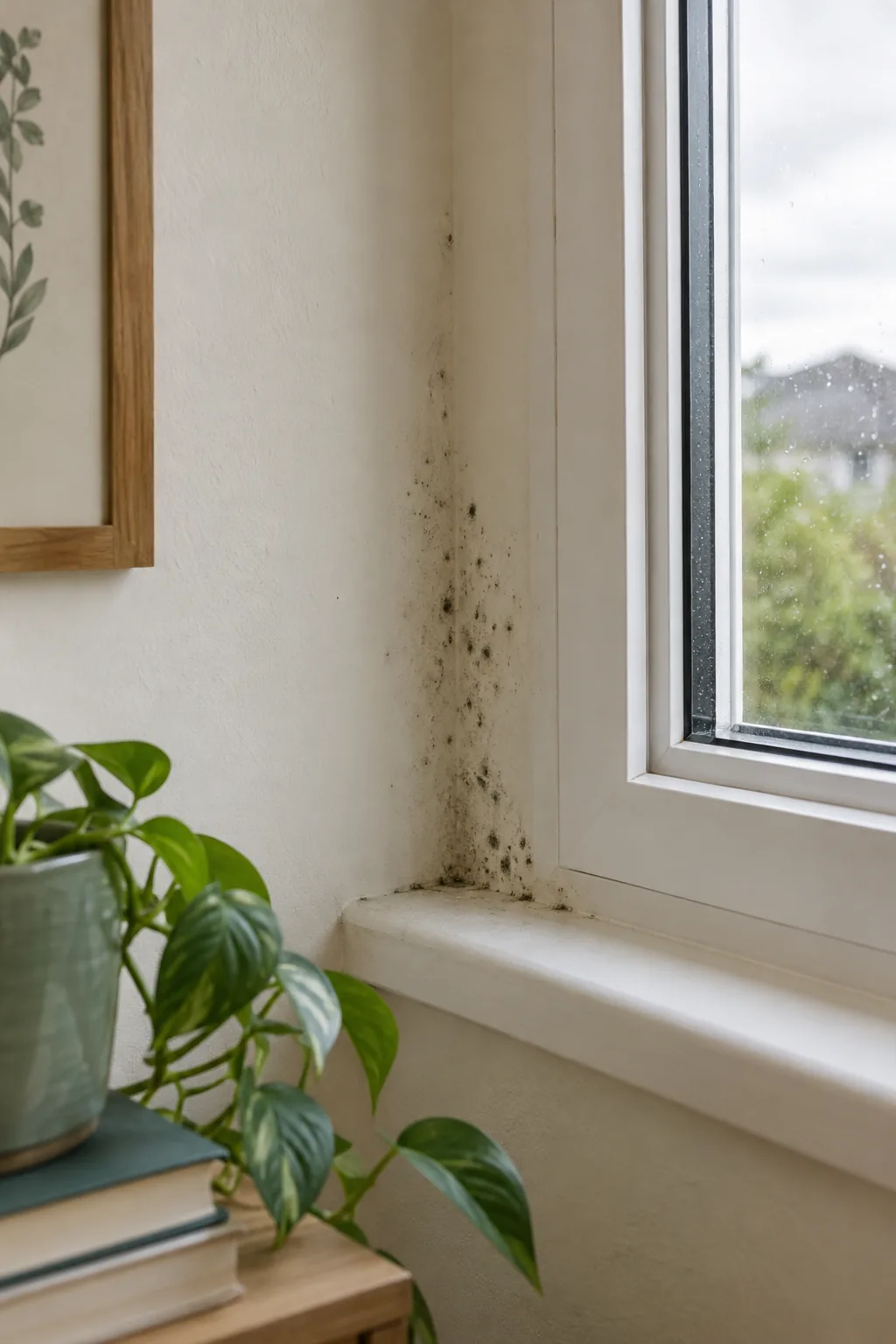
Merri-bek includes Brunswick, but this guide does not assume a particular housing type. If windows, doors or a bathroom have recently been changed, state what was altered and whether the visible marks pre-date that work. The useful comparison is your own before-and-after room history, not an invented customer example or a claim about all new glazing.
Include the alteration dates in your removal enquiry, but distinguish them from evidence of causation. A patch appearing after new glazing may still need plumbing or roof history considered. Show what changed in the room and what is visible now rather than assuming the new component explains everything.
ASSESS · PREPARE · REMOVE
Plan the work around recent room alterations
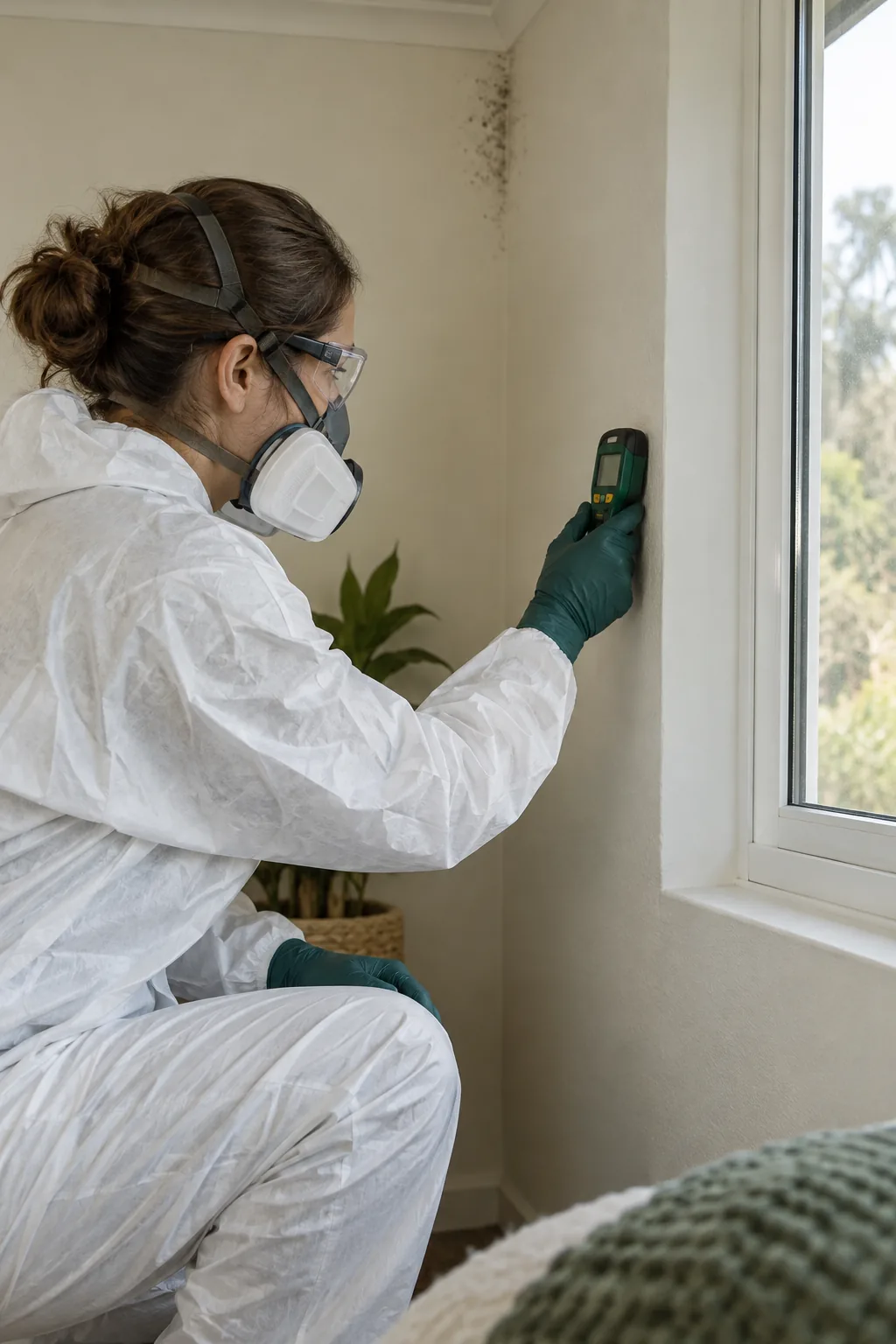
Bring dates of glazing, bathroom or extraction changes.
Compare altered and existing finishes
Assess marked reveals, walls and ceiling corners individually, including paint condition. Describe the renovated wet area separately if relevant. Accessible hard floors can be considered where affected; textiles are excluded. New finishes do not establish that hidden material is sound or that the room’s earlier moisture history no longer matters.
Arrange access around new fittings
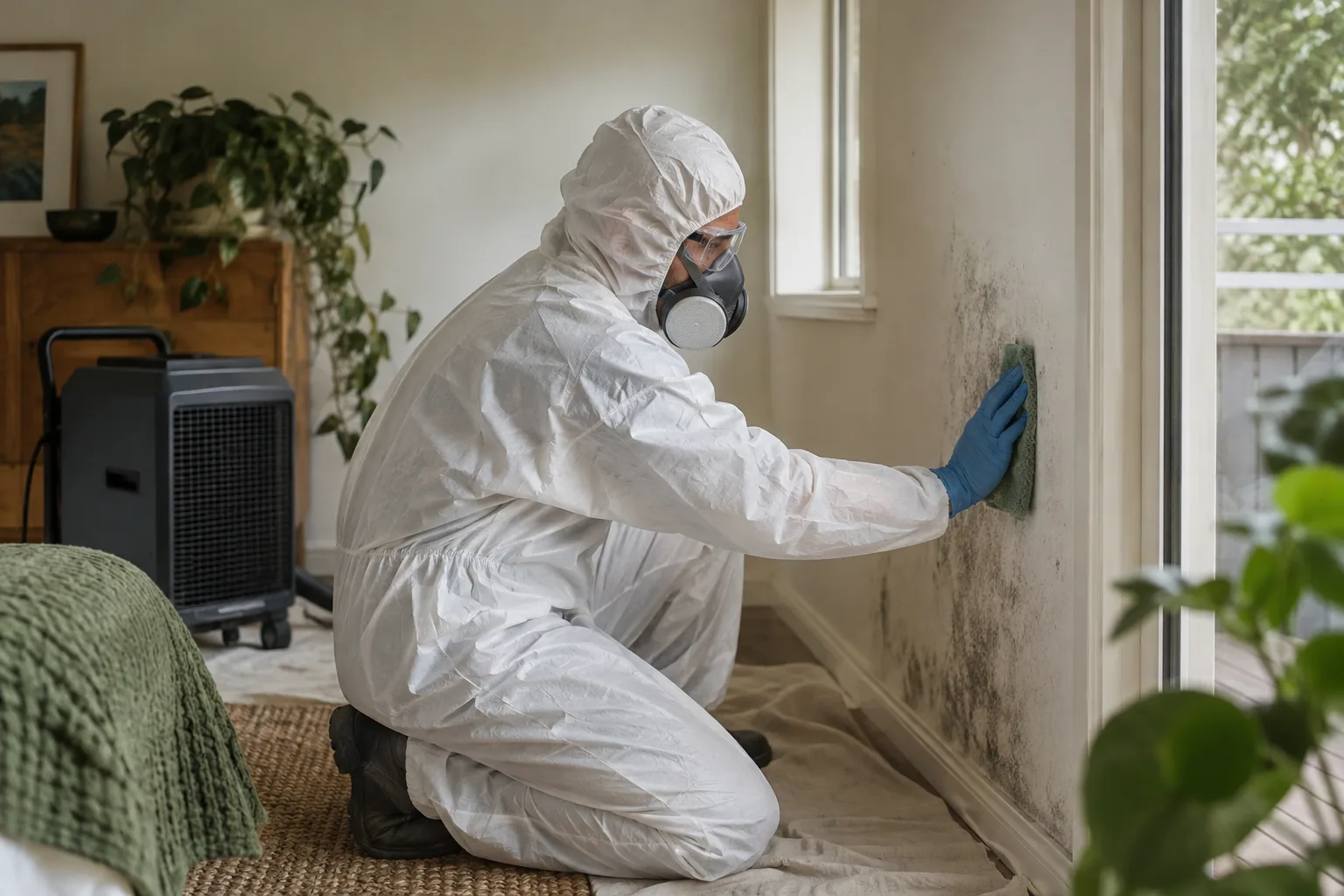
Agree furnishings and reachable surfaces without modifying recent building work as a trial response. Plan appropriate protection, PPE and HEPA filtration for the actual removal task. Fixed glazing, cabinetry or extraction components require separate access or repair decisions rather than improvisation during treatment.
Treat the supported surface scope
Physical removal and suitable treatment follow the material and accessible evidence. The remediation plan should identify damaged finishes or unresolved investigation questions. It cannot redesign airflow, repair a concealed leak or certify the performance of the newly installed components.
Review the changed room conditions
Explain residual stains and maintenance decisions, then keep the alteration timeline with follow-up photographs. If the same areas become damp again, revisit the relevant systems and sources. The room’s cleaner appearance should not be confused with proof that building changes or moisture-control issues are resolved.
BATHROOMS · WALLS · CEILINGS
Sealed-Room Moisture Review
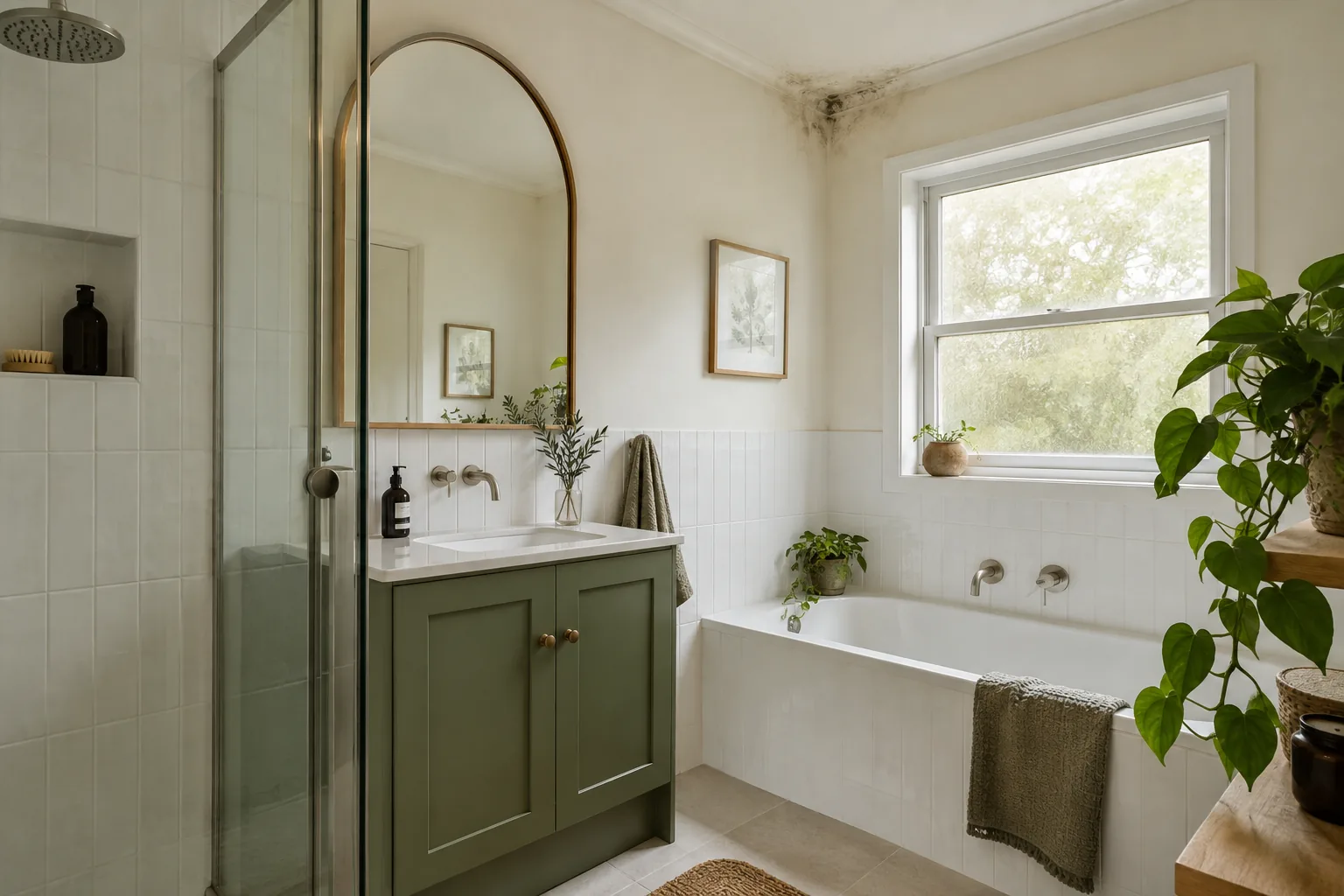
Describe window reveals, painted walls and ceiling corners separately. Tile faces in a renovated bathroom can look sound while a joint or hidden lining needs attention. Accessible hard floors may be discussed if affected, but textiles are excluded. Explain fitted furnishings and paint condition so access and finish limitations are not overlooked.
Compare the change timeline
An inspection can consider the timing of changes, room use and visible moisture pattern. New windows do not rule out a roof or plumbing defect. If extraction was altered, provide its maintenance or installation details to the relevant trade. A single photograph cannot determine whether the room has sufficient ventilation or establish the condition behind its finishes.
A mould inspection can help organise observations where the change timeline and visible pattern are uncertain. Provide installation or repair information without preselecting the cause. Ask what the accessible evidence supports and which ventilation or building performance question belongs to the relevant professional.
Alteration-aware scope
Ask how treatment fits around the renovation or ventilation decisions already being made. A good scope identifies the accessible finish, realistic appearance and unresolved assessment questions. This helps you avoid choosing a generic whole-house claim when the practical concern is one room’s altered conditions.
Discuss prices for the actual room surfaces, keeping design changes and system repairs out of an assumed removal package. Explore neighbouring places via Areas We Cover. Confirm the Brunswick address, recent fittings and appointment availability before preparing the room.
Maintain the actual system
Maintain moisture removal appropriate to the actual room and seek advice on any identified system issue. Do not undo building components or drill ventilation openings as a trial response. After repairs and treatment, keep a dated comparison of the original patches under ordinary use. Cleaning does not change the room’s design or eliminate the need for maintenance.
NEARBY LOCATIONS
Around Brunswick
Coburg · Princes Hill · Parkville · Northcote
For another address, explore Melbourne areas and call to confirm availability.
BEFORE YOU BOOK
Questions about your Brunswick home
Do new windows prove condensation caused the growth?
No. The alteration history is useful context, but other moisture sources still need consideration.
Can removal fix ventilation design?
No. Design improvements or system repairs require separate assessment and work.
Should I make extra ventilation holes?
Do not improvise building alterations to test a cause. Seek appropriate advice about the room and relevant requirements.
What renovation information is useful?
Provide dates, changed components and whether the marks appeared before or after the work.
Can newly painted walls still need assessment?
Yes. Appearance does not establish moisture conditions or the state of concealed material.
How can Brunswick availability be confirmed?
Call with the address, alteration history and affected surfaces to discuss a suitable appointment.
Discuss the affected room in Brunswick
Call 03 8652 1296 with your address, photographs if available and a short description of recent room alterations. We can discuss the visible surfaces, what needs assessment and whether an appointment is available for your address. Confirm the scope before booking.
Local context and practical guidance: Merri-bek City Council — About the city · Australia Post — Brunswick postcode