
DIAMOND CREEK · 3089
Mould Removal Diamond Creek
Mould in a lower room should be assessed through the property’s actual moisture history, not a name associated with a creek. For Diamond Creek enquiries, explain the room level, wall condition and any wetness after rain. We can discuss inspection, visible removal and separate building or drainage advice where needed. Call to confirm address availability and a realistic scope.
A defined surface scope
Practical preparation
A useful follow-up plan
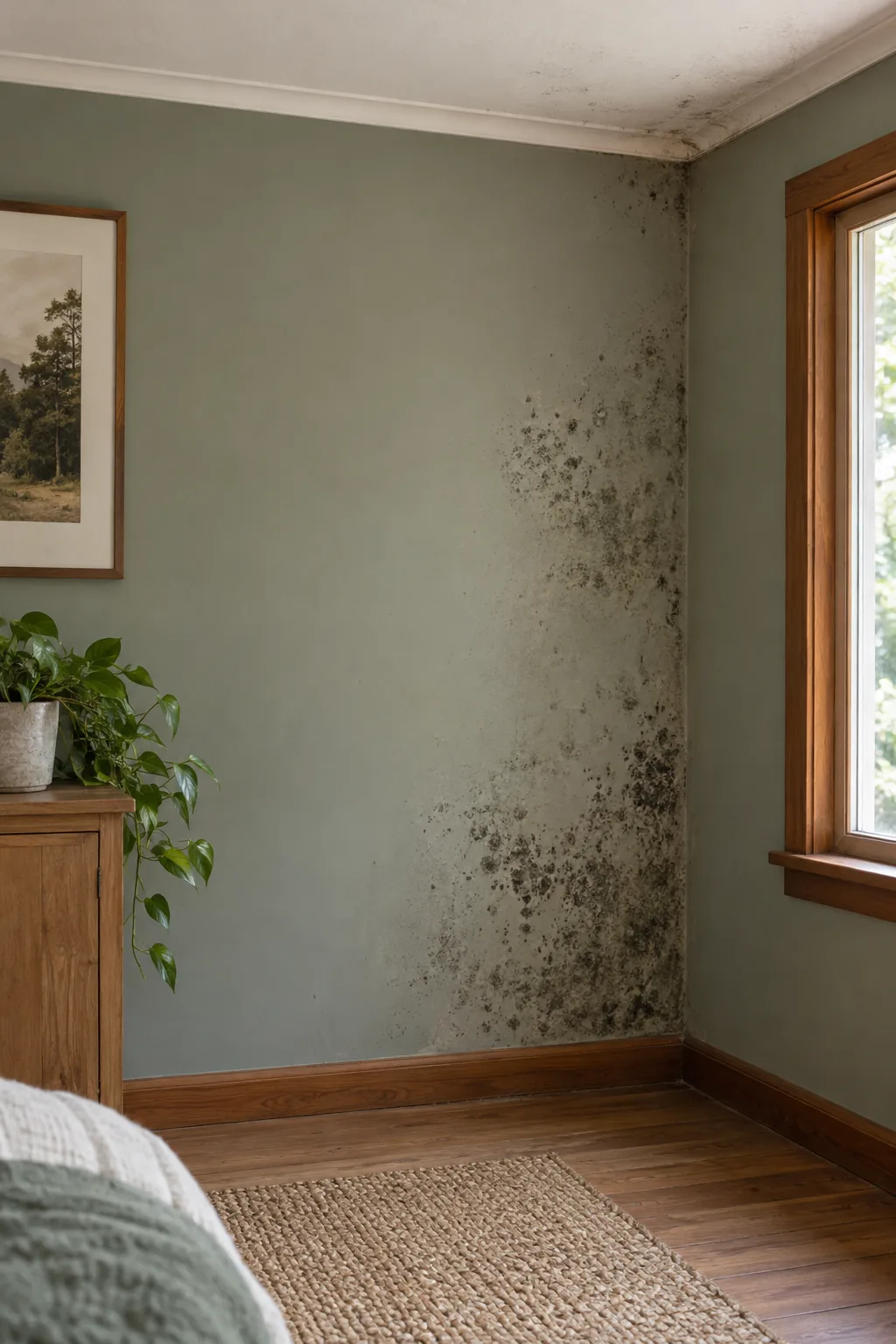
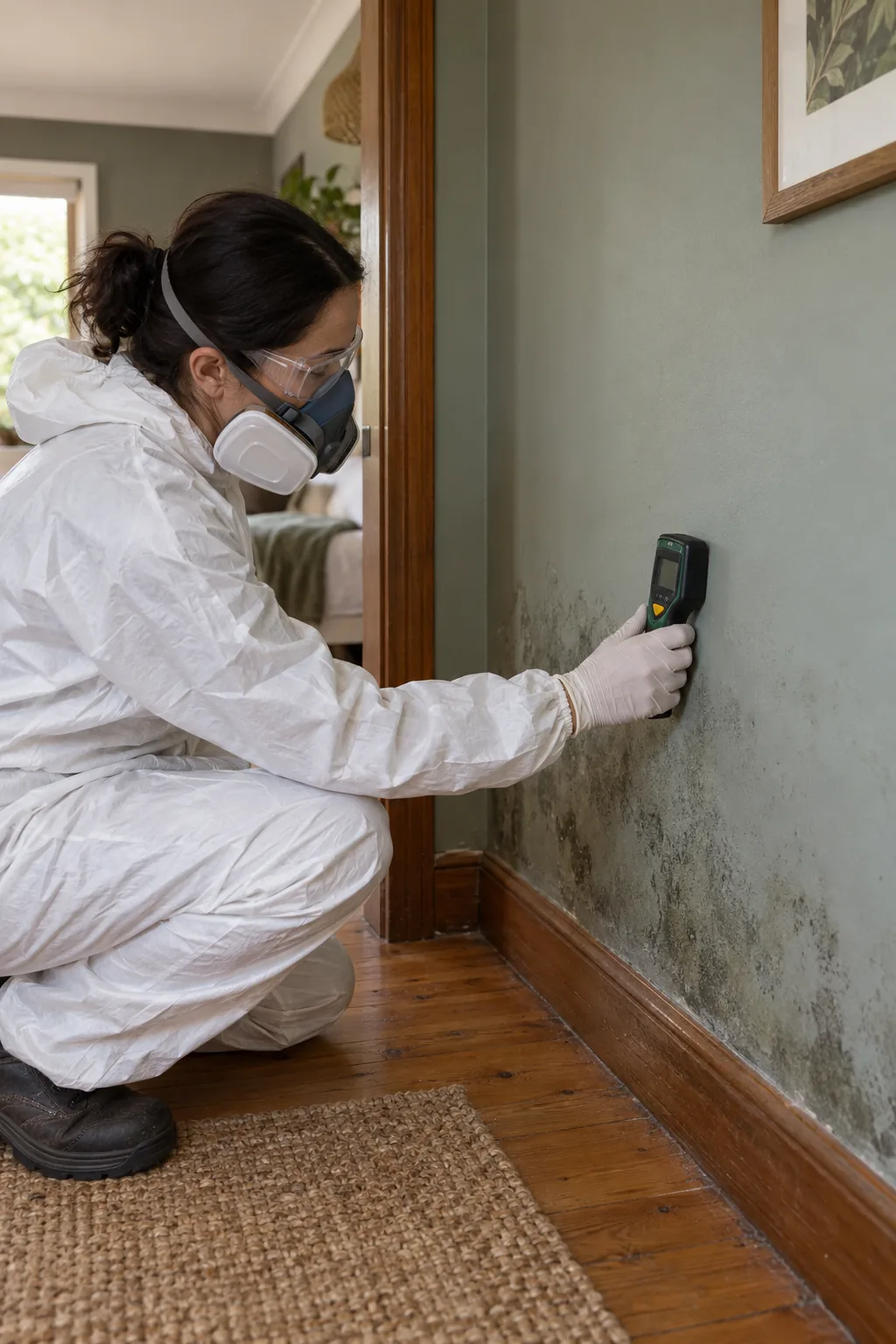
THE PROPERTY SETS THE PLAN
A practical starting point for Diamond Creek
Nillumbik Council locates Nillumbik Park in Diamond Creek 3089 and describes its trail connections. Council confirms Diamond Creek’s locality and postcode through Nillumbik Park. Nearby waterways or a suburb name do not establish flooding or dampness at a particular house. The useful property context is where the room sits, what material is affected and whether there is a documented relationship between rainfall and indoor wetness.
Diamond Creek’s 2021 occupied-dwelling table was predominantly separate houses, at 94.3%. The useful lower-room enquiry still needs its own building level and rain history. Neither the housing category nor the locality name demonstrates flooding, a wet subfloor or drainage failure at your address.
For a rain-related lower-room enquiry, provide an overall view showing the wall base and floor level. Explain any earlier drainage or building repair. The record should remain property-specific: a creek locality does not establish a flood event, a wet foundation or an external cause at the address.
Investigate the moisture pathway
Keep observations of the indoor patch and any accessible outside wetness after rain, without entering unsafe drainage or subfloor areas. Surface readings can help compare conditions, while drainage and building-envelope questions need suitable trade investigation. Do not label the problem flood damage or rising damp solely because the room is low in the building.
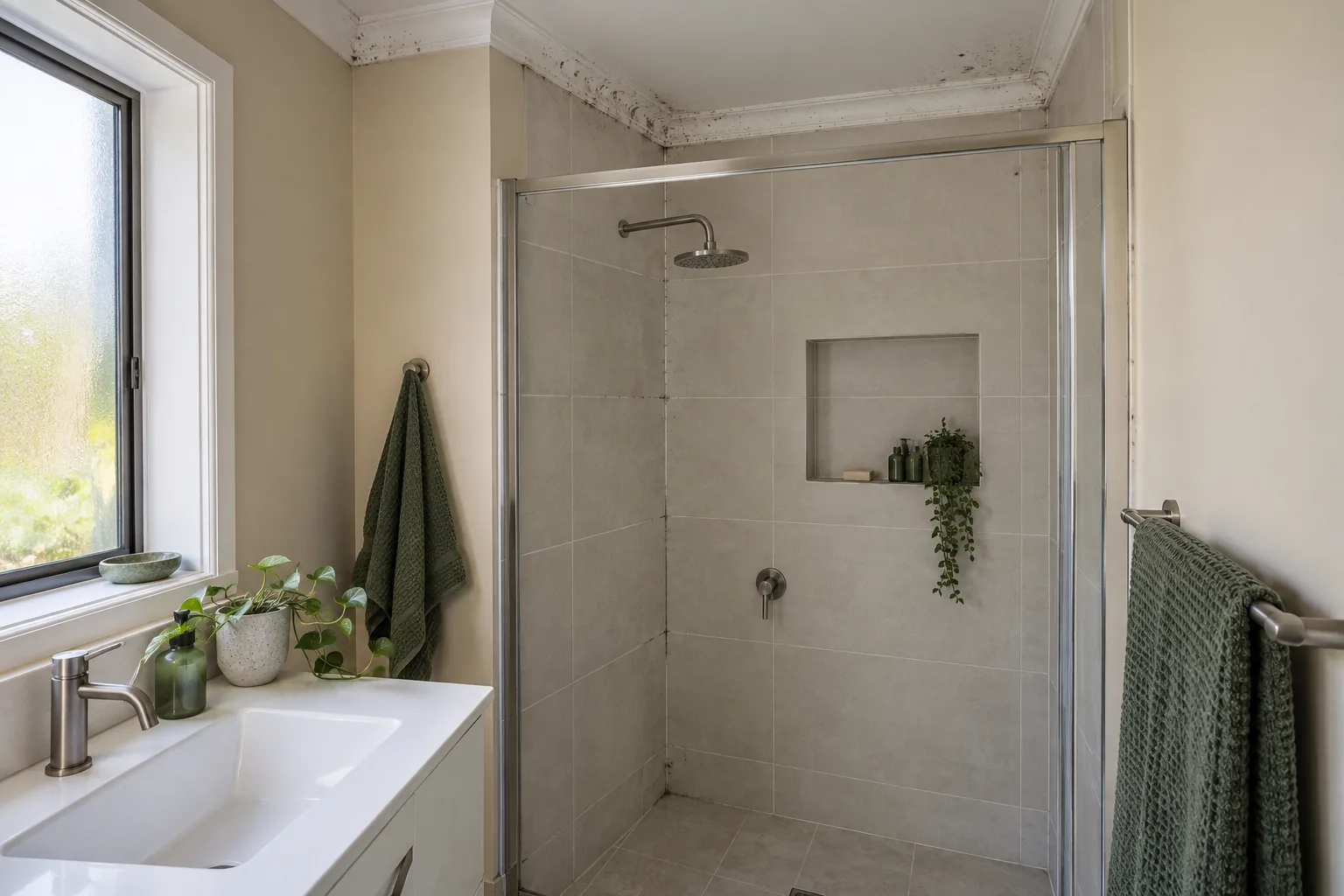
BATHROOMS · WALLS · CEILINGS
Bathroom, wall and ceiling surfaces
Identify the painted wall, skirting and hard-floor edge separately. Damp damaged lining may require replacement rather than cleaning alone. If a lower room contains stored rugs or soft furnishings, those textiles are excluded. A visible-surface appointment does not assess every concealed substrate or validate the use of a converted room.
The proposed method can use physical removal, appropriate treatment and filtration on suitable accessible materials. It should not be sold as drainage repair or concealed-substrate clearance. Damaged skirting, wet lining and fabric coverings require separate decisions before the room is redecorated.
ASSESS · PREPARE · REMOVE
From the first assessment to the final check
Describe the room level and the documented rain-to-wetness sequence.
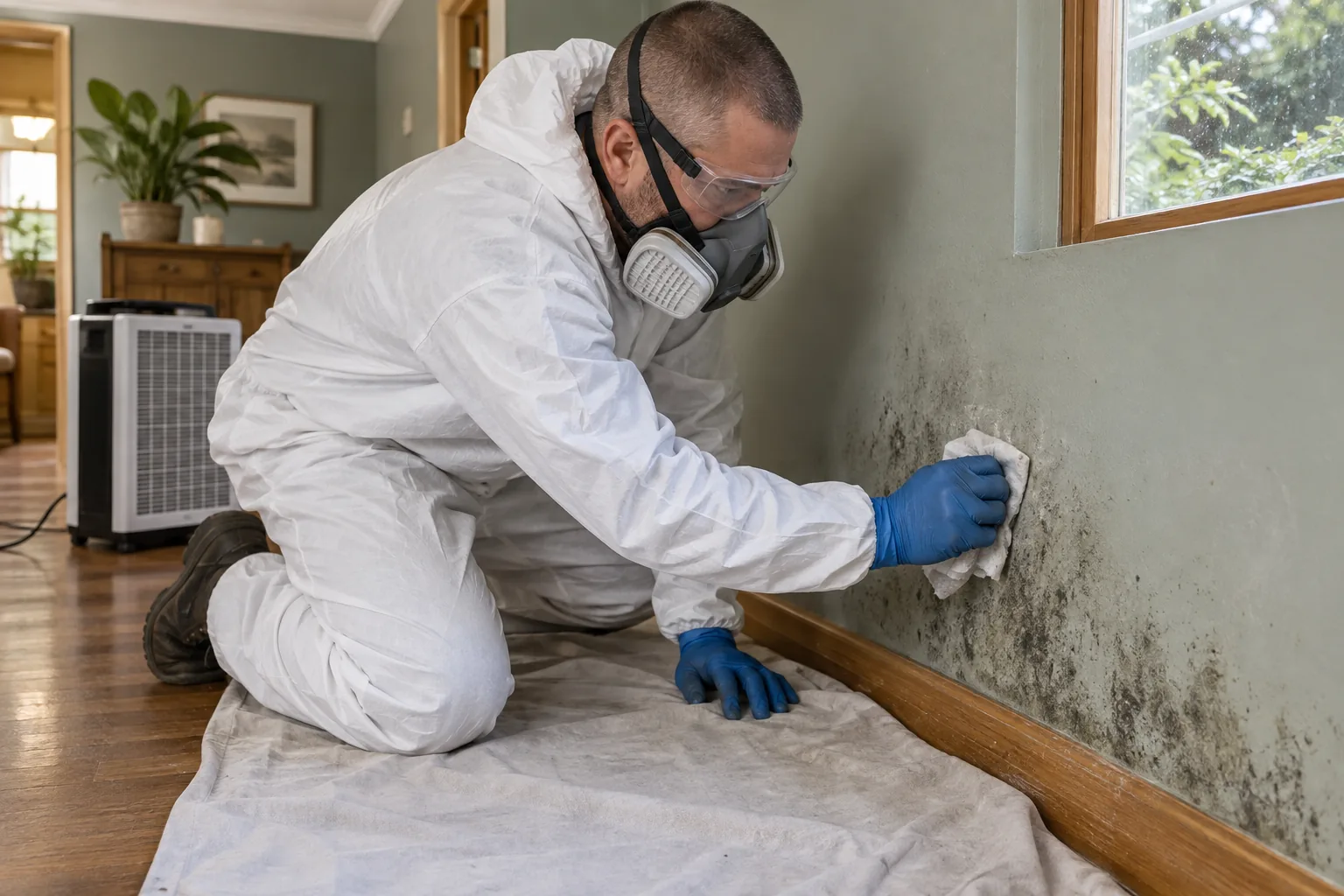
Assess the room and agree the limits
Organise the rain-to-wetness observations for a moisture inspection. Explain what is seen indoors and what can safely be observed outside. A further building or drainage assessment may be needed, without labelling the problem from the suburb name or room level.
Prepare access and carry out removal
Clear the agreed lower-wall access and separate excluded stored fabrics. The remediation process should define the hard-floor and wall surfaces. It does not automatically extend into a wet subfloor, outside drainage or concealed layers behind the lining.
Review the finish and next actions
Check the visible result and retain the record of any separate source repair. Compare the original wall base through later relevant rainfall before covering the area with storage. A surface completion and a working external repair are different outcomes that should both remain understandable.
Make the follow-up practical
Once the source is identified, coordinate the appropriate repairs and monitor the same wall base across later weather. Leave access to the original point rather than covering it with stored boxes. If damaged material is replaced, retain photos and repair notes to help distinguish a new issue from old discolouration.
Know what you are booking
A useful scope explains the difference between the indoor surface task and any outside repair. Ask what can be reached, whether materials are sound and what evidence supports further investigation. This avoids making an unsupported locality-based diagnosis while giving the household clear next steps.
Read the service overview alongside the lower-room scope. Use the price information to confirm surfaces and exclusions. Check the Diamond Creek address by phone, with wider locality navigation in the areas directory.
NEARBY LOCATIONS
Around Diamond Creek
St Helena · Briar Hill · Plenty · Yarrambat
For another address, explore Melbourne areas and call to confirm availability.
BEFORE YOU BOOK
Questions about your Diamond Creek home
Does living in Diamond Creek mean the mould is flood-related?
No. A locality name or nearby waterway cannot establish the cause at a property. The actual water history and affected materials need assessment.
Is a low room automatically a drainage problem?
No. Rain timing may guide investigation, but other moisture pathways remain possible. Avoid diagnosing from room level alone.
Can outside drainage be included in the cleaning price?
Drainage assessment and repair are separate work. Confirm the accessible indoor surfaces and any required trade referral.
Should I inspect a wet subfloor?
Do not assume it is safe or included in the appointment. Use an appropriate professional for inaccessible or potentially unsafe spaces.
Will damaged skirting be restored by treatment?
No material-restoration guarantee is offered. Swelling or deterioration may need separate replacement after the moisture issue is addressed.
What makes my enquiry useful?
Give the room’s level, affected finishes, timing after rain and previous repair history. Dated photographs help explain intermittent changes.
Discuss the affected room in Diamond Creek
Call 03 8652 1296 with the Diamond Creek address and lower-room details. Explain the recorded rain-to-wetness pattern and any separate drainage or building investigation.
Local context and practical guidance: Nillumbik Council Nillumbik Park · ABS 2021 Census dwelling structure — Diamond Creek