
DROMANA · MELBOURNE
Mould Removal Dromana
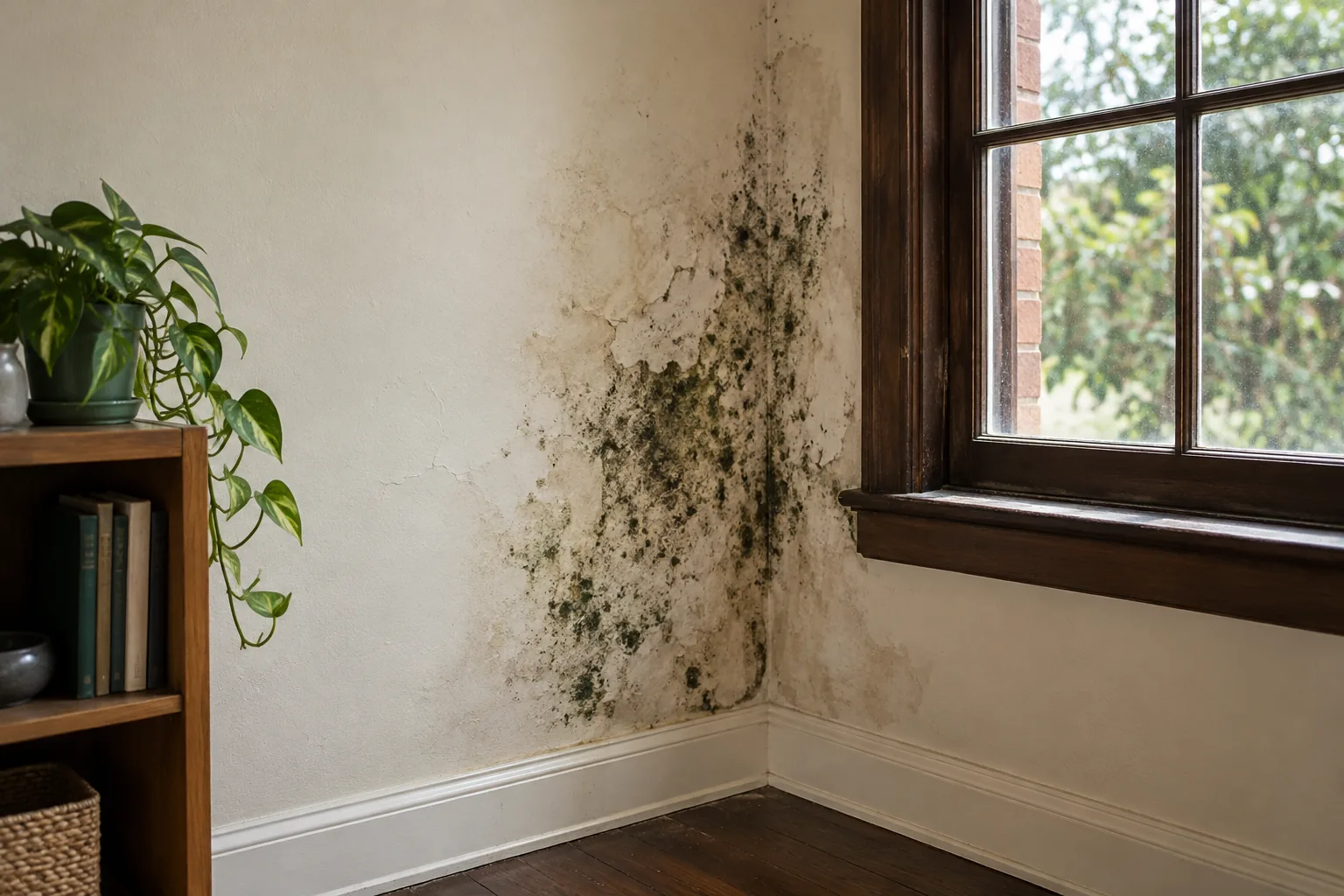
For Dromana enquiries involving several patches, label each room, surface and wetting history separately. Call 03 8652 1296 to check address availability and discuss accessible work. A bathroom ceiling and bedroom wall may need different decisions; one address does not establish a whole-property scope or identical method.
Rooms assessed separately
Materials identified
Access checked for the address
ROOMS · MATERIALS · PHOTOGRAPHS
THE HOME, IN CONTEXT
Locate the property and each room
Dromana appears in the Victorian Government’s Mornington Peninsula locality list. Give the full address, then label the affected rooms and floors. The exact location matters to availability and access, while room conditions determine the useful surface questions.
Keep separate timelines
Note when each patch appeared and any relevant water event. One room may have a known leak while another has no established source. Combining them can hide that distinction and encourage an unsupported single explanation.
Use comparable photographs
Send a broad view and a close view for each area, with the room name attached. Approximate dimensions help describe extent. Do not scrape growth or move heavy furniture merely to make every image look equally clear.
INSPECTION & MOISTURE
Assess differences before combining scope
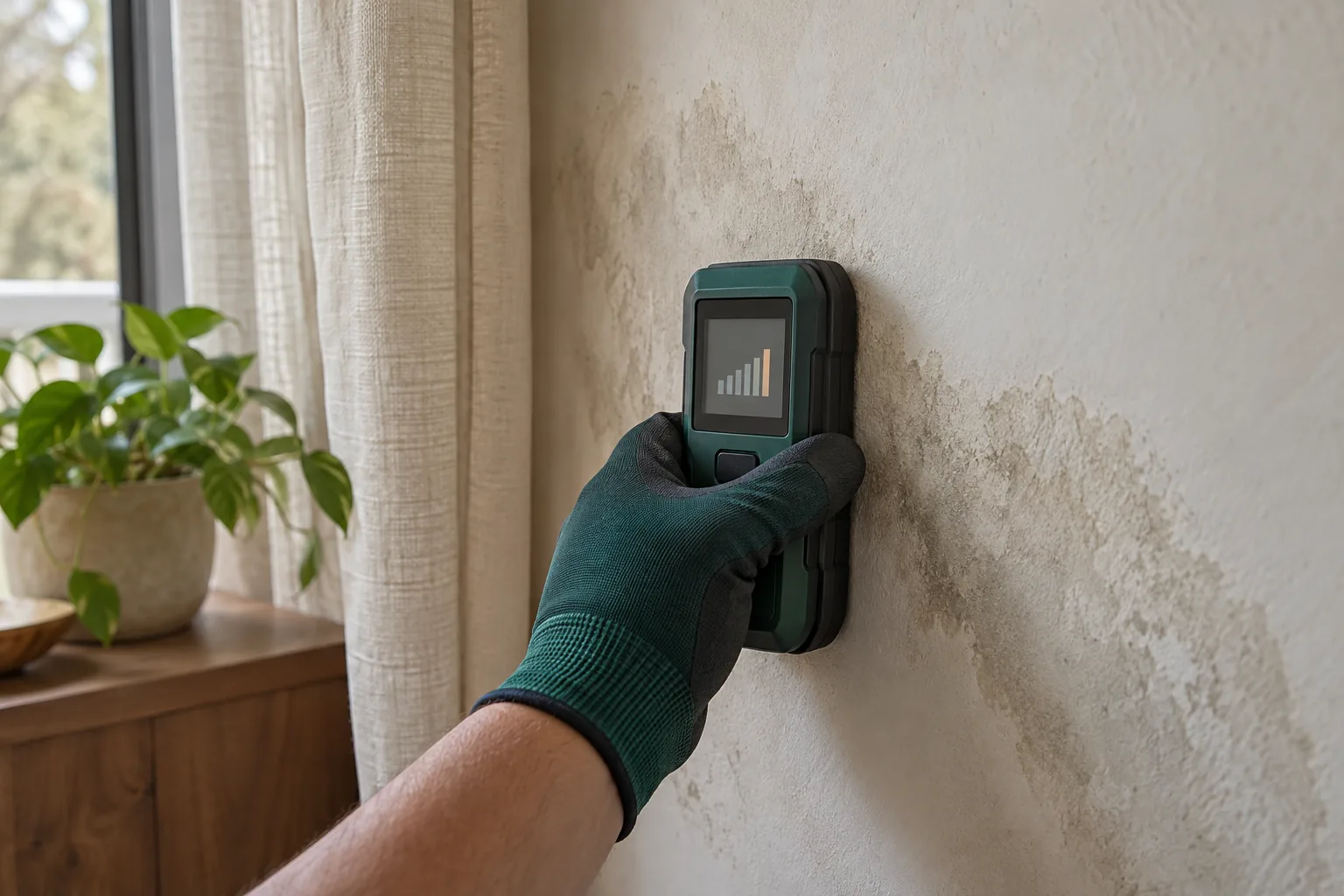
A room-by-room assessment discussion can compare accessible observations without assuming a shared cause. Materials, coating damage and moisture history may lead to different repair or access questions for each space.
Identify surface materials consistently
Describe plaster, timber, tiles and sealant separately. If a material is unknown, say so. A common dark colour across photographs does not establish that the same method will suit all affected surfaces.
Record room-specific restrictions
High ceilings, fixed cupboards and occupied areas have different access needs. Explain those restrictions before expecting the entire property to be ready for work. Suitable preparation should follow the actual room layout rather than a blanket clearance instruction.
A CONNECTED PROCESS
Build a defined scope from the separate rooms
Confirm location and priorities
Check address availability and explain which rooms concern you most. Priority can guide the discussion, but should not conceal another visible problem. Include current wetness or unstable material early rather than treating all patches as cosmetic.
Review each material condition
Firm coatings differ from failing paint or swollen board. Discuss suitability independently. Accessible surface removal should name the rooms and materials included instead of creating an undefined promise to treat everything throughout the building.
Plan preparation by room
Ask which sound items should be moved in each space and who can handle heavy furniture. Keep affected contents separate from building surfaces. Do not disturb growth to make every room appear ready for the same process.
Carry out the agreed room-specific work
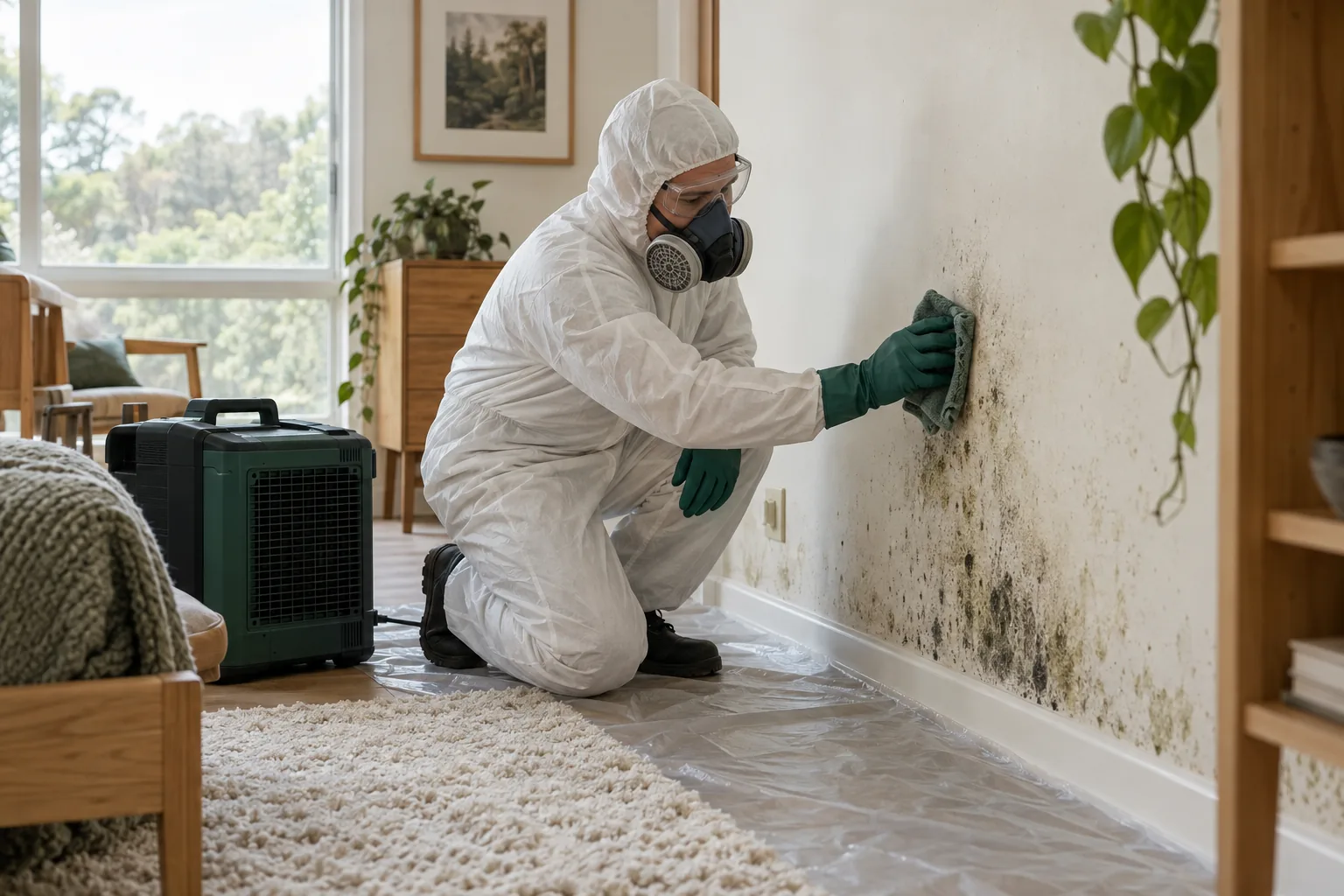
Suitable accessible surfaces can receive physical removal and compatible treatment, with HEPA filtration where appropriate to each work area. Keep room boundaries and different finishes identifiable. A method suited to one wall does not automatically suit every surface at the property.
Review the included areas
Record outcomes and unresolved questions by room. A cleaner bathroom ceiling does not establish the condition of a bedroom cavity. Keep remaining stains, damaged finishes and excluded surfaces identifiable before decoration or further repairs.
WHERE MOULD APPEARS
Different rooms can contain different questions
Bathroom ceiling
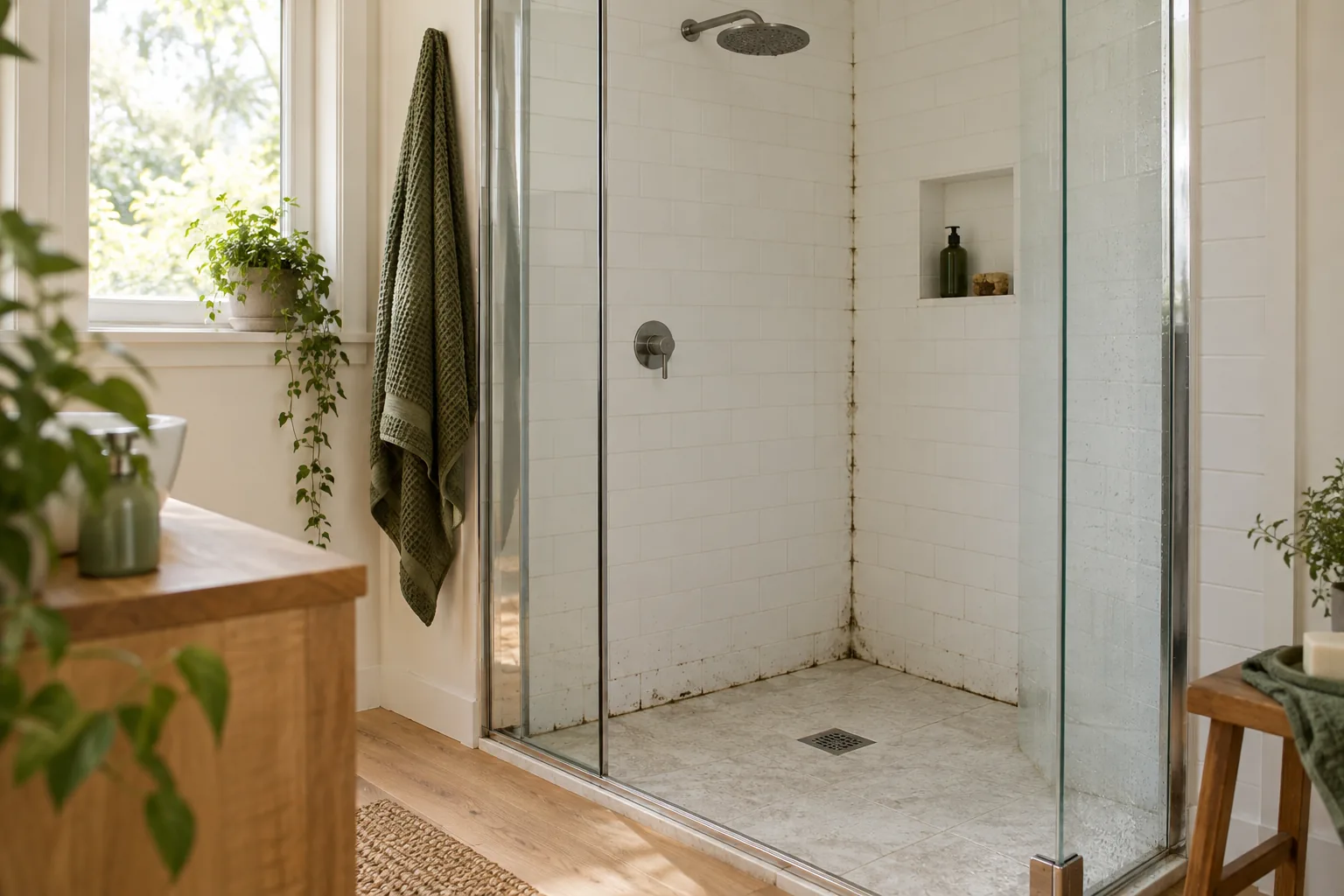
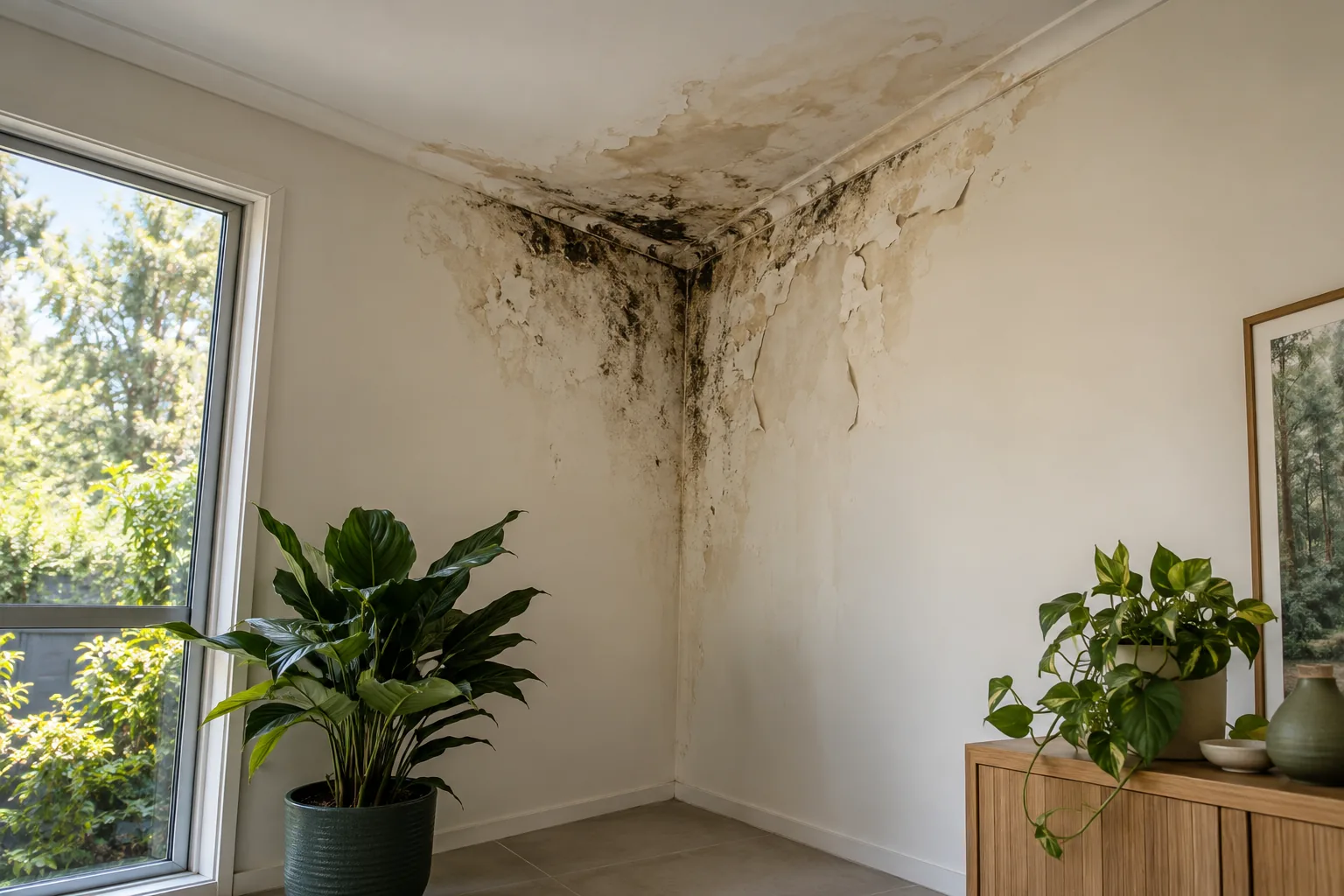
Mention shower use, extraction and coating condition. Those observations help frame moisture questions without proving a cause. High fittings or damaged lining may change access and suitability for routine surface work.
Bedroom window wall
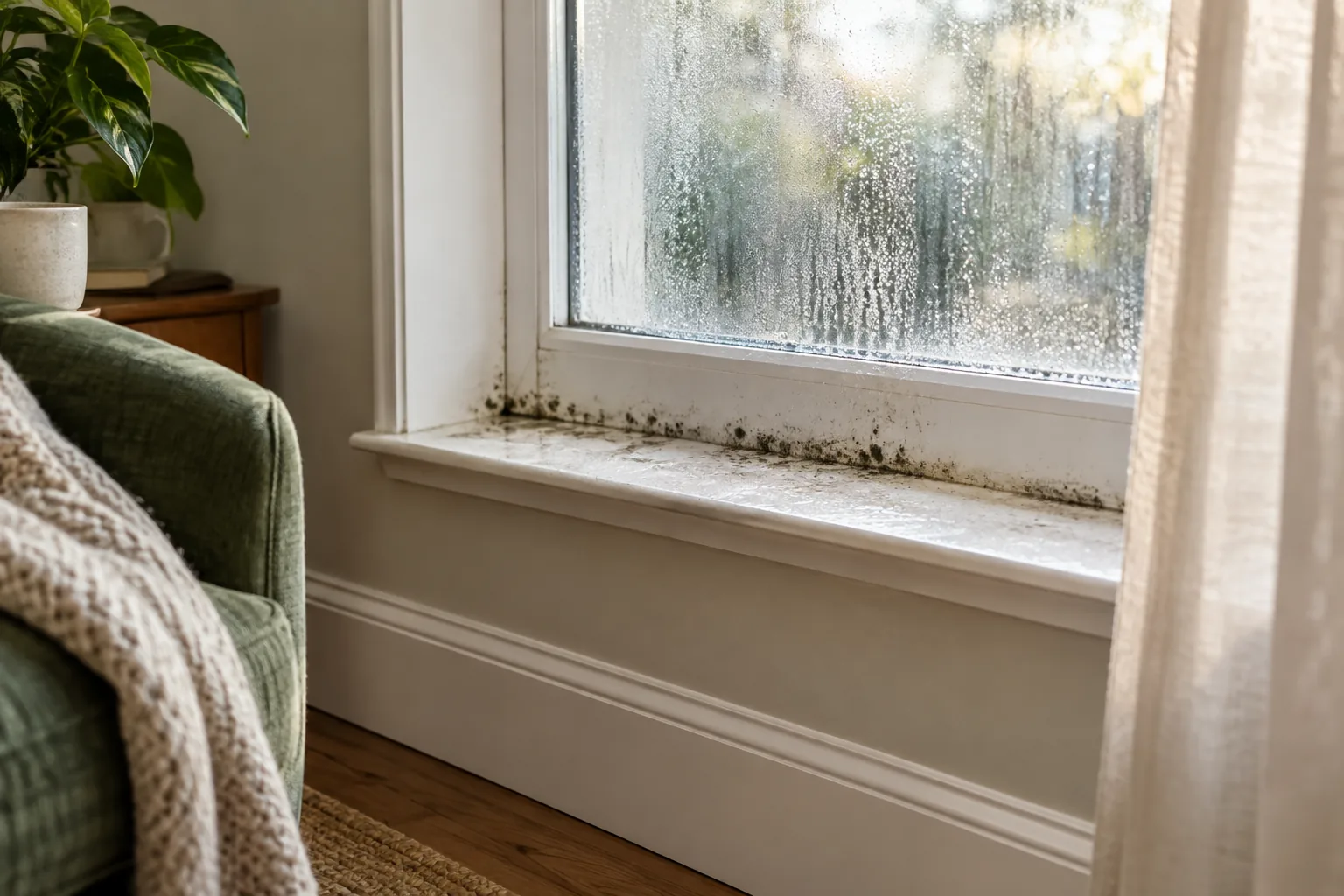
Include droplets, curtain position and furniture access. Growth behind a cupboard is partly a reachability question. The wall and any affected textile or furniture item need separate material and handling decisions.
Kitchen cabinet
Describe drips, swelling and fixed backing. Stopping a leak does not restore damaged board. A proposal for room walls should not be read as assessment of every concealed cabinet component or appliance.
Entry ceiling
Report stains and changes after water events. Location can guide investigation but cannot reliably identify the source. Electrical fittings and unstable material deserve their own access or safety consideration before cosmetic work.
MAKE SPACE FOR DRYING
Keep the property record organised
After agreed work and repairs, compare the same labelled locations during ordinary use. Keep dates and repair information beside each room’s photographs. This supports a later enquiry without assuming all recurrence has one source or represents one uniform material problem.
Maintain relevant ventilation and repair actual leaks promptly through suitable trades. Room-by-room observations may reveal a continuing concern even while other areas remain dry. Avoid repainting all patches as one decorative project before their moisture and material questions are addressed.
DROMANA & NEARBY
Nearby property enquiries
Compare location information for Safety Beach Rosebud Mount Martha. Give the exact property address when calling; a nearby page does not confirm an available appointment.
QUESTIONS WORTH ASKING
Before the visit.
Do several rooms prove whole-house mould?
Not by themselves. Describe the observed areas and access limits. The scope should follow evidence and material condition rather than assuming every concealed cavity or surface is affected because several visible patches exist.
Can all rooms use the same cleaning method?
Do not assume that. Materials and finish condition may differ substantially. Discuss each surface group, including fragile coatings or damaged board, before expecting identical handling throughout the property.
Should I send every photo in one group?
Label images by room and include wide views. A clear set helps keep different histories and materials distinct. Unlabelled close-ups can make unrelated surfaces appear to be one continuous patch.
Can the most affected room be discussed first?
Yes, explain priorities alongside the complete visible information. Active water or unstable material may change the next step. A priority room does not automatically define the scope for all other areas.
Does one repair resolve every patch?
Not necessarily. A repair may address one water route while other observations need their own investigation. Keep room histories separate and avoid using an improved surface elsewhere as confirmation of a concealed condition.
How do I start a Dromana enquiry?
Call 03 8652 1296 with the address, labelled room photographs and wetting histories. Check availability and room-specific preparation before organising clearance or repairs around a possible visit.
START WITH YOUR ROOM
Discuss the rooms as separate evidence
Call with a simple room list and material details. A defined scope and individual repair questions make the Dromana enquiry more useful while availability and access are checked.
Useful references: Victorian Government — Mornington Peninsula localities