
SEAFORD · MELBOURNE
Mould Removal Seaford
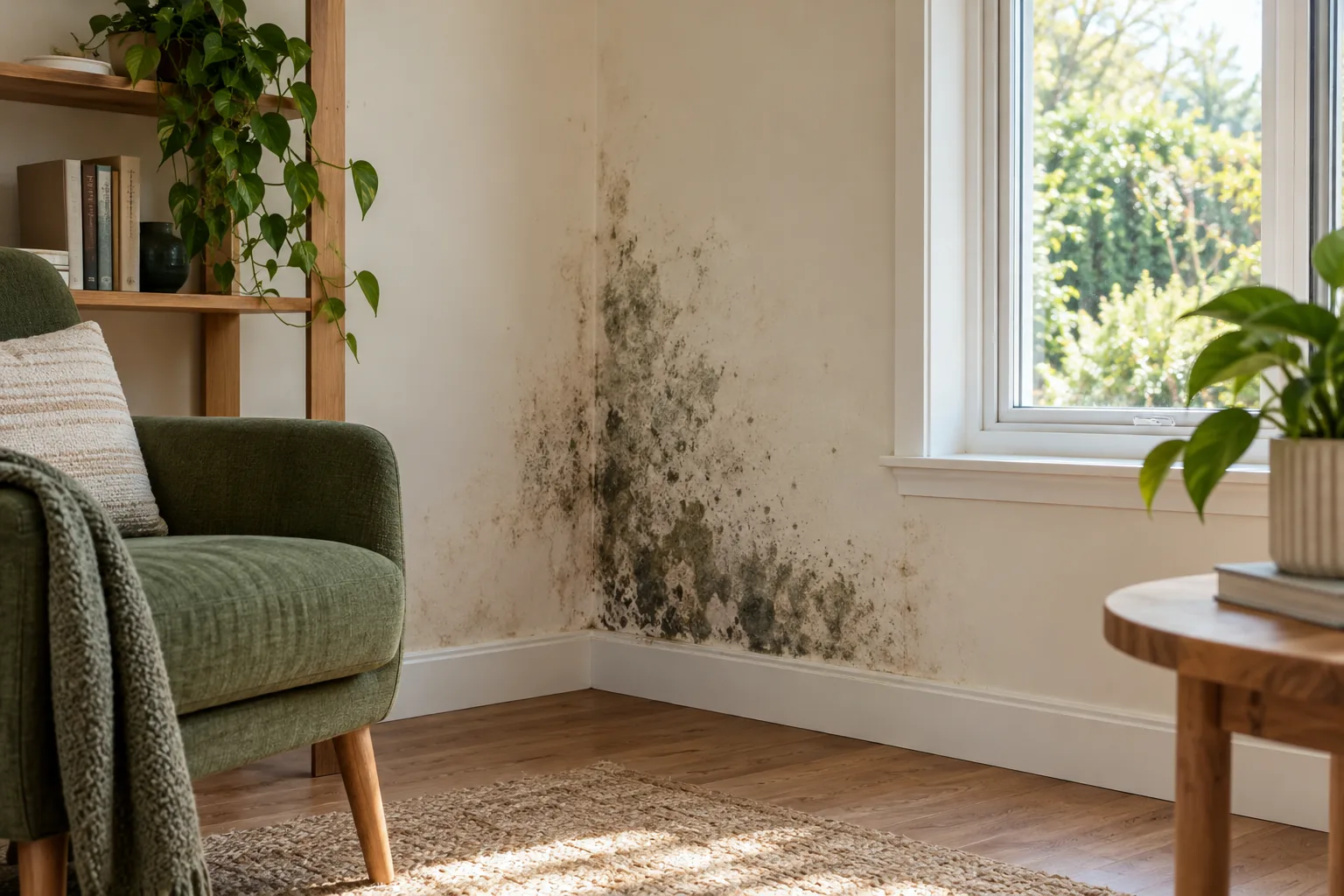
A living-room corner can conceal growth behind a sofa or bookcase, making it important to describe both the surface and the obstruction. For Seaford, begin with photographs of accessible paint and explain any dampness or recent wet event. We can discuss a defined removal enquiry and check the full address, while furniture textiles, damaged finishes and building repairs remain separate questions.
Furniture access clarified
Finish condition reviewed
Living-space preparation discussed
Living rooms · Corners · Paint
THE HOME, IN CONTEXT
Confirm the Seaford property location
Frankston City Council identifies Seaford and Frankston as the suburbs containing its two main beaches. Give your own street address and living-room entry when enquiring; the coastal locality is context, not evidence of the cause inside a particular home.
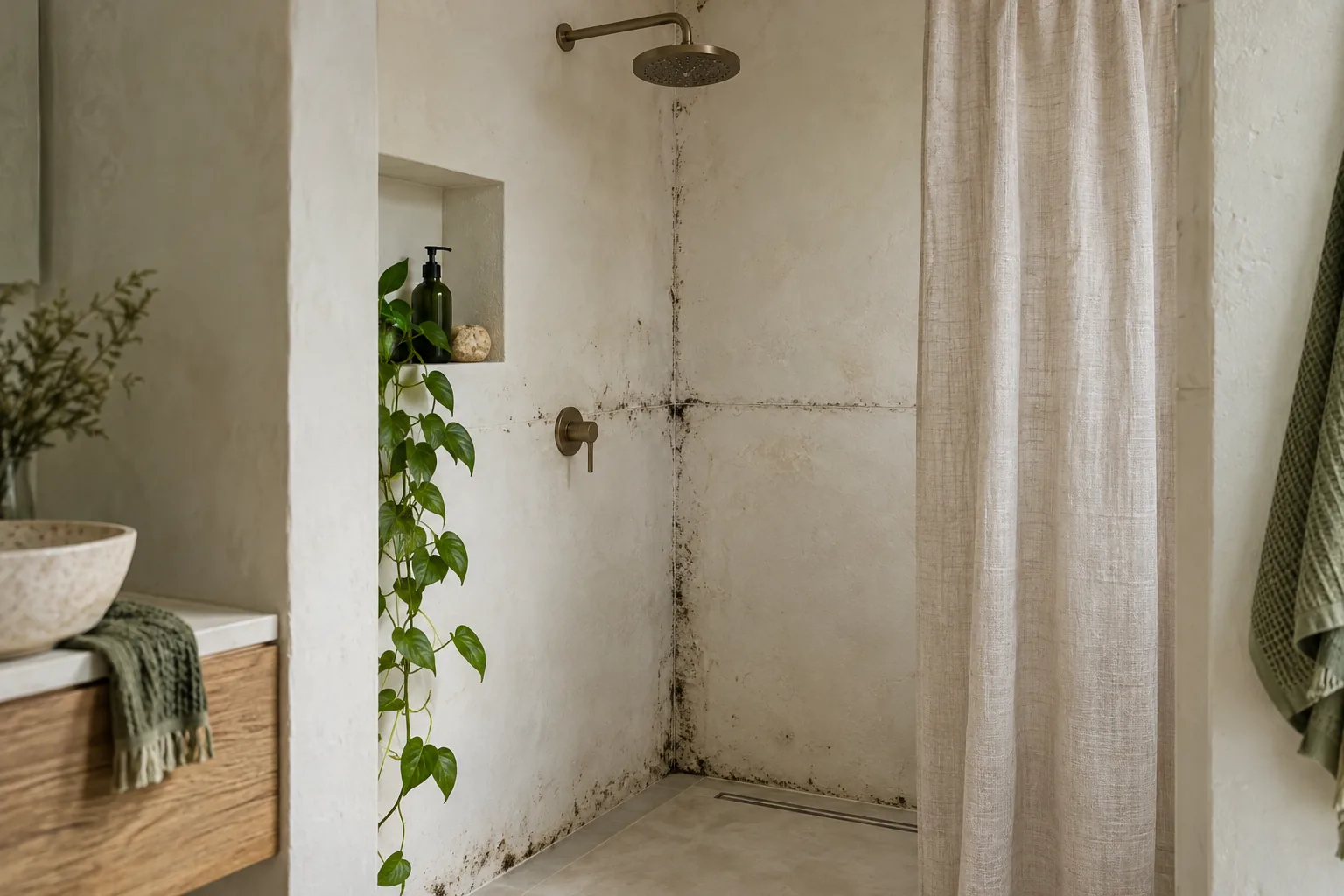
A corner behind the sofa
If growth becomes visible when furniture is moved, describe the wall and sofa separately. A patch on paint does not show the condition of upholstery or the concealed wall beyond it. Avoid moving a heavy sofa without help or dragging affected fabric through the rest of the house.
A room still used every day
Explain whether this is the main living space and how household members pass through it. A clear preparation plan can consider the actual layout without promising that every activity can continue during work. Keep the surface boundary distinct from a general request to clean all belongings.
INSPECTION & MOISTURE
See the corner in its room context
Take a wide photograph showing furniture, windows and doorways as well as a closer view of the finish. Inspection information is useful when the patch has returned or the wall appears damp rather than simply marked.
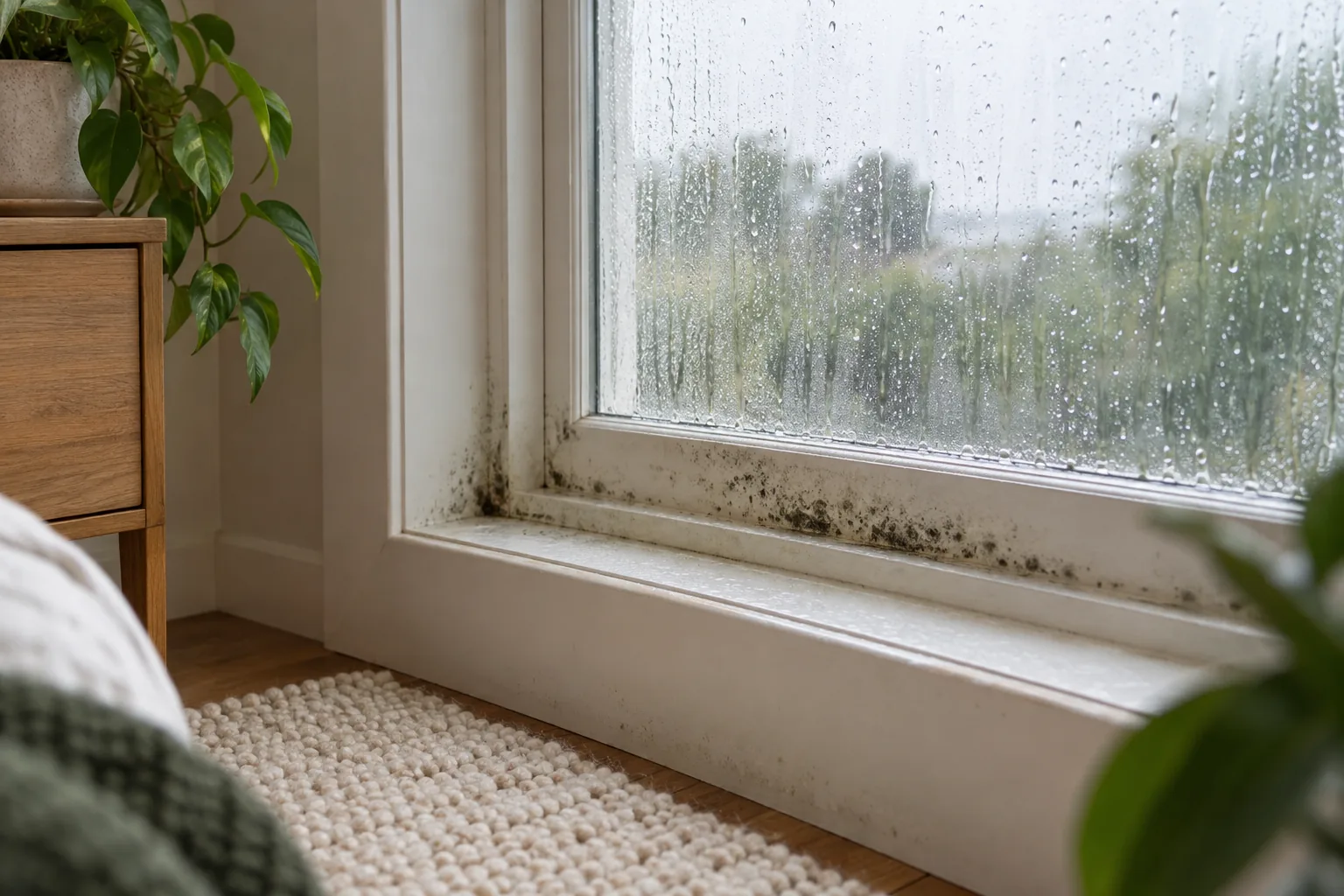
Describe the wall covering
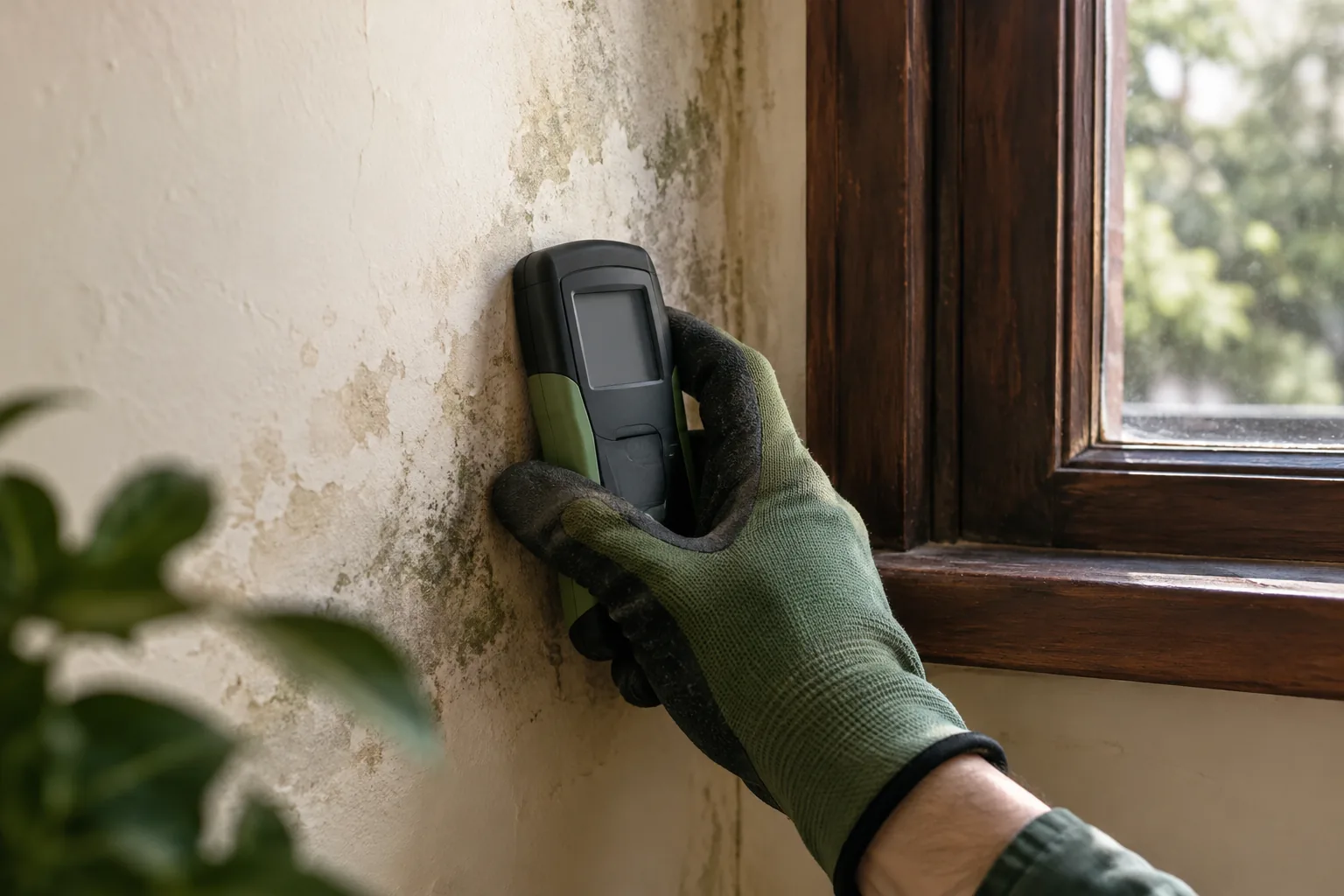
Painted plaster, wallpaper and timber panels each need material consideration. Mention peeling, softness or blistering. A method selected for intact paint should not be presumed suitable for a delicate covering or damaged lining.
Keep a factual moisture history
Report wet glass, a known leak or earlier decorating where relevant. Do not infer that the sea or weather alone explains the problem. The timing and position of observed moisture can help formulate questions for the appropriate assessment or repair contact.
A CONNECTED PROCESS
A living-room corner plan
Define the requested surfaces
Identify the visible wall, ceiling or floor areas and what furniture hides. Explain any other marked corner separately rather than assuming the whole room has the same condition.
Arrange safe clearance
Discuss which items the household can move and where they will be placed. Leave a clear route to the corner without creating a new obstruction across the doorway.
Review the finish
Consider suitability and deteriorated material before agreeing the method. Fragile coverings or softened lining may need a separate repair or replacement decision.
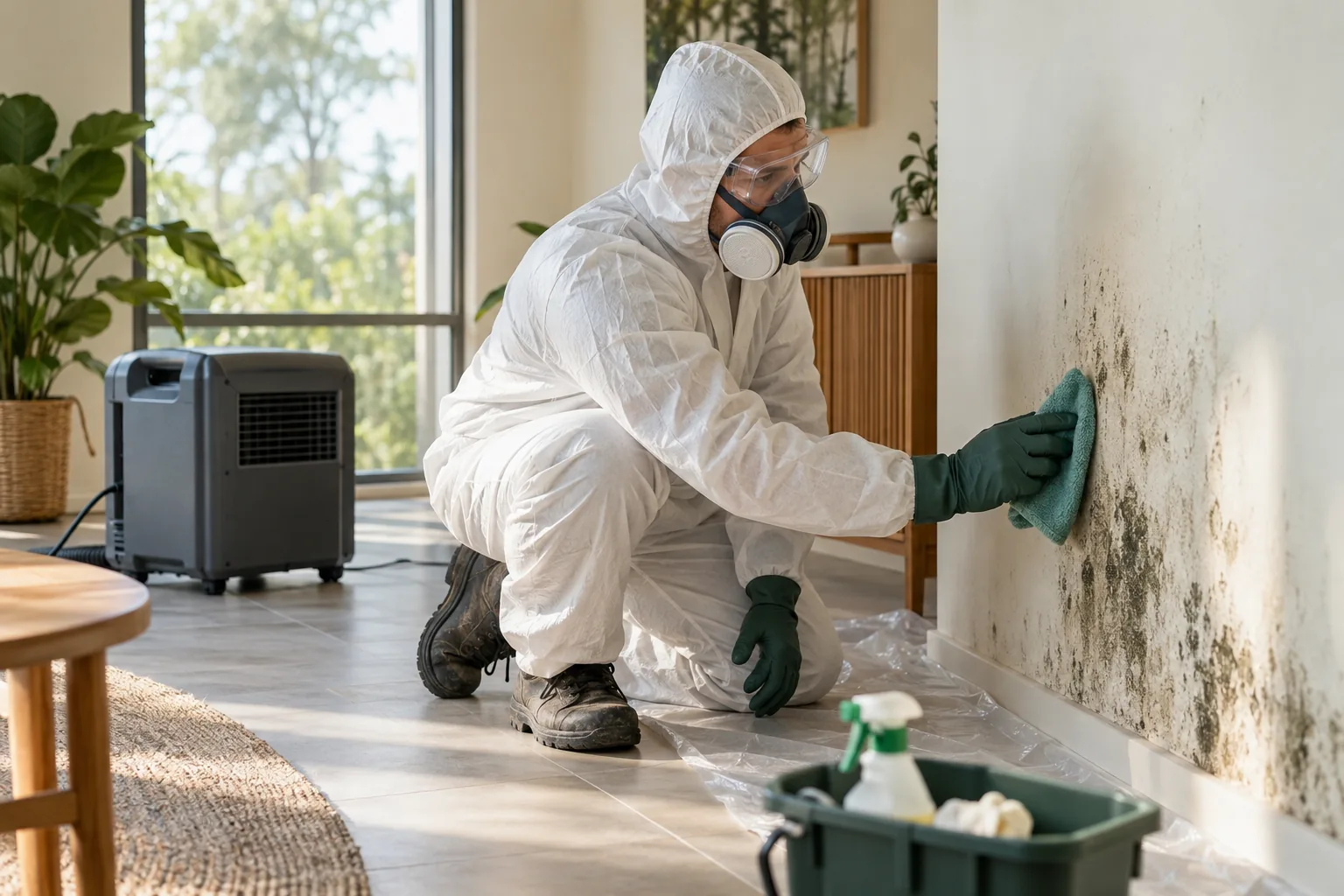
Remove agreed growth
Physical removal, compatible treatment and HEPA filtration may be used as appropriate. Read about remediation arrangements where an occupied living space needs careful preparation.
Review the wall before refurnishing
Clarify stains and unresolved moisture concerns. Return furniture according to the applicable instructions and maintain enough access to observe the affected corner afterwards.
WHERE MOULD APPEARS
Living-room observations with separate meanings
Wall behind upholstery
Surface growth and an affected sofa are different enquiries. Describe the fabric without assuming upholstery treatment is included.
Bookcase margins
A fixed or heavy unit can conceal access. Explain the reachable strip and who can safely clear contents if movement is needed.
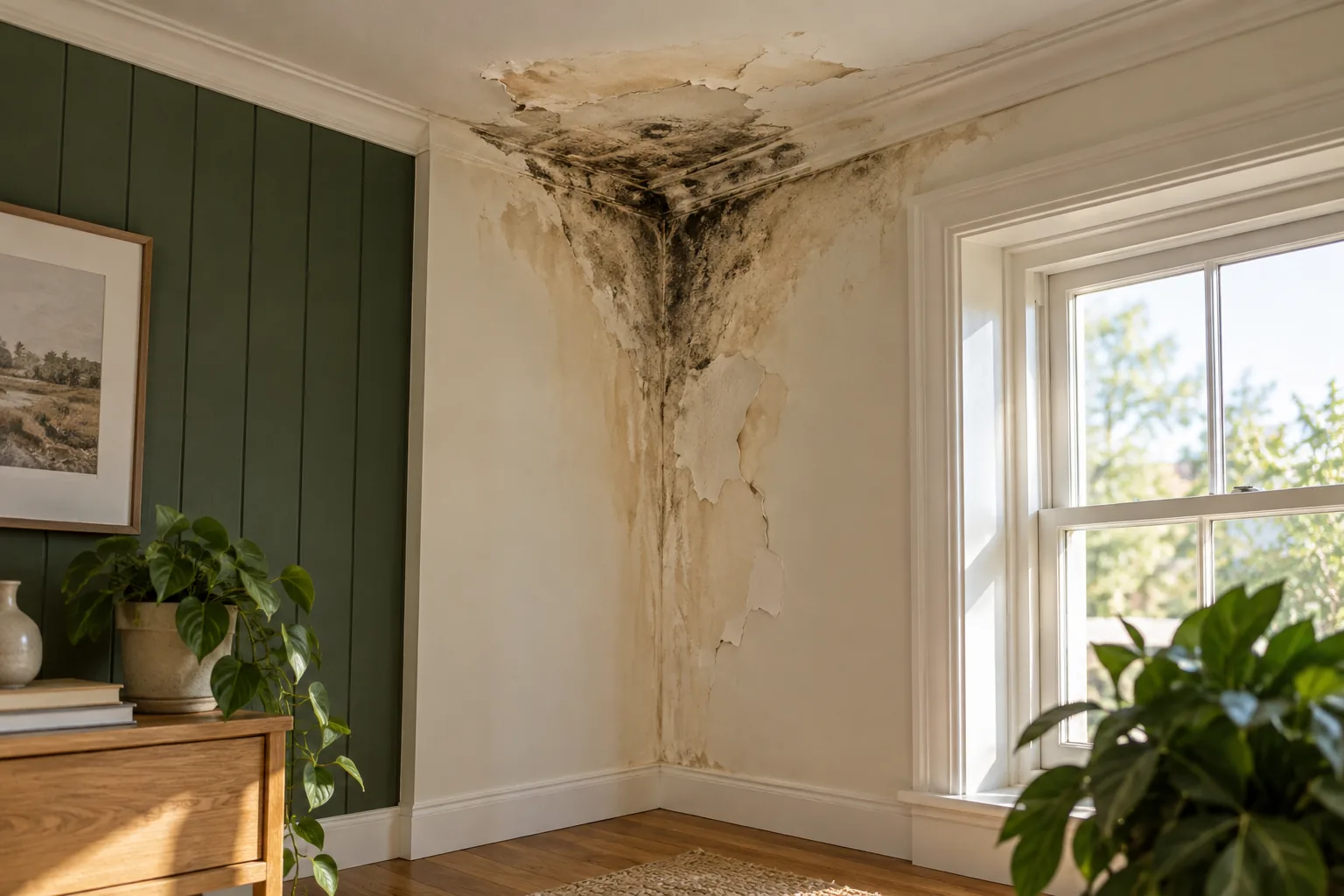
Ceiling above the seating area
If upper growth is present, show its relation to the sofa and wall. Explain reach restrictions without treating furniture or ceiling damage as one material concern.
Skirting beneath the patch
Swelling or looseness may indicate material damage. Cleaning the paint above does not restore the trim or establish the condition behind it.
MAKE SPACE FOR DRYING
Keep the affected corner visible
Once moisture and surface questions are addressed, avoid pushing furniture tightly against the same area before it can be monitored. Retain dated photographs if changes recur. A practical check should include the wall condition and any observed wet event rather than relying on odour alone.
Arrange appropriate repairs for continuing water entry and manage ordinary indoor moisture through sensible household routines. Those actions should reflect the actual room, not a generic claim about coastal homes. Accessible surface removal can be one part of the plan without guaranteeing future growth will never occur.
SEAFORD & NEARBY
Seaford and surrounding locations
Confirm the exact property address for an availability enquiry. These nearby pages can help distinguish neighbouring suburb names: Carrum, Patterson Lakes, Bonbeach.
QUESTIONS WORTH ASKING
Before the visit.
Does the coastal location identify the cause?
No. A suburb’s setting does not diagnose a particular wall. Describe room use, wet observations and known repairs rather than assuming a local cause.
Do you clean the sofa too?
Upholstery is a separate textile concern. The stated service relates to accessible walls, ceilings and floors, with belongings handled through separate arrangements.
Should I move the bookcase now?
Explain its weight, contents and obstruction first. Agree safe preparation before moving heavy furniture or exposing areas that cannot be reached normally.
Can wallpaper be cleaned like paint?
The covering and its condition need consideration. Delicate or damaged wallpaper may not suit a method appropriate for an intact painted surface.
What if the patch returns after decorating?
Keep dates and photographs and describe the repair history. Recurrence warrants a fresh moisture question rather than assuming another cosmetic treatment will resolve it.
Will all stains disappear?
Some discolouration may remain depending on the material and damage. Discuss appearance and later decorating separately from removal of visible growth.
START WITH YOUR ROOM
Describe the living-room corner
Call 03 8652 1296 with the Seaford address, wall photographs and furniture layout. Mention fragile coverings or heavy obstructions early so suitable scope and household preparation can be discussed.
Useful references: Frankston City Council — foreshore