

WINDOW LEDGES AND CURTAINS · MOISTURE · SURFACES
TECOMA · MELBOURNE
Mould Removal Tecoma
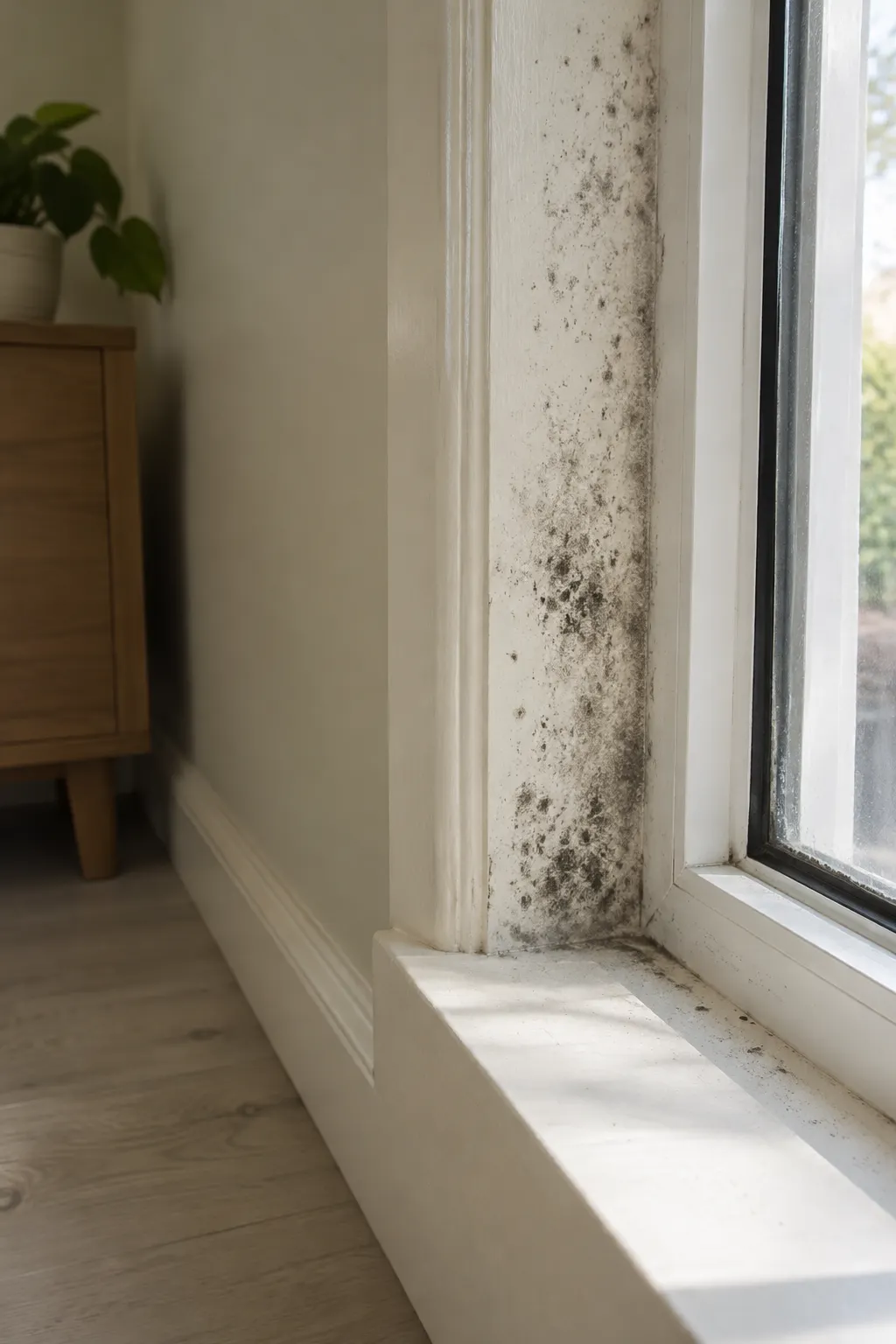
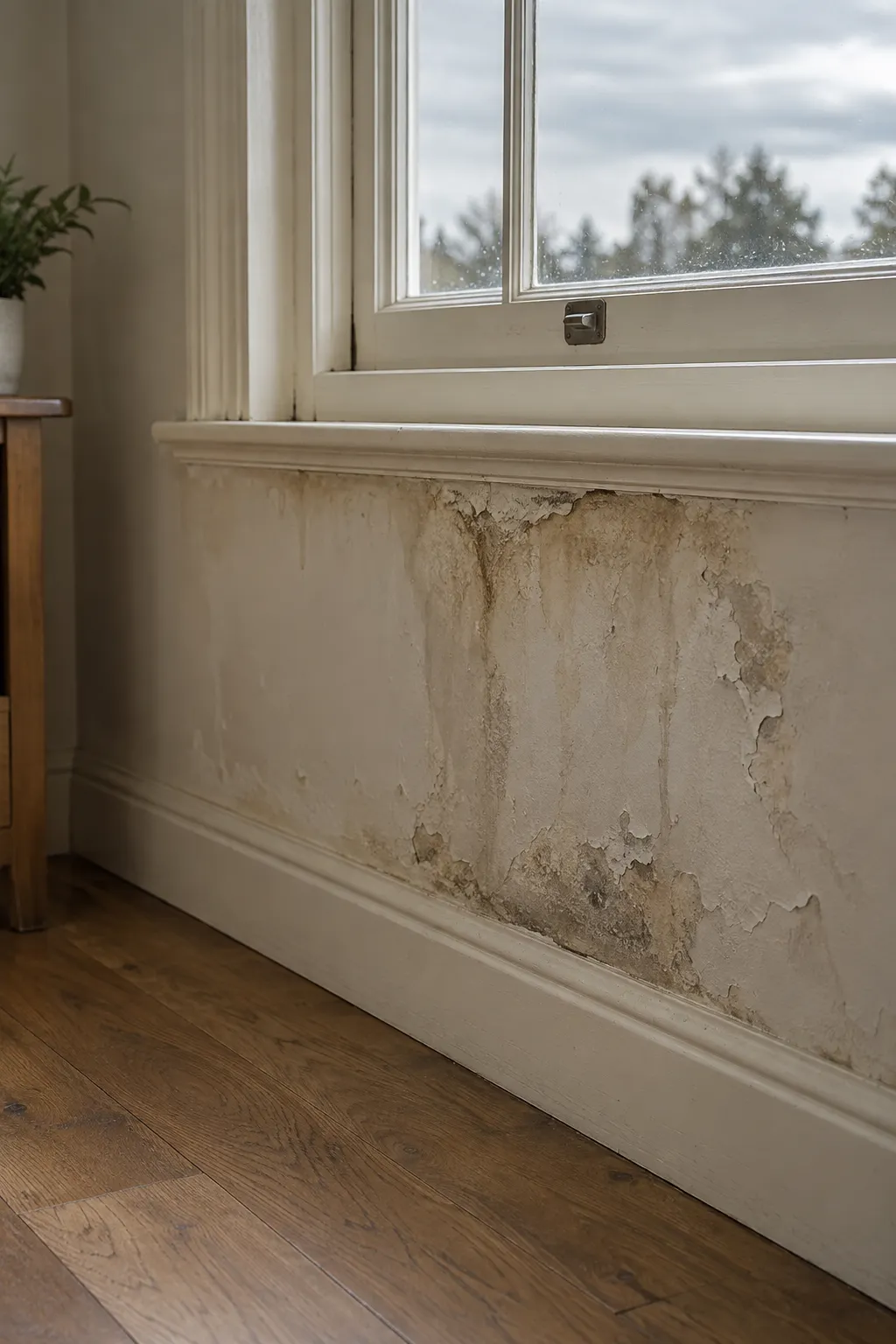
A damp window ledge can affect the nearby wall and curtains differently. For Tecoma, describe the frame, painted reveal and any fabric touching the wet area before arranging work.
Visible material considered
Moisture history discussed
Access and scope agreed
THE ROOM TELLS A STORY
Where the fabric meets the frame
Yarra Ranges identifies Tecoma within its municipality. If the mark follows the curtain edge, look for moisture on the adjacent frame without assuming the fabric caused it. A curtain, timber sill and painted wall need separate decisions. Describe repeated morning droplets or water appearing during rain.
The window-area inspection discussion should include the curtain’s usual position and the sill material. Describe rain-related changes and morning droplets separately, without treating fabric contact as a confirmed cause or assuming every nearby material belongs in the removal scope.
UNDERSTANDING MOISTURE
Make sense of
moisture at a window ledge.

What stays damp
Observe whether water appears on the ledge overnight or during rain. Curtain contact may keep an area covered, but it does not establish why the frame or adjoining wall became wet.
Leaks and repairs
A suspected seal or opening defect requires its own investigation. Describe entry timing and earlier repairs; cleaning a ledge cannot confirm that the window assembly or surrounding fabric is watertight.
Accessible evidence
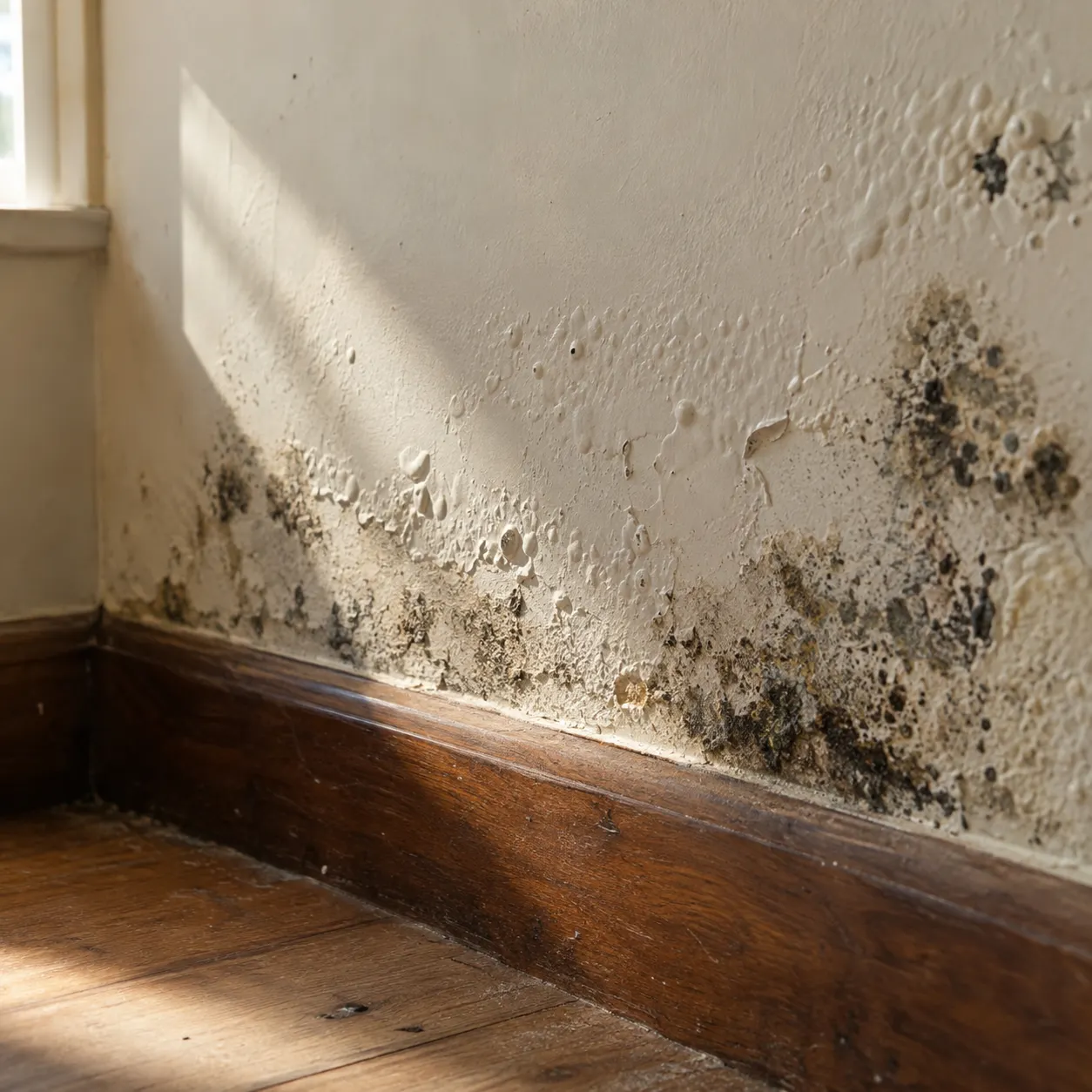
The timber sill, painted reveal and curtain fabric have different condition questions. Identify swelling, lifted coatings or affected textiles so surface work is not assumed to restore every nearby material.
OUR REMOVAL PROCESS
Plan the work
around the room.
Keep the room history
Take photos of the window with the curtain in its usual position, then of the accessible marks. Record morning moisture separately from rain-related water entry.
Make access practical
Tell us whether curtains are easily removable and who will handle them. A fixed pelmet or difficult opening can affect access without making dismantling part of the visit.
Agree the next decisions
Ask which materials are included and what requires repair or laundering advice elsewhere. Drying the ledge and restoring a coating are different from resolving water entering at the frame.
01
Assess the window ledge
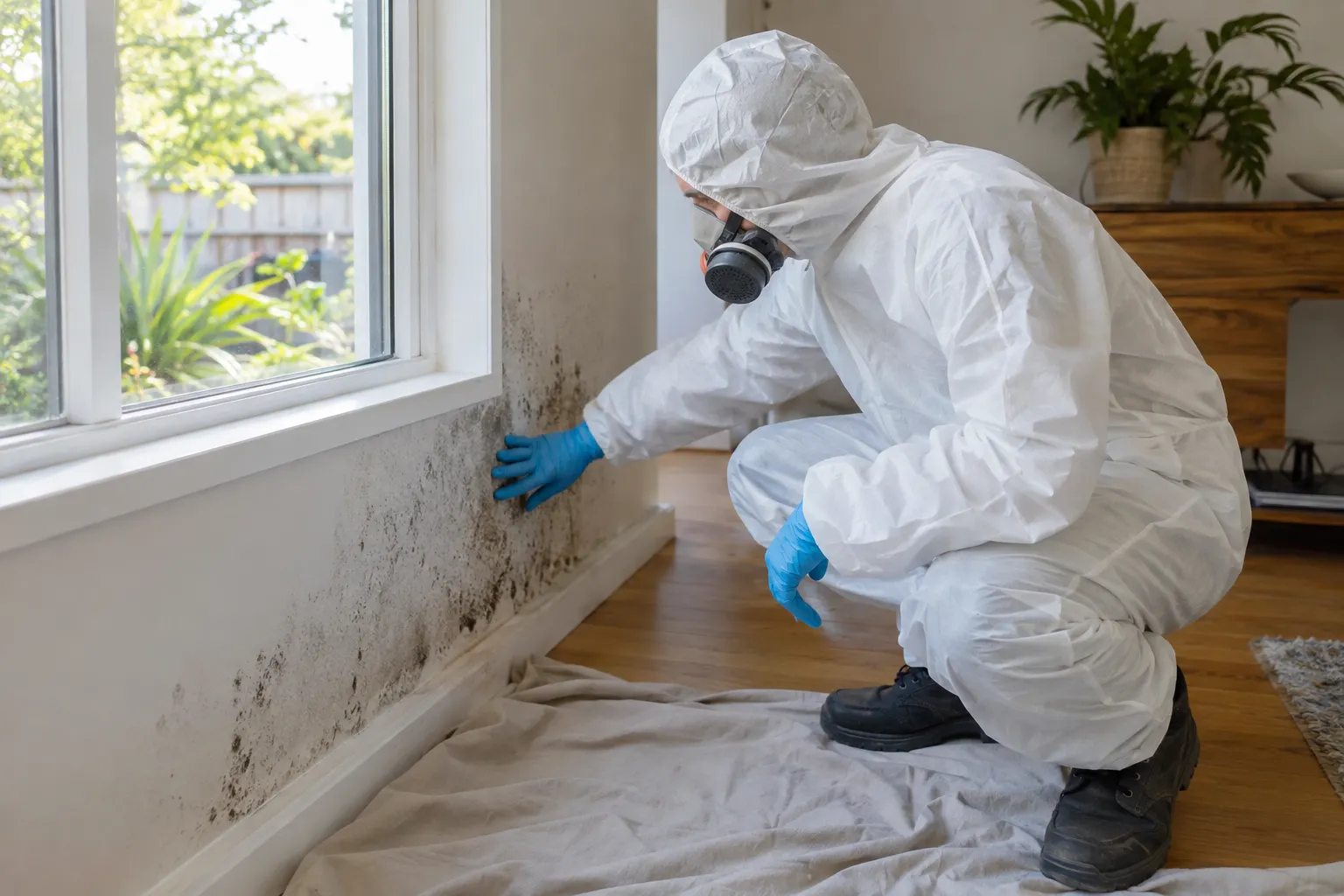
Identify the painted reveal, timber sill and nearby curtain separately. Discuss suitable surface treatment without assuming fabric and fixed building finishes belong in one cleaning task.
02
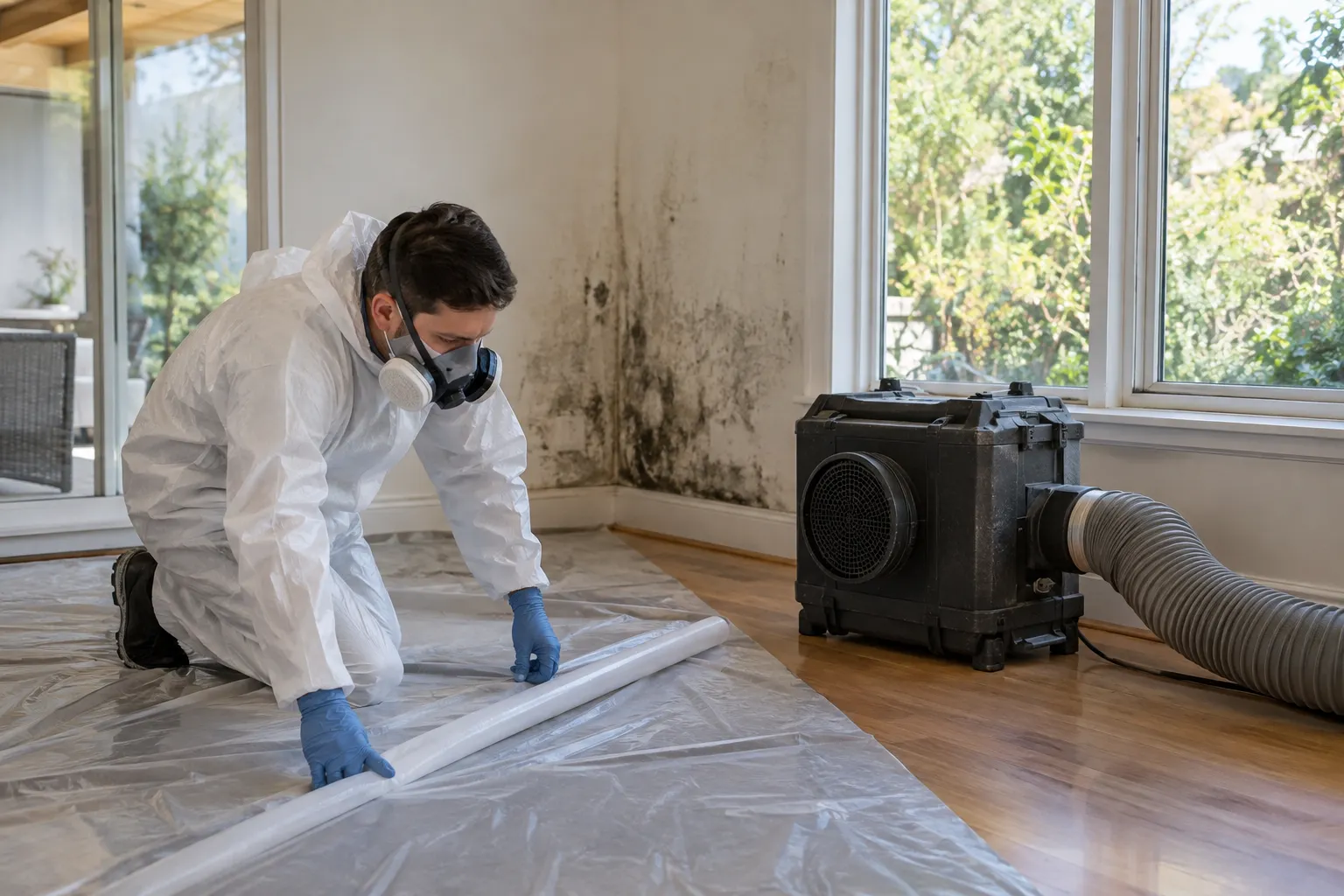
Prepare the working area
Agree on curtain handling and access to the ledge before work. Protect clear finishes beside the window while leaving seals and fittings undisturbed for assessment.
03
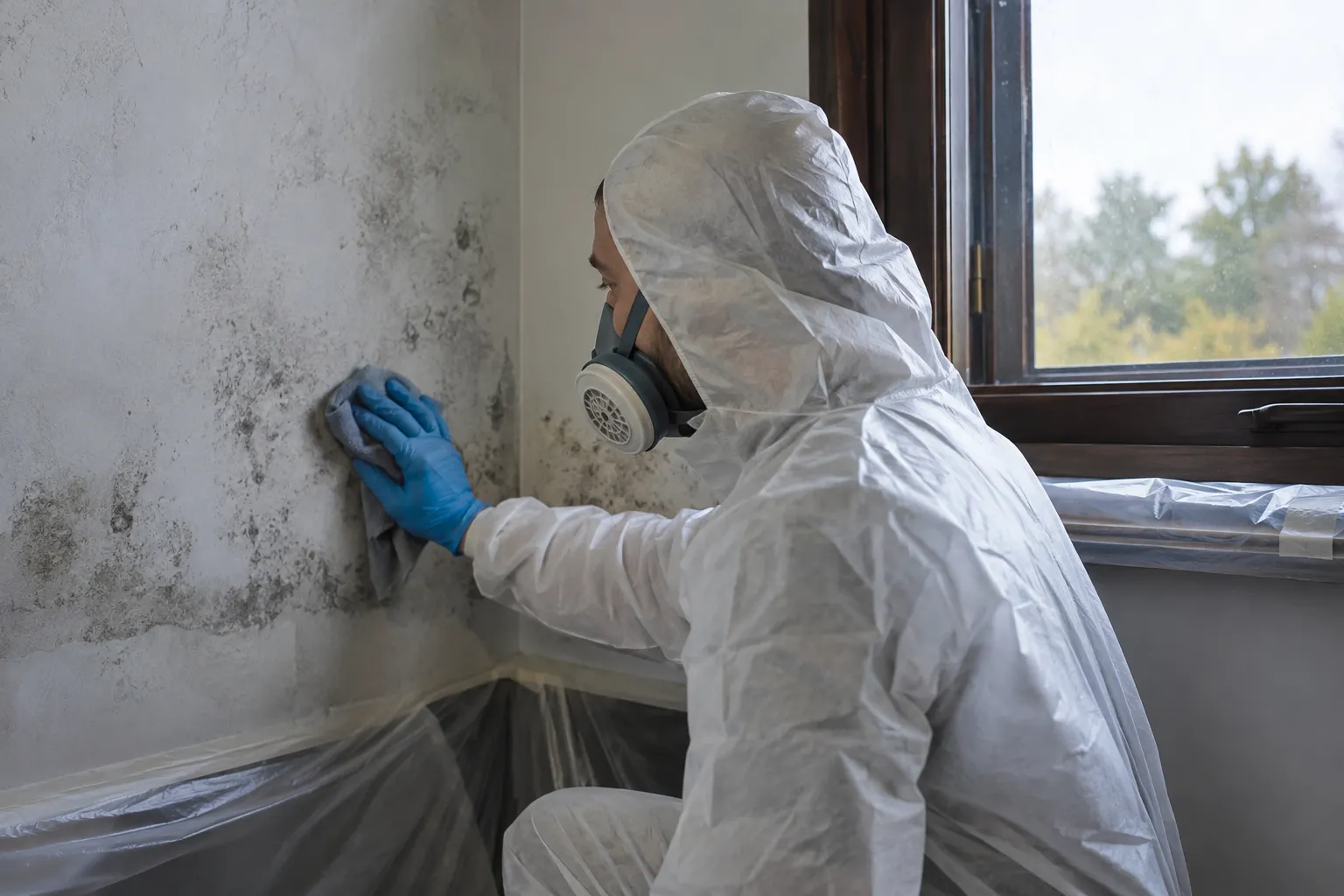
Remove and review
After treatment, observe whether the curtain continues touching a wet frame. New droplets and any fabric damage need consideration beyond the appearance of the painted reveal.
COMMON AREAS AFFECTED
Different surfaces.
Different decisions.
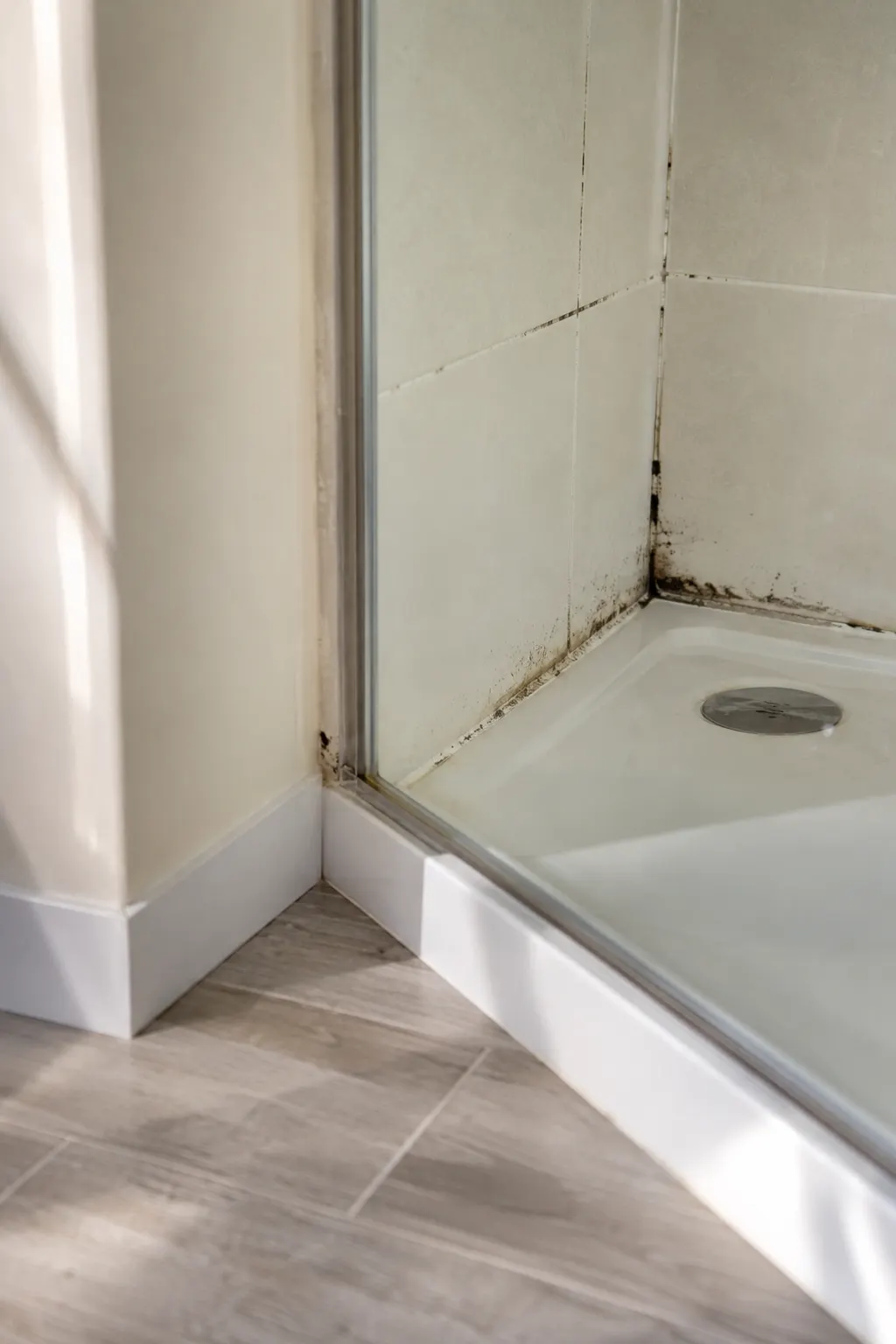
Bathroom junctions
If window moisture follows bathing elsewhere, record that connection. A marked shower joint and wet curtain edge remain different materials and should be described separately if both are affected.
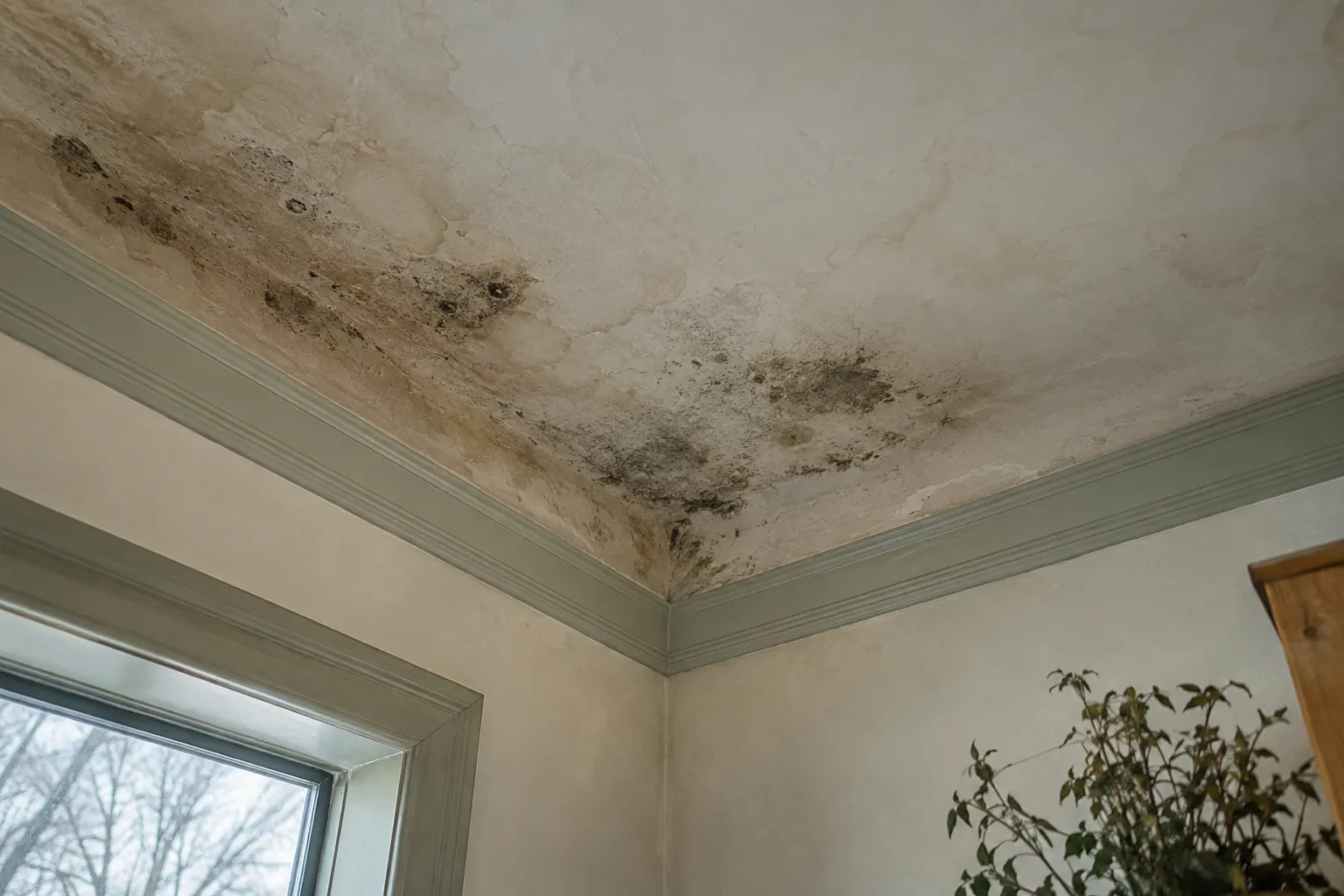
Ceiling surfaces
A ceiling mark above the opening adds another position to photograph safely. Note whether it changes with rain or remains separate from droplets gathering on the ledge.
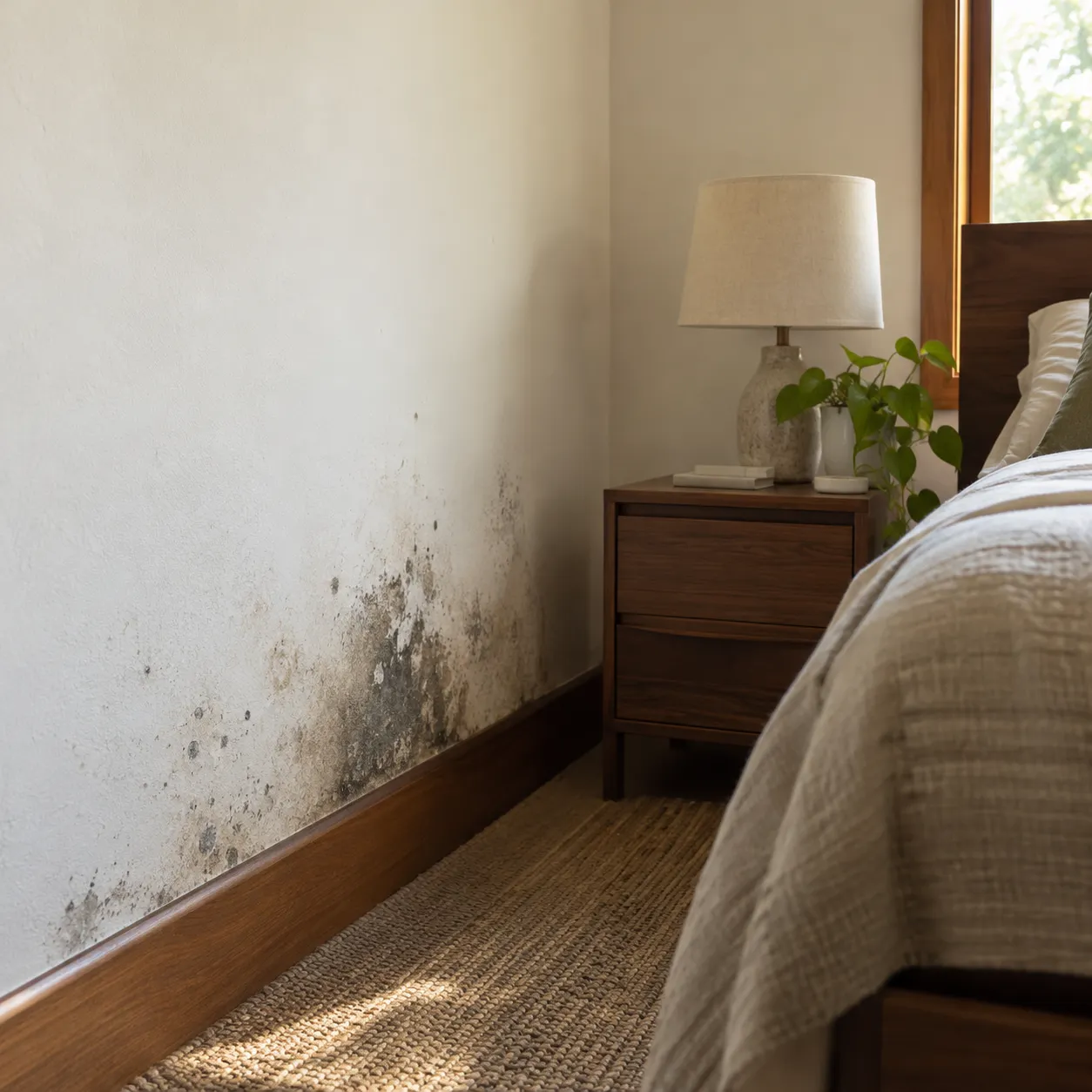
Painted walls
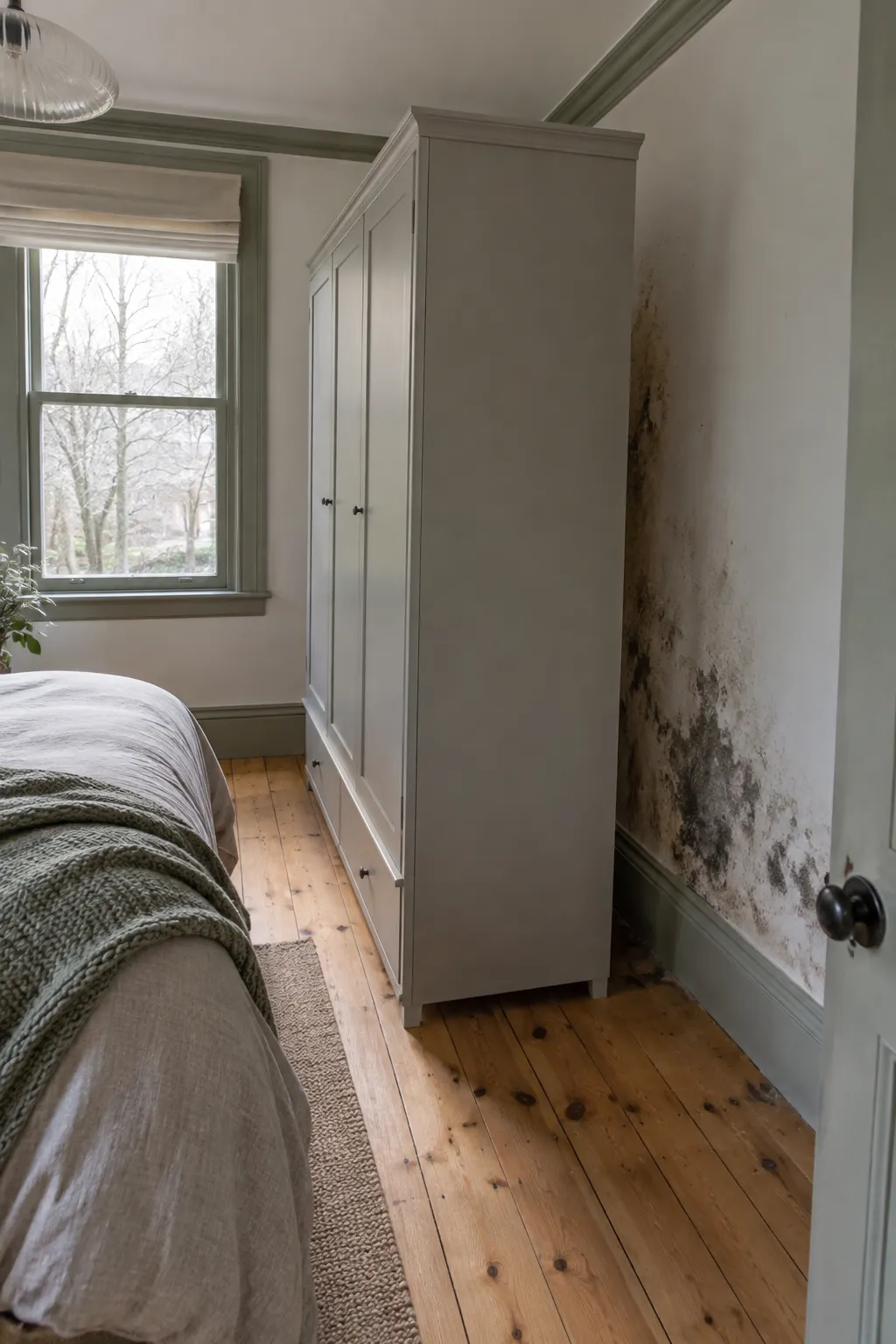
Show where the curtain usually touches the frame and wall. That arrangement can explain concealment and access without proving that the fabric caused the visible growth.
Water-affected rooms
A previous window leak may have affected fabric or furnishings beyond the paintwork. Include known wet items and repairs while keeping their handling outside assumptions about building-surface treatment.
PREVENTION STARTS WITH
Follow the source.
Protect the finish.
Observe the drying pattern
Keep the ledge observable and follow new moisture through its ordinary daily pattern. Practical drying and curtain placement can help monitoring, but neither repairs water entering through the opening.
Follow up before decorating
Confirm material handling and source decisions before refinishing the surround. If the concern extends across the room, remediation planning should distinguish fixed surfaces from textile and repair tasks.
TECOMA & NEARBY
Tecoma and nearby rooms.
Nearby guides are available for Belgrave and Upwey. For Tecoma, give the particular window and full property address, noting curtain fittings and access so the proposed arrangement fits that room instead of another opening’s example.
BEFORE YOU CALL
The useful
questions.
Do curtains cause every mark at a window?
Their position is relevant context, not proof of a source. Describe moisture timing and the materials affected so the opening’s actual condition can be considered.
Should curtains be taken down before inspection?
Agree on that preparation. Explain whether they are removable and who will handle them, particularly where a fixed pelmet or fitting limits access.
Can fabric and the painted reveal use one scope?
Their suitability and handling differ. Ask which building surfaces are included and whether textiles require separate laundering, assessment or replacement advice.
What if the sill has swollen?
Mention the damage before treatment is planned. Surface removal cannot restore altered timber shape or settle whether the sill is suitable to retain.
Why note morning droplets separately from rainwater?
The timing helps distinguish questions about room moisture from possible water entry. Both can occur at the same opening and may need different follow-up.
What should a Tecoma window enquiry include?
Provide the address, affected ledge and fabric position, with photos and moisture timing. Mention earlier opening repairs and anything that restricts reaching the reveal.
TELL US WHAT YOU CAN SEE
Describe the mark.
Plan the next step.
Describe the ledge, curtain contact and moisture timing on 03 8652 1296. With your Tecoma address and window photos, the initial conversation can clarify materials, reachable surfaces and any source questions still outstanding.
Local context: Victorian Government Yarra Ranges localities