
TOOMUC VALLEY · MELBOURNE
Mould Removal Toomuc Valley
VALLEY · ADDRESS · ROOM
A Toomuc Valley enquiry should identify the actual property and room, especially when the area name is used broadly. Describe visible growth, known water entry and access to the finish. We discuss availability and structural-surface scope before assuming the locality label identifies the right building.
Address clarified first
Water history considered
Reachable surface scope agreed
SURFACES & THEIR SETTING
Give the street address
Toomuc Valley is used as a local area name around the Pakenham-side valley, including a council-listed community hall. Use the full address and postcode rather than relying on that name alone. No work at the hall or other local facility is claimed.
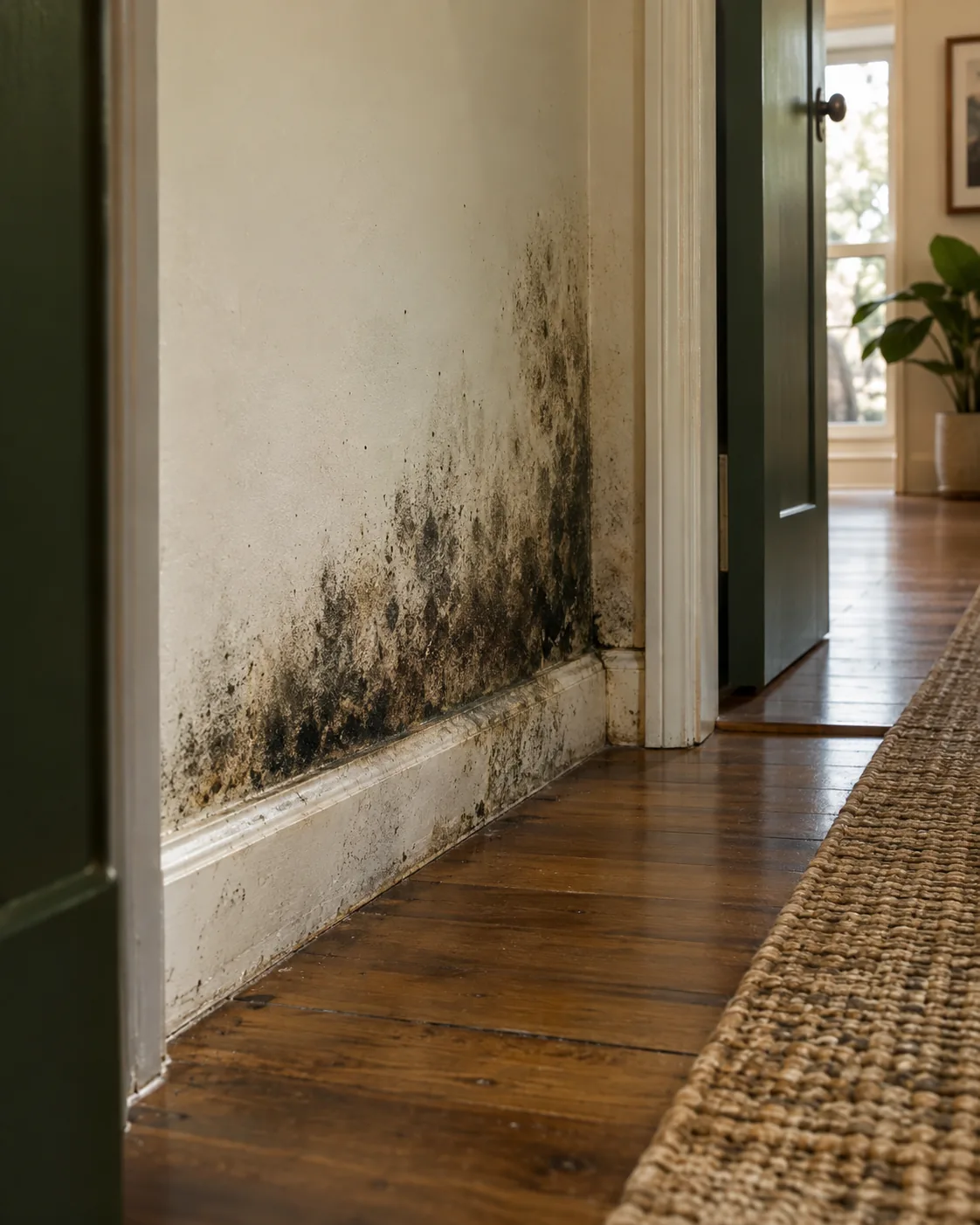
A wall after a water incident
Explain the date, source if known and repairs already made. Our inspection service considers visible growth and moisture. A repaired leak and a dry wall are different observations; neither should be assumed from a photograph.
Reaching the affected finish
Tell us whether furniture, built-in storage or floor coverings block access. Heavy movement and dismantling are not automatically included. A defined equipment route matters before any clearance or occupant arrangements are made.
Separate the incident from remaining damage
Damp plaster, loose paint and floor distortion can persist after water entry stops. Describe each concern. Removal of growth does not restore weakened material or replace an appropriate repair assessment.
A useful timeline
Note when growth was first seen and whether marks changed after repairs. Dated overall photographs help explain extent. Avoid removing wall sections or lifting floor material just to support a basic enquiry.
Assessment limits
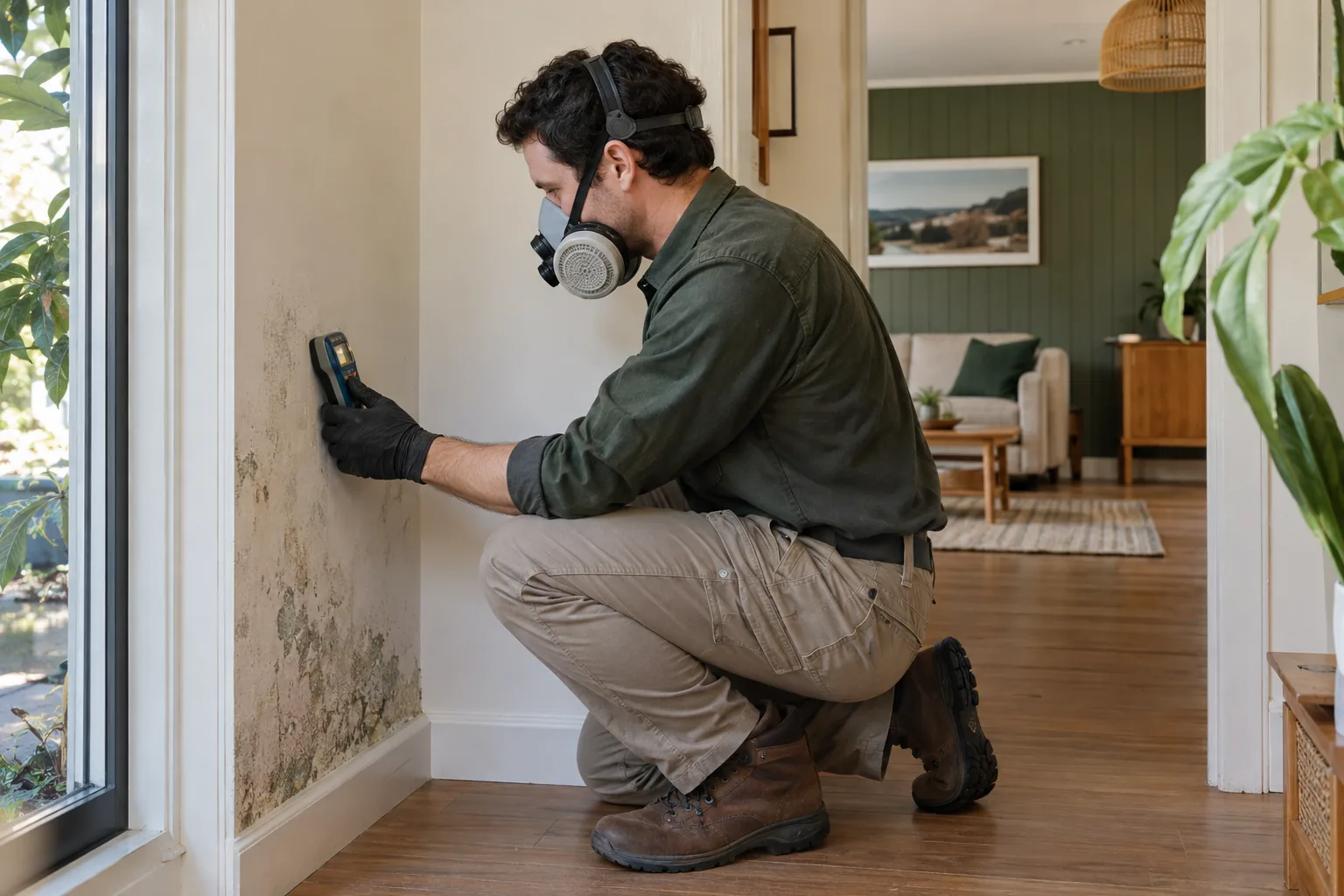
A hygrometer assists moisture assessment alongside visible inspection. It does not certify concealed layers or establish every source of a recurrent patch. Further investigation may be needed if dampness persists.
THE SURFACE REMOVAL PROCESS
A defined room sequence
01
Inspect accessible surfaces
Check the agreed walls, ceiling and hard floor. Review material damage and obstacles. Identify surfaces requiring another access or repair decision, rather than treating a past water incident as permission for whole-property work.
02
Prepare air filtration
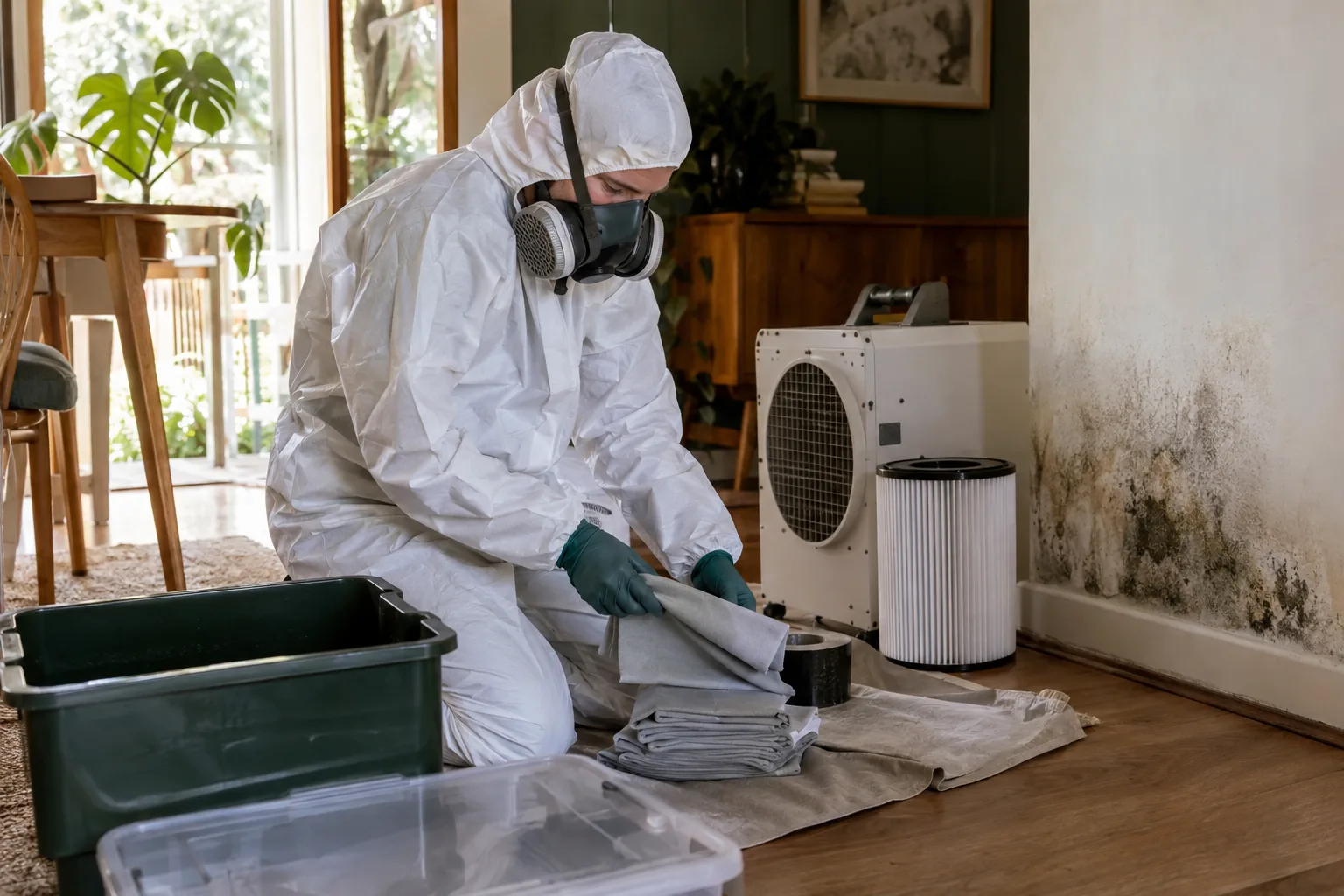
Set up HEPA filtration and agreed protection. Confirm clearance and arrangements for people and pets. The preparation should reflect the actual room and entry route at the identified address.
03
Choose compatible treatment
HOCl treatment may be appropriate for assessed finishes. Compatibility and condition guide use. Treating visible growth does not guarantee complete stain removal or certify that the previous water source is fixed.
04
Discuss ULV application
Where ULV application suits the room, explain preparation and restrictions. It supports the agreed method without replacing investigation of concealed material or repairs to plumbing, roofing or external joints.
05
Remove visible residues
Use suitable physical removal equipment with H-class filtration. The remediation process combines treatment and removal. Furniture, carpets and textiles remain excluded even if they were affected by the same incident.
06
Finish filtration and review
Continue filtration and explain treated surfaces, staining and unresolved concerns. Any further repair or decorative work should be separately arranged. A clear handover distinguishes completed cleaning from remaining building tasks.
VISIBLE & ACCESSIBLE
Surfaces to describe
Walls after water entry
Give the material, extent and repair history. Mention ongoing wetness rather than only colour.
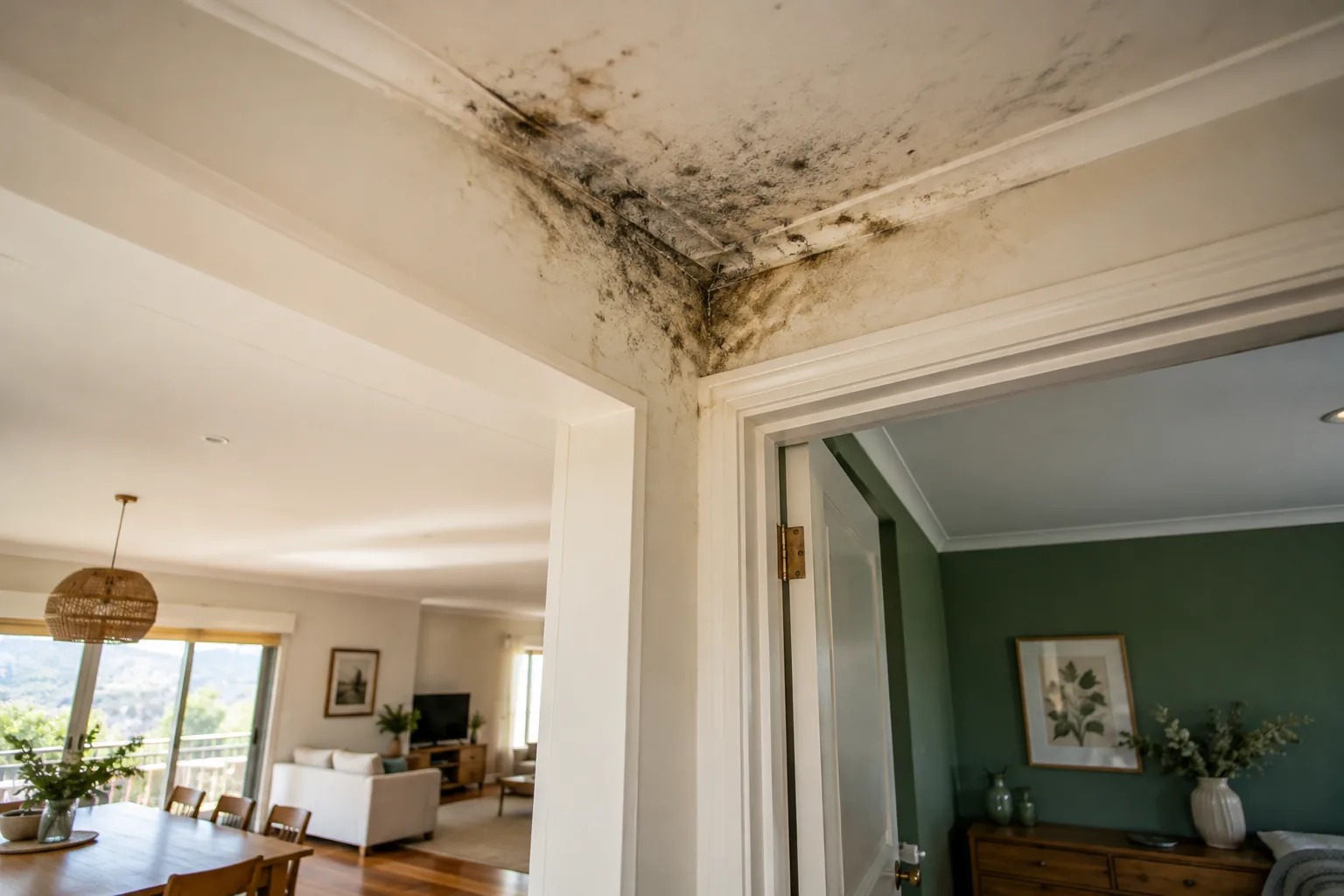
Ceiling marks
State height and any change after rain. Roof-space investigation is not automatically included.
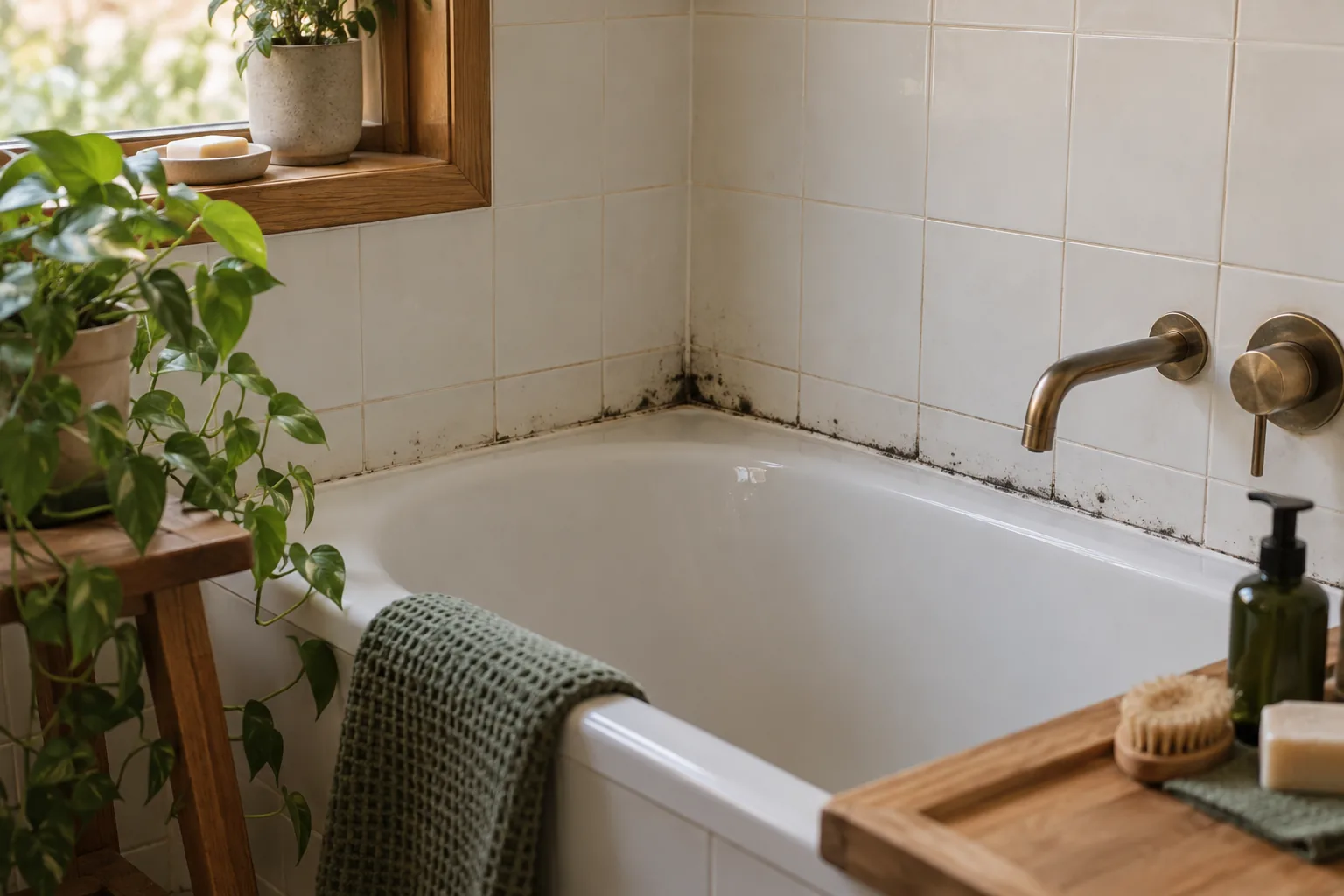
Wet-room finishes
Describe plumbing history and routine moisture. Source repair remains a separate task.
Hard floor edges
Name the finish and damage. Carpets and other textiles are outside the floor scope.
PREPARATION & LIMITS
Keep the quotation bounded
Visible accessible walls, ceilings and hard floors are included as agreed. Furniture, sofas, mattresses, carpets, curtains, clothing and textiles are excluded. List affected belongings separately so a single water event does not turn the structural quotation into an undefined contents service.
Working time averages about three hours per room, with access and extent affecting duration; charging is not hourly. Cosmetic staining may remain. Repainting or decorating requires a separate quote after dampness and damaged materials have been addressed.
AFTER THE SURFACE WORK
Review the room after repairs
Keep dated notes through later rain or ordinary use and watch whether the finish dries. A completed repair should be followed by observation of the affected room rather than immediate concealment under fresh paint or furniture.
The general service scope explains structural work. Use suitable everyday extraction and moisture control, but arrange the appropriate trade for recurrent water entry. Growth can return if the source or damp conditions remain unresolved.
TOOMUC VALLEY · NEARBY LOCATION PAGES
Nearby address navigation
Dewhurst, Mount Burnett and Pakenham provide surrounding-area pages. Choose the property’s actual address and confirm availability. The Toomuc Valley name does not imply a separate branch or a contract with local facilities.
BEFORE YOU ARRANGE WORK
Questions for your enquiry.
Can I use the valley name instead of an address?
Provide the full street address and postcode as well. Area names can be used broadly and may not identify the building. Entry, availability and scope need the actual property details.
Does a repaired leak mean the wall is ready?
Not necessarily. Material condition and continuing dampness need consideration. Describe the repair and current surface; removal does not certify hidden layers or automatically make a damaged finish suitable for decorating.
Will belongings affected by the incident be cleaned?
No. Furniture and textiles are excluded. Identify them separately so their handling or replacement can be considered outside the agreed walls, ceilings and hard-floor treatment.
Can concealed wall damage be included?
A separate investigation and access arrangement is required. Standard work covers visible accessible surfaces, and room application is not evidence that concealed materials have been assessed.
Will all water marks disappear?
No cosmetic guarantee applies. Old staining may remain after growth removal. Repairing or decorating a finish is separately considered once the dampness and material condition have been addressed.
Do you service the community hall?
No existing contract or project is claimed. The hall is only a verified area reference. Any managed-premises enquiry needs its own authorised contact, address and confirmed scope.
Discuss the Toomuc Valley address
Call 03 8652 1296 with the property location, water history and accessible finishes. We can discuss availability and a defined room assessment.
Useful references: Official local context