
TOTTENHAM · MELBOURNE
Mould Removal Tottenham
Mould in a staff room or office needs a practical plan that fits the building and the people using it. For a Tottenham address, tell us which accessible walls, ceilings or floors are affected, when the marks appeared and who can authorise work. We can discuss surface assessment and removal without assuming that an entire workplace needs treatment or that cleaning will resolve a building leak.
Accessible surface assessment
Preparation agreed before work
Moisture concerns kept visible
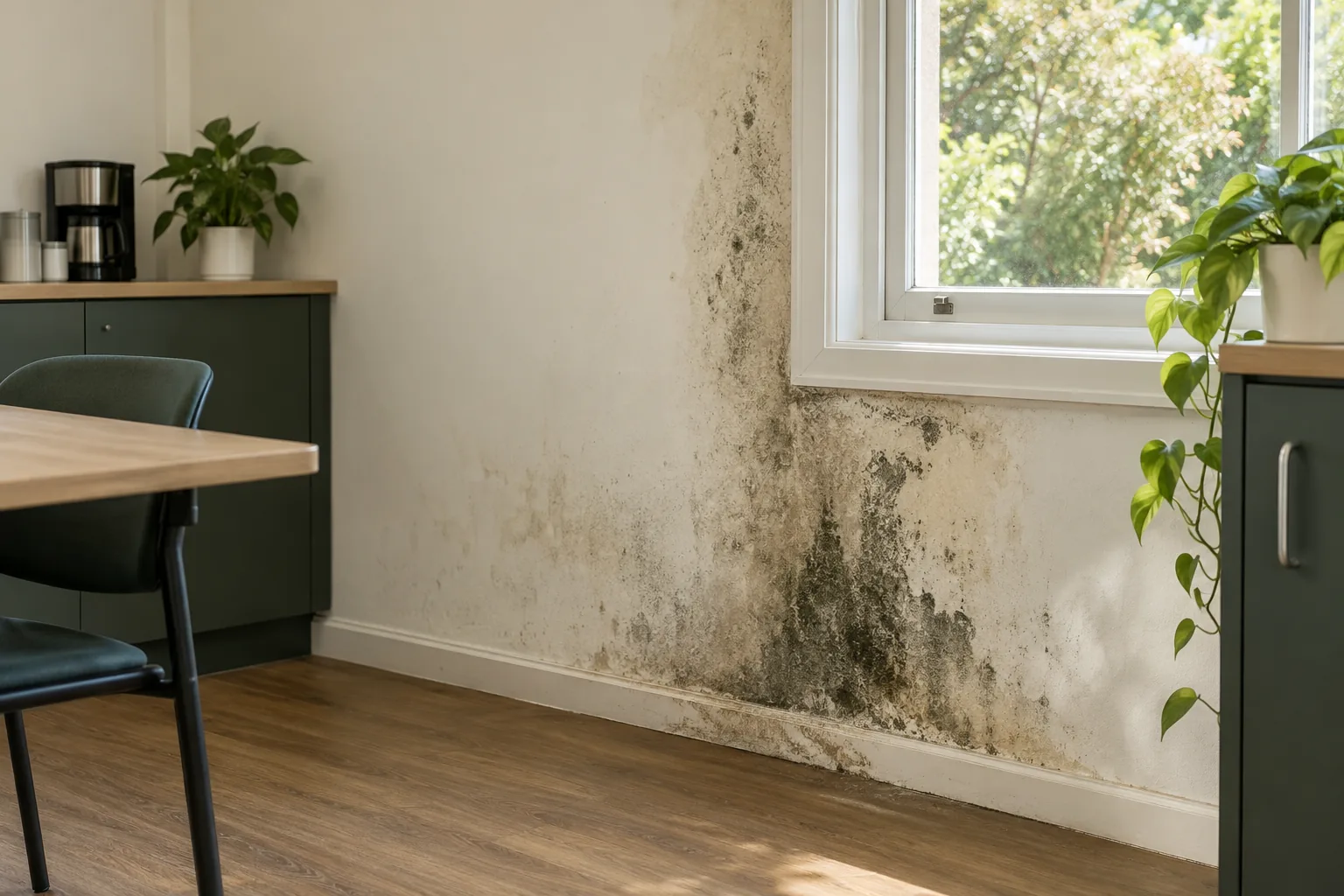
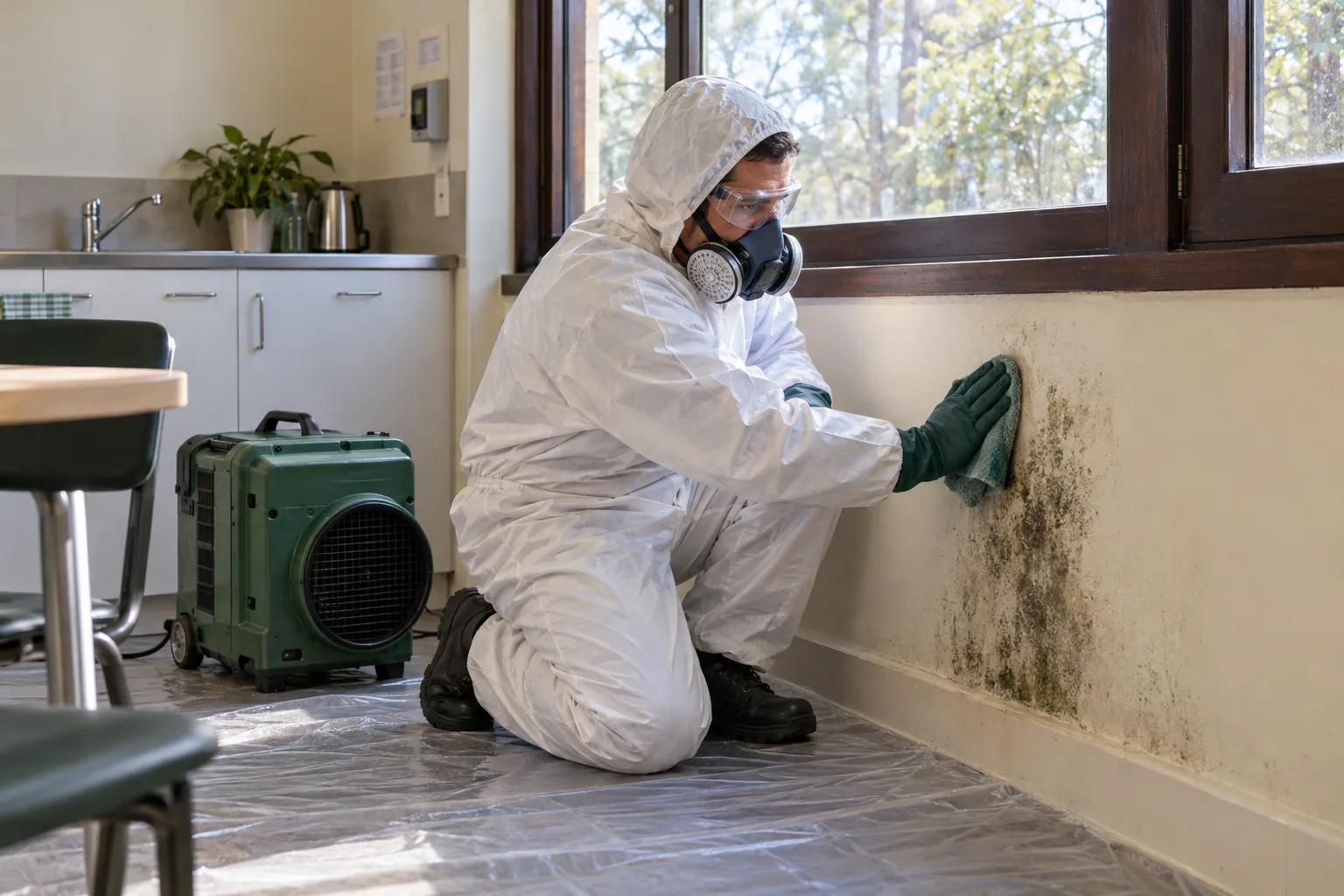
Walls · Work rooms · Ceilings
THE WORKPLACE, IN CONTEXT
A clear starting point for a Tottenham enquiry
The Victorian Government lists Tottenham within Maribyrnong. Give the street address and the particular room when calling: a suburb label alone does not describe entry arrangements, tenancy boundaries or permission to move equipment.
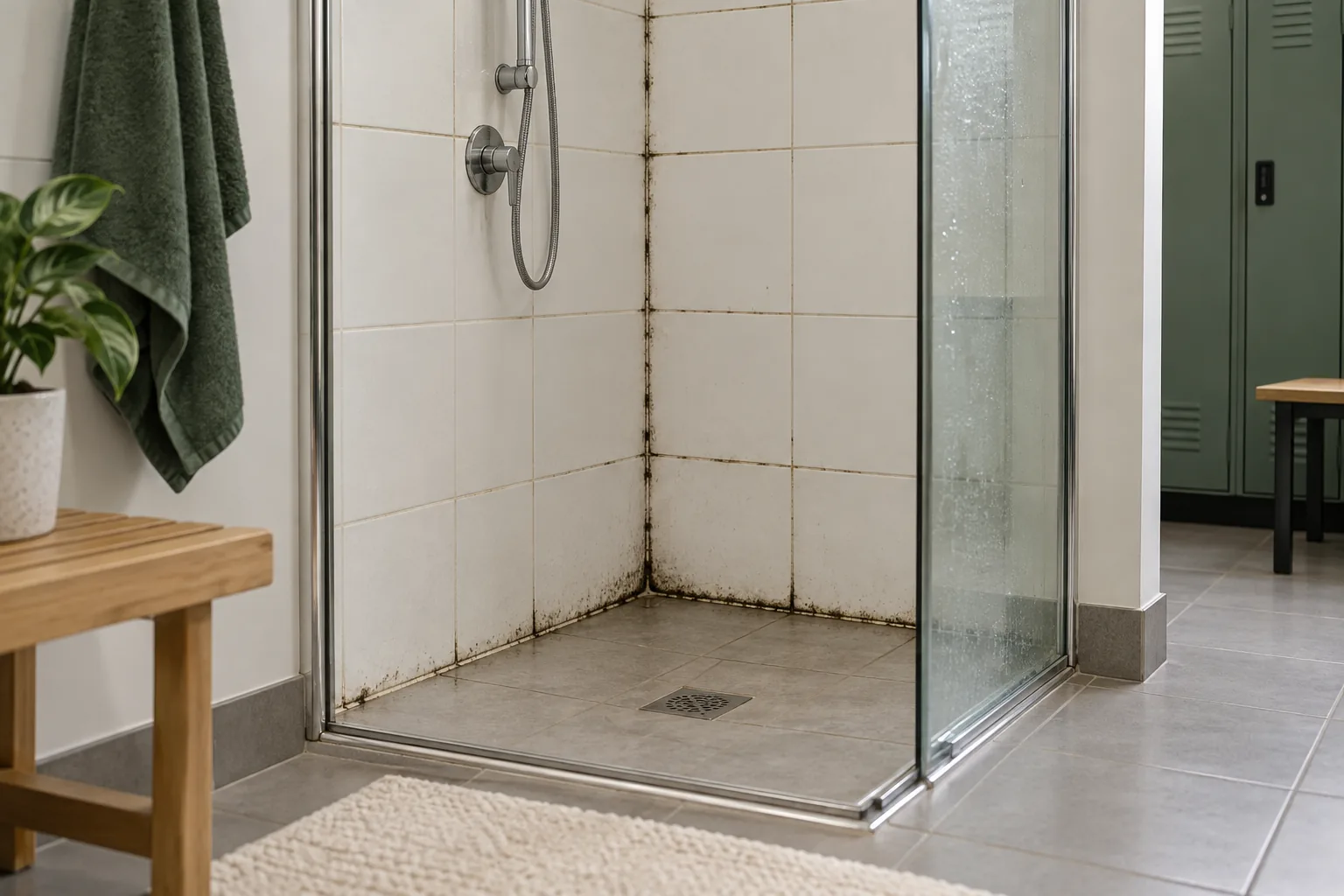
Separate the room from the business
If a staff kitchenette ceiling has visible growth, describe that ceiling before listing the whole premises. Explain whether adjoining offices share an open doorway, and whether work can be arranged while the room is unused. This keeps the enquiry about an identifiable surface rather than an unsupported promise of whole-site remediation.
Know who can approve the scope
A tenant may be able to clear desks but need the property manager to organise a plumber or authorise work near fixed fittings. Nominate one contact for access and one for building repairs if they are different people. Leave confidential papers and stock outside the proposed work area rather than expecting technicians to sort them.
INSPECTION & MOISTURE
What helps assess a workplace surface
A photo should show the room layout as well as the affected patch. Use mould inspection information to prepare questions about surface condition and moisture observations before deciding what work is suitable.
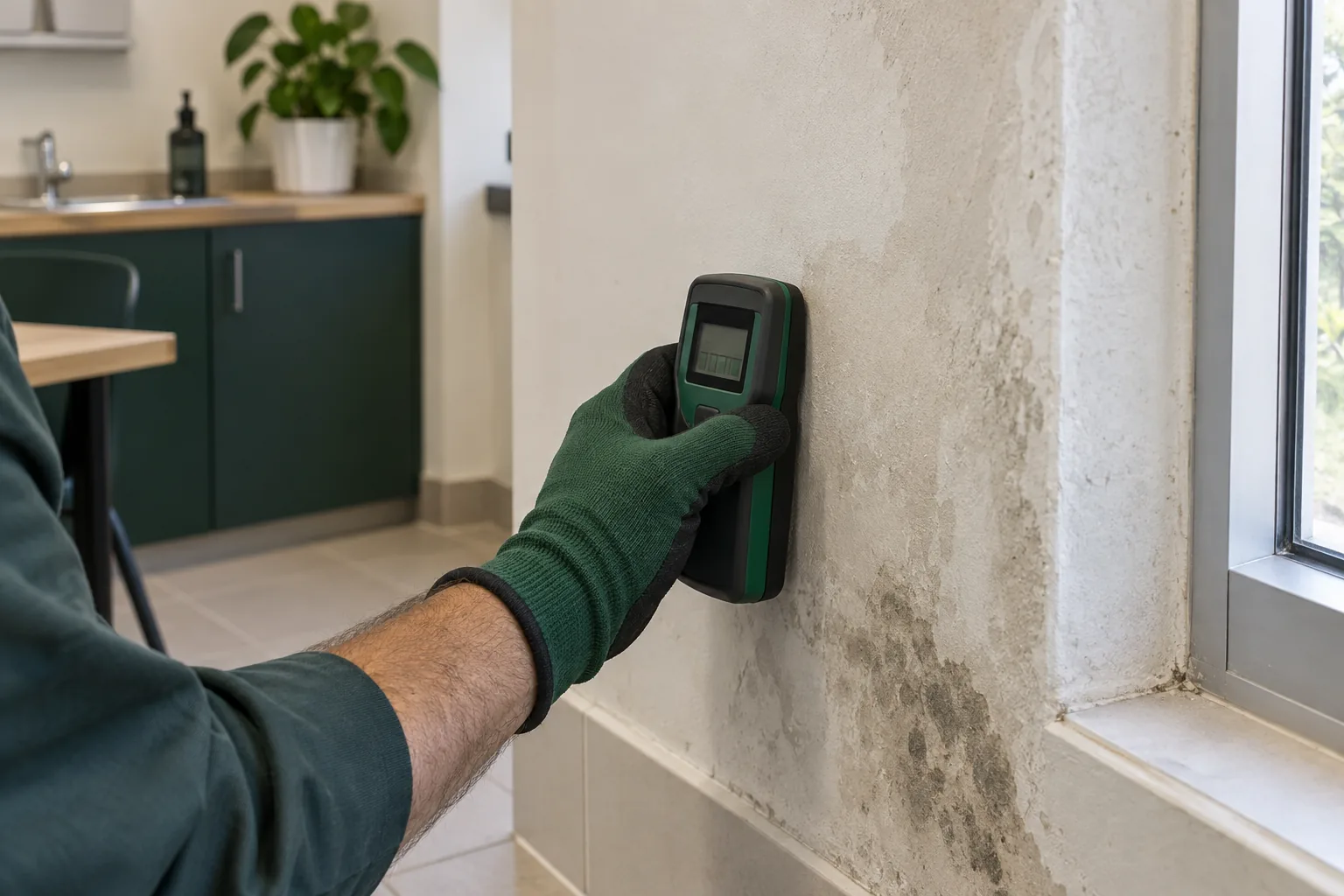
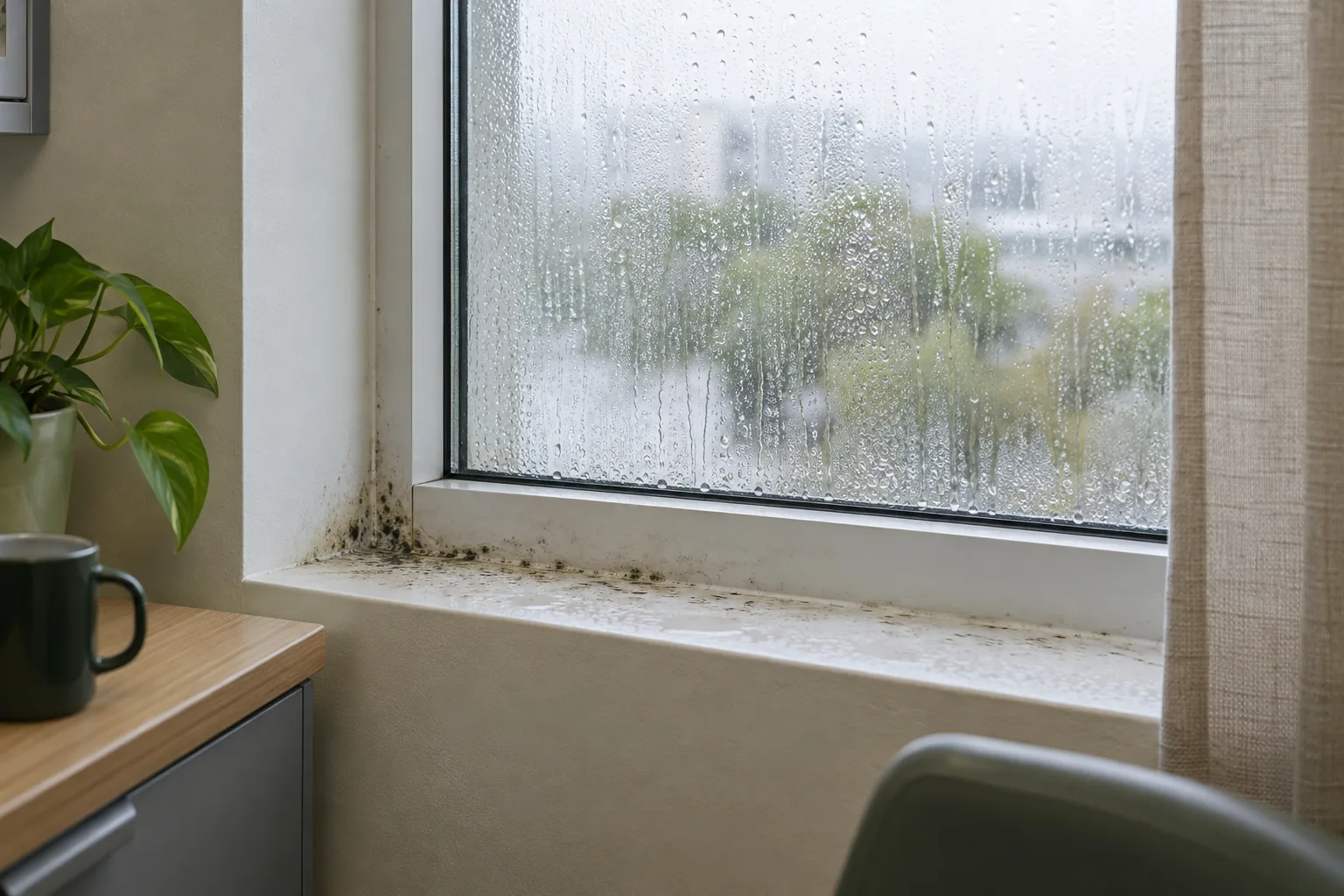
Record ordinary room use
Mention kettle steam, wet cleaning, stored damp items or an earlier plumbing incident if relevant. These details help frame an assessment; they do not establish a cause by themselves. Note whether the ceiling becomes marked while the room is closed overnight or after a particular event.
Make access realistic
Describe high shelves, suspended fittings and the nearest clear doorway. Do not climb on office chairs to inspect overhead marks. If a ceiling tile is loose, saturated or deteriorated, raise that condition before arranging cleaning; replacement and work above a suspended ceiling may require a different scope.
A CONNECTED PROCESS
Planning work around a defined room
Identify the boundary
Agree which kitchenette or office surfaces are included and which adjacent rooms remain outside the enquiry. Ask how doors, corridors and ordinary occupants will be managed during work.
Clear movable belongings
Arrange for staff to remove food, documents and small appliances from the agreed area. Fixed cabinets and electrical fittings should be described rather than dismantled during a rushed preparation.
Assess material condition
Discuss whether the visible finish can tolerate cleaning and whether wet or friable material needs referral. A sound painted wall and a damaged ceiling panel should not receive an automatic identical response.
Remove visible growth
Suitable accessible surfaces may involve HEPA filtration, physical removal and surface treatment. Read about remediation preparation when the room requires more than a small isolated clean.
Review practical next steps
Ask which marks remain as staining and which moisture concerns still need the building owner. Confirm any room-use instructions directly before staff return, rather than relying on a presumed waiting period.
WHERE MOULD APPEARS
Workplace details worth mentioning
Corners behind cabinets
A narrow gap can conceal affected paint. State whether the cabinet is movable and who will empty it, so the proposed surface can actually be reached.
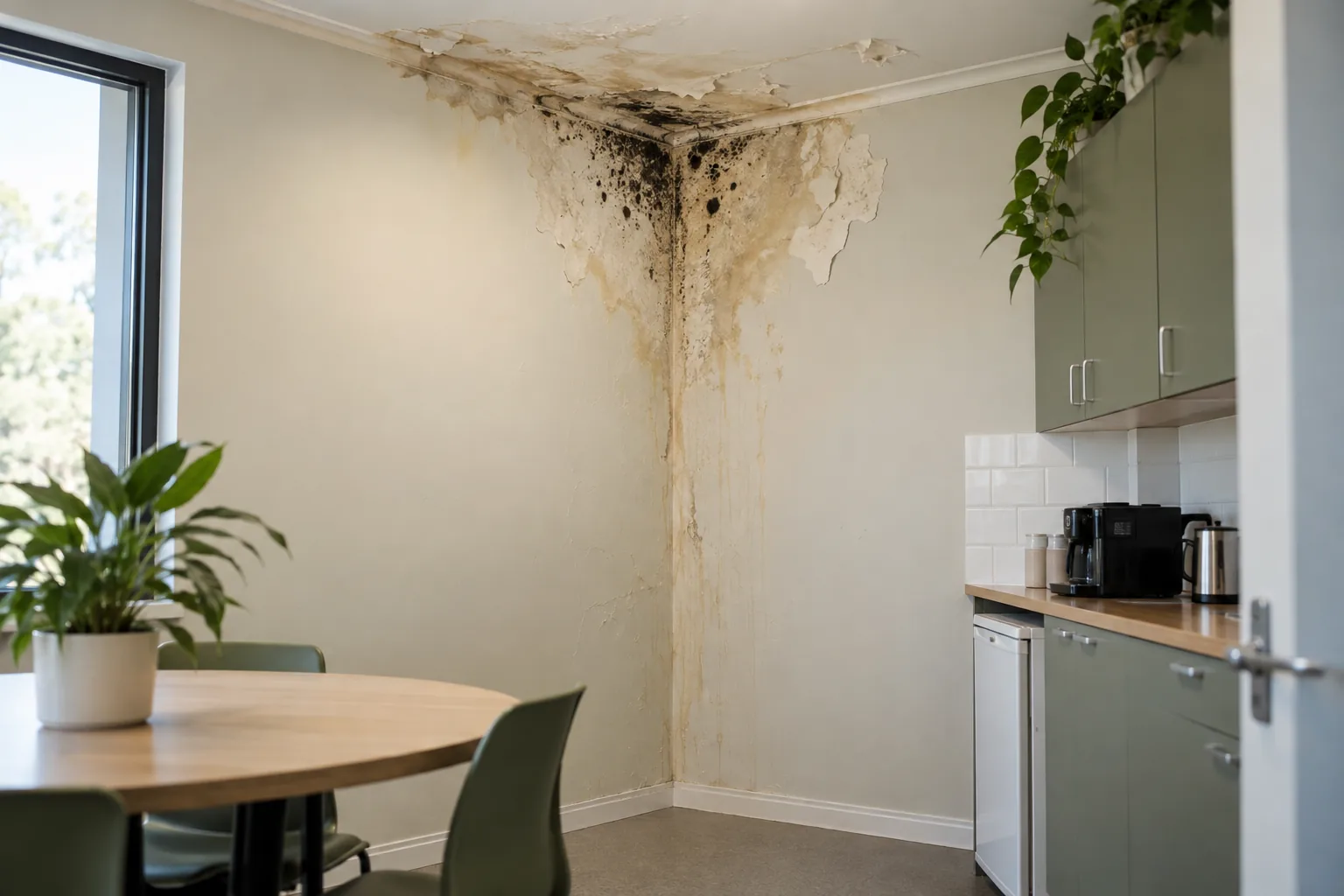
Staff-room ceiling marks
Growth near a kitchenette may coincide with room moisture, but a ceiling patch can also warrant plumbing or roof investigation. Report the pattern without diagnosing it.
Floor edges
Hard floor cleaning and a wet carpet are different enquiries. Tell us the material at the wall junction; textile treatment is outside the stated accessible wall, ceiling and floor scope.
Air-conditioning surrounds
Marks beside a vent are useful observations. Surface removal does not service air-conditioning equipment or establish the condition of concealed ducts.
MAKE SPACE FOR DRYING
Keep maintenance separate from cleaning
Choose a simple record for the affected room: dated photographs, unusual wet events and whether ventilation was operating. Share it with the responsible property contact. A growing stain or fresh dripping deserves prompt building maintenance rather than repeated cosmetic cleaning.
For everyday room use, avoid leaving damp cleaning cloths or wet containers against walls. Keep agreed access gaps available and follow workplace requirements for ventilation. The mould removal service outline explains surface work; repair responsibilities should be discussed with the owner or appropriate trade.
TOTTENHAM & NEARBY
Checking the actual workplace address
Nearby location pages can help distinguish the premises from surrounding suburb names. Appointment availability still needs an address check: Braybrook, Brooklyn, Kingsville.
QUESTIONS WORTH ASKING
Before the visit.
Can you quote from a staff-room photo?
A photo can begin the discussion, particularly with room dimensions and surface material. Access, condition and the agreed area still need clarification before a scope can be settled.
Should staff stay in the room during cleaning?
Discuss room occupancy when arranging work. The preparation and return instructions depend on the method and premises; do not assume that ordinary kitchenette access can continue throughout.
Do you clean stock or office chairs?
The stated service concerns accessible walls, ceilings and floors. List affected stock and upholstered chairs separately, because textiles or business inventory are excluded.
Can a tenant arrange the enquiry?
A tenant can explain the visible problem. Clarify authority to approve work, entry permission and who will arrange any required building repair before booking.
Does a clean ceiling prove the leak is repaired?
No. Visible removal and leak repair are separate tasks. The responsible trade should address suspected water entry even if the treated surface looks better.
What if equipment blocks the wall?
Explain what is fixed and what can be safely moved by authorised staff. Do not disconnect workplace machinery to create access without the appropriate person involved.
START WITH YOUR ROOM
Discuss your Tottenham room
Call 03 8652 1296 with the workplace address, room use and permission details. Mention fixed equipment and any active water entry first, so availability and preparation can be checked against a defined enquiry.
Useful references: Victorian Government — Maribyrnong council localities