
WESTBREEN · MELBOURNE
Mould Removal Westbreen
WESTBREEN / A ROOM IN USE
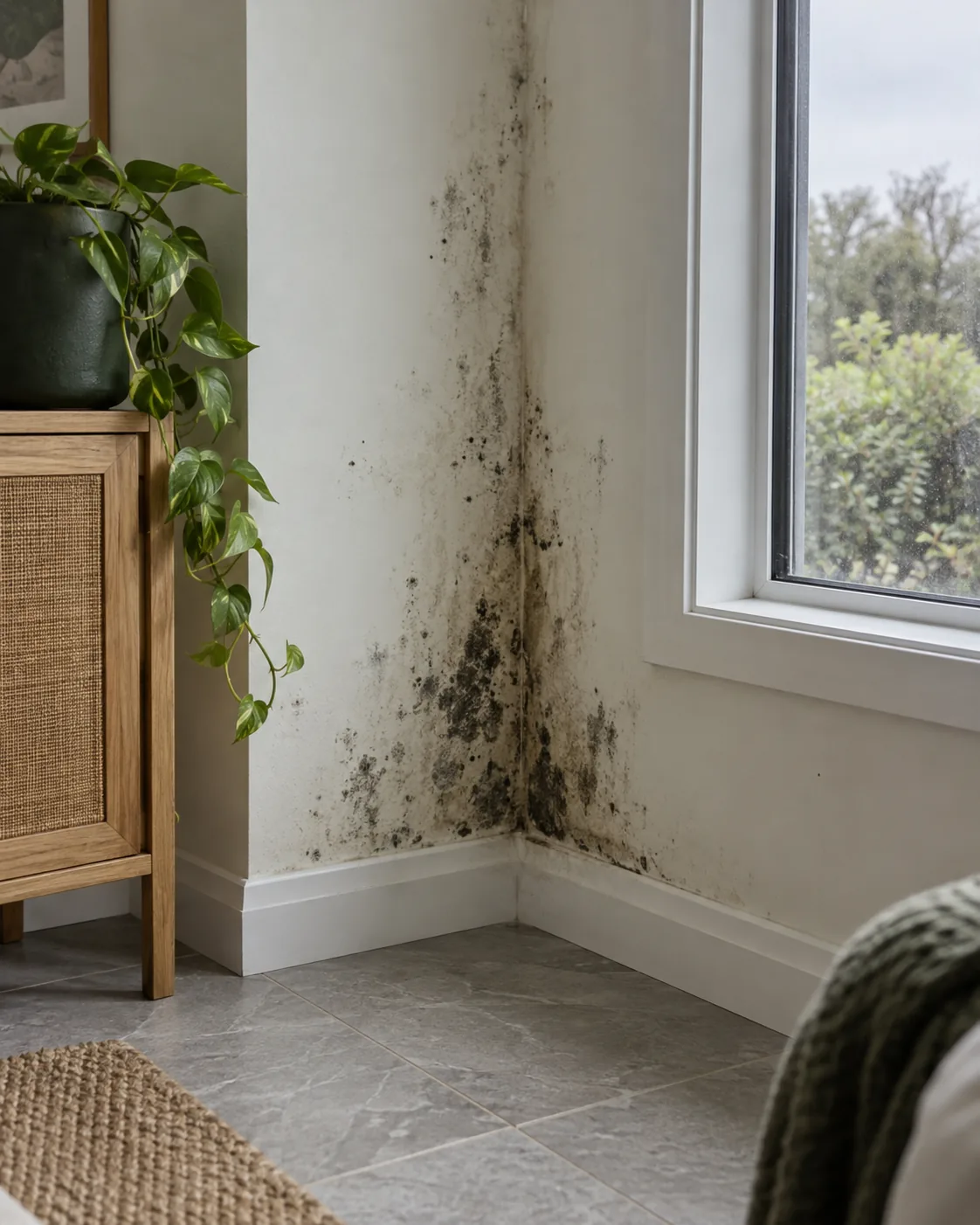
If a spare room develops marks while it is being used for storage, start by describing the accessible wall and its condition. A Westbreen enquiry should include the property address, room use and any continuing dampness. The next step depends on those details, not on an assumed local cause.
Storage-room access considered
Visible growth assessed
Outstanding moisture work identified
SURFACES & THEIR SETTING
A local name needs a street address
Westbreen appears in Merri-bek’s official local naming, including a council ward. Give the property’s street address and postal suburb rather than relying on the name to define a precise service boundary.
Storage can conceal the surface
Tell us which wall sections remain visible and whether boxes or shelving block access. Our mould removal service concerns accessible structural surfaces. Stored belongings, furniture and textiles are excluded, even if they stand next to the growth.
Describe changes in the room
Explain whether the room recently became less occupied, ventilation changed or a leak occurred. Those are enquiry details, not confirmed causes. Photographs and dates can help the conversation without implying that every Westbreen property has the same moisture problem.
Make the observations useful
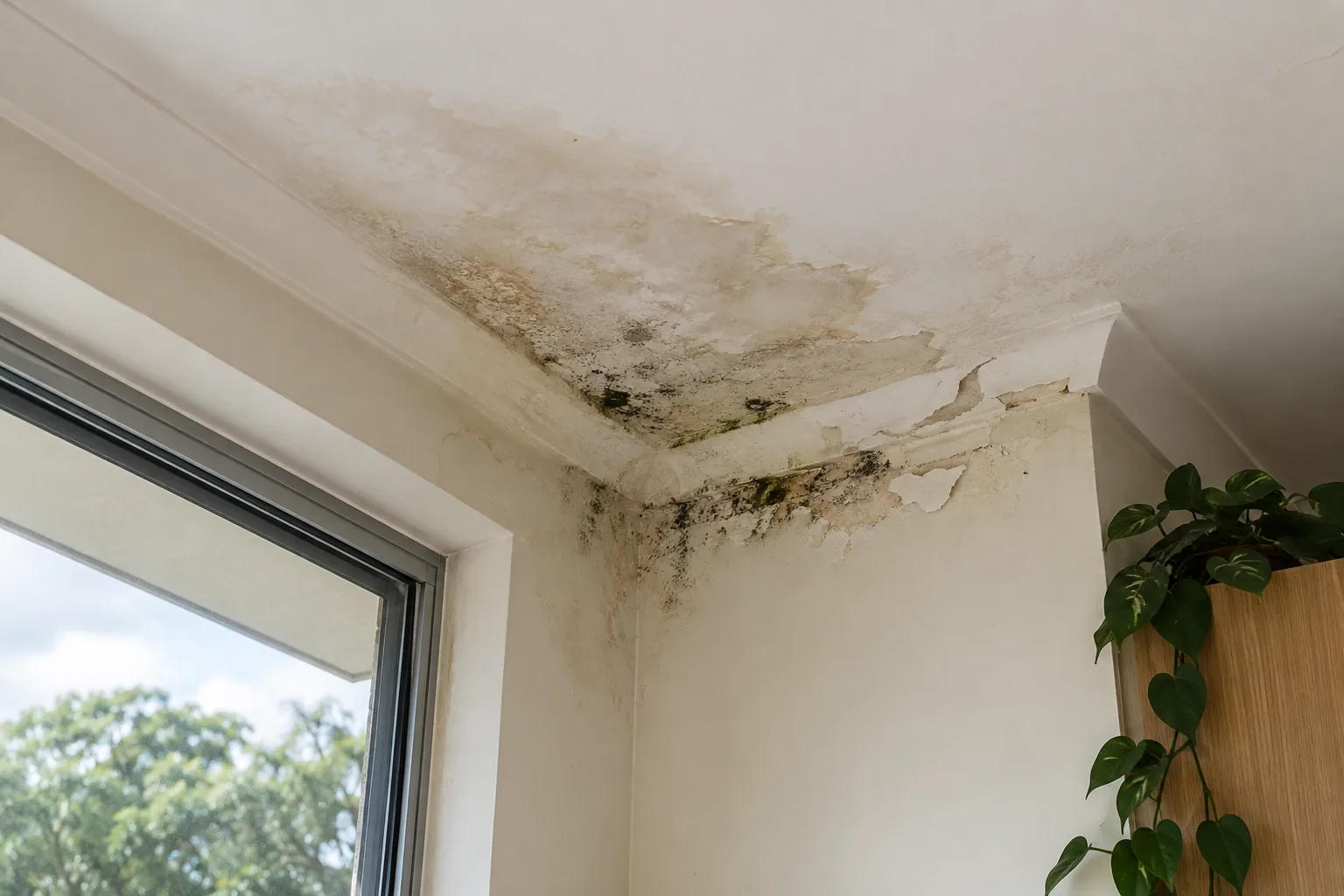
A patch near the skirting, an affected ceiling and condensation beside a window need different questions. Describe their position and material rather than only the colour.
Check the visible finish
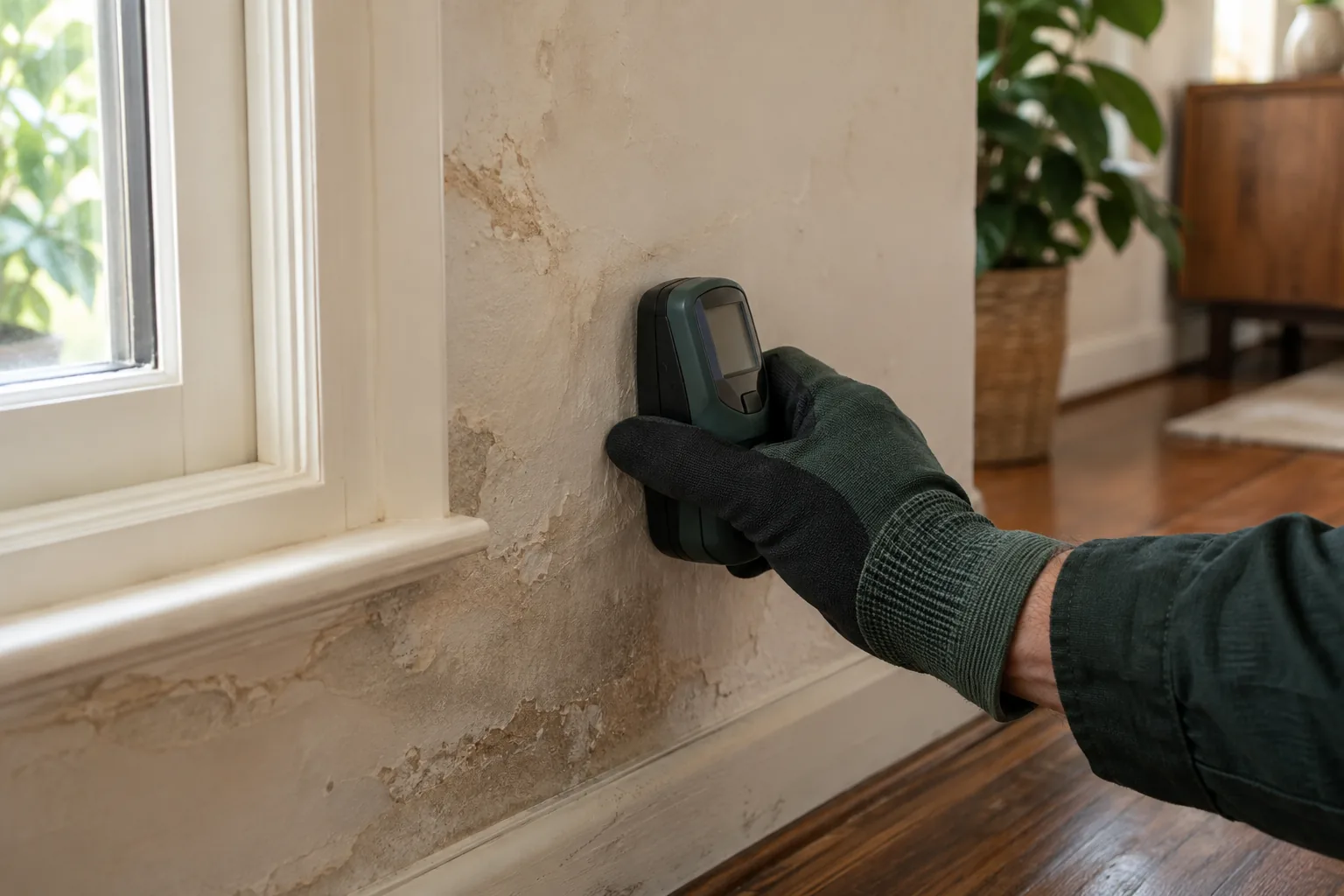
Mention bubbling paint, water marks and soft plaster without cutting or scraping. Inspection may include visible assessment and humidity or moisture information. Hidden construction and inaccessible areas need a separate discussion.
Do not lose the repair history
Provide any relevant maintenance details and whether wetness continues. Roof and plumbing repairs are separate from removal. A room air reading cannot confirm that materials inside a wall are dry or that a defect has been fixed.
THE SURFACE REMOVAL PROCESS
Agree the room before choosing the method
01
Assess surfaces and extent
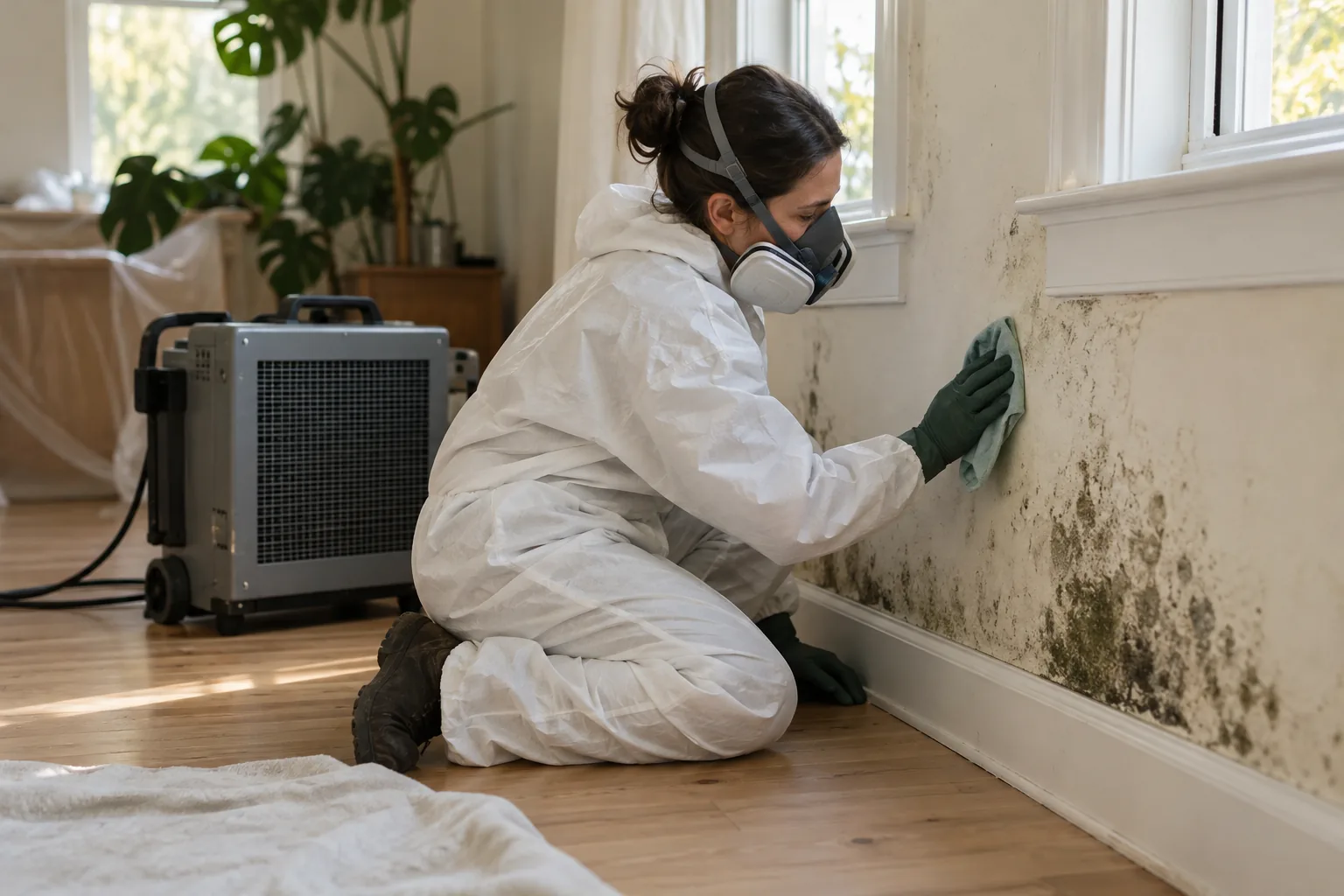
The technician reviews accessible growth and the wall, ceiling or hard-floor material. Hygrometer readings can provide room context. The assessment should identify limitations, especially where storage or damaged finishes prevent a straightforward surface review.
02
Prepare and filter
Clearance of belongings and people or pet arrangements are agreed. HEPA air filtration supports the work. Do not move potentially affected contents throughout the home simply to make the room look empty before discussing preparation.
03
Select HOCl treatment appropriately
The surface condition informs the application. Report earlier cleaning and fragile coatings. Treatment of growth is not a promise to restore a water-damaged finish or make every stained painted area look freshly decorated.
04
Discuss fog application
Where appropriate, ULV application is included in the plan. Confirm preparation and return timing with the technician. Any alarm arrangement needs approval from the responsible person; switching alarms off is not a routine independent preparation step.
05
Remove accessible residues
Professional physical removal uses H-class filtered equipment where suitable. Furniture, carpet, curtains, mattresses and clothing are excluded. Concealed cavities and material replacement do not become part of the service because they are near the patch.
06
Finish and clarify next steps
Final filtration continues as appropriate. Discuss remaining marks and moisture work still required, keeping treatment separate from repairs and decorating. Damp conditions can support recurrence, so the completed scope should not be mistaken for a permanent guarantee.
VISIBLE & ACCESSIBLE
Different surfaces, different information
Spare-room walls
Describe storage clearance and painted finish.
Bathroom ceilings
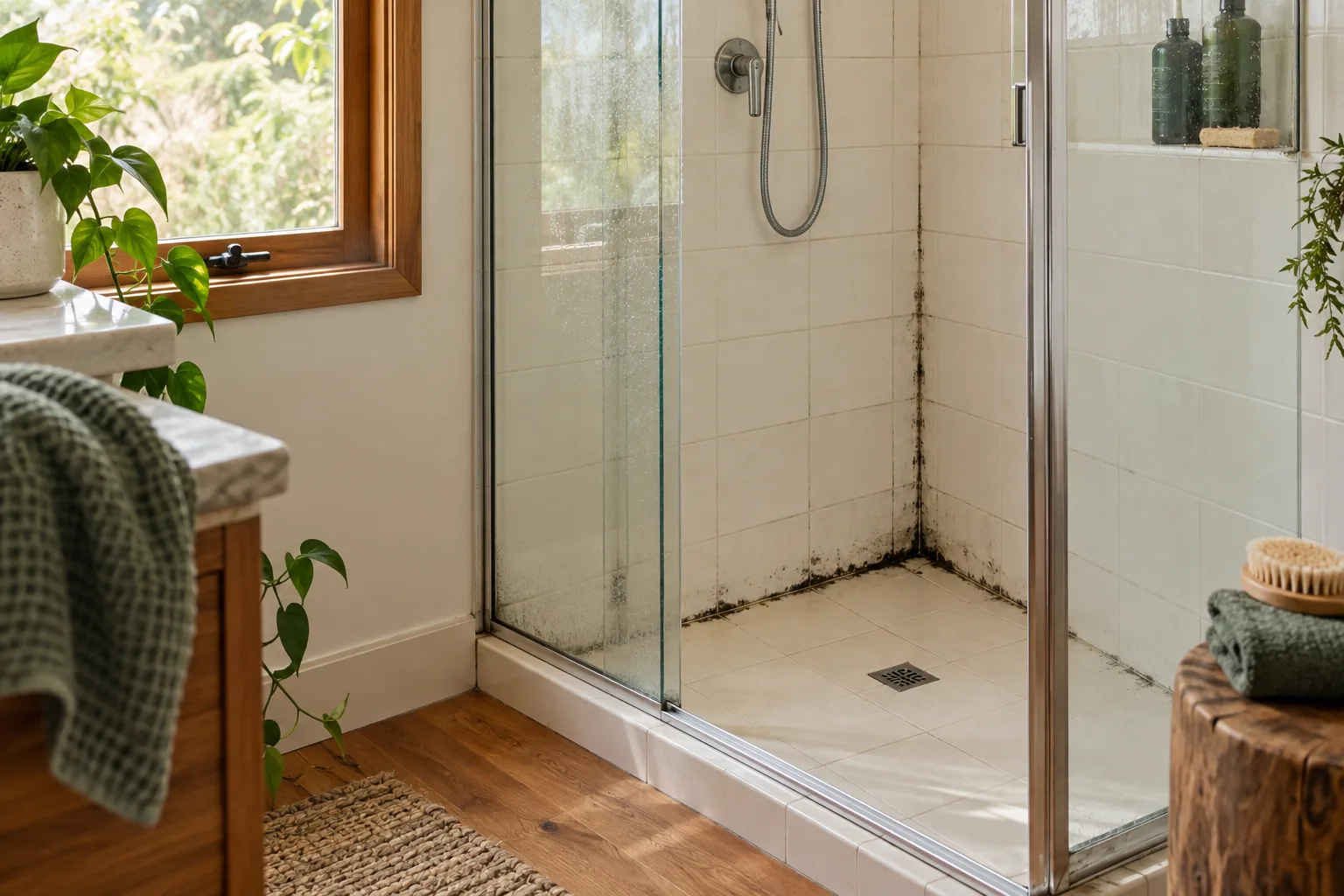
State the visible spread and extraction use.
Window corners
Note droplets and drying patterns.
Hard-floor margins
Explain floor material and water tracking.
PREPARATION & LIMITS
A realistic plan for time and finish
The guide’s average is around three hours per room. Actual time varies with size, contamination and accessibility, and the service is not hourly-based. Discuss the affected room list before arranging a fixed period away from the property.
After remediation, cosmetic marks may remain. Decorating is separately quoted, while leaks and building defects need their own repair work. Treatment of existing growth does not prevent recurrence if damp conditions continue.
AFTER THE SURFACE WORK
Keep storage from hiding an unresolved issue
Once return arrangements are satisfied, keep vents clear and leave reasonable airflow around stored belongings. Check extraction in rooms producing steam. A spare room still needs attention when its use changes; closing the door is not a moisture management plan.
Record recurring dampness and fresh marks with dates. A humidity log can support advice but cannot locate every hidden leak. If water entry persists, arrange the relevant repair rather than filling the affected corner again before it can be assessed.
WESTBREEN · NEARBY LOCATION PAGES
Confirm the actual Westbreen address
Nearby location pages offer useful orientation. When calling, give the street and postal suburb as well as Westbreen so access and availability can be checked for the actual property, rather than inferred from a local label.
BEFORE YOU ARRANGE WORK
Questions for your enquiry.
Is Westbreen enough information to book?
Please provide the full address and postal suburb. Local names can describe neighbourhoods or wider administrative areas.
Should I empty the spare room completely?
Explain which belongings prevent access and follow the agreed preparation. Clearing everything without a plan may be unnecessary.
Does a closed room always cause mould?
No. Reduced use is relevant history, but water entry, ventilation and material condition may also matter.
Can hidden wall sections be included?
Only if suitable access and scope are agreed. Concealed cavities, insulation and damaged construction require separately defined investigation or work.
Will stains disappear after removal?
Cosmetic stain removal is not guaranteed. A separate decorating quotation may be appropriate after moisture concerns are addressed.
How do I report a recurring problem?
Keep dated photographs and note wetness, room use and any unresolved repair. Share those details with the appropriate property contact.
Discuss the room and its next use
Call 03 8652 1296 with the Westbreen property address and visible surface details. Clarify access, assessment and preparation before treatment is arranged.
Useful references: Merri-bek official Westbreen naming