
WOORI YALLOCK · MELBOURNE
Mould Removal Woori Yallock
RAINFALL · SURFACES · ACCESS
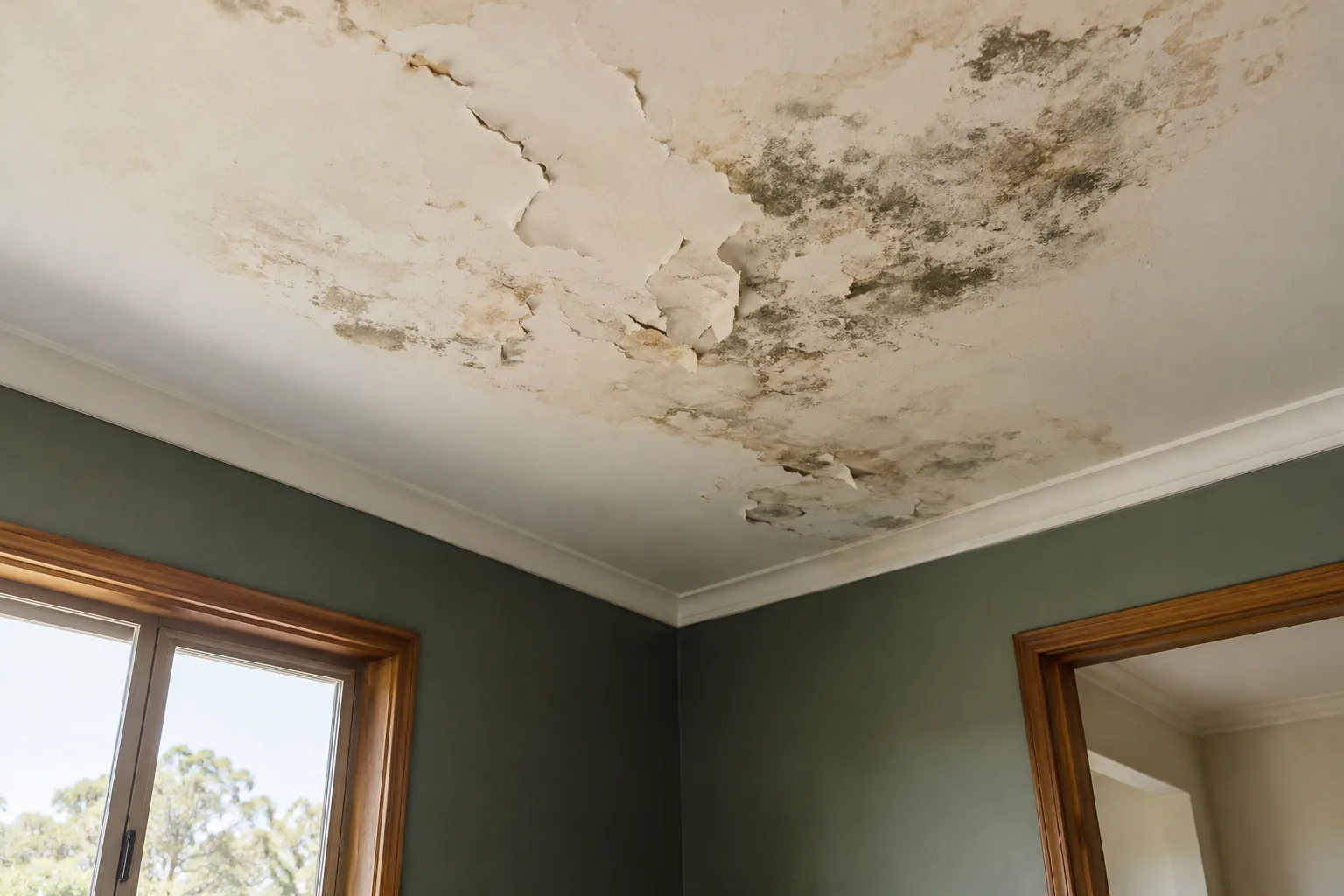
A ceiling patch after rain needs more than a quick wipe. For a Woori Yallock enquiry, describe when the mark appeared, whether it is still damp and how the room can be reached. We discuss treatment of visible structural surfaces and the separate work needed to stop water entering.
Rain history considered
Accessible ceiling assessed
Repair scope kept clear
SURFACES & THEIR SETTING
Describe the property, not just the patch
Woori Yallock is a recognised Yarra Ranges locality. Confirm the address, appointment availability and any entry restrictions. The locality name does not establish the condition of an individual building.
A stain that keeps widening
Photograph the patch from the floor and note its change after wet weather. If water is actively entering, prioritise the appropriate repair trade. Our inspection information explains assessment of visible growth and moisture conditions without promising a roof diagnosis.
Access above the room
Tell us whether the ceiling is high, sloped or blocked by shelving. Reaching an interior surface is different from accessing a roof space. Concealed insulation, timbers and cavities are outside a standard visible-surface job and may need separate investigation.
Separate dampness from the visible finish
Brown water staining can overlap with mould growth, but colour alone cannot establish what has happened. Damp plaster may need repair or replacement as well as cleaning. The agreed method follows inspection of the material.
Timeline of the leak
Give dates of recent rain, repairs and the first visible change. That sequence is more useful than assuming every dark patch came from condensation. Explain whether the room has dried or the stain continues spreading.
Moisture readings in context
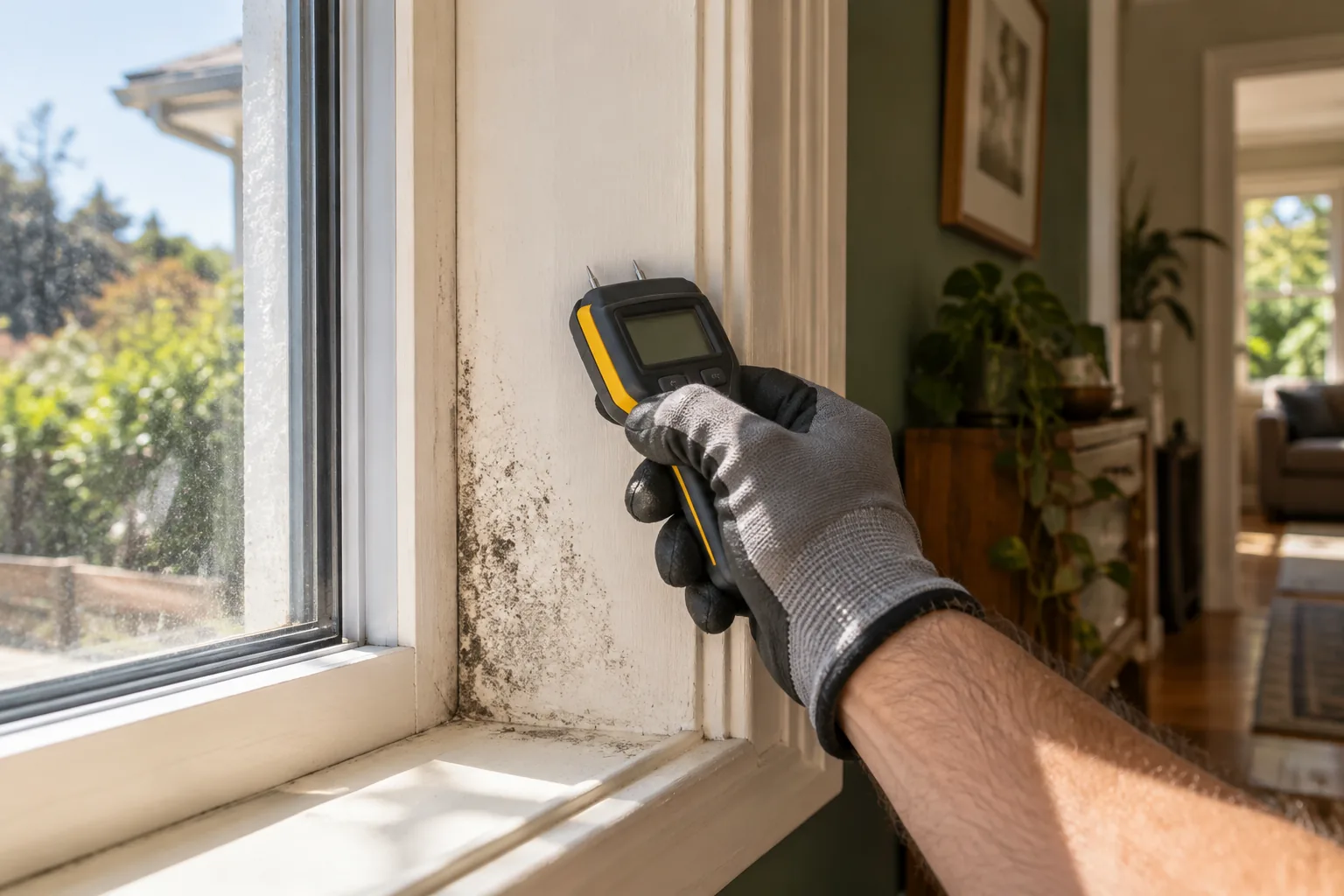
A hygrometer supports assessment of humidity and moisture conditions. Readings complement the visible inspection; they do not certify that a roof is watertight or that concealed materials are sound.
THE SURFACE REMOVAL PROCESS
From assessment to final filtration
01
Define the affected area
Check reachable ceiling, walls and included hard floor. Discuss loose or soft finishes and obstacles. Identify surfaces requiring repair before selecting treatment.
02
Protect the working area
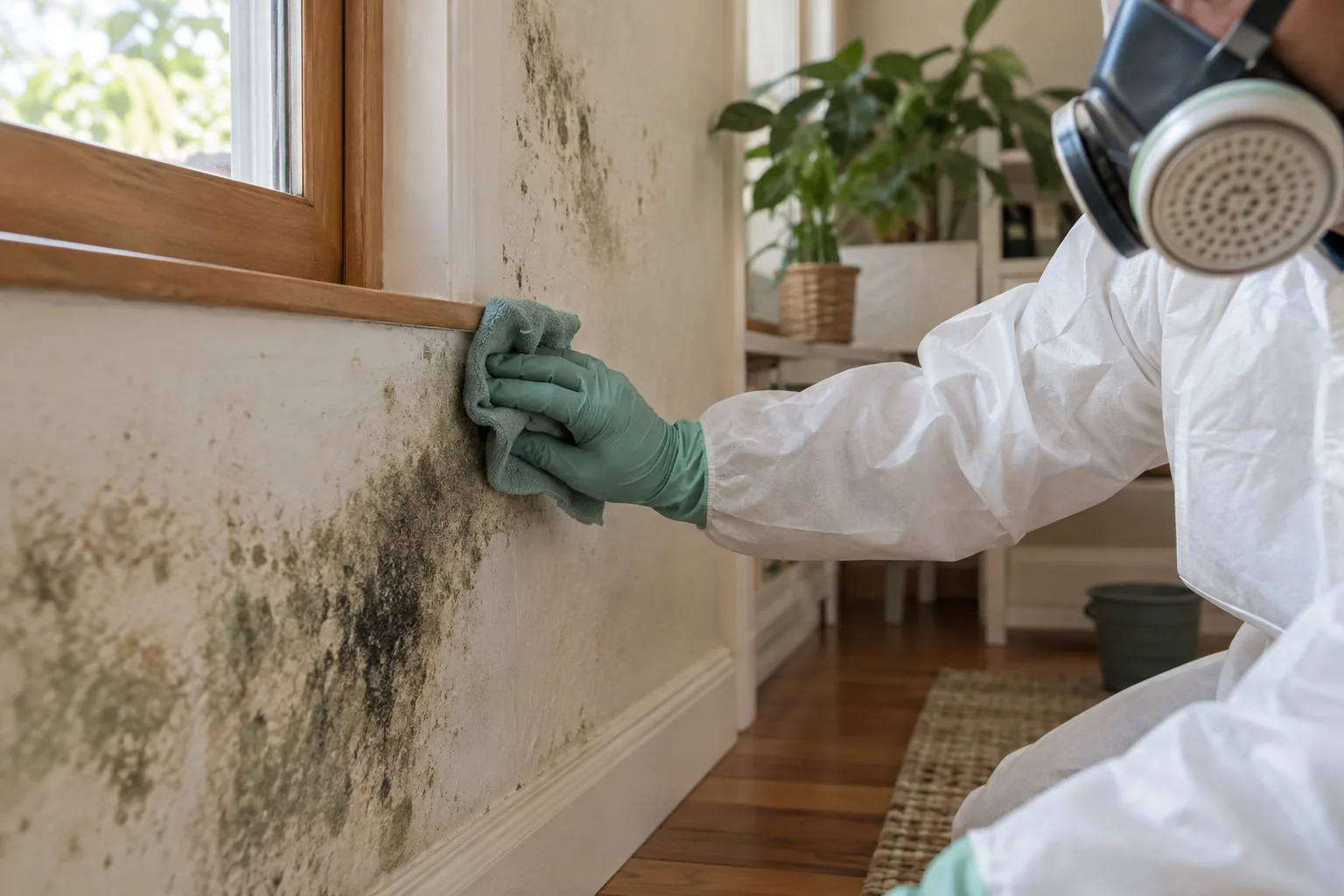
Set up HEPA filtration and protection. Agree people and pet arrangements and safe clearance. Equipment access should be ready before work begins.
03
Choose compatible treatment
HOCl may be suitable for assessed surfaces. Compatibility and condition guide use. Treatment does not strengthen a weakened ceiling or guarantee disappearance of staining.
04
Explain ULV application
Discuss ULV application where appropriate, including preparation and restrictions. It supports room treatment without assessing concealed roof materials or replacing repairs.
05
Remove growth physically
Use suitable physical removal equipment with H-class filtration on the included accessible surfaces. The remediation process combines treatment and removal rather than relying on a spray to resolve damaged materials.
06
Complete the room review
Continue HEPA filtration through completion and explain remaining staining or repair needs. Record the treated surfaces and follow-up actions. Roof repairs, plumbing and decorating are separate tasks, even when they relate to the same patch.
VISIBLE & ACCESSIBLE
Four details for the enquiry
Ceiling spotting
Describe the approximate area and height. Do not climb onto furniture or disturb loose plaster to obtain a closer photograph.
Upper wall marks
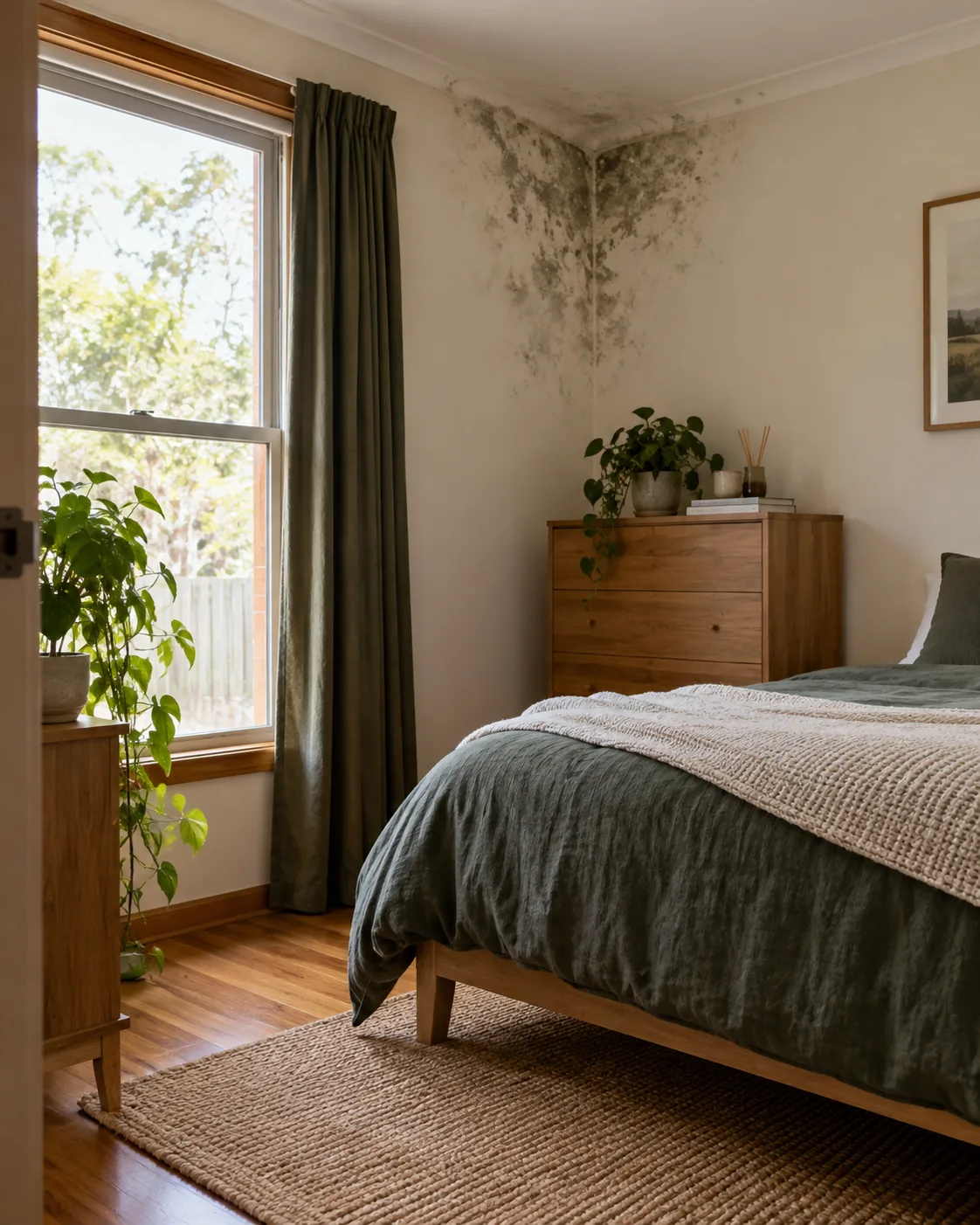
Say whether growth follows the ceiling junction or appears lower down. This helps describe extent without guessing the moisture source.
Bathroom finishes
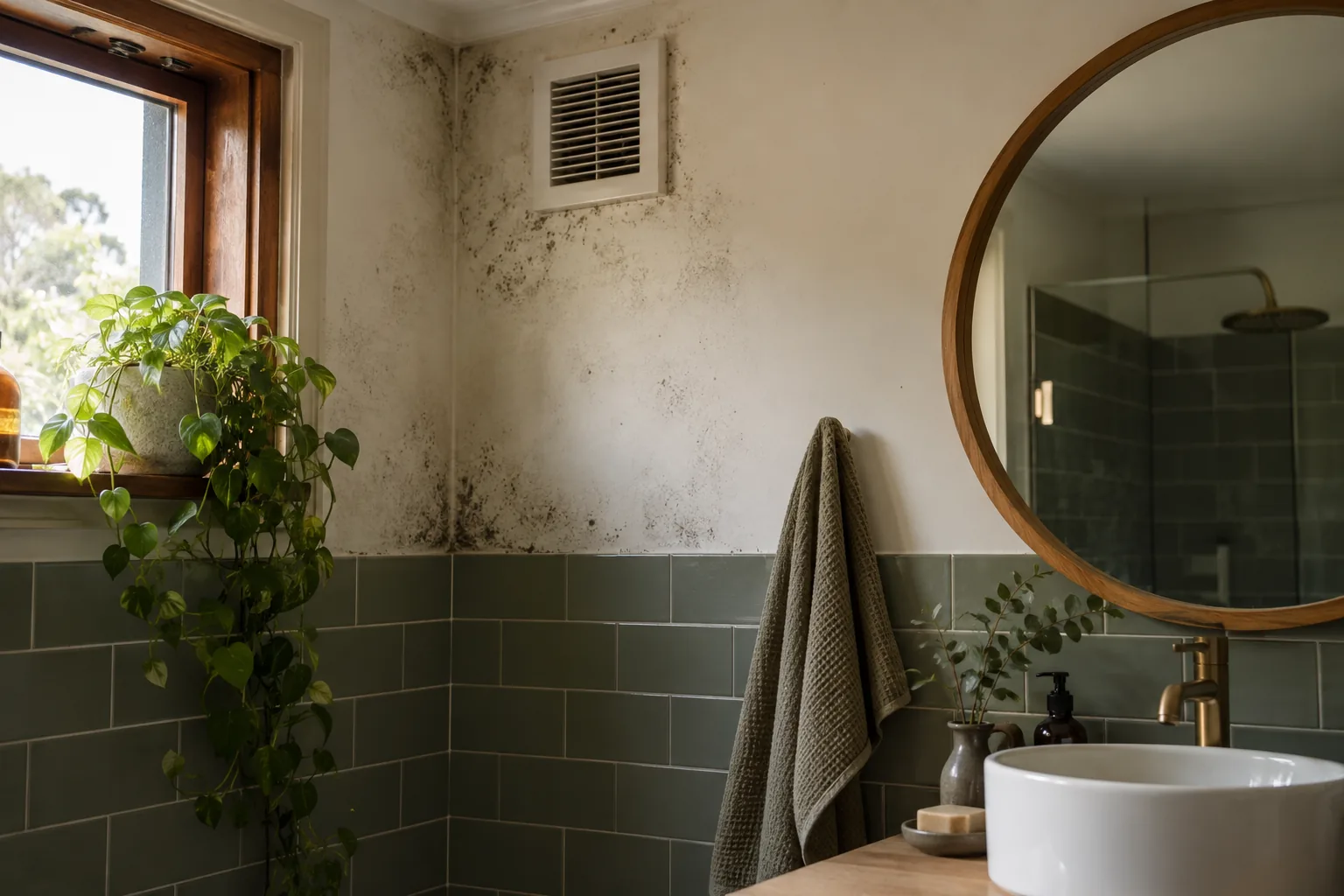
Mention shower use, fan operation and whether the surface stays wet. Bathroom growth may require a different follow-up from rain-related damage.
Hard floor damage
Explain swelling, lifting or damp edges. Treatment does not restore a damaged floor, and carpets are excluded.
PREPARATION & LIMITS
What treatment can leave behind
Visible accessible walls, ceilings and hard floors are included as agreed. Furniture, sofas, mattresses, carpets, curtains, clothing and textiles are excluded. Identify affected belongings separately.
Working time averages about three hours per room, with access and contamination affecting the duration. The service is not priced by the hour. Removal does not guarantee a spotless finish; repainting or decorating can be quoted separately after the moisture problem is addressed.
AFTER THE SURFACE WORK
A useful post-rain check
After the appropriate repair, watch the affected room through subsequent wet weather. Keep dated photographs and note whether the surface dries. Avoid covering a recurring patch with fresh paint before you know why it remains damp.
Manage ordinary indoor moisture too: use kitchen and bathroom extraction, provide airflow and avoid crowding furniture against affected walls. Our general removal scope helps distinguish cleaning from building repairs. These measures reduce contributing moisture without promising permanent prevention.
WOORI YALLOCK · NEARBY LOCATION PAGES
Nearby locality information
Launching Place, Yellingbo and Don Valley are relevant nearby pages. Supply the exact address when asking about availability; access and travel arrangements must be confirmed rather than assumed from a neighbouring booking.
BEFORE YOU ARRANGE WORK
Questions for your enquiry.
Can you repair my leaking roof?
Roof repairs are separate from this mould removal service. Explain any active leak first so the appropriate trade can address water entry and the interior treatment can be planned around the repaired surface.
Is a brown ceiling mark always mould?
No. A photograph of discolouration cannot establish its cause. Assessment considers visible growth, material condition and moisture history. A cosmetic water stain may remain even after the appropriate treatment.
What if plaster feels soft?
Mention it before booking and avoid disturbing it. A compromised surface may need building repair or replacement; cleaning alone cannot restore its strength or establish that the surrounding structure is sound.
Do you inspect the roof cavity?
Standard work covers visible accessible interior surfaces. Concealed roof-space material may require a separate inspection and different access arrangements. Do not assume room treatment includes opening ceilings or inspecting insulation.
How long should I book the room out for?
About three hours per room is only a working guide. Preparation and return arrangements depend on the job. Confirm them with the technician, including provisions for occupants and pets.
Can I request treatment before fixing the leak?
Discuss the circumstances, but an unresolved leak can allow growth to return. The scope must separate immediate surface work from the repair needed to stop ongoing moisture.
Discuss a Woori Yallock visit
Call 03 8652 1296 with the address, ceiling height and leak history to discuss availability and accessible-surface assessment.
Useful references: Official local context