
YARRA’S EDGE · MELBOURNE
Mould Removal Yarra’s Edge
YARRA’S EDGE / EVERYDAY MOISTURE
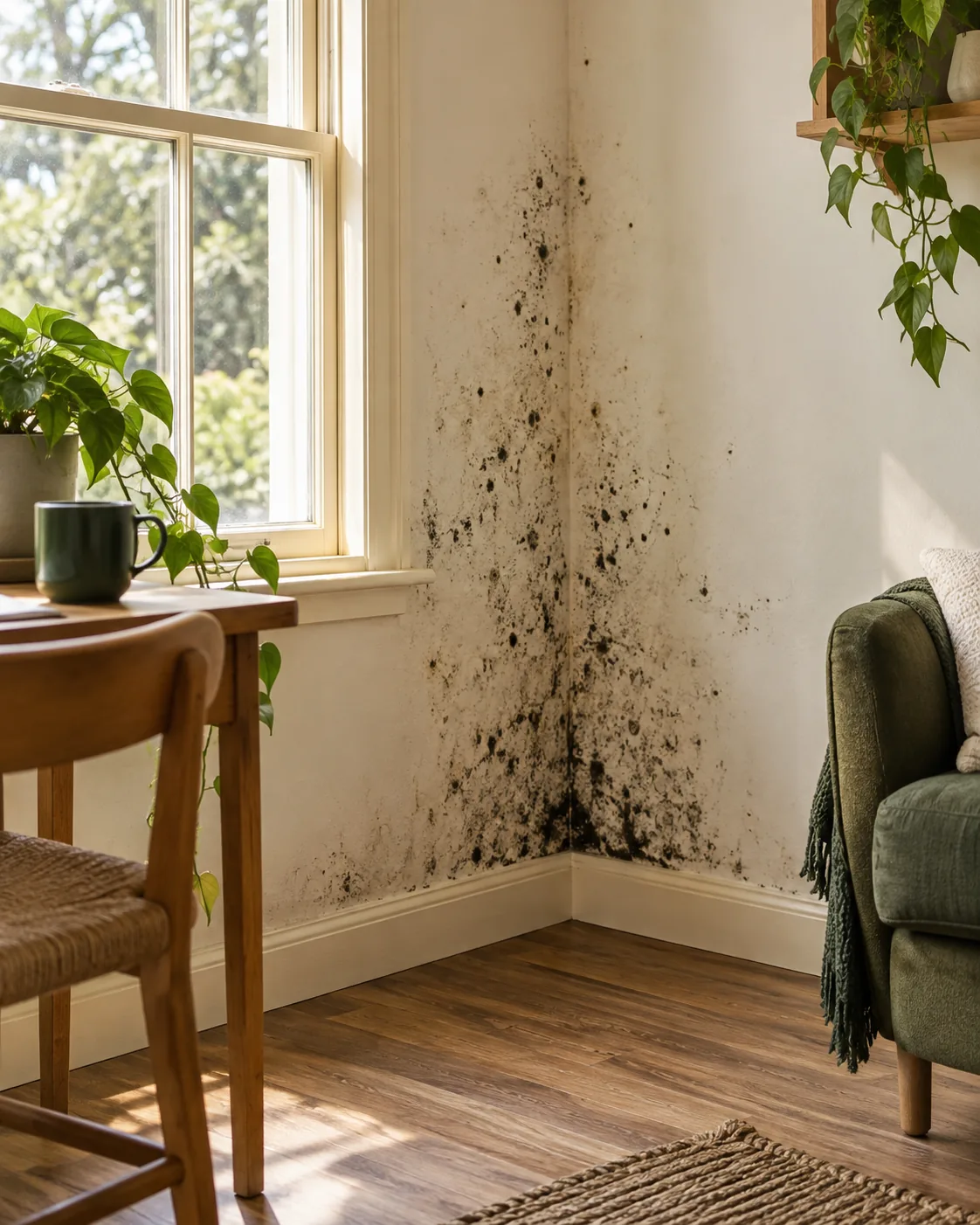
At Yarra’s Edge, an enquiry about an affected laundry wall should explain more than the visible patch. Tell us whether a dryer vents moisture indoors, whether a fitting leaks and what prevents access.
Laundry conditions reviewed
Building entry agreed
Hard surfaces clearly scoped
SURFACES & THEIR SETTING
A precise address for a practical visit
The official Docklands Plan identifies Yarra’s Edge as a precinct. Include the building, street and unit or tenancy when calling so the visit can be planned for the correct interior.
Begin with laundry use
Explain appliance venting, visible dampness and any history of overflow. A wall behind an appliance may need access arrangements before its condition can be reviewed. The inspection discussion should distinguish observations from an assumed cause.
Clarify who can approve access
Shared doors, lifts and service areas need the right contact. Ask the building representative about equipment access before making arrangements. Do not move an appliance or disconnect services simply to reveal a patch; describe the obstruction and agree the preparation.
Moisture-producing activities and actual defects
Repeated steam, poor drying and a leaking connection can lead to different next steps.
Accessible means genuinely reachable
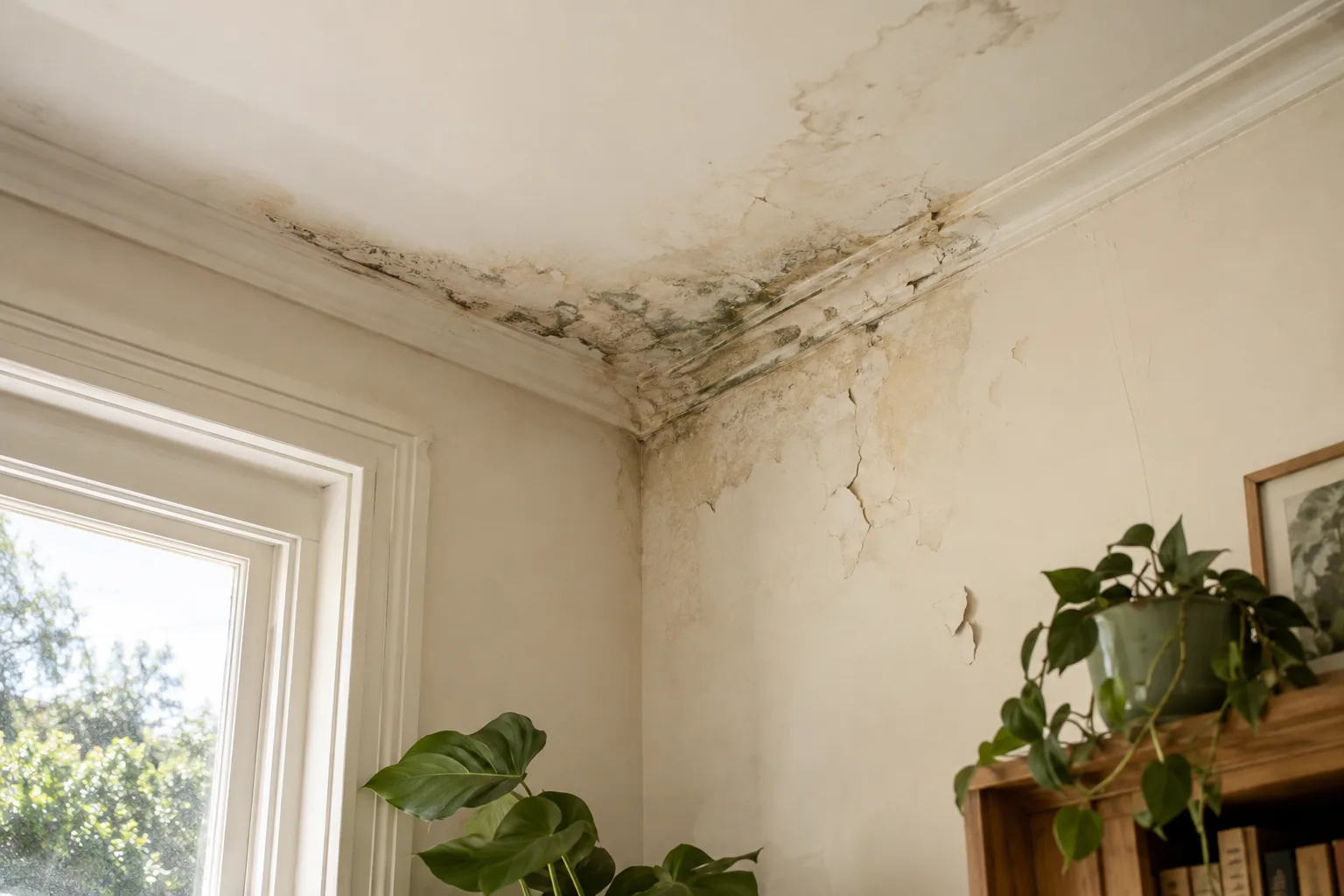
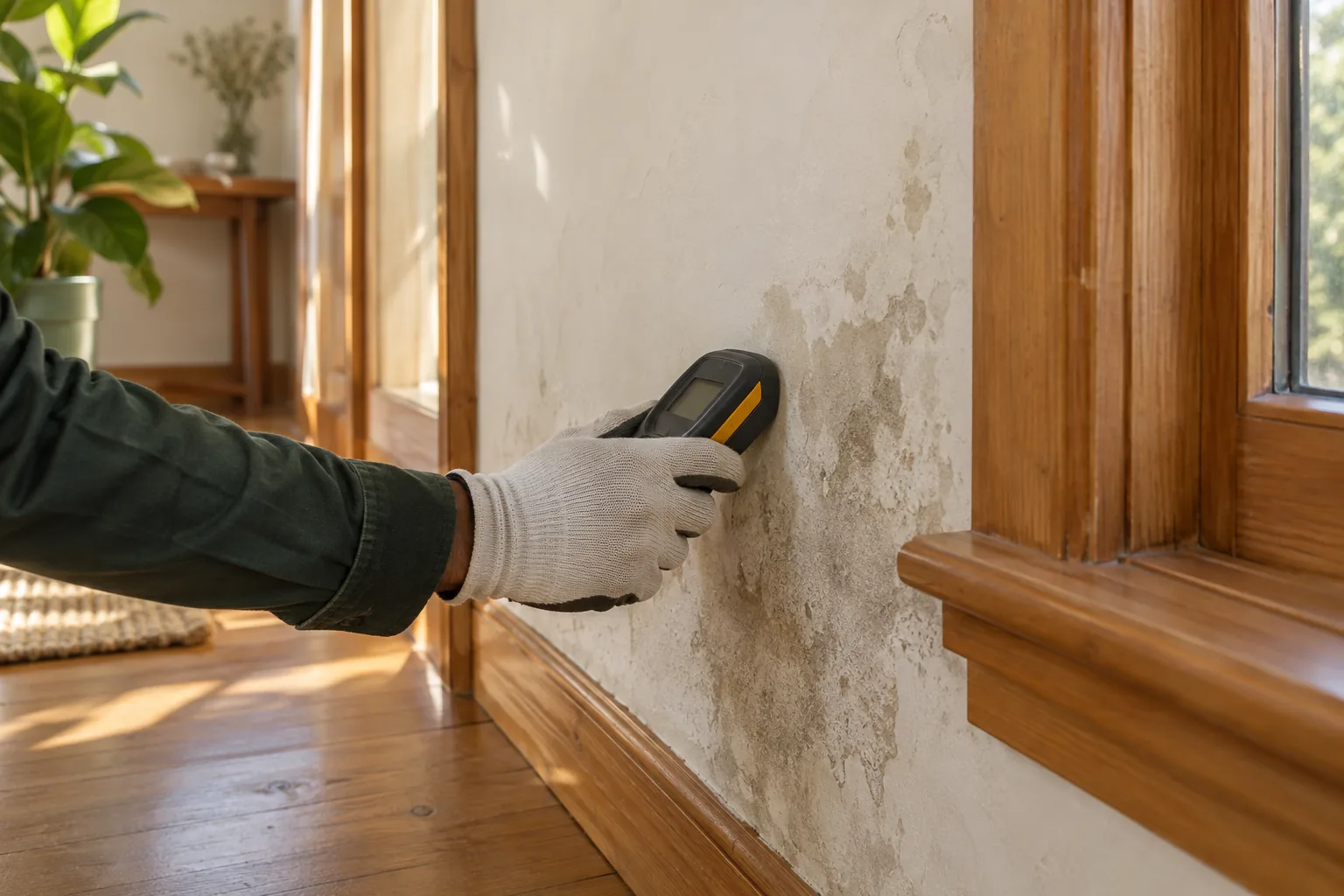
Visible walls, ceilings and hard floors are the removal service scope. A wall blocked by fixed cabinetry is not automatically accessible. Note peeling paint, soft material and any narrow gap so the limitations can be discussed before treatment.
Keep plumbing work separate
A leaking hose, pipe or fitting needs the appropriate repair trade. Treatment does not stop that water supply or repair the appliance. Explain any recent maintenance and whether the surface has dried; room air humidity alone cannot establish dryness inside construction.
THE SURFACE REMOVAL PROCESS
The room comes first, then the method
01
Inspect the visible surfaces
Growth extent, materials and surface condition are reviewed. The technician may use a hygrometer and consider the room history. The assessment does not imply entry into every concealed gap behind appliances or cabinetry.
02
Prepare and protect the air
Personal items and occupant arrangements are addressed before the work. HEPA filtration supports control of airborne particles. Agree safe access and clearance rather than improvising storage in a communal corridor or emergency route.
03
Select appropriate HOCl treatment
The application is matched to the surfaces and their condition. Fragile paint and nearby fittings should be identified. Treating growth is different from repairing a damaged coating or promising that an old stain will vanish.
04
Apply ULV fog if suitable
Where the method is appropriate, fog application follows the agreed room preparation. Confirm return timing and approved alarm arrangements with the technician and responsible building contact. Do not independently switch off building alarms.
05
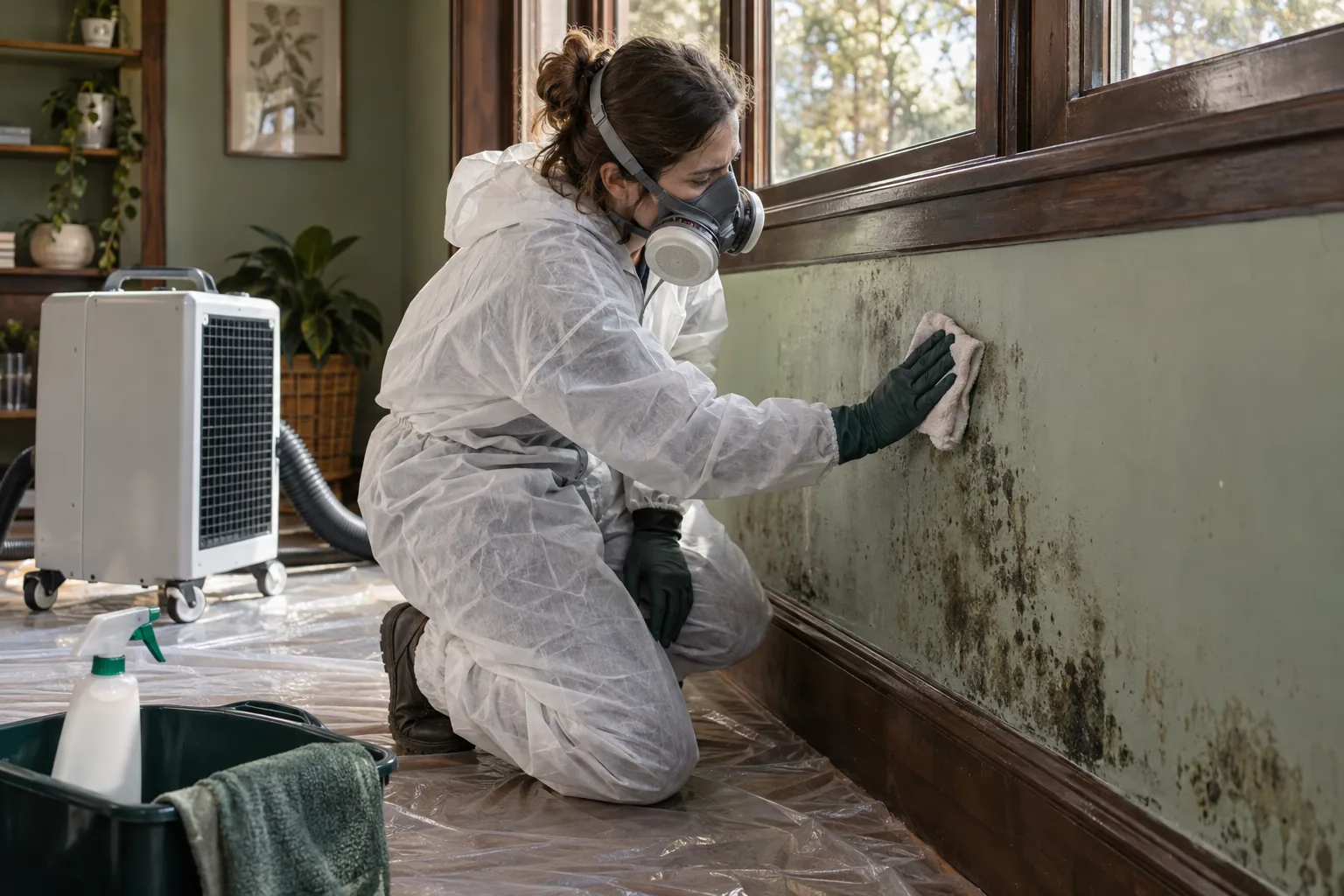
Remove visible residues physically
Professional removal with H-class filtered equipment addresses accessible structural surfaces as appropriate. Clothes, curtains, carpet, furniture and other textiles remain outside the service. An affected laundry basket does not become included because it sits in the room.
06
Complete filtration and discuss repairs
Final air filtration continues as required. Ask about remaining marks, future room use and unresolved water or ventilation issues. The handover should leave a clear distinction between completed treatment and outstanding appliance or building work.
VISIBLE & ACCESSIBLE
Surfaces linked to the room’s use
Laundry walls
Describe visible growth, appliance clearance and any moisture discharge.
Bathroom ceilings
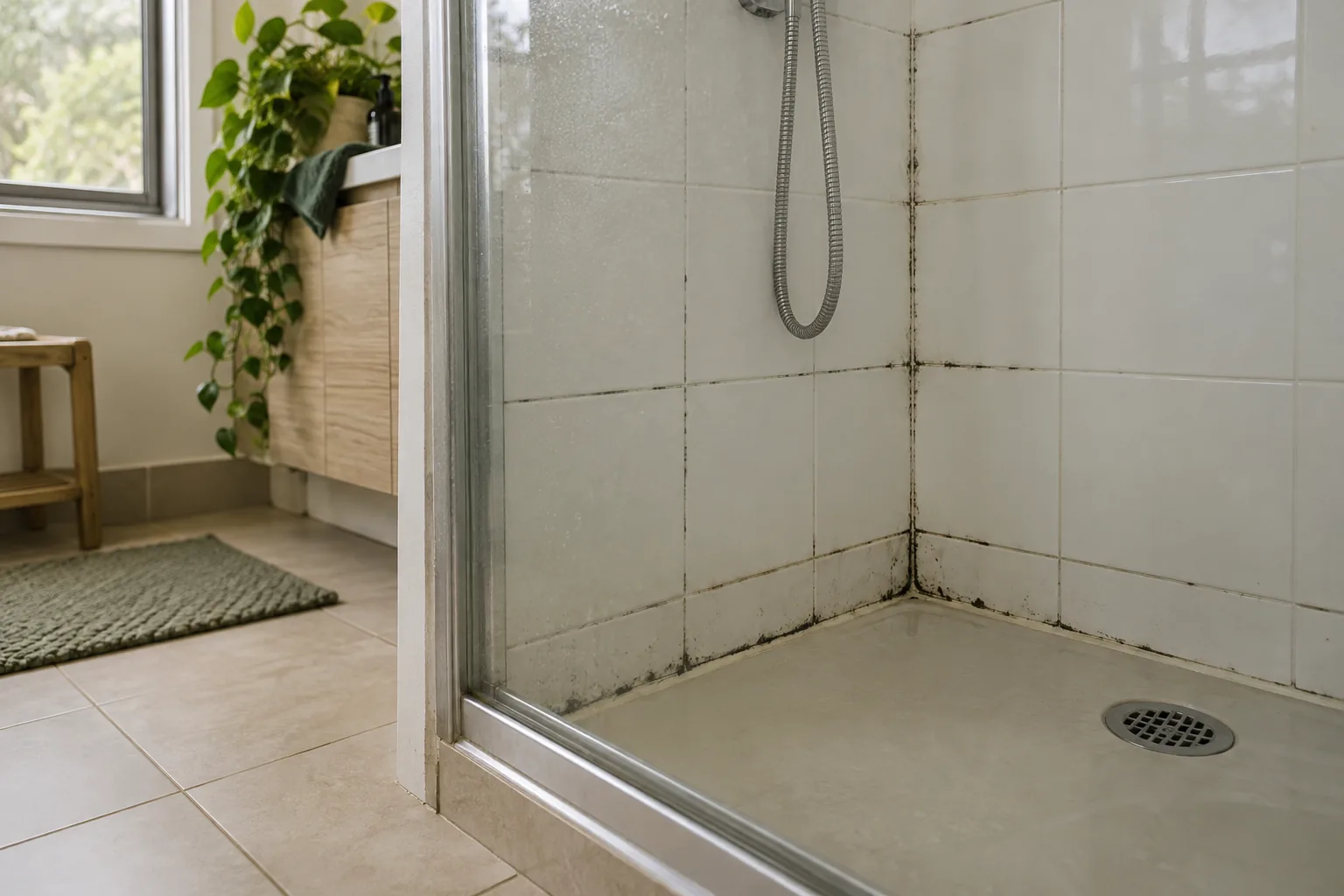
Mention extraction and drying between showers.
Kitchen wall sections
Identify the finish and nearby steam sources.
Hard-floor corners
Note water tracking and the actual floor material.
PREPARATION & LIMITS
Plan for scope, not a fixed stopwatch
Expect an average around three hours per room, with duration affected by size, contamination and accessibility. It is not hourly pricing. A room with obstructed surfaces needs a specific discussion rather than an assumed standard appointment.
Remediation may leave cosmetic marks. Decorating is separately quoted, and repairs to leaks or appliances are separate work. Existing growth can be addressed while the conditions that support recurrence still need attention.
AFTER THE SURFACE WORK
Reduce avoidable indoor moisture
Check how laundry appliances discharge moisture and follow their proper installation and maintenance requirements. Use working extraction where steam is produced. Do not treat a fan running in the background as proof that damp air is actually leaving the room.
After the agreed return time, keep accessible ventilation paths clear and monitor repeated dampness. If a fitting still leaks, organise the repair rather than repeatedly wiping the adjacent wall. Dated observations help distinguish a recurring issue from an old cosmetic stain.
YARRA’S EDGE · NEARBY LOCATION PAGES
Nearby harbour-side guides
Victoria Harbour, Batman’s Hill and Fishermans Bend provide nearby location pages. For Yarra’s Edge, use the full address and authorised access contact; a precinct name does not establish an on-site office or guaranteed availability.
BEFORE YOU ARRANGE WORK
Questions for your enquiry.
Can you move the washing machine to reach the wall?
Describe the appliance and access gap before booking. Any movement or disconnection must be agreed and suitable.
Does a dryer cause every laundry mould problem?
No. Appliance venting is one relevant observation, but leaks and other moisture sources may also need consideration.
Are clothes in the room treated?
Clothing and textiles are excluded. Follow the agreed preparation for clearing belongings, especially if they may be affected.
Can fog reach an inaccessible wall behind cabinetry?
Fog application does not automatically extend the agreed scope to hidden construction. A blocked surface or concealed cavity requires an access and investigation discussion.
How should I describe a suspected leak?
Give the fitting location, dates and whether wetness persists when the room is unused. Photographs and maintenance notes can help.
Will treated walls stay clear permanently?
There is no permanent guarantee against recurrence. Ongoing leaks, moisture discharge and poor drying can create suitable conditions again.
Discuss the affected room at Yarra’s Edge
Call 03 8652 1296 with the address, surface condition and appliance or access constraints. We will discuss assessment, preparation and the boundaries of the work.
Useful references: Official Docklands precinct plan