
LAUNDRY DRYING · MOISTURE · SURFACES
ASHWOOD · MELBOURNE
Mould Removal Ashwood
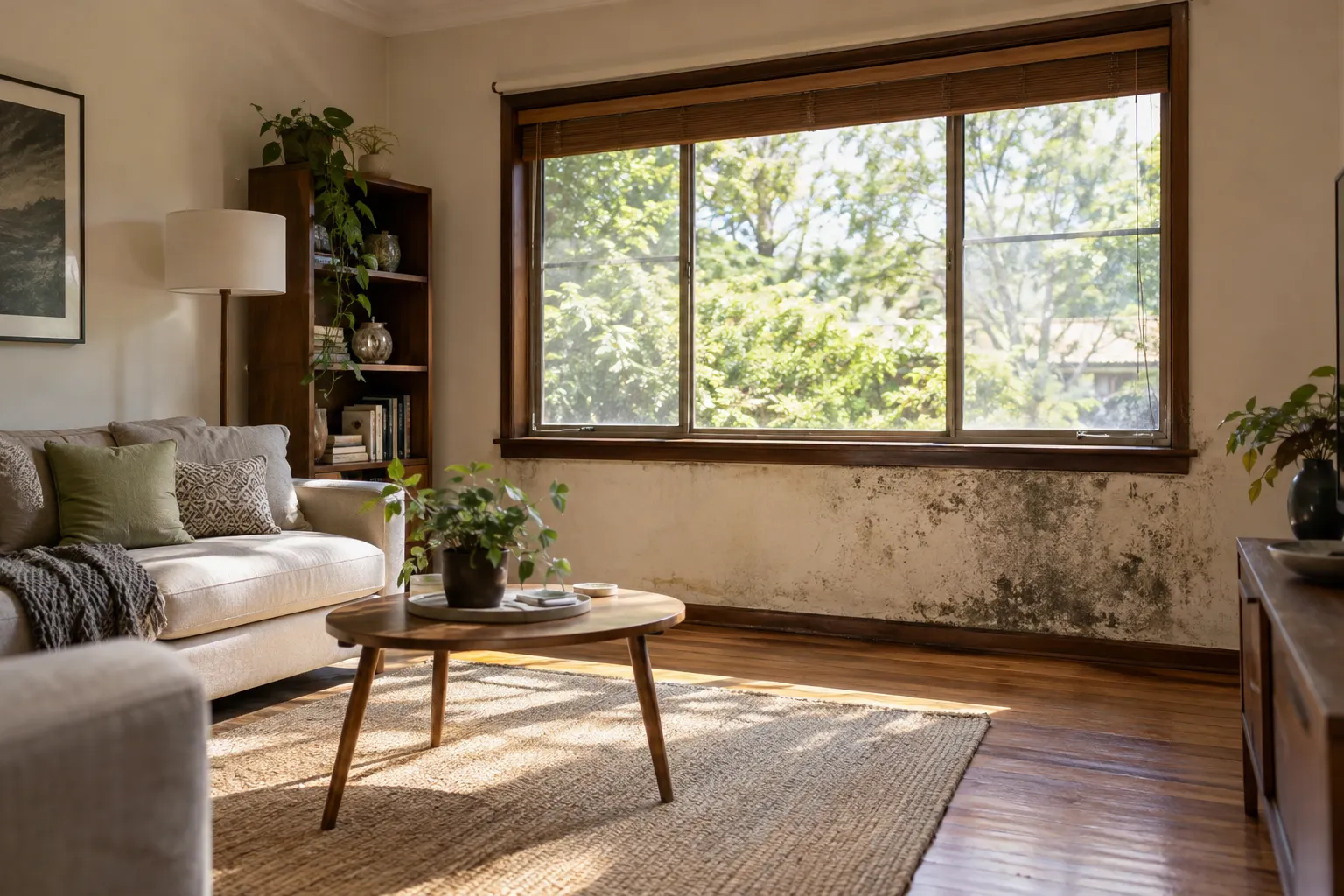
Laundry moisture can reach more than the wall beside the machine. For an Ashwood room, describe clothes drying, dryer ventilation and any leak around the taps or waste connection.
Visible material considered
Moisture history discussed
Access and scope agreed
THE ROOM TELLS A STORY
Follow moisture through the laundry
Monash includes Ashwood within its municipality. If clothes dry indoors, note which surfaces remain cool and damp during use rather than assuming the machine is leaking. Where water appears only around a connection, arrange investigation of that fixture. These are separate routes into the same room.
Explain laundry use before asking for an inspection of the marked wall. The distinction between drying moisture and water near a connection helps organise the enquiry, while appliance servicing or disconnection should be separately arranged if necessary.
UNDERSTANDING MOISTURE
Make sense of
laundry drying routines.
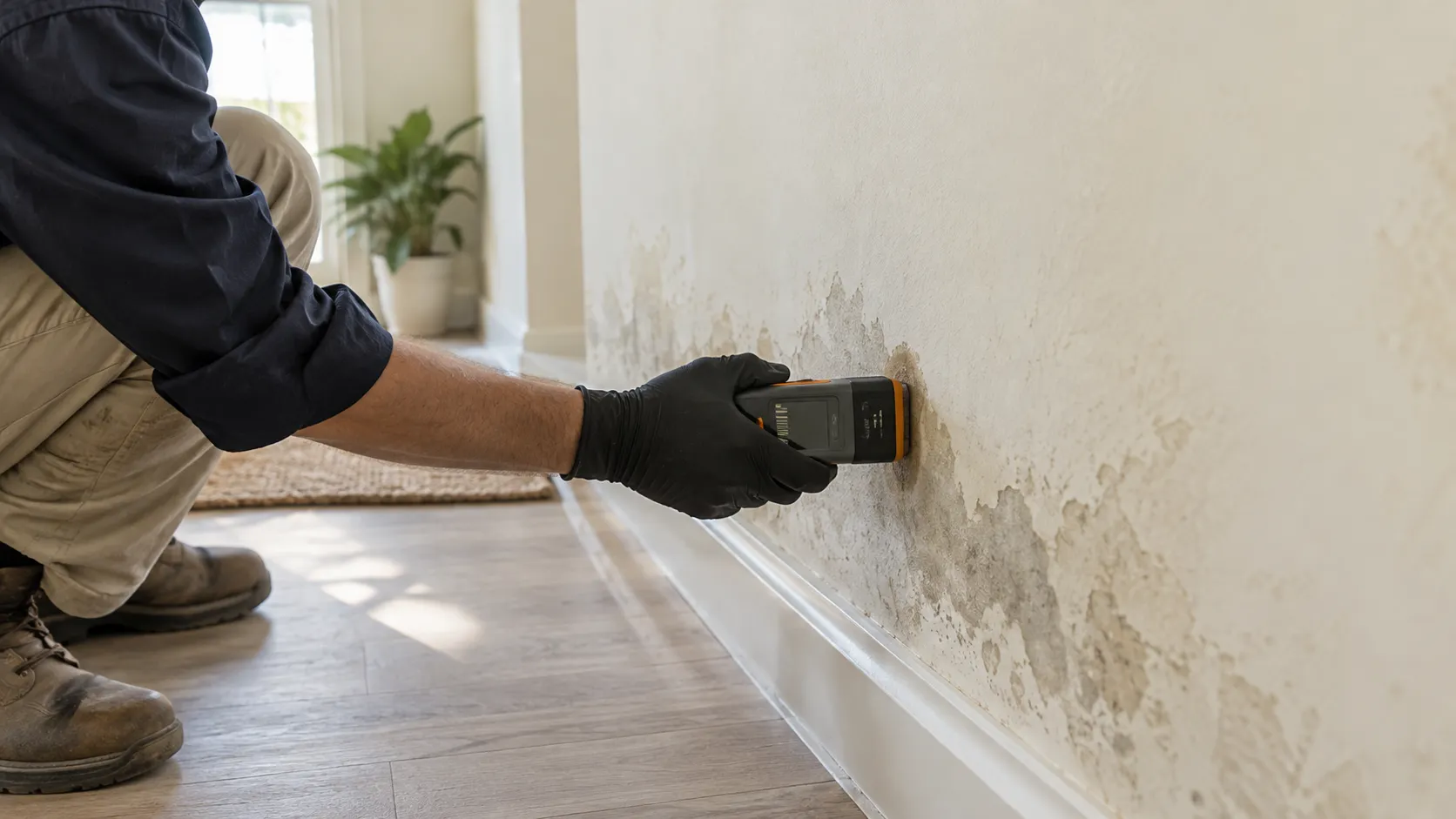
What stays damp
Separate moisture from indoor clothes drying from water escaping a fitting. Note which surfaces become damp during each routine and whether they dry once laundry activity has ended.
Leaks and repairs
If water collects beside a tap or waste connection during a cycle, record that timing. Arrange suitable fixture investigation without dismantling hoses to demonstrate the suspected source.
Accessible evidence
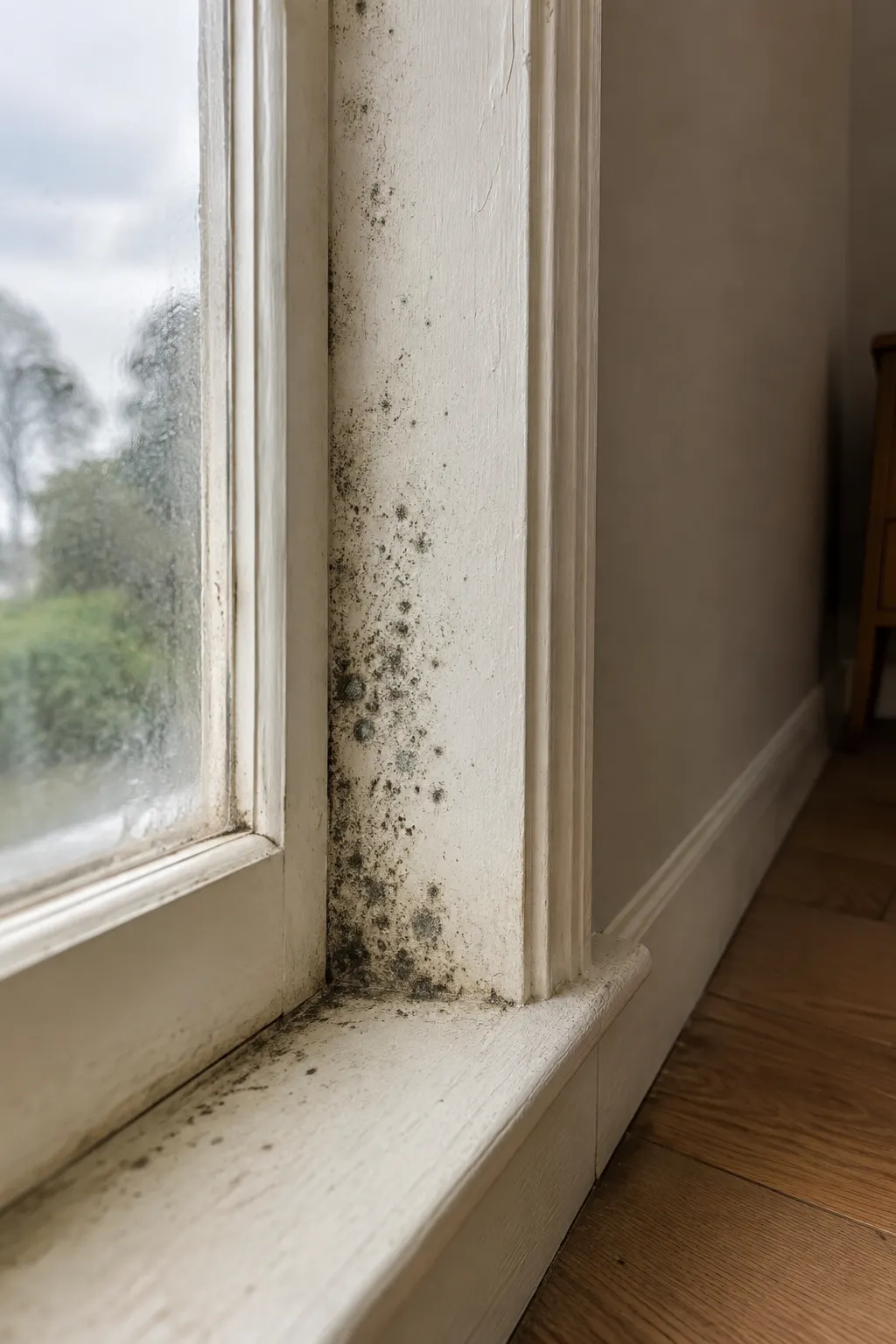
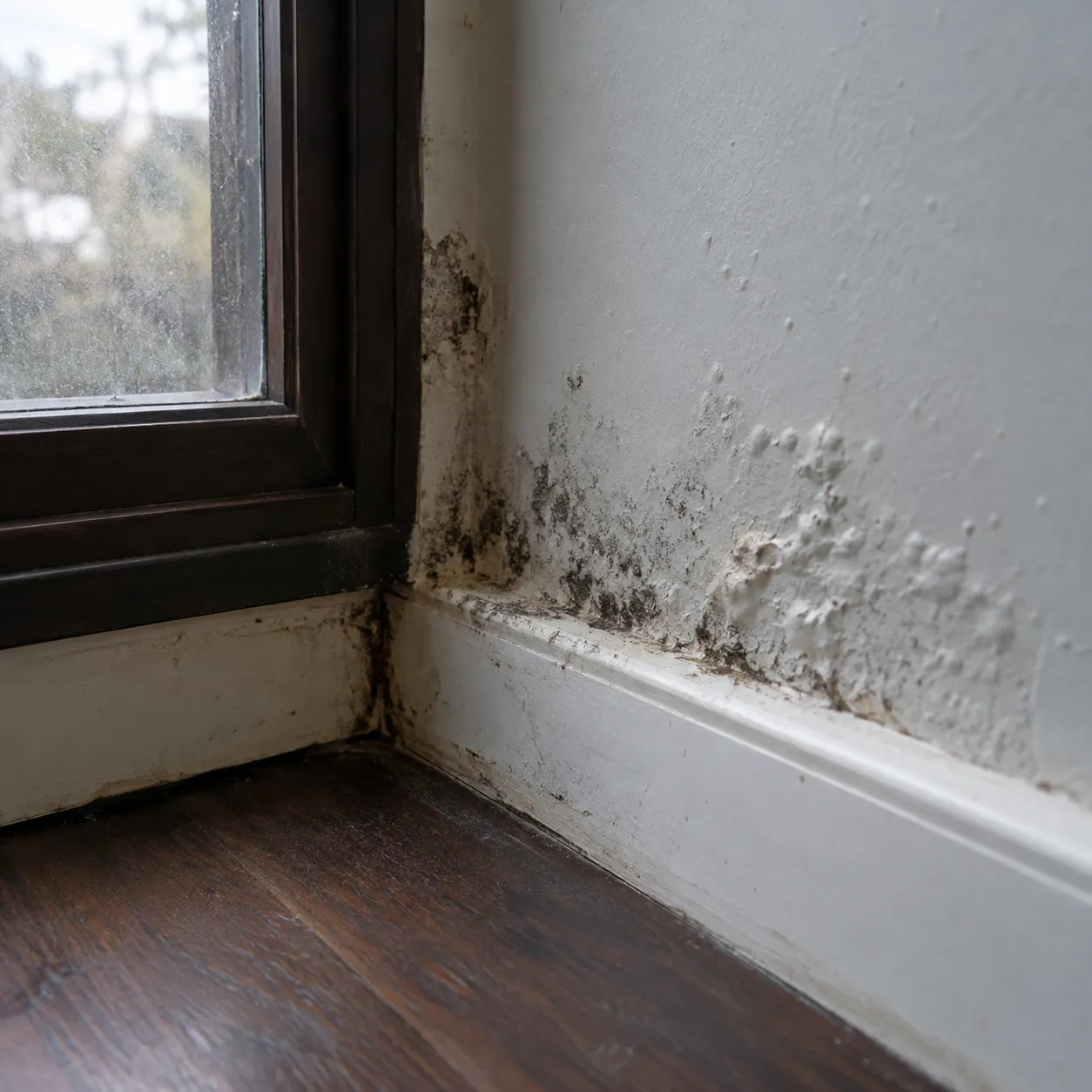
A laundry wall may have paint, board and cabinetry close together. Identify the affected material and its condition, particularly where swelling or loose coatings may require repair decisions.
OUR REMOVAL PROCESS
Plan the work
around the room.
Keep the room history
Record whether dampness follows clothes drying, dryer operation or a washing cycle. These timings are more informative than simply describing the room as humid.
Make access practical
Confirm who can move any connected appliance if that is required. Wall access should not rely on unexpected disconnection of plumbing or electrical equipment.
Agree the next decisions
Ask which drying or fixture checks remain outside the removal visit. A clean wall does not establish that an appliance connection is sound or that all damp material has dried.
01
Assess the laundry wall
Discuss where laundry moisture appears during drying or machine use. Mould removal from accessible walls should be scoped separately from appliance servicing or connection repairs.
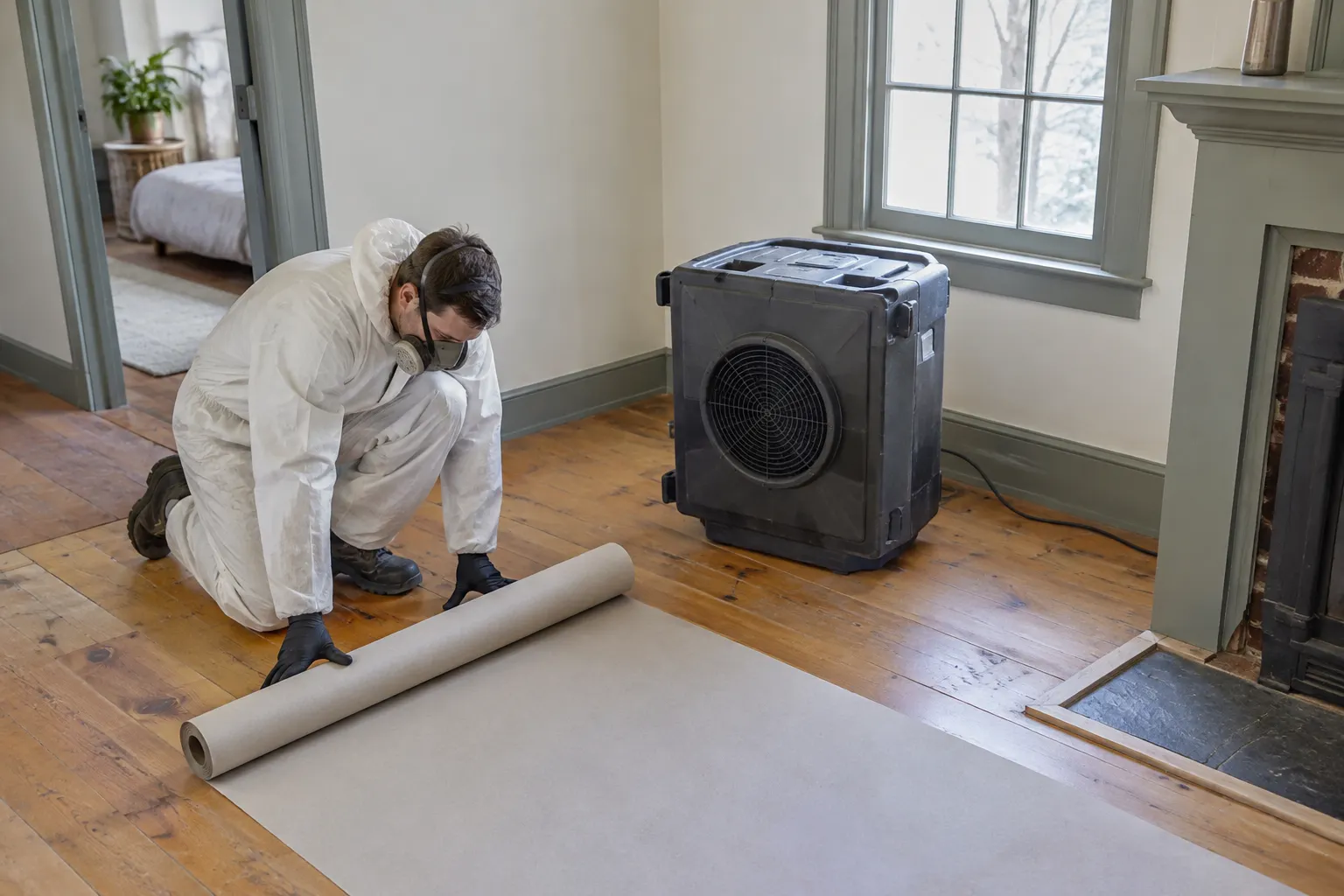
02
Prepare the working area
Keep the appliance route and reachable wall clear while leaving fittings undisturbed. Mention hoses, shelving or drying racks that restrict the work area.
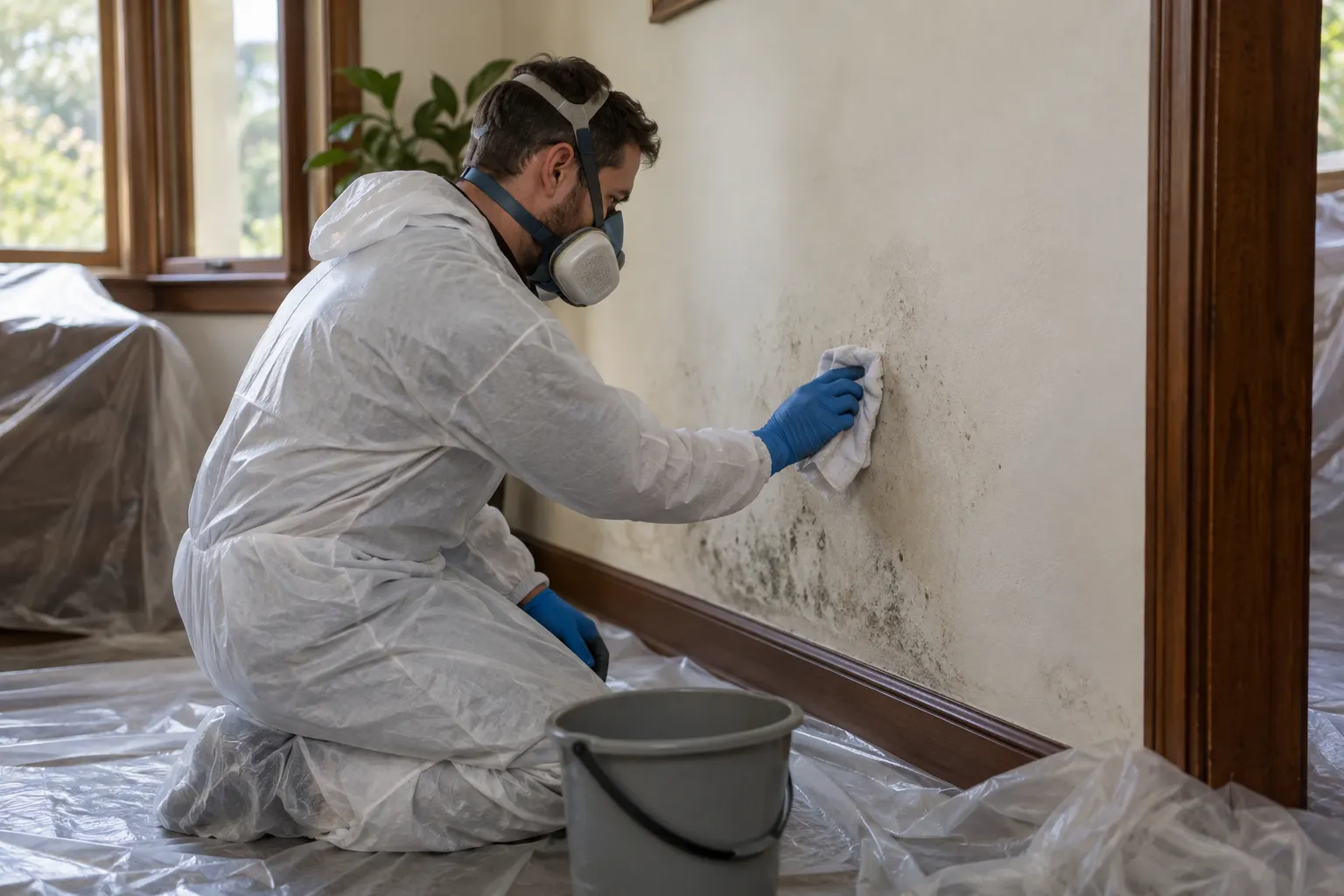
03
Remove and review
Observe the laundry during later use after the agreed surface work. Water appearing at a connection and moisture collecting on a cool wall remain different follow-up clues.
COMMON AREAS AFFECTED
Different surfaces.
Different decisions.
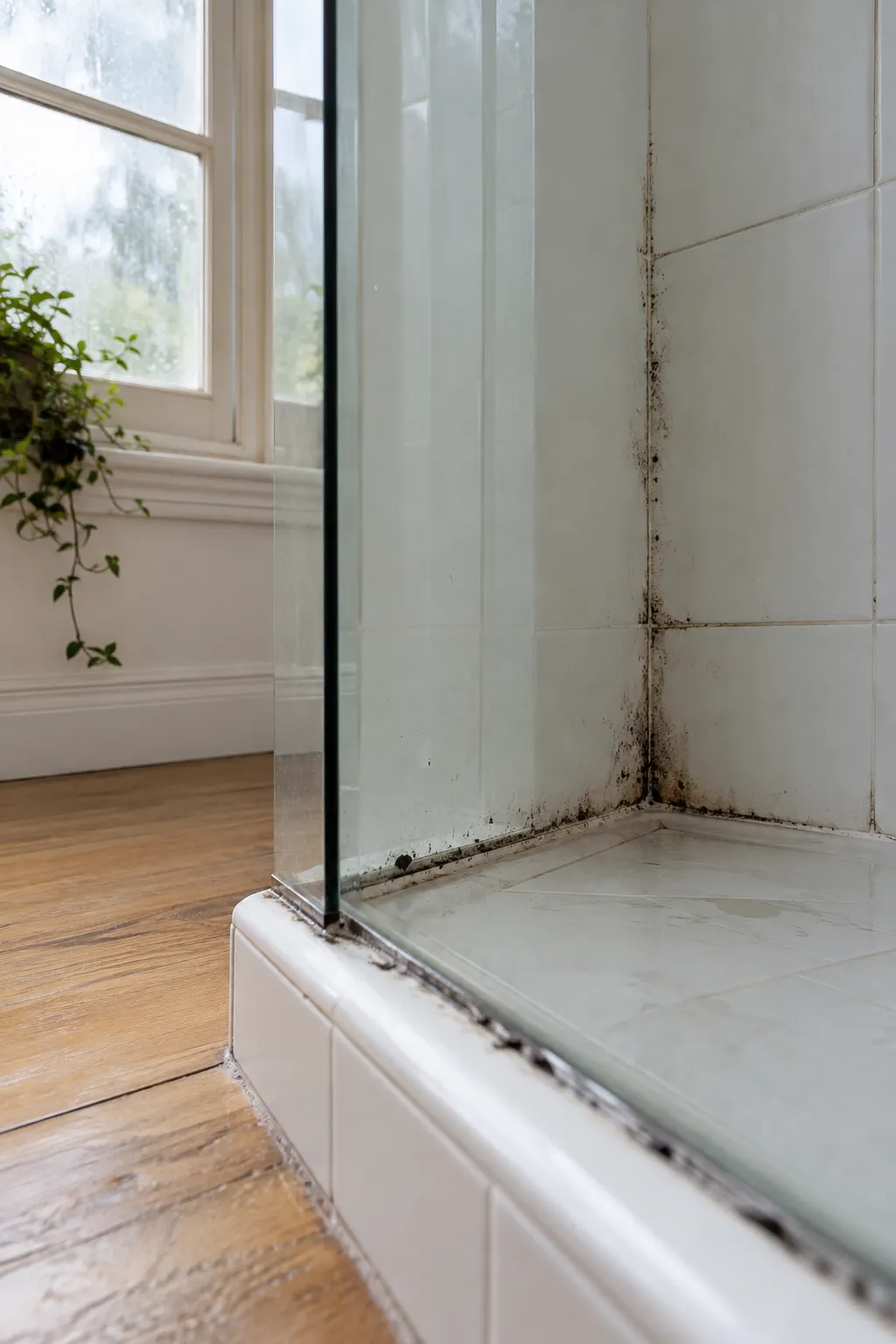
Bathroom junctions
If household drying also affects a nearby bathroom, describe its surfaces separately. A marked shower joint and laundry wall should not be grouped into one material or moisture assumption.
Ceiling surfaces
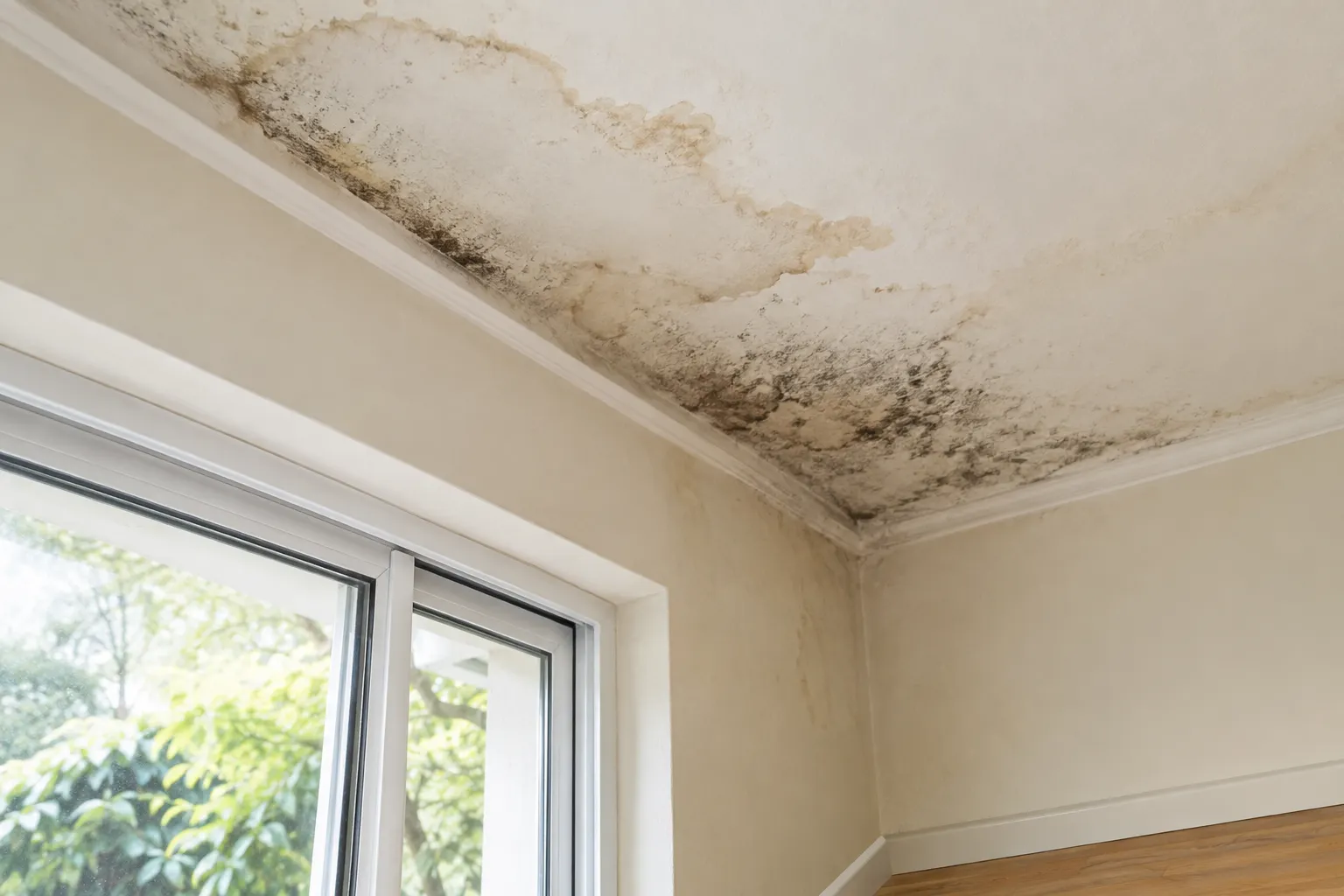
Ceiling spots during heavy drying periods need a room-use account and a finish check. Mention whether another water event occurred, rather than attributing all marks to laundry steam.
Painted walls
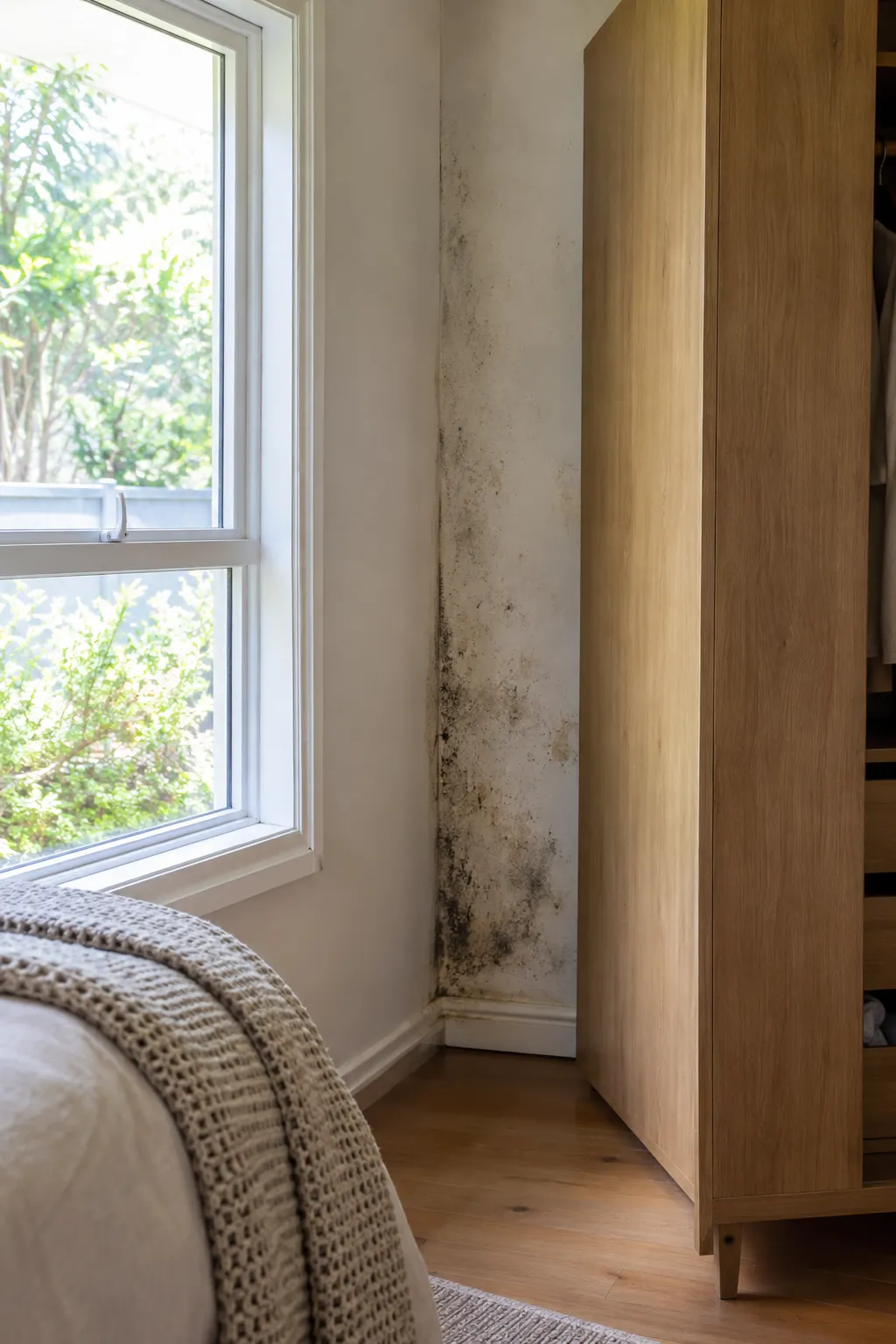
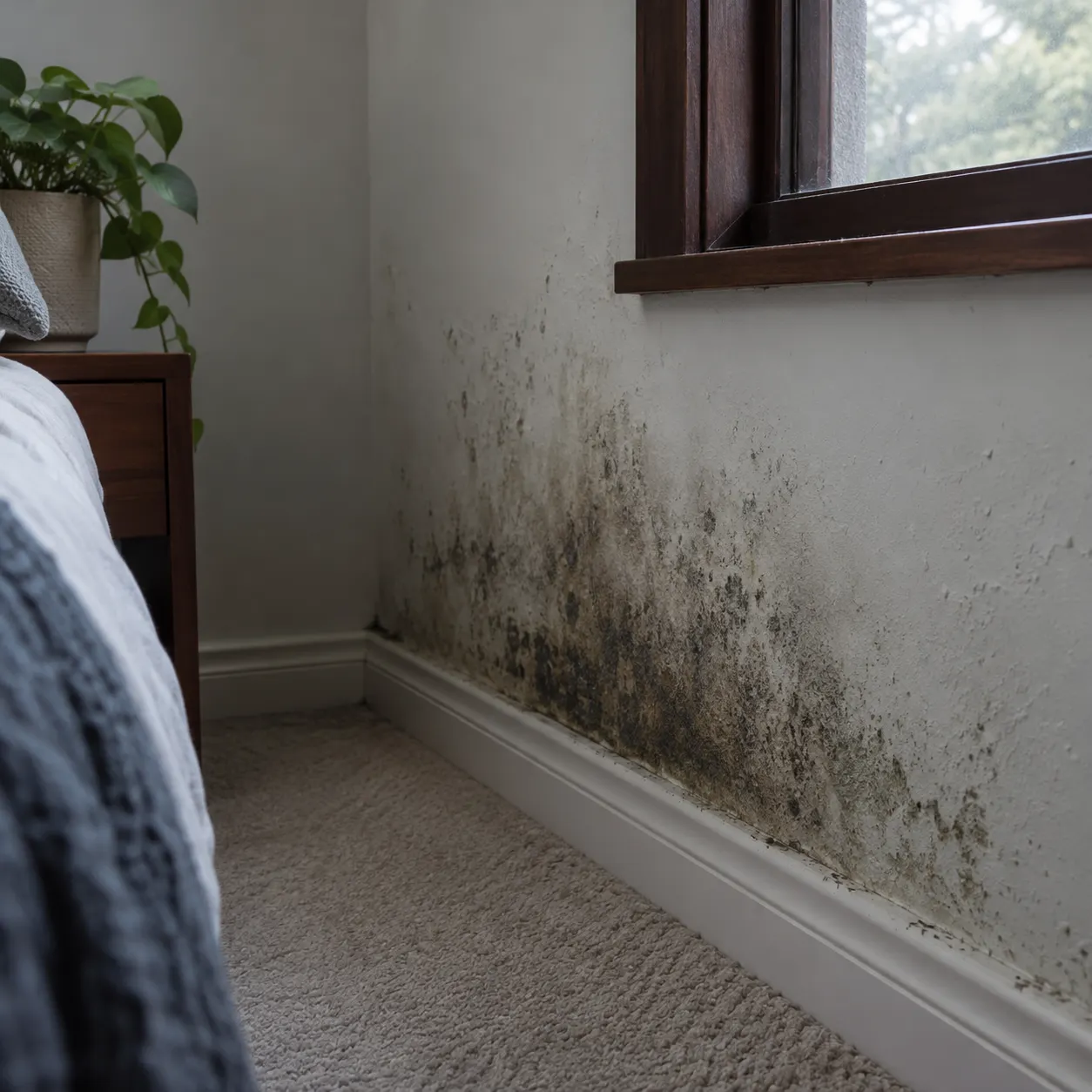
The wall behind racks or appliances can be partly concealed. Explain what is visible and reachable so treatment is not assumed to cover areas that equipment has never exposed.
Water-affected rooms
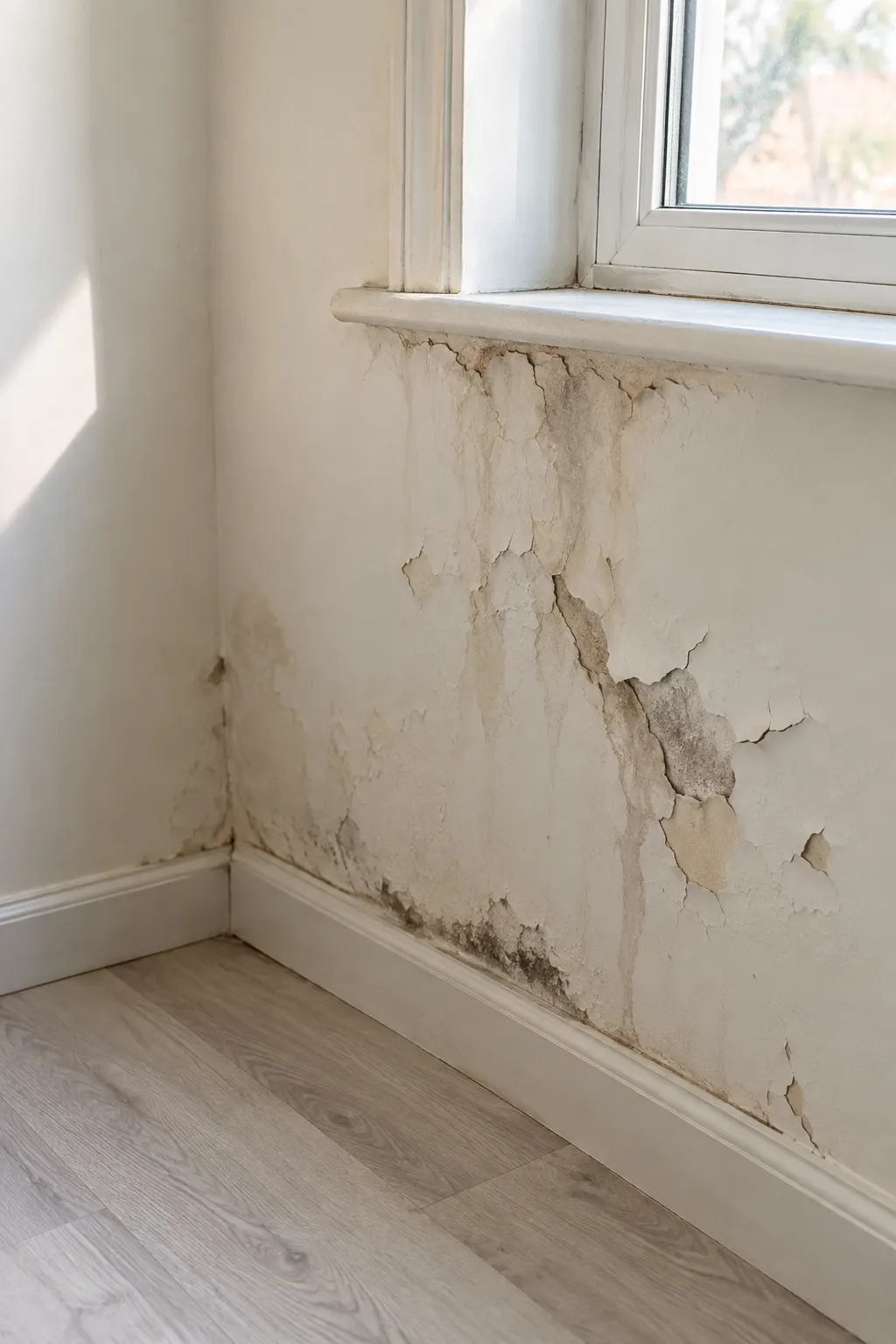
An earlier machine overflow can leave several wet materials after the floor looks clear. Include wall bases, cabinetry and belongings in the history, with any drying or repair details.
PREVENTION STARTS WITH
Follow the source.
Protect the finish.
Observe the drying pattern
Use suitable ventilation for moisture-producing laundry routines and observe the room afterwards. Continuing wetness at a fitting needs attention in its own right, even if drying routines have changed.
Follow up before decorating
Plan repairs and drying before covering an affected laundry wall. For multiple damaged materials, ask about remediation planning without assuming appliance work or contents handling is automatically included.
ASHWOOD & NEARBY
Ashwood and nearby rooms.
Additional nearby room guides include Ashburton and Burwood. An Ashwood laundry enquiry still needs the specific street address, appliance layout and access details; confirm arrangements before assuming that another property’s preparation suits your room.
BEFORE YOU CALL
The useful
questions.
How can I distinguish drying moisture from a fixture leak?
Describe the timing and location rather than deciding yourself. Water at a connection during operation and damp cool walls can direct different investigations.
Should I disconnect the machine before inspection?
Agree on access first. Safe movement or disconnection may require suitable arrangements, and an accessible wall enquiry should not become unexpected appliance work.
Is the dryer relevant to the wall patch?
Its use and ventilation can be useful context. Explain when the mark changes and whether water appears elsewhere, so the discussion considers more than one possibility.
What if cabinetry has swollen after an overflow?
Mention that damage as well as visible growth. Cleaning an intact wall and deciding whether damaged cabinetry can be retained are separate tasks.
Can changing clothes-drying routines guarantee clear walls?
No routine provides that promise. Follow practical drying observations and deal with continuing water entry or material damage alongside any surface treatment.
What helps with an Ashwood laundry enquiry?
Give the address, affected finishes and appliance-related timing. Include photos, previous overflows and access constraints so the initial scope can be discussed realistically.
TELL US WHAT YOU CAN SEE
Describe the mark.
Plan the next step.
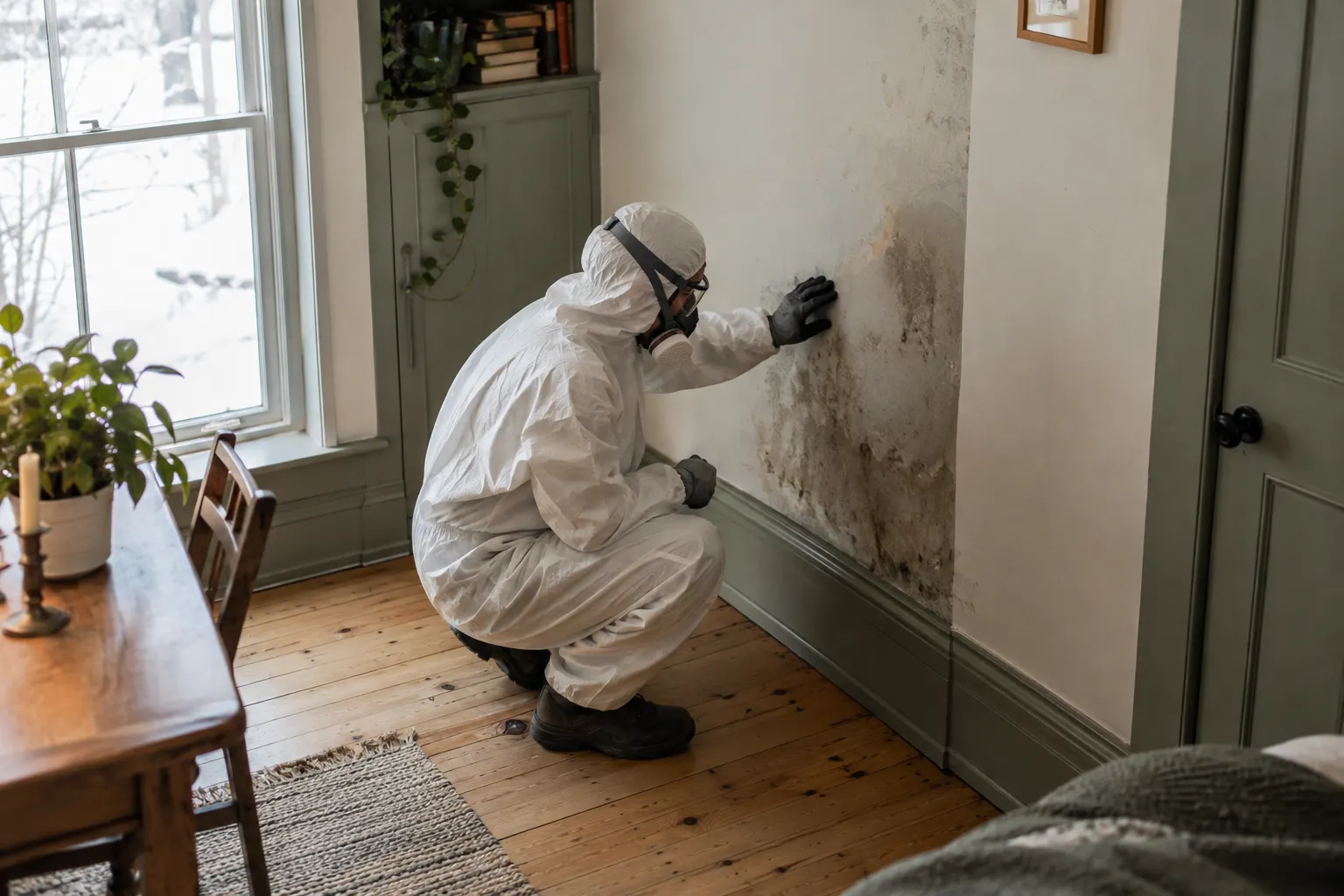
Describe the laundry routine, visible water and affected finish on 03 8652 1296. Give your Ashwood address and equipment-access details so the appropriate next conversation can be planned.
Local context: Monash suburb profile