
HEATHERDALE · MELBOURNE
Mould Removal Heatherdale
ROOMS · ACCESS · FINISHES
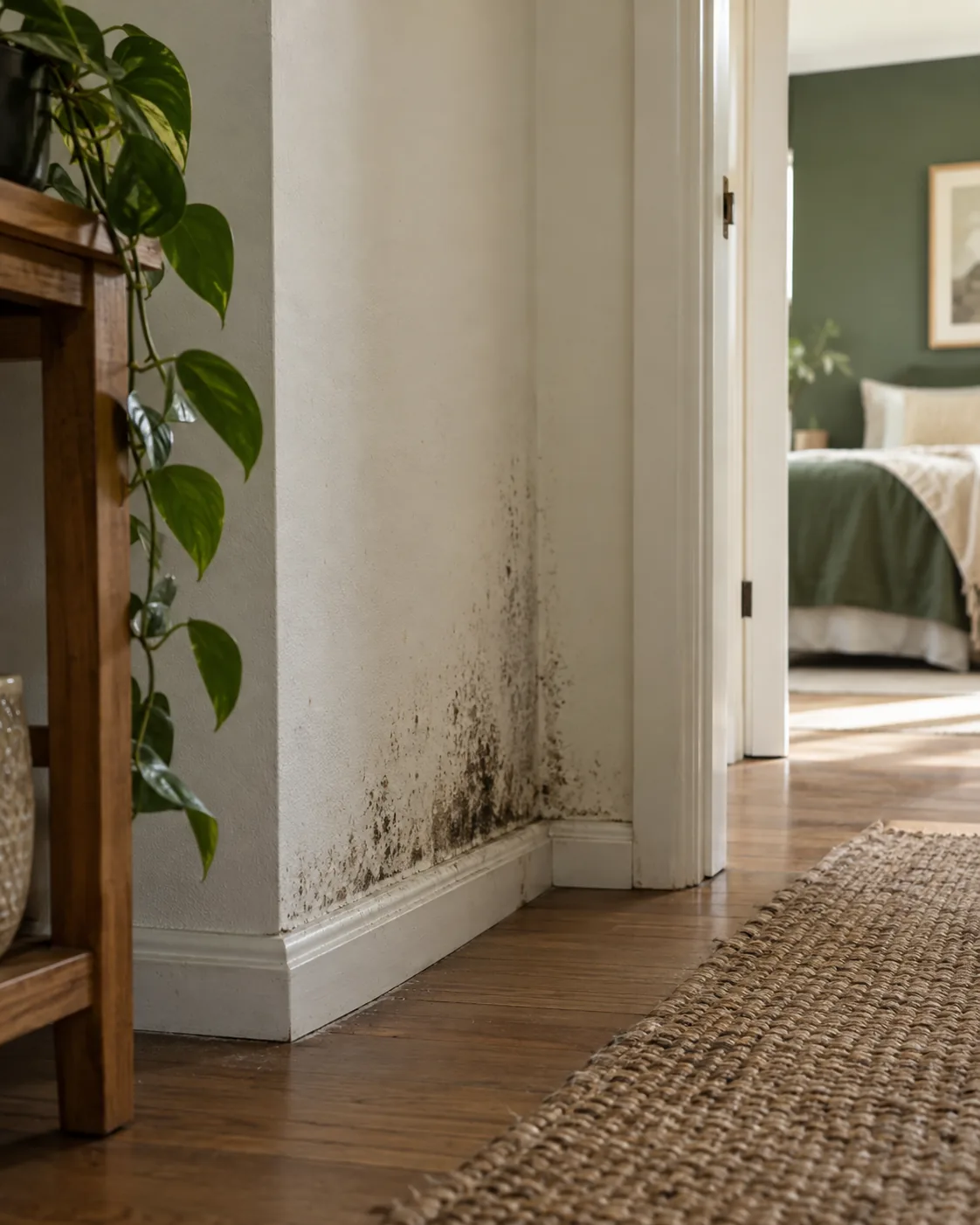
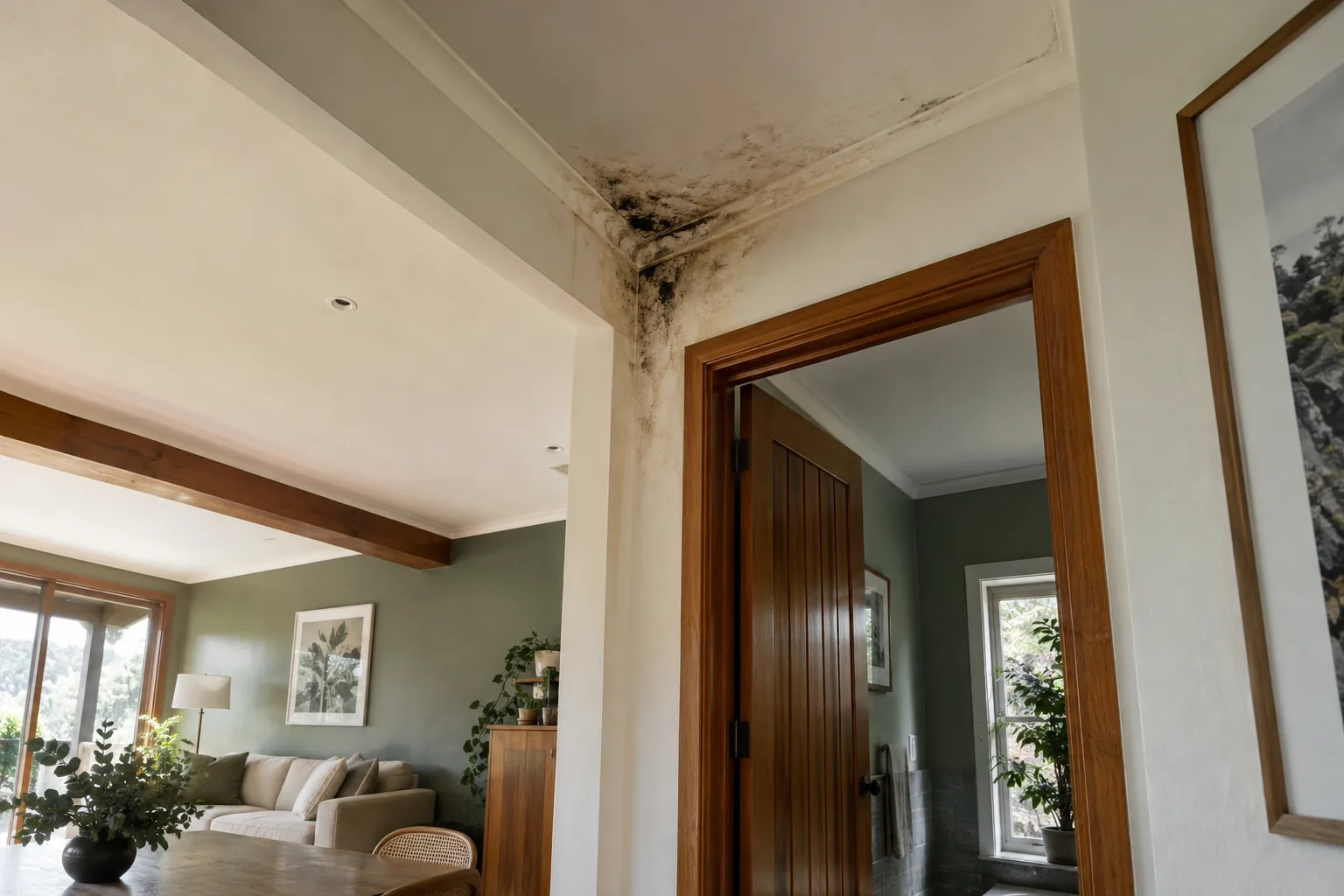
A damp bedroom corner near Heatherdale needs assessment before repainting. Describe marks behind furniture or along the ceiling. We discuss reachable surfaces, moisture and preparation.
Furniture clearance discussed
Wall condition checked first
Moisture follow-up explained
SURFACES & THEIR SETTING
When a wall has been out of sight
Heatherdale is a station-area name used around Mitcham and Ringwood. Give the full street address and unit details so access can be organised for the correct property.
A discovery during rearranging
Finding spotting after shifting furniture does not establish its cause. Note the size of the patch and whether the paint feels loose. Our mould inspection service considers visible growth alongside moisture readings, rather than making a diagnosis from a single photograph.
Room to work
A bulky wardrobe can turn a small patch into an awkward job. Discuss moving it before the visit; do not assume technicians will handle heavy furniture. We need a clear approach to the affected wall and a preparation plan for belongings outside the treatment scope.
Reading the room carefully
Explain room use, ventilation and changes after wet weather. This history gives moisture readings context; damp material and humid room air are different observations.
What photographs should show
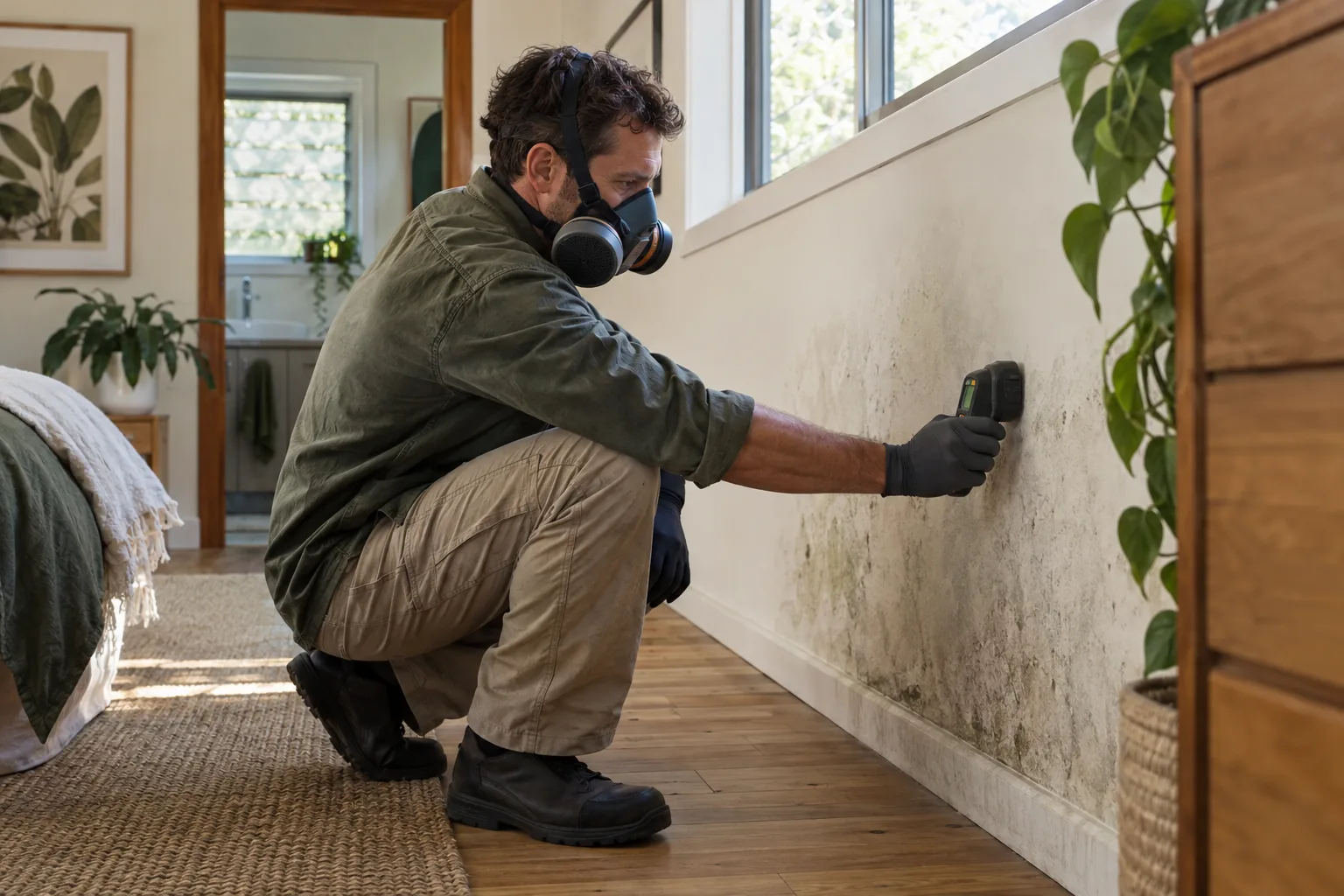
Send an overall room view and a closer view without scraping the surface. Include the window or door position if relevant. An image helps describe access and extent, but cannot show concealed damage or establish whether plaster needs replacement.
Compare neighbouring surfaces
A patch beside a clean section of wall raises useful questions about airflow and temperature. A hygrometer helps assess moisture conditions. Inspection does not automatically include opening the wall, testing every cavity or determining the source of a plumbing fault.
THE SURFACE REMOVAL PROCESS
A planned sequence for the room
01
Inspect the accessible growth
Check agreed walls, ceiling and hard floor. Discuss fragile finishes and blocked corners before selecting treatment. Concealed structures require a separate investigation.
02
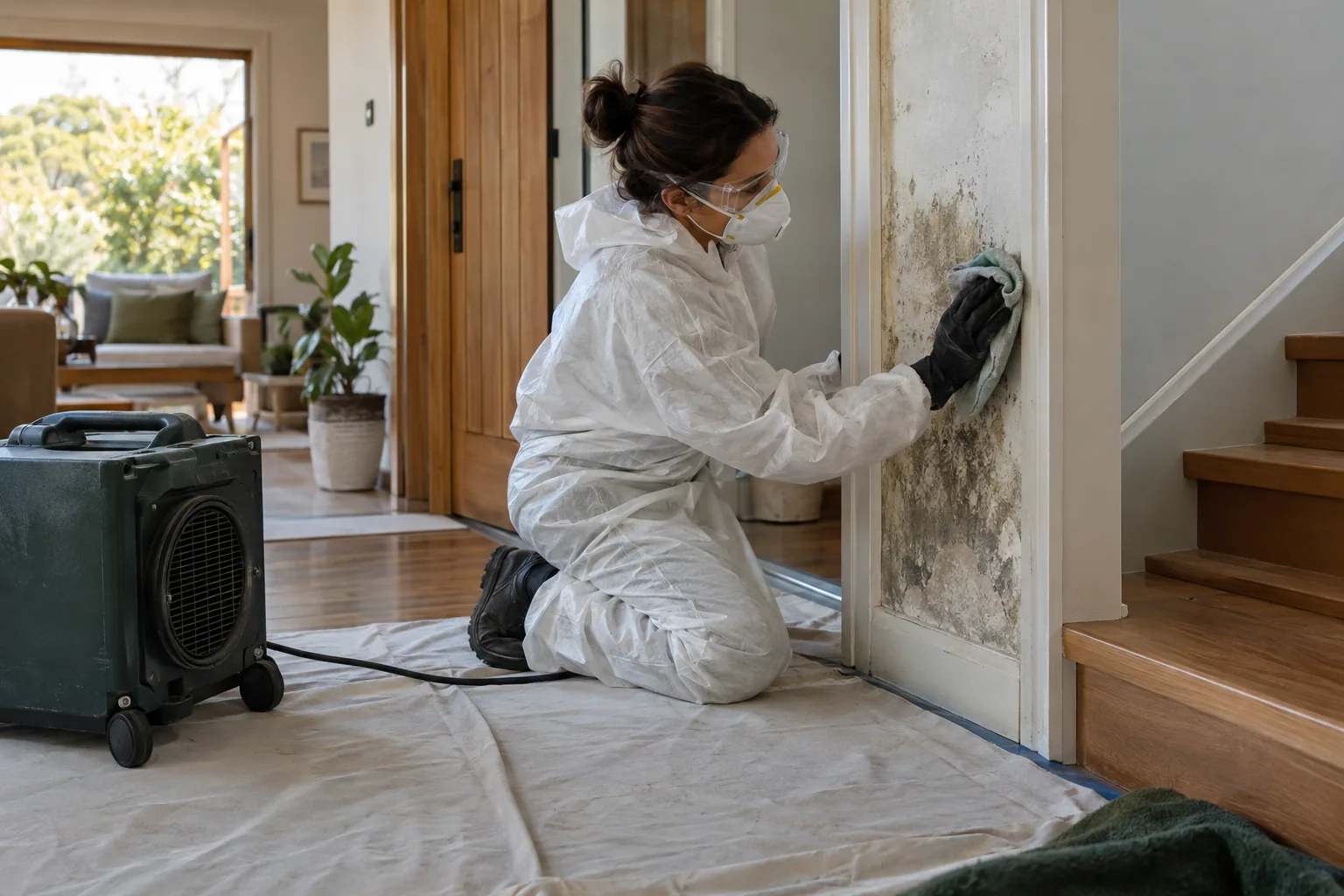
Set up air filtration
Position HEPA air filtration for the work area. Agree equipment placement and provisions for people and pets. Filtration supports remediation rather than certifying the whole building.
03
Select surface treatment
Appropriate HOCl treatment may form part of the method. Material condition guides use. Old discolouration can remain, and treatment does not resolve ongoing dampness.
04
Consider ULV application
Discuss ULV application where suitable, including preparation and access restrictions. It complements the room method without inspecting sealed cavities or restoring damaged materials.
05
Remove visible residues
Physical removal uses suitable H-class filtration equipment on accessible growth. Furniture and textiles remain excluded even when they sit beside an included wall.
06
Finish with filtration and advice
Air filtration continues through the final stage. We discuss what has been treated, any remaining cosmetic staining and moisture issues requiring follow-up. The remediation overview explains how these stages fit together when several surfaces are involved.
VISIBLE & ACCESSIBLE
Surfaces worth describing
Bedroom walls
Mention growth behind furniture, around corners or beside glazing. Confirm the wall can be reached without dismantling built-in cabinetry.
Bathroom ceilings
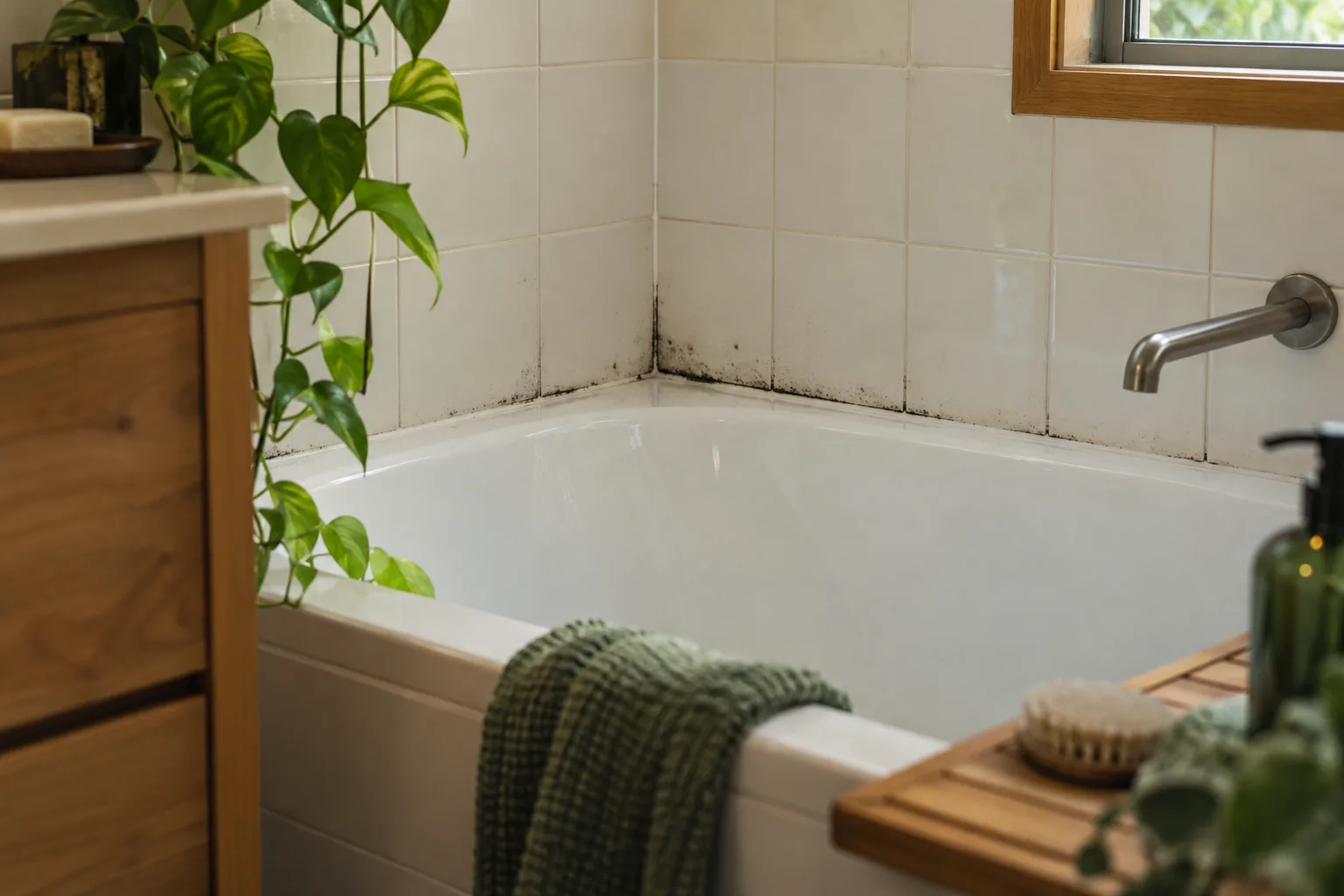
Explain fan use and whether spotting returns after showers. A high ceiling also needs an access discussion before the booking.
Window-side plaster
Record bubbling paint or dampness around the reveal. Cleaning visible growth does not repair a leaking window or seal.
Hard floor edges
Identify the floor material and any lifting or swelling. Soft furnishings and floor coverings are outside the structural-surface scope.
PREPARATION & LIMITS
Agree the outcome before work
Visible accessible walls, ceilings and hard floors are included as agreed. Furniture, sofas, mattresses, curtains, carpets, clothing and textiles are excluded. Separate belongings from the structural quotation.
Allow roughly three hours per room as a general planning guide, with actual duration depending on access and extent. Pricing is not hourly. Old staining can remain after removal; decorating requires a separate quote and should follow resolution of dampness.
AFTER THE SURFACE WORK
Make the follow-up practical
Keep a simple record of when window condensation appears and when the room is aired. Check that extractor fans discharge as intended and leave a sensible airflow gap beside furniture where practical. A dehumidifier can assist moisture control, but cannot mend a leak.
If marks return in exactly the same place, revisit the moisture source instead of booking repeated cosmetic cleaning. The mould removal page sets out the general scope. A plumber, glazier or building professional may be needed for work beyond that scope.
HEATHERDALE · NEARBY LOCATION PAGES
Nearby address enquiries
Ringwood, Mitcham and Vermont offer nearby navigation. Use the actual address and describe keys, parking or shared entry. No separate Heatherdale office is claimed.
BEFORE YOU ARRANGE WORK
Questions for your enquiry.
Can you treat a wall behind a fitted wardrobe?
Only if the surface is safely accessible within the agreed job. If cabinetry must be removed, discuss that work separately before booking. We cannot promise treatment of a wall that remains concealed.
Does the station-area name affect booking?
The full property address matters more than the neighbourhood label. Heatherdale is used around the station; a street address helps avoid confusion between nearby Mitcham and Ringwood properties.
Should I repaint before the assessment?
Wait until the surface and dampness have been assessed. Paint can cover useful clues without resolving growth or moisture. Repainting is separate from removal, and existing staining may need further decorative preparation.
Can you clean the bedroom carpet too?
No. Carpets and other textiles are excluded, even when they are in the same affected room. Explain all affected materials during your enquiry so structural treatment and separate textile decisions are not confused.
Will opening a window solve the problem?
It may help ventilation under suitable conditions, but it is not a diagnosis or repair. Persistent dampness, a leak or damaged plaster needs attention to its cause as well as treatment of visible growth.
When can people return to the room?
Return arrangements depend on the method and preparation agreed for the job. Ask for the technician’s instructions and arrange people and pets accordingly; do not infer a return time from the estimated working duration.
Talk through your Heatherdale room
Call 03 8652 1296 with the address, surfaces and access details. We can discuss assessment and any separate trade work.
Useful references: Official local context