
MERRICKS · MELBOURNE
Mould Removal Merricks
USE · AIRFLOW · SURFACES
When a bedroom develops marks after a change in how it is used, the timing matters. Tell us whether a spare room became an everyday bedroom, whether windows stay closed and where moisture collects. Merricks bookings depend on confirmation of the exact address and work scope.
Changed room use considered
Surface limits discussed
Clear occupancy arrangements
SURFACES & THEIR SETTING
A changed bedroom routine
Mornington Peninsula Shire lists Merricks separately from Merricks North and Merricks Beach. Specify which address you mean so the right property can be discussed. For mould removal, describe the room rather than treating its locality as an explanation for growth.
More hours in one room
A home office or regularly occupied bedroom can have a different daily moisture pattern from a spare room. Note the change in use and any condensation on windows. This is enquiry information, not proof of a single cause.
A bed against the wall
Give the wall’s condition and the space available beside the bed. Do not drag a bulky item alone to take photographs. Furniture and bedding are excluded, although an accessible structural wall behind them may be discussed.
Bring a useful history to inspection
An inspection enquiry is easier to assess when photographs show the room layout and affected finish. Include any water entry, fan problem or recent repainting. These details help distinguish what can be observed from what still needs investigation.
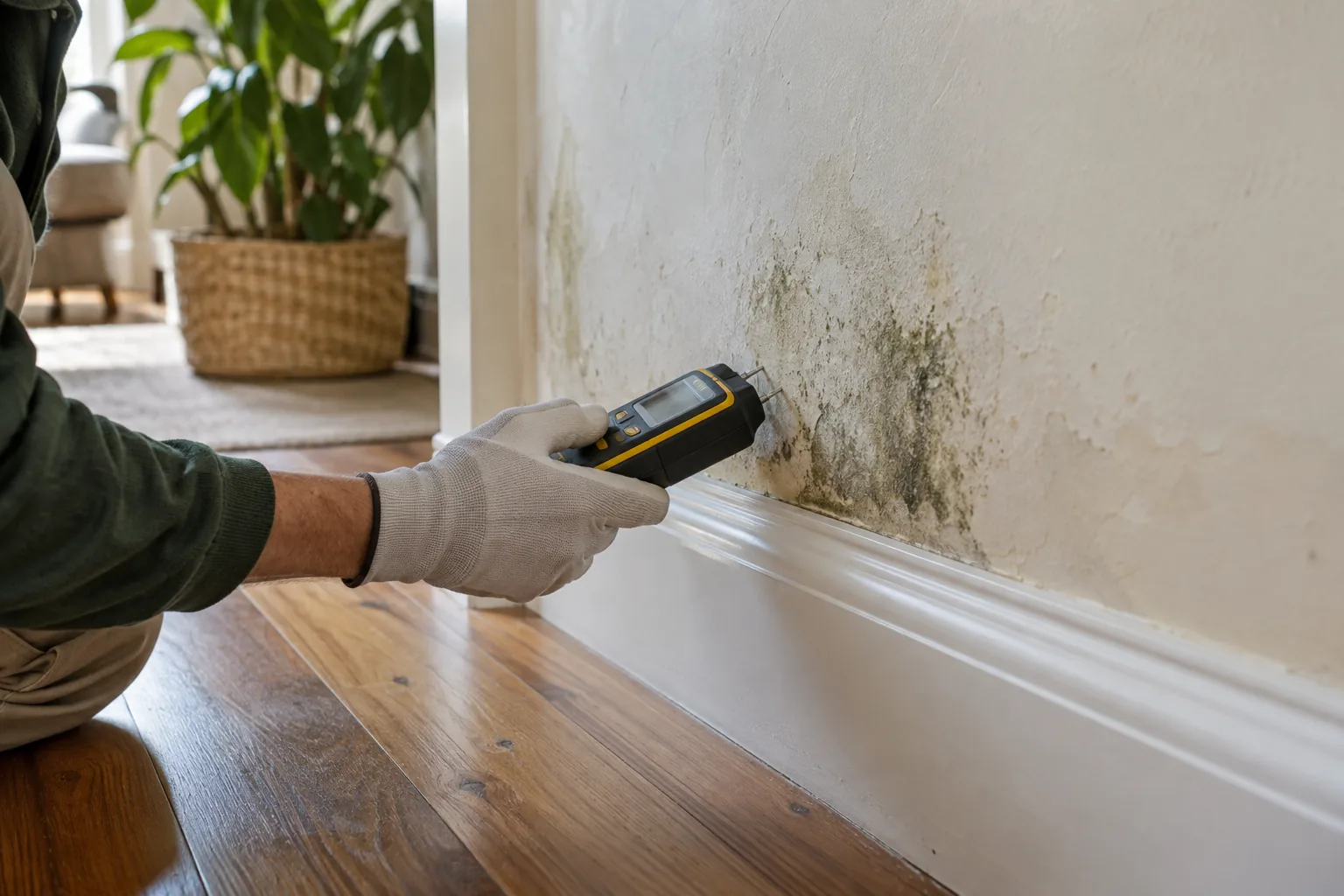
Readings with context
Humidity and moisture checks support the technician’s observations. Explain whether the room was heated or ventilated just before attendance.
Finish and clearance
Loose wallpaper, lifting paint and swollen lining matter when choosing a method. Identify fragile surfaces and obstacles early. The agreed work may need a smaller accessible area or a separate repair assessment before treatment proceeds.
THE SURFACE REMOVAL PROCESS
A considered room sequence
01
Agree the assessed area
Review visible growth, surface material and the room’s history. Moisture readings inform the discussion.
02
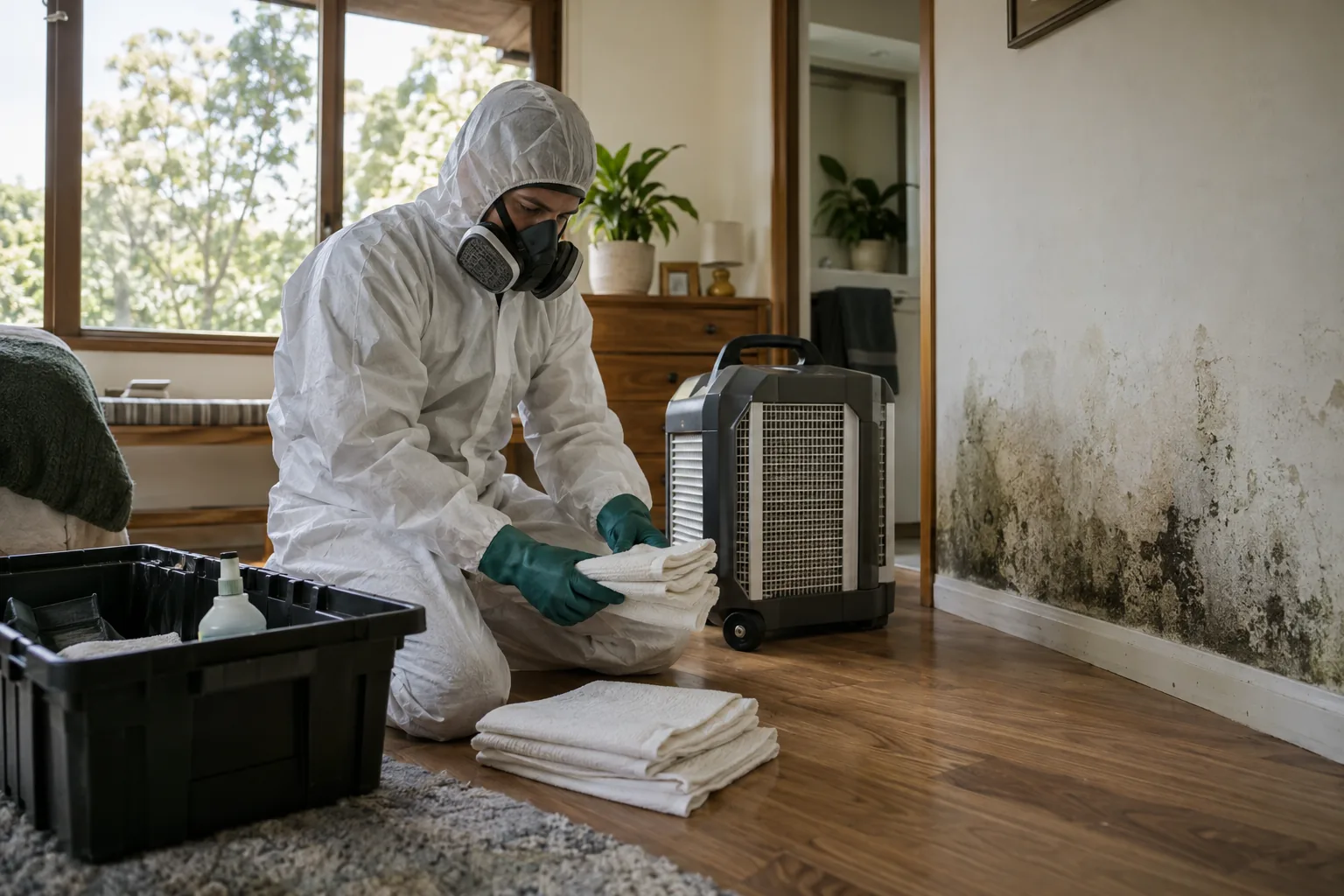
Prepare air filtration
Position the HEPA air scrubber for the planned work and check suitable power. Discuss how occupants will avoid the area. Filtration is one part of the process, not evidence that excluded belongings will be cleaned.
03
Choose suitable treatment
The technician considers appropriate HOCl application for the surfaces. Provide information about products already used.
04
Apply where appropriate
ULV application may form part of the agreed method. Confirm people, pet and access arrangements before this stage.
05
Remove the visible material
Professional physical removal uses H-class filtration as appropriate to the job. Accessible wall, ceiling and hard-floor surfaces are the focus. Sensitive finishes and damaged lining retain their agreed limitations throughout this stage.
06
Filter and discuss follow-up
Final air cleaning completes the sequence. Review marks that remain, moisture concerns needing another trade and practical monitoring. Ask about return arrangements rather than assuming a room is ready simply because machinery stops.
VISIBLE & ACCESSIBLE
Look beyond a single close-up
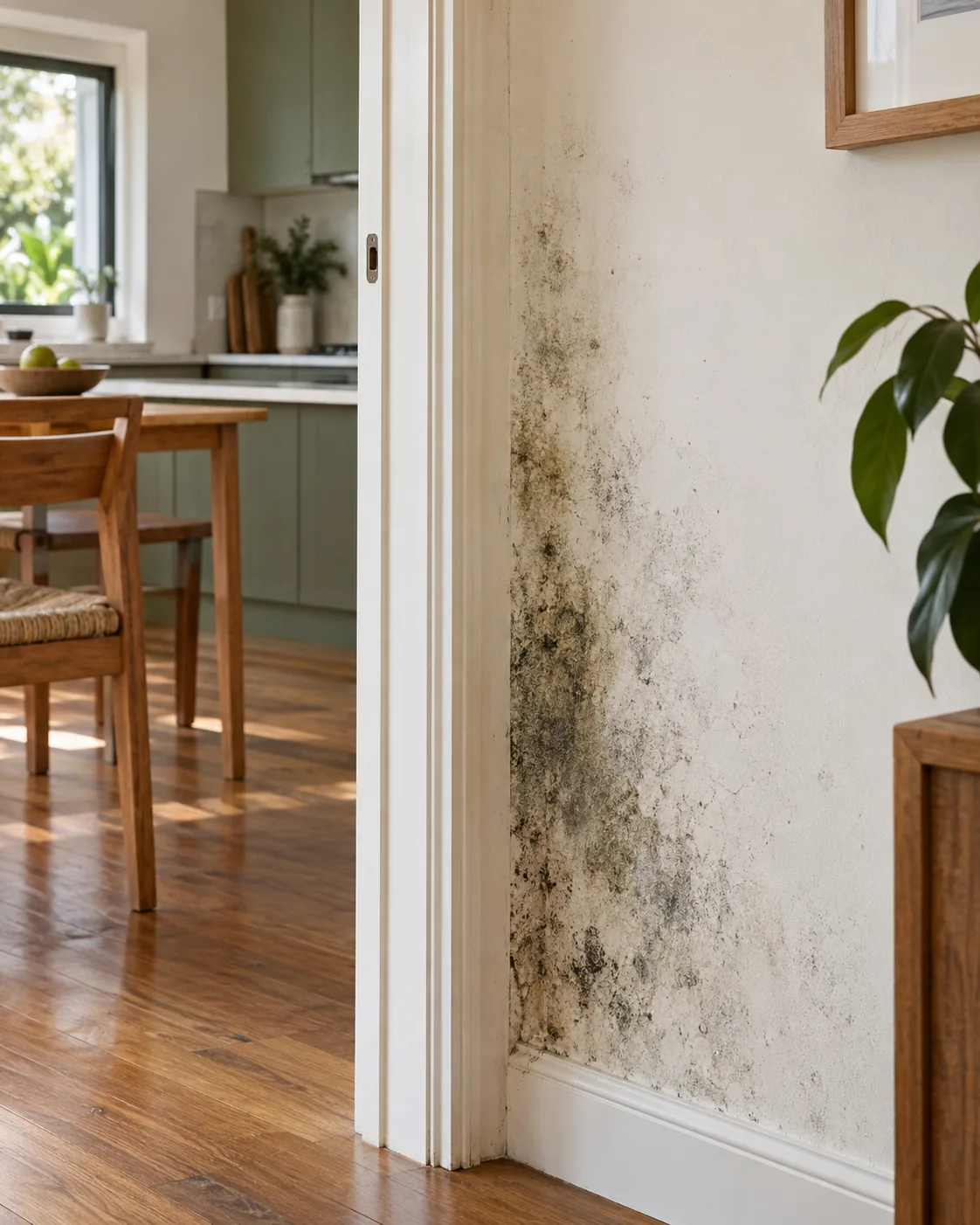
Bedroom corner
Show where the mark sits relative to the bed, window and wall junction. The surrounding layout can explain clearance requirements.
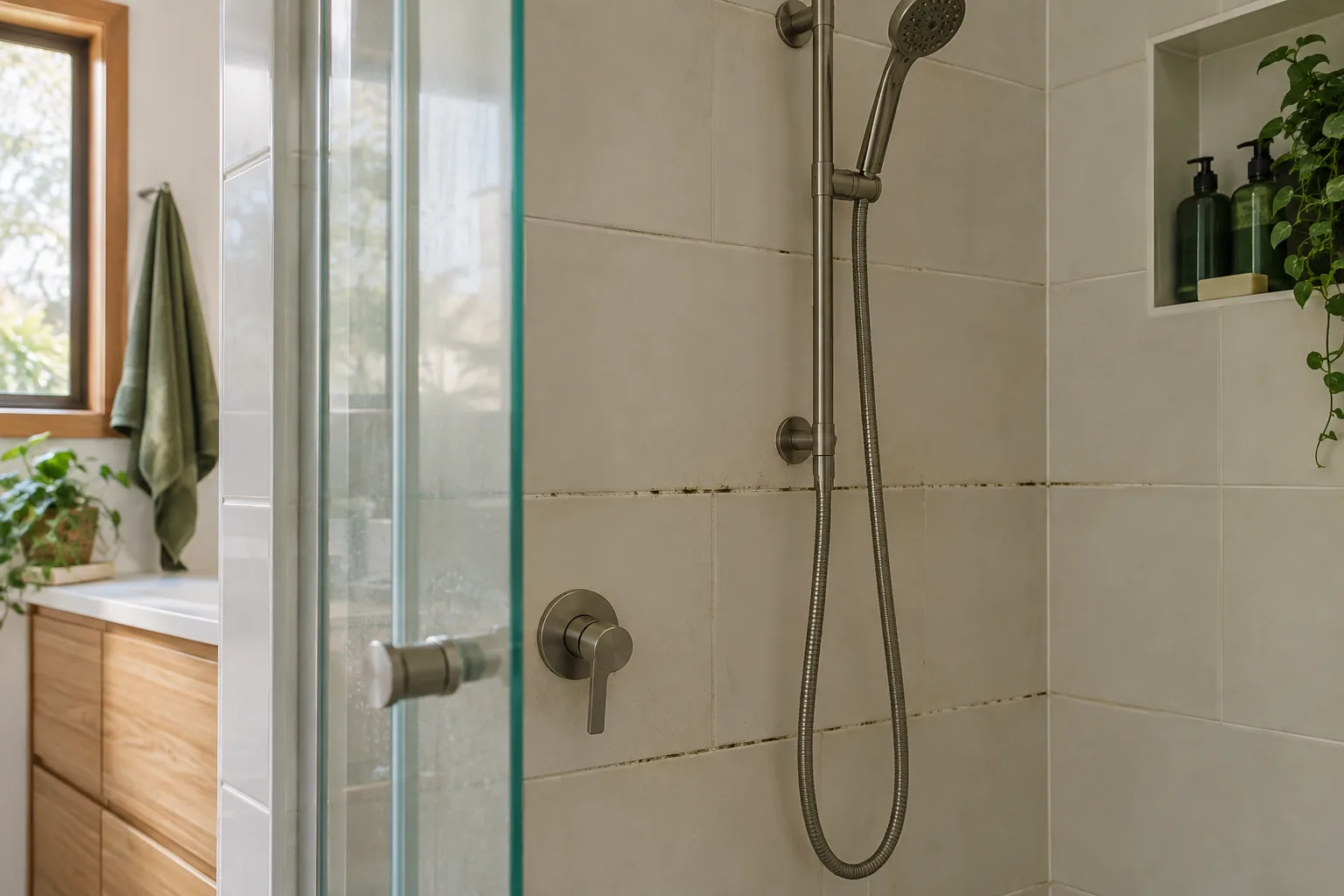
Window-side wall
Photograph droplets or damp edges if present. A stain beside a window does not alone identify the leak route.
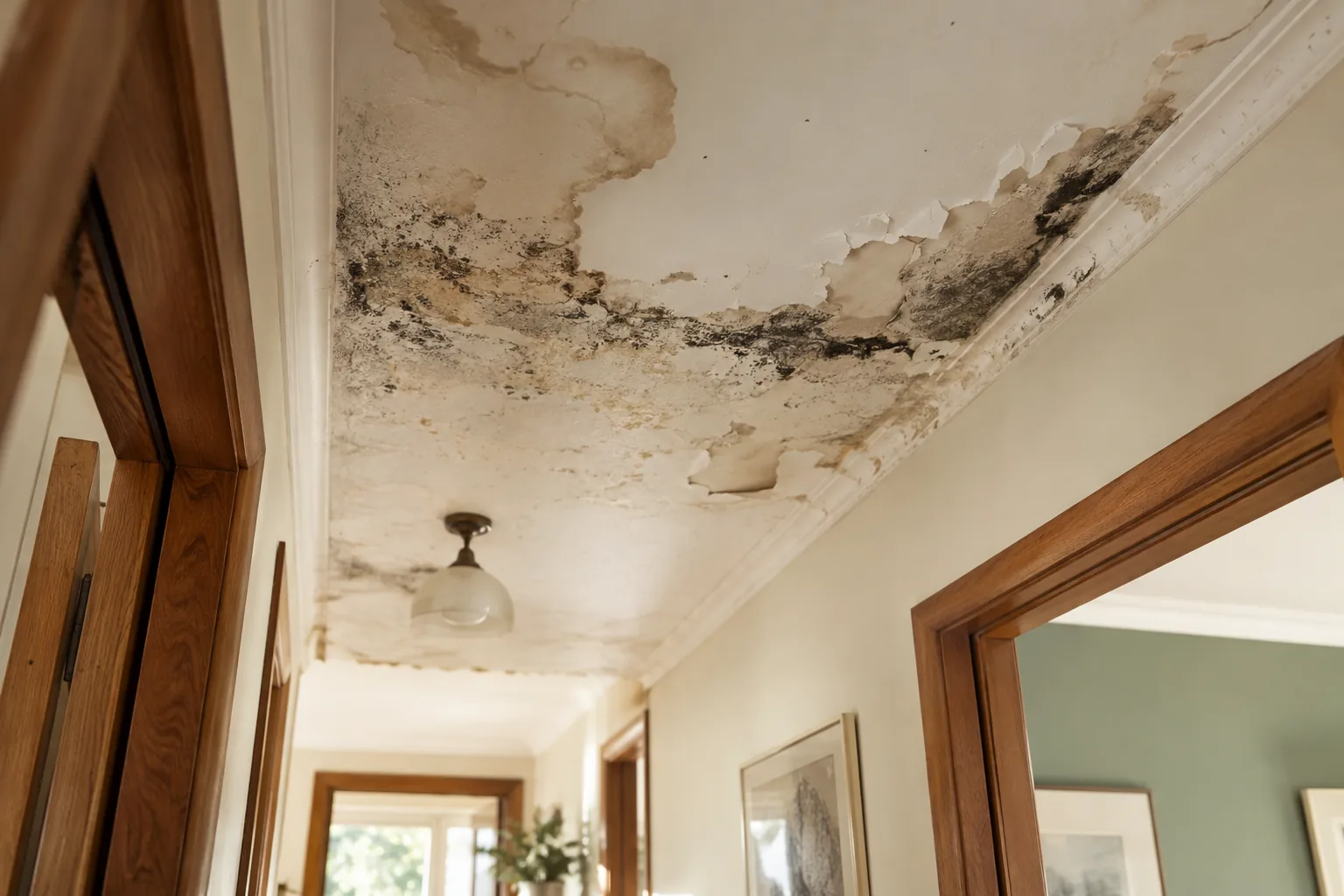
Bathroom ceiling
Mention whether extraction works and where moisture lingers. Ceilings can be considered without including towels, curtains or bathroom textiles.
Hard-floor edge
Indicate the surface type and any lifting or persistent wetness. Carpeted areas need separate advice and are not included.
PREPARATION & LIMITS
An appointment with realistic boundaries
Around three hours per room is the service’s average guide; complexity and accessibility affect duration. Charging is not hourly. Confirm the number of rooms, entry arrangements and preparation instead of planning around a fixed finish time.
Existing growth can be treated while cosmetic marks remain. A separate decorating quotation may be appropriate after dampness and substrate condition are resolved. Neither repainting nor remediation promises that growth cannot recur if moisture returns.
AFTER THE SURFACE WORK
Make the room easier to monitor
If the bedroom has a new daily use, review ventilation alongside that routine. Manage shower, cooking and laundry moisture at its source. Maintain workable gaps beside furniture without treating rearrangement as a substitute for diagnosing a leak.
Keep dated photographs and note any repeated condensation. A persistent problem deserves a follow-up conversation rather than stronger improvised chemicals. Our remediation information explains why physical removal and moisture correction serve different purposes.
MERRICKS · NEARBY LOCATION PAGES
Find the right Peninsula locality
Use the surrounding location links to compare nearby enquiry pages, but send the full Merricks address when contacting us. Similar place names and adjoining areas do not establish access or availability; those details are confirmed for the individual property.
BEFORE YOU ARRANGE WORK
Questions for your enquiry.
Is Merricks the same enquiry area as Merricks Beach?
They are separately named localities. Include your street and postcode so we discuss the correct address, rather than relying on a shortened place name in the booking conversation.
Can changed bedroom use explain the marks?
It may be relevant, but timing alone is not a diagnosis. Describe condensation, water entry and the affected material so the assessment can consider more than one possibility.
Is the bed included in treatment?
No. Beds, mattresses, bedding and furniture are excluded. Agree any clearance needed to reach the structural wall before moving belongings or arranging attendance.
Should I repaint before the visit?
Usually it is more useful to show the existing condition. Tell us if paint has already been applied. A coating can hide observations without resolving dampness or contamination beneath it.
Can one humidity reading explain a week of condensation?
No. Conditions change with use and ventilation. A reading supports assessment at that time; repeated observations and the room history provide context for follow-up decisions.
Does removal include fixing the extractor?
No. Fan repairs, plumbing and structural moisture correction are separate from the agreed surface treatment. Explain faults beforehand so expectations about the visit remain clear.
Discuss your Merricks address
For a Merricks bedroom enquiry, call 03 8652 1296 with the exact street details and the change in room use. We can discuss visible surfaces, preparation and confirmed availability before a booking is arranged.
Useful references: Official local geographic reference