
POINT LEO · MELBOURNE
Mould Removal Point Leo
ARRIVAL · ACCESS · ASSESSMENT
Discovering mould when opening a house after an absence raises two questions: what needs treating now, and what happened while the rooms were closed? For Point Leo, send current photographs and the property’s access details. Attendance is discussed for the specific address, not presumed from a postcode.
Current photographs reviewed
Keyholder arrangements agreed
Visible surface scope
SURFACES & THEIR SETTING
Opening the property after time away
The Shire identifies Point Leo among its Peninsula foreshore locations. A coastal address does not establish why a particular room is damp. Describe your actual building, its use and the condition you found when considering surface mould removal.
Check the date of discovery
Record when someone last entered the room and whether any maintenance happened during the absence. Photographs taken before cleaning can help explain the original extent.
Coordinate the keyholder
Tell us who can open the house, approve the room scope and receive instructions afterwards. A key-safe code alone is not a complete preparation plan. People, pets and any other scheduled visitors need agreed arrangements.
Assess what changed during closure
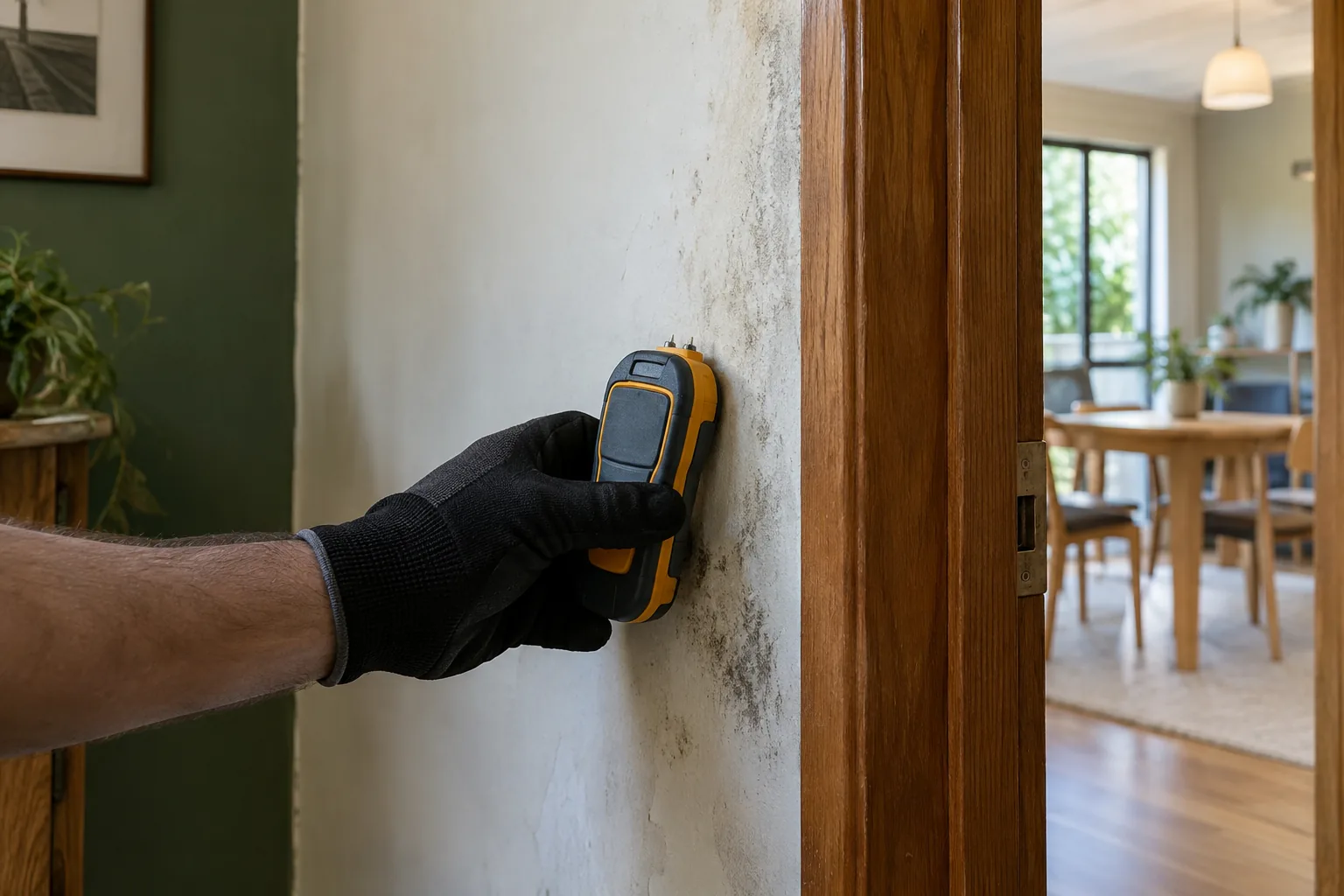
Our inspection service information explains the role of observations and moisture checks. Share known roof issues, plumbing repairs and ventilation arrangements. Hidden damage cannot be ruled out by a photograph of an otherwise tidy living room.
An isolated patch
Show its relationship to the window, ceiling joint or floor edge. A small visible area can still warrant questions about moisture, while a widespread pattern requires a clear description of all accessible rooms involved.
The rest of the building
Mention rooms that remain locked or occupied. Explain whether internal doors, stairs or tight passages limit equipment movement.
THE SURFACE REMOVAL PROCESS
An organised visit, stage by stage
01
Inspect and set boundaries
Assess the visible surfaces and discuss moisture and humidity readings. Confirm who authorises changes if a finish is damaged. The scope should identify accessible walls, ceilings and hard floors, plus any areas needing separate investigation.
02
Set up filtered air
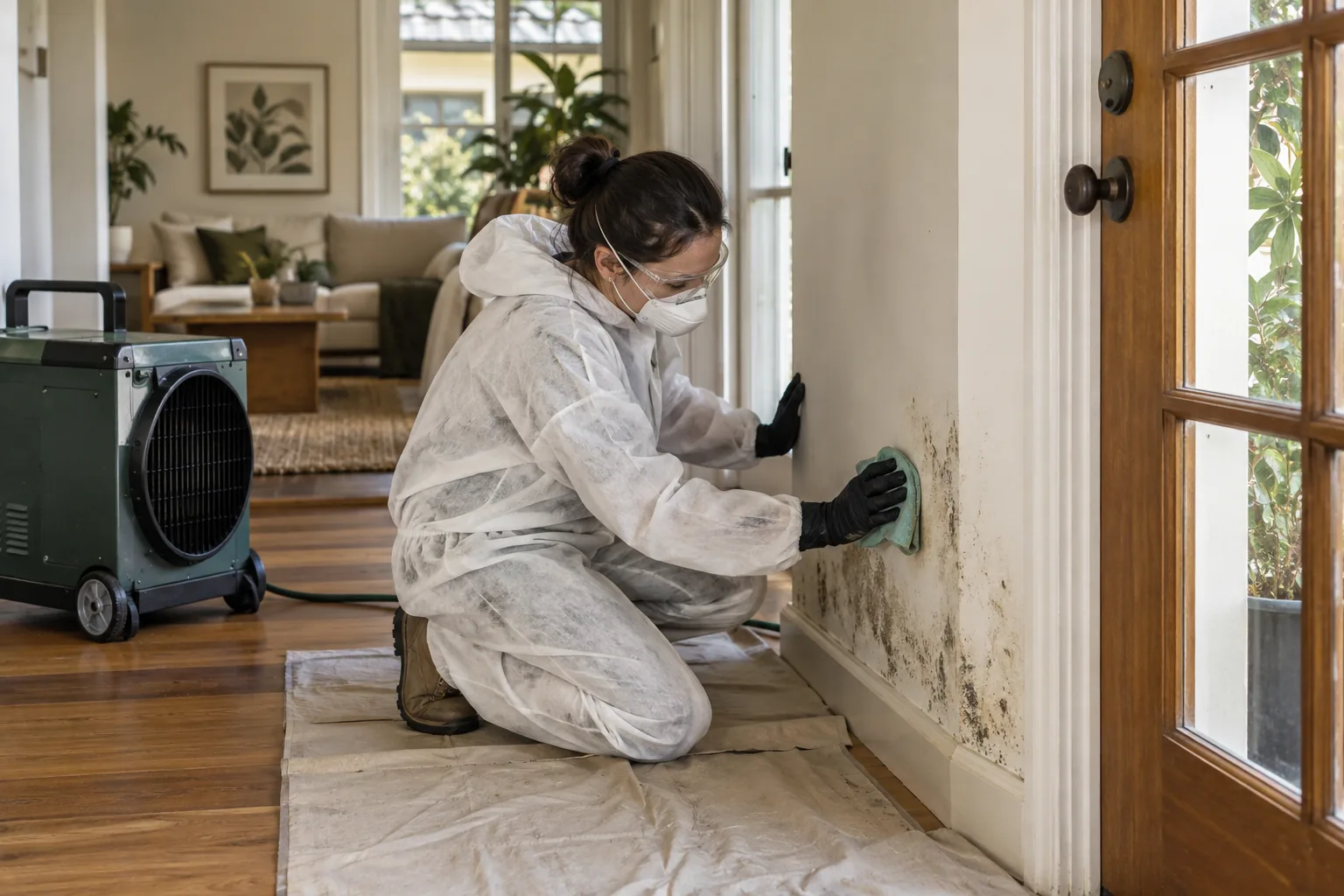
Place HEPA filtration equipment to suit the working area and available power. Protect access routes as agreed. A vacant house still needs a controlled setup; it is not a reason to omit preparation or communication.
03
Match the surface treatment
Appropriate HOCl treatment depends on assessed surfaces and conditions. Report household cleaners already applied.
04
Complete agreed application
ULV application is used where suitable within the plan. Confirm occupancy restrictions and arrangements with the keyholder.
05
Remove accessible contamination
Physical removal uses professional equipment with H-class filtration where appropriate. The work does not extend to sofas, carpets or curtains.
06
Finish and report clearly
Complete final air filtration and review the treated areas. Explain remaining cosmetic marks, separate repair needs and return instructions.
VISIBLE & ACCESSIBLE
A room-by-room photo list
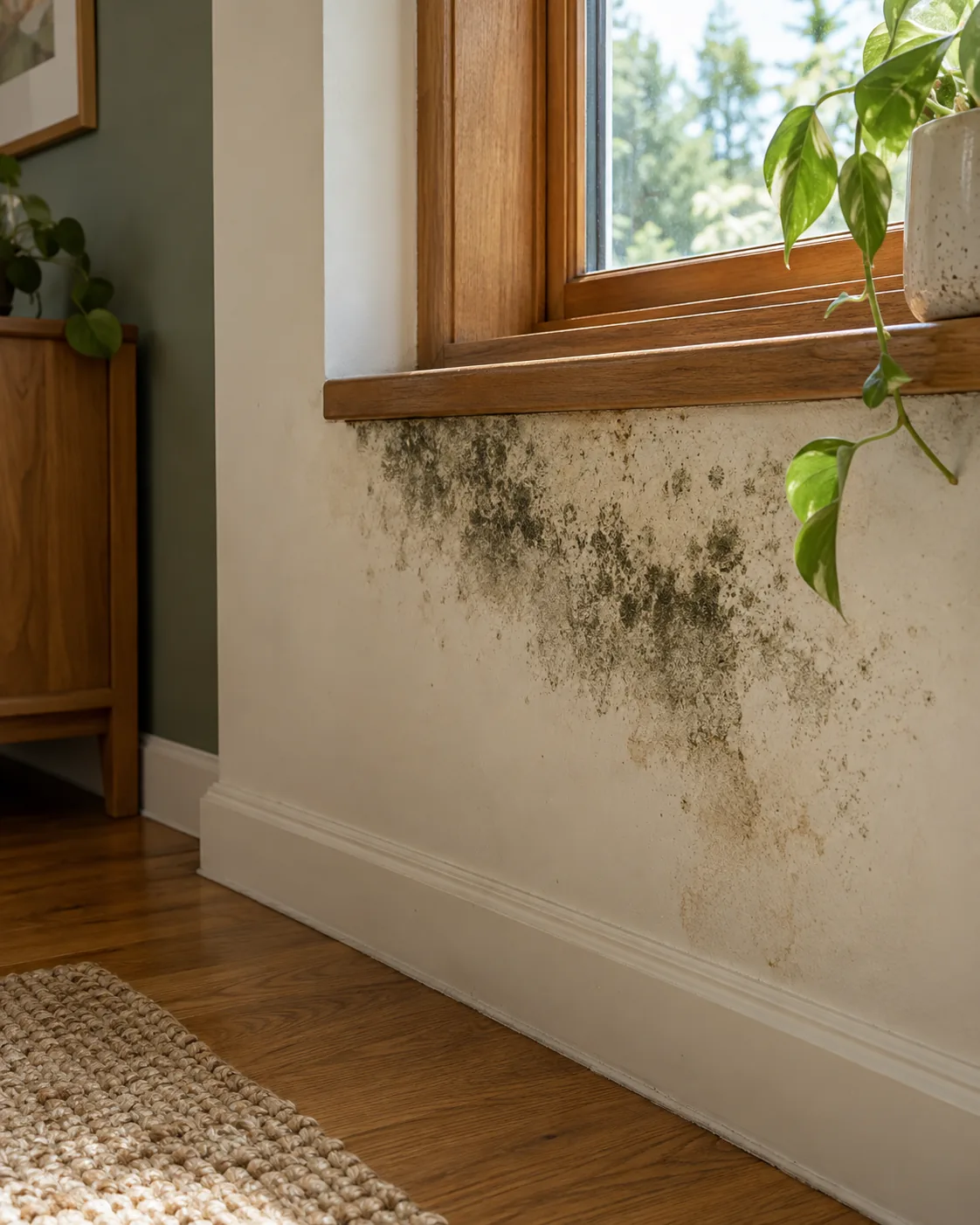
Living-room wall
Include the full wall and nearby opening. Sofas and cushions are outside the treatment even when they appear beside the affected area.
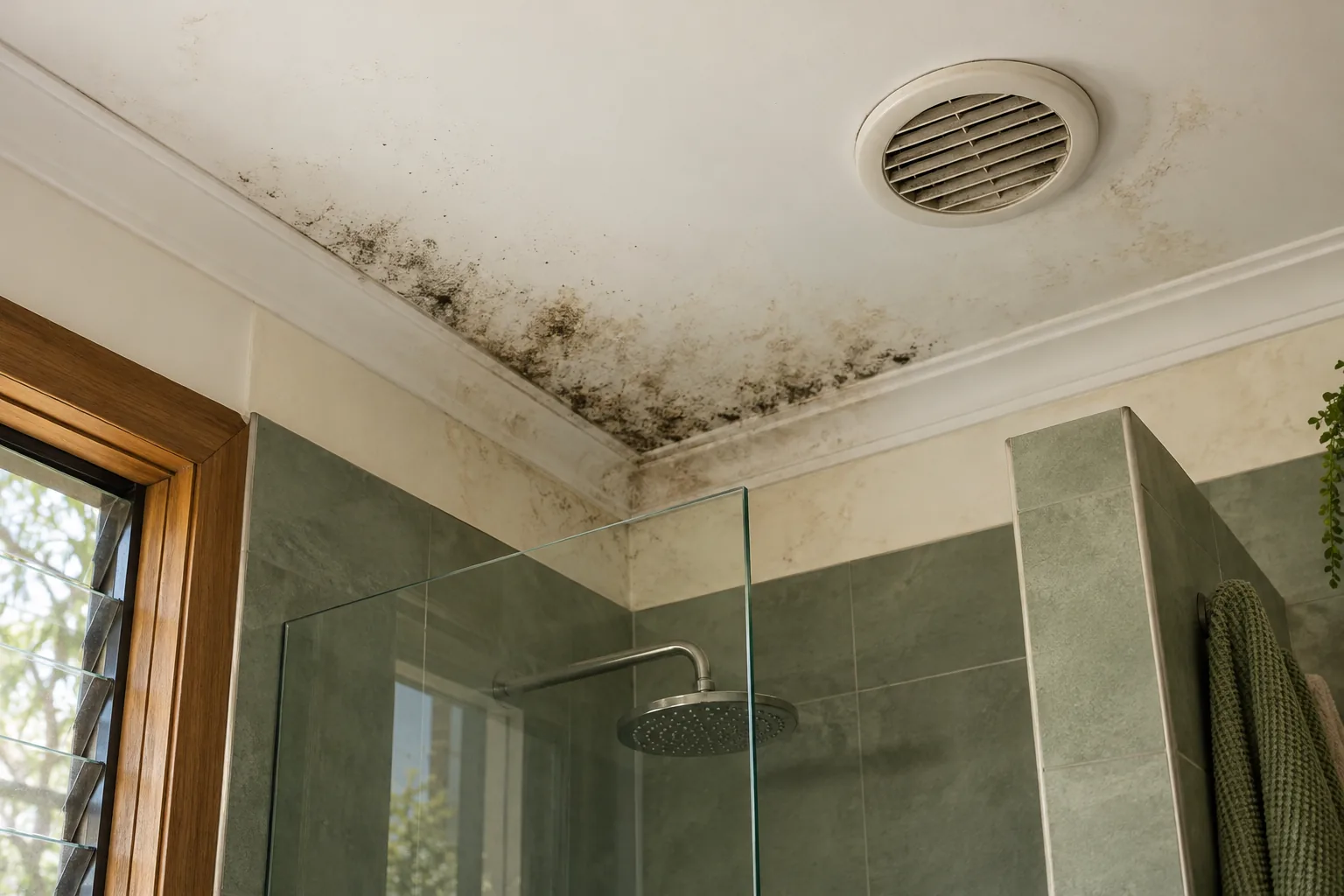
Bathroom ceiling
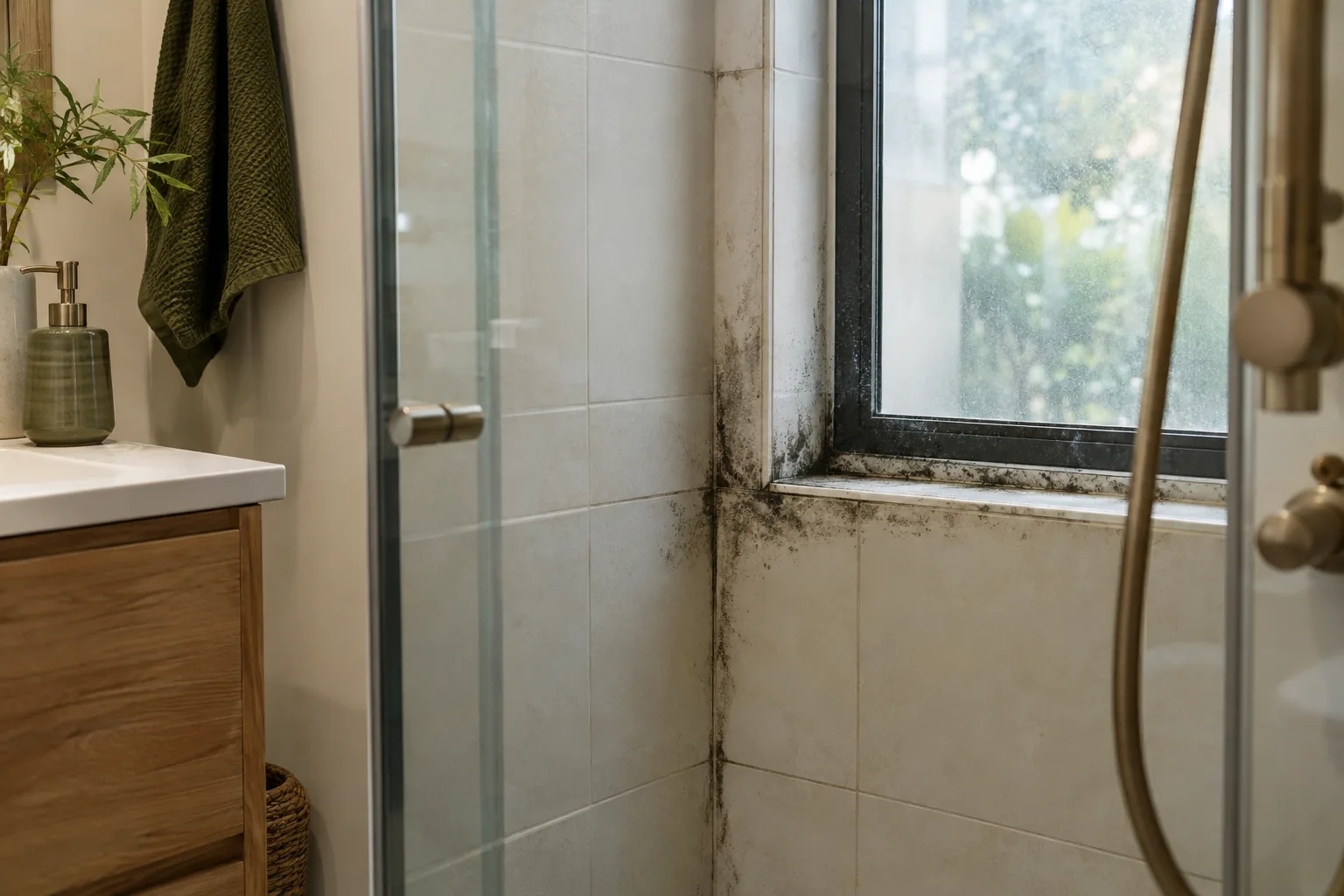
Show painted surfaces and note fan operation. A visible patch above the shower needs context about ventilation and any water entry.
Ceiling beneath roofing
Photograph the room-wide position of the stain. Roofing repairs remain a separate task and should be discussed if the area stays damp.
Hard floor near an entrance
Specify the finish and whether it remains wet. Do not count a rug or carpet as a hard structural floor.
PREPARATION & LIMITS
Prepare for duration and residual marks
Working time averages about three hours per room, with variation according to contamination, room size and access. This is not hourly charging. A keyholder should avoid promising another contractor an exact handover time before the work is assessed.
Mould staining may survive removal of contamination. Decorating is a separate quotation, and the underlying dampness needs attention first. A closed-up property can develop fresh growth if moisture conditions continue after the original affected surfaces have been treated.
AFTER THE SURFACE WORK
Give an unattended house a practical routine
Arrange periodic checks when nobody is staying at the property. Record condensation, leaks and changes in smell or surface condition. Where feasible, manage ventilation and extraction during occupancy so the next closure does not begin with unnecessary indoor moisture.
Do not expect one appliance to repair a roof leak or solve every moisture source. Match any humidity management to the room and circumstances. Mould remediation addresses the agreed contamination; a continuing water-entry issue belongs in a separate repair plan.
POINT LEO · NEARBY LOCATION PAGES
Point Leo and surrounding addresses
The nearby pages below help locate surrounding enquiries. Exact property access and attendance remain subject to confirmation. If an owner is elsewhere, include the local keyholder and the person authorised to agree the work so instructions reach the right people.
BEFORE YOU ARRANGE WORK
Questions for your enquiry.
Can you attend while the owner is away?
Discuss a responsible keyholder and authorisation first. Access, preparation and communication need agreement, including who receives the findings and arranges any change to the scope.
Should I send old photographs from last summer?
Send them as history, clearly dated, alongside current images. The earlier condition may help the discussion but does not establish the extent or material condition today.
Are all rooms included in a vacant house?
No automatic whole-house scope applies. Identify each affected accessible room and confirm it in the booking discussion. Locked rooms or excluded materials need separate arrangements.
Can the cleaner follow immediately afterwards?
Agree the sequence with us before scheduling another visit. Return arrangements and final filtration depend on the work, so an assumed fixed finish time can create avoidable conflicts.
Do you treat curtains that were left closed?
No. Curtains and other textiles are excluded, along with furniture, carpets and mattresses. The accessible wall or ceiling beside them can be assessed within the structural-surface scope.
Will treatment protect the house during another closure?
It cannot guarantee that. New moisture or unresolved dampness can support recurrence. Plan ongoing checks, ventilation and source repair separately from removing existing growth.
Discuss your Point Leo address
Call 03 8652 1296 to discuss the Point Leo property, current room condition and keyholder. Include who can authorise the work and receive instructions, then confirm suitable scope and address availability.
Useful references: Official local geographic reference