
SHOREHAM · MELBOURNE
Mould Removal Shoreham
STEAM · FINISHES · FOLLOW-UP
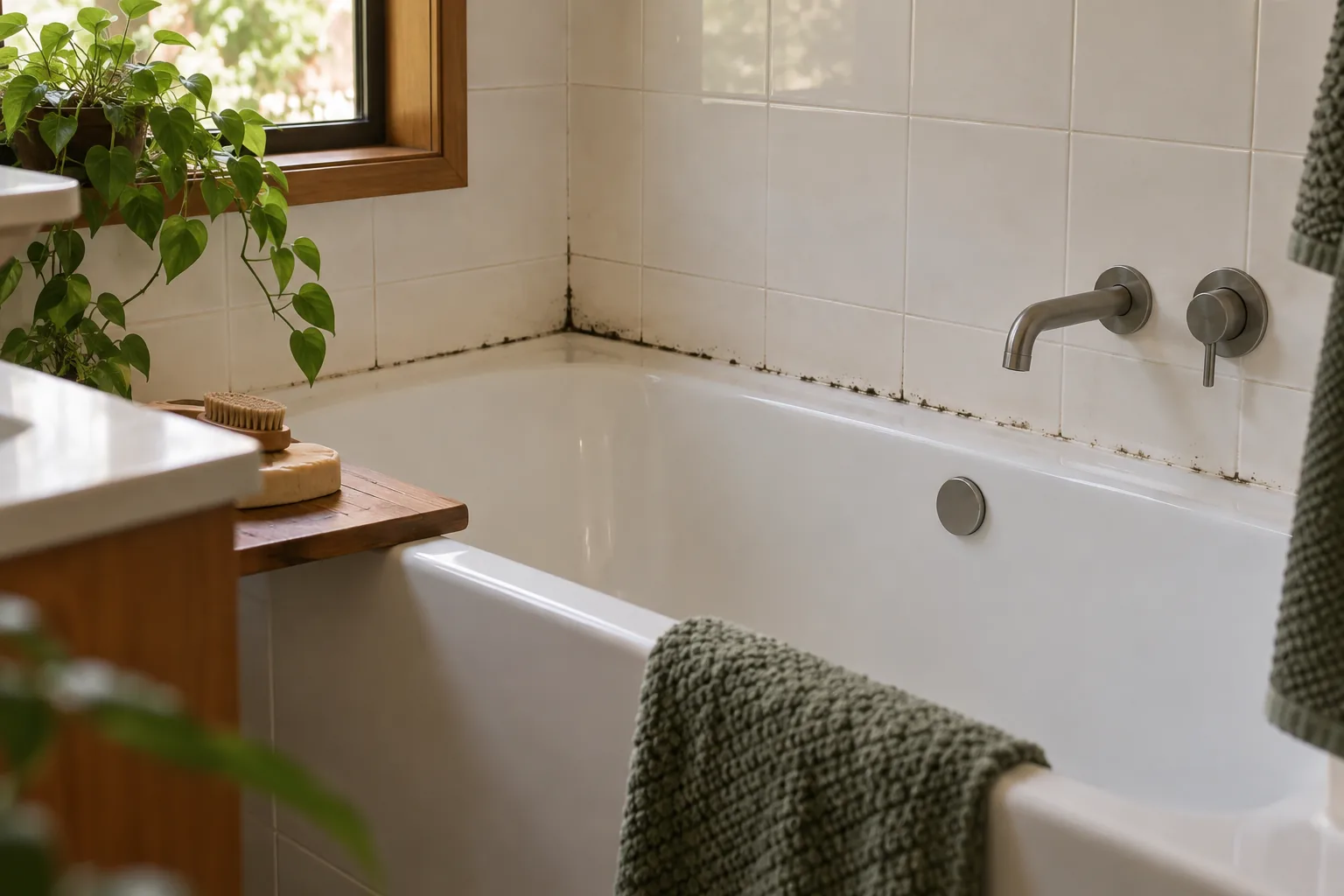
Mould above a shower can look like a small cleaning problem while damp paint or a failing fan points to a wider question. For a Shoreham enquiry, describe the ceiling finish, extraction and any recent leak. We confirm availability and an appropriate scope for the address before booking.
Bathroom finish considered
Extraction history reviewed
Work boundaries explained
SURFACES & THEIR SETTING
Describe the bathroom beyond the tiles
Shoreham is identified in the Shire’s foreshore information. That location does not prove salt air or outdoor conditions caused indoor mould. The useful starting point for removal enquiries is what happens inside the bathroom and what the affected material looks like.
Paint above the shower
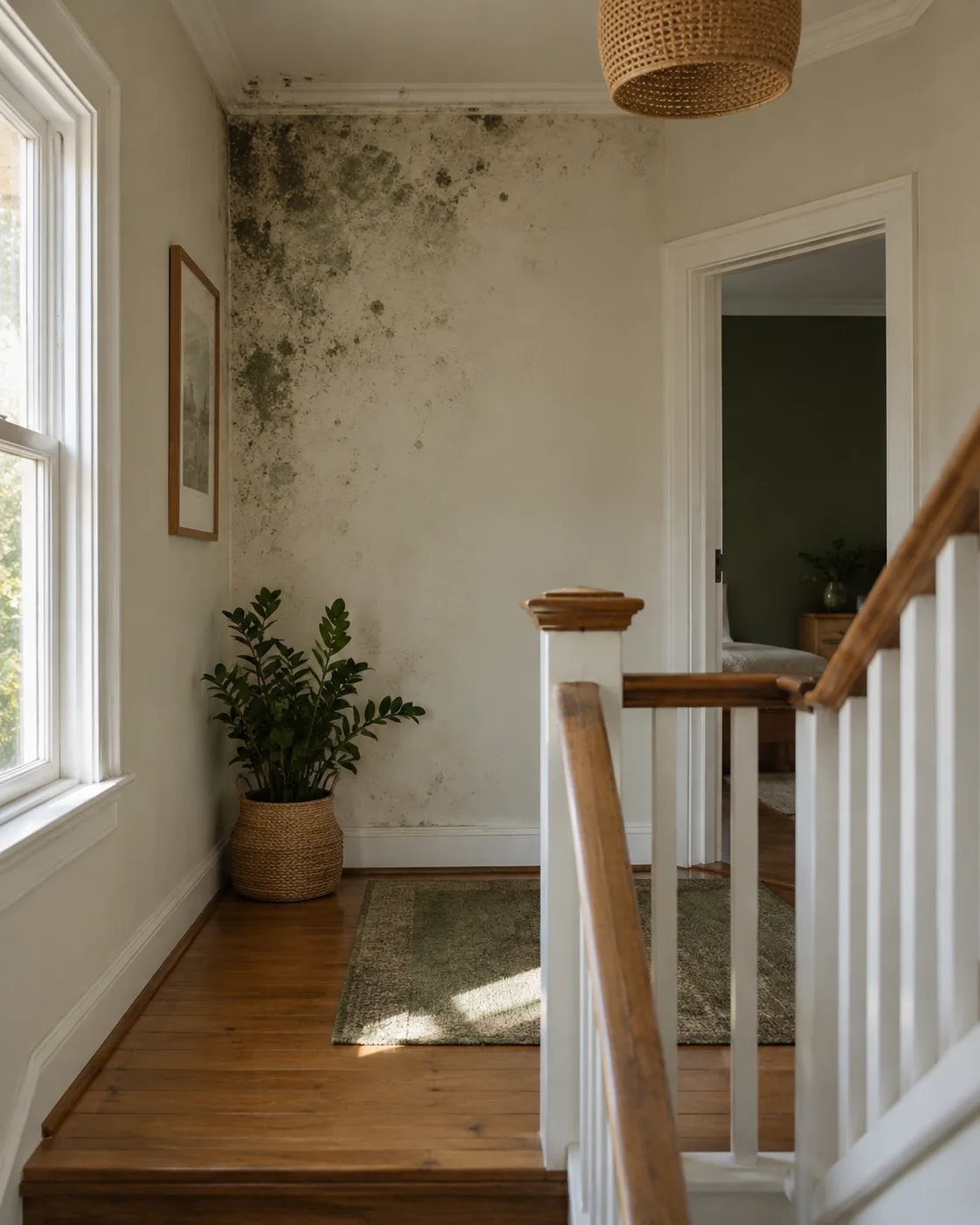
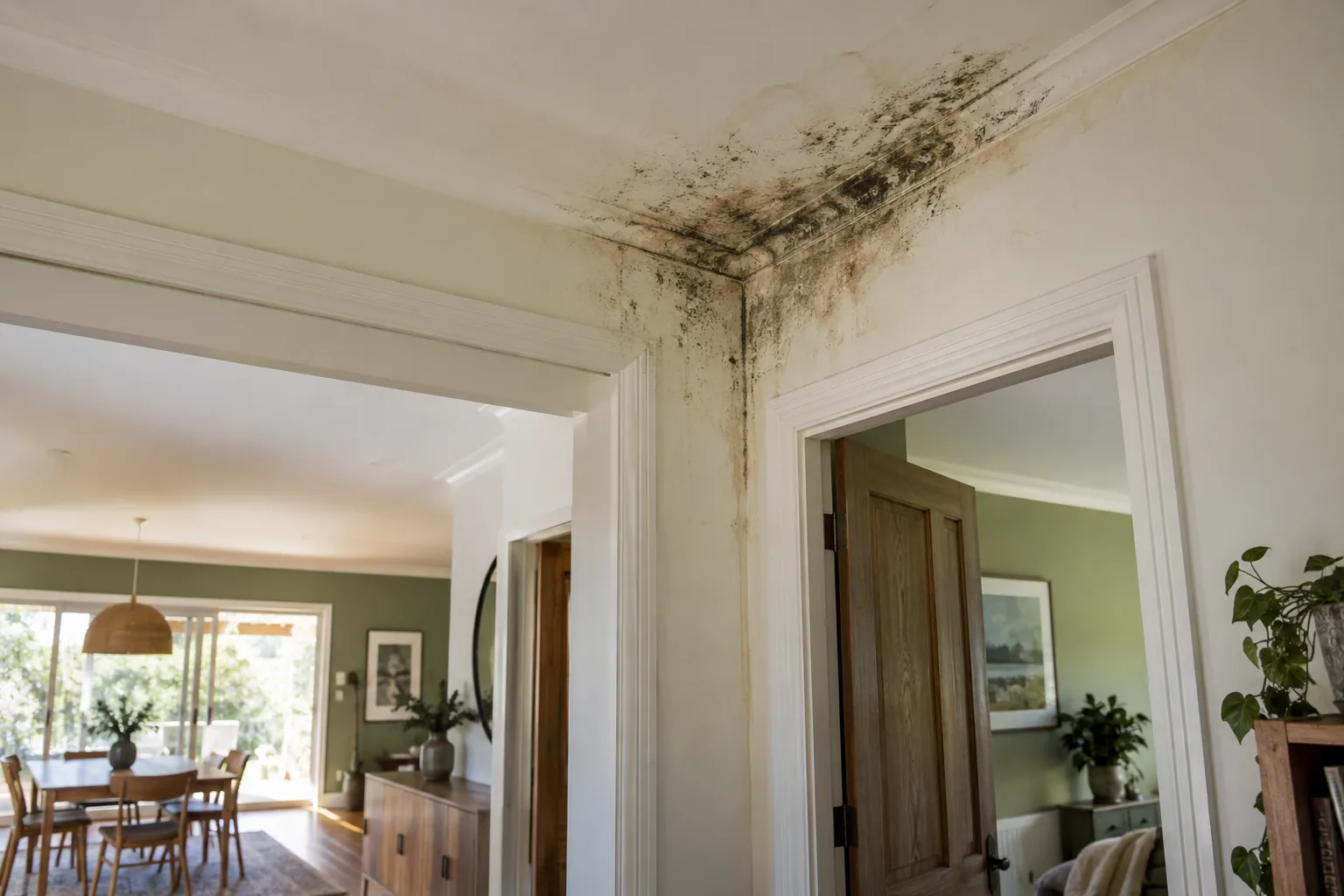
Explain whether the surface is sound, blistered or peeling. A photograph should show the ceiling and nearby wall junction, not just a single dark dot.
Moisture that stays behind
Note whether droplets remain long after showering and whether the fan operates. Also mention water entering from above or beside a window.
Separate visible growth from material damage
The inspection discussion considers accessible surfaces alongside moisture observations. Tell us about earlier repainting and cleaners used. Surface appearance cannot confirm the condition of insulation or a concealed cavity, particularly where a leak remains unresolved.
A room-wide view
Include the bathroom door, window and ceiling layout where practical. This helps discuss equipment access and the area to be assessed. Do not climb onto wet fittings or disturb loose material to obtain a closer photograph.
A second affected room
If marks extend into the bedroom or hallway, identify those surfaces separately. The bathroom’s treatment does not automatically include adjoining rooms.
THE SURFACE REMOVAL PROCESS
The removal sequence for an agreed bathroom
01
Inspect the finish
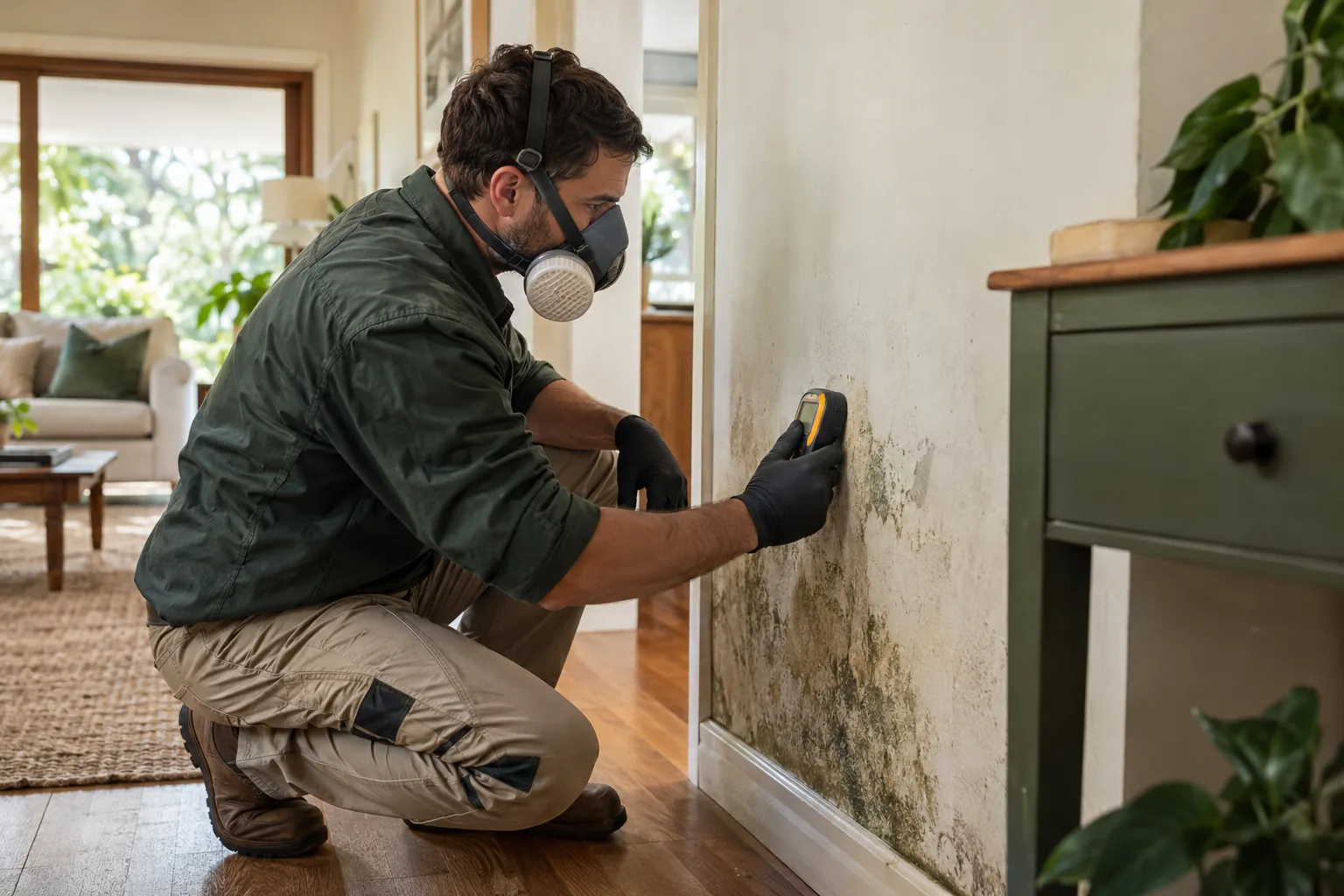
Examine visible growth, accessible materials and moisture or humidity readings. Discuss whether deterioration needs another trade.
02
Prepare filtered air
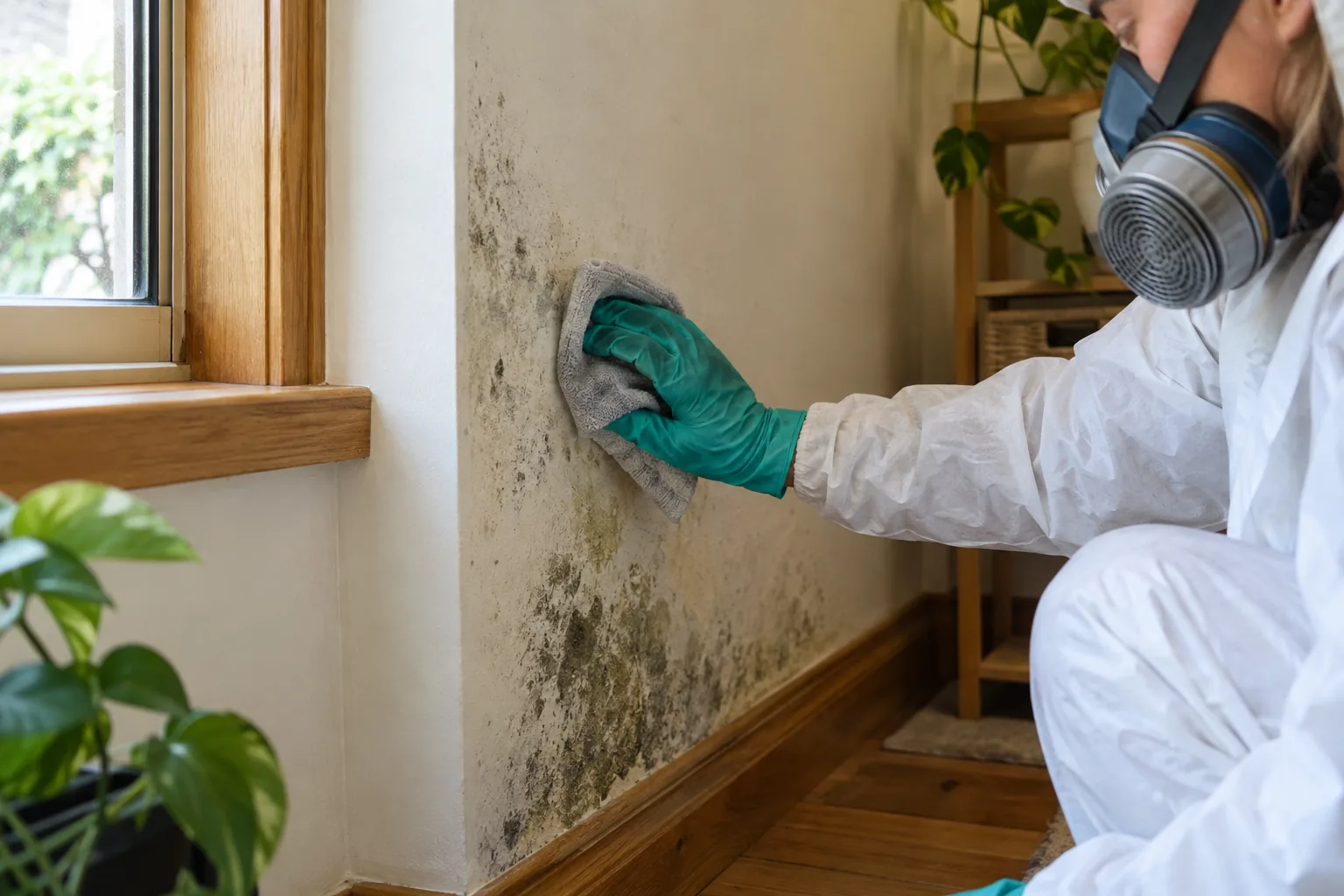
Set up the HEPA air scrubber within the planned working arrangement. Check power and a suitable route to the bathroom. Discuss occupant movement so the setup is considered even when the room itself is compact.
03
Select the treatment
Appropriate HOCl use follows the assessed material and conditions. Advise the technician about bleach or other products already used. Do not add a new chemical mixture to make the room appear cleaner before inspection.
04
Apply the planned method
ULV application may be appropriate within the agreed procedure. Confirm people and pet arrangements and any approved building-system requirements.
05
Remove surface contamination
Professional equipment with H-class filtration is used for physical removal where required. The agreed ceiling, walls and hard floor remain the focus.
06
Complete the air stage
Final filtration follows removal, then the room findings and limitations are reviewed. Ask about remaining marks, moisture repairs and return instructions.
VISIBLE & ACCESSIBLE
Bathroom observations worth sharing
Shower-side ceiling
State whether paint is lifting or the surface remains damp. Cosmetic restoration may be separate after the underlying issue is resolved.
Wall above tile height
Show the transition between tile and painted finish. Different materials can require different expectations about the achievable appearance.
Window-side wall
Explain any repeated condensation or water entry. Glazing or waterproofing repairs are not included in mould removal.
Hard-floor edge
Describe dampness at the perimeter and the finish. Carpet, bath mats and textile items are excluded from this service.
PREPARATION & LIMITS
Avoid promising a spotless ceiling
Treatment concerns contamination, while residual staining concerns appearance. There is no guarantee that every cosmetic mark disappears. Repainting or decorative work can be separately quoted after the surface and moisture issue are ready for that decision.
The service’s average guide is approximately three hours per room, with room size, access and severity affecting duration. It is not hourly-based pricing. A small bathroom can still involve preparation and several stages; agree the appointment rather than calculating by floor area alone.
AFTER THE SURFACE WORK
Make the next shower less of a moisture event
Use effective extraction during moisture-producing activities and allow the bathroom to dry afterwards. Report a fan that does not appear to remove steam and arrange appropriate maintenance. Leaving a door open alone is not proof that dampness has been managed.
Keep a record of where condensation or water marks return. A repeat problem calls for another look at the source, not an assumption that stronger cleaning is needed. Remediation and ventilation or leak repair contribute different parts of the overall plan.
SHOREHAM · NEARBY LOCATION PAGES
Shoreham and nearby Peninsula enquiries
Explore the neighbouring location pages below, then contact us with the actual Shoreham street address. We need the building entrance, room details and authority to book. Nearby geography helps navigation but does not confirm immediate availability or a local office.
BEFORE YOU ARRANGE WORK
Questions for your enquiry.
Does a working fan mean the bathroom is adequately ventilated?
Not necessarily. Explain whether steam clears and surfaces dry, as well as whether the fan runs. Performance and maintenance may need review separately from surface treatment.
Can you guarantee the ceiling will look newly painted?
No. Existing marks and weakened finishes may remain. Decorating is separate from mould removal and should follow consideration of the moisture source and material condition.
Is bleach use important to mention?
Yes. Tell the technician what was applied and when. Do not mix products or add treatment beforehand without advice; the existing surface condition matters when selecting a method.
Can you clean the bathroom curtains too?
Curtains and other textiles are excluded. Furniture, carpets, mattresses and clothing are also outside scope. Agree structural surfaces and any required clearance when discussing the bathroom.
What if the patch spreads into the hallway?
Describe and photograph the hallway as a separate affected area. The number of accessible rooms and their boundaries need agreement; treatment in one room does not automatically include another.
Will you repair waterproofing under the shower?
No. Plumbing, waterproofing and structural repairs are separate. Concealed damage can require additional investigation beyond the visible and accessible surface service.
Discuss your Shoreham address
Describe the Shoreham bathroom finish, extraction and any leak when calling 03 8652 1296. The next step is an address-specific discussion of suitable visible surfaces, preparation and realistic appearance expectations.
Useful references: Official local geographic reference