
FLINDERS · MELBOURNE
Mould Removal Flinders
REPAIR · DRYING · REMOVAL
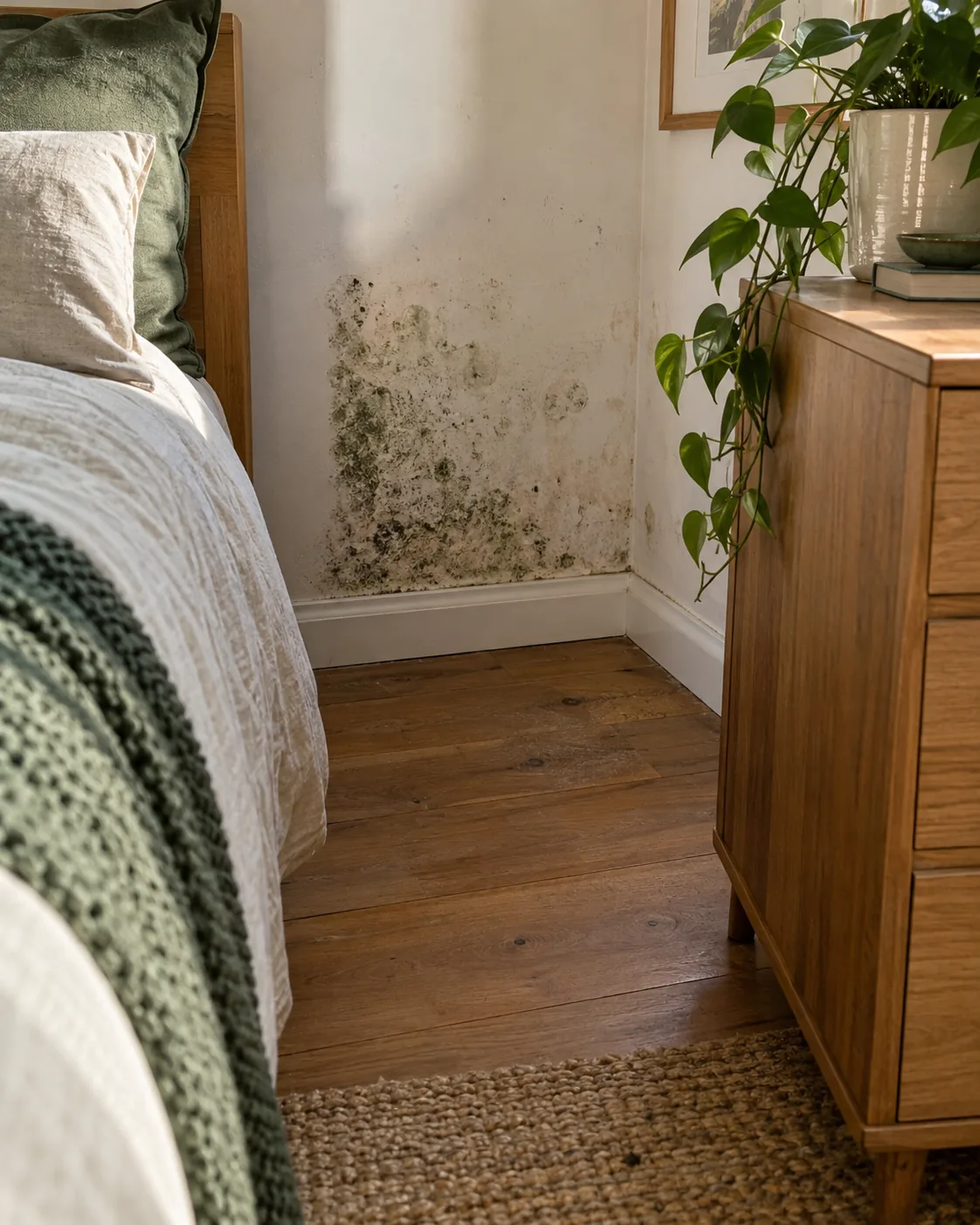
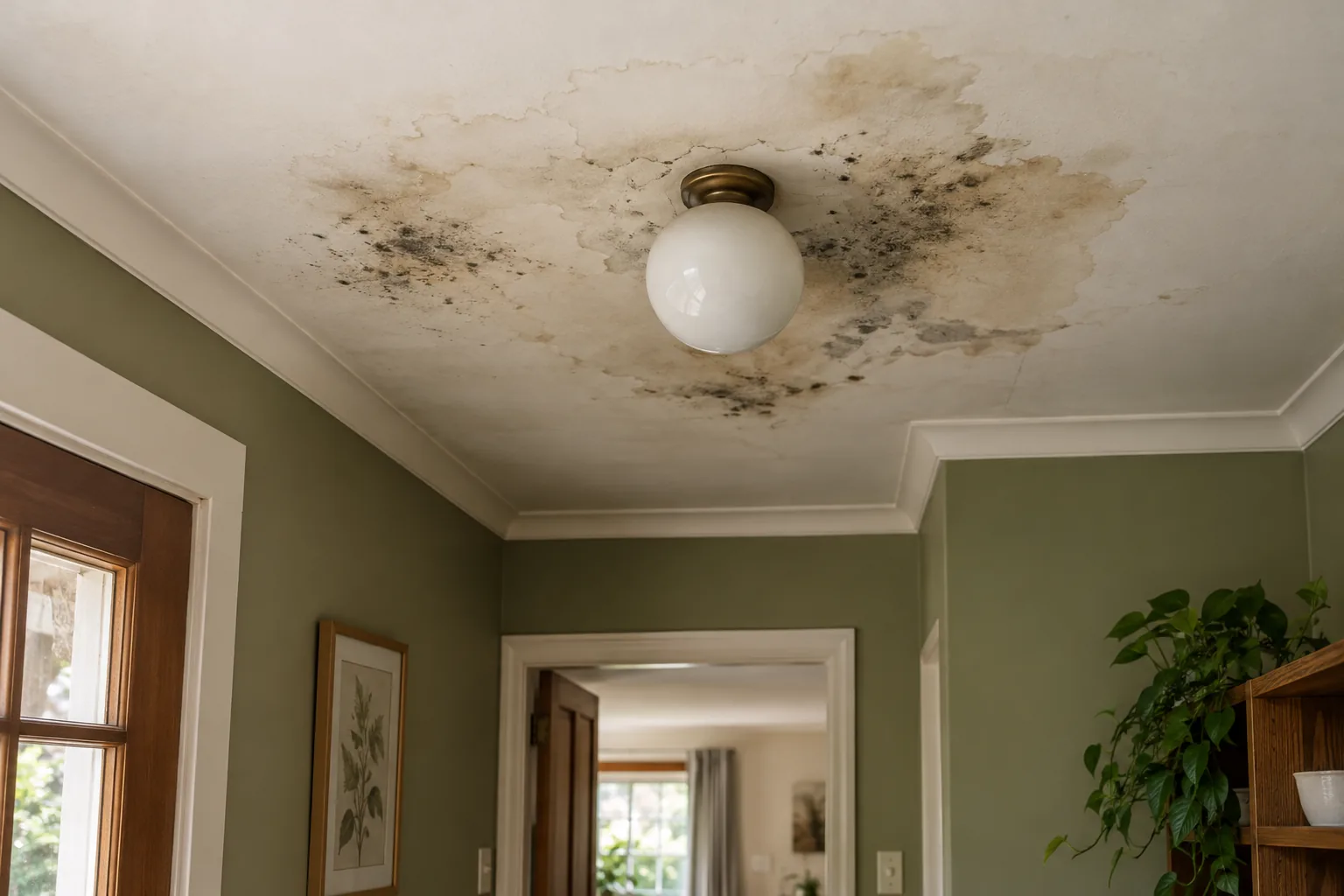
A roof repair can stop new water entering without explaining the marks left inside. For a Flinders room, describe the repair date, whether the ceiling still feels damp and which surfaces show growth. We discuss the address and accessible work before confirming an appointment.
Repair history considered
Visible ceiling scope
Residual marks explained
SURFACES & THEIR SETTING
What changed after the leak was repaired?
The Shire identifies Flinders among its Peninsula coastal locations. The coastal setting is useful geographical context, but the room’s leak and repair history matters more to a mould removal enquiry. Provide dates where known and distinguish observations from assumptions.
An old ceiling mark
Explain whether the stain remained unchanged or whether fresh spots appeared around it. Include a wider photo showing its location in the room.
Work recently completed above
Tell us what the repair trade advised and whether further checks are planned. Mould removal does not certify a roof repair. If moisture continues, a separate follow-up with the appropriate contractor may be needed before cosmetic restoration is sensible.
Assessment needs more than a repair invoice
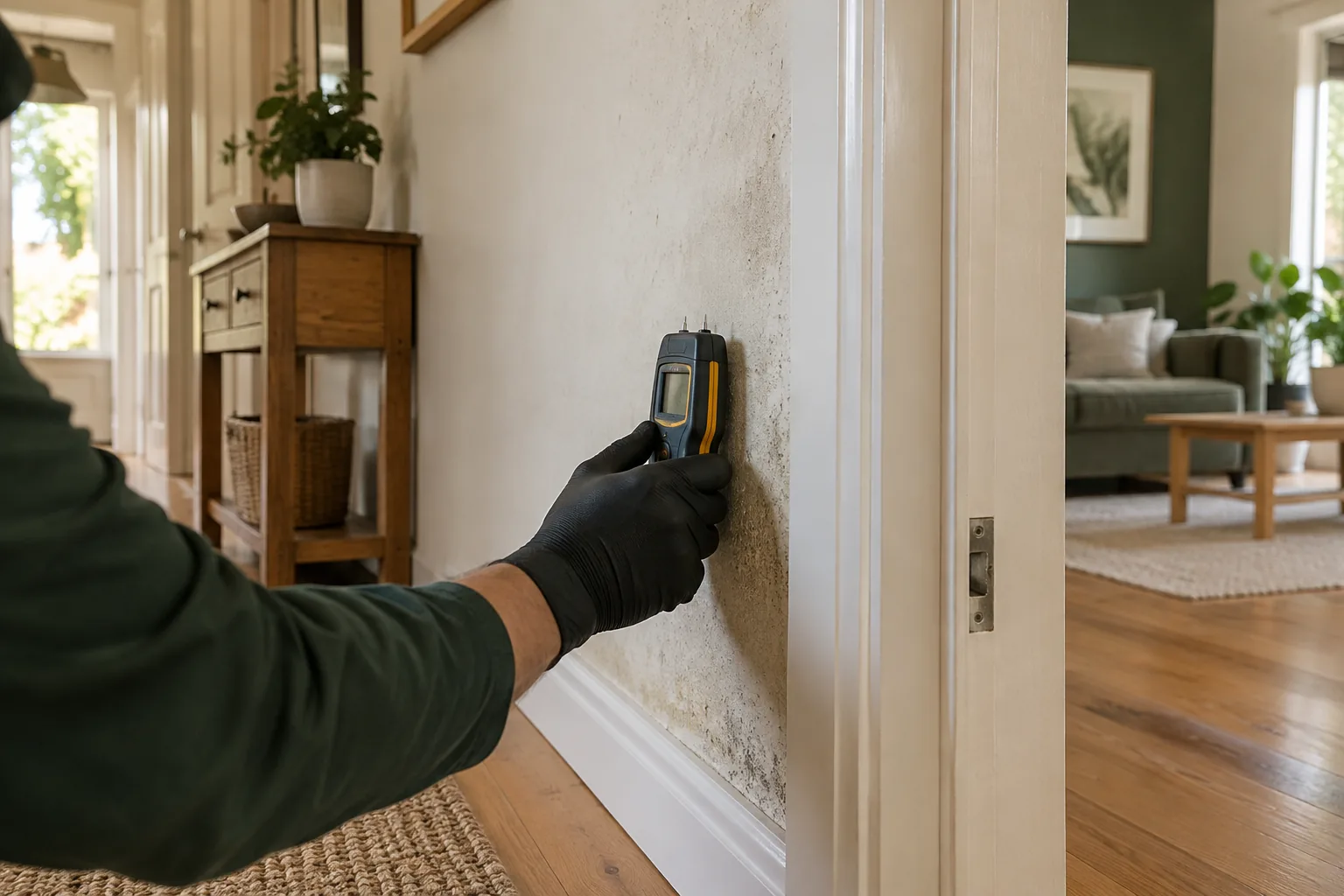
For inspection, describe the visible extent and the ceiling material. Moisture and humidity observations can support the room assessment. A document showing external work is useful history but does not establish the condition of every concealed surface indoors.
Weak or swollen lining
Mention sagging, softness or loose coatings before arranging treatment. Damaged material may need repair or replacement. Avoid pushing, scraping or cutting the ceiling to see what is behind it; concealed investigation is separate from accessible surface work.
Marks on the adjoining wall
Identify the wall as well as the ceiling if both are affected. The shape of a stain does not define a complete service scope.
THE SURFACE REMOVAL PROCESS
A careful sequence after water entry
01
Inspect the reported surfaces
Review accessible growth, material condition and relevant readings. Discuss continuing dampness and the repair history.
02
Establish filtered air
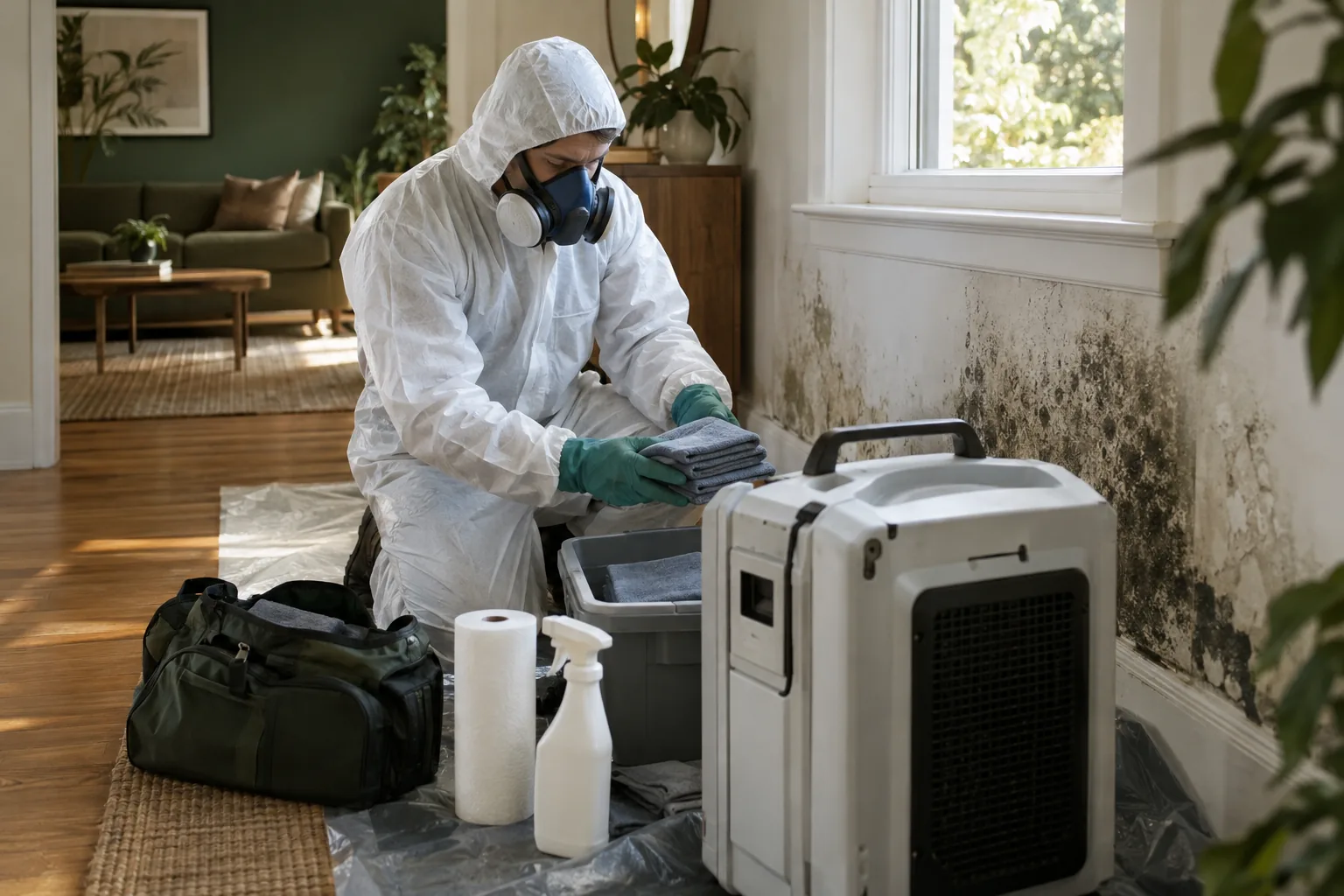
Prepare HEPA air filtration and suitable room access. Equipment needs workable placement and power.
03
Select appropriate treatment
The technician chooses suitable HOCl use for the assessed finish. Report previous cleaners, coatings and any recent repainting.
04
Apply within the scope
ULV application may form part of the agreed procedure. Prepare according to the instructions for people, pets and access.
05
Remove accessible contamination
Professional physical removal uses equipment with H-class filtration as needed. Keep work within agreed structural surfaces.
06
Filter and review
Final air cleaning completes the procedure. Record remaining marks and moisture questions needing another trade. Confirm return arrangements and practical monitoring so the room handover separates surface treatment from any outstanding roof or lining decision.
VISIBLE & ACCESSIBLE
Document the surfaces around the leak
Ceiling centre
Show its full position and any sagging. A close-up alone does not communicate the material’s condition or access needed.
Wall-ceiling junction
Include both faces where visible growth crosses the join. Treating one surface does not automatically include the other.
Bathroom ceiling
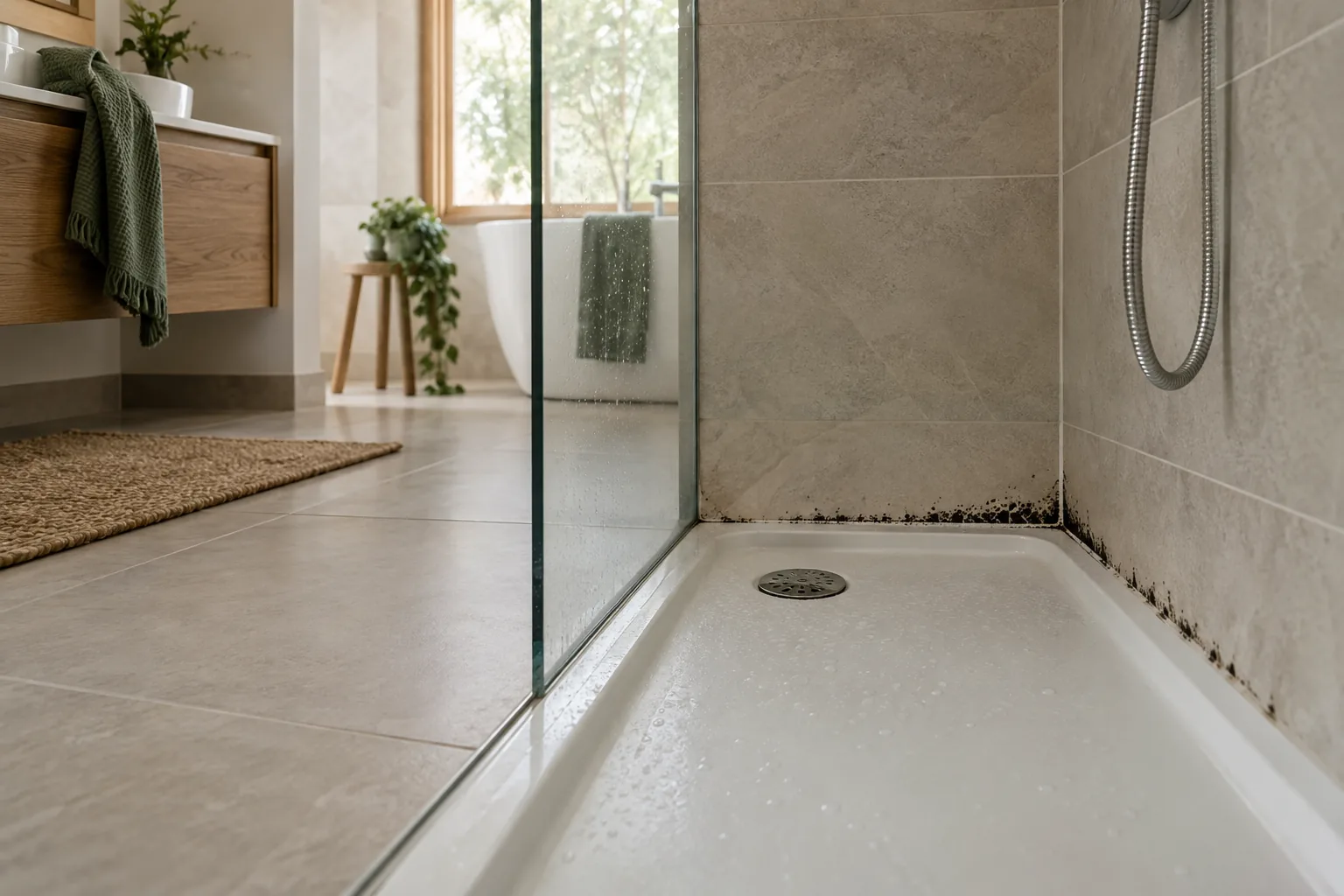
Report extraction concerns as well as roof history. Condensation and water entry may both need consideration without assuming one excludes the other.
Hard-floor edge
Mention wetness or damage below the affected wall. Carpet and underlay are excluded even when water has reached them.
PREPARATION & LIMITS
Treatment and restoration have different aims
The service guidance allows roughly three hours per room on average, with variation for extent, room size and access. It is not hourly charging. A post-leak room with material damage can involve different planning from a sound accessible surface.
Contamination removal cannot guarantee disappearance of every water or mould stain. Decorating may be separately quoted once the source and substrate are ready. Neither a fresh finish nor treatment provides permanent prevention if a roof or plumbing defect continues.
AFTER THE SURFACE WORK
Monitor the repair as well as the room
Keep dated photographs from a consistent position and note any new marks after rain or normal room use. Pass continuing water-entry concerns to the relevant repair trade. Do not assume that a treated surface proves the building defect has been solved.
Manage routine indoor moisture with extraction and sensible ventilation. These habits support follow-up but cannot repair damaged roofing. Our remediation overview explains the separate roles of assessing surfaces, removing growth and correcting the conditions that allowed it to develop.
FLINDERS · NEARBY LOCATION PAGES
Flinders and surrounding addresses
The linked nearby pages help navigate surrounding enquiries. Give the actual Flinders address, room location and access route when contacting us. Appointment suitability depends on those details, the visible surface condition and confirmation of availability for the property.
BEFORE YOU ARRANGE WORK
Questions for your enquiry.
Does a repaired roof mean treatment can start immediately?
Not automatically. Explain the current material condition and any continuing dampness. The room scope and suitability still need assessment, especially if the lining is weak or replacement has been recommended.
Can you confirm my roofer’s repair worked?
Mould removal does not certify roof work. Share the repair history, then arrange any ongoing leak concern with the appropriate trade. Surface observations cannot verify all concealed building details.
What if the ceiling is sagging?
Report it before booking and avoid disturbing it. Structural or lining assessment may be needed separately. Accessible mould treatment does not replace evaluation of damaged building material.
Will the brown water stain disappear?
No complete cosmetic removal is guaranteed. Water marks and mould staining may remain after contamination is treated. Decorating is a separate decision once the moisture source and surface condition are addressed.
Does treatment cover wet carpet beneath the mark?
No. Carpets, underlay, rugs and textiles are excluded. Describe them so the structural floor and wall scope can be distinguished from belongings needing separate attention.
Should I photograph the room after cleaning it myself?
Current pictures are useful, but also send any earlier images with dates. Explain products already used. Do not disturb damaged material or mix cleaners simply to improve a photograph.
Discuss your Flinders address
Call 03 8652 1296 with the Flinders address, repair date and present ceiling condition. Include any continuing dampness or weak material so surface treatment can be distinguished from separate source or lining repair.
Useful references: Official local geographic reference