
VISIBLE SURFACES · AGREED TREATMENT
Mould Remediation Coolaroo
A room packed with boxes can make a small wall concern difficult to reach. At your Coolaroo property, explain which finish is marked and whether a safe path can be made available. The treatment enquiry should define the exposed wall and preparation responsibilities without turning stored belongings or covered surfaces into assumed inclusions.
Available wall access is defined.
Belongings preparation is agreed.
Excluded contents stay outside the quote.
TREATMENT · FILTRATION · FOLLOW-THROUGH
A TREATMENT PLAN WITH CLEAR LIMITS
Treatment begins with an accessible finish
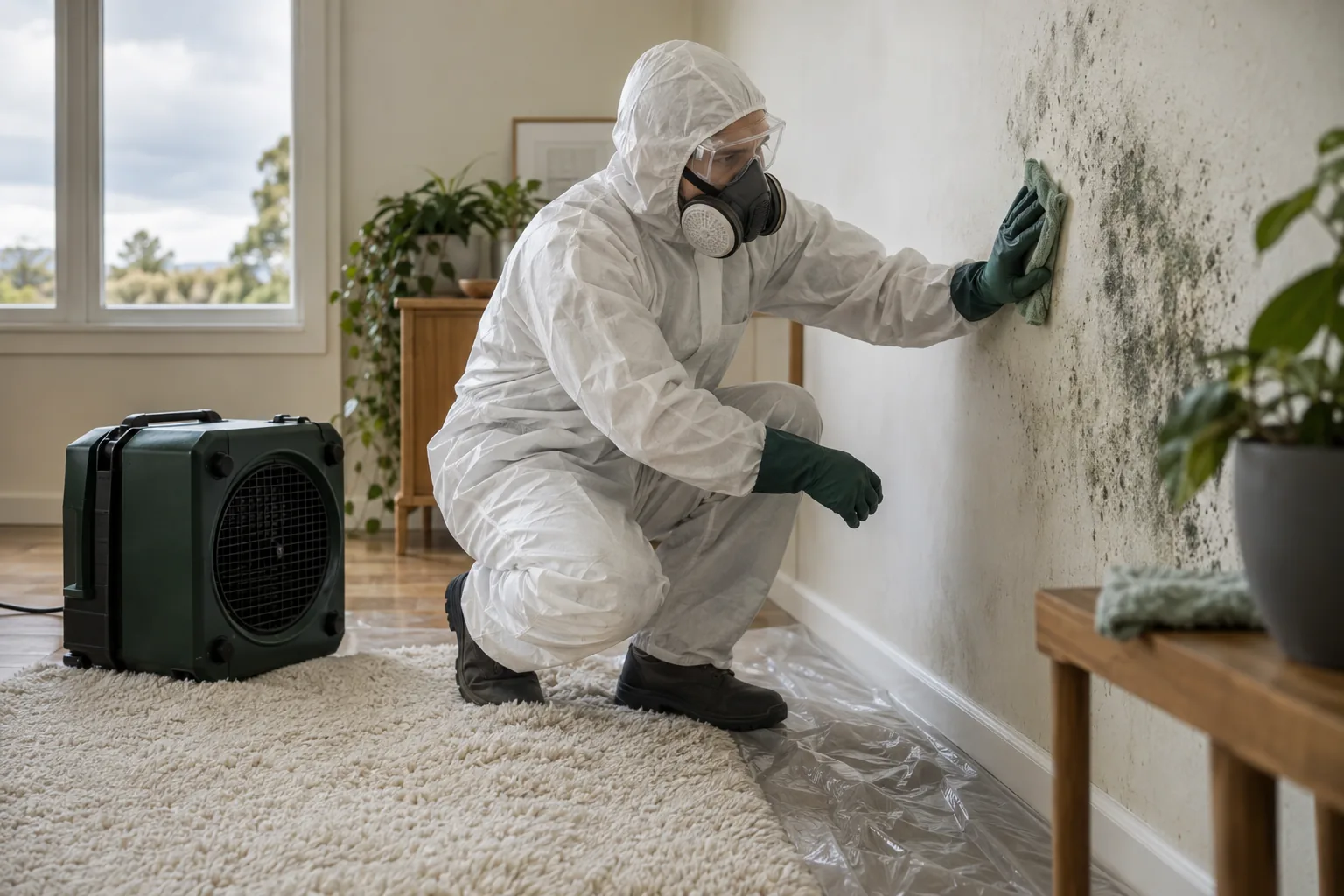
Remediation coordinates assessment, filtration, appropriate treatment and physical removal of visible contamination. It needs an accessible affected finish, rather than a promise that a crowded room will be cleared during the appointment. Describe the room arrangement before agreeing work so important access limitations are known.
Boxes, clothing and soft furnishings are not standard treatment surfaces. Do not pile contents into a neighbouring working area without discussing preparation. Our remediation overview explains the supported work; this room’s scope still requires its own agreement.
MOISTURE COMES FIRST
Damp observations belong to their own surfaces
Explain whether water was seen on the wall, a window or the contents, and keep those observations separate. A professional hygrometer informs the room-air humidity discussion. It does not determine moisture inside a box, identify a leak path or establish that the wall lining is dry behind stored items.
An unresolved water source needs separate correction. Remediation can address agreed visible contamination, but another occurrence is possible if the damp conditions continue. If the wall cannot yet be viewed, an inspection enquiry can start by clarifying the actual access limitation.

FROM PREPARATION TO FOLLOW-THROUGH
Plan the work around the available space
1
Agree the accessible scope
Agree the reachable wall boundary and safe route before treating the room as ready; identify any sections still covered.
2
Begin air protection
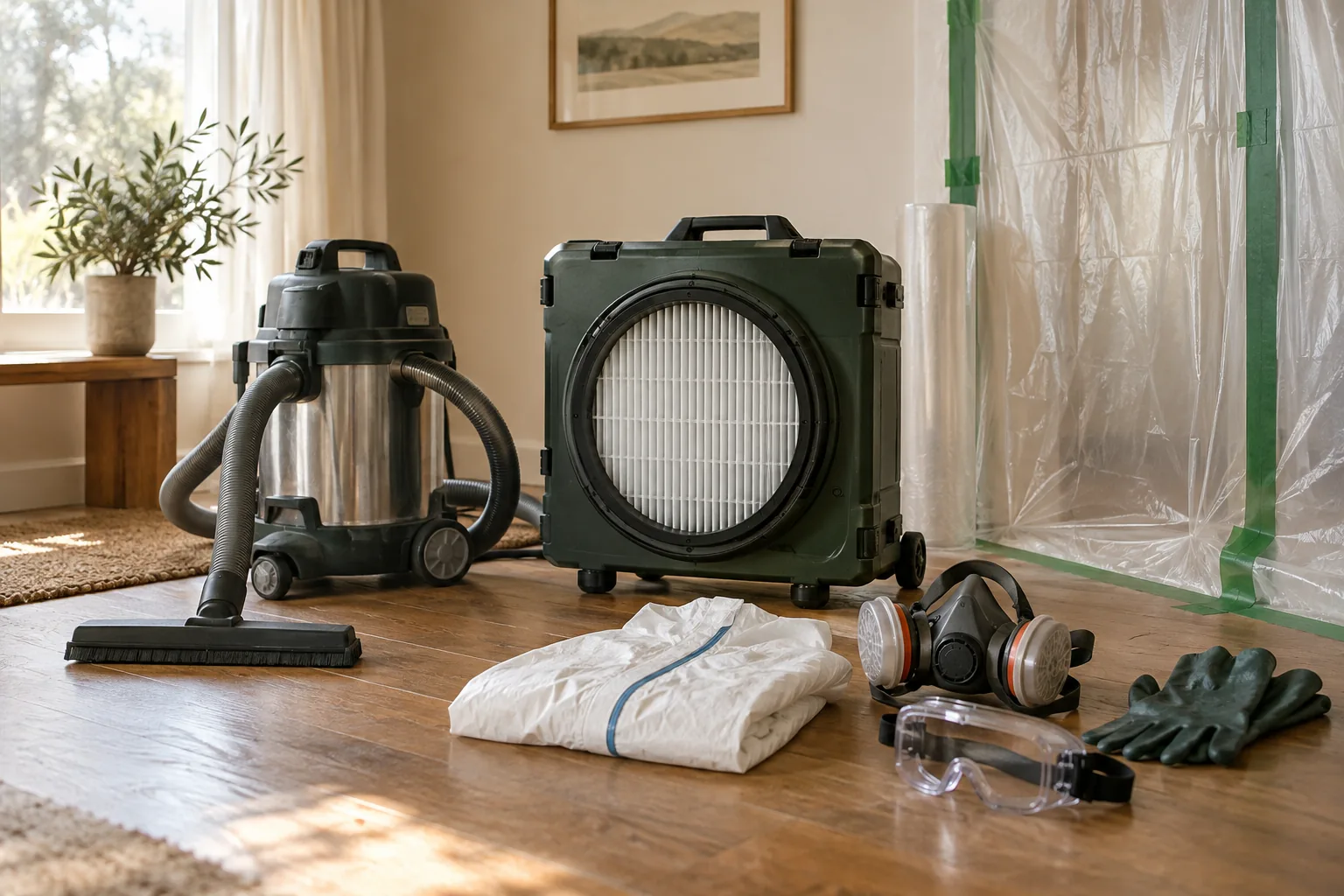
Begin HEPA air-scrubber filtration before treatment application, with its work-area position arranged around available access.
3
Choose the treatment application
Apply HOCl by a suitable method. ULV dry fog is conditional, and does not include treatment of stored textiles.
4
Remove visible growth
Use professional H-class filtered equipment for physical removal of visible mould on the surfaces agreed for this job.
5
Continue final air cleaning
Keep HEPA air cleaning running during and after work; discuss remaining marks, unresolved dampness and specific return arrangements.
Identify finishes without including contents
Walls
A wall behind stacked items belongs in scope only where it becomes visibly and safely accessible.
Ceilings
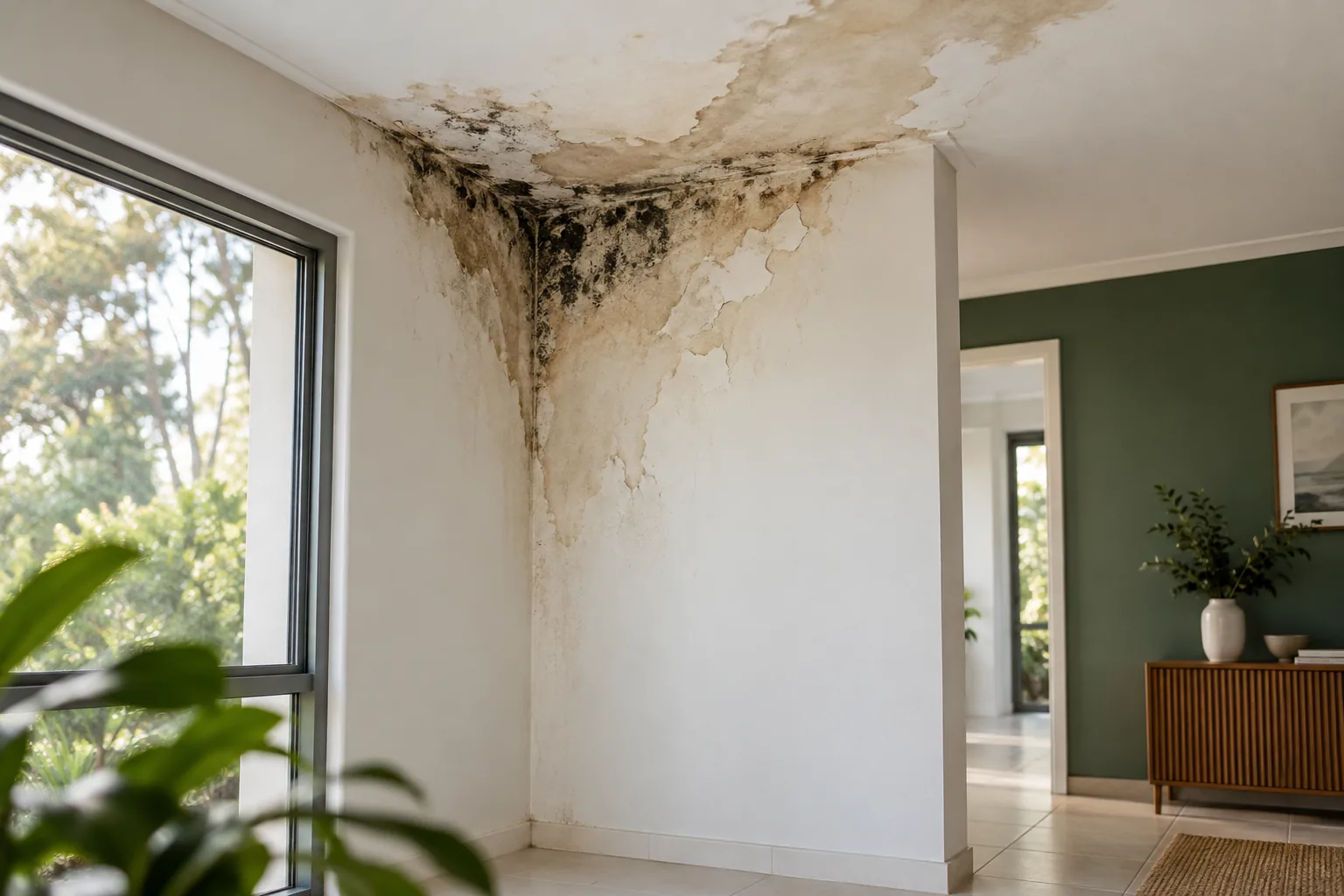
Ceiling marks need their own safe working clearance; a floor pathway alone does not resolve overhead access.
Bathrooms
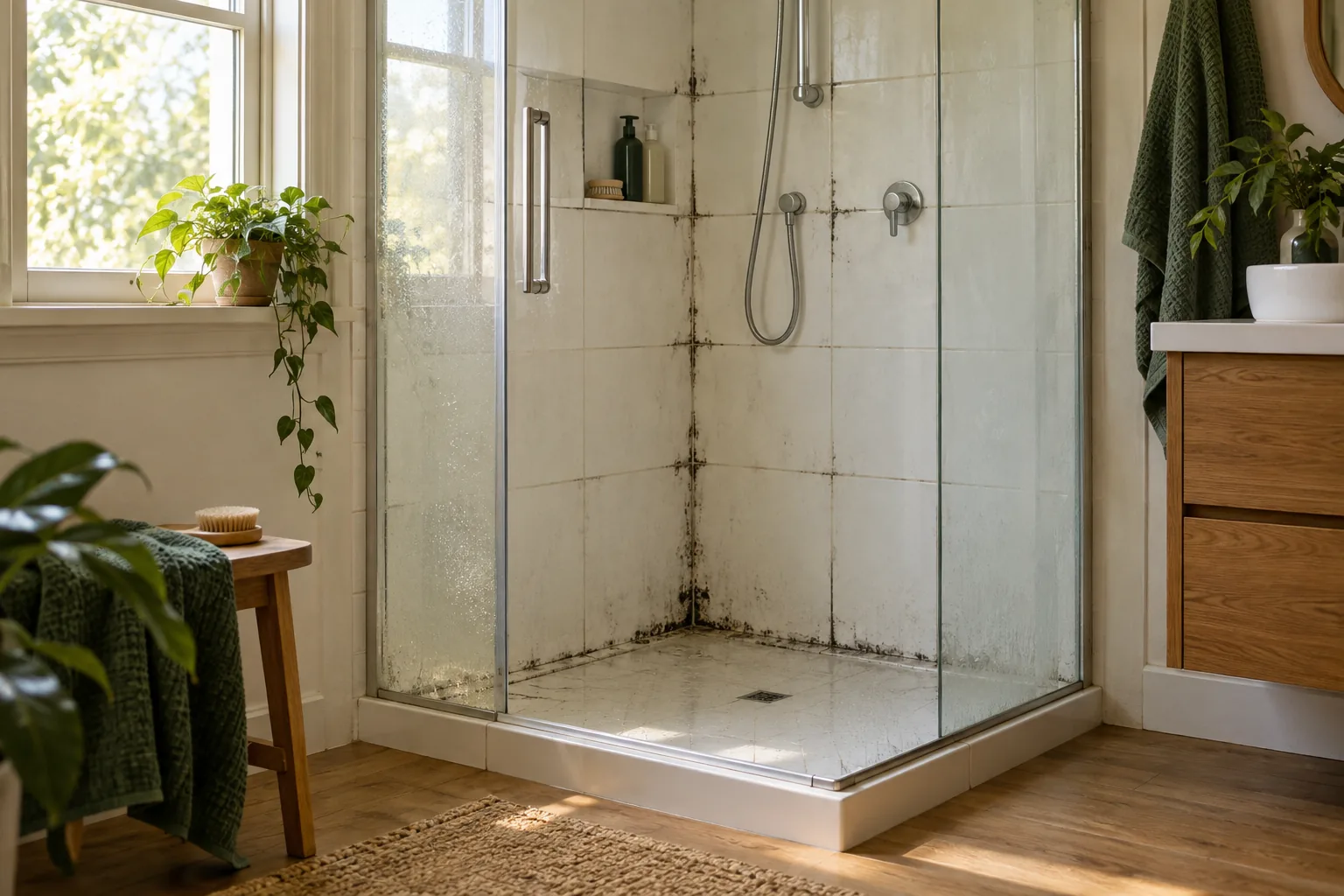
Bathroom paint, tiles and shower joints need distinct finish descriptions rather than a general contents-cleaning request.
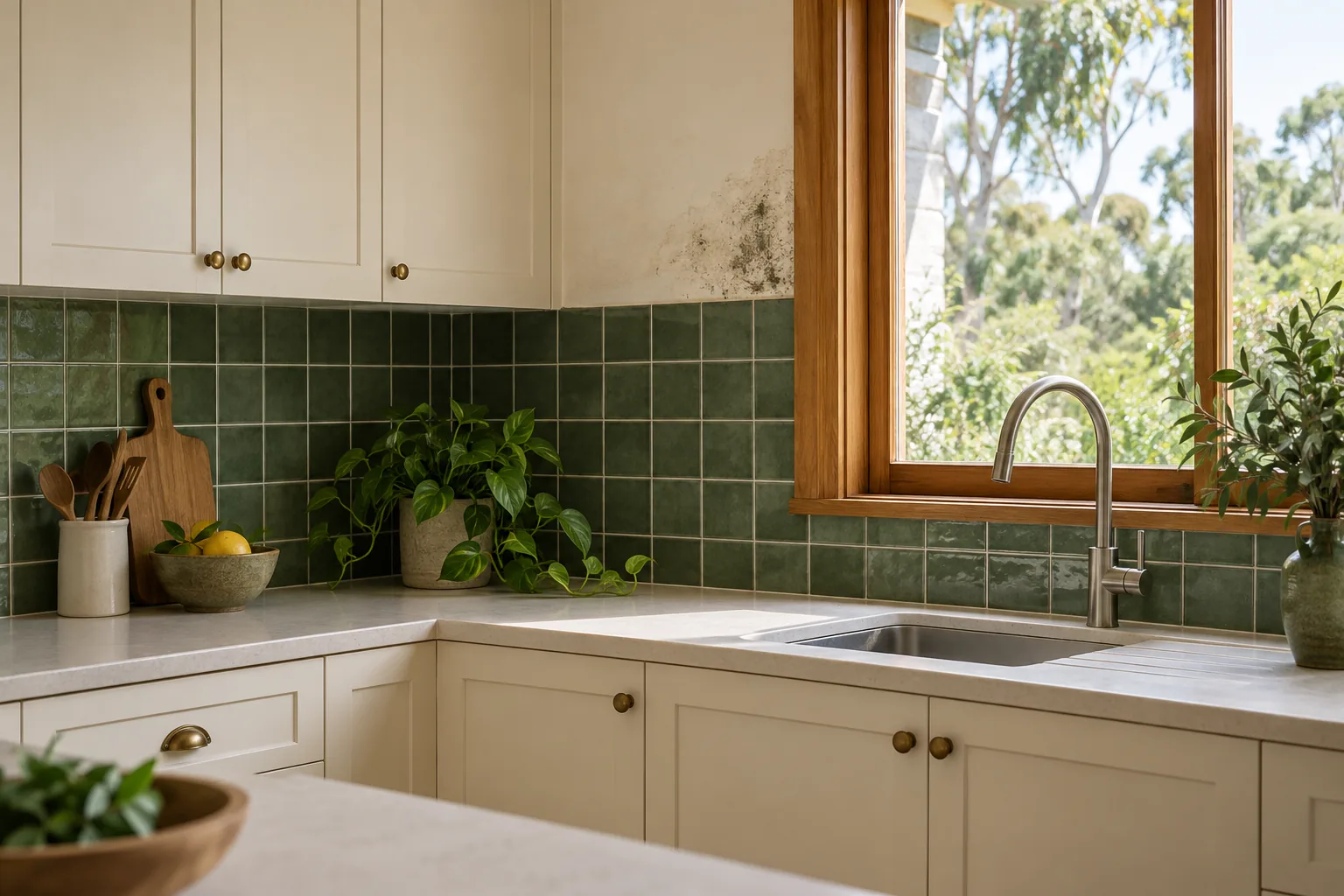
Kitchens
Kitchen wall treatment does not include stored food or household items; prepare movable contents as instructed.
Accessible affected surfaces
Other visible affected walls, ceilings and floors may be agreed separately; concealed materials and textiles remain excluded.
PREPARE FOR THE ACTUAL JOB
Preparation needs a realistic plan
Discuss who will clear movable belongings and when the room can be made available. Avoid unsafe lifting or blocking exits. People and pets leave during treatment, with the departure and return instructions confirmed directly. Average source room guidance is around three hours, depending on area, contamination and accessibility.
Residual stains can remain even after treatment of visible growth. Painting, repairs and the condition of excluded contents need separate decisions. Do not assume equipment setup means every hidden patch has been reached, or that the appointment includes a written clearance, laboratory testing or any particular re-entry interval.
AFTER THE TREATMENT
Keep useful access after treatment
Keep a practical way to observe the treated finish once belongings are returned.
Maintain agreed clearance for airflow where furniture is placed.
Follow through on a separately identified leak or ventilation problem.
Record a fresh visible change instead of relying on the former stack arrangement.
Quote for surfaces rather than boxes
Discuss the exposed surface area and preparation status when asking for the quote. A room full of boxes does not create a contents-treatment package. The price examples are labelled Mould Removal; confirm which pricing applies to this remediation scope and what must be prepared before attendance.
COOLAROO · EXACT ADDRESS & ACCESS
Enquiries for nearby addresses
Give the Coolaroo address and identify the room being cleared. Explain any remaining pathway obstruction to the entry contact. Nearby pages relate to other premises; agree this property’s preparation and attendance separately.
Questions about remediation
Will the technician unpack boxes to find wall mould?
Do not assume that. Agree the accessible wall and preparation responsibilities before attendance; a treatment booking does not include unpacking all stored contents.
Are the cardboard boxes included in treatment?
No standard contents treatment is confirmed. Identify concerns about them separately rather than treating the wall quote as permission to clean every item.
Can I stack everything against the opposite wall?
Only use a safe agreed preparation arrangement. Do not obstruct access or cover another requested surface merely to reveal the first patch.
What if only half the marked wall can be reached?
State that limitation before booking. The agreed scope should describe the accessible portion and any untreated remainder, rather than imply full-wall coverage.
Does fogging remove the need to clear access?
No. Appropriate ULV application does not change the visible accessible scope or the exclusion of contents and textiles. Discuss actual clearance requirements.
Should a remaining old stain be painted immediately?
Ask about the finish and unresolved moisture first. Cosmetic marks may persist, and decorating is a separate decision rather than evidence of complete source correction.
Discuss the room you can make available
Call 03 8652 1296 and describe the marked finish, the available pathway and what can be cleared safely. Confirm the preparation and quote before treatment.