
VISIBLE SURFACES · AGREED TREATMENT
Mould Remediation Somerton
Earlier cleaning can change a wall’s appearance without explaining what remains on the finish. For your Somerton enquiry, identify the surface, any products previously used and the present visible concern. Remediation planning should consider that history without promising a diagnosis from residue, assuming different applications are compatible or treating a faded patch as proof that dampness has ended.
Previous applications are disclosed.
The current finish is considered.
A suitable treatment scope is agreed.

TREATMENT · FILTRATION · FOLLOW-THROUGH
A TREATMENT PLAN WITH CLEAR LIMITS
Describe earlier work before deciding the next application
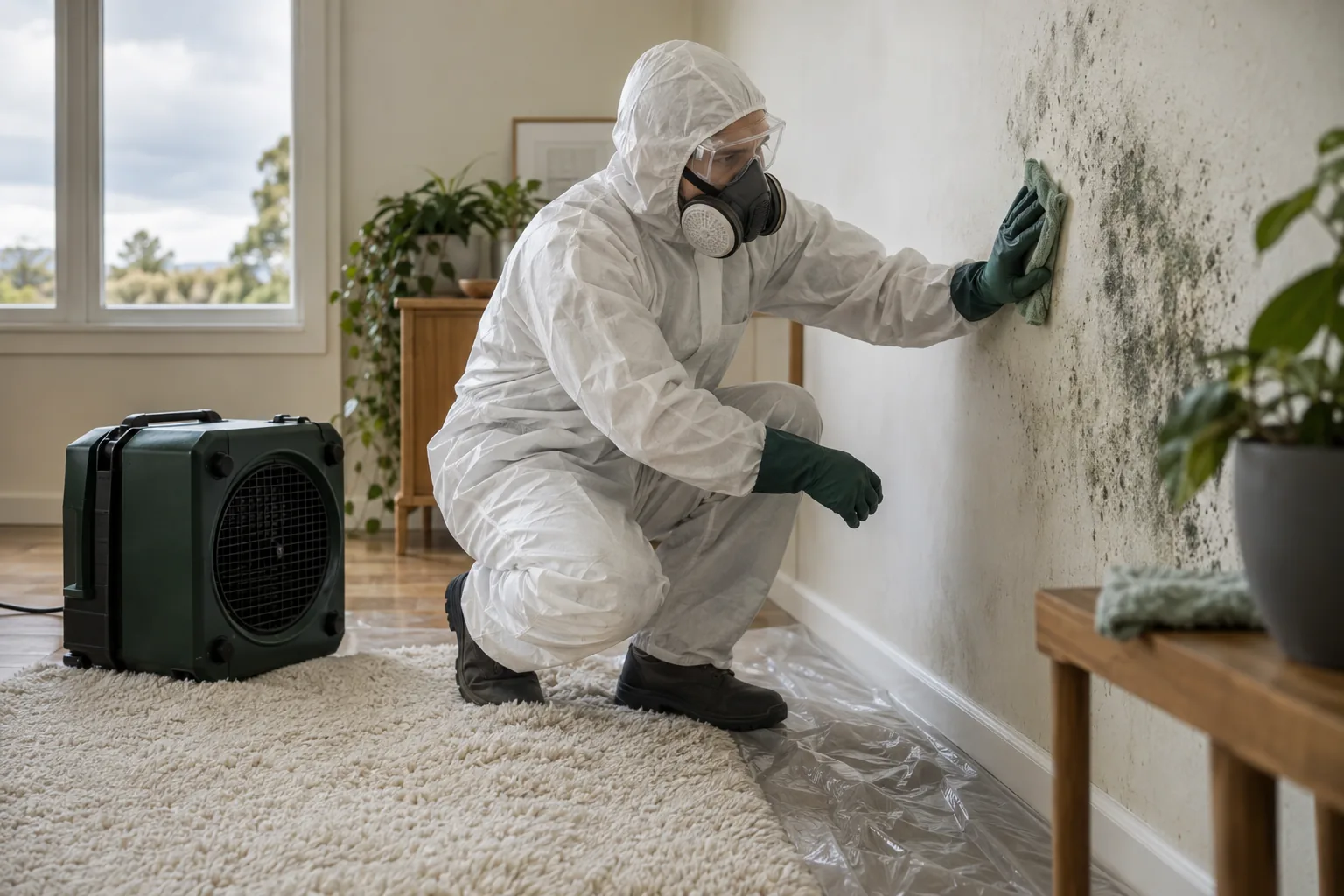
Remediation coordinates assessment, filtration, suitable application and physical removal of visible mould. Say whether the wall was wiped, painted or treated previously, and whether those details are known firsthand. A clear account helps avoid presenting uncertain residue as a confirmed contaminant or assuming the finish is unchanged.
Our service overview explains the supported process. Suitability still needs discussion for the actual material and condition. Repainting, replacement finishes and treatment of textiles are not automatically included, and the enquiry does not promise chemical analysis of earlier applications.
MOISTURE COMES FIRST
Keep product history separate from moisture history
Describe actual water or condensation separately from the cleaner’s appearance. A professional hygrometer informs room-air relative humidity, not moisture inside a coating or the chemical composition of a residue. An unchanged room reading does not show whether a concealed leak has been corrected.
Arrange separate repair or ventilation work where a source remains unresolved. Continued dampness can support recurrence after visible treatment. A visible-condition inspection can help clarify the accessible concern, without promising laboratory testing, species identification or material-probe readings beneath previously treated paint.

FROM PREPARATION TO FOLLOW-THROUGH
A supported sequence for the current finish
1
Agree the accessible scope
Assess the exposed finish and disclosed application history, then agree accessible boundaries and treatment suitability.
2
Begin air protection
Begin confirmed HEPA air-scrubber protection before the agreed application; filtration supports the work rather than certifying residue safety.
3
Choose the treatment application
Use HOCl by an appropriate method, with ULV dry fog only where suitable and no universal compatibility claim.
4
Remove visible growth
Remove visible mould with professional H-class filtered equipment within the agreed finish scope, without adding coating restoration.
5
Continue final air cleaning
Continue HEPA air cleaning during and after work, discussing remaining appearance, source correction and the technician’s particular return advice.
Identify materials rather than residue colour
Walls
Previously cleaned walls need the coating condition and product history described before another method is agreed.
Ceilings
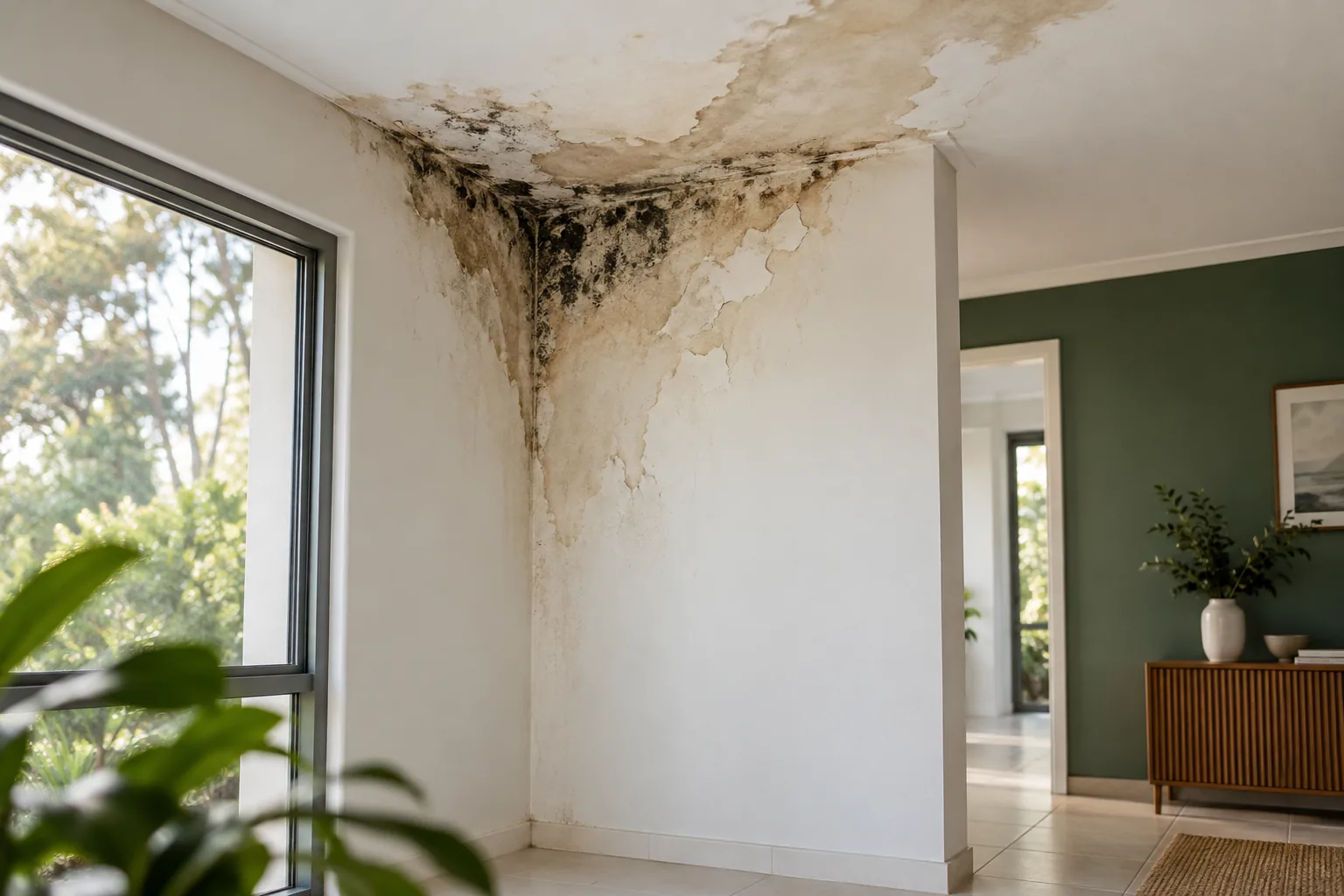
Ceiling residues or old water stains require their own safe access and finish description.
Bathrooms
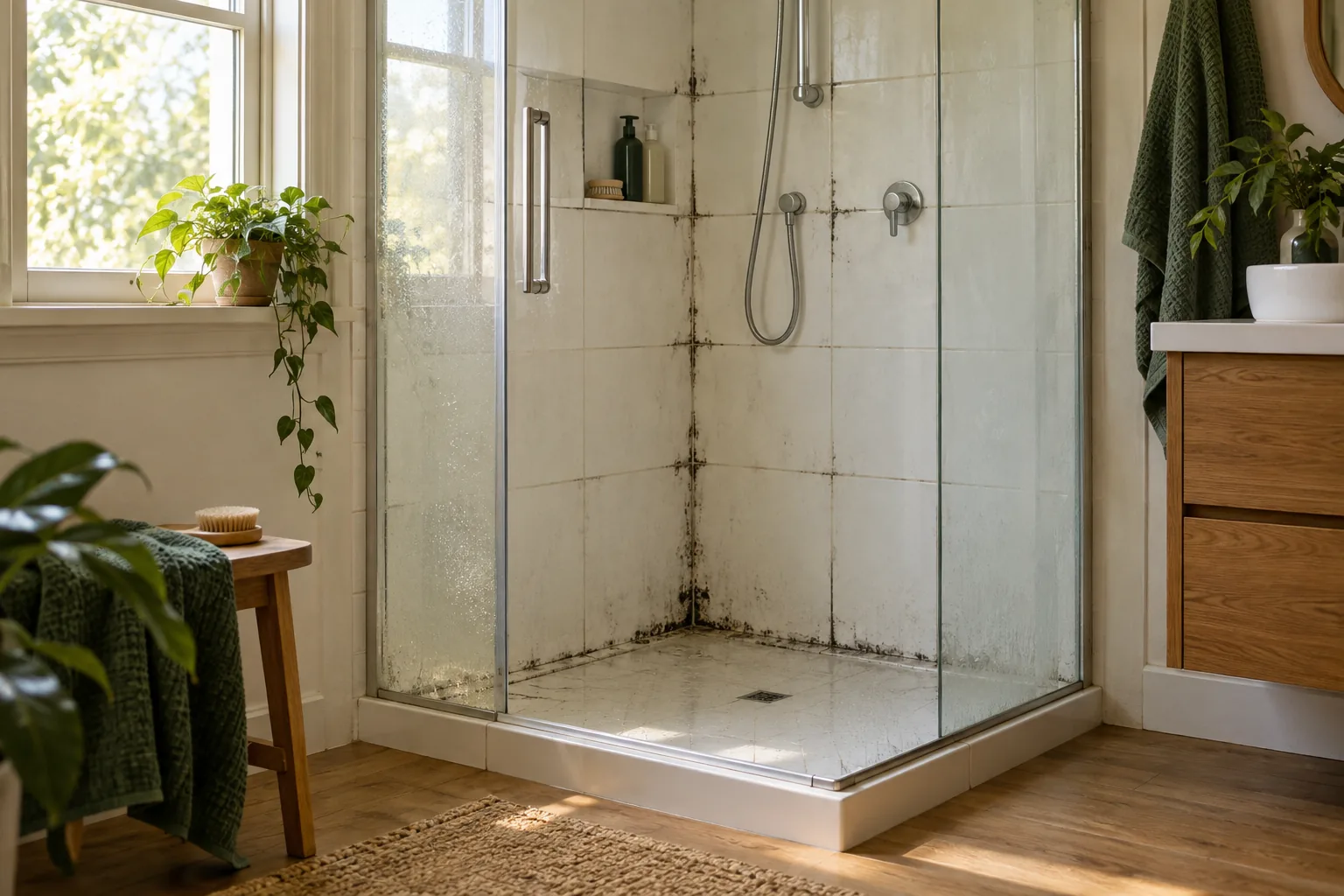
Bathroom paint and joints may have different application histories, so keep their materials and changes separate.
Kitchens
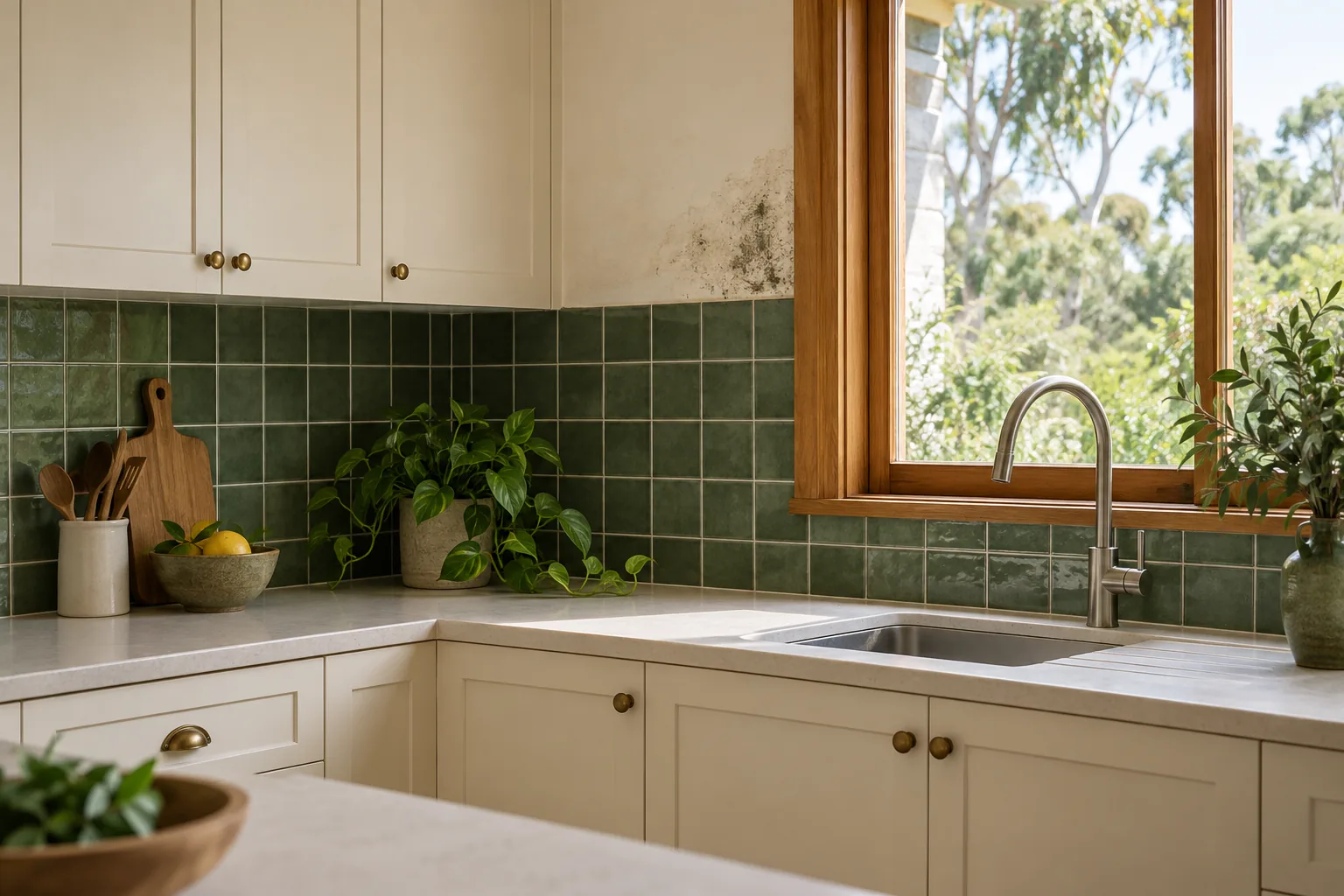
Kitchen exposed finishes should be identified without assuming residue on stored contents is included for treatment.
Accessible affected surfaces
Additional accessible walls, ceilings or hard floors may be agreed; textile items and concealed layers remain excluded.
PREPARE FOR THE ACTUAL JOB
Preparation should preserve useful information
Do not apply another product merely to prepare the room. Share labels or known application details where available and follow the agreed clearance instructions. People and pets leave during treatment. Average guidance is about three hours per room, varying with size, contamination and access rather than a fixed finishing time.
Cosmetic marks or damaged paint can remain after visible contamination work. Decorating needs separate agreement, and no laboratory clearance or chemical-residue certificate is promised. Obtain return instructions directly; the smell, colour or claimed safety of an earlier product is not a substitute for job-specific advice.
AFTER THE TREATMENT
Notice later changes on the actual surface
Follow-up should identify a fresh surface change rather than only a changed cleaner residue.
Keep known earlier application details with the room record.
Pursue unresolved leak or ventilation corrections separately.
Avoid obscuring a new visible concern before describing it to the service contact.
Quote for the remaining accessible concern
Explain the current affected area and previous applications when discussing the quote. The pricing examples are labelled Mould Removal, so confirm the figures applicable to remediation. Chemical testing, stripping an old coating and restoring a finish should not be inferred from a room amount; clarify the visible treatment task first.
SOMERTON · EXACT ADDRESS & ACCESS
Enquiries for nearby addresses
Provide the Somerton address and identify the previously cleaned finish. Distinguish another person’s application account from your own observations. Nearby navigation concerns separate properties, while this room needs availability and access confirmed directly.
Questions about remediation
Should I use another cleaner before the appointment?
Do not apply one just as preparation. Explain what has already been used and follow the agreed instructions so the current finish and history remain clear.
Can remediation identify an unknown chemical residue?
No analysis is promised. Supply known product details where available, but do not describe the visit as laboratory identification of earlier applications.
Does a faded patch mean the mould was fully removed?
Not necessarily. Describe the current visible finish and any fresh change rather than drawing a complete treatment or moisture conclusion from colour alone.
Are all treatments compatible with earlier products?
No universal compatibility is claimed. Disclose the application history so suitability can be discussed for the actual finish.
Will an old coating be stripped as part of treatment?
Do not assume that. Coating removal or restoration requires a separate scope decision rather than an implied extension of visible mould work.
What helps when I cannot identify the earlier cleaner?
Say the information is unknown and describe who applied it and when, if known. Avoid guessing a product or presenting uncertain recollection as a confirmed history.
Discuss what has already been applied
Call 03 8652 1296 with the present finish, earlier applications and available access. Discuss suitability and preparation before choosing the treatment date.