
VISIBLE SURFACES · AGREED TREATMENT
Mould Remediation Merlynston
A request to treat a wall can become confused with cleaning the carpet beneath it. For your Merlynston enquiry, identify the exposed wall finish and explain what floor covering is present. The remediation agreement should describe supported surface work and filtration without presenting the adjacent carpet, rug or upholstered belongings as included treatment areas.
Wall and floor-covering concerns are separated.
Filtered work is part of the agreed process.
The accessible boundary stays explicit.

TREATMENT · FILTRATION · FOLLOW-THROUGH
A TREATMENT PLAN WITH CLEAR LIMITS
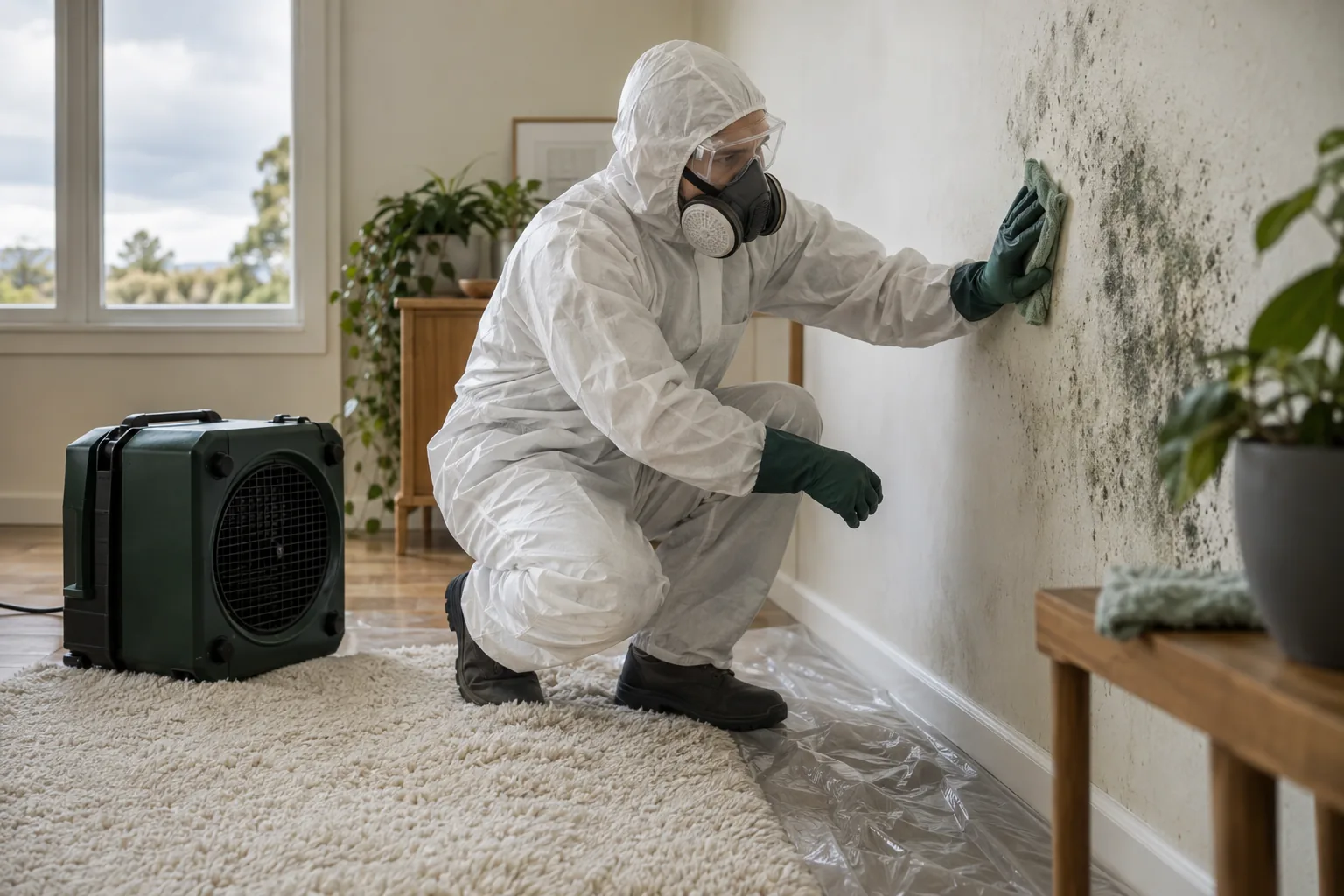
Filtered wall work does not include carpet cleaning
Remediation combines assessment, appropriate treatment and physical removal of visible contamination with air protection. Explain the wall’s exposed area and whether a rug, furniture or fixed fitting limits access. Filtration supports the process, but does not change the materials included in the standard surface agreement.
Carpets, furniture and other textiles are excluded. Our remediation page explains the service relationship. Avoid interpreting an equipment photograph as proof that upholstery or flooring textiles will be restored, tested or made suitable for continued use as part of the wall booking.
MOISTURE COMES FIRST
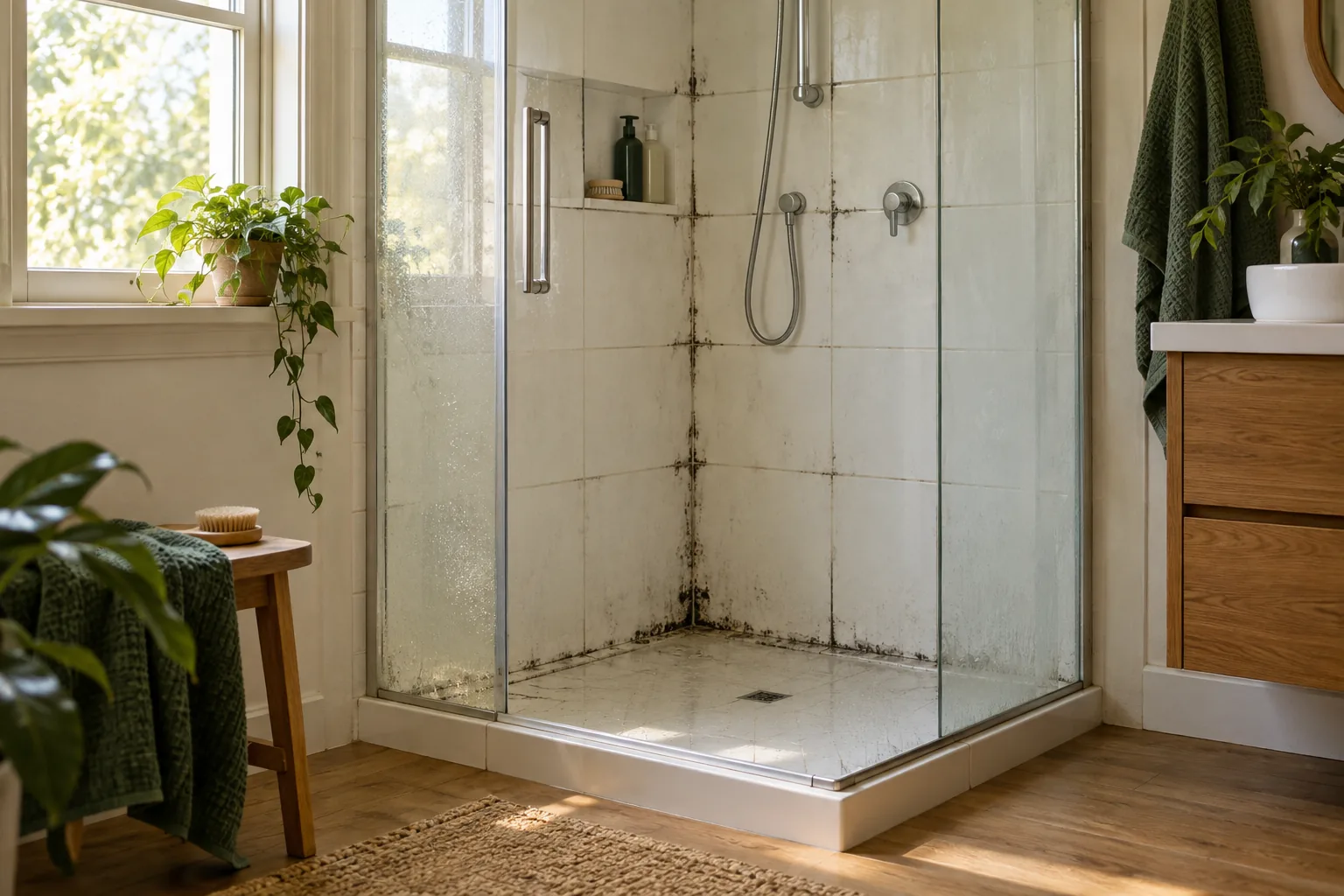
Identify water on the actual finish
Give concrete observations about water on the wall, hard floor or window, keeping any carpet concern separate. The professional hygrometer informs room-air relative humidity. It does not determine moisture inside carpet, certify a lining as dry or provide a promised material-probe investigation.
An unresolved leak or ventilation issue needs separate correction. Another occurrence remains possible if the conditions continue after visible work. Discuss inspection of accessible condition when the requested boundary is unclear, rather than assuming a treatment appointment investigates every covered floor layer.
FROM PREPARATION TO FOLLOW-THROUGH
The confirmed sequence for accessible contamination
1
Agree the accessible scope
Assess the exposed wall and reachable edges, agreeing suitable checks and noting textile materials outside the treatment scope.
2
Begin air protection
Set up confirmed HEPA air-scrubber protection before surface application, with working clearance arranged for the room.
3
Choose the treatment application
Apply HOCl by a suitable method, using ULV dry fog only where appropriate rather than as a textile-treatment promise.
4
Remove visible growth
Remove visible mould with professional H-class filtered equipment on the agreed finish, without adding carpet cleaning.
5
Continue final air cleaning
Continue HEPA air cleaning during and after the process, then discuss the result’s limitations and specific return instructions.
Treatable finishes need clear names
Walls
Wall sections above skirting need their actual visible boundary identified rather than a whole-room assumption.
Ceilings
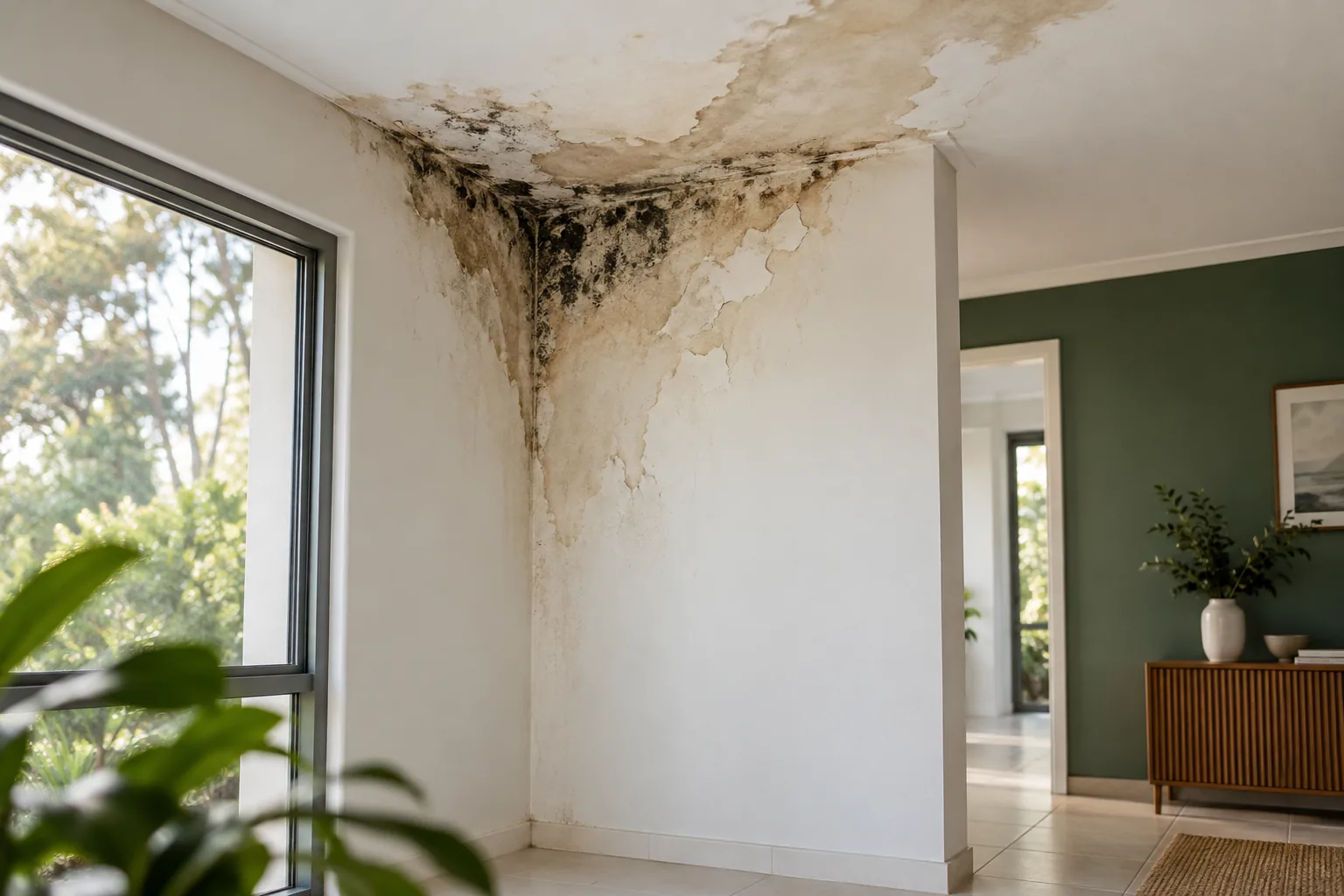
Ceiling concerns require safe access and their own description, even when the wall is the main request.
Bathrooms
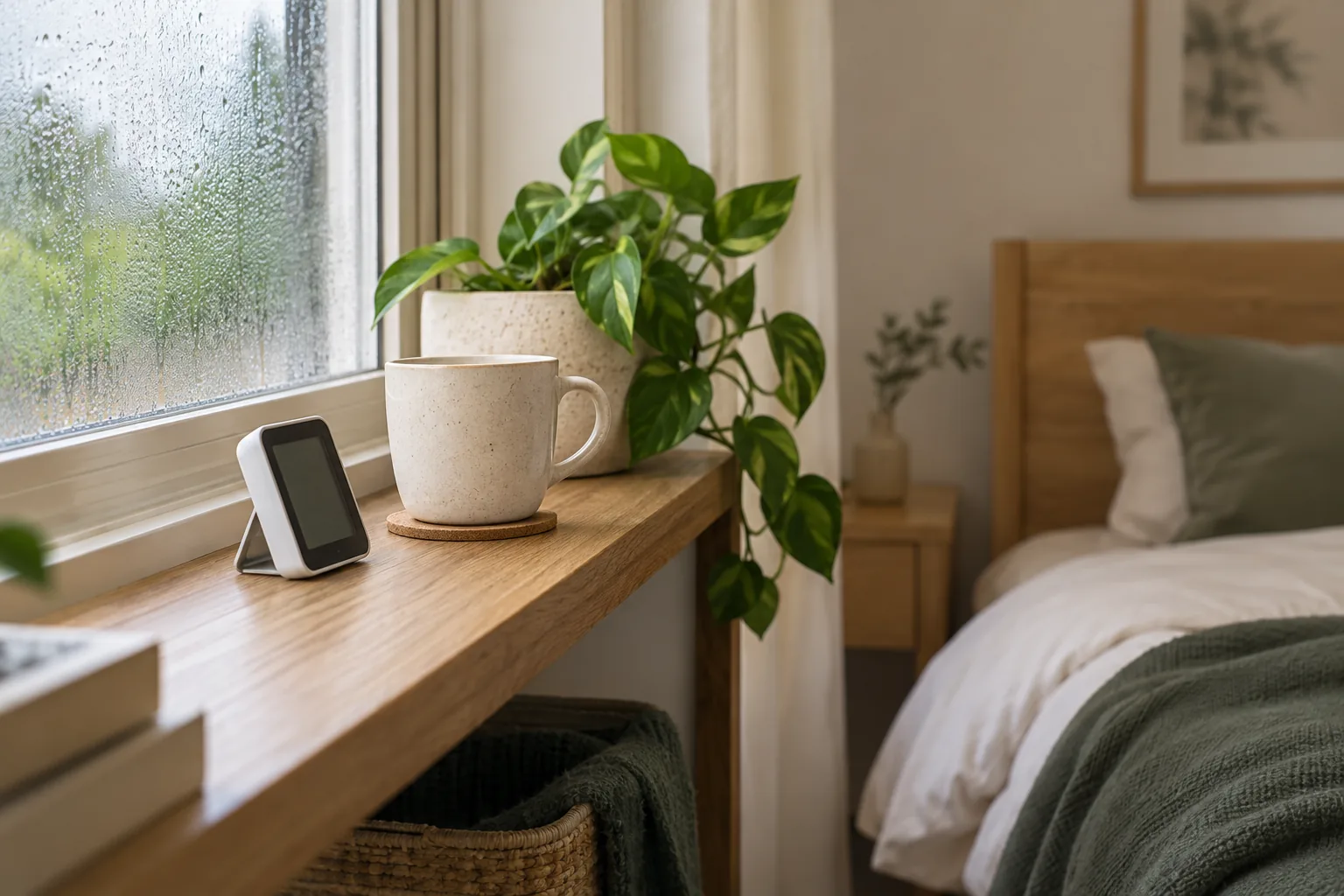
Bathroom mould on paint or joints should be distinguished from towels and bathmats, which are textile contents.
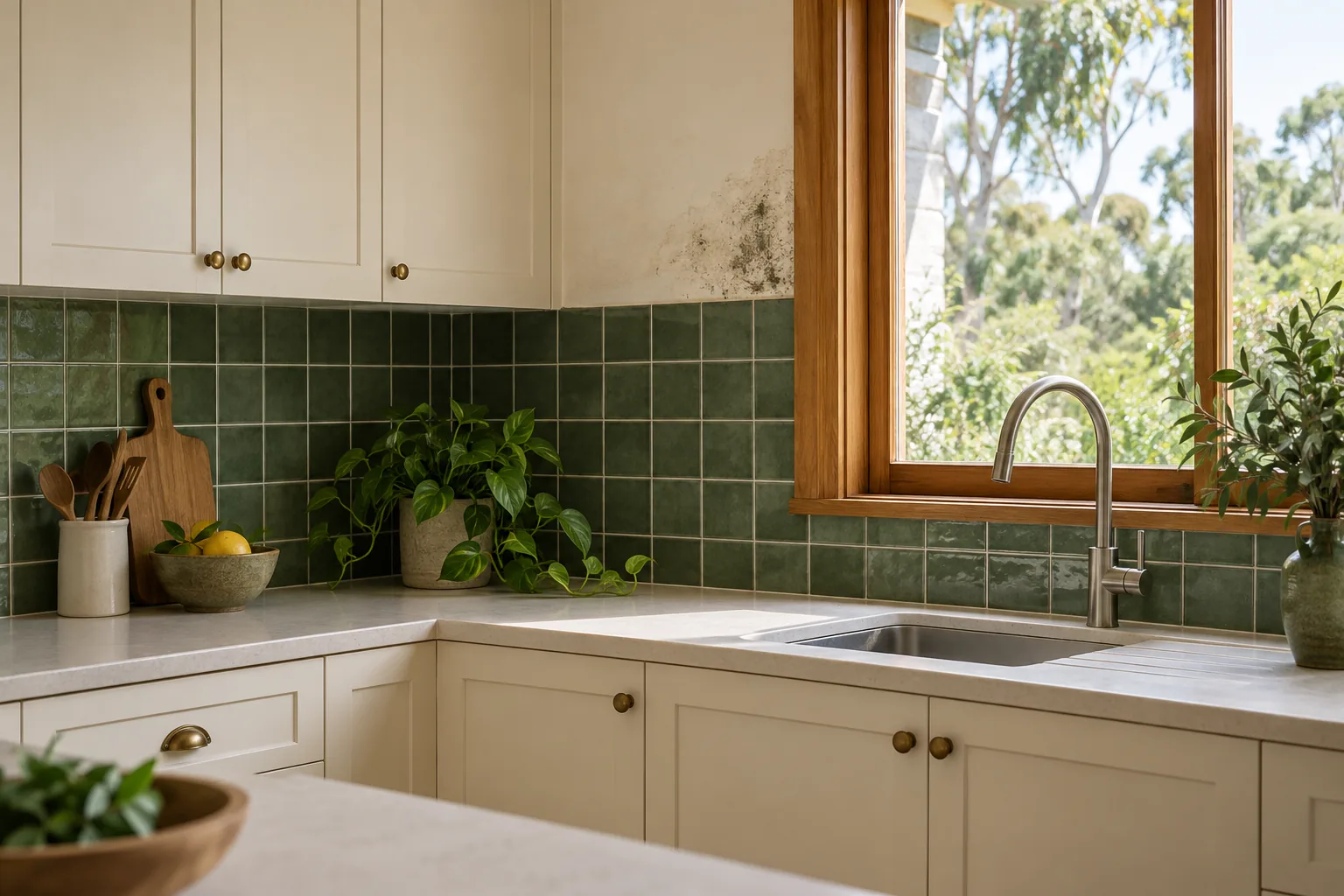
Kitchens
Kitchen exposed finishes may be discussed separately; fitted components and stored belongings are not automatically included.
Accessible affected surfaces
Accessible affected hard floors can be considered by agreement; carpets, rugs and concealed layers remain excluded.
PREPARE FOR THE ACTUAL JOB
Prepare the room without changing its exclusions
Ask what floor-area clearance and movable-content preparation are required, without treating preparation as carpet remediation. People and pets leave during treatment. The source’s average room guidance is around three hours, depending on size, contamination and access, not a universal finishing time or an hourly service.
Cosmetic stains may remain on the treated finish. Separate decorating, floor-covering and building-repair decisions from the contamination work. Obtain return instructions directly, and do not interpret a filtered machine, dry-looking wall or elapsed average duration as a laboratory clearance or assurance about excluded belongings.
AFTER THE TREATMENT
Keep follow-up focused on the treated wall
Follow the visible wall independently of any decision about excluded floor coverings.
Report fresh water or a newly appearing wall mark with its date.
Pursue continuing leak or ventilation repairs separately.
Keep safe access for observing the treated finish where practical.
Discuss wall scope and floor preparation
Explain the wall area, floor covering and available clearance when requesting the quote. Our published examples are labelled Mould Removal, so confirm applicability to this remediation task. A room amount should not be interpreted as carpet restoration, textile treatment or certification of every object remaining in the room.
MERLYNSTON · EXACT ADDRESS & ACCESS
Enquiries for nearby addresses
Supply the postal address when referring to Merlynston, and identify the requested wall. Explain fixed access limits to the entry contact. Nearby navigation does not confirm neighbourhood boundaries or treatment availability for this room.
Newlands · Pascoe Vale · Fawkner · Westbreen
Questions about remediation
Does H-class equipment mean carpet cleaning is included?
No. Filtered equipment is part of the confirmed visible-surface process; it does not override the exclusion of carpets and other textile materials.
Will a rug beside the wall be assessed as safe?
No such assessment is promised. Raise the rug concern separately and do not use wall treatment as a conclusion about excluded belongings.
Can an exposed hard floor be added to the job?
Discuss it explicitly. An accessible affected hard floor may be considered within agreed scope, but it is not automatically added to a wall quote.
Does the air scrubber remove all preparation requirements?
No. Agree clearance and contents preparation before attendance. Filtration does not make blocked surfaces accessible or permit people to stay during treatment.
What if growth extends below the visible skirting edge?
State the limitation. Covered or concealed layers are not standard accessible work, and the visible patch should not be described as complete treatment of hidden material.
How should I describe a later wall change?
Locate the new visible mark and report timing and any water observed. Keep it distinct from unchanged cosmetic staining or a separate carpet concern.
Clarify the wall you want addressed
Phone 03 8652 1296 with the exposed wall, floor covering and available access. Clarify the treatment boundary and preparation before booking.