
VISIBLE SURFACES · AGREED TREATMENT
Mould Remediation Newlands
Running a household air purifier does not decide whether a marked wall needs remediation. For an enquiry at your Newlands address, describe the visible finish and any earlier cleaning or appliance use. The treatment plan should rely on the current accessible condition, without presenting a consumer filter or its display as proof that contamination has been removed.
The current surface condition is considered.
Professional filtration supports the work.
Air-device readings stay in context.
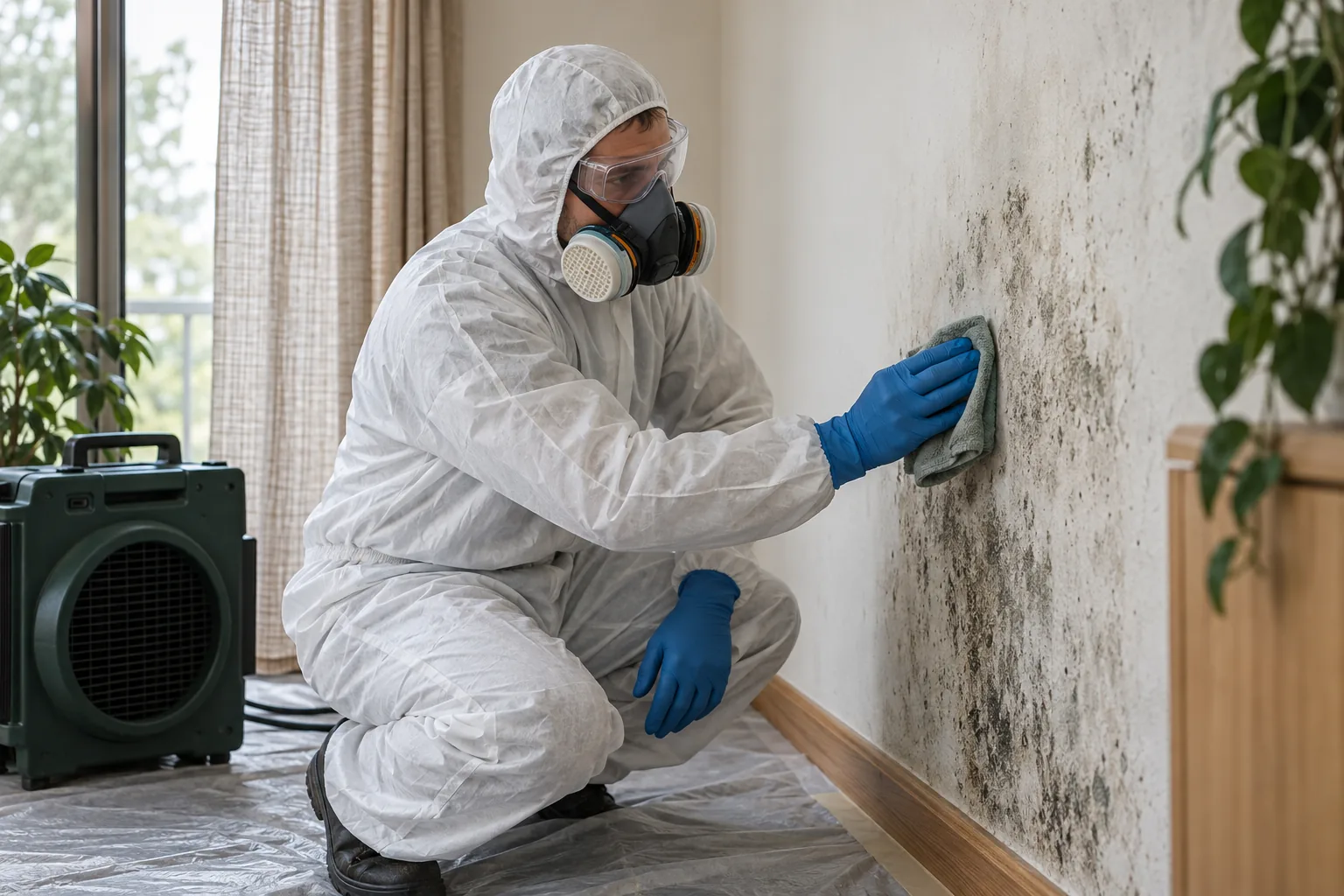

TREATMENT · FILTRATION · FOLLOW-THROUGH
A TREATMENT PLAN WITH CLEAR LIMITS
An appliance is not a surface treatment finding
Remediation includes assessment, filtration, appropriate application and physical removal of visible mould within an agreed accessible boundary. Explain what remains on the wall now, including any damage or cosmetic discolouration. A device that has been running nearby does not establish which finish is suitable for treatment.
Our remediation information outlines confirmed work. Professional equipment is part of that process, rather than a guaranteed package for every item in the room. Household purifier settings, filter changes and textile concerns do not become included services simply because they feature in the enquiry.
MOISTURE COMES FIRST
Keep air readings and material condition distinct
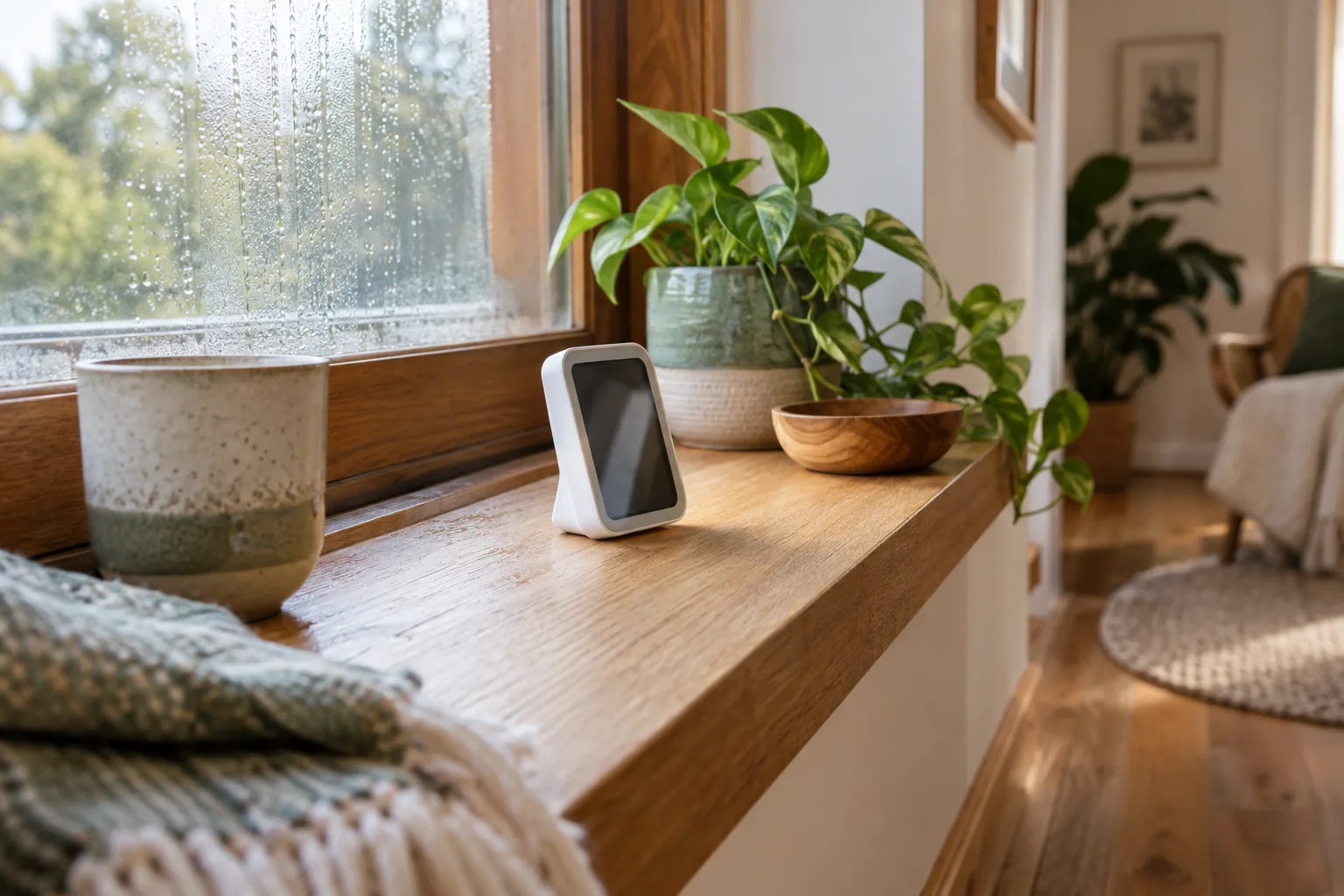
If you have recorded room readings, identify the device and units, and describe actual water or condensation separately. A professional hygrometer provides room-air relative-humidity context. It does not certify a concealed cavity as dry, and an air-quality display is not the same as a material-moisture measurement.
Known leaks or ventilation faults require separate correction. Continued dampness can allow another occurrence after visible treatment. An inspection discussion is useful when the accessible condition needs clarification; it does not promise laboratory testing or interpretation of every consumer sensor as a formal diagnostic result.
FROM PREPARATION TO FOLLOW-THROUGH
Supported work in the correct sequence
1
Agree the accessible scope
Assess visible accessible contamination and agree suitable surface work, including any previous application or covered-area limitations.
2
Begin air protection
Begin confirmed HEPA air-scrubber protection before treatment; this is professional work support, not a claim of sterile room air.
3
Choose the treatment application
Apply appropriate HOCl treatment, with ULV dry fog considered where suitable rather than an automatic response to a device reading.
4
Remove visible growth
Physically remove visible mould using professional H-class filtered equipment on the agreed surfaces, excluding household textiles.
5
Continue final air cleaning
Continue HEPA air cleaning during and after work, communicating specific return advice and any remaining cosmetic or moisture concerns.
Identify finishes beyond the device display
Walls
The wall’s exposed finish is considered directly, rather than classified from an adjacent purifier indicator.
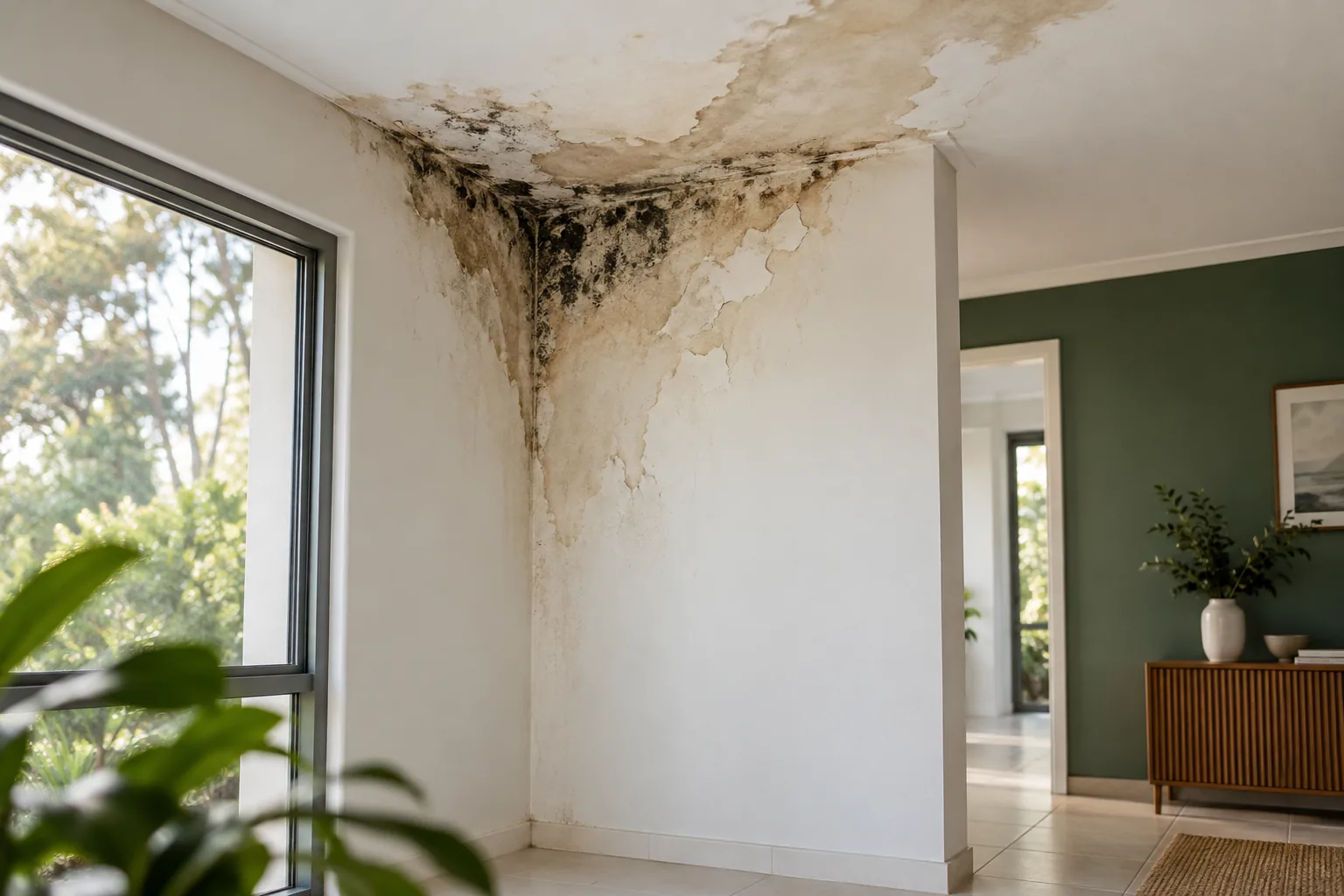
Ceilings
Ceiling marks need a safe accessible scope and description of any visible paint deterioration.
Bathrooms
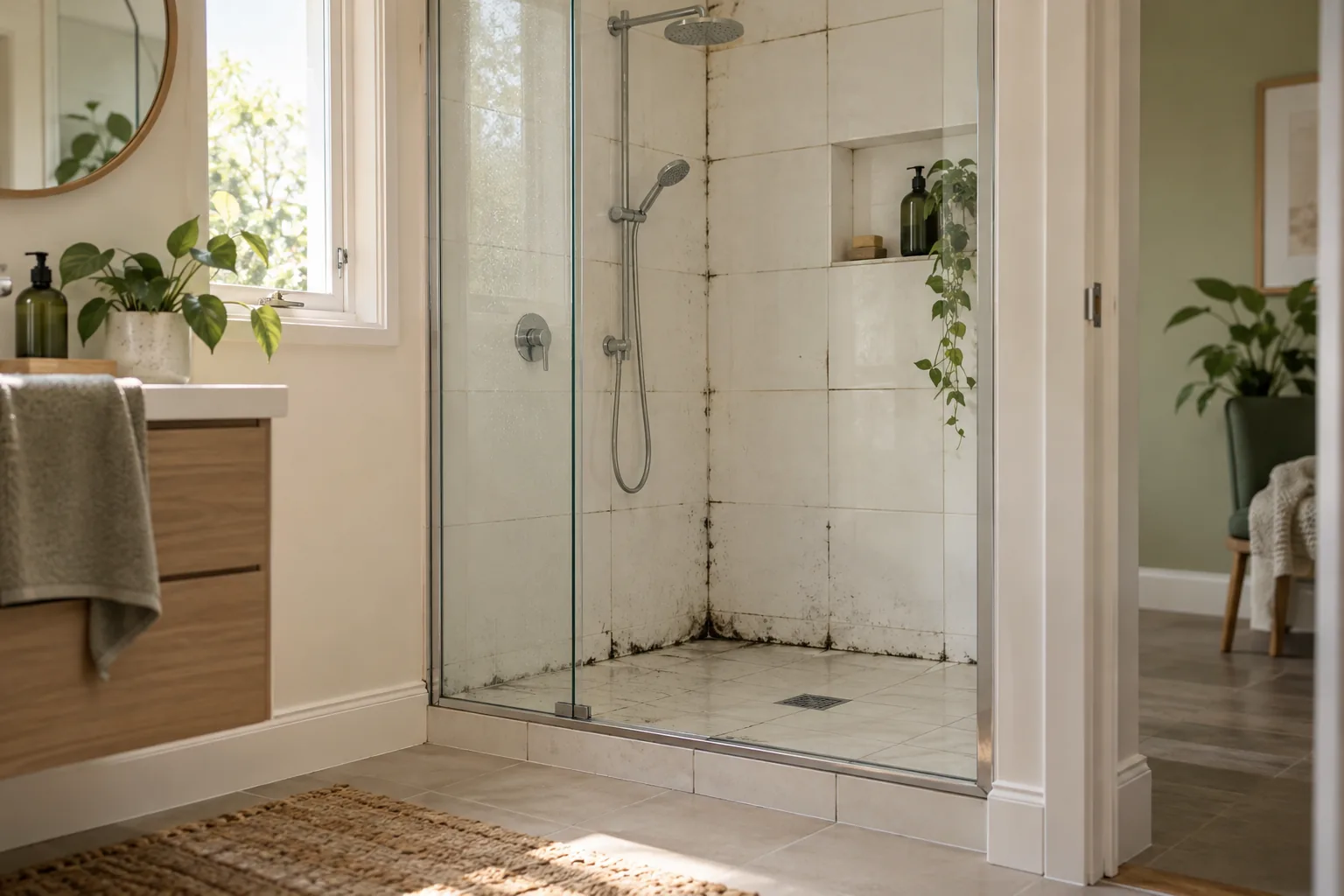
Bathroom paint and joints are distinguished; a household device does not establish concealed waterproofing condition.
Kitchens
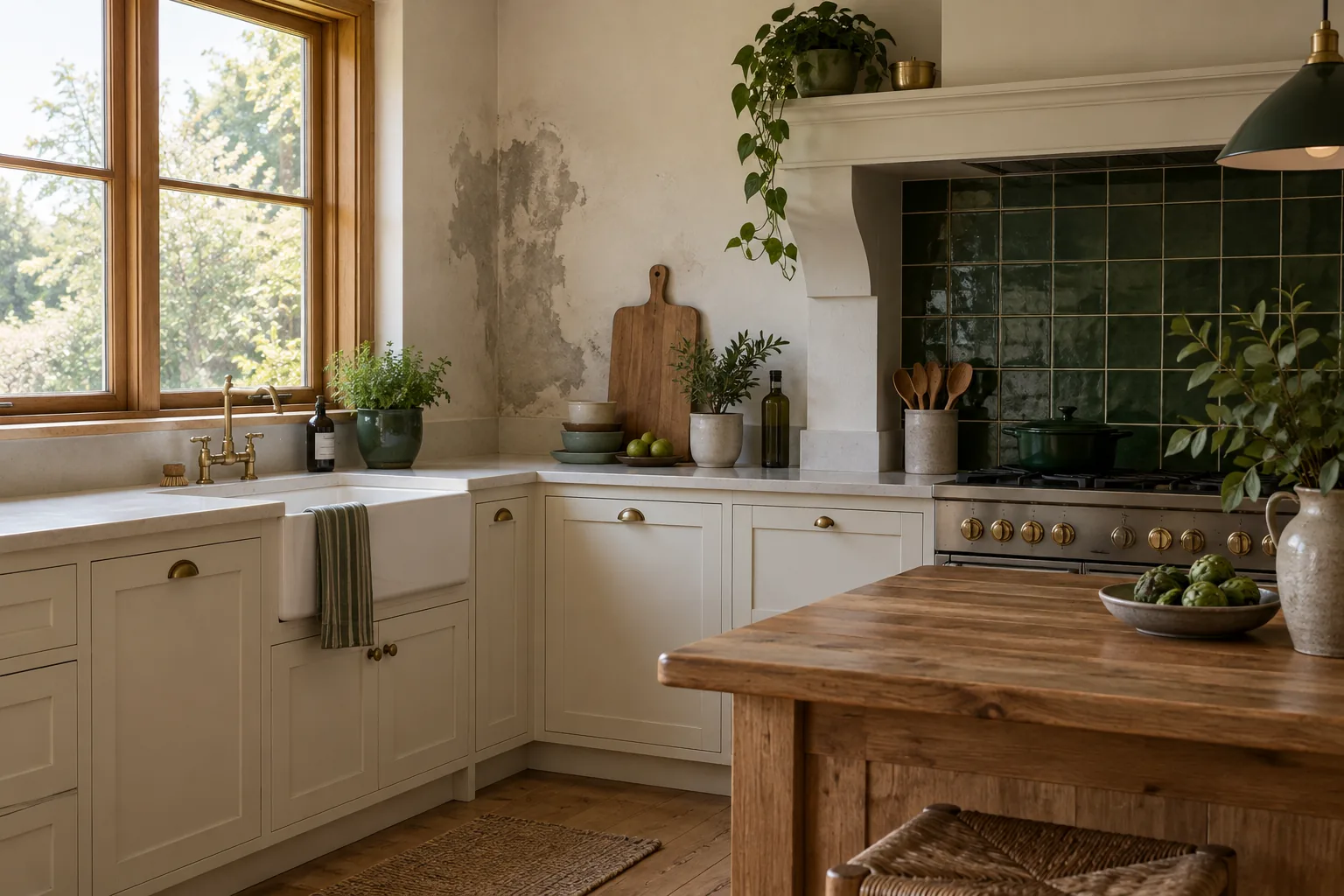
Kitchen wall and ceiling concerns should be identified as accessible finishes, apart from appliances and food contents.
Accessible affected surfaces
Other affected walls, ceilings or hard floors need agreement; furniture, fabrics and hidden layers remain outside standard treatment.
PREPARE FOR THE ACTUAL JOB
Prepare for the actual treatment
Ask whether household appliances need moving or other preparation before attendance, without assuming they will be serviced. People and pets leave during treatment. Approximately three hours per room is the source’s average guidance, with timing dependent on area, contamination and access rather than a fixed return interval.
A device display after work is not a promised clearance certificate. Residual stains can remain on the finish, and repairs or decorating are separate. Follow the technician’s specific return instructions instead of deciding to enter because a household indicator looks favourable or filtration is still operating.
AFTER THE TREATMENT
Track the finish rather than one dashboard
Focus follow-up on actual conditions and the visible finish.
Keep humidity records labelled with the device, units and time.
Arrange correction of a known leak or ventilation fault.
Report fresh growth or water separately from a changed purifier display.
Quote for the agreed surface task
Identify the visible treatment area and any household equipment that affects access when seeking the quote. The price table uses Mould Removal examples, so confirm applicable remediation figures. Do not assume device servicing, filter replacement, laboratory testing or an independently measured clearance is included in a room amount.
NEWLANDS · EXACT ADDRESS & ACCESS
Enquiries for nearby addresses
For an address described as Newlands, give the complete postal details and requested interior. An app’s location label is insufficient for entry. Nearby pages navigate other premises; confirm this room’s availability and scope directly.
Merlynston · Coburg · Fawkner · Pascoe Vale
Questions about remediation
Does a household purifier remove mould from the wall?
Do not assume that. Describe the current visible surface concern; using a room appliance does not establish that contamination has been physically addressed.
Will the technician service our purifier?
That is not confirmed as part of remediation. Mention its effect on access and seek separate appliance advice where needed.
Is a green air indicator permission to remain during treatment?
No. People and pets leave during treatment. Return arrangements follow the technician’s job-specific instructions, not a consumer display.
Can room humidity certify the wall cavity is dry?
No. Air-relative humidity is different from moisture in building layers, and the confirmed instrument is not a promise of concealed-material assessment.
Does HEPA filtration replace physical surface work?
No. The supported sequence also includes appropriate treatment and physical removal of visible mould using professional H-class filtered equipment.
What should I keep in a follow-up record?
Record the visible location, any new water or growth, and clearly labelled room readings. Keep appliance indicators separate from conclusions about the treated finish.
Discuss the wall’s condition today
Call 03 8652 1296 with the current surface condition and available access. Explain previous appliance use without treating its display as a treatment outcome.