
SURFACE TREATMENT · MOISTURE FOLLOW-THROUGH
Mould Remediation Lysterfield
A mark running along the bottom of a wall deserves more detail than “the room is mouldy”. For a Lysterfield enquiry, describe the visible skirting and adjacent structural surfaces, including any recent wetting. Decide what treatment can reach before replacing finishes that might conceal the same problem.
Lower-wall scope explained
Floor coverings separated
Water-source repairs discussed
TREATMENT & FOLLOW-THROUGH
UNDERSTANDING REMEDIATION
Identify what is exposed at floor level
Say whether growth is on painted wall, skirting or the exposed floor finish. Explain any lifted covering without pulling more material up for the enquiry. Changes after water use or rainfall are observations to share, not proof of where water is entering.
Our mould treatment includes agreed visible accessible structural surfaces. Carpet and other textiles are excluded. Skirting removal, floor replacement and concealed-space work are not automatic additions; agree any separate trade sequence before opening or closing the affected area.
THE MOISTURE CONNECTION
Treat water entry as a separate decision
If the lower wall is still being wetted, discuss that before booking treatment. A plumber or building repairer may need to address the cause. Removing visible growth cannot mend a failed pipe or establish that moisture behind a finish has disappeared.
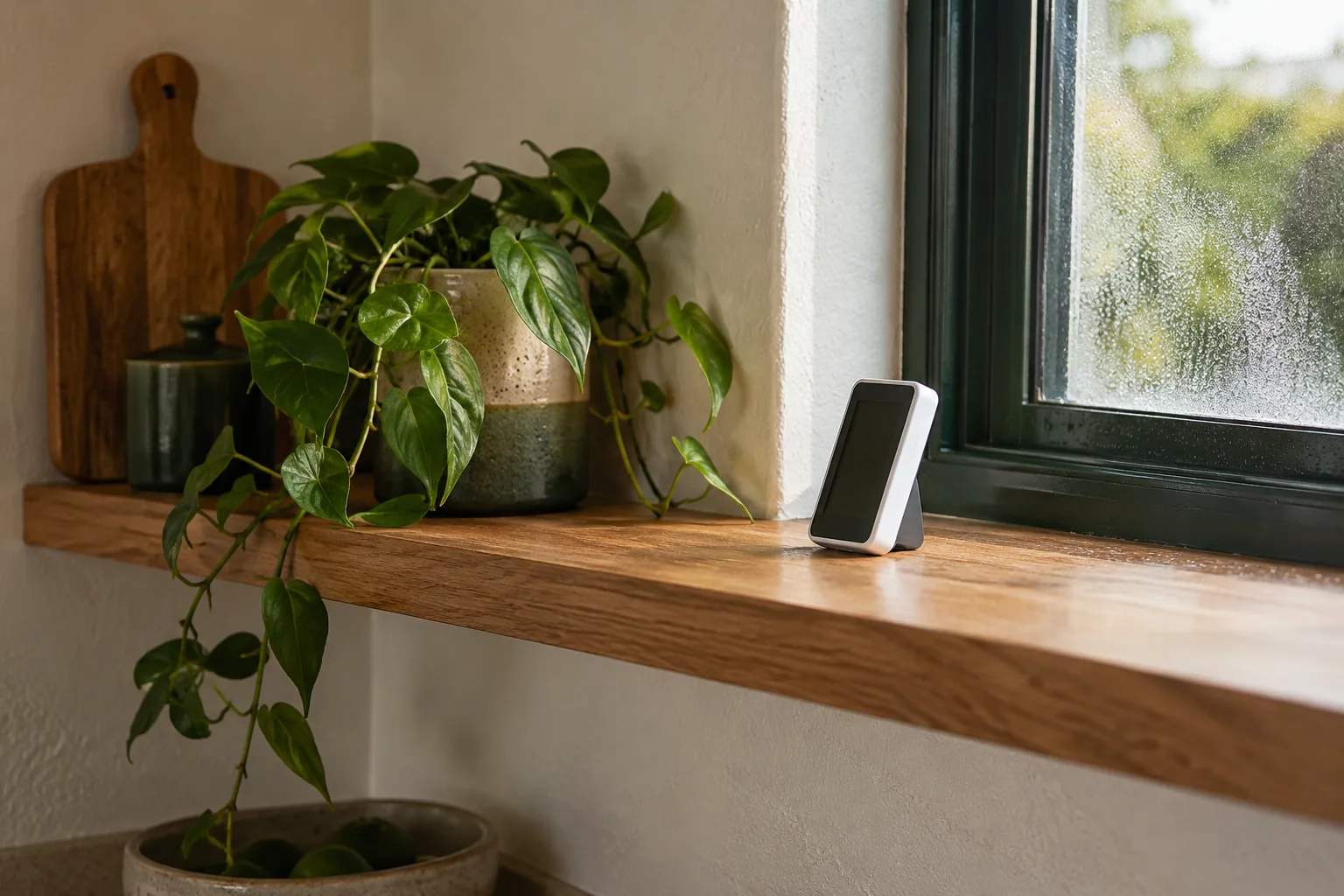
The professional hygrometer reads relative humidity in room air, rather than moisture in the skirting or floor structure. Inspection advice can help frame further questions when the source or concealed condition is uncertain; a particular probe or destructive investigation is not promised.
PLAN · FILTER · TREAT · REMOVE · CONTINUE
A defined lower-wall treatment sequence
1
Agree the reachable surfaces
Assessment distinguishes visible wall, skirting and exposed floor areas from coverings or cavities. Explain unfinished repairs that may affect the working boundary.
2
Protect the work-area air
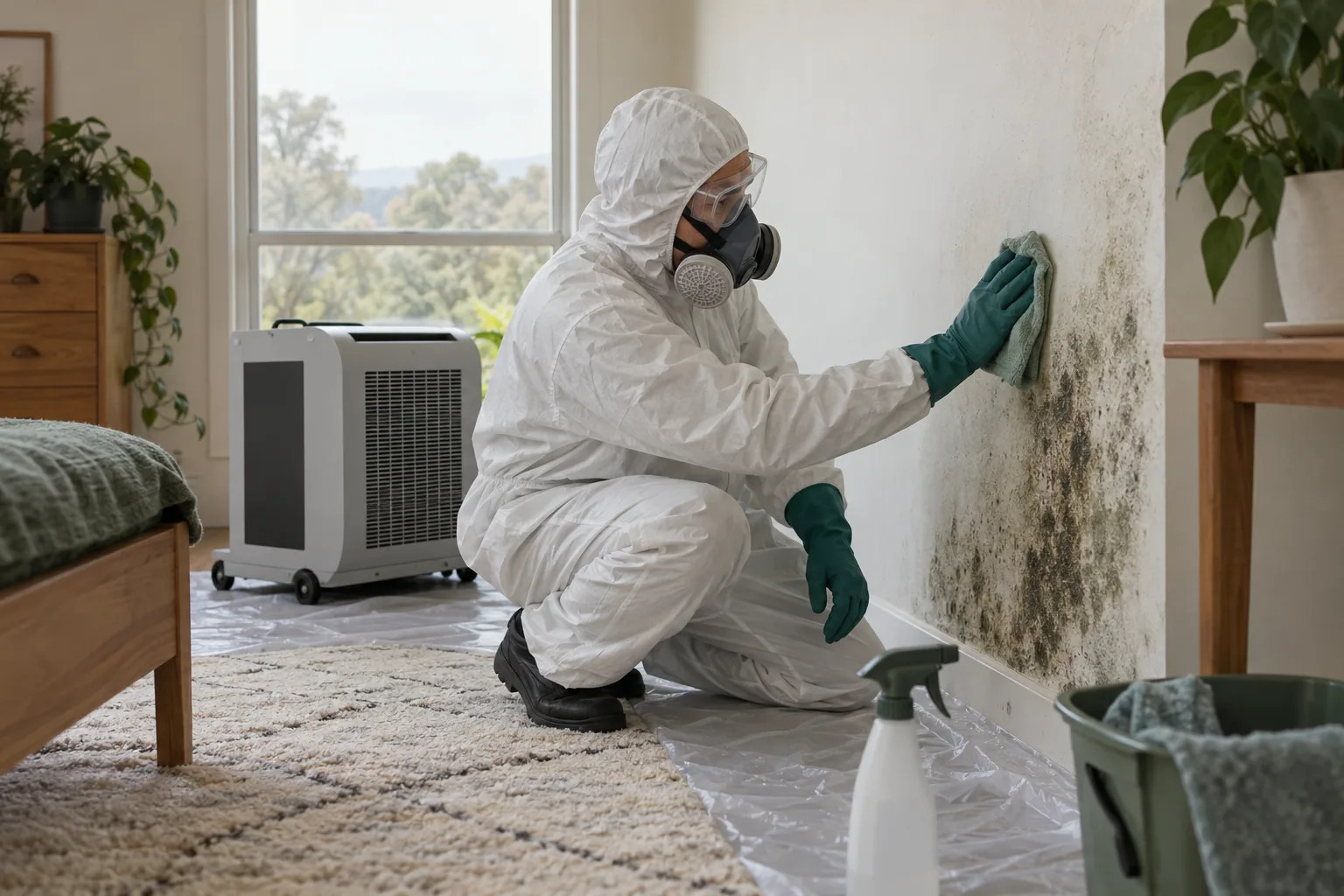
A HEPA air scrubber is established ahead of treatment. Its setup needs usable access around the affected lower wall, rather than equipment squeezed into a blocked corner.

3
Use the appropriate application
HOCl treatment is applied within the agreed scope. ULV dry fog is used in most cases where suitable; it does not extend treatment into an unassessed floor cavity.
4
Remove visible contamination
Professional equipment with H-class filtration physically removes accessible growth. Replacement of damaged skirting or other materials requires a separate agreement.
5
Continue filtration afterwards
HEPA air cleaning remains active during and after treatment. Discuss residual marks and ongoing dampness before deciding how the repaired room will be finished.
Keep the surfaces distinct
Walls
Describe the wall above the skirting separately from the trim, particularly when staining extends beyond the visible growth.
Ceilings
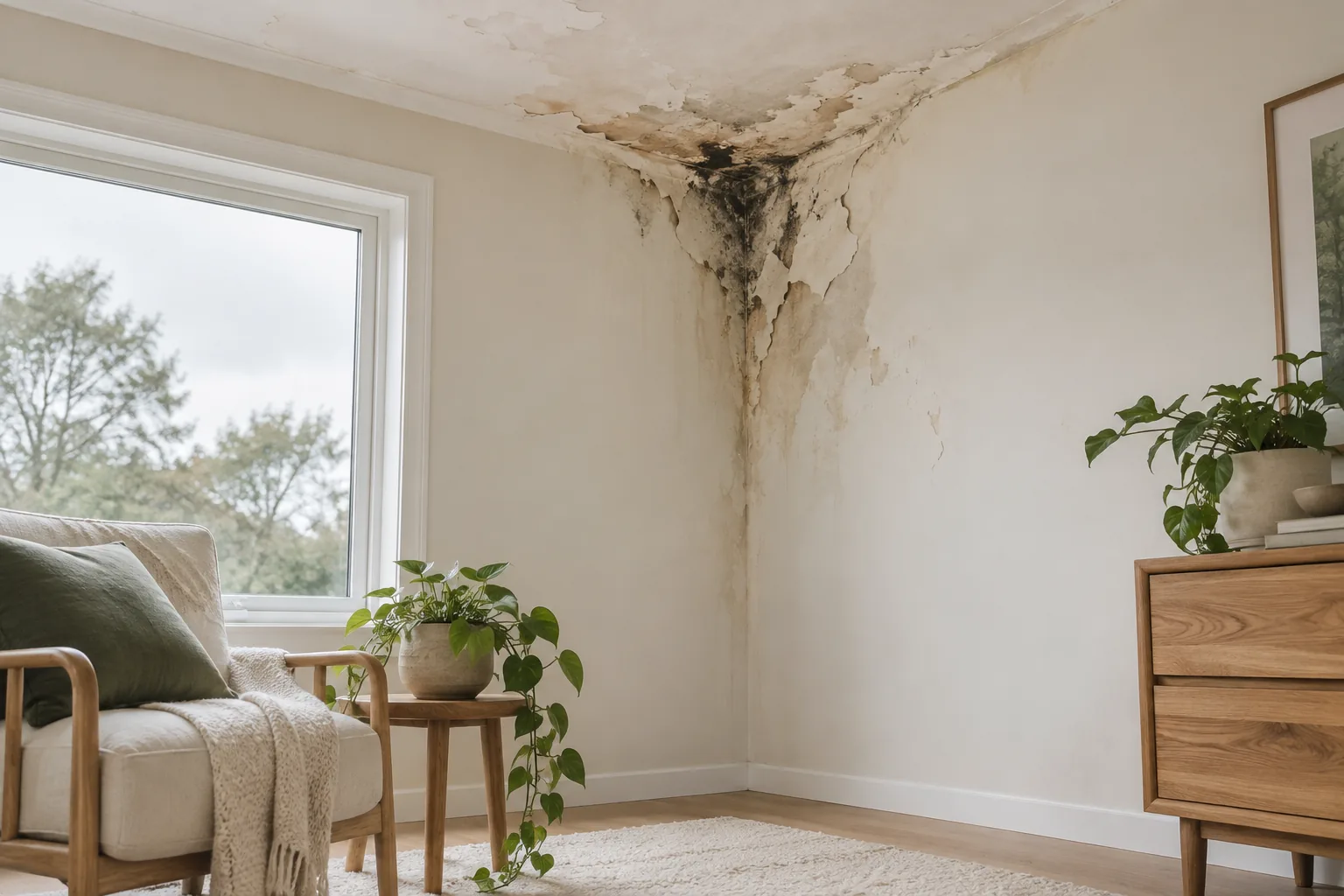
A ceiling patch elsewhere should not be attributed to the same source without assessment; note it as an additional visible area.
Bathrooms
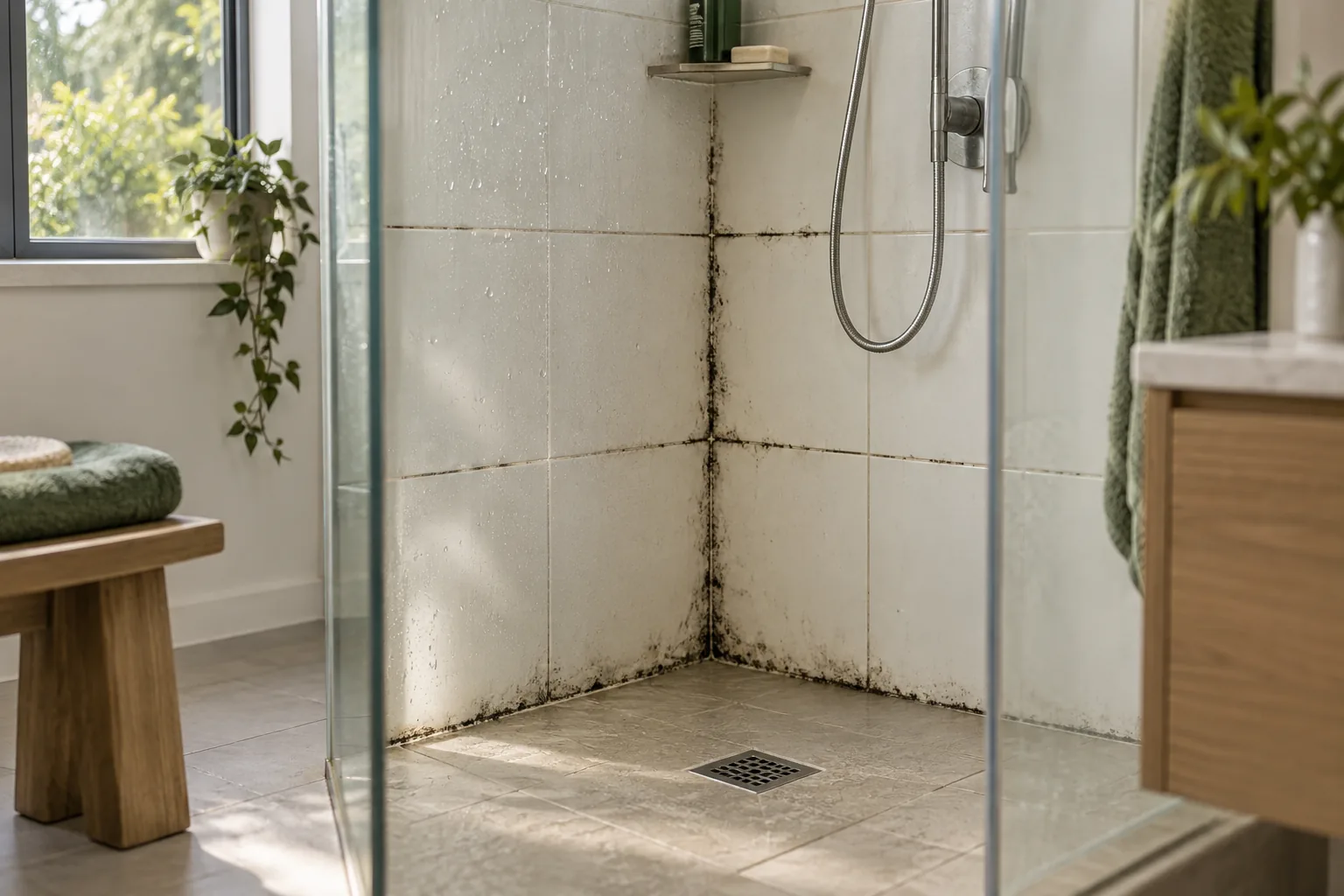
In bathrooms, explain whether water reaches the lower wall after ordinary use. Treatment does not replace a plumbing or waterproofing repair.
Kitchens
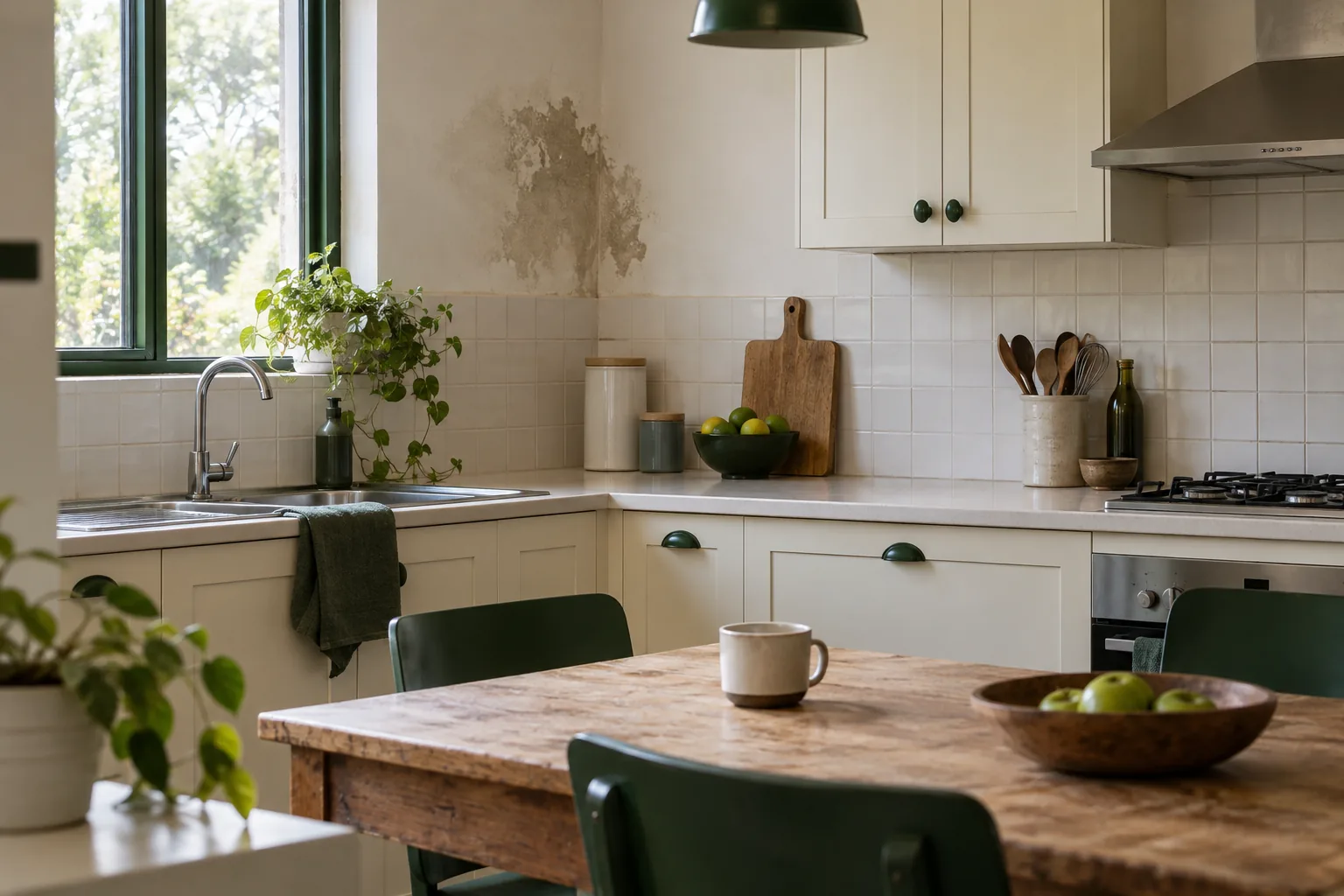
For kitchens, show accessible wall or floor marks and mention relevant water-use timing. Behind cabinetry is not assumed accessible.
Accessible affected surfaces
An exposed structural floor may be discussed; carpet, rugs and concealed under-floor areas are outside the standard visible-surface promise.
WHAT TO EXPECT
Plan the visit around access and repairs
Discuss furniture clearance and a route to the low-level patch. People and pets must be away during treatment; obtain specific instructions for leaving and returning. The source average is about three hours per room, but floor-level access, size and extent can change duration.
Treatment may leave cosmetic discolouration. Repainting or reinstating finishes is separate, and hidden moisture is not certified absent. If repair work will reopen the area, explain that programme before the appointment so treatment and finishing decisions are not based on an incomplete boundary.
FOLLOW THE MOISTURE
Watch the same junction after work
Follow-up should focus on renewed wetting as well as the visible appearance.
Note when dampness returns near the skirting and what happened beforehand.
Complete agreed water-source repairs through the appropriate trade.
Maintain ventilation and avoid using a fresh finish to conceal unresolved dampness.
Quote the accessible work accurately
When checking current prices, describe the exposed wall and floor boundary, coverings and repair status. The listed room examples are labelled Mould Removal; confirm their relevance to remediation. Do not assume floor reinstatement or skirting replacement is priced in.
LYSTERFIELD · EXACT ADDRESS & ACCESS
Discuss each nearby address on its merits
A second property near Lysterfield needs its own access and moisture description. Confirm availability and authorisation for that address rather than treating a nearby enquiry as an extension of the same job.
Rowville · Upper Ferntree Gully · Knoxfield · Ferntree Gully
Questions about remediation
Should I lift more carpet to expose the edge?
Do not lift more solely to prepare for a call. Explain what is already visible and discuss suitable preparation; carpet is excluded from the structural treatment scope.
Will removing the skirting be part of remediation?
Not automatically. Agree whether separate removal or repair work is needed before treating the accessible surfaces.
Can the wall be treated while a leak continues?
Explain continuing wetting before arrangements are made. The cause needs a separate plan, because remediation cannot repair the leak or prevent renewed growth under persistent damp conditions.
Does a normal humidity reading mean the floor is dry?
No. Room-air humidity does not measure moisture within the floor structure or behind a finish.
What should I mention about a recently repaired pipe?
Give the repair date, where water appeared and whether dampness has continued. That history helps explain the current condition without proving that every affected material has dried.
Is repainting the lower wall included?
Repainting is a separate scope. Ask about remaining marks and moisture concerns before arranging the decorative work.
Clarify the lower-wall boundary
Call 03 8652 1296 with the visible surfaces, wetting history and repair status. Discuss a workable treatment scope before reinstating finishes.