
SURFACE TREATMENT · MOISTURE FOLLOW-THROUGH
Mould Remediation Selby
A repair appointment and a remediation appointment can involve the same room without covering the same work. For a Selby enquiry, explain what has already been repaired, what remains open and which visible surfaces need treatment. Agree who does what before the next visit changes the area.
Trade sequence discussed
Treatment boundary recorded
Unfinished repairs identified
TREATMENT & FOLLOW-THROUGH
UNDERSTANDING REMEDIATION
Explain the work between appointments
Give the dates and scope of completed repairs if known, rather than describing the whole problem as “fixed”. Mention any planned removal or reinstatement that will change access. The technician needs to understand the room as it will be on treatment day, not only as it appeared earlier.
Our structural remediation work treats visible accessible contamination. A repairer’s task may address water entry or damaged materials, while treatment addresses the included surfaces. Neither appointment should be assumed to include the other trade’s work or an unagreed second visit.
THE MOISTURE CONNECTION
Separate repaired faults from drying questions
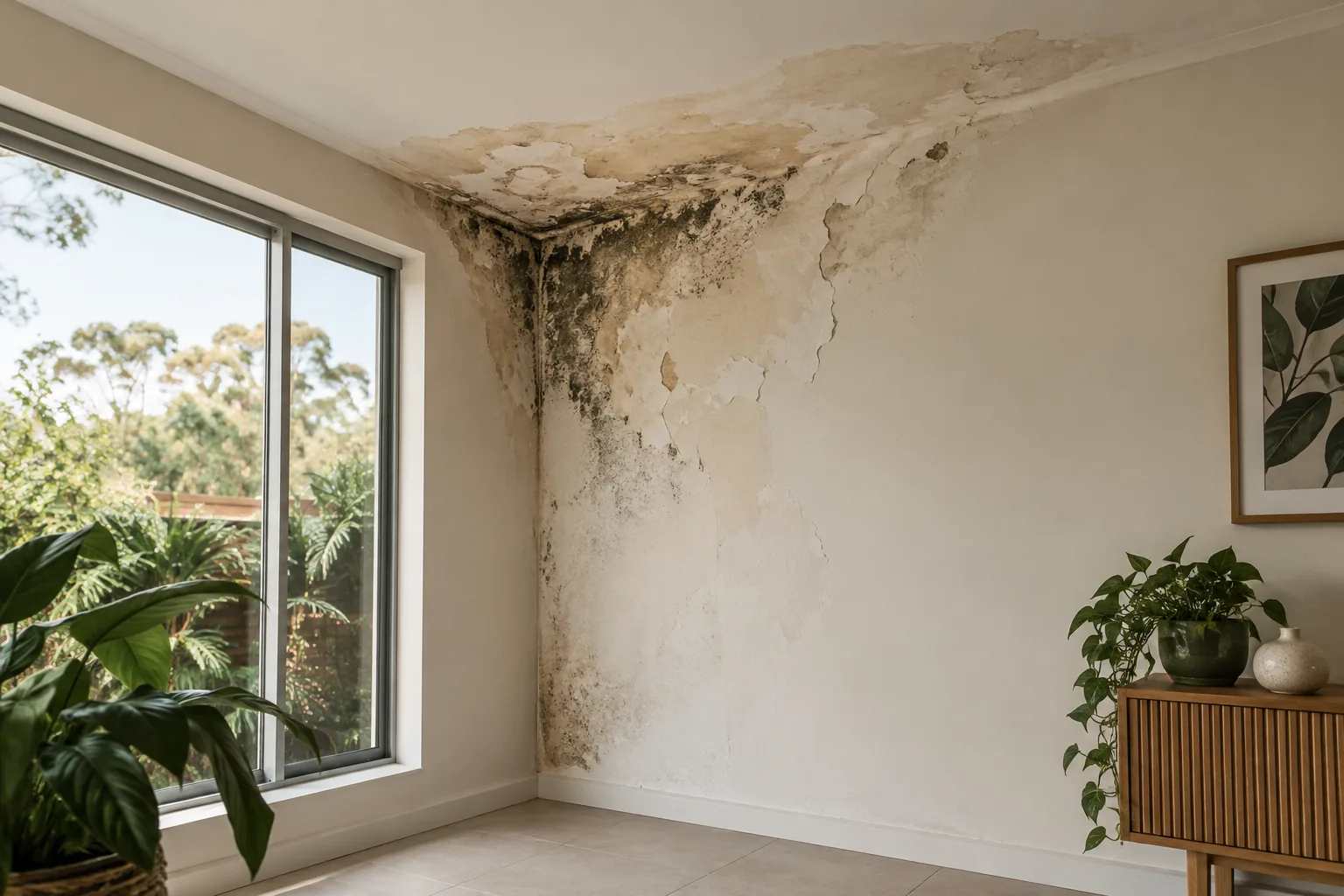
A completed repair is useful history, but it does not by itself establish the condition of every affected material. Describe continuing dampness or new staining after the repair. Further plumbing or building questions need their own responsible person and scope.
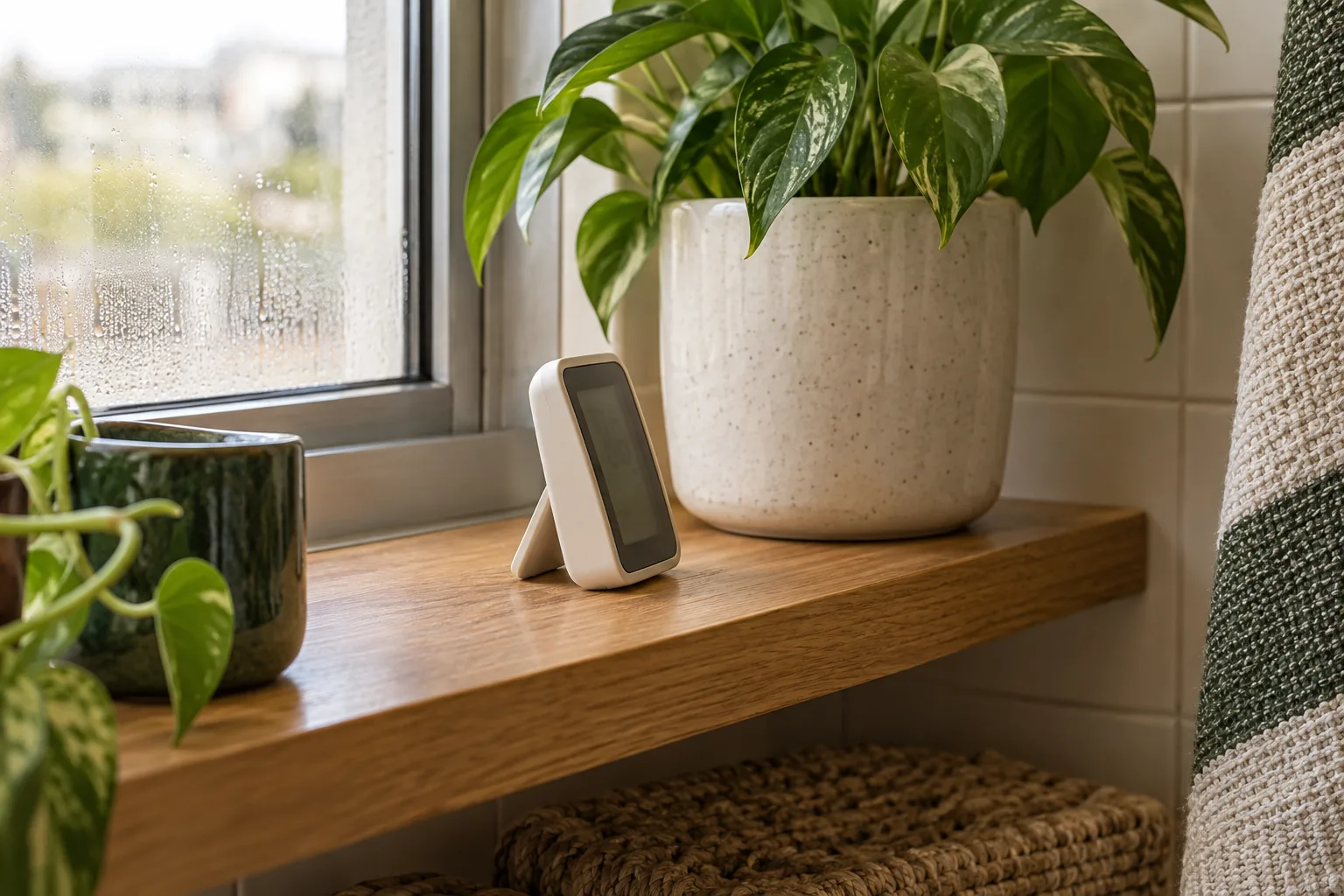
The confirmed hygrometer assesses room-air relative humidity, not moisture inside repaired construction. Where the remaining condition is uncertain, discuss inspection questions; specific material instruments, hidden-space checks and written clearances are not automatic inclusions.
PLAN · FILTER · TREAT · REMOVE · CONTINUE
Coordinate the treatment stages
1
Review the current exposed area
Assessment confirms accessible contamination and the repair status. Identify surfaces that another trade intends to open, replace or cover before treatment is arranged.
2
Set the air-cleaning equipment
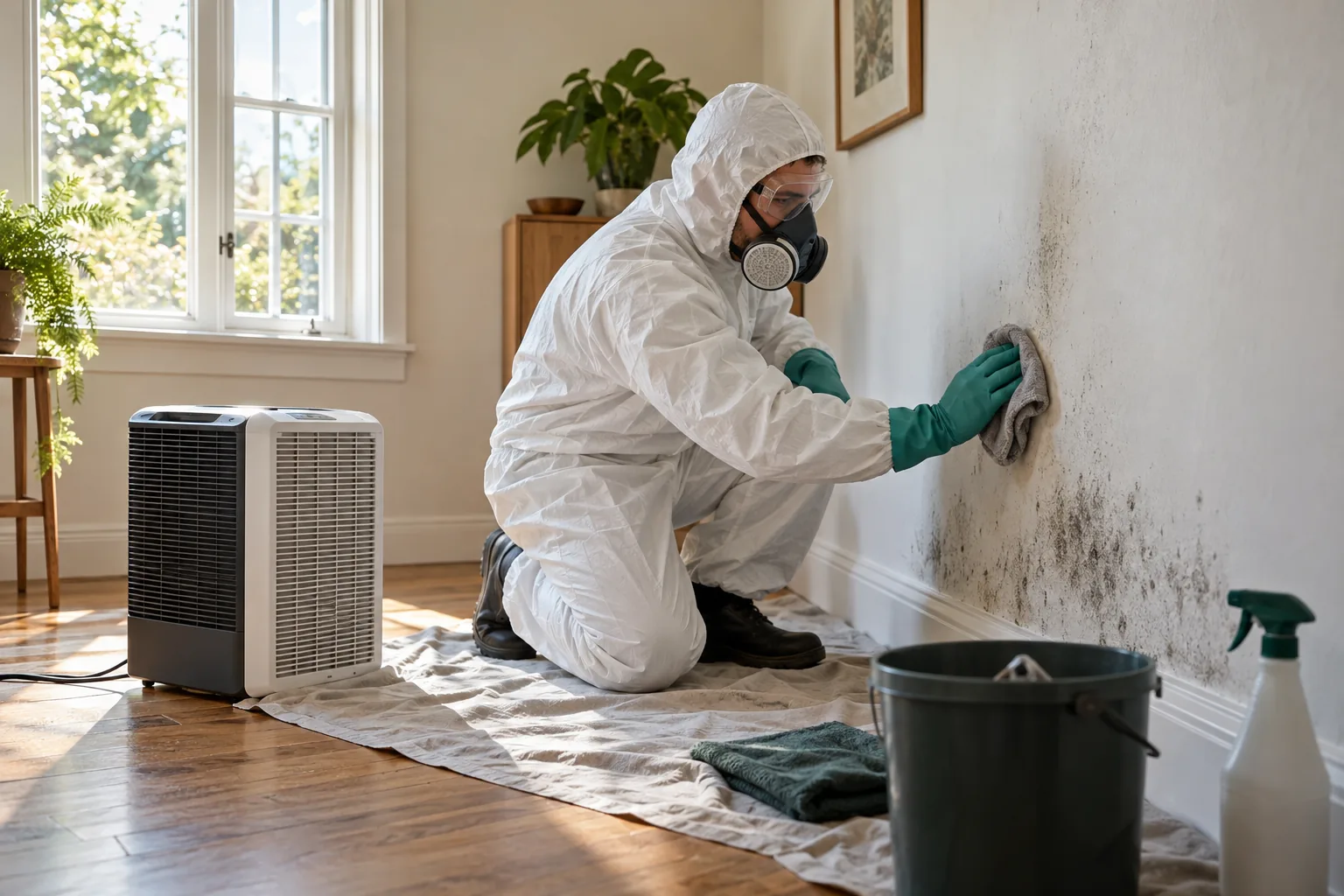
The HEPA scrubber is established before treatment starts. Clear the working route so equipment can be used alongside the agreed structural access.

3
Apply suitable treatment
HOCl application is part of the confirmed process, combined with ULV dry fog where appropriate in most cases. A treatment stage does not close out the repairer’s separate obligations.
4
Physically remove accessible mould
Professional equipment with H-class filtration removes visible growth. Material replacement and finishing remain distinct tasks unless separately agreed.
5
Continue the final air cleaning
HEPA filtration runs during and after remediation. Discuss completion observations and the next trade’s programme without interpreting the appointment as a certification of all earlier repairs.
Describe what each trade will leave exposed
Walls
Wall treatment needs an account of the finish and any opening or reinstatement planned nearby; concealed areas are not included by implication.
Ceilings
For ceilings, tell the technician whether a repairer has replaced a section or plans further work before the appointment.
Bathrooms
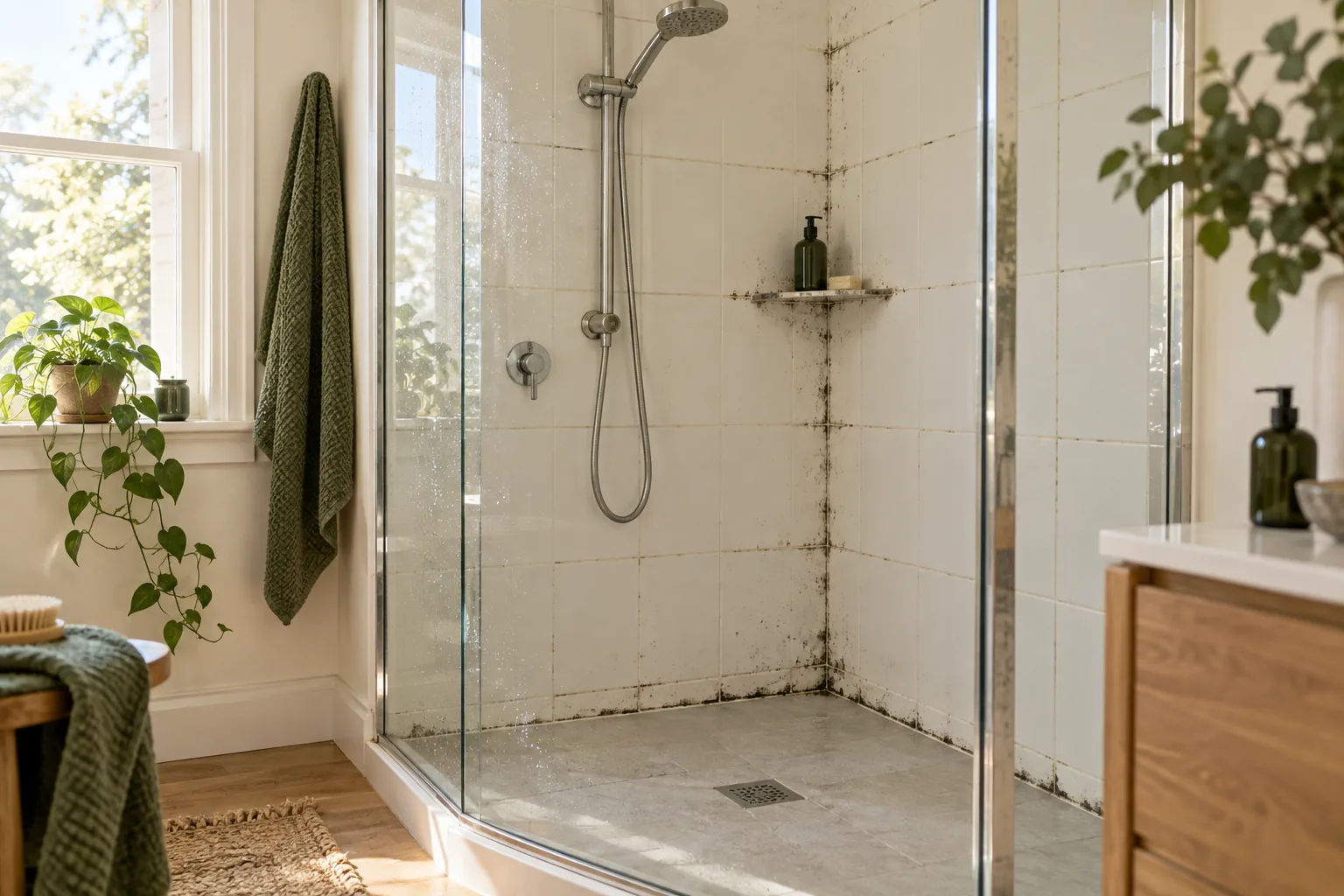
In bathrooms, distinguish affected structural surfaces from plumbing or waterproofing work that is still being arranged.
Kitchens
For kitchens, specify accessible wall and floor marks separately from repairs behind cabinetry or appliances.
Accessible affected surfaces
Exposed floors can be discussed, but carpet and other textiles remain excluded even when the repair programme affects the whole room.
WHAT TO EXPECT
Agree a practical programme
Confirm which preparatory tasks will be complete and discuss fragile items before moving them. People and pets leave during treatment, with job-specific advice about departure and return. Average source guidance of roughly three hours per room varies with size, extent and access; it is not a shared timetable for all trades.
Some cosmetic marks may remain. Repainting and decorative restoration need separate decisions, and unresolved moisture can allow recurrence. Keep the treatment boundary and remaining repair questions clear so one completed appointment does not accidentally end follow-up on another unfinished task.
FOLLOW THE MOISTURE
Keep the handover useful
A clear record of the sequence is more useful than calling every stage complete at once.
Retain the repair details and note whether dampness continues afterwards.
Ask who will assess unresolved building faults or damaged materials.
Maintain ventilation and monitor the included surfaces after returning as instructed.
Distinguish treatment cost from repair cost
For price information, explain the exposed area and remaining trade programme. The table is headed Mould Removal, so confirm applicability to remediation. A repair invoice or decorating quote does not establish what this treatment appointment includes.
SELBY · EXACT ADDRESS & ACCESS
Enquiries near Selby
If another nearby property also needs work, give its own repair history and access arrangements. Availability and the treatment boundary require confirmation separately; a shared repairer does not create one combined remediation scope.
Questions about remediation
Should treatment be booked before the repairer finishes?
Discuss the programme first. Unfinished work may change access or the moisture situation, so the appropriate sequence needs agreement for the actual job.
Does a repaired leak mean treatment can proceed immediately?
It does not establish immediate readiness. Explain the repair and current visible condition so the remaining questions can be considered.
Will the technician check the repairer’s workmanship?
Do not assume a workmanship inspection is included. Agree the visible remediation scope and refer repair-performance questions to the responsible trade.
What if another trade opens more wall after treatment?
Newly exposed areas need a separate discussion. The earlier scope cannot be assumed to cover contamination that was concealed at the time.
Can I use one completion note for every task?
Keep the tasks distinct. A treatment appointment does not provide a laboratory clearance or certify that repairs, hidden materials and decorating are complete.
Is a return visit included if the programme changes?
Do not assume it is included. Explain possible changes when quoting and ask how an additional visit or newly exposed surface would be handled.
Agree the sequence before the next appointment
Call 03 8652 1296 with the repair status, visible contamination and planned changes to access. Clarify the treatment boundary and separate trade tasks.