
SURFACE TREATMENT · MOISTURE FOLLOW-THROUGH
Mould Remediation Tecoma
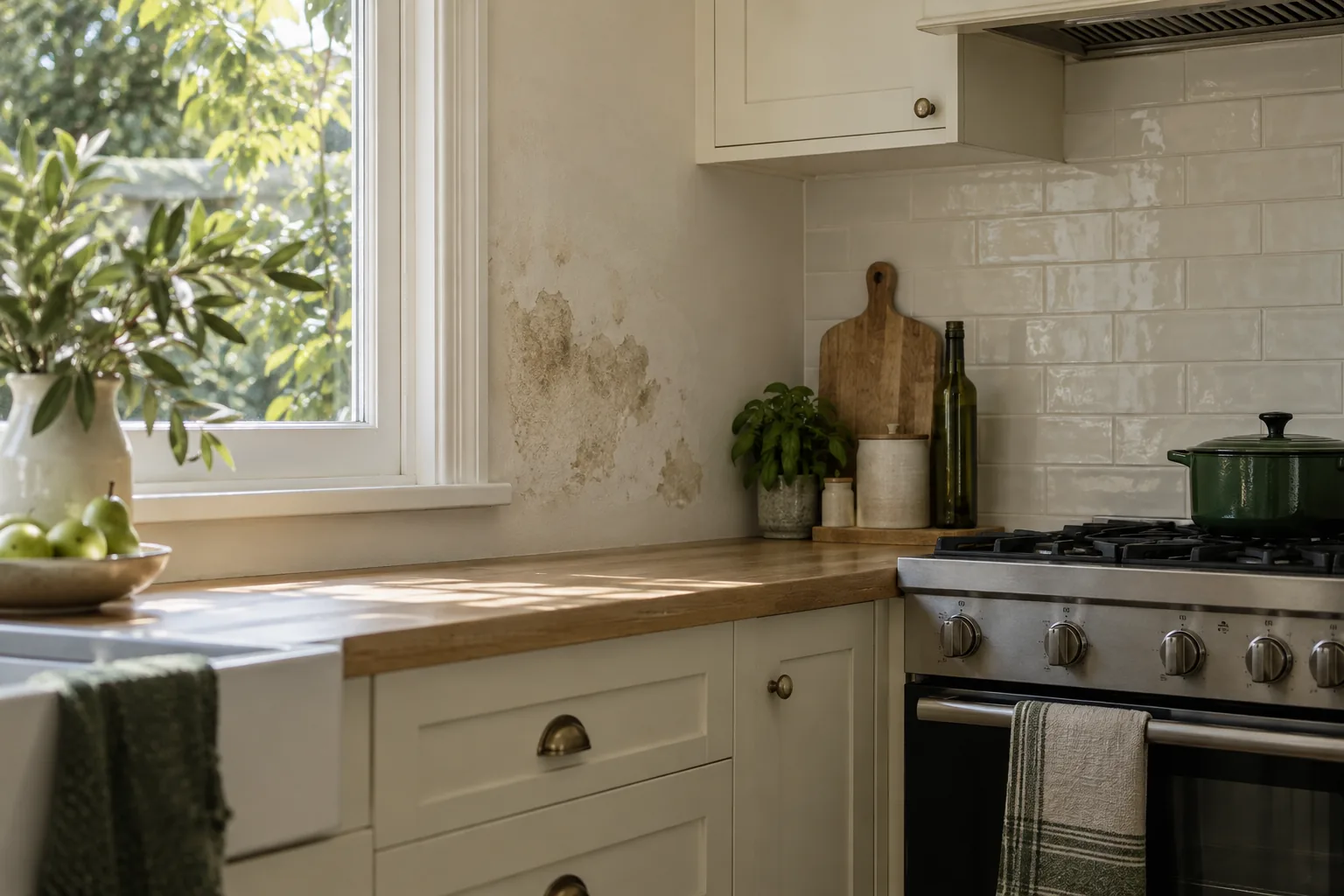
Removing a storage unit can reveal a wall that was previously hidden. For a Tecoma enquiry, explain what is exposed now, whether joinery work is continuing and where the visible growth ends. Treatment should be agreed before another unit conceals the area again.
Newly visible scope reviewed
Joinery work distinguished
Reinstatement questions raised
TREATMENT & FOLLOW-THROUGH
UNDERSTANDING REMEDIATION
Make the newly exposed area clear
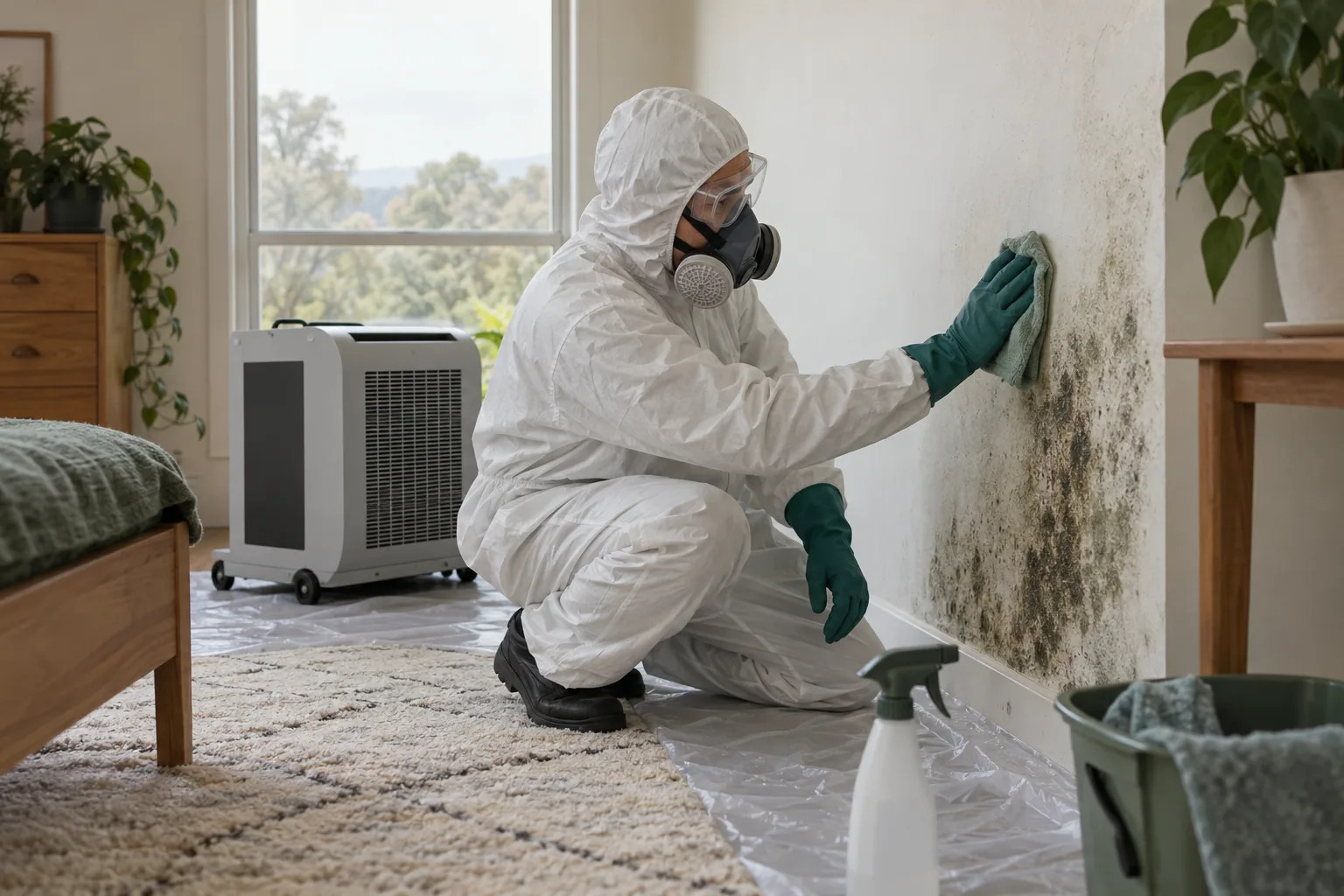
Describe the structural wall rather than treating the removed unit and its contents as one affected item. Mention remaining panels, fixed shelves or fittings that still restrict access. Do not dismantle further simply because a larger area might be visible behind them.
The remediation process treats visible accessible structural surfaces. Cabinet cleaning, joinery replacement and concealed-wall investigation are not automatic inclusions. If another trade will cover the wall, explain that timing so scope and follow-up can be discussed first.
THE MOISTURE CONNECTION
Consider what happened while the wall was hidden
Give any known leak history or dampness noticed when the unit was removed. The pattern alone does not prove that the cupboard caused the problem or that there is no concealed moisture. Repairs to water entry and damaged construction require a separate arrangement.
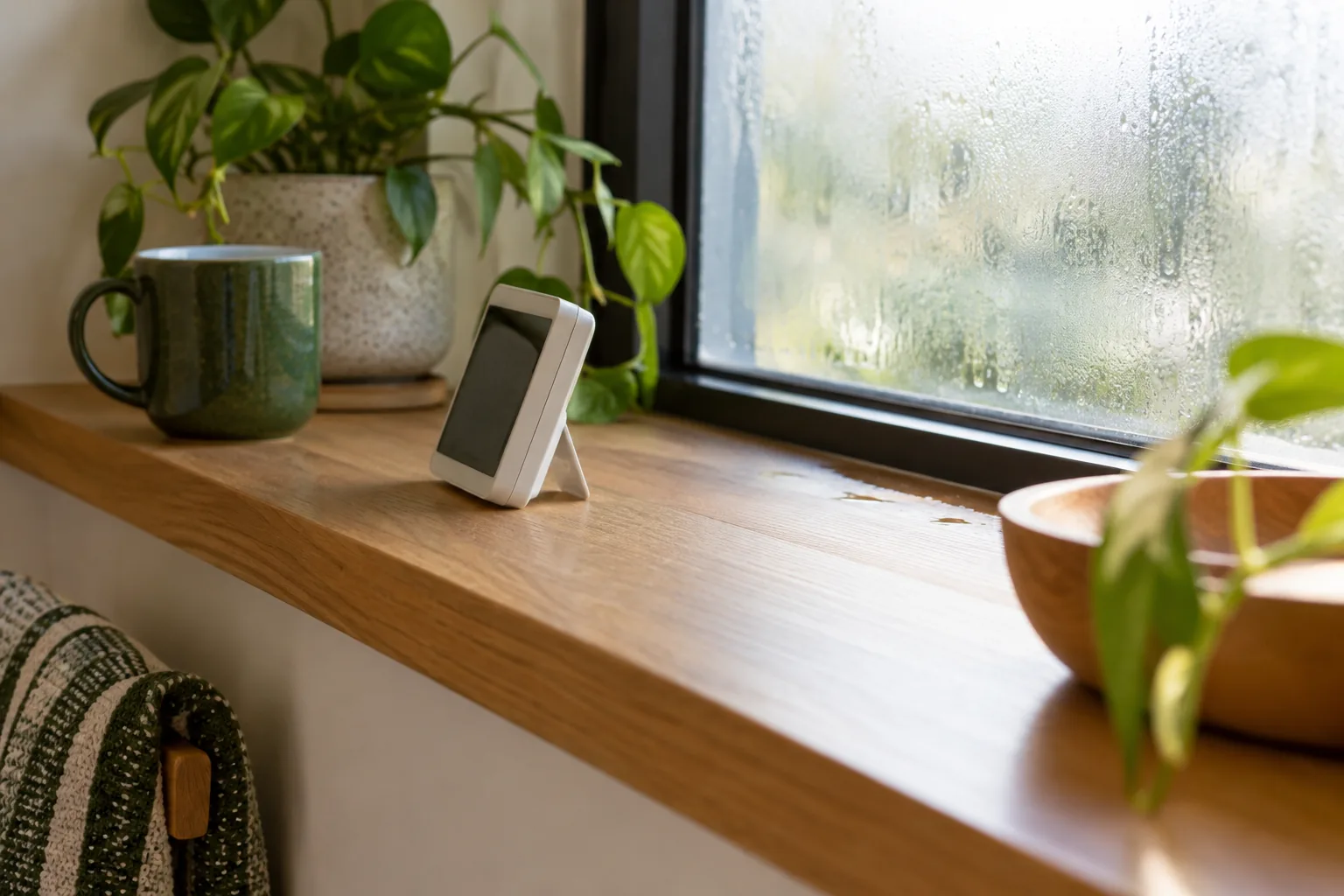
A professional hygrometer measures air relative humidity in the room, not moisture within the cabinet or wall. If the exposed surface leaves unresolved questions, discuss further assessment without assuming material probes, destructive access or a written clearance will be supplied.
PLAN · FILTER · TREAT · REMOVE · CONTINUE
A sequence before reinstating the unit
1
Define the exposed structural scope
Assessment identifies the visible contamination and remaining obstructions. Explain unfinished joinery work that may alter the accessible area before treatment day.
2
Set the air protection
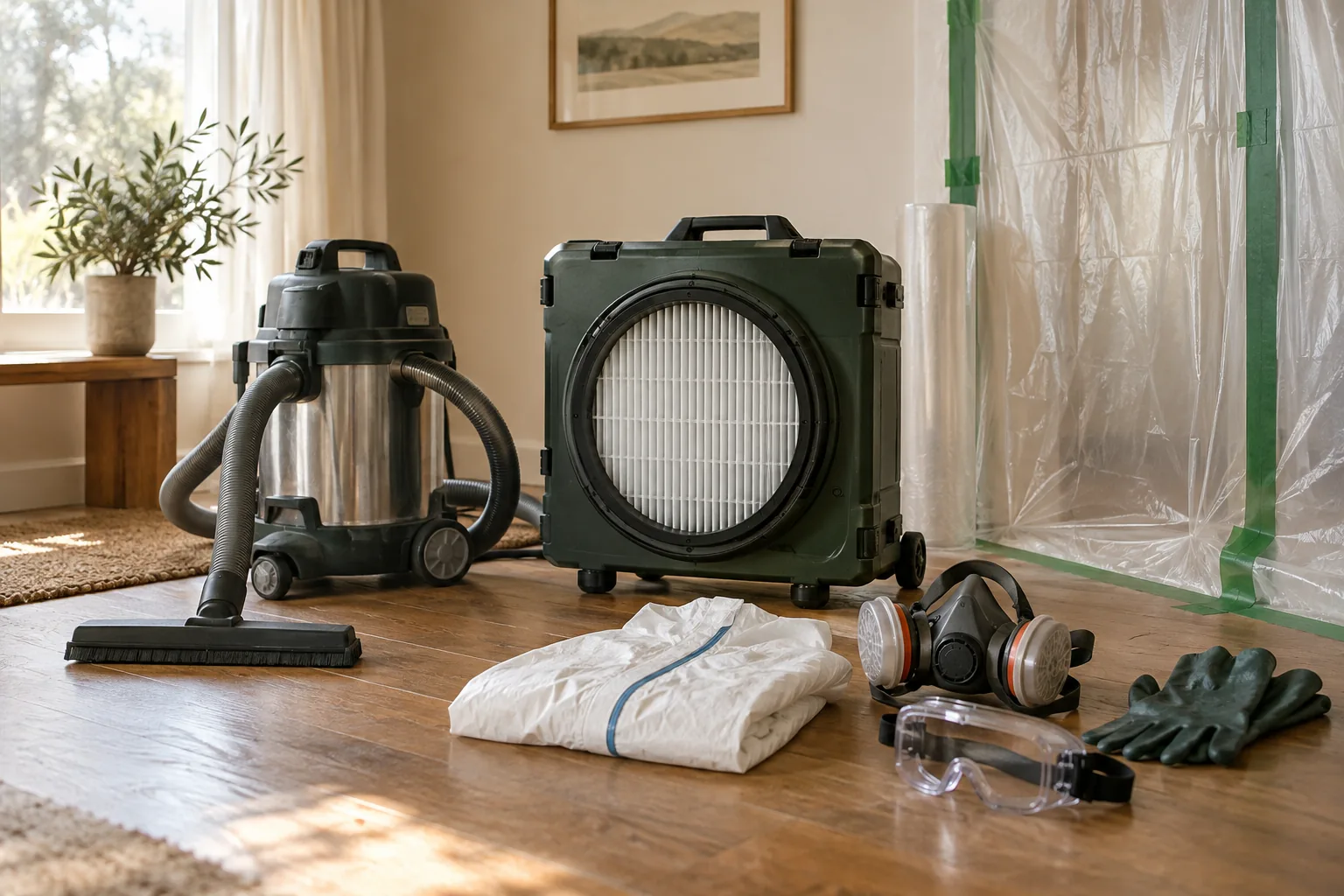
HEPA air-scrubber filtration is established before application. The equipment and technician need an agreed working route around any remaining fixed panels.
3
Apply suitable treatment
HOCl application is confirmed, with ULV dry fog used where appropriate in most cases. It does not make a covered wall or cupboard interior part of an unagreed scope.
4
Physically remove visible growth
Professional equipment with H-class filtration removes accessible contamination. Rebuilding the cabinet or repairing the structural finish remains separate.
5
Continue the air-cleaning stage
HEPA operates during and after remediation. Discuss visible marks and remaining moisture questions before deciding how reinstatement will proceed.
Distinguish structural surfaces from fittings
Walls
Wall treatment needs the exposed finish and remaining panel edges identified clearly, rather than a general request to clean the cupboard.
Ceilings
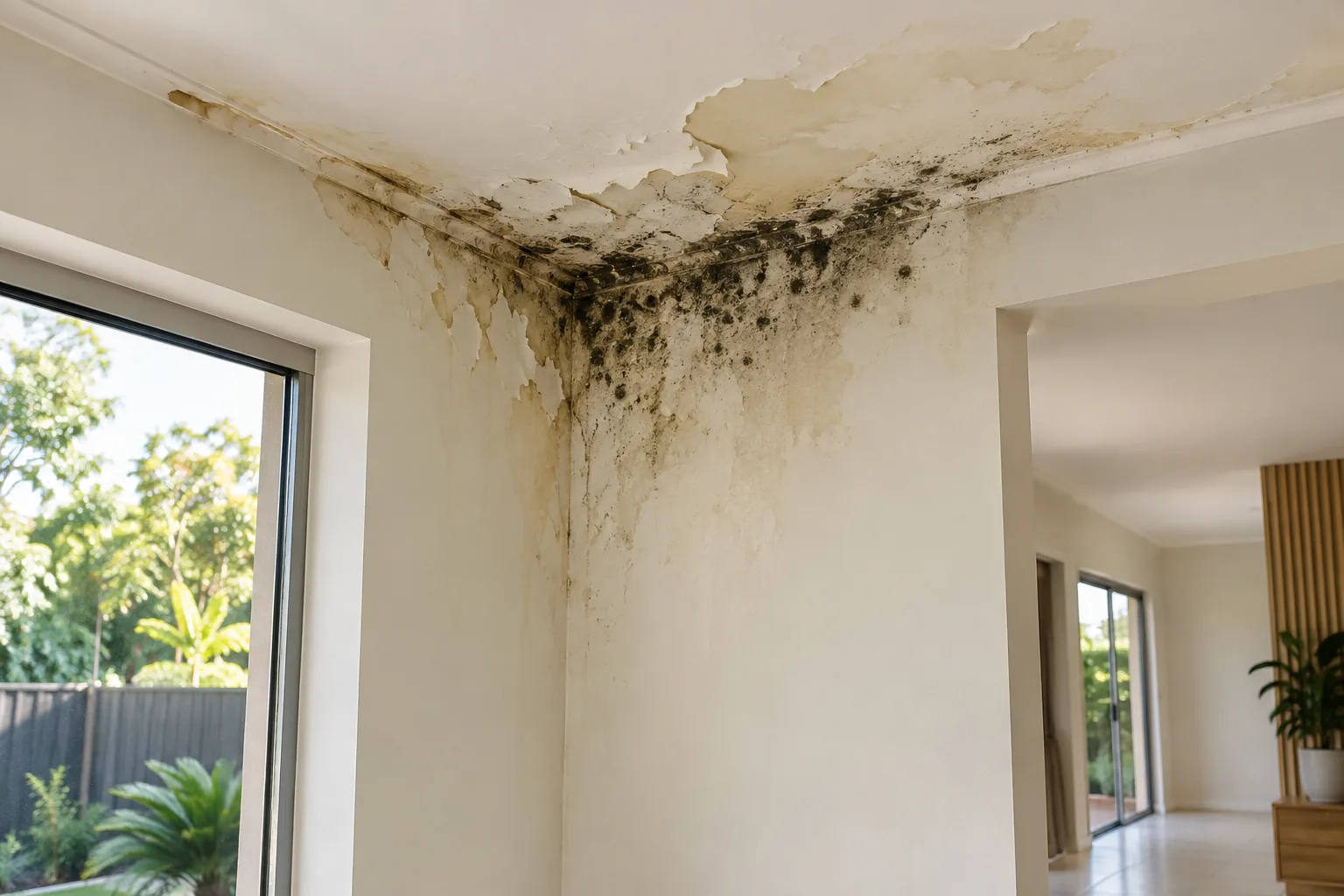
Ceiling growth above the former unit should be recorded as another surface, especially where upper panels still block access.
Bathrooms
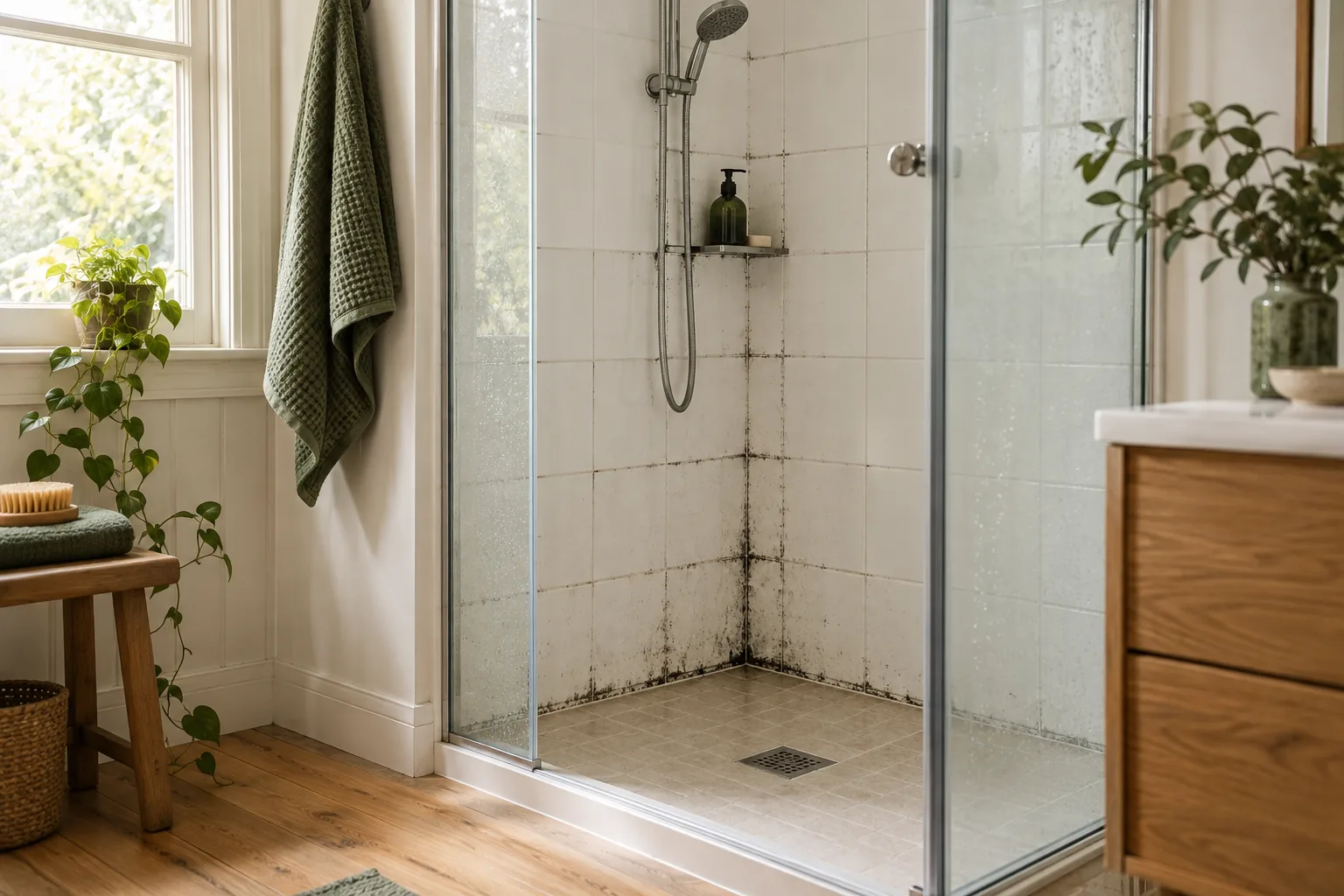
In bathrooms, describe affected walls or ceilings independently from a vanity, stored towels or other excluded belongings.
Kitchens
Kitchen wall treatment does not imply cabinet dismantling or plumbing work; show what can actually be reached.
Accessible affected surfaces
An exposed floor under the removed unit may be discussed if structural and accessible. Carpet and loose textile coverings are excluded.
WHAT TO EXPECT
Agree the preparation and next trade
Discuss clear access and any loose or fragile panels before moving them. People and pets leave during treatment; confirm the actual departure and return arrangements. About three hours per room is average guidance, varying with the size, extent and accessibility of the included work.
The finish may retain cosmetic marks, and decorating or joinery reinstatement needs separate scope. Standard treatment does not certify the concealed wall dry or guarantee that growth will not return. Keep the visible area available for the agreed follow-up instead of assuming replacement cabinetry resolves moisture.
FOLLOW THE MOISTURE
Do not close off an unresolved question
Reinstatement is a useful point to review what remains unfinished.
Confirm who is addressing any identified leak or building defect.
Note new dampness while the exposed wall can still be observed.
Maintain ventilation and discuss persistent humidity before relying on a replacement unit to improve conditions.
Describe treatment separately from joinery cost
Use the price information to start the enquiry, then explain the exposed wall and remaining work. The table is labelled Mould Removal, not a confirmed remediation-and-joinery package. Ask how its figures apply and whether changed access would alter the quote.
TECOMA · EXACT ADDRESS & ACCESS
Enquiries around Tecoma
For a nearby address, explain its own obstruction and reinstatement plans. Access, authorisation and appointment availability need confirmation independently; one newly exposed wall does not establish the scope for another property.
Questions about remediation
Should a replacement cupboard be installed first?
Discuss treatment and unresolved moisture before covering the wall. Installation can restrict access, so the trade sequence needs agreement rather than a default assumption.
Is the removed cabinet treated too?
Do not assume it is included. The confirmed scope concerns accessible structural surfaces, with cabinet or belongings work requiring separate discussion.
What if a panel still hides part of the patch?
Identify the covered part and ask what preparation is suitable. Do not assume fog application includes the concealed surface.
Does removing the cupboard solve the moisture problem?
Not necessarily. Exposure changes access but does not establish or repair the cause of dampness.
Can the new joiner use the humidity reading as a wall clearance?
No. Air relative humidity is not a material-moisture measurement or a clearance for reinstatement.
What should I record before the wall is covered again?
Keep the visible condition, treatment boundary and outstanding moisture or repair questions clear. A photograph helps describe appearance but does not certify hidden dryness.
Agree treatment before the wall is covered
Call 03 8652 1296 with the exposed finish, remaining panels and joinery programme. Discuss accessible treatment and the separate reinstatement decisions.