
SURFACE TREATMENT · MOISTURE FOLLOW-THROUGH
Mould Remediation Clayton
A room used for work can contain equipment that complicates access to a wall. For Clayton, describe the visible structural growth, connected devices and the space available around them. Plan treatment without assuming that electronics cleaning or a guaranteed return-to-work time forms part of the service.
Connected equipment identified
Structural access planned
Work timetable discussed
TREATMENT & FOLLOW-THROUGH
UNDERSTANDING REMEDIATION
Describe the wall without treating the contents as included
Explain whether a desk, cables or fixed storage obstructs the patch. Mention delicate equipment before moving or disconnecting it. The enquiry should distinguish the exposed surface from concerns about devices or paperwork; those are not automatically covered by a structural appointment.
The confirmed remediation service addresses visible accessible walls, ceilings and floors. Electronics cleaning, furniture restoration and textiles are not assumed inclusions. Agree preparation and the treatment boundary before describing the room as ready for ordinary work again.
THE MOISTURE CONNECTION
Keep moisture observations separate from equipment condition
Mention condensation, wetting or a leak history relevant to the wall. An affected surface does not establish that equipment has been damaged, nor does a clean-looking desk resolve structural dampness. Repairs to water entry or construction need separate advice.
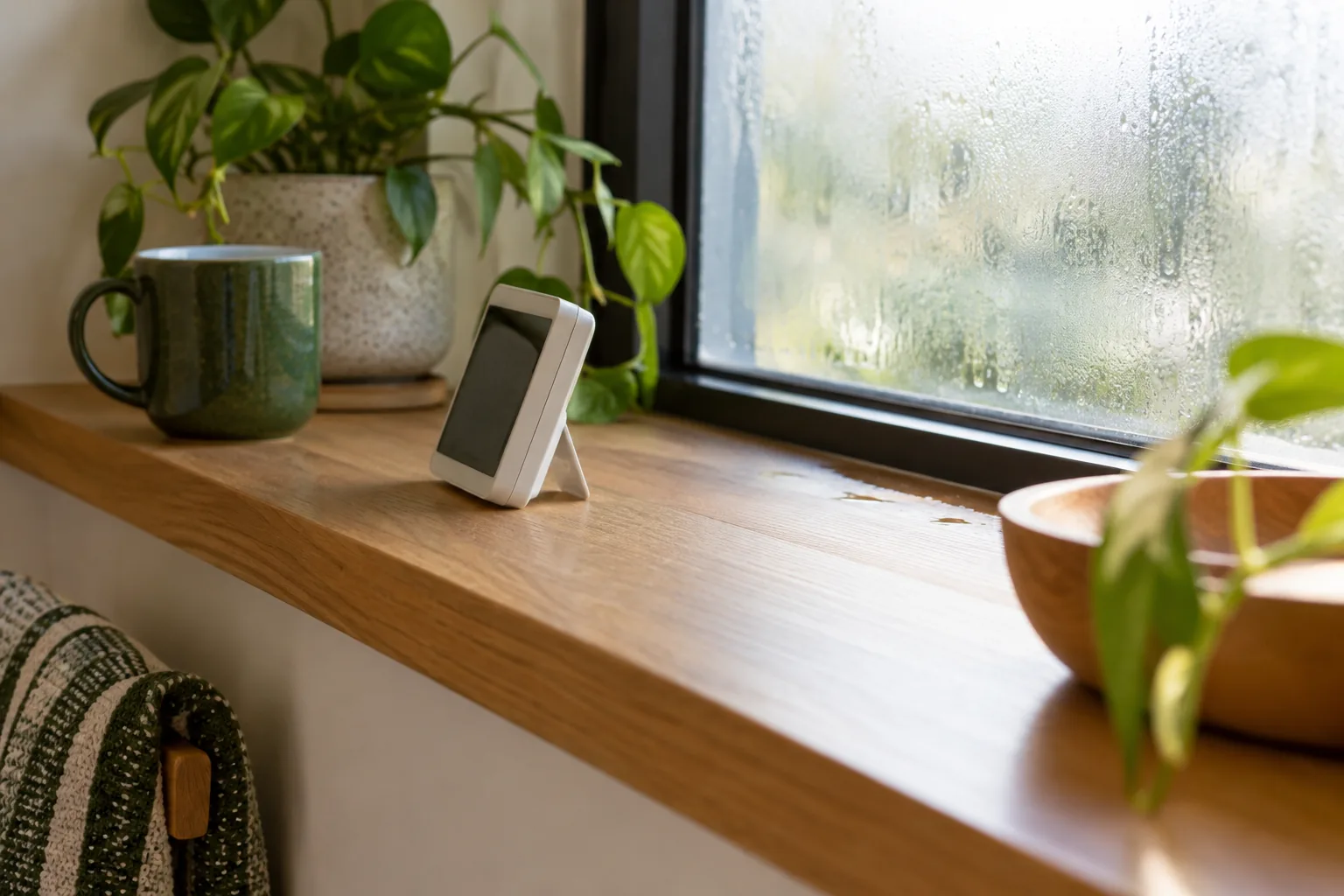
A professional hygrometer checks relative humidity in room air, not the moisture condition of devices or the wall lining. Where the cause remains unclear, ask about appropriate assessment. No electrical inspection, material-probe service or laboratory clearance is confirmed.
PLAN · FILTER · TREAT · REMOVE · CONTINUE
A treatment plan around agreed clearance
1
Review the structural area
Assessment identifies exposed contamination and the equipment that affects access. Explain what can be moved and who is responsible for preparing connected items.
2
Establish air protection
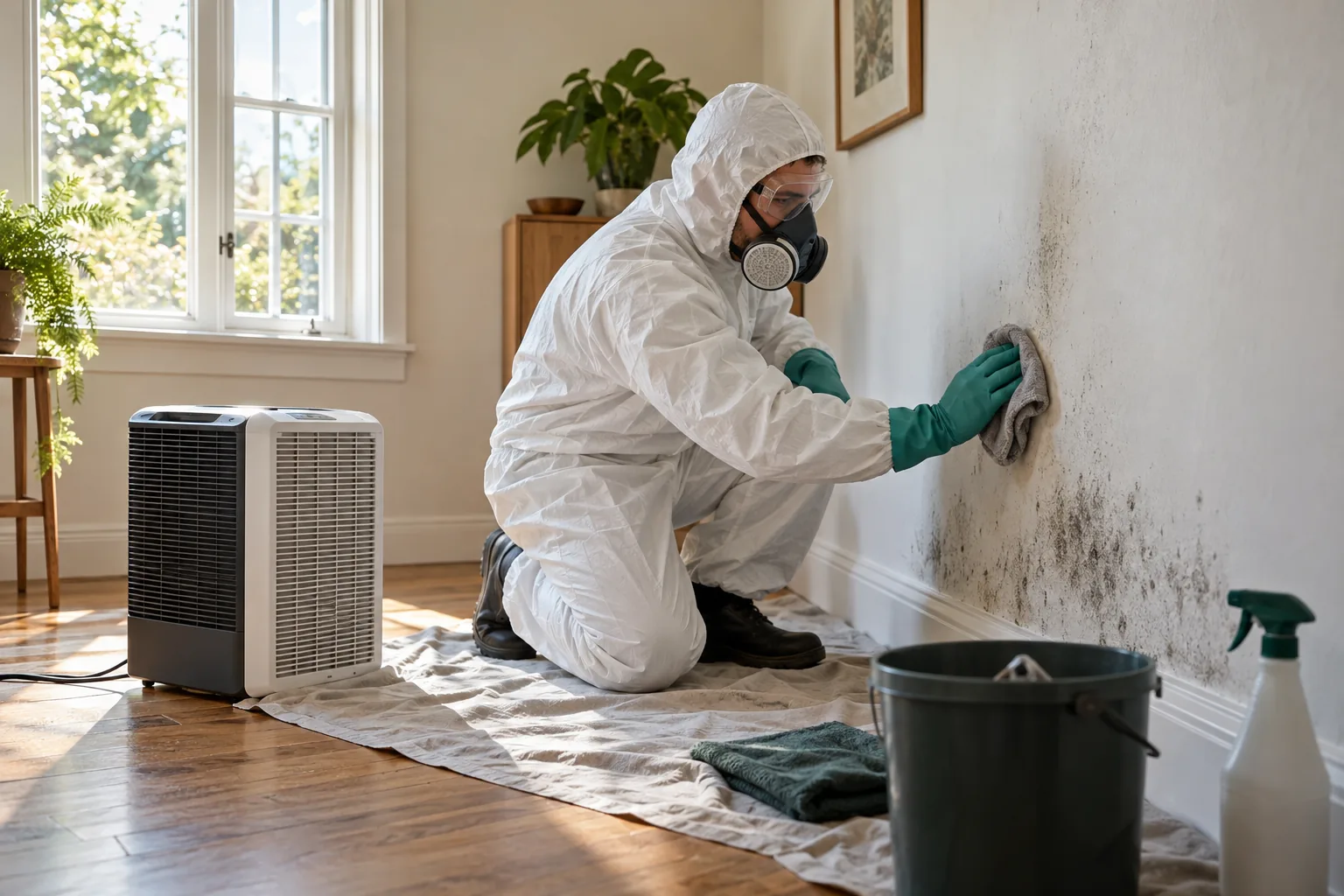
HEPA air-scrubber filtration is started before treatment. Equipment placement and the technician’s route need coordination with the cleared workspace.

3
Apply suitable treatment
The process uses HOCl, with ULV dry fog where appropriate in most cases. Discuss the included structural finish rather than assuming application is a service for electronics or stored papers.
4
Physically remove visible mould
Professional H-class filtered equipment is used on accessible contamination. Work on the room’s contents requires its own agreement and is not implied by treating the wall.
5
Continue air cleaning
HEPA remains active during and after the process. Obtain job-specific return advice and discuss remaining marks and moisture questions before planning normal room use.
Identify surfaces beyond the desk
Walls
For walls, explain the patch’s position relative to connected equipment and any portion still obstructed.
Ceilings
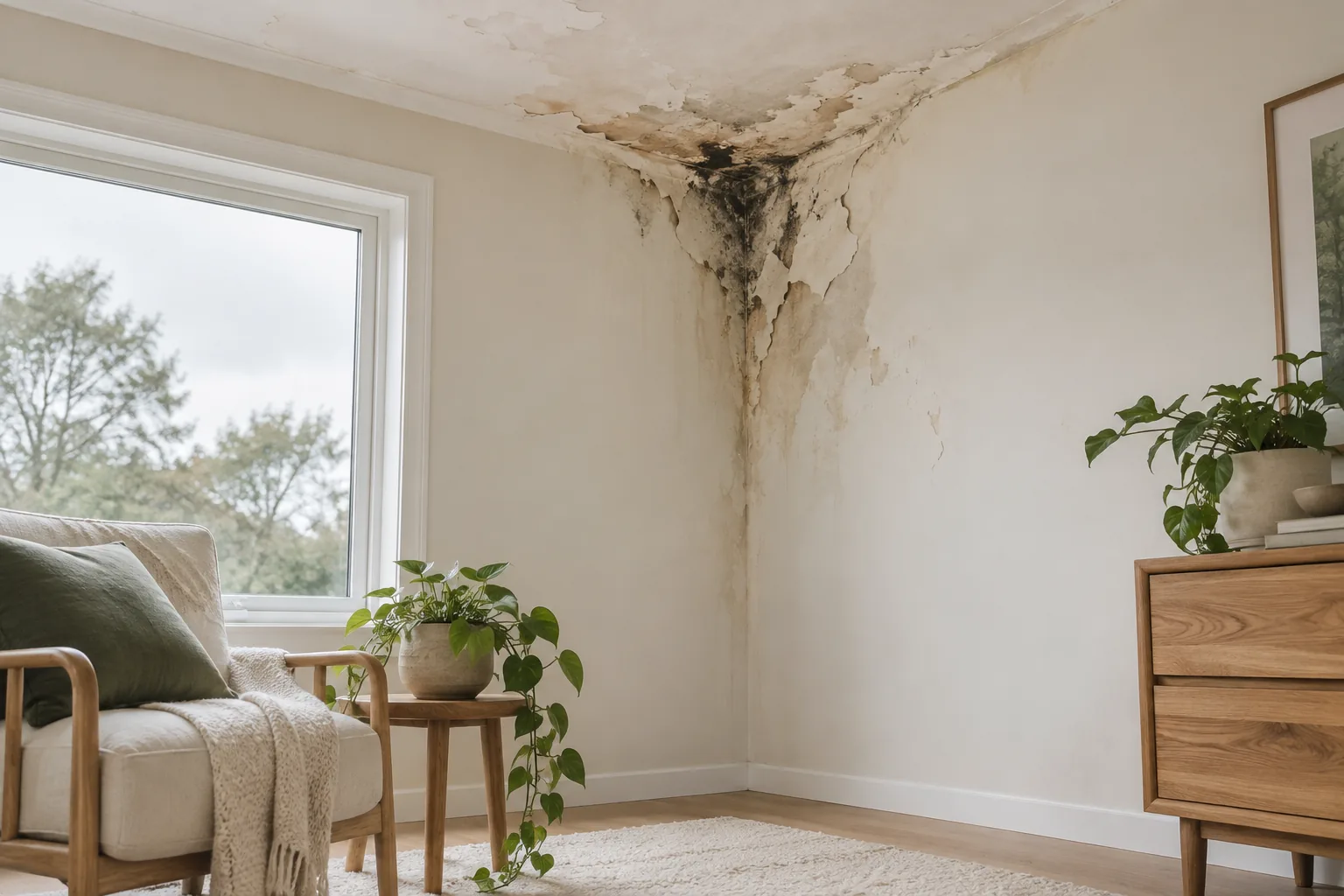
For ceilings, describe overhead growth separately and identify tall shelves or fittings that restrict work below it.
Bathrooms
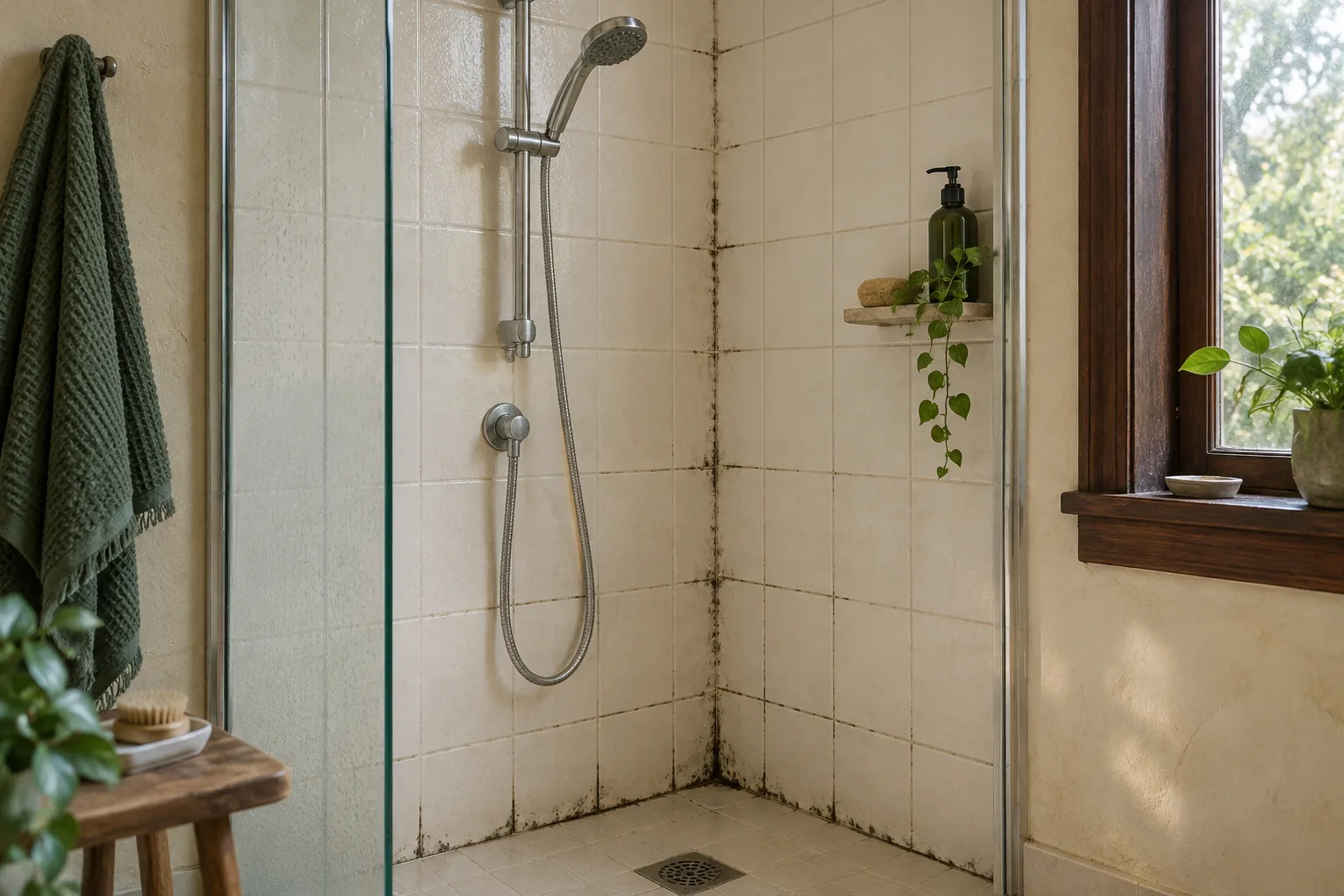
Bathroom structural surfaces elsewhere need their own scope; towels and other textiles are excluded from treatment.
Kitchens
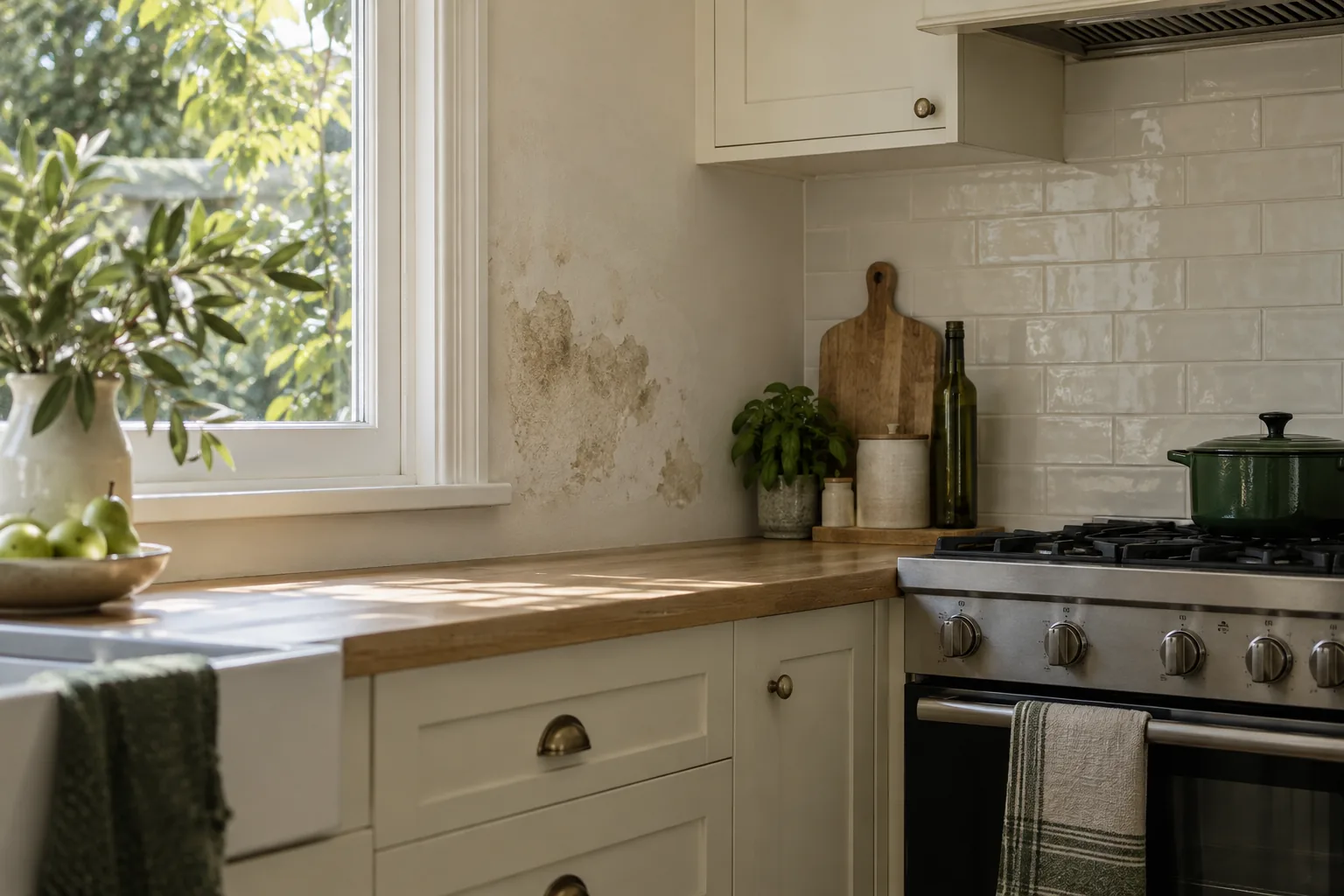
Kitchen wall or floor marks should be listed separately from appliance or plumbing concerns.
Accessible affected surfaces
An exposed structural floor can be included by agreement, while carpet, rugs and loose contents remain outside the confirmed textile scope.
WHAT TO EXPECT
Prepare the visit and the work schedule
Discuss clearance, fragile devices and access before making changes. People and pets leave during treatment; confirm departure and return instructions for the appointment. The source average is around three hours per room, varying with extent, size and accessibility, rather than a fixed interruption to work.
Treatment may leave cosmetic discolouration, with decorating handled separately. It does not certify electronics functional, concealed materials dry or air laboratory-cleared. Persistent moisture can lead to recurrence, so keep the repair and follow-up questions open rather than relying on a tidier-looking workspace.
FOLLOW THE MOISTURE
Keep the treated area observable
Returning to ordinary room use should preserve practical access for monitoring.
Avoid rebuilding a layout that completely hides the affected structural patch.
Record renewed dampness and arrange repair advice for continuing water entry.
Maintain ventilation and discuss persistent humidity without assuming equipment movement alone resolves it.
Separate treatment cost from equipment work
When checking published price information, describe the exposed area, access and equipment preparation. The examples are headed Mould Removal; confirm how they relate to this remediation scope. No electronics-cleaning allowance or fixed timetable for resuming work is established by those figures.
CLAYTON · EXACT ADDRESS & ACCESS
Other workroom enquiries nearby
For a different Clayton-area address, provide its own access, approval and equipment arrangements. Similar use does not create a combined treatment package or guarantee availability at each property.
Questions about remediation
Should I unplug every device before calling?
No universal disconnection instruction is established. Describe connected equipment and discuss preparation with the appropriate responsible person before moving or disconnecting it.
Will the technician clean the computer too?
Electronics cleaning is not a confirmed structural remediation inclusion. Agree the wall or other accessible surface scope separately.
Can I work in another room during treatment?
The source guidance is for people and pets to leave during treatment. Confirm the property arrangements rather than assuming another workspace can remain occupied.
Is the room guaranteed ready for work the next morning?
No fixed return-to-work time is established. Obtain job-specific return advice and plan any separate equipment or decorating tasks accordingly.
Does room humidity show whether a device is damaged?
No. Air relative humidity is not an electrical assessment or a measurement inside equipment.
What if moving the desk reveals more growth?
Describe the additional exposed area before assuming it is included. Extent, access and the agreed treatment boundary may need review.
Plan the structural work around the room’s contents
Call 03 8652 1296 with the visible surfaces, equipment obstruction and moisture history. Clarify preparation and the separate contents decisions.