
SURFACE TREATMENT · MOISTURE FOLLOW-THROUGH
Mould Remediation Mulgrave
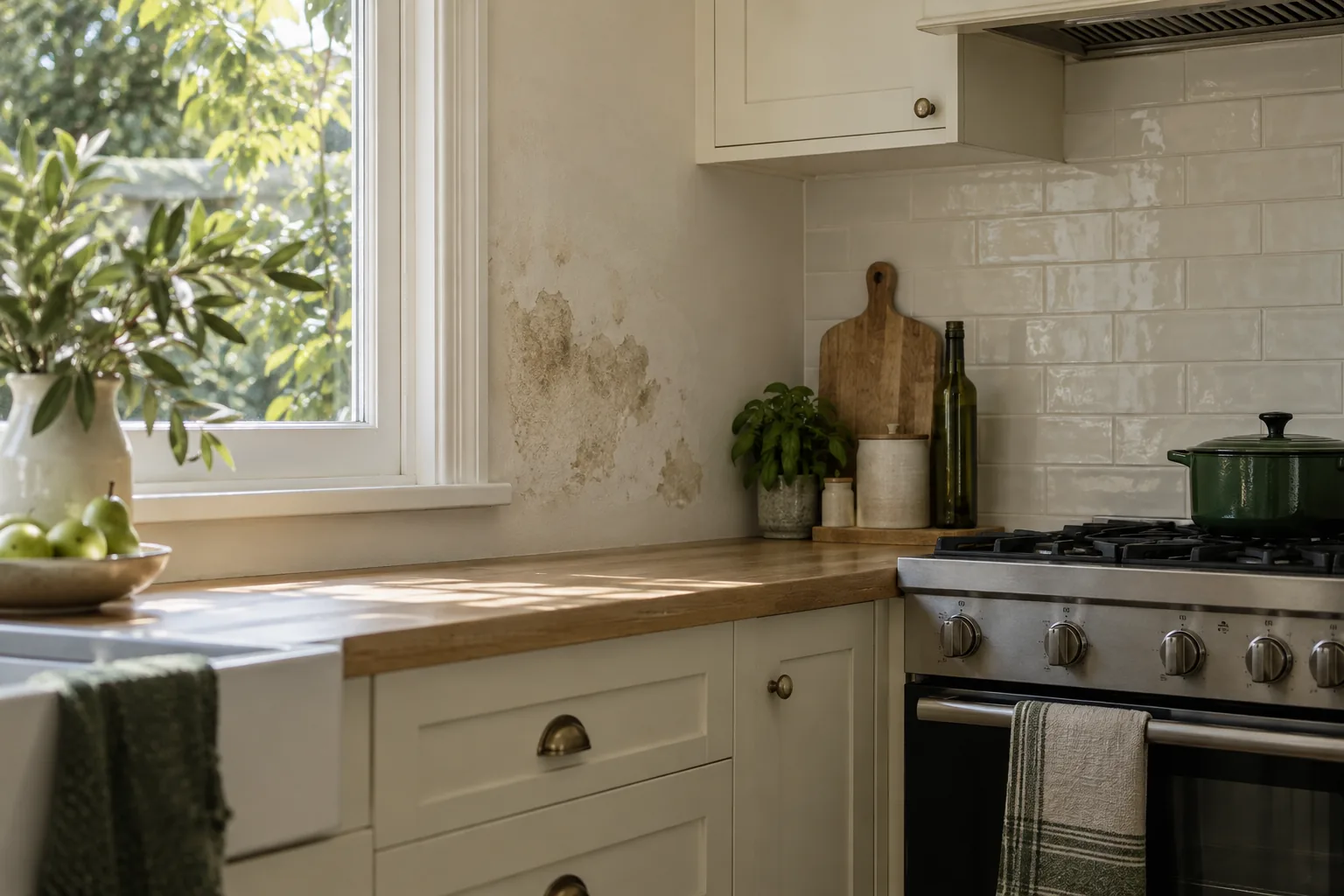
If a patch has returned after an earlier clean, describe what is visible now rather than assuming the same task should simply be repeated. For Mulgrave, explain the previous work, products if known and any continuing dampness. The current structural condition needs its own treatment discussion.
Previous work described
Current scope assessed
Recurrence limits explained
TREATMENT & FOLLOW-THROUGH
UNDERSTANDING REMEDIATION
Give useful history without recreating the old clean
Mention when the area was cleaned, whether the finish changed and where growth has reappeared. If products are known, share that information; do not combine or reapply chemicals merely to prepare for the appointment. The technician needs the present visible condition and relevant history.
The confirmed treatment addresses visible accessible structural surfaces. It does not guarantee permanent protection or reproduce an earlier contents-cleaning arrangement. Agree walls, ceilings and exposed floor areas separately from furniture, carpet and other excluded belongings.
THE MOISTURE CONNECTION
Recurrence needs a moisture conversation
A returning patch does not by itself establish that the earlier work was faulty. Continuing leaks, condensation or other damp conditions may need consideration, with building and plumbing repairs arranged separately. Describe changes in wetting and timing without treating them as a diagnosis.
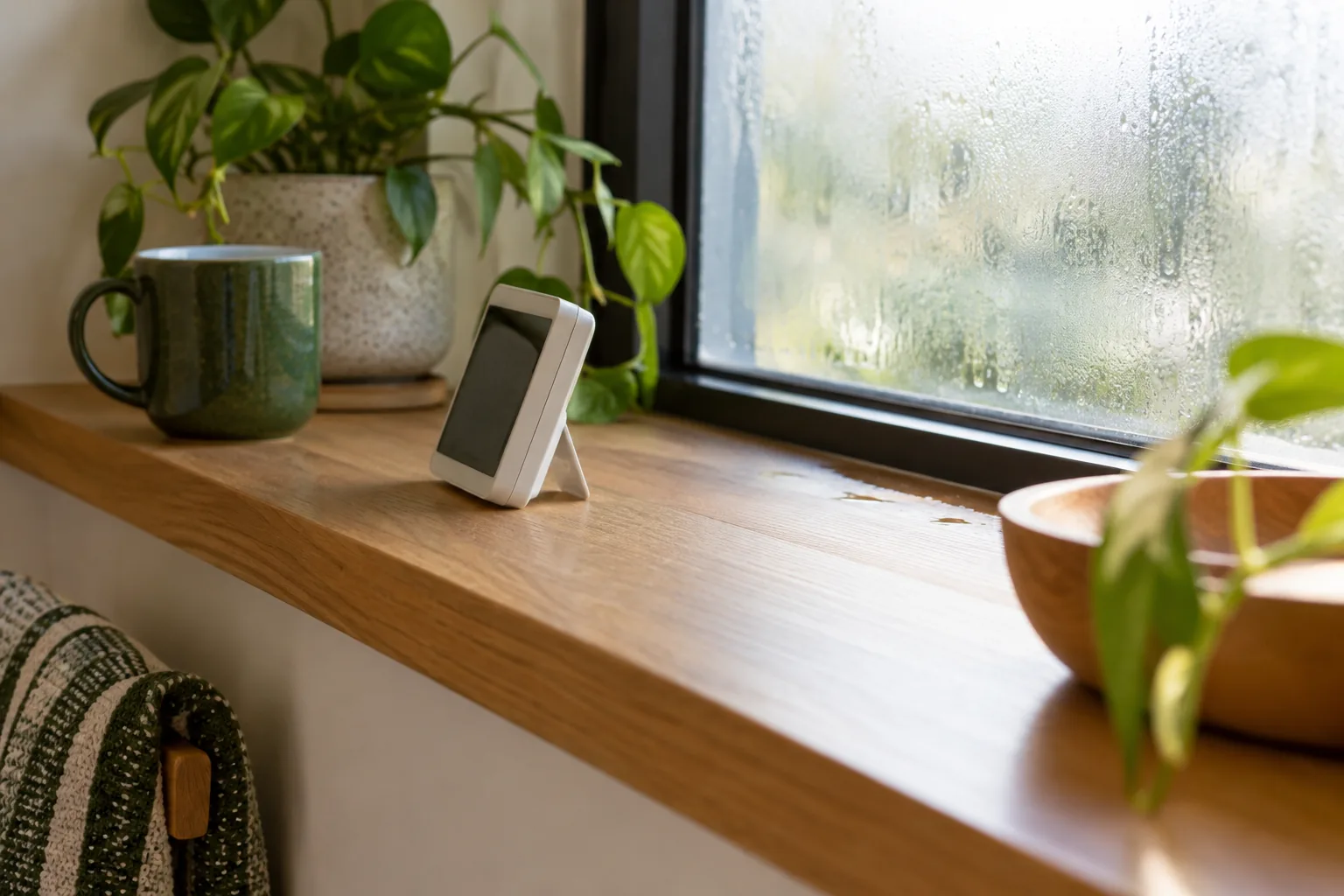
A professional hygrometer checks relative humidity in room air, not moisture behind the finish or proof of why the patch returned. For uncertain conditions, discuss assessment requirements; no particular material instrument, lab test or concealed-space investigation is confirmed.
PLAN · FILTER · TREAT · REMOVE · CONTINUE
An assessment-led treatment sequence
1
Review the current exposed patch
Assessment considers visible growth, finish condition and earlier treatment history. Identify obstructions and changes to the area so the working boundary reflects the current room.
2
Set air protection before application
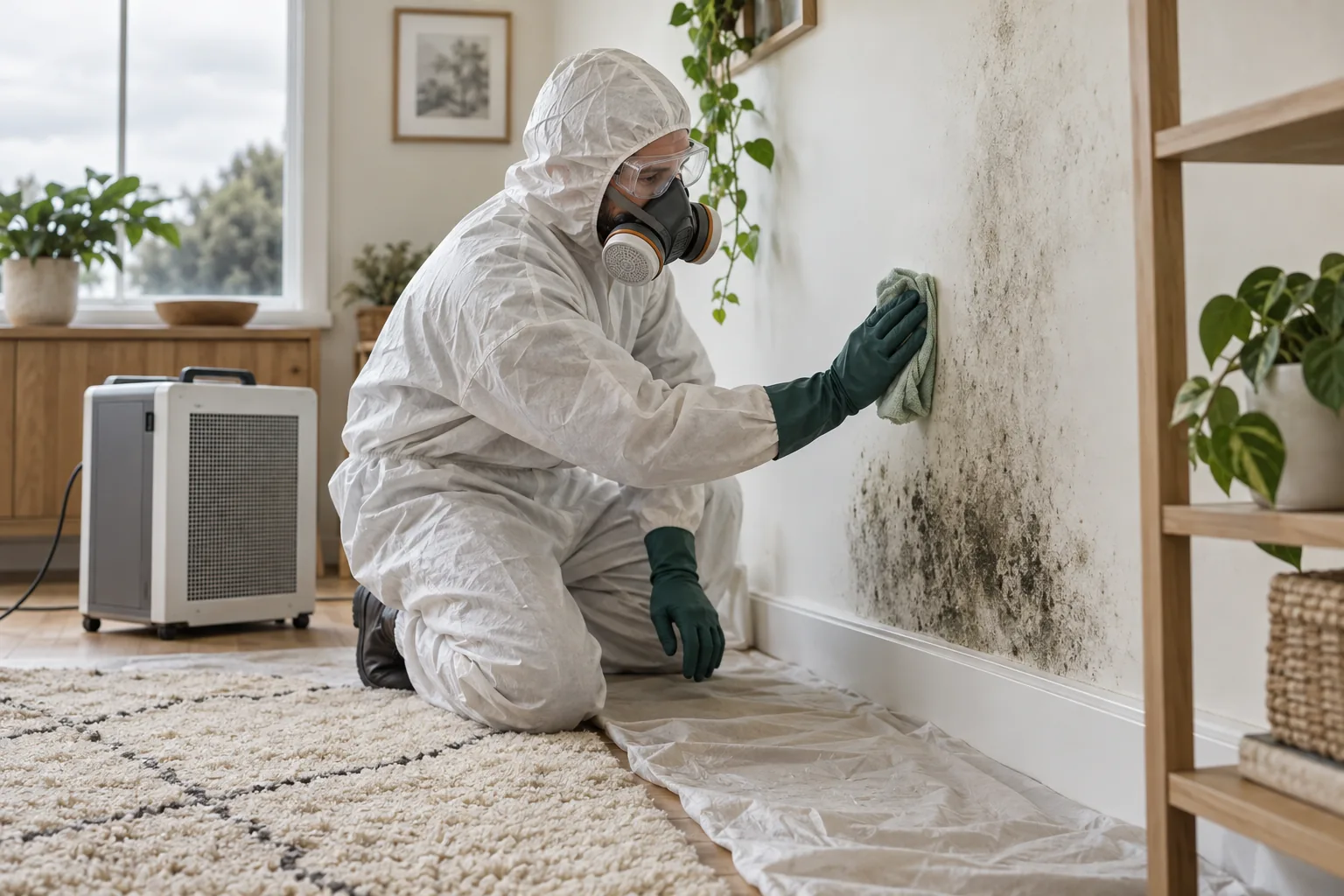
The confirmed HEPA scrubber is established ahead of treatment. Equipment placement needs clear access, even if an earlier clean was carried out without the same working arrangement.

3
Apply suitable treatment
HOCl forms part of the process, with ULV dry fog where appropriate in most cases. Previous product use should be discussed rather than assuming all finishes or concealed areas are suitable.
4
Remove visible growth physically
Professional H-class filtered equipment is used on included accessible contamination. The work does not promise removal of every old cosmetic mark or repair of damaged materials.
5
Continue filtration and clarify follow-up
HEPA remains active during and after treatment. Discuss residual marks and the moisture plan rather than treating completion as a promise that another patch cannot appear.
Separate current patches by surface
Walls
For walls, distinguish returning growth from old discolouration and mention any finish damage after previous cleaning.
Ceilings
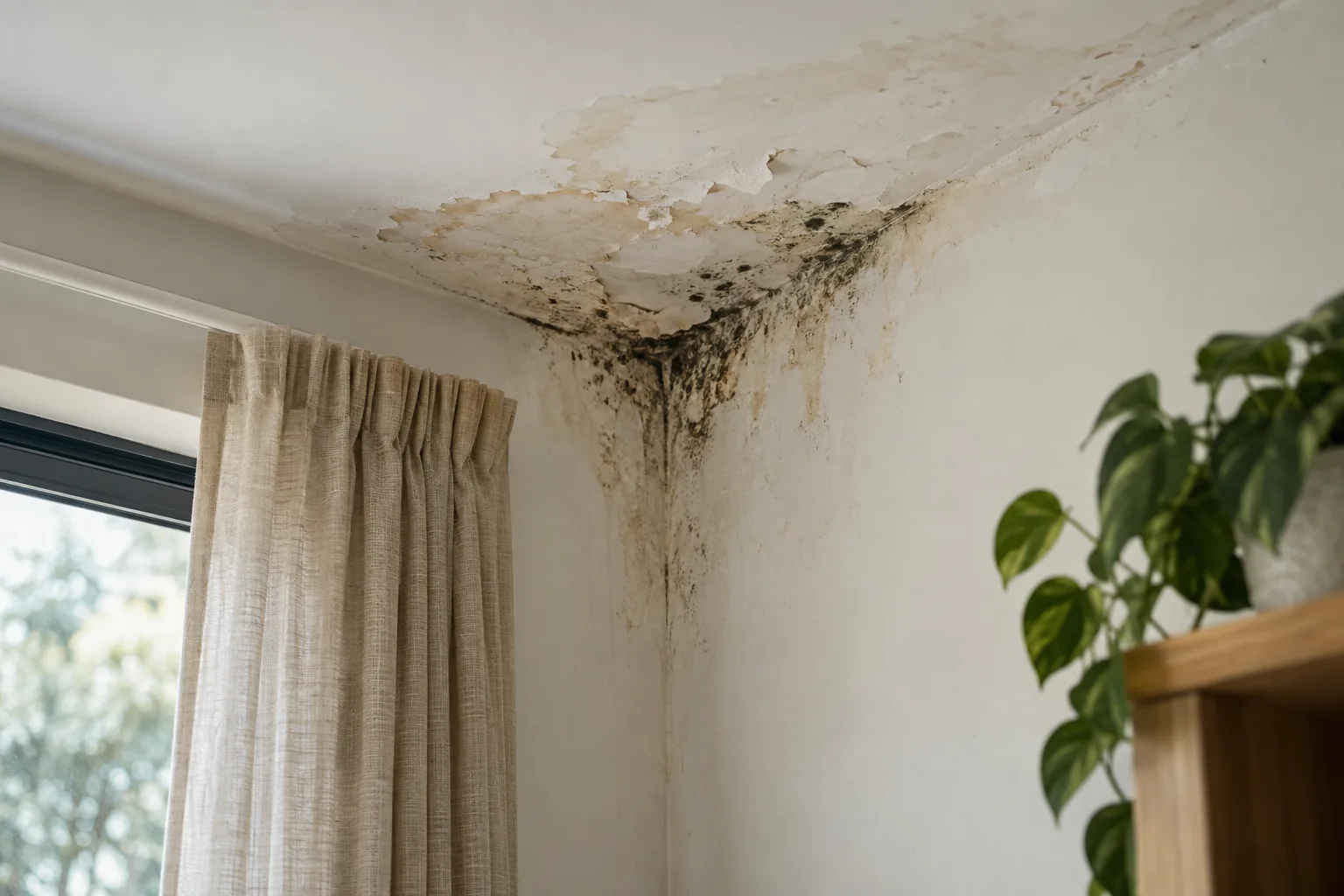
For ceilings, describe new or recurring areas separately instead of assuming the wall history explains them.
Bathrooms
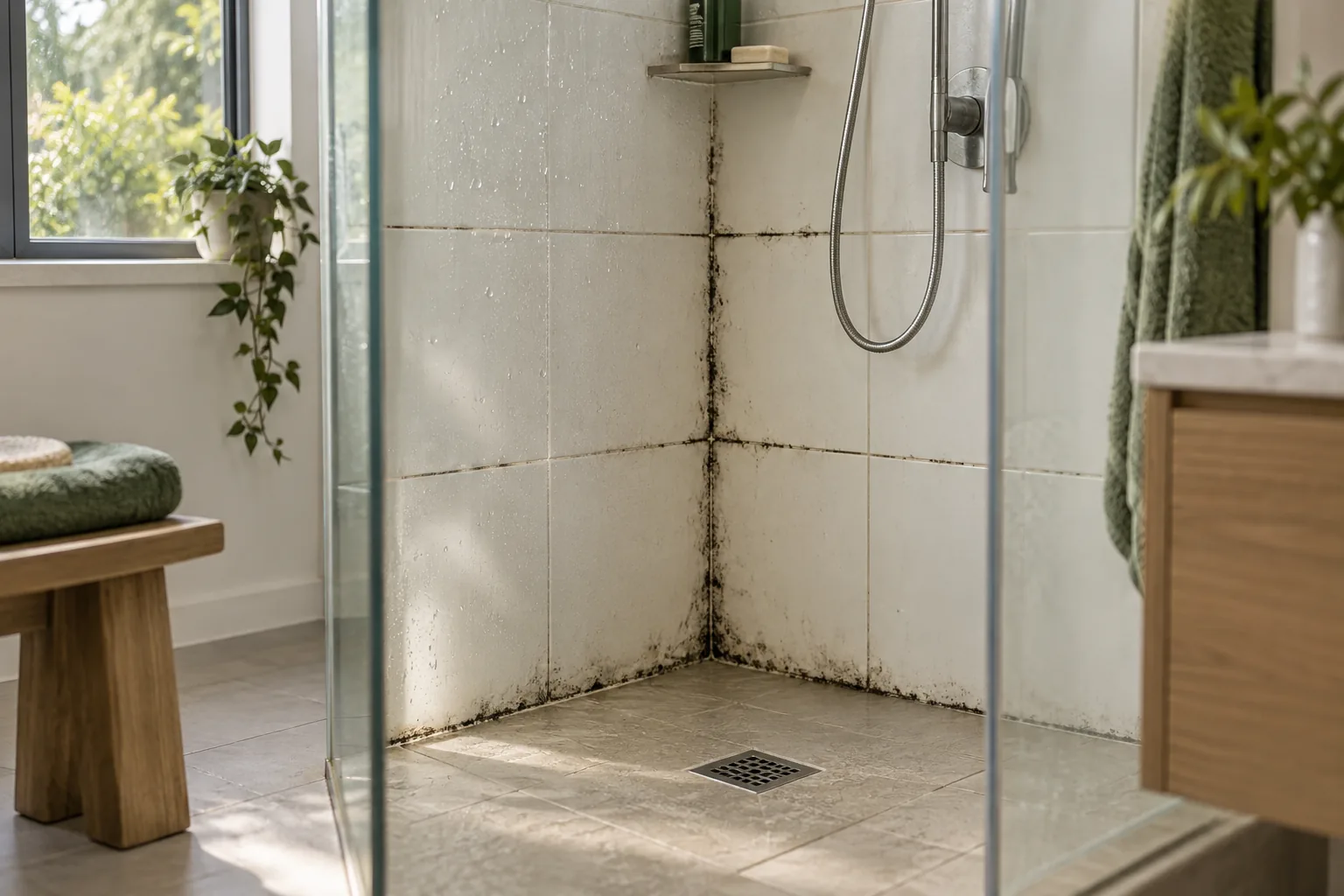
Bathroom structural areas need their own account of condensation or wetting; towels and other textiles remain excluded.
Kitchens
Kitchen wall or floor patches should be described alongside observed water use without including appliance cleaning automatically.
Accessible affected surfaces
Exposed structural floors can be considered; carpet and rugs are not added because a previous household clean included them.
WHAT TO EXPECT
Prepare for a fresh scope discussion
Agree clearance and discuss fragile finishes or past product use before the appointment. People and pets leave during treatment and receive job-specific departure and return advice. Source average guidance is approximately three hours per room, varying with size, extent and access; recurrence does not establish a fixed repeat-visit duration.
Cosmetic staining may remain, with decorating handled separately. Concealed areas are not certified dry and treatment cannot guarantee no future growth under persistent moisture. Keep completion observations and remaining repair questions clear instead of comparing appearance alone with the earlier clean.
FOLLOW THE MOISTURE
Change the follow-up, not just the appearance
Monitoring should help identify what remains unresolved between treatments.
Note when growth or dampness returns and whether the same surface is affected.
Arrange repair advice for continuing water entry or other identified faults.
Maintain ventilation and avoid repeatedly painting over the area without discussing moisture conditions.
Do not infer a repeat-treatment allowance
The price information uses Mould Removal room examples. Explain the current growth, preparation and earlier work when checking relevance to remediation. A discounted repeat visit, guarantee claim or old-price entitlement is not established by those figures.
MULGRAVE · EXACT ADDRESS & ACCESS
Enquiries around Mulgrave
A nearby address needs its own treatment history, authority and visible scope. Similar recurrence does not establish the same cause, quote or appointment availability; describe each property independently.
Questions about remediation
Does returning growth prove the previous clean failed?
It does not prove one explanation. Describe the current patch and continuing moisture conditions so both treatment scope and follow-up can be considered.
Should I clean it again before the visit?
Discuss preparation first. The current visible condition and past product information are useful; do not reapply or combine chemicals solely for the enquiry.
Can you guarantee it will not return this time?
No permanent guarantee is confirmed. Persistent leaks, condensation or other dampness can allow recurrence after treatment.
Are old stains treated as new growth?
Describe the difference you observe, but do not assume appearance alone establishes the condition. Assessment needs the current surface and history.
Is a repeat visit automatically discounted?
No repeat-visit discount is established. Confirm the actual remediation quote rather than inferring an allowance from the previous appointment.
What should I record if the patch appears again?
Note the date, location, visible change and relevant wetting observations. Those details support a further discussion without proving a particular cause.
Discuss the present patch and the previous work
Call 03 8652 1296 with the current visible area, earlier treatment history and moisture observations. Agree scope and practical follow-up.