
SURFACE TREATMENT · MOISTURE FOLLOW-THROUGH
Mould Remediation Kurunjang
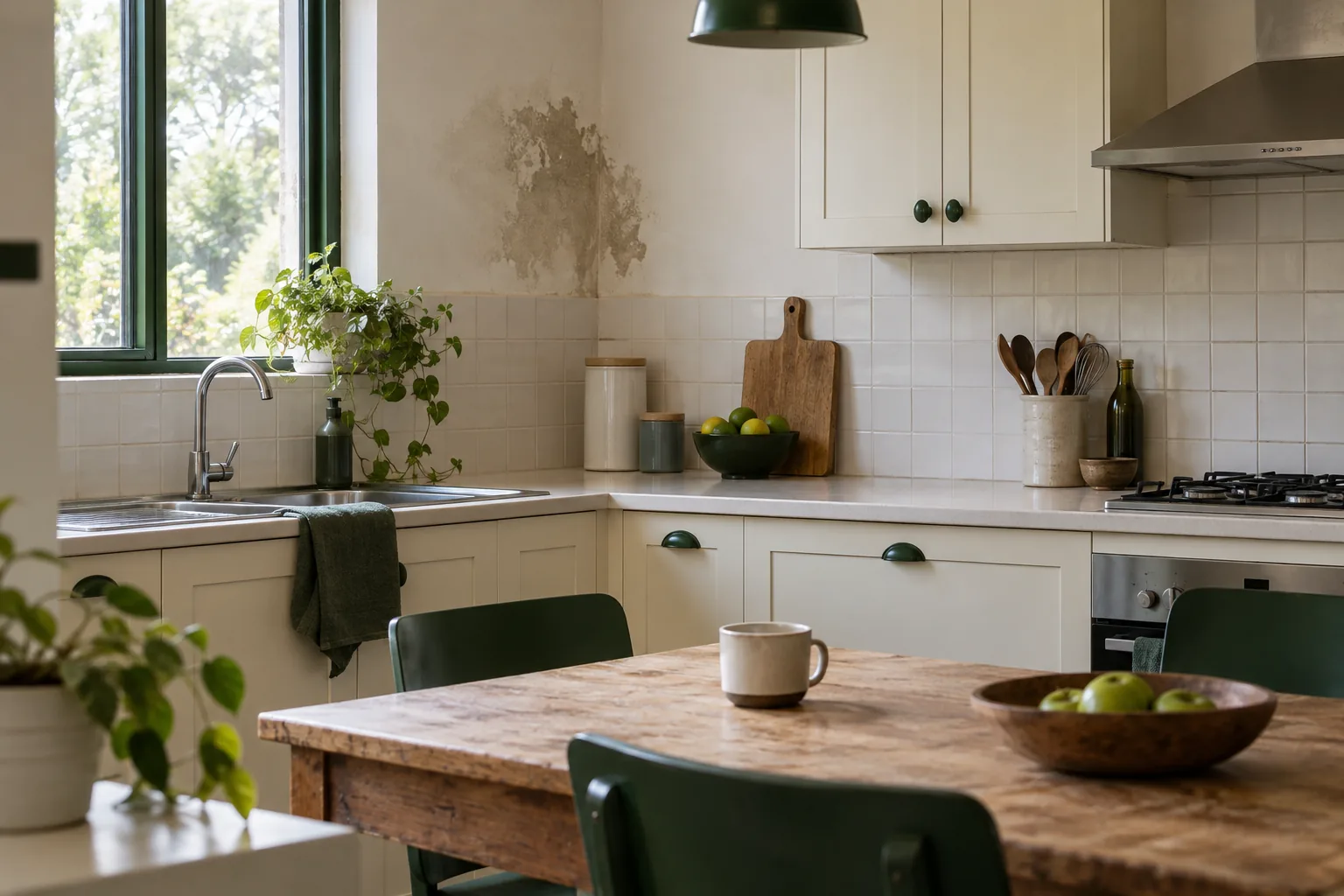
A patch can contain both visible growth and paint that no longer holds to the wall. If that is your concern in Kurunjang, explain the loose coating before assuming cleaning will leave a ready-to-paint surface. Remediation needs a suitable accessible finish and a clear boundary between contamination work and the separate repair of damaged material.
Finish condition is discussed before application.
Treatment and repainting have separate scopes.
The result describes surfaces actually reached.
TREATMENT & FOLLOW-THROUGH
UNDERSTANDING REMEDIATION
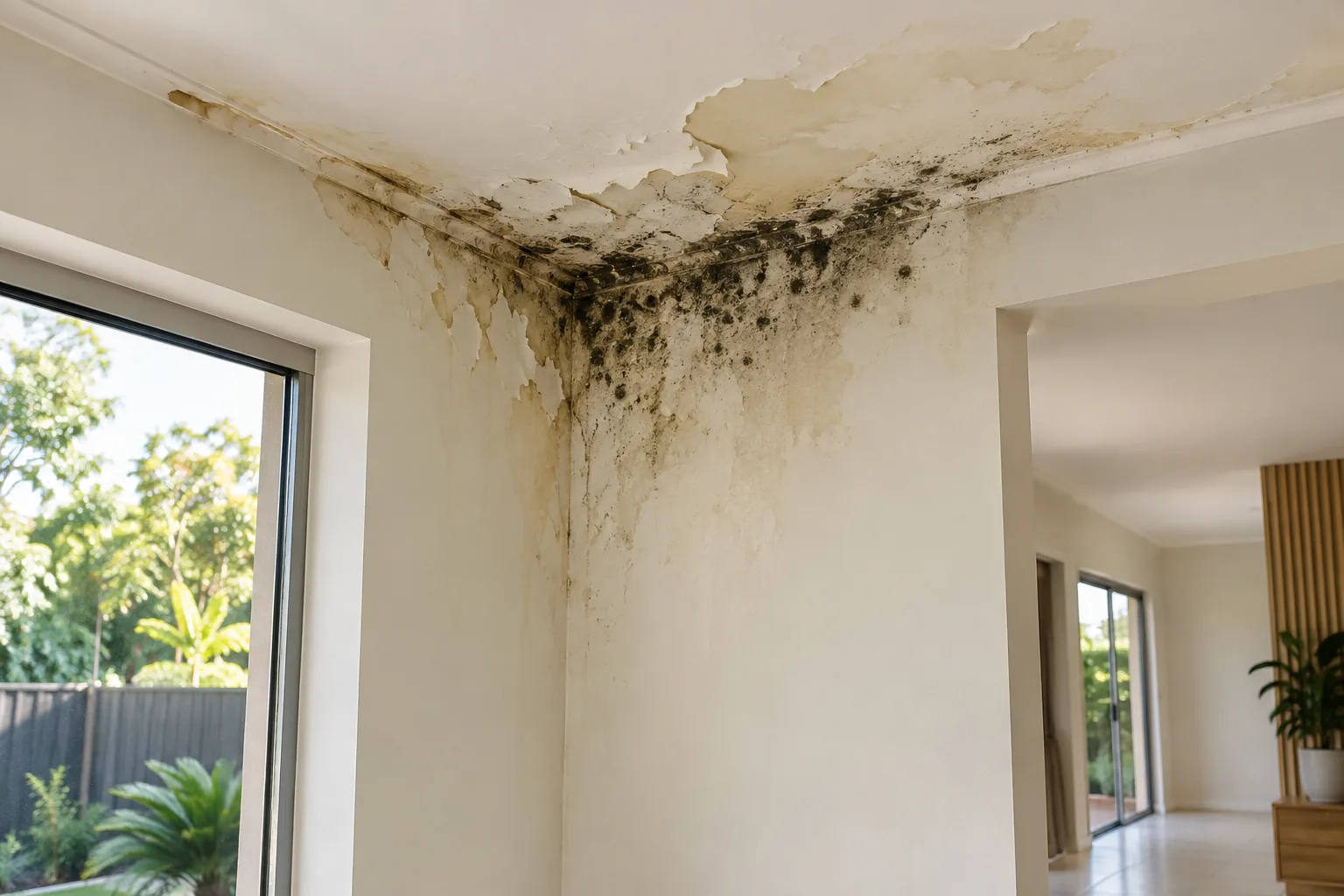
Loose paint changes the treatment conversation
Name the affected wall and whether the loose area is beside, beneath or within the visible growth. A photograph can introduce the concern, but it cannot establish every underlying layer’s condition. The remediation service concerns agreed reachable contamination; it is not a default stripping, re-plastering or preparation contract for a painter.
Discuss fragile coating before disturbing it. Newly exposed layers need their own agreement, while lining repair and excluded furnishings cannot be folded into the visible-wall result.
THE MOISTURE CONNECTION
Describe lifting and wetting as separate observations
Peeling paint alone does not identify a leak or prove active mould. Explain any fresh water, softness or change in the patch, including whether a repair has already occurred. An inspection discussion may be useful before agreeing treatment when the visible condition is unclear.
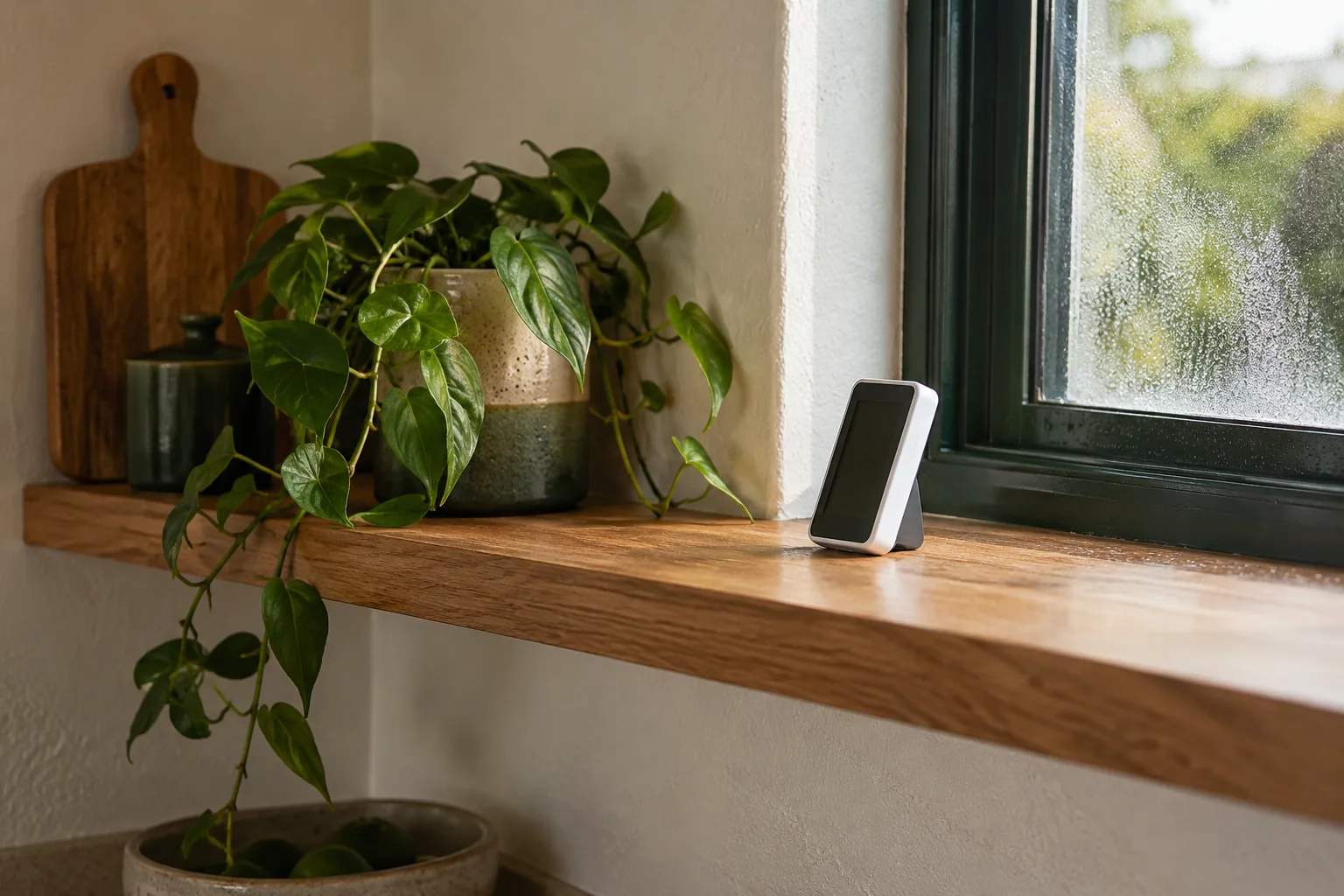
Room-air relative humidity from the professional hygrometer is one contextual observation, not a paint-substrate moisture percentage. Neither that reading nor a dried-looking coating certifies readiness for a new finish. Have continuing water entry or building deterioration addressed separately. A surface treatment does not make damaged plaster sound or remove the conditions that might support renewed growth.
PLAN · FILTER · TREAT · REMOVE · CONTINUE
Agree a suitable exposed finish
1
Assess coating and contamination
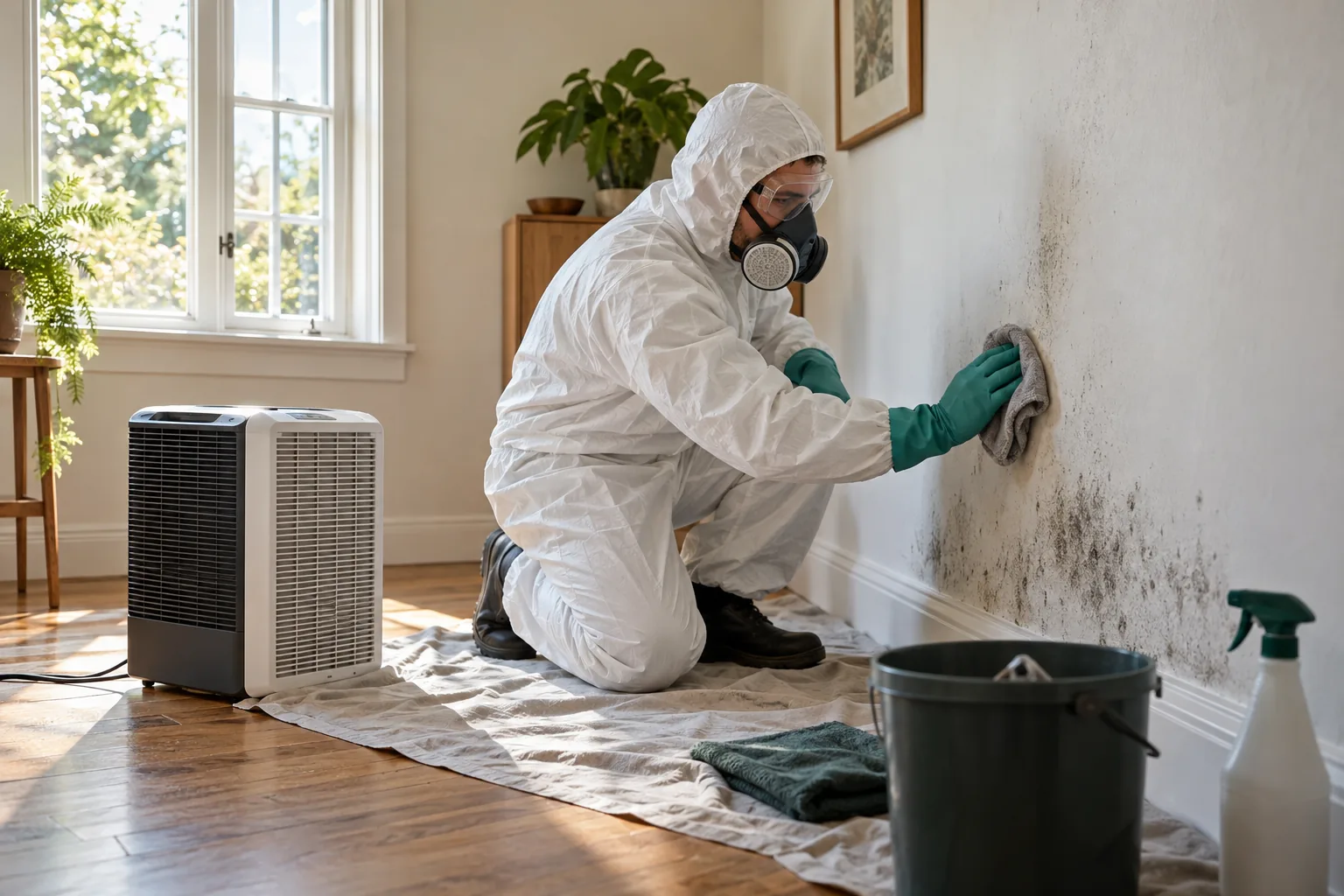
Inspect the visible accessible patch, identify fragile finishes and agree which surface can be included before selecting treatment.
2
Introduce HEPA air protection
Set the confirmed HEPA air scrubber running before application in the prepared area, without treating filtration as proof of repaired material.

3
Apply the appropriate treatment
Use suitable HOCl application, with ULV dry fog only where appropriate; do not promise preservation of every weakened paint layer.
4
Remove visible mould physically
Use professional equipment with H-class filtration for the agreed physical removal, keeping demolition and decorative surface repair separately scoped.
5
Continue air cleaning and clarify limits
Maintain HEPA filtration during and after work, then explain actual return instructions, residual staining and any surface repair still needed.
Name the finish on each requested surface
Walls
Identify the affected coating and any loose edge rather than describing every wall as ready for the same method.
Ceilings
Mention flaking ceiling paint and visible water marks separately; roof access and repair are not assumed.
Bathrooms
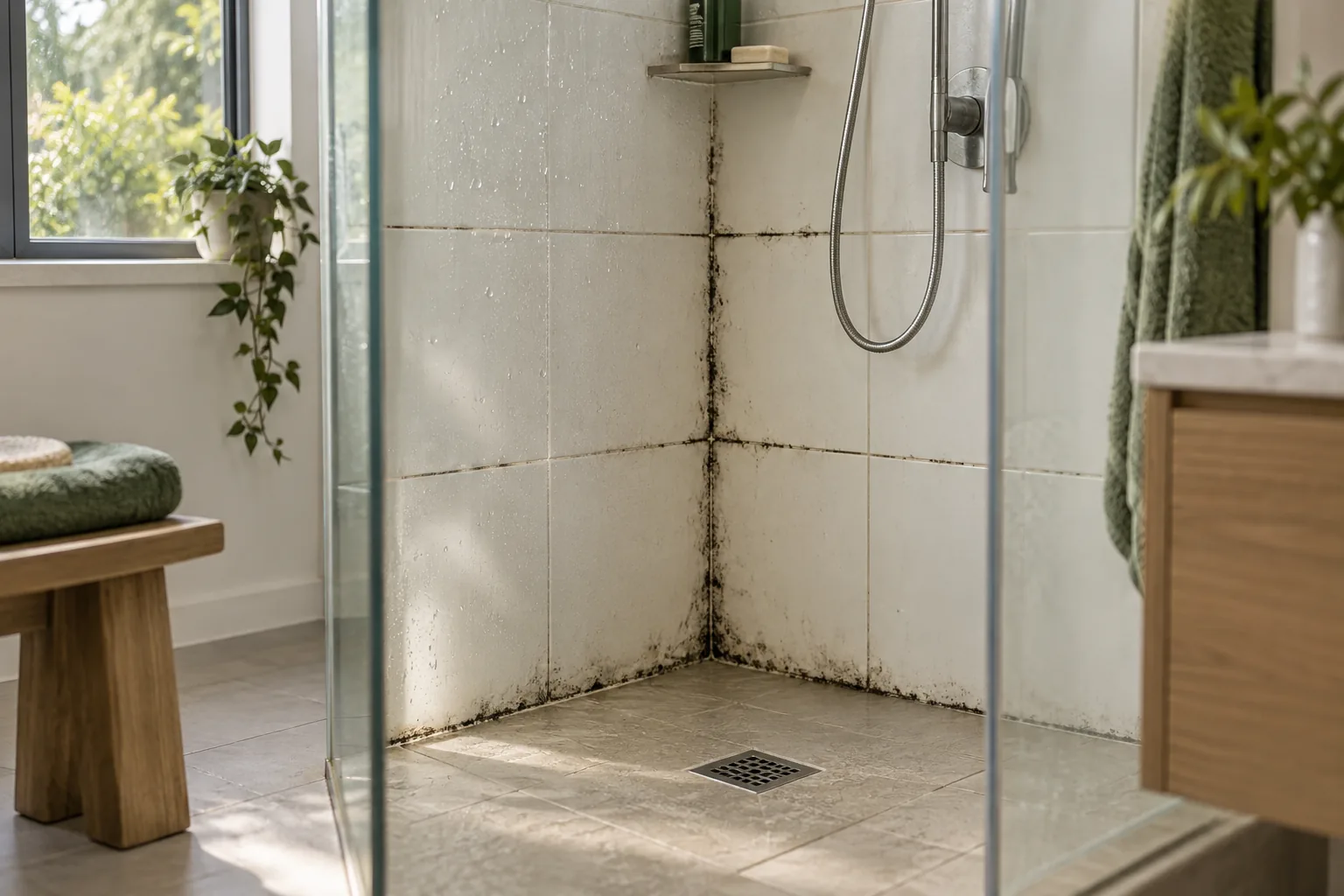
Distinguish painted bathroom finishes from tile joints and a separately planned silicone replacement.
Kitchens
Describe exposed kitchen wall paint without including grease removal, appliance work or hidden cabinet backing.
Accessible affected surfaces
Other reachable structural finishes need suitability discussed individually; damaged linings and excluded textiles are not automatically included.
WHAT TO EXPECT
Prepare without scraping to enlarge access
Check the preparation requirements before moving contents or disturbing loose paint. Explain any fragile sections that might affect the proposed method. People and pets leave the property during treatment, and the technician gives the relevant return instructions rather than a universal waiting period.
The source’s average of around three hours per room varies with size, contamination and access. Remediation is not charged as an invented hourly painting-preparation task. Remaining staining or damaged finish can still require another provider’s work. Agree the sequence with that provider instead of scheduling decoration on an assumption of perfect cosmetic restoration or certified substrate dryness.
FOLLOW THE MOISTURE
Keep the finish decision connected to moisture follow-through
After the instructed return, distinguish a stable damaged coating from newly wet or growing areas. Complete separately arranged source repairs and discuss decoration requirements with the responsible provider. A fresh coat should not be used to hide a changed surface before its current condition is described.
Record new lifting or water at the same identifiable patch.
Keep contamination treatment separate from paint-system preparation.
Update the scope if repair later exposes another affected section.
Clarify what the coating repair excludes
Describe the coating condition as well as the visible extent when requesting cost. Confirm which published Mould Removal examples apply to remediation; none should be read as a paint-stripping allowance, replastering package or guarantee that a decorator can start immediately.
KURUNJANG · EXACT ADDRESS & ACCESS
Kurunjang access and neighbouring requests
For Kurunjang work, specify the wall and any preparation restriction at the actual address. Melton and Brookfield links help with another nearby property, but that property’s coating or repair sequence cannot determine what your surface needs.
Melton · Brookfield · Rockbank · Diggers Rest
Questions about remediation
Should I scrape the loose paint before treatment?
Do not assume scraping is useful preparation. Describe the fragile area and agree what access or separate repair is appropriate first.
Will remediation include replastering the patch?
No structural repair is confirmed. Discuss deterioration and arrange any required repair under its own scope.
Can fogging preserve every paint layer?
No universal finish guarantee is made. Application suitability must account for the actual coating and condition.
Does a dry-looking surface mean it is ready to paint?
Appearance is insufficient to certify the substrate. The decorating provider needs to decide what their proposed finish requires.
What if another layer appears during separate repairs?
Describe that newly exposed section and have its treatment agreed. The original accessible face does not establish concealed-layer clearance.
How should a remaining stain be handled?
Discuss whether it is unchanged cosmetic discolouration or a fresh visible change. Decoration and any renewed contamination require different decisions.
Describe the paint condition with the mould
Call 03 8652 1296 with the Kurunjang patch, exposed finish and planned repair. Agree a suitable treatment boundary before scraping or decorating.