
VISIBLE SURFACES · THOUGHTFUL RESTORATION
Mould Remediation Bayles
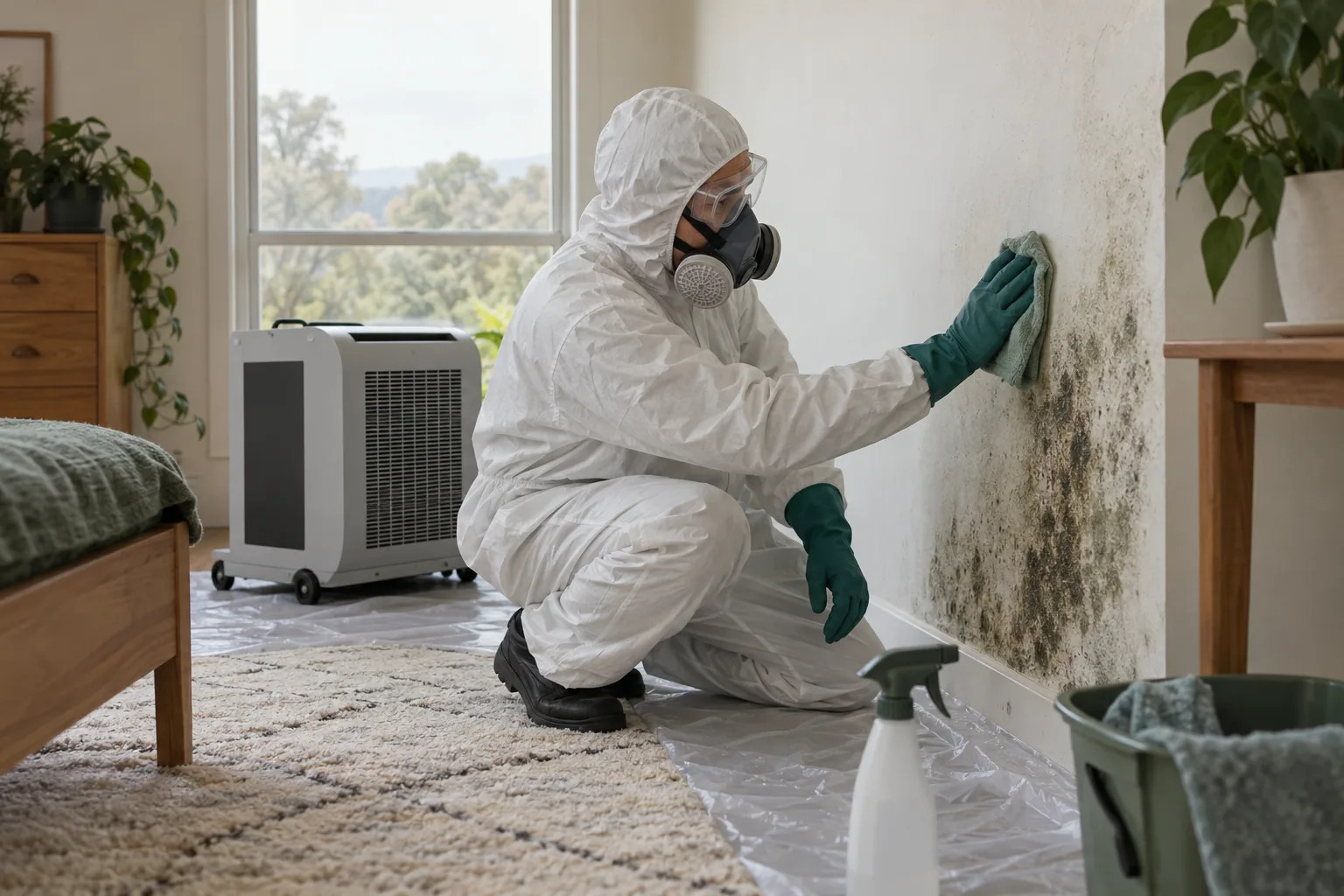
If the concern is described as mould inside a cupboard, identify what is actually affected before choosing remediation. For a Bayles property, distinguish an exposed structural wall from the cabinet’s own backing and stored belongings, then confirm availability. A storage label should not turn the service into automatic cabinetry or contents restoration.
ASSESS · FILTER · RESTORE
The actual affected face is identified.
Contents stay separate from structural work.
Access is agreed without assuming dismantling.
A cupboard description can refer to different surfaces
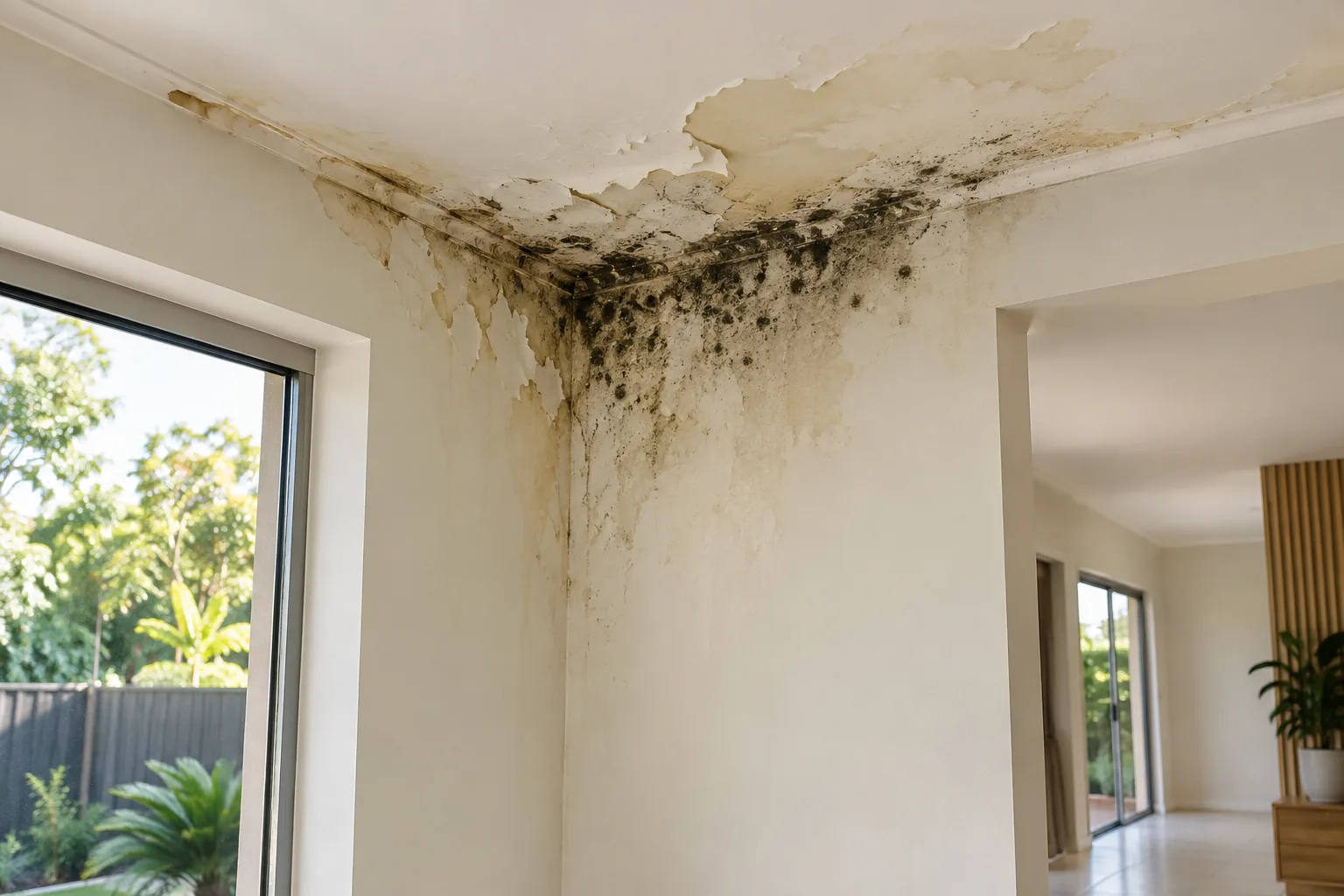
Explain whether you can see the building wall, a removable item or fixed backing, keeping uncertainty clear. The confirmed professional process concerns suitable reachable structural surfaces. Do not treat every cupboard component as a wall or assume the cabinet will be removed to reveal more material.
Clothing and other textiles remain excluded, along with furniture and concealed layers. Discuss preparation before moving difficult or affected belongings. If separate access work reveals a contaminated structural face, its inclusion needs agreement. The completed result cannot clear the entire storage space or all contents through a general room booking.
Describe the observation rather than assigning a storage cause
Report actual condensation, water and repair information at the nominated area. Mould appearing inside storage does not establish ventilation as the only cause. A separate visible accessible assessment enquiry can discuss the condition before treatment where the affected material remains uncertain.
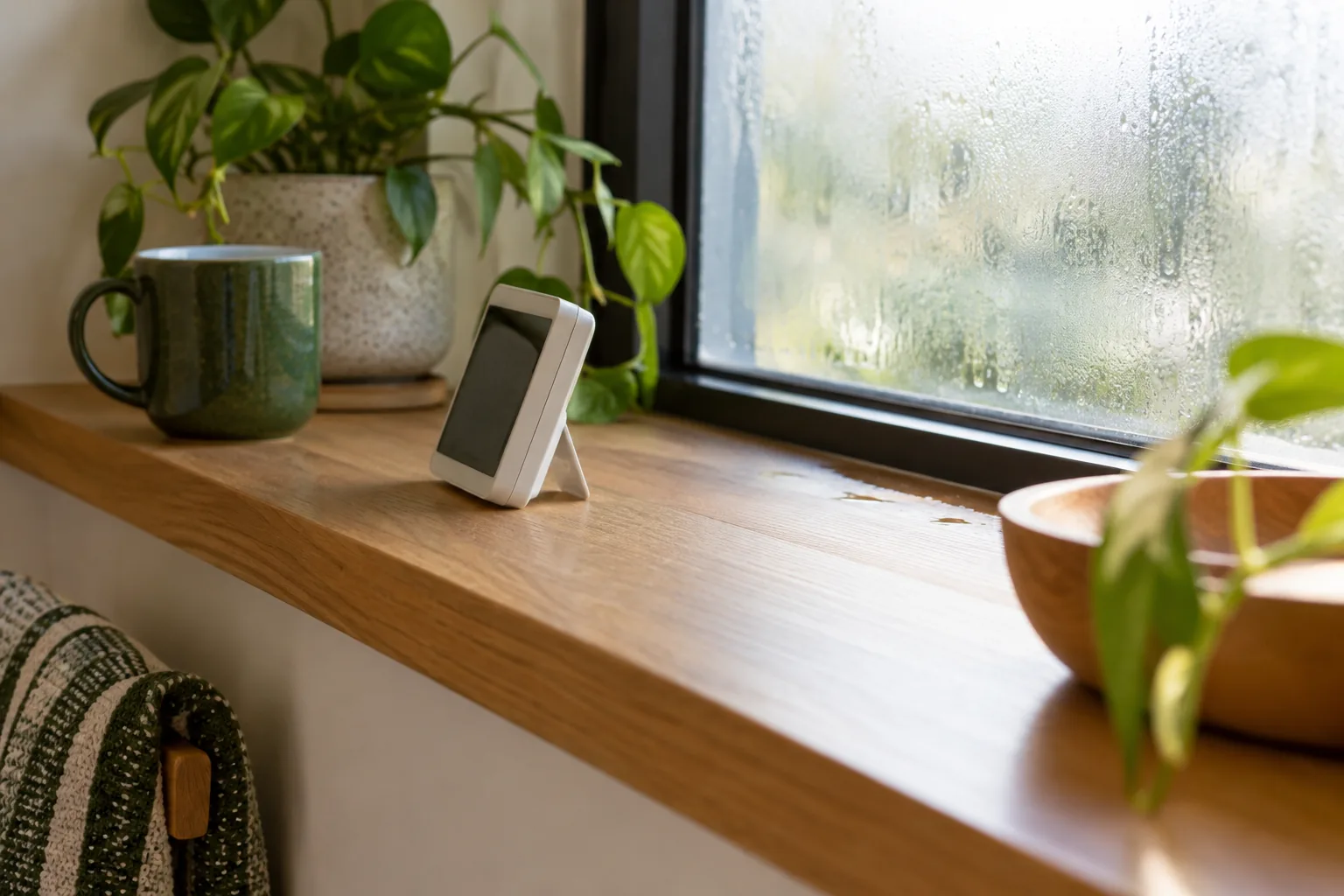
The professional hygrometer measures room-air relative humidity, not moisture inside stored fabric, cabinet backing or hidden wall material. It cannot certify belongings suitable for reuse. Relevant leaks and building faults require appropriate providers. Practical moisture correction and ventilation support follow-through, without a guarantee that contamination cannot return under continued damp conditions.
PLAN · FILTER · TREAT · REMOVE · CONTINUE
Treatment when an accessible structural face is agreed
1
Assess the identified surface
Review visible contamination and actual material, clarify whether an exposed structural face is requested and agree suitable reach without assuming cabinet removal.
2
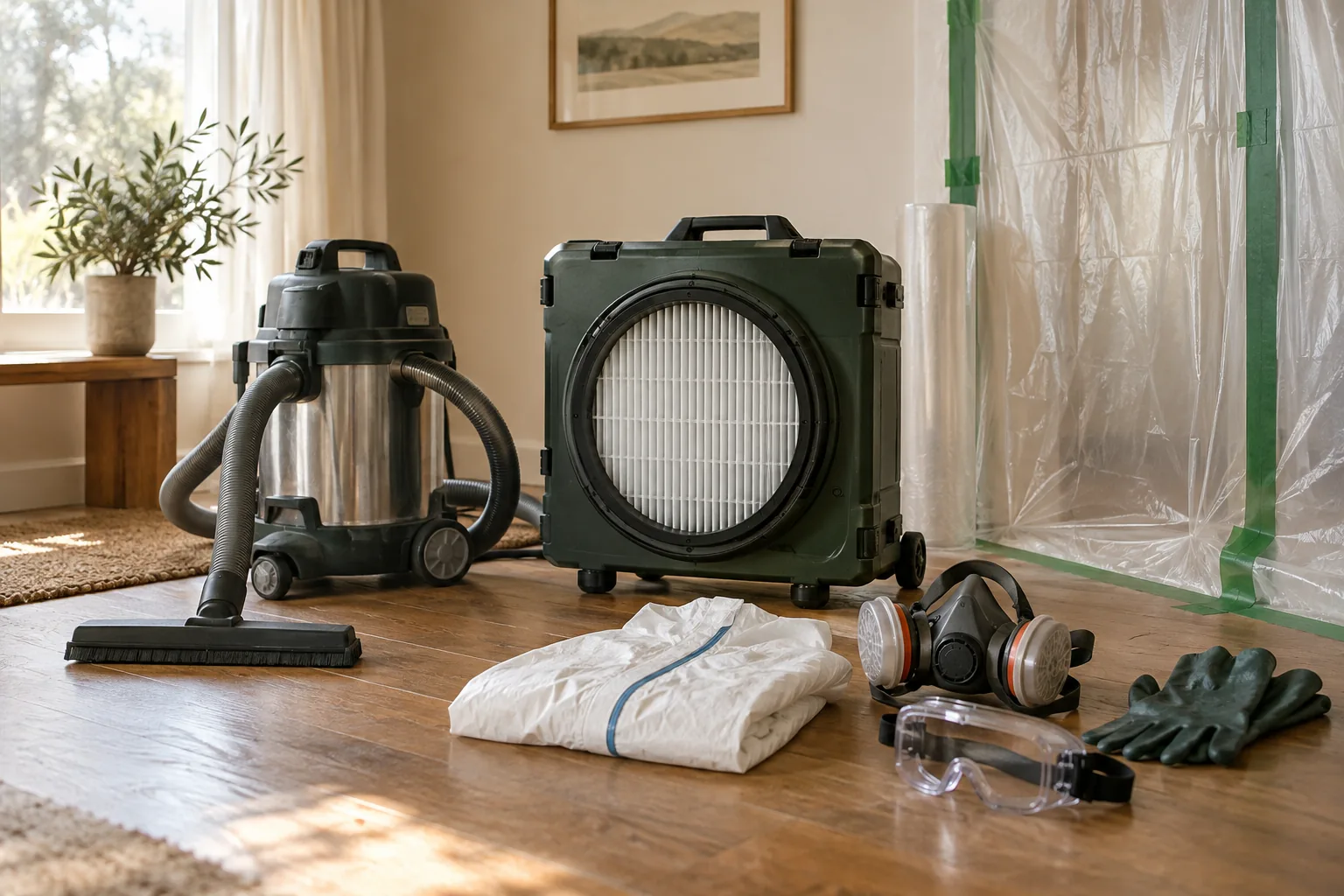
Begin HEPA air protection
Set up the confirmed HEPA air scrubber before treatment in the prepared area, without presenting filtration as clearance of stored textiles or cabinet interiors.
3
Apply appropriate HOCl treatment
Use suitable HOCl with ULV dry fog where appropriate, retaining the contents and hidden-layer limits around the agreed structural face.
4
Physically remove visible mould
Use professional H-class filtered equipment within the reachable structural boundary, excluding cabinetry restoration, clothing treatment and unconfirmed dismantling.
5
Continue filtration and state the scope
Maintain HEPA air cleaning during and after the process, then discuss actual return advice and the surfaces treated rather than the whole cupboard.
Structural finishes distinguished from storage components
Walls
Identify whether the requested face is the building wall rather than assumed cabinet backing.
Ceilings
Ceiling growth near a storage unit needs its own location, inclusion and safe reach.
Bathrooms
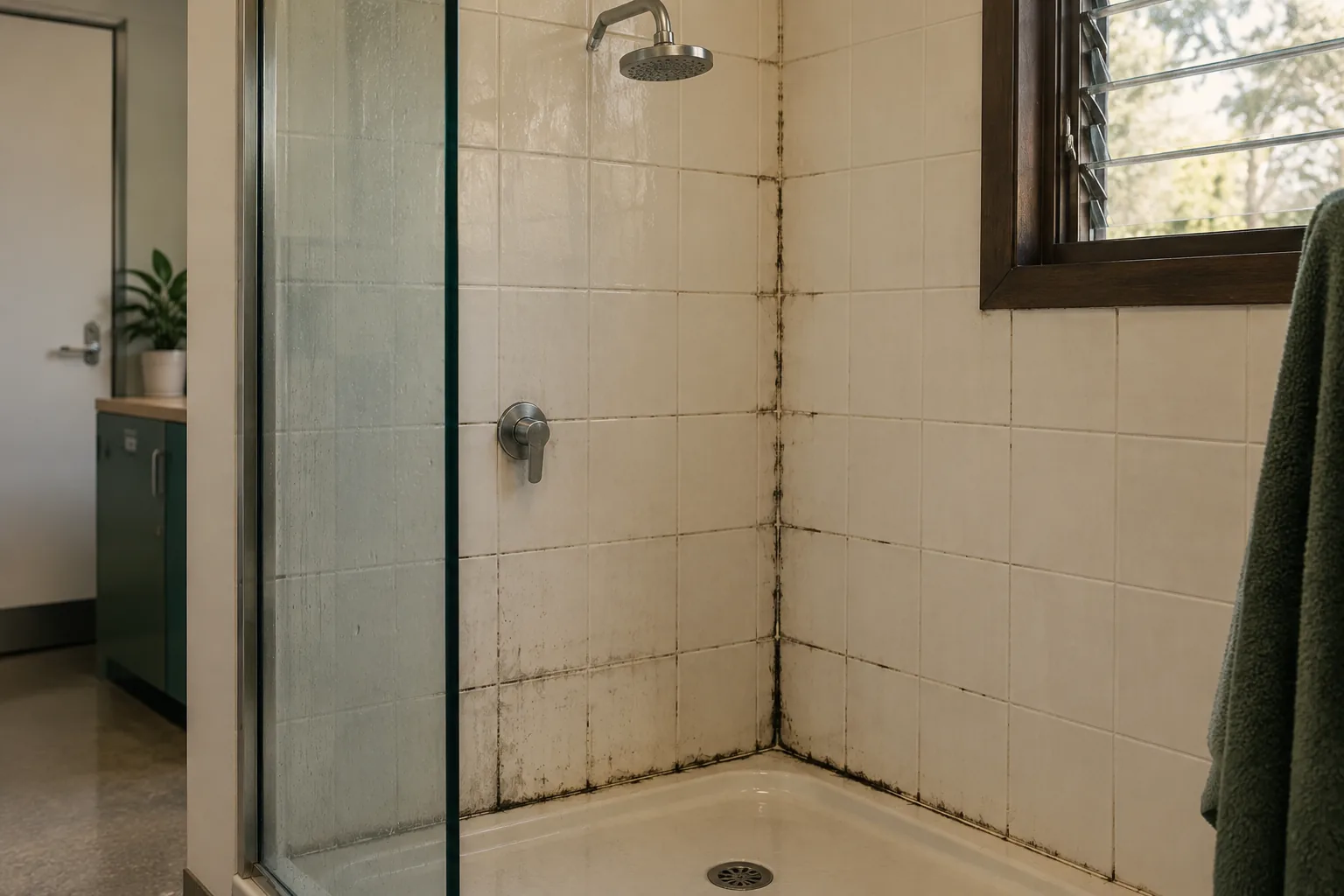
Bathroom structural work remains separate from vanity repair, stored towels and textile items.
Kitchens
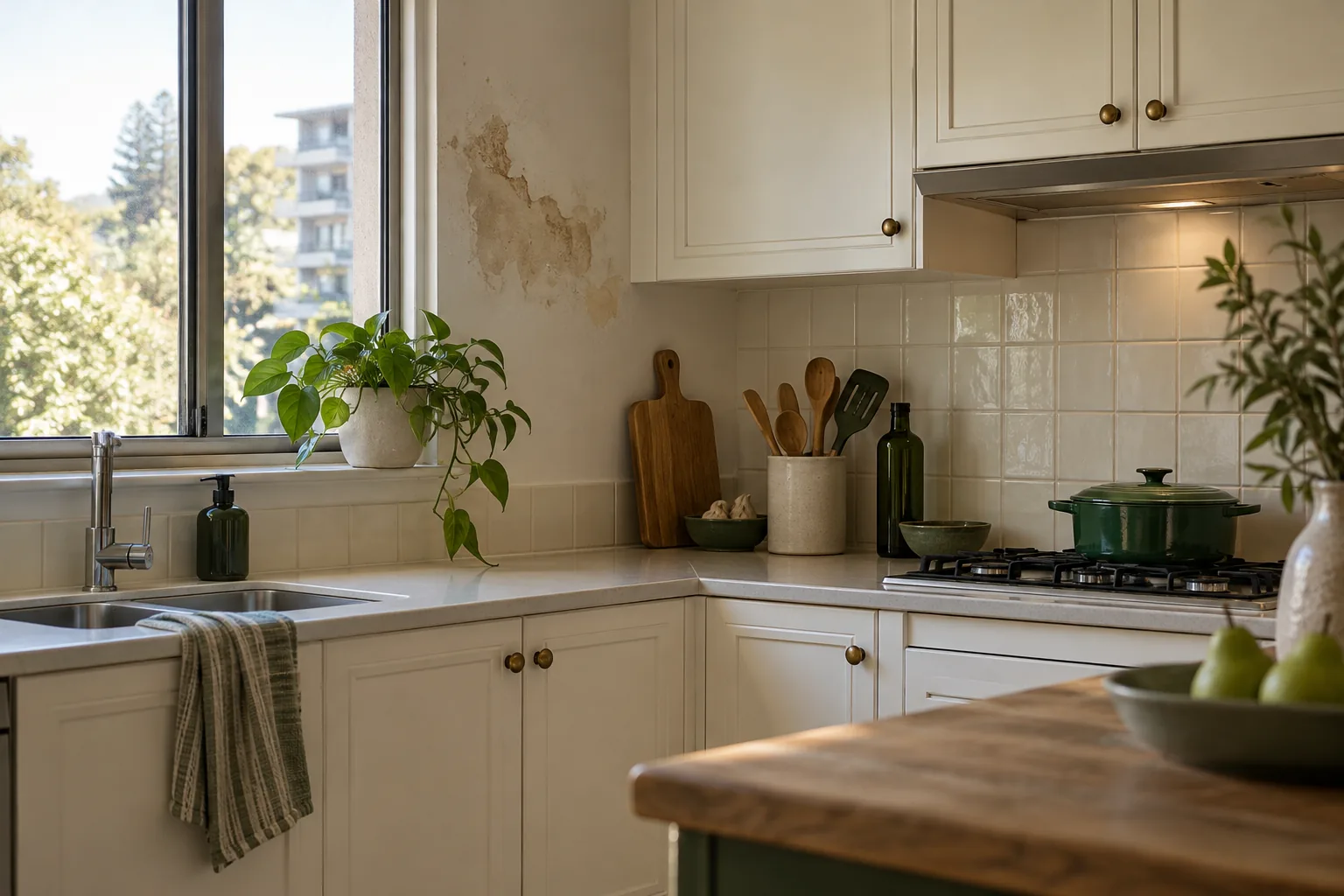
Reachable kitchen wall finishes can be discussed without fixed cabinetry or contents restored by implication.
Accessible affected surfaces
Other exposed structural sections require agreement; hidden backing, clothing and furnishings are outside standard inclusions.
WHAT TO EXPECT
Clarify the storage restriction before preparation
Give the Bayles premises address, nominated interior and material uncertainty when confirming availability. Ask what clearance is appropriate rather than emptying or dismantling everything on assumption. People and pets leave during treatment and follow the technician’s specific departure and return advice.
Average source guidance is roughly three hours per room, varying with contamination, size and accessibility. It is not an hourly cupboard-restoration task or guaranteed disposal service. Cosmetic marks may remain, while repairs and decoration require separate scope. No material probe, lab or contents-clearance result is confirmed.
FOLLOW THE MOISTURE
Keep later storage concerns accurately separated
After advised return, report fresh growth or water on the actual structural face and complete relevant moisture repairs. A mark on clothing or cabinet material needs its own advice rather than being merged into the wall result. Newly exposed surfaces require an updated request.
Name the affected material when reporting a new storage concern.
Keep belongings outside the completed structural boundary.
Describe changed access before adding another surface.
Quote the identified structural face
Provide visible extent, material and access restriction when discussing cost. Confirm applicability of Mould Removal price examples to remediation; they do not establish cabinet restoration, textile treatment, contents disposal or automatic regional attendance at the Bayles premises.
BAYLES · EXACT ADDRESS & ACCESS
Bayles premises and nearby storage enquiries
Catani and Koo Wee Rup pages help distinguish nearby property requests. Supply the exact Bayles address and identified structural face directly. Those links cannot resolve the cabinet-material uncertainty or establish attendance for an unspecified interior.
Monomeith · Cora Lynn · Catani · Koo Wee Rup
Questions about remediation
Does mould inside a cupboard automatically mean wall treatment?
No. Identify the actual affected material and clarify whether a reachable structural face is present.
Is fixed cabinet backing a confirmed standard surface?
Do not assume cabinetry treatment is included. Describe the material separately from the building wall before scope is agreed.
Will clothing be treated with the cupboard area?
No. Clothing and other textiles are excluded from standard structural remediation.
Should I dismantle the unit to expose more?
Discuss access first. Separate dismantling or repair is not an automatic preparation requirement or inclusion.
Can humidity clear stored belongings?
No. Room-air relative humidity does not test or certify fabric, cabinet components or concealed wall material.
What if access work reveals an affected wall later?
Describe that newly exposed structural section and agree suitable treatment. It was not included through the earlier storage-space description.
Identify the affected material inside the storage area
Call 03 8652 1296 with the Bayles address, current surface and access. Confirm availability and structural scope while keeping cabinetry and contents separate.