
VISIBLE SURFACES · THOUGHTFUL RESTORATION
Mould Remediation Catani
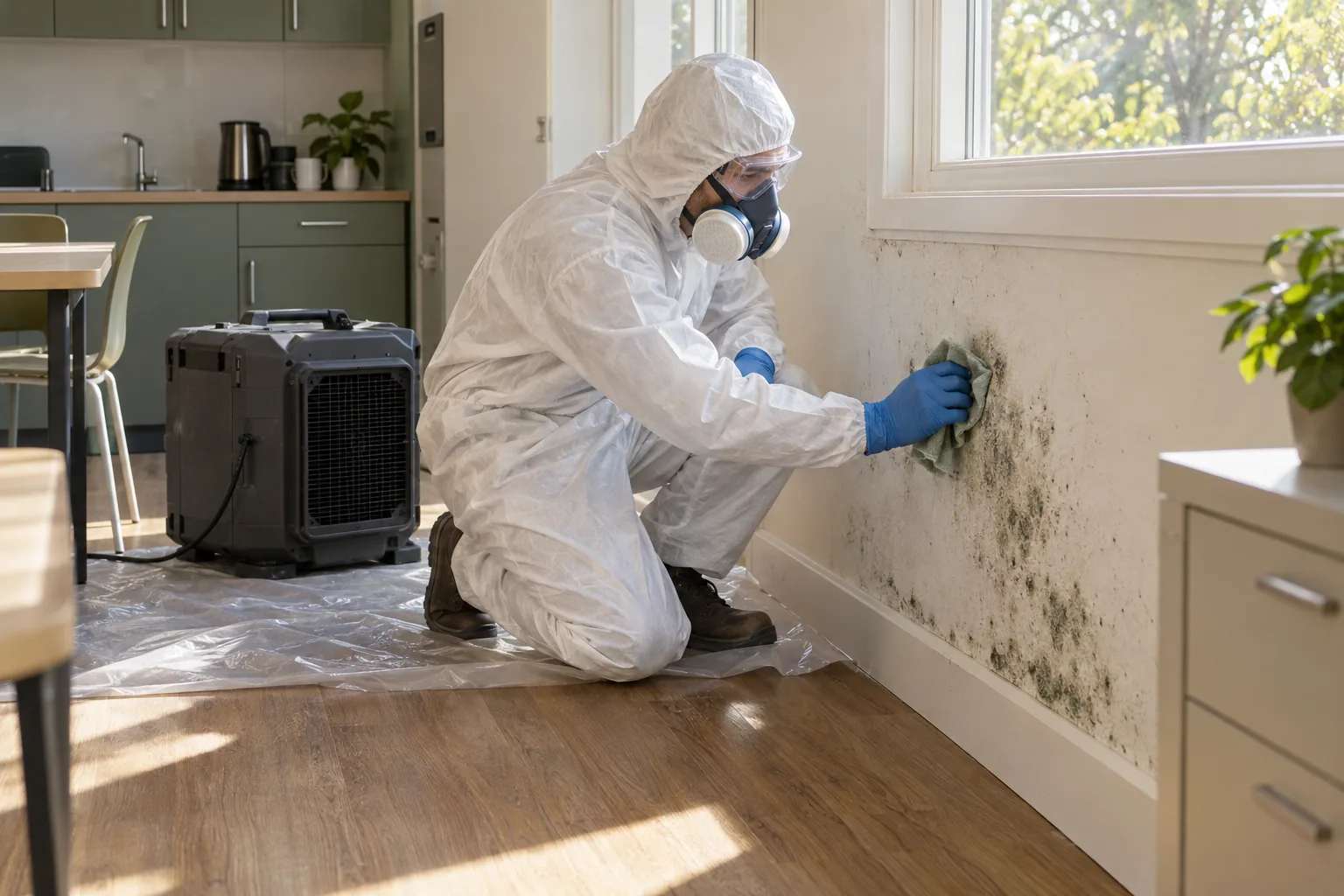
If separate floor-covering work reveals visible growth and leftover residue, describe the exposed structural face before assuming it is ready for one cleaning method. For a Catani property, give the exact interior and address and confirm availability. Remediation does not automatically include removing adhesive, restoring flooring or certifying readiness for another covering.
ASSESS · FILTER · RESTORE
The exposed floor condition is described.
Removal and reinstatement stay separate.
Suitable accessible work is agreed.
The uncovered face may still have a separate preparation question
Identify the actual floor finish, residue and visible extent without guessing what lies below. The confirmed process can be discussed for suitable reachable structural contamination. Explain loose or damaged material before the method and boundary are agreed.
Do not strip residue or lift more covering solely to prepare an enquiry. Flooring removal and repair need their own arrangement. Carpets, rugs and other textiles remain excluded, with concealed material outside standard treatment. If later work opens another section, describe that newly available face and have its inclusion agreed independently.
A revealed floor does not establish a complete drying history
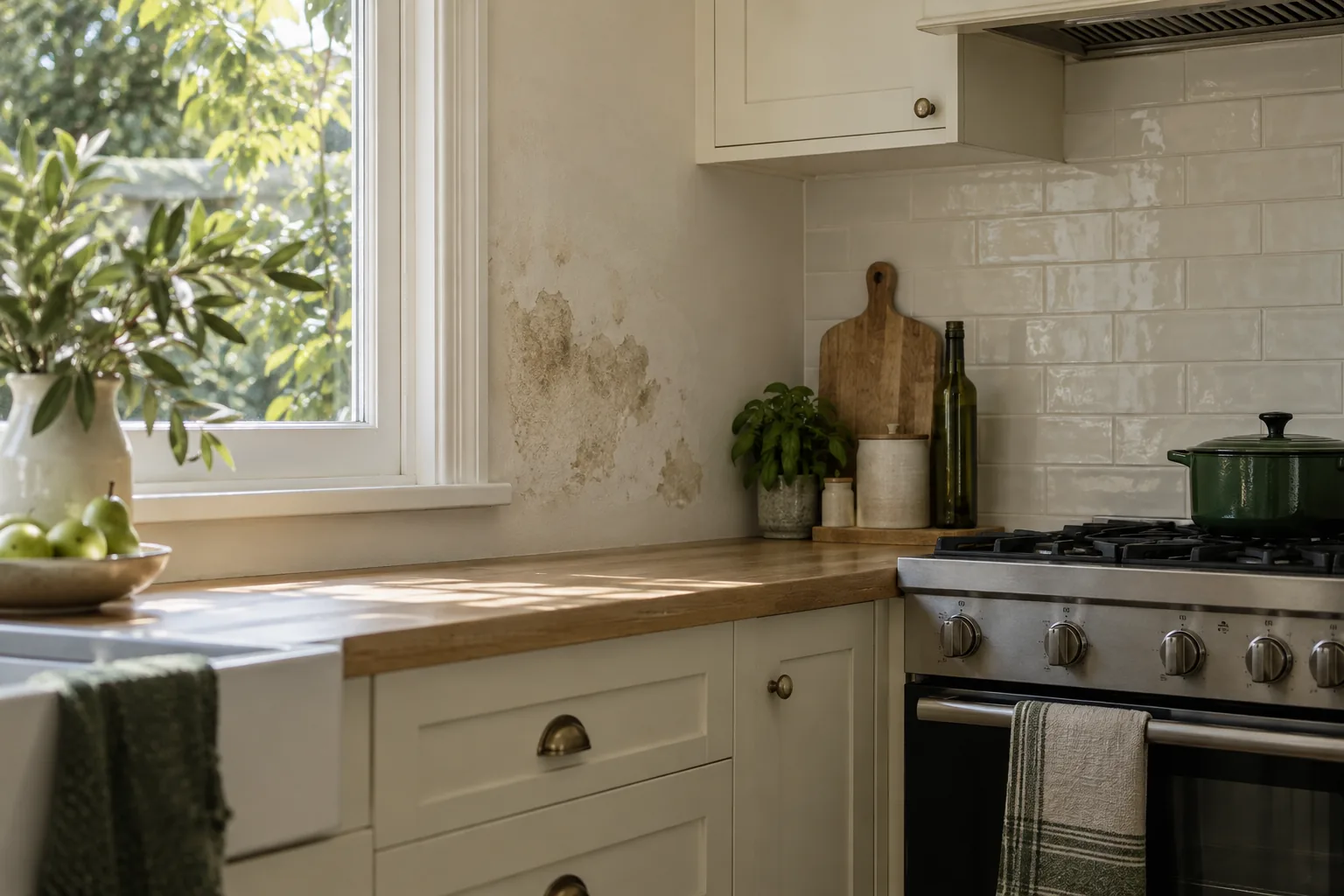
Provide reliable water, condensation and repair observations separately from the covering’s removal. Its newly exposed appearance cannot identify one source or certify material dry. A separate visible accessible assessment enquiry may clarify current condition before suitable treatment.
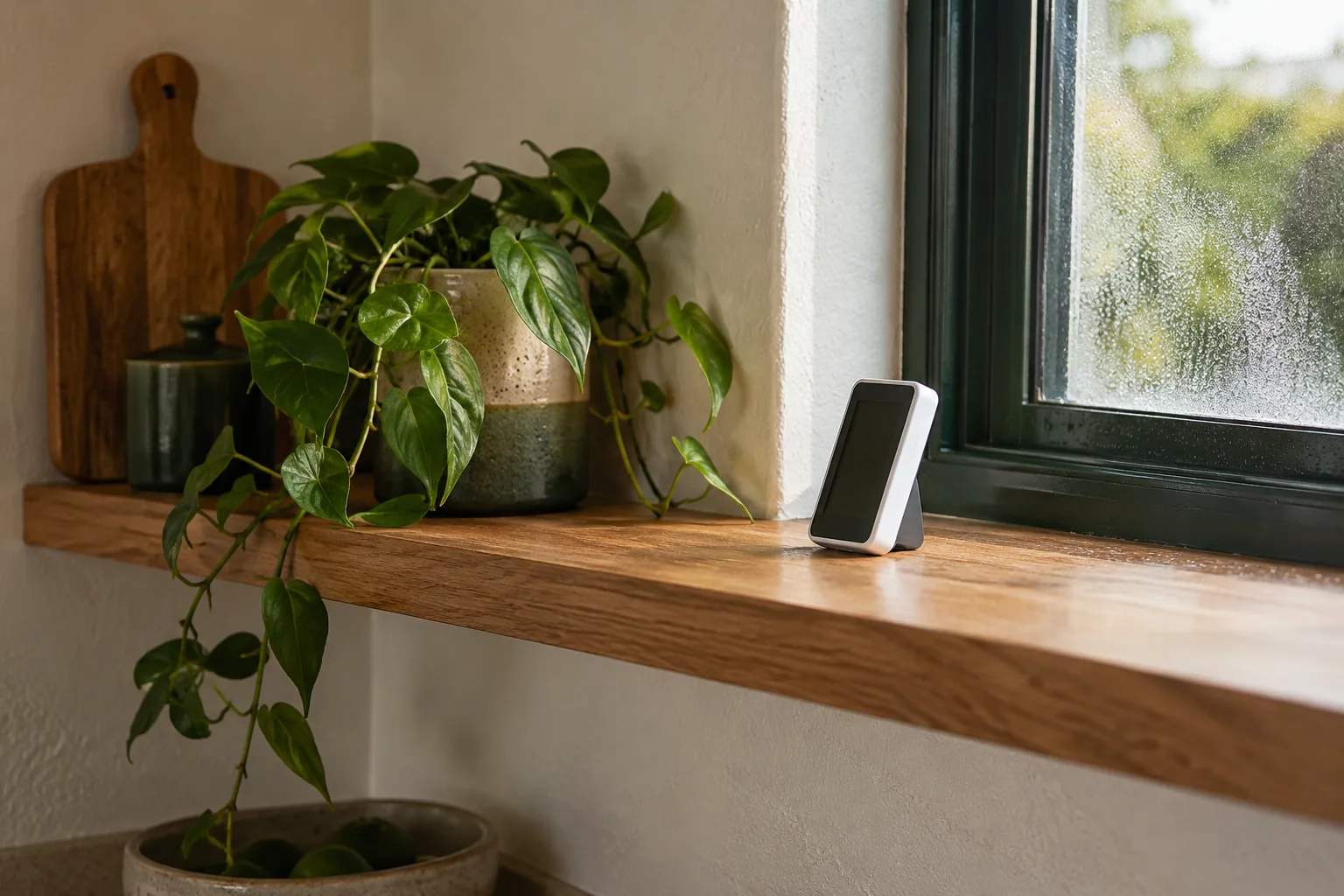
The professional hygrometer measures room-air relative humidity, not moisture inside the floor or performance of the proposed flooring system. It cannot approve adhesive application or reinstatement. Appropriate providers need to correct plumbing and building defects, while the flooring provider settles their own requirements. Continued dampness can support recurrence despite contamination work on the exposed face.
PLAN · FILTER · TREAT · REMOVE · CONTINUE
Treatment on suitable exposed structural sections
1
Assess the current floor condition
Review visible accessible contamination, finish and residue, identify remaining covering restrictions and agree the structural sections suitable for treatment.
2
Set up HEPA air protection
Begin the confirmed scrubber before application in the prepared area, without describing filtration as flooring-readiness or concealed-dryness certification.

3
Apply appropriate HOCl
Use suitable HOCl with ULV dry fog where appropriate, retaining actual finish limitations rather than promising removal of every residue.
4
Physically remove visible mould
Use professional H-class filtered equipment within the agreed reachable structural scope, keeping adhesive stripping, flooring repairs and textiles separately excluded from assumptions.
5
Continue filtration and explain completion
Maintain HEPA air cleaning during and after the process, then discuss actual return advice and any cosmetic or preparation issue still outstanding.
Structural faces apart from covering layers
Walls
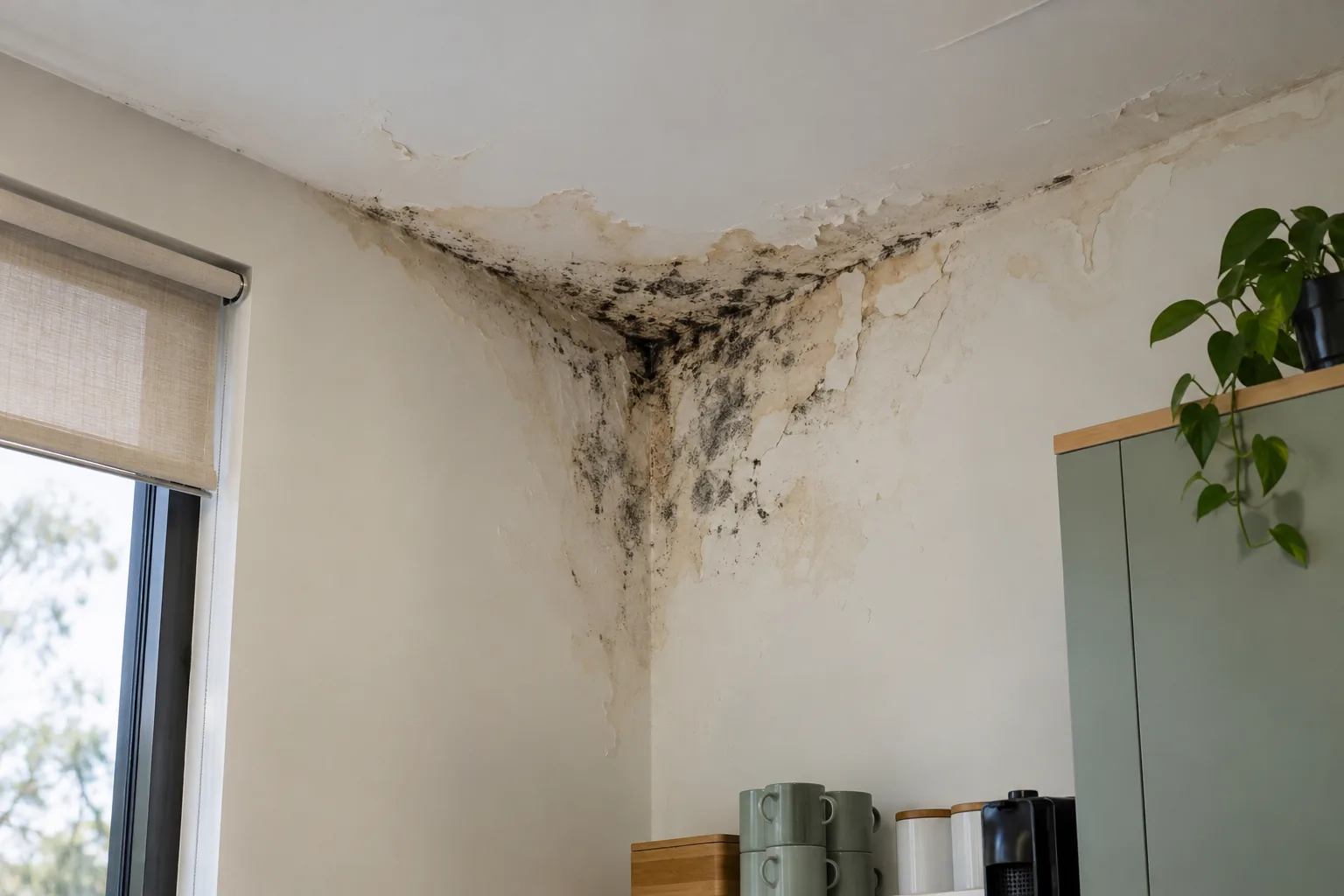
Wall contamination beside the floor requires its own exposed extent and coating description.
Ceilings
Ceiling patches need independent safe reach and water observations rather than inferred inclusion from floor work.
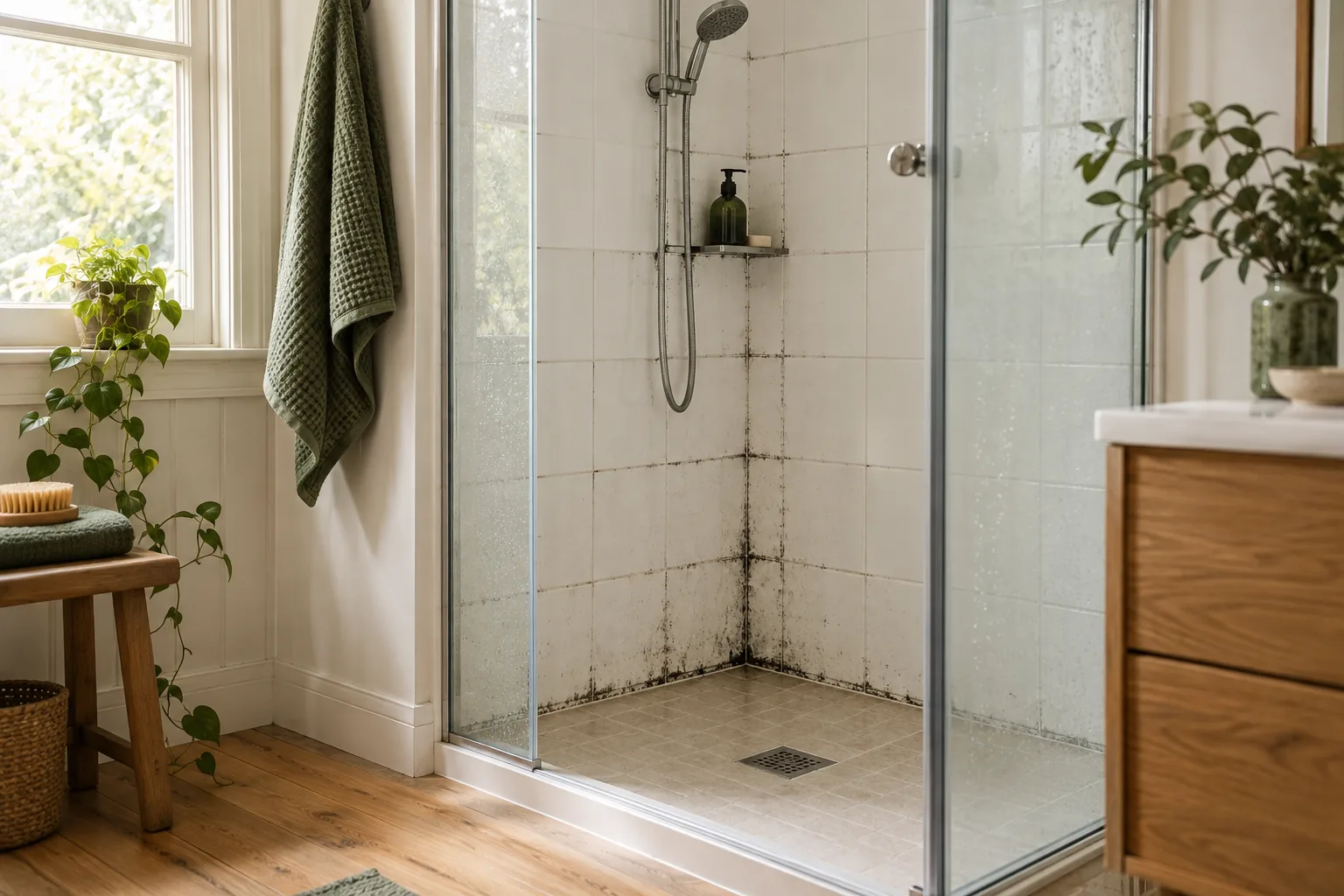
Bathrooms
Bathroom structural faces stay separate from mats, waterproofing repairs and covering reinstatement.
Kitchens
Reachable kitchen finishes can be discussed without appliance servicing or removal of fixed units.
Accessible affected surfaces
An exposed structural floor needs material suitability and agreement; coverings, residue-removal projects and hidden layers are not automatic additions.
WHAT TO EXPECT
Discuss preparation before changing the floor again
Give the Catani address, nominated room and current floor condition when confirming availability. Ask what clearance is appropriate before further stripping or reinstatement. People and pets leave during treatment and follow technician-specific departure and return instructions rather than the flooring provider’s proposed timetable.
Discuss the exposed floor’s working programme rather than a handover deadline, using the approximate three-hour room average only with its size, contamination and access qualifications. It is not an hourly covering-removal task or a fixed installation handover. Cosmetic marks may remain, with floor repair and decoration separately scoped. No probe readings, material-dryness certificate or lab clearance is promised.
FOLLOW THE MOISTURE
Keep future floor changes connected to the exposed result
After advised return, record fresh water or growth at the structural face and follow appropriate source repairs. A new covering should not be used to infer concealed dryness. Material revealed during later flooring work needs its present condition described before any additional treatment is assumed.
Keep contamination treatment separate from flooring installation approval.
Record renewed wetting with its actual position and timing.
Describe newly exposed sections before extending the earlier boundary.
Quote treatment without a flooring-restoration package
Provide exposed extent, finish and residue information when discussing cost. Confirm how Mould Removal price examples apply to remediation; they do not establish adhesive removal, covering disposal, reinstatement or regional attendance at an unspecified Catani property.
CATANI · EXACT ADDRESS & ACCESS
Catani premises and neighbouring floor enquiries
Bayles and Monomeith pages help navigate other nearby requests. Supply the exact Catani address and exposed floor details directly. Those locality links cannot establish residue suitability, installer requirements or availability for this interior.
Questions about remediation
Does removing the covering make every floor section suitable?
No. Describe the actual finish, residue and damage so appropriate reachable treatment can be discussed.
Will leftover adhesive be stripped during remediation?
No stripping project is confirmed. Keep separate preparation or flooring work outside the standard treatment assumption.
Is the removed carpet treated too?
No. Carpets and textile coverings are excluded from structural-surface remediation.
Can room humidity approve the new covering?
No. Air relative humidity is not material moisture or installation-readiness certification.
What if more contamination appears during later floor work?
Describe the newly exposed face and agree suitable scope. It was not automatically covered by the earlier available section.
Can the installer rely on a guaranteed immediate handover?
No fixed installation time follows from average treatment guidance. Confirm actual instructions and the flooring provider’s separate requirements.
Describe the uncovered floor before further work
Call 03 8652 1296 with the Catani premises, finish and residue condition. Confirm availability and suitable structural treatment alongside separate flooring arrangements.