
SURFACE TREATMENT · MOISTURE FOLLOW-THROUGH
Mould Remediation Ashwood
Two readings can appear to disagree when they come from different devices, locations or units. For your Ashwood enquiry, describe the visible surface concern and label any records accurately. Remediation planning should use room information in context rather than convert an unexplained percentage into material moisture, assume a hidden fault or delay all surface decisions until the records look identical.
The visible concern remains central.
Room records are labelled clearly.
Material-moisture assumptions are avoided.
TREATMENT & FOLLOW-THROUGH
UNDERSTANDING THE AFFECTED ROOM
Readings support a surface enquiry rather than replace it
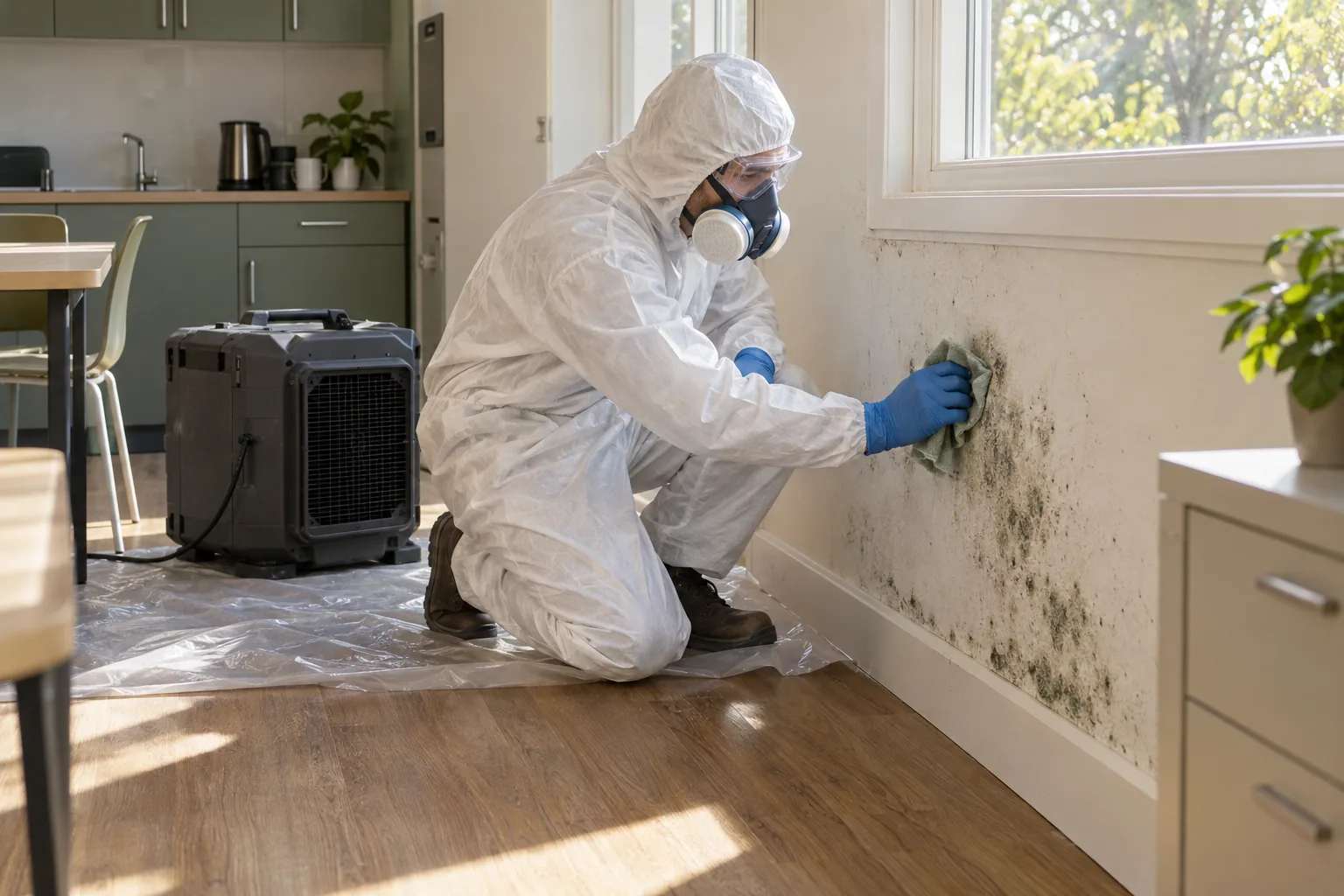
Remediation combines assessment, air protection, suitable treatment and physical removal of visible mould. Identify the exposed material, current growth and available access before relying on device outputs. A number without units and measurement context cannot define the visible treatment boundary or demonstrate that every lining is affected.
The remediation information explains supported work. Device servicing and calibration are not promised, while concealed layers and textile materials remain excluded. Repairs and decorating need separate scope rather than being inferred from the size or disagreement of recorded percentages.
MOISTURE & CONTAMINATION
Different records may measure different things
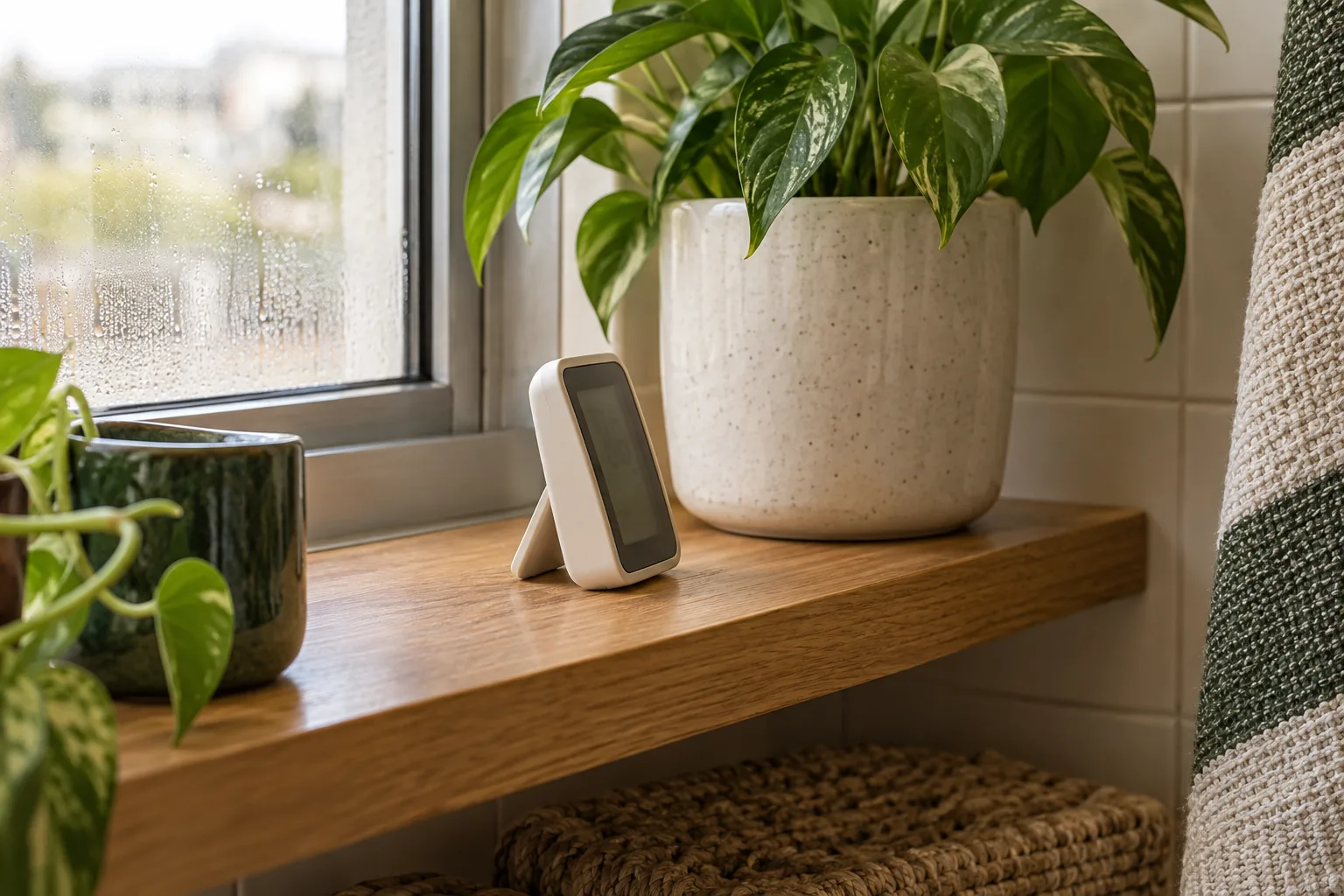
Label the instrument, units, room and time for each reading, and report actual water separately. The confirmed professional hygrometer informs air-relative humidity. It does not provide a material-probe result, certify concealed dryness or establish equivalence with every household sensor’s output.
Known leaks or ventilation concerns need correction through appropriate separate arrangements. Continued dampness may support recurrence after visible treatment. Discuss accessible-condition inspection if the exposed surface first needs consideration, without expecting laboratory analysis or a device-comparison certificate to resolve every record.
A DEFINED TREATMENT SEQUENCE
Confirmed work on suitable accessible finishes
1
Agree the accessible scope
Assess the exposed contamination and available access, considering accurately labelled room information while agreeing suitable checks and finish limits.
2
Begin air protection
Begin confirmed HEPA air-scrubber protection before application, supporting the work rather than turning a device display into an air clearance.

3
Choose the treatment application
Use appropriate HOCl treatment, considering ULV dry fog where suitable without making the application depend on an unexplained percentage.
4
Remove visible growth
Remove visible mould using professional H-class filtered equipment on agreed accessible surfaces, excluding contents and concealed layers.
5
Continue final air cleaning
Continue HEPA air cleaning during and after work, explaining remaining appearance, source follow-up and particular return instructions.
Describe the finish before interpreting numbers
Walls
Walls need their actual material and exposed condition described, not a classification from an unlabelled number.
Ceilings
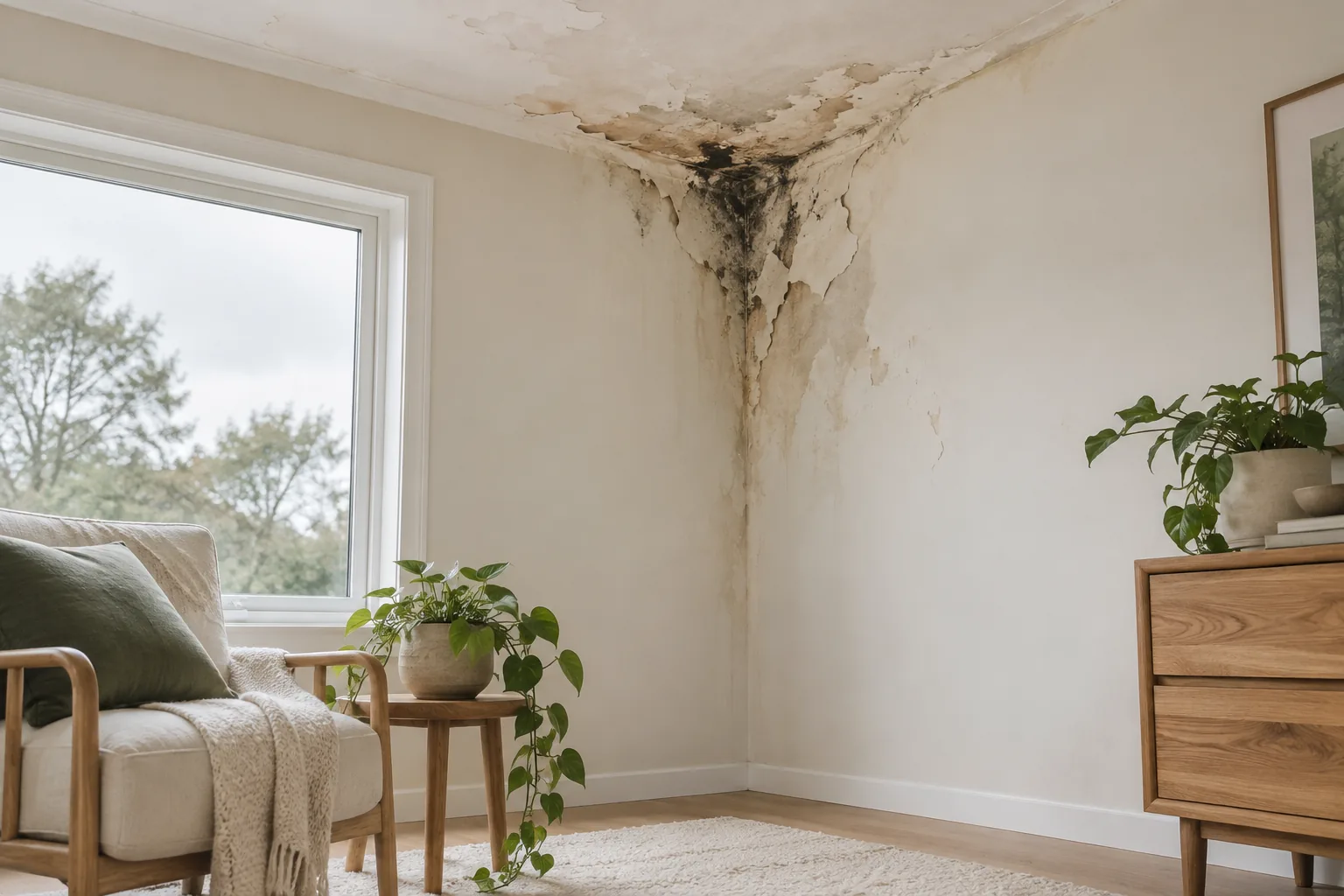
Ceiling requests require safe access and any deterioration located independently of a household reading.
Bathrooms
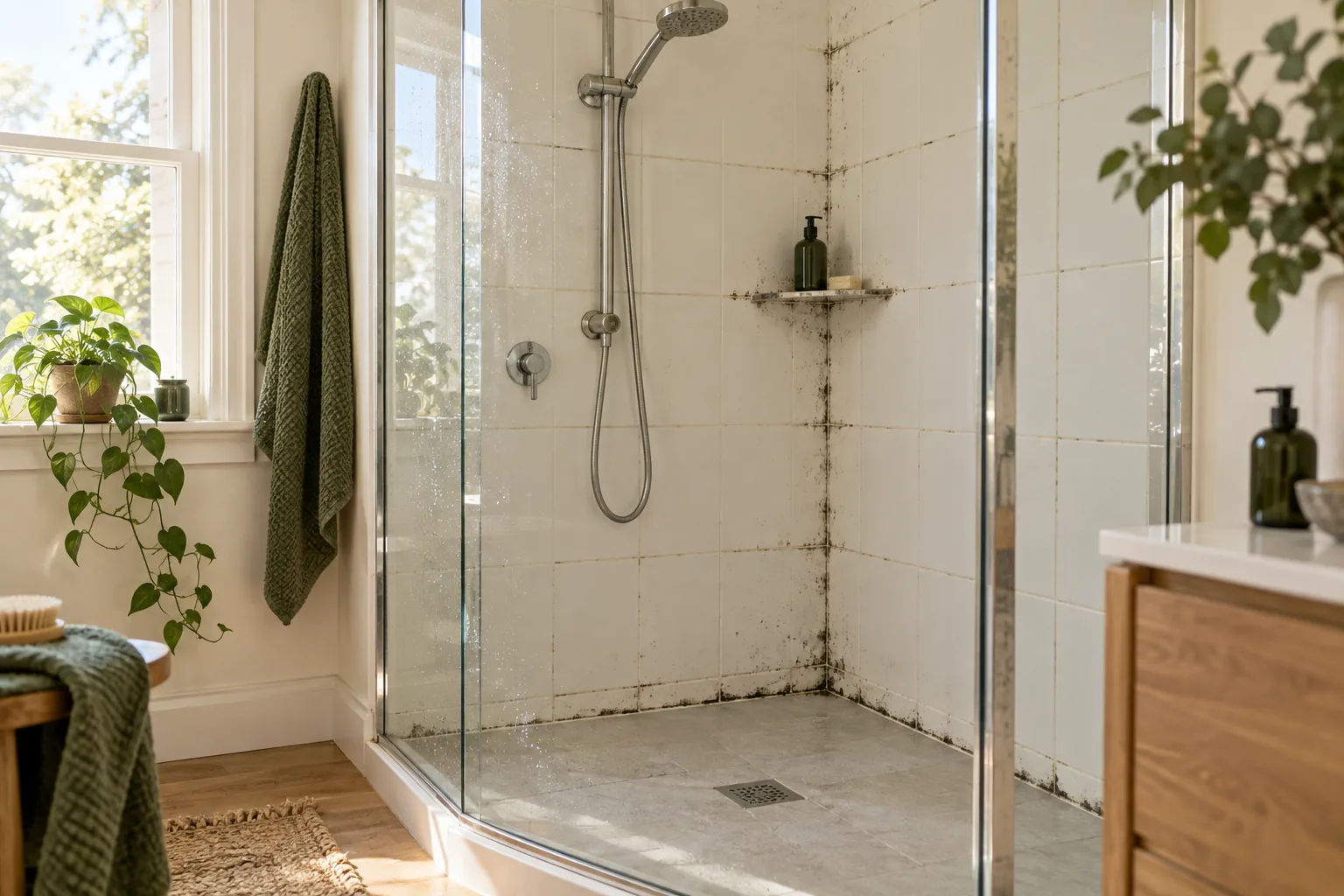
Bathroom paint, tiles and joints are different finishes; humidity does not certify waterproofing or hidden backing.
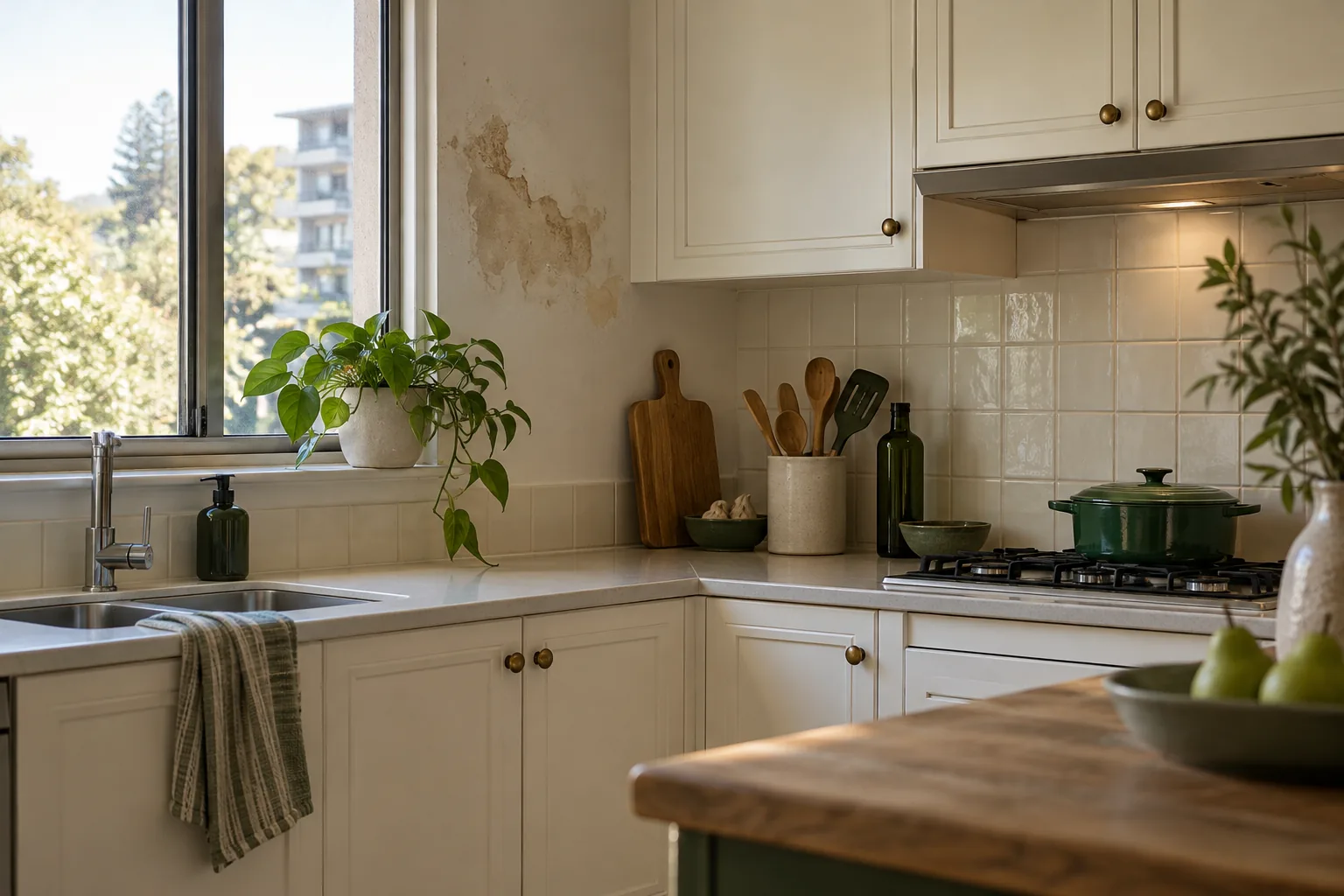
Kitchens
Kitchen surface work identifies accessible materials, with stored contents and appliances outside assumed assessment.
Accessible affected surfaces
Other affected visible walls, ceilings or hard floors may be agreed, excluding fabrics and concealed construction layers.
AFTER TREATMENT
Prepare information and the actual room
Supply useful labelled records without guessing missing units. Prepare movable contents as instructed so the exposed finish remains available. People and pets leave during treatment. About three hours per room is average source guidance, influenced by area, contamination and access rather than a guaranteed device-investigation interval.
Cosmetic marks can remain and separate decorating or repair may be needed. Obtain the technician’s return advice instead of choosing a favourable display reading. No laboratory clearance, hidden-material certificate or calibration outcome is promised by treatment of the visible finish.
KEEP MOISTURE IN VIEW
Follow visible changes with labelled records
Keep later records labelled rather than combine unlike measurements.
Locate fresh water or growth on the actual surface.
Complete separately required source or ventilation corrections.
Compare visible changes without treating every device variation as a treatment failure.
Quote for the surface task rather than device testing
Describe the current surface area and relevant room records when seeking the quote. The published table covers Mould Removal examples; establish how the figures apply to the proposed remediation. Sensor testing, calibration and laboratory clearance should not be assumed from a room amount or the need to understand conflicting readings.
ASHWOOD · EXACT ADDRESS & ACCESS
Enquiries for nearby addresses
Give the full Ashwood address and identify the room associated with each record. If measurements came from another premises, label that distinction before booking. Nearby navigation concerns separate location enquiries, while this room needs its own entry contact, accessible finish and agreed preparation.
Questions about remediation
Can two percentages be compared without knowing their units?
Not reliably. Label what each device measures, where it was used and when, rather than treating unlike outputs as contradictory material-moisture results.
Does the professional hygrometer measure water inside the wall?
No. The confirmed instrument informs room-air relative humidity, not a promised material-probe finding inside building layers.
Will the service calibrate all household sensors?
No calibration is confirmed. Share relevant readings accurately while keeping device maintenance and testing separate from the surface task.
Can a favourable display decide when to return?
No. Follow the technician’s job-specific return instructions rather than substitute a household device output.
Do disputed readings mean every room is included?
No. Identify requested exposed surfaces and agree scope; numerical disagreement does not establish whole-property treatment.
What helps with a later concern about the readings?
Give units, device, room and time alongside actual visible changes or water. Keep measurement context separate from unsupported claims about concealed materials.
Discuss the current finish and room information
Call 03 8652 1296 with the visible finish and clearly labelled room records. Agree accessible surface treatment without treating unexplained percentages as hidden-material findings.