
SURFACE TREATMENT · MOISTURE FOLLOW-THROUGH
Mould Remediation Balaclava
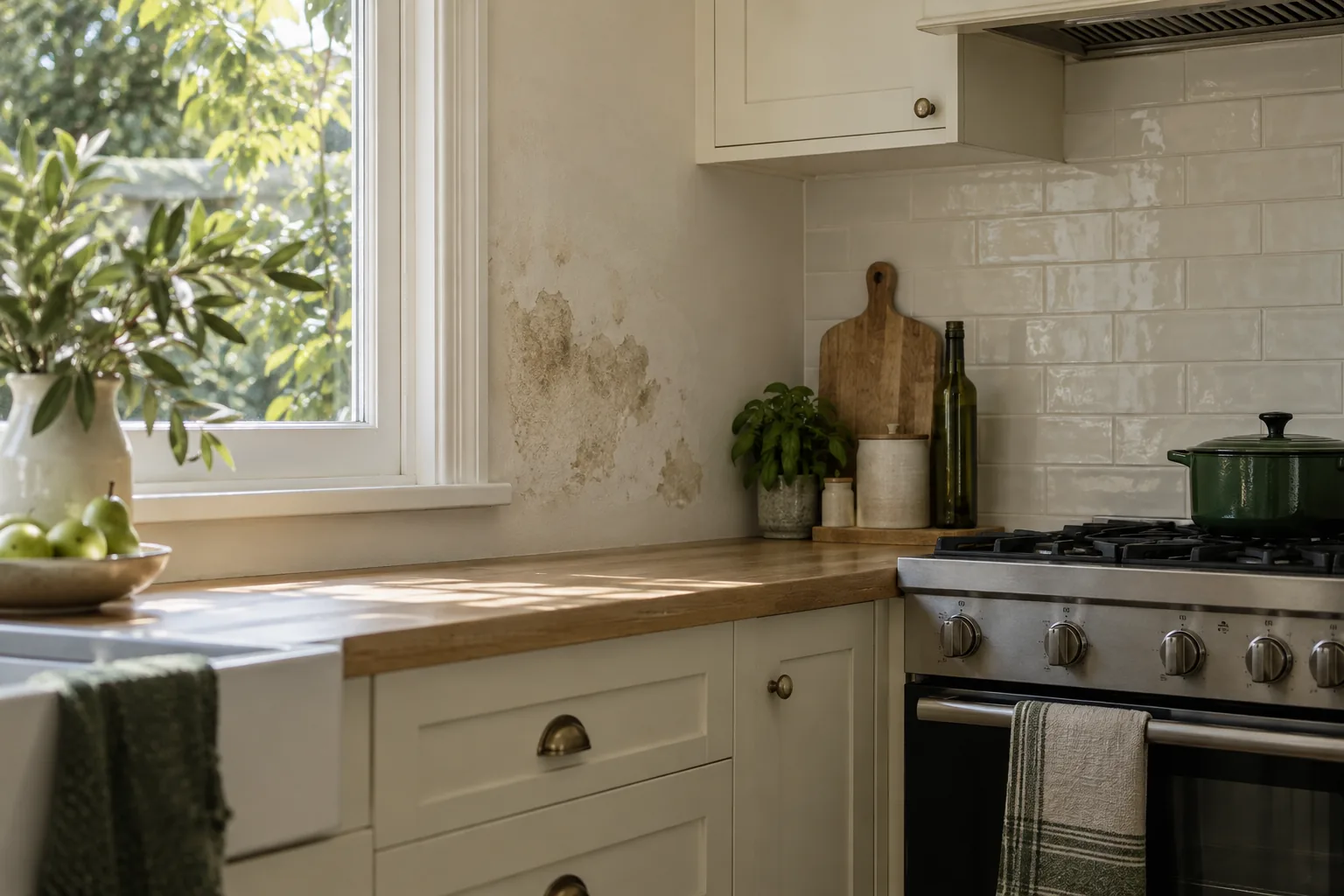
Several photographs can make a small enquiry confusing if they do not show which surfaces belong together. For Balaclava, explain the room and structural area in each image. A clear description helps define treatment without adding unreported rooms, concealed growth or contents to the scope.
Photographs put in context
Surface extent clarified
Working access described
TREATMENT & FOLLOW-THROUGH
UNDERSTANDING REMEDIATION
Pair each image with a useful description
Say whether the photographs show different rooms, angles of one patch or changes over time. Explain any obstruction beyond the frame. Do not climb, dismantle finishes or move suspect belongings simply to obtain more images; describe limitations and discuss preparation instead.
The confirmed treatment scope concerns visible accessible structural surfaces. A photo can illustrate appearance but cannot establish every hidden condition or inclusion. Agree walls, ceilings and exposed floors separately from furniture, carpet, mattresses and other excluded textiles.
THE MOISTURE CONNECTION
Keep the moisture history alongside the images
Mention known wetting, condensation or repair history for the surface shown. Colour and camera angle do not identify the source or establish moisture within construction. Any continuing plumbing or building fault needs separate repair advice.
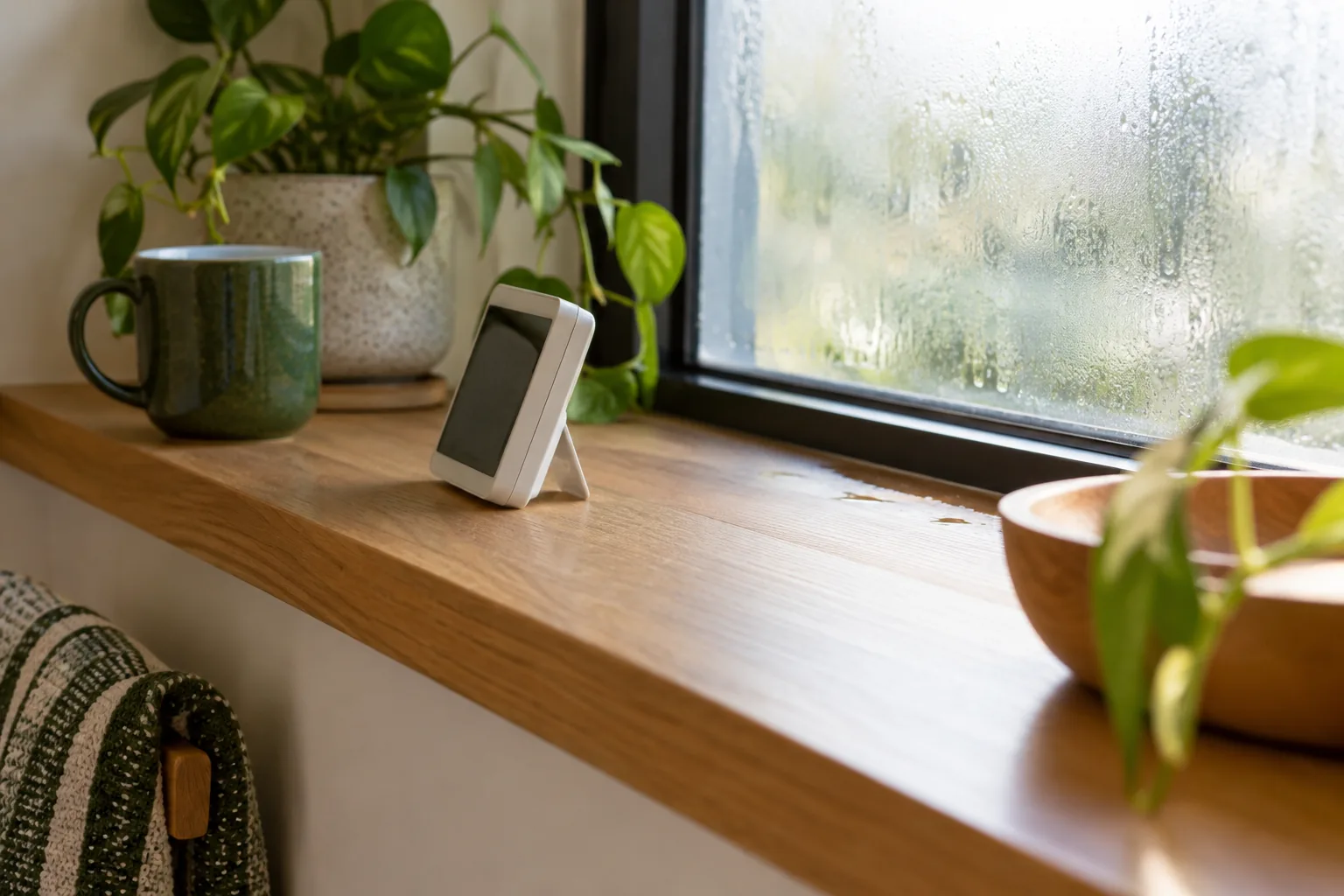
The professional hygrometer measures room-air relative humidity rather than moisture in the photographed material. Where the visible information leaves uncertainty, discuss appropriate assessment. No lab finding, material probe or hidden-area clearance is confirmed by an image-based enquiry.
PLAN · FILTER · TREAT · REMOVE · CONTINUE
Treatment after the structural boundary is understood
1
Review the current visible area
Assessment confirms the accessible contamination and preparation. Explain image dates and any changes so the agreed surface list reflects the present room rather than an ambiguous photo collection.
2
Set air filtration before application
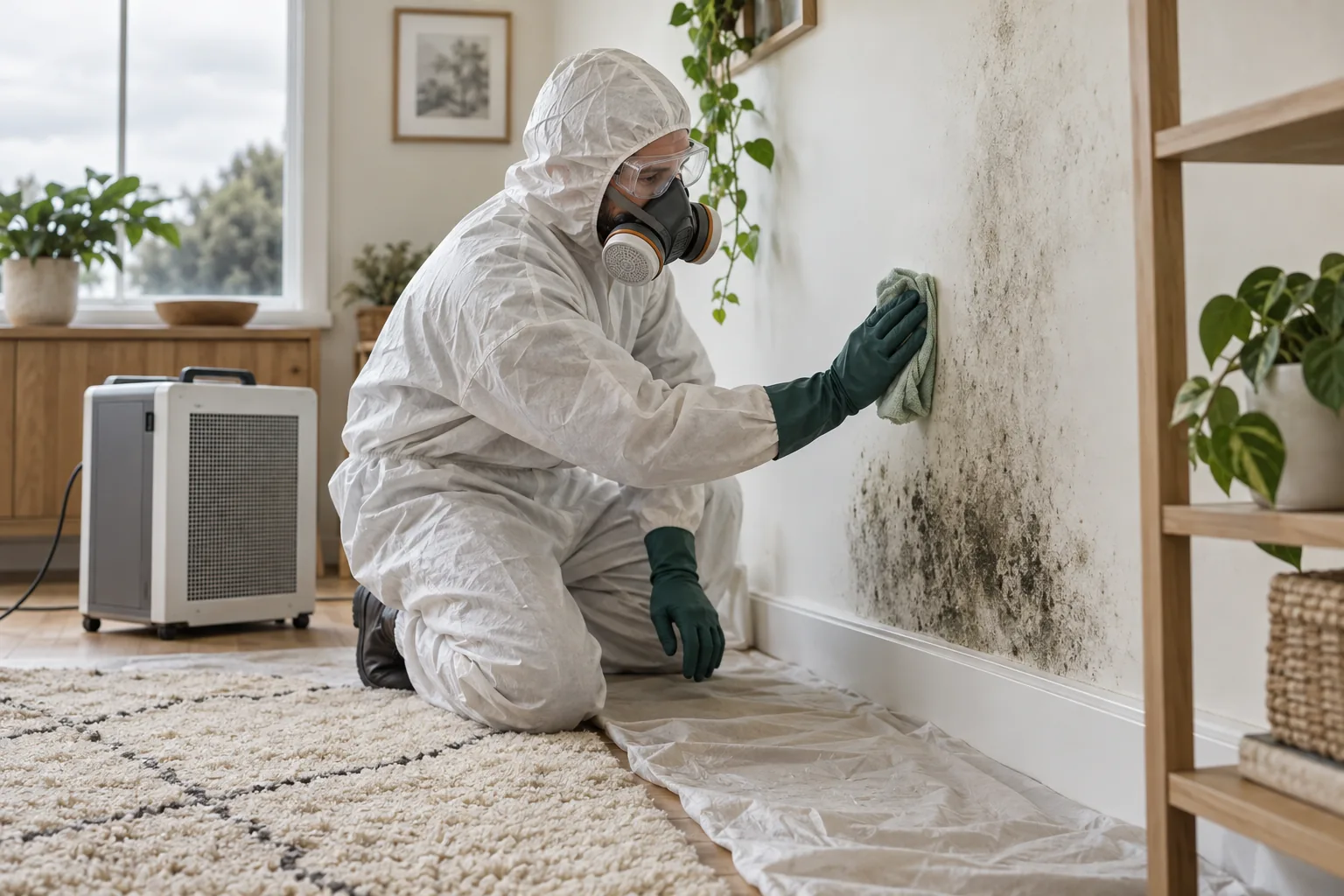
The confirmed HEPA scrubber is established before treatment. Discuss the actual working route and equipment placement, including obstructions not visible in the photographs.

3
Apply suitable treatment
For the structural area agreed after reviewing the images, treatment uses HOCl and suitable ULV dry fog, used in most cases. Suitability needs assessment; a photograph does not guarantee concealed coverage or a universal method.
4
Physically remove accessible mould
Professional H-class filtered equipment is used within the visible structural scope. Cosmetic restoration and excluded belongings remain separate decisions.
5
Continue air cleaning afterwards
HEPA operates during and after the work. Discuss remaining marks, return advice and moisture follow-up without treating a cleaner completion photograph as a laboratory clearance.
Use a room and surface list
Walls
For walls, identify the actual face and finish in each image rather than counting every angle as a separate affected area.
Ceilings
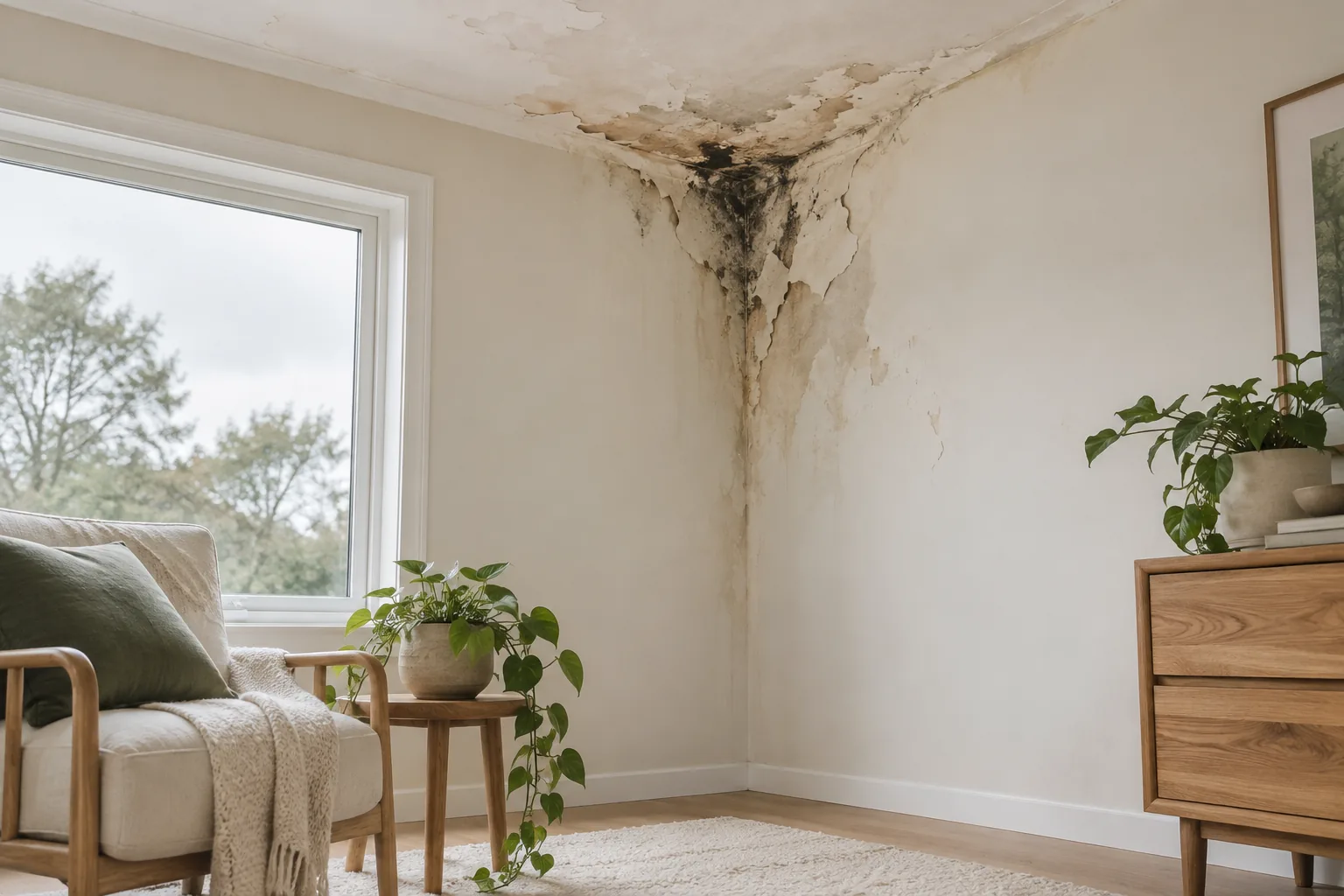
For ceilings, explain the patch position and working access below it; a close image may hide important obstructions.
Bathrooms
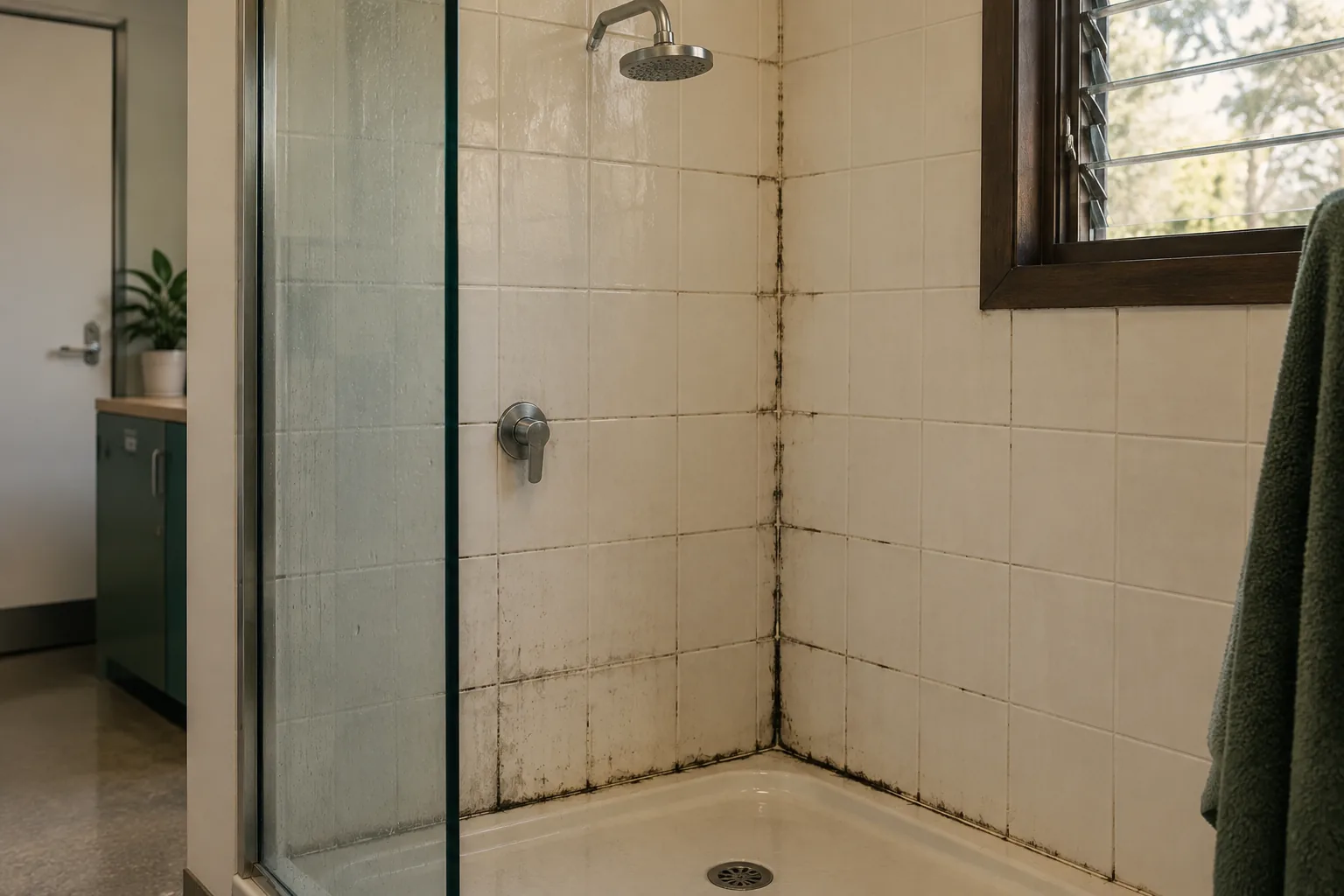
Bathroom structural growth needs its own description, with towels and bathmats excluded from treatment.
Kitchens
Kitchen wall or floor patches should be distinguished from cabinet, appliance and plumbing concerns shown nearby.
Accessible affected surfaces
An exposed structural floor can be discussed, while carpet, rugs and coverings are not assumed included because they appear in the same photograph.
WHAT TO EXPECT
Prepare the actual room, not the photograph
Agree clearance and discuss delicate finishes before the appointment. Plan for occupants and pets to be away during treatment; obtain return instructions for the actual appointment rather than inferring them from the photographs. Around three hours per room is average source guidance, varying with extent, size and accessibility; image count does not establish treatment duration.
Cosmetic staining may remain, with decorating handled separately. Hidden materials are not certified dry, and ongoing dampness can allow recurrence. Keep the included surfaces and unresolved questions clear so completion is assessed honestly rather than judged only by contrasting photographs.
FOLLOW THE MOISTURE
Make later observations comparable
A useful record describes the same surface and any new wetting without claiming a result the image cannot prove.
Note the date, room and location of renewed growth or dampness.
Arrange repair advice for continuing water entry.
Maintain ventilation and keep the treated patch observable for follow-up.
Explain extent rather than pricing by image count
Use published pricing information with the room list, visible surfaces and access details. The Mould Removal examples do not confirm a separate photo-based remediation tariff. Ask how the actual scope is quoted without inferring an inclusion from everything pictured.
BALACLAVA · EXACT ADDRESS & ACCESS
Other Balaclava-area enquiries
For another nearby property, provide its own address, images, authority and access description. Similar appearance does not establish the same source or appointment availability; agree each scope separately.
Questions about remediation
Should I send every photograph I have?
Select images that explain the current visible surfaces and label their room and date. Older images can provide history when clearly distinguished from the present condition.
Can two angles be mistaken for two affected rooms?
Yes, an unclear image set can confuse extent. Explain when photographs show the same patch from different positions.
Does a photograph prove the material is dry?
No. Appearance does not measure moisture within construction or establish concealed condition.
Will everything pictured be treated?
No inclusion follows from appearing in an image. Agree the accessible structural surfaces and keep excluded belongings separate.
Should I move furniture to improve the photograph?
Discuss preparation before difficult or suspect movement. Describe the obstruction rather than assuming a clearer image requires you to expose more area.
Can a completion image be used as a clearance certificate?
No. A photograph records visible appearance, not a laboratory result, hidden-area finding or permanent guarantee against recurrence.
Give the photographs a clear structural context
Call 03 8652 1296 with the room list, current visible surfaces and access. Agree treatment and the separate moisture or finishing decisions.