
SURFACE TREATMENT · MOISTURE FOLLOW-THROUGH
Mould Remediation Burnley
If the enquiry includes wall growth and an unrelated odour complaint at your Burnley address, avoid treating one surface appointment as odour-source clearance. Discuss the odour alongside visible marks, keeping concerns about its source separate from the structural treatment request.
Visible evidence located
Odour concerns separated
Hidden-source limits explicit
TREATMENT & FOLLOW-THROUGH
UNDERSTANDING THE AFFECTED ROOM
Separate a patch from an odour enquiry
A smell and a visible patch are different observations. Locate the structural surface and explain the odour separately instead of using one to identify all affected areas. The treatment job should not silently become chemical testing or a guarantee about sources that cannot be seen. Review remediation scope before selecting the structural-surface job.
An enquiry can ask about a visible patch without claiming it explains the smell. Keep laboratory, chemical or concealed-source expectations outside the surface agreement unless another confirmed service is expressly arranged. Remediation uses the supported sequence on accessible contamination, with no guarantee for every possible odour origin. If the concerns need different responses, describe them individually rather than paying for an undefined complete-room outcome.
MOISTURE & CONTAMINATION
Smell does not establish hidden moisture
An odour does not establish a concealed moisture source or a diagnosis of every mark. Describe actual dampness and visible growth separately. A visible-condition enquiry can help distinguish assessment from a bounded treatment request.
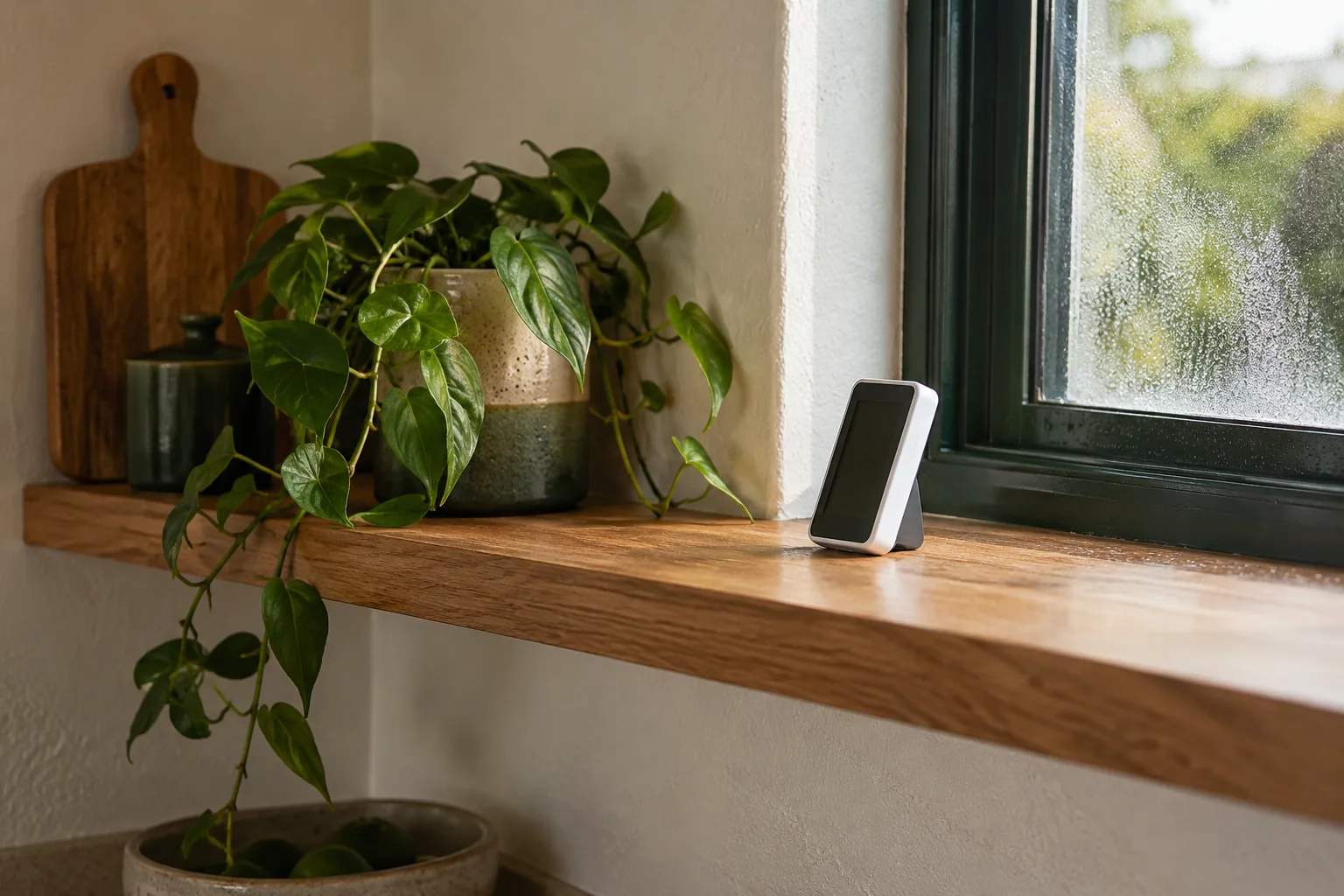
A professional hygrometer measures room-air relative humidity, not an odour’s chemistry or the moisture state behind a lining.
A DEFINED TREATMENT SEQUENCE
Visible treatment with separate odour limits
1
Assess the accessible scope
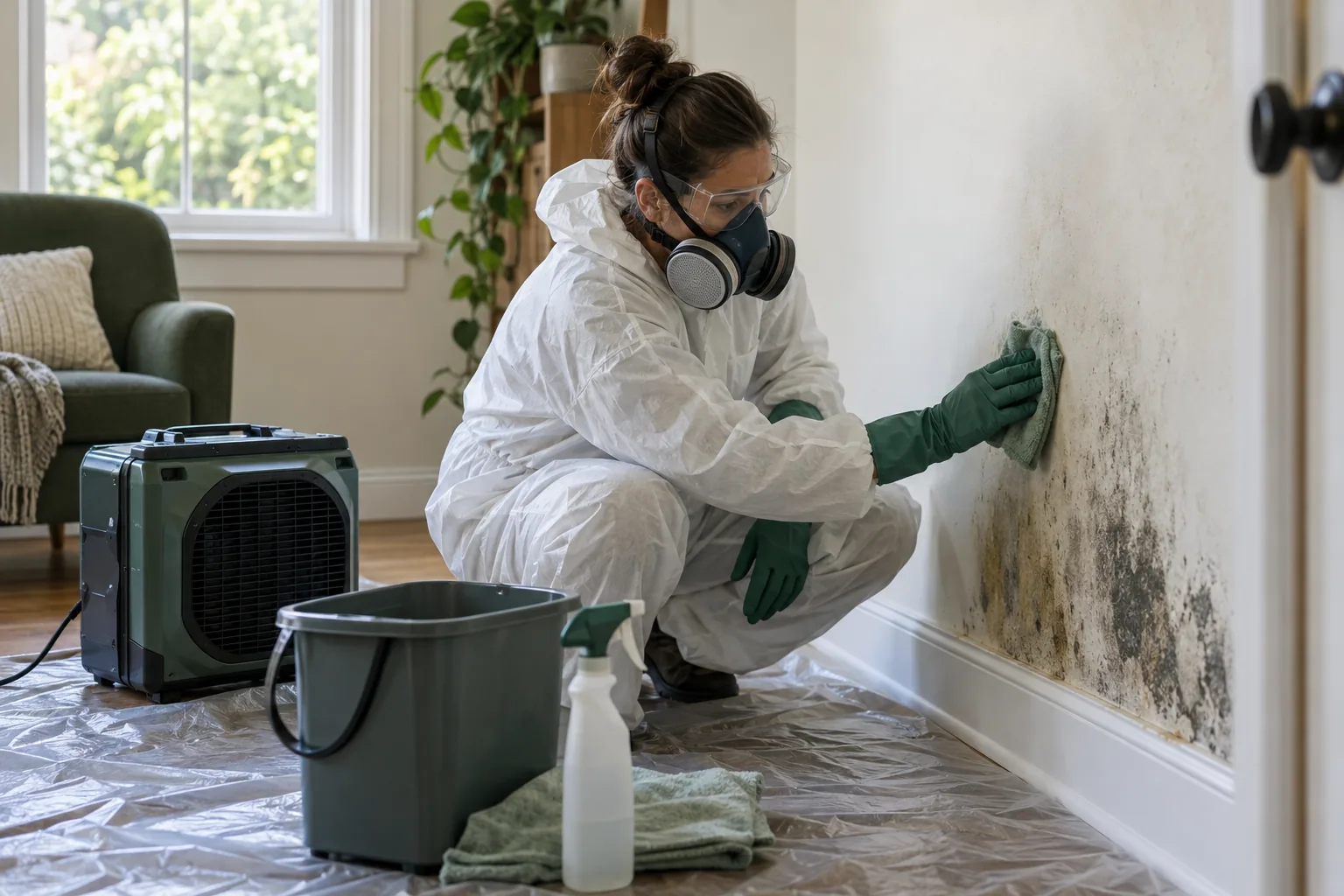
Assess the reachable visible patch while recording the odour as a separate observation rather than an assumed hidden diagnosis.
2
Set up HEPA protection
Establish HEPA air protection before treatment of the agreed surface, without promising identification or removal of every smell source.

3
Choose suitable application
Apply appropriate HOCl, including ULV dry fog when suitable; application does not turn this visit into laboratory odour analysis.
4
Remove visible contamination
Remove visible contamination with professional H-class filtered equipment inside the structural scope, keeping separate odour concerns explicit.
5
Continue final air cleaning
Continue HEPA air cleaning during and after the work; review return advice and the distinction between appearance and remaining odour.
Structural surfaces supported by evidence
Walls
Locate visible wall growth separately from the room’s odour observation.
Ceilings
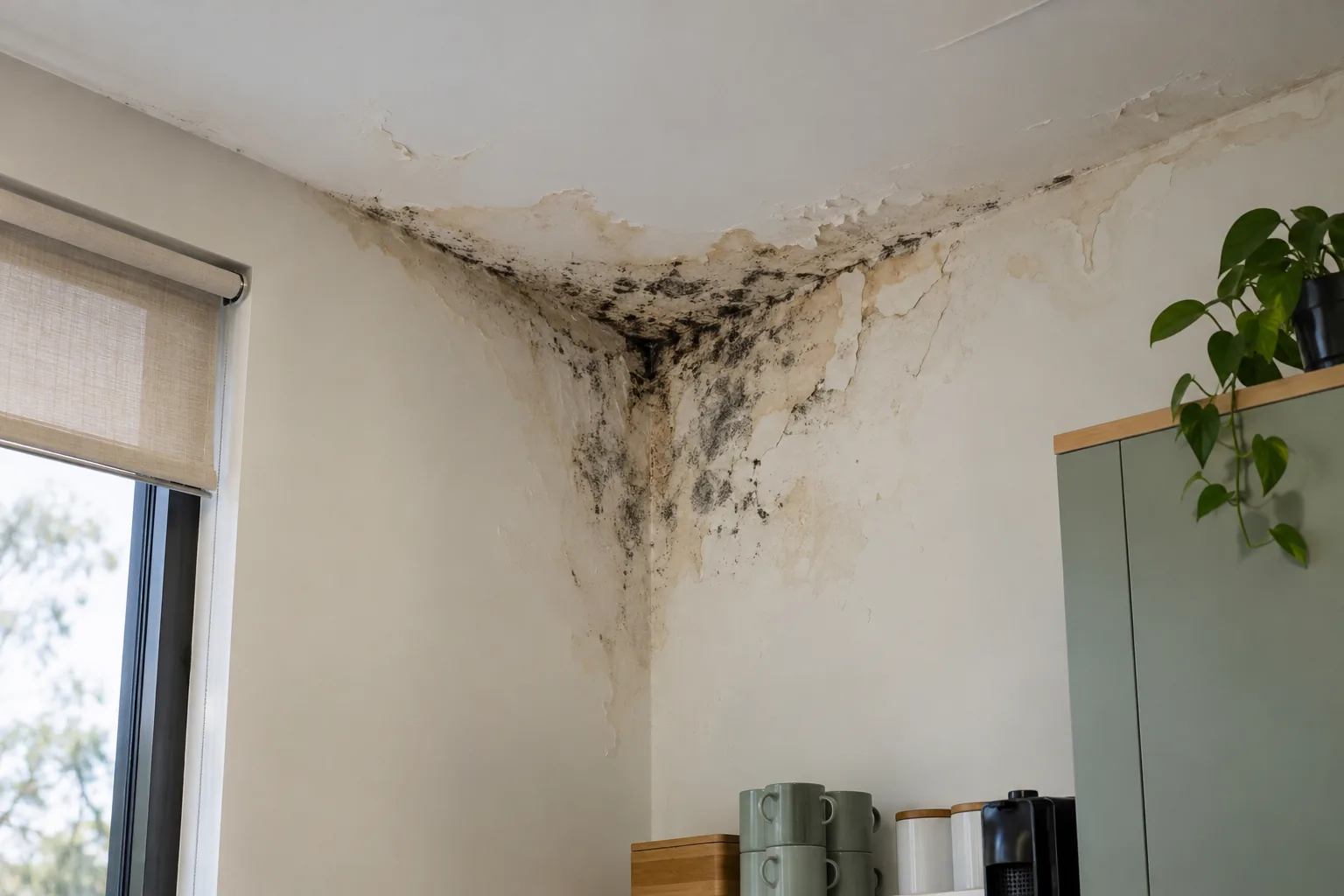
Ceiling treatment needs exposed evidence and reachability, rather than an assumed hidden smell source.
Bathrooms
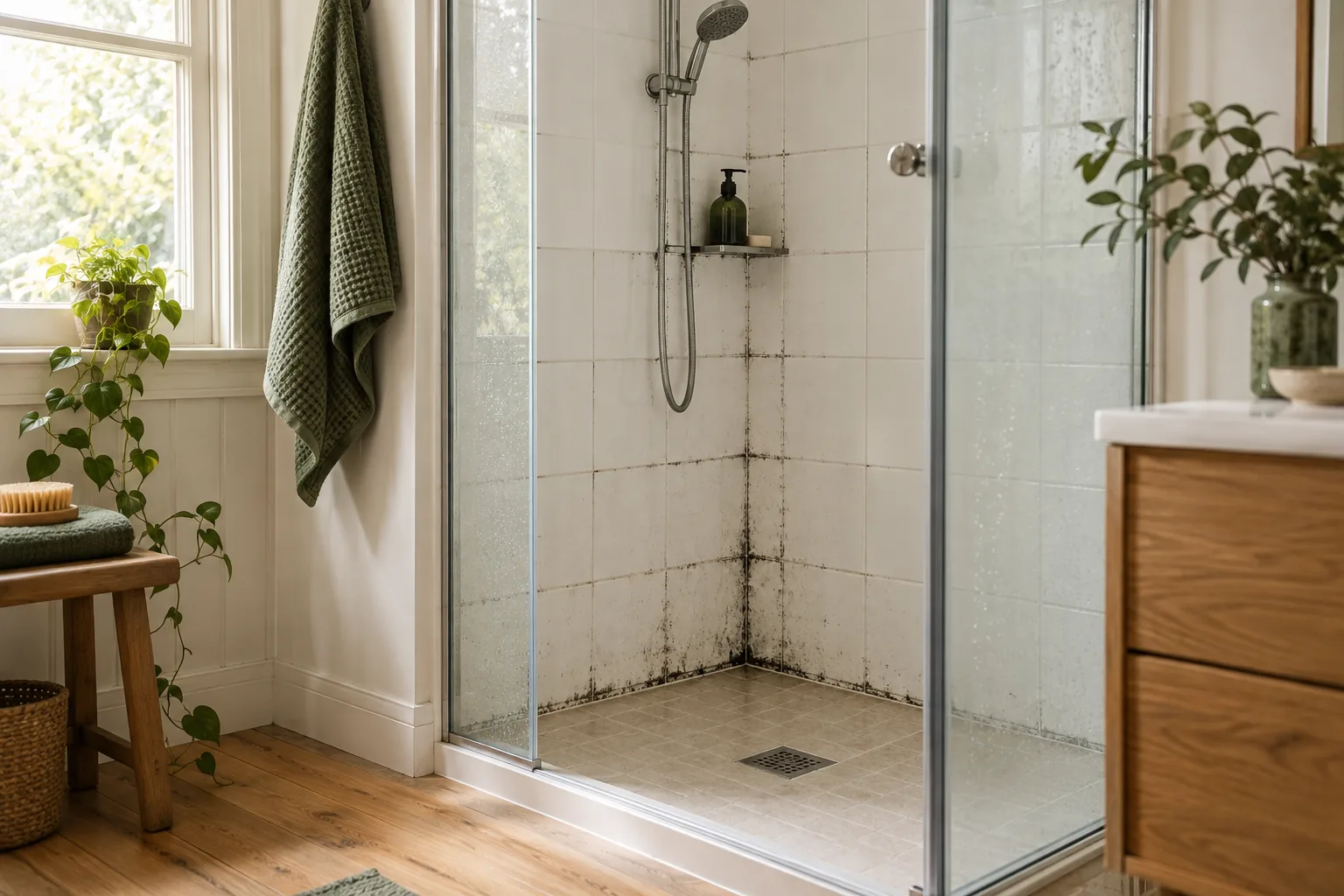
Bathroom contamination and any odour concern should be described as different observations.
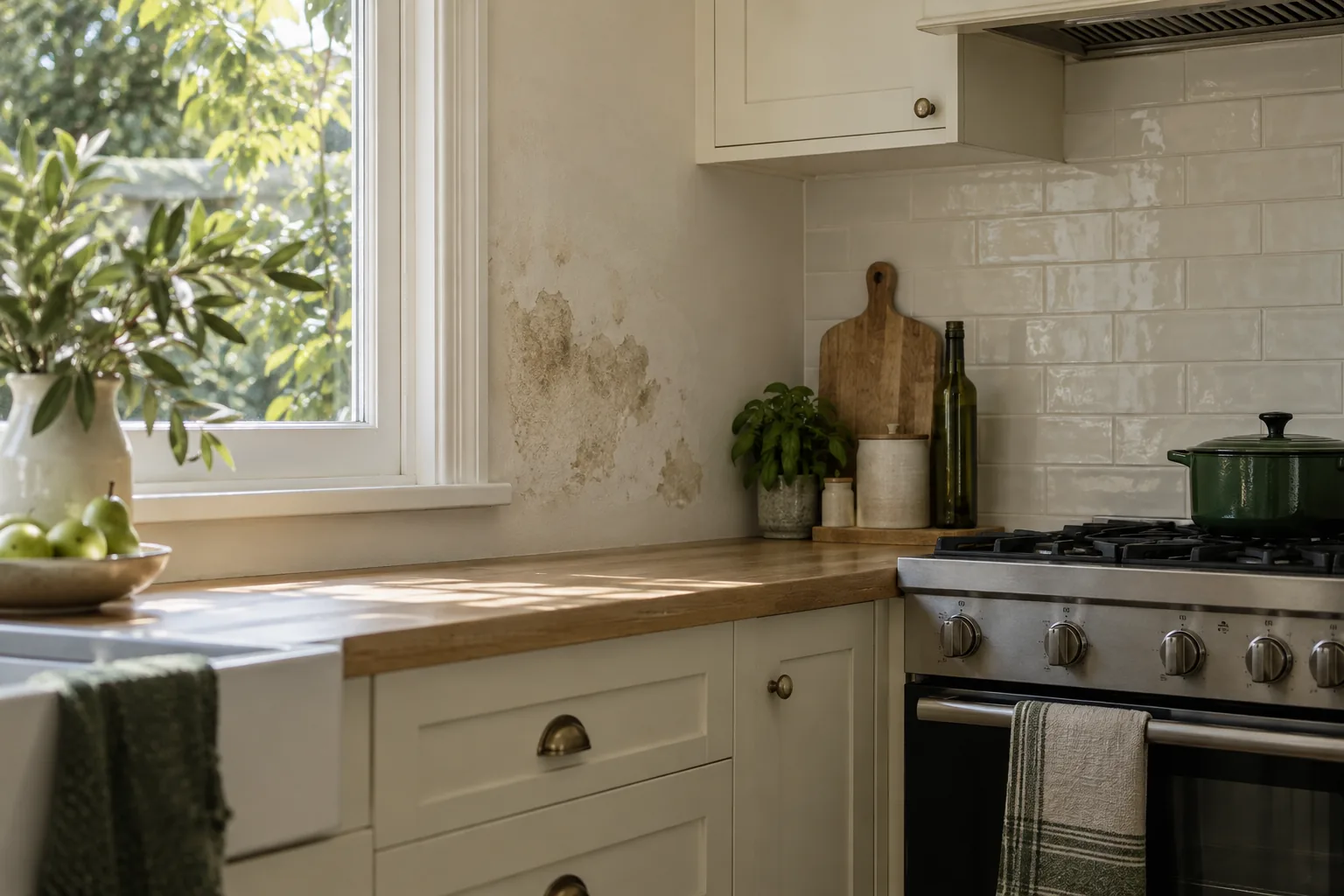
Kitchens
Kitchen work concerns visible agreed surfaces; odour testing of contents is not implied.
Accessible affected surfaces
Other reachable structural surfaces need explicit scope; furniture, textile materials and concealed odour sources are not cleared automatically.
AFTER TREATMENT
Prepare for a bounded surface purpose
Explain the odour and visible surface as separate concerns before preparation. Do not assume clearing the room makes every source available for treatment. Organise departure of people and pets and obtain the particular return advice. Check the technician’s instructions before bringing occupants or pets back into the property.
The source averages approximately three hours per room, but a treatment schedule is not an estimate for separate odour investigation. Working-time guidance is not an hourly odour-investigation tariff.
KEEP MOISTURE IN VIEW
Report remaining observations accurately
Keep the odour concern distinct from the visible surface result after return. If a smell remains, report it as an observation rather than proof that a hidden source was assessed or cleared. Follow through on relevant water and ventilation questions, while seeking a separate appropriate enquiry where needed. Record fresh growth on the structural finish with dates and location. Cosmetic marks, odour and new dampness can have different next steps. The treatment should remain useful within its agreed purpose without becoming an unsupported laboratory result or a guarantee about every source of smell.
Describe a remaining smell without assigning a hidden source.
Report fresh visible growth independently of odour.
Seek a distinct enquiry for unresolved observations outside the scope.
Quote the visible request distinctly
Keep the visible structural request separate from the odour enquiry when discussing cost. Published room examples do not establish a remediation testing package or guaranteed removal of every smell source.
BURNLEY · EXACT ADDRESS & ACCESS
Enquiries with growth and odour identified
Give the Burnley premises and identify where growth is visible independently of the odour. Nearby service links cannot establish the source or confirm unseen conditions at that interior.
Hawthorn · Richmond · Toorak · Glenferrie
Questions about remediation
Will remediation guarantee the odour disappears?
No odour-elimination outcome is confirmed. Describe the smell separately from visible growth so its own concern can be discussed.
Can smell identify mould behind the wall?
No. An odour does not establish concealed contamination; further assessment may be appropriate.
Is laboratory odour testing included?
No laboratory or chemical analysis is promised with this treatment.
Should the visible patch still be described separately?
Yes. Locate its finish, extent and access rather than using the odour as a substitute for the structural-surface scope.
Can filtration find the source of the smell?
No source-location guarantee follows from HEPA air cleaning. It supports the agreed work.
What if the surface improves but the odour stays?
Report that as a remaining observation. Do not assume hidden sources were treated or that the unchanged smell establishes failure of the visible work.
Describe both concerns separately
Call 03 8652 1296 about the Burnley visible finish and separate odour concern. Clarify whether assessment or bounded surface treatment is the appropriate enquiry.